
Foreign News
Singapore tightens rules for expat workers with an eye on local discontent

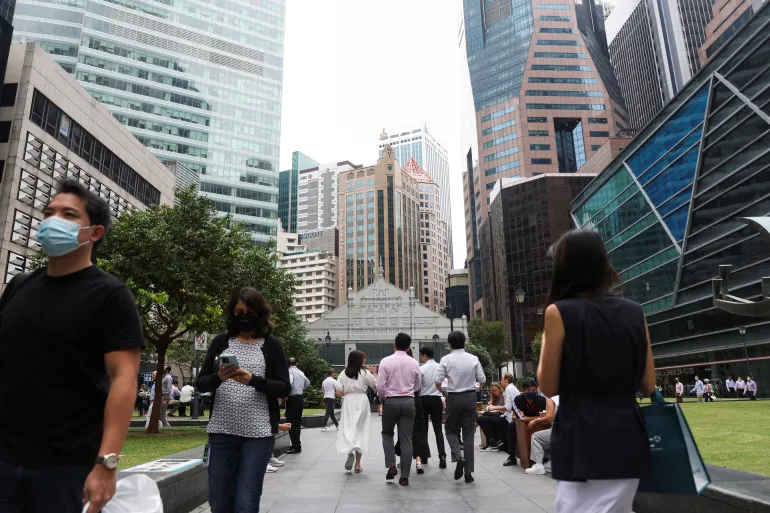
Singapore – One of the world’s most open economies is attempting a delicate balancing act.
On the one hand, the Southeast Asian city-state wants to lure the world’s best and brightest to bolster its workforce, one of Asia’s most diverse. On the other hand, it has to assure locals competing with foreigners for jobs that the system works for them, too, nipping potential resentment or xenophobia in the bud.
From next year, the government will tweak that calculus in favour of locals by raising the salary threshold for foreigners seeking approval to work in the city-state.
Last month, Singapore’s Ministry of Manpower announced that new applicants for the Employment Pass (EP) system will have to earn at least 5,600 Singapore dollars ($4,140) per month, up from 5,000 Singapore dollars ($3,700).
Applicants working in the financial services sector will have to earn at least 6,200 Singapore dollars ($4,600), compared with 5,500 Singapore dollars ($4,100) at present.
“By regularly updating the qualifying salaries based on the set wage benchmarks, we ensure a level-playing field for locals,” Manpower Minister Tan See Leng told parliament during a budget debate.
Analysts said the changes were not surprising for a government that has regularly tweaked the rules for expat workers, most recently in September 2022, when it raised the salary threshold by 500 Singapore dollars ($370).
Walter Theseira, an associate professor and labour economist at the Singapore University for Social Sciences (SUSS), said the move had been “telegraphed for a number of years”.
Theseira said that while the EP system was originally intended to import highly-skilled workers to fill gaps in the workforce, “the criteria seemed to have expanded and EP holders became more prevalent in the middle of the market as well”.
“This was perceived by local workers to be unwelcome competition for jobs that many skilled locals could do, so the government responded by re-calibrating the EP again upwards, so that based on salaries, it now targets more clearly the high-end,” he said.
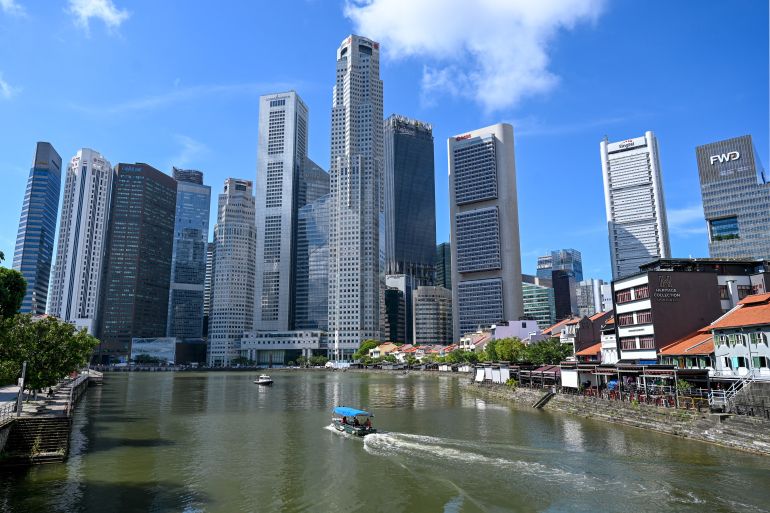
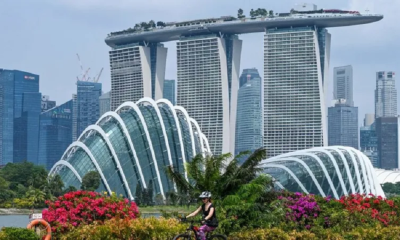
Singapore has built its reputation on attracting foreign talent (Aljazeera)
For decades, Singapore, an island with no natural resources that is about the size of New York City, has built its reputation on an openness to foreign talent.
The number of EP holders has grown substantially over the years, fuelled in part by anxiety over the country’s rock-bottom birthrate and greying population.
As of December last year, there were about 205,400 EP holders in the city, up from 161,700 during the same month in 2021.
As far back as 2021, Tan acknowledged that Singaporeans, though recognising the need to attract foreign talent, had concerns that the influx came at the “expense” of local businesses.
A labour market report released by the Manpower Ministry last month showed that employment growth in 2023, comprising 88,400 positions in Singapore – excluding migrant domestic workers – was largely made up of foreigners.
The revision of the EP qualification criteria can be seen as “a strategic move” to appease age-old tensions over hiring foreign talent amid a crowded job market, said Joshua Yim, the CEO of Achieve Group, a talent acquisition consultancy.
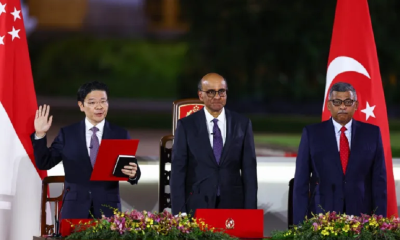
The changes also come as the Southeast Asian country is gearing up for one of the most politically significant transitions in its history.
Singapore’s ruling People’s Action Party is set to fight the next general election, due by 2025, under new leadership as incumbent Prime Minister Lee Hsien Loong prepares to step down after some two decades in office.
The issue of foreign workers became salient in the 2011 general election, when public discontent simmered over rising competition for jobs and increasing pressure on public infrastructure.
While most Singaporeans and permanent residents agree that immigration is generally good for the economy, slightly more than half also believe that immigrants take jobs away from locals, according to a 2021 survey by the Institute of Policy Studies.
In another survey conducted by the research firm Milieu Insight, Singaporeans were almost evenly divided on whether the nation struck the right balance between bringing in foreign workers and protecting local jobs.
Sid Suhas, the senior vice president and head of EMEA & APAC at the talent acquisition firm Cielo, said the visa changes are likely to prompt large employers to “focus more on attracting, developing and nurturing the local talent pool, particularly for junior professional and mid-level lower-skilled roles.”
With the higher salary threshold, companies are likely to adopt “a skills-first approach” when employing foreigners, Suhas said, focusing on talent in areas such as AI, technology, engineering and healthcare.
“The trend of limiting foreign talent deployment to specific skills and industries is inevitable. In the past, foreign talent had the opportunity to develop their careers in Singapore across various roles but now, the focus will likely be on senior and niche positions,” Suhas told Al Jazeera.
Suhas said he has already seen companies exploring alternative locations in the Association of Southeast Asian Nations (ASEAN) such as Thailand, Malaysia and Indonesia, as a means of relocating key talent while still maintaining proximity to Singapore.
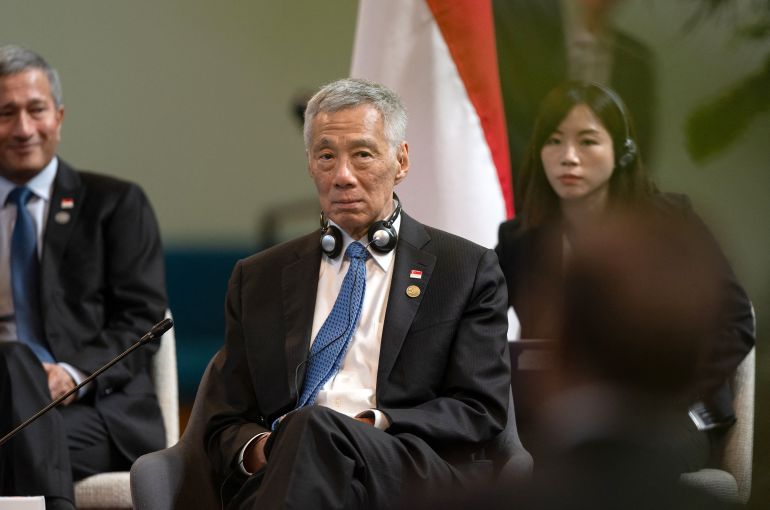
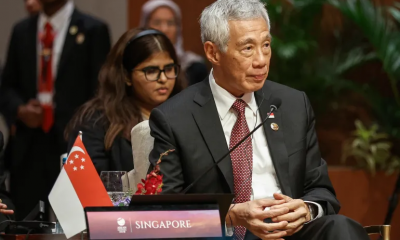
Singapore’s Prime Minister Lee Hsien Loong is due to step down before the 2025 general elections (Aljazeera)
“Most SMEs [small to medium-sized enterprises] do not rely much on EP workforce as their core talent pool,” Yuit told Al Jazeera.
“Selected businesses may have EP hiring in the stated 5,000 or 5,500 [Singapore dollars] range for specialised roles but usually, that is for time-limited, project engagement or if they are in specialised sectors that rely on a foreign talent pool because of a lack of matching local workforce.”
But the increased labour costs could affect the profitability of SMEs with tighter budget constraints, said Achieve Group’s Yim.
“Local SMEs may not be so well-oiled in terms of their processes and operations, as compared to the MNCs,” Yim said.
“They will feel the heat because they have to go up against the big players with the financial muscles who can offer higher EP salaries and attract better-quality talent. They might feel that talent is being stolen away and thus, this group is at the shorter end of the stick.”
Xu Le, a lecturer from the department of strategy and policy at the National University of Singapore’s Business School, said the policy change could “spur local companies to think out of the box and explore alternative methods to enhance overall operational efficiency and labour productivity”, in turn benefitting the economy.
Beatrice Liu-Cheng, the CEO of Oriental Remedies Group, said that while the higher-qualification threshold could pose challenges for her chain of Chinese medicine clinics, it would also be an “opportunity to further enhance the diversity and expertise” within its workforce.
Liu-Cheng said the changes would encourage her to seek out and nurture Singaporean talent through training programmes, mentorship initiatives and partnerships with educational institutions.
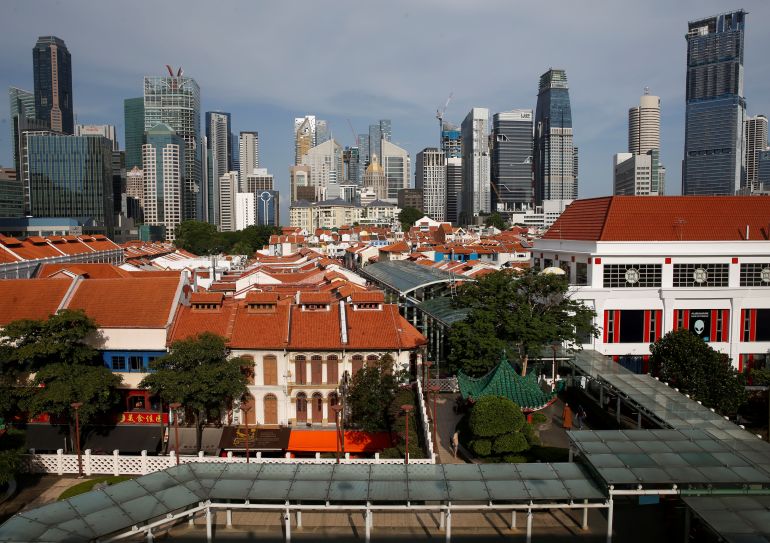 Singapore is known for its business-friendly environment (Aljazeera)
While the migration changes are set to raise the cost of doing business, Singapore’s advantages, including a business-friendly environment, its strategic location and world-class infrastructure, will continue to attract international companies, analysts said.
Singapore is expected to remain “the preferred choice” for firms’ regional headquarters, said Cielo’s Suhas, even if deploying smaller teams becomes more common due to the higher costs.
Suhas said the changes would also accelerate the various government initiatives aimed at creating high-quality jobs for locals, including early talent programmes and re-skilling programmes for mid-to-late career professionals.
“As a result, we anticipate that global companies setting up in Singapore will increasingly prioritise hiring Singaporeans,” he said.
Singapore ranks second in the 2023 World Economic Forum’s Global Talent Competitiveness Index, behind Switzerland.
Nicholas Sim, an associate professor at SUSS’s business school, said that businesses seeking to establish a foothold in Asia are still likely to prioritise Singapore due to its “high-quality infrastructure, efficient and stable government and access to a high-calibre talent pool”.
Besides the EP scheme, there are other avenues for foreign talent to come to Singapore.
In 2023, the Manpower Ministry launched the Overseas Networks & Expertise Pass for “top talent” in business, arts and culture, sports, academia and research.
As of January, the ministry had approved nearly 4,200 applications for the pass.
“Going forward, it’s a clear sign that the Singapore government wants to bring high-calibre individuals into the Singapore workforce – and firms will need to deliberate more carefully about hiring top-tier foreign candidates who are skilled and can add to Singapore’s long-term competitiveness,” Yim said.
”All the more, MNCs will see Singapore as a place for the cream of the crop.”
(Aljazeera)










At least 139 people, including 15 children, have died and 84 are missing after a boat capsized off the coast of Djibouti, according to the United Nations migration agency.
In a statement on Sunday, the International Organization for Migration (IOM) quoted survivors as saying that the incident happened near Guhere off Djibouti’s eastern coast in the Gulf of Aden near the Bab al-Mandeb strait from Thursday night to before dawn on Friday.
The boat was heading from Djibouti to Yemen with more than 300 people on board. More than 80 people – all Ethiopians – survived the shipwreck while Djiboutian search and rescue operations continued.
“Our teams are on the ground alongside local authorities to provide emergency assistance,” IOM Chief of Mission in Djibouti Alexandre Coissac said, lamenting the “devastating loss of life”.
That number only includes those buried by authorities in Djibouti. Others have been buried by the migrants themselves but they won’t be added to the official count until authorities can verify the bodies, Alexandre Coissac, IOM Chief of Mission in Djibouti, told the Associated Press.
“This tragedy is a stark reminder of the dangers faced by migrants along this migration corridor as they seek economic opportunities,” Coissac added.
[Aljazeera]
Foreign News
‘Time for Ukraine to get new president,’ says Trump after Zelensky condemns diesel deal

US President Donald Trump has said he thinks “it’s time for Ukraine to get a new president” as he responded to Volodymyr Zelensky’s criticism of the US diesel deal with Russia.
The Ukrainian president warned a new deal to release millions of tonnes of Russian diesel into the US would provide Moscow with money to continue its war against his nation, calling it a gift to Russian President Vladimir Putin.
Trump told reporters outside the White House on Saturday that Zelensky “wants to make problems for the world” by continuing to authorise attacks on Russian refineries.
“He’d better damn well stop,” Trump said, before suggesting Ukraine should “get a new leader who can make a deal”.
Global fuel supplies, including diesel, have been severely limited by the war against Iran launched by the US and Israel, which led to the effective closure of the Strait of Hormuz, through which roughly a fifth of the world’s oil products usually flows.
Russia – a major producer – and Ukraine have recently intensified their strikes on each other’s energy infrastructure and transport facilities, further straining energy markets.
“We said, ‘you can do whatever you want to Russia, don’t hit the refineries’, because that’s a world problem that’s caused,” Trump continued.
“He could have made many deals and for some reason, he never does.”
Putin’s envoy Kirill Dmitriev described Trump’s intervention as “iconic and historic”, saying that Ukraine “needs leadership actually focused on peace”.
The US president confirmed on Friday that an agreement had been reached with Moscow to suspend sanctions on Russian diesel exports until 7 April.
Zelensky reacted by saying it would allow Moscow to raise new funds to source new military equipment to continue the war.
He also accused Moscow of taking the deal “to mean they can keep fighting, to mean they keep dropping bombs on cities” following deadly new strikes on Zaporizhzhia.
The Ukrainian president spoke to several allies on Saturday to discuss the latest developments, calling for “real decisions to protect lives in Ukraine” and to protect European security.
A Downing Street spokesperson said UK Prime Minister Andy Burnham had spoken to Zelensky and offered his “complete solidarity”.
The pair had agreed Russia should acquiesce to “an immediate energy ceasefire” and end its attacks on shipping in the Black Sea, the spokesperson said, as “this would immediately release more energy and food supplies into the global market”.
News of the US-Russia diesel deal was also met with criticism by EU’s foreign affairs chief Kaja Kallas, who echoed Zelensky in saying that suspending sanctions “provides Moscow with more revenues to wage war”, adding: “This is not the time to ease pressure on Russia, and Europe won’t.”
She said European foreign ministers intended to approve the biggest set of sanctions on Russia since the start of its full-scale invasion on Monday.
The deal with Russia is the latest effort from Trump to lower fuel prices in the US ahead of the midterm elections, after months spent grappling with the political consequences of the Iran war.
That conflict, which began in February, has sent the cost of petrol and in particular diesel skyrocketing, which has soured his standing with the American public who have been stung by the higher pump prices and knock-on effects that led to across-the-board inflation.
The average price of diesel is currently $6.28 (£4.74) a gallon, according to the AAA – up from last month’s $5.94 average, and $3.68 last year.
Under the deal, Russia would release an initial 300,000 tonnes of diesel “to the American and global marketplace” followed by an additional 500,000 tonnes in November.
A further million would follow, Trump wrote on Truth Social, and then another 3m tonnes “within a short period of time” – but he noted that this delivery will be “based on the condition of their diesel refineries”.
In the past 10 months, Russia experienced two waves of severe fuel shortages across the country due to Ukrainian drones strikes on its oil refineries.
Diesel production in Russia dropped by an estimated 30%, according to the International Energy Agency.
Trump had already called for new elections in Ukraine last December, saying Ukrainian voters should have the choice to replace Zelensky.
Since the war broke out in 2022 Ukraine has been under martial law, meaning elections are suspended.
[BBC]
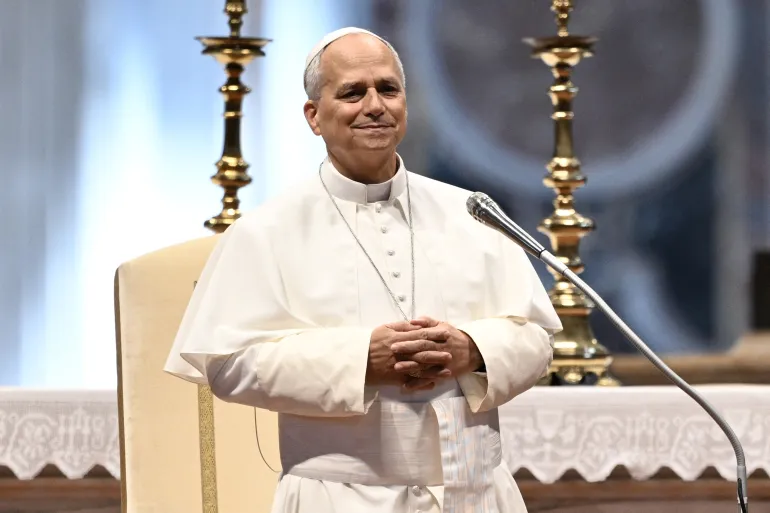
Pope Leo XIV has declared that the death penalty is “inadmissible” while his home country, the United States, announces plans to livestream an execution by firing squad.
Marking World Day Against the Death Penalty on Saturday, the pope reiterated the Catholic Church’s teaching on capital punishment, writing on X that it was “inadmissible because it is an attack on the inviolability and dignity of the person”.
“The common good can be safeguarded and the requirements of justice can be met without recourse to capital punishment,” his post said.
“Effective systems of detention have been developed that protect citizens while at the same time do not completely deprive those who are guilty of the possibility of redemption,” added the leader of the Catholic Church.
The American Pope’s comments come days after US Secretary of Defense Pete Hegseth said on Thursday that the firing squad execution of Nidal Malik Hasan on December 3 will be livestreamed.
Hasan was convicted of killing 13 people and wounding 32 others in a shooting at the Fort Hood military base in 2009.
Pope Leo did not specifically refer to the planned execution, or last month’s botched execution attempt on Christa Pike, who survived two doses of the lethal injection in Tennessee.
But his post came hours after his top deputy, Cardinal Pietro Parolin, the Vatican secretary of state, told Vatican News that the plan to livestream Hasan’s execution was “unacceptable”.
It was Leo’s predecessor, Pope Francis, in 2018 who first amended official Catholic teaching to declare capital punishment “inadmissible” in all circumstances.
[Aljazeera]

Navy Commander attends Trans-Regional Seapower Symposium in Italy

Heavy showers about (100-150) mm are likely at some places in the Central, Sabaragamuwa, Uva and Southern provinces

Elephant enrichment programme centred on the Thabbowa Reservoir proves successful
Showers above 75 mm are likely at some places in the Western, Sabaragamuwa, Central, Southern, Uva and North-Western provinces and in Anuradhapura and Mannar districts.

New prison regulations for monks serving jail terms soon: President’s Office

CP alleges NPP has taken the blame for illegal US sanctions on Iranian vessels

‘Dates have the highest sugar content to fight Coronavirus’

Sunday Island 27 December – Headlines

#SundayIsland 17th December – Headlines

Sunday Island – 28th March

Sunday Island Headlines – 21 March

Sunday Island – 21st February – Headlines
-

 Features5 days ago
The Sri Lankan who made Scottish history
-

 Features7 days ago
Preventing grievances from becoming communal
-

 Sports5 days ago
Nissanka absence opens door for Sri Lanka’s young guns
-

 News6 days ago
Gnansara Thera to be assigned to prison printing section: Officials
-

 News4 days ago
NDB fraud Rs 60mn more than reported
-

 News4 days ago
Removing monk’s robes matter for Sangha to decide: Mahanayake Theras
-

 Features5 days ago
Future of Sri Lanka’s state university system: Should it be shut down and reopened?
-

 News6 days ago
OIC of FCID summoned before Maligakanda Magistrate