
Foreign News
Italy mafia trial: 200 sentenced to 2,200 years for mob links

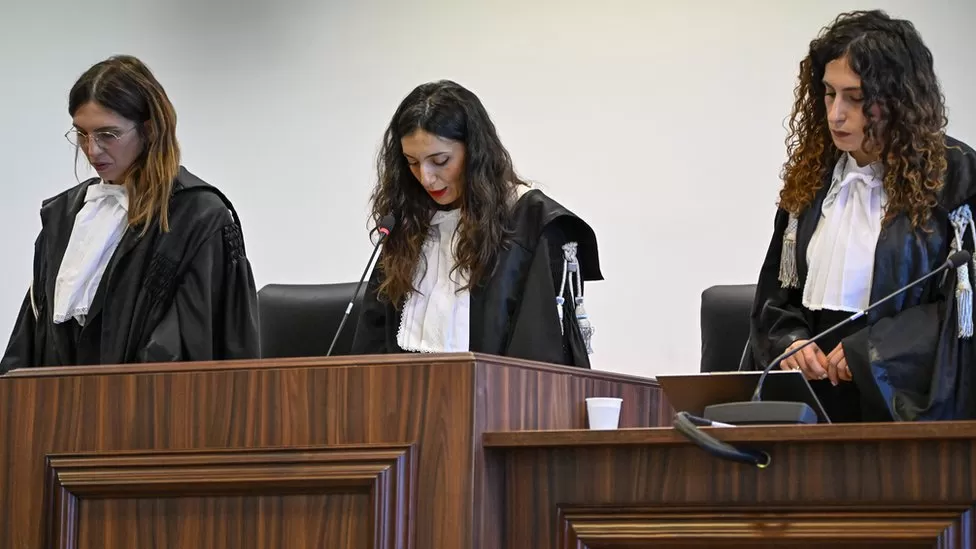
More than 200 defendants in one of Italy’s biggest mafia trials for generations have been sentenced to a total of more than 2,200 years in jail.
The three-year trial saw individuals allegedly linked to the ‘Ndrangheta sentenced for crimes ranging from extortion to drug trafficking. Those sentenced included a former Italian senator, though the verdicts can still be appealed.
The ‘Ndrangheta is one of Europe’s most influential criminal organisations.
The case illustrated the mob’s broad influence over the politics and society of southern Italy. Experts said the convictions of white collar workers, including local officials, businessmen and politicians, showed the far-reaching impact of organised crime on Italian institutions.
Among the most notable people to be sentenced was Giancarlo Pittelli, a lawyer and former senator for ex-premier Silvio Berlusconi’s party Forza Italia. Pittelli received an 11-year sentence for collusion with a mafia-type organisation.
Others convicted included civil servants, professionals across various industries and high-ranking officials, who were critical to the ‘Ndrangheta’s success in infiltrating the legitimate economy and state institutions.
More than 100 defendants were acquitted.
The judges presiding over the case were put under police protection over fears for their safety.
Originating in the impoverished region of Calabria, the ‘Ndrangheta is considered one of the world’s most dangerous criminal organisations. It is estimated to control as much as 80% of Europe’s cocaine market.
The gang boasts an estimated annual turnover of around $60bn (£49bn).
The trial was held in a call centre on the outskirts of the town of Lamezia Terme, converted into a high-security courtroom equipped with cages to hold the defendants and large enough to hold some 600 lawyers and 900 witnesses. Charges included murder, extortion, drug-trafficking, loan sharking, abuse of office and money laundering.
Over three years, proceedings demonstrated how the Calabrian syndicate extended its reach across continents, eventually operating as far afield as South America and Australia. Its members infiltrated the local economy, public institutions, and even the health system, rigging public tenders and bribing local officials.
The trial, the largest of its kind since the 1980s, saw judges examine thousands of hours of testimony. Former mobsters turned collaborators with the justice system testified about the activities of the Mancuso family and their associates, who wield extensive control over the province of Vibo Valentia.
The Mancuso family, from the town of Limbadi, are one of the most powerful of the 150 clans which make up the ‘Ndrangheta.
Anna Sergi, a professor of criminology at the University of Exeter, said: “This trial confirms convictions of classic mafiosi, sentenced for offences traditionally more associate with criminal activities, such as extortion or drug trafficking.”
She added: “However, it is important to note how the different types of people involved, including white collar workers, provide a more comprehensive view of the entire province and the connections between various mafia clans.”
Most of the defendants were arrested in December 2019, following an extensive investigation spanning at least 11 Italian regions, which began in 2016. Approximately 2,500 officers took part in raids targeting suspects in Vibo Valentia, an area primarily controlled by the ‘Ndragheta’s Mancuso clan.
More than 50 former mafia members agreed to cooperate with the trial, among them Luigi Mancuso’s nephew, Emanuele.
Their testimony shed light on the inner workings of one of Italy’s most powerful mobs. The trial revealed that ‘Ndrangheta members allegedly concealed weapons in cemetery chapels, used ambulances for drug transportation and diverted public water supplies to grow marijuana.
Those who opposed the organised crime group faced grim consequences, including finding dead puppies and goat heads left in front of their houses, torched cars and vandalised shop windows.
“This first round of sentences demonstrates how challenging it is to combat the ‘Ndrangheta due to its political, economic, and financial connections,” Antonio Nicaso, a writer and organised crime expert, said.
(BBC)








At least 139 people, including 15 children, have died and 84 are missing after a boat capsized off the coast of Djibouti, according to the United Nations migration agency.
In a statement on Sunday, the International Organization for Migration (IOM) quoted survivors as saying that the incident happened near Guhere off Djibouti’s eastern coast in the Gulf of Aden near the Bab al-Mandeb strait from Thursday night to before dawn on Friday.
The boat was heading from Djibouti to Yemen with more than 300 people on board. More than 80 people – all Ethiopians – survived the shipwreck while Djiboutian search and rescue operations continued.
“Our teams are on the ground alongside local authorities to provide emergency assistance,” IOM Chief of Mission in Djibouti Alexandre Coissac said, lamenting the “devastating loss of life”.
That number only includes those buried by authorities in Djibouti. Others have been buried by the migrants themselves but they won’t be added to the official count until authorities can verify the bodies, Alexandre Coissac, IOM Chief of Mission in Djibouti, told the Associated Press.
“This tragedy is a stark reminder of the dangers faced by migrants along this migration corridor as they seek economic opportunities,” Coissac added.
[Aljazeera]
Foreign News
‘Time for Ukraine to get new president,’ says Trump after Zelensky condemns diesel deal

US President Donald Trump has said he thinks “it’s time for Ukraine to get a new president” as he responded to Volodymyr Zelensky’s criticism of the US diesel deal with Russia.
The Ukrainian president warned a new deal to release millions of tonnes of Russian diesel into the US would provide Moscow with money to continue its war against his nation, calling it a gift to Russian President Vladimir Putin.
Trump told reporters outside the White House on Saturday that Zelensky “wants to make problems for the world” by continuing to authorise attacks on Russian refineries.
“He’d better damn well stop,” Trump said, before suggesting Ukraine should “get a new leader who can make a deal”.
Global fuel supplies, including diesel, have been severely limited by the war against Iran launched by the US and Israel, which led to the effective closure of the Strait of Hormuz, through which roughly a fifth of the world’s oil products usually flows.
Russia – a major producer – and Ukraine have recently intensified their strikes on each other’s energy infrastructure and transport facilities, further straining energy markets.
“We said, ‘you can do whatever you want to Russia, don’t hit the refineries’, because that’s a world problem that’s caused,” Trump continued.
“He could have made many deals and for some reason, he never does.”
Putin’s envoy Kirill Dmitriev described Trump’s intervention as “iconic and historic”, saying that Ukraine “needs leadership actually focused on peace”.
The US president confirmed on Friday that an agreement had been reached with Moscow to suspend sanctions on Russian diesel exports until 7 April.
Zelensky reacted by saying it would allow Moscow to raise new funds to source new military equipment to continue the war.
He also accused Moscow of taking the deal “to mean they can keep fighting, to mean they keep dropping bombs on cities” following deadly new strikes on Zaporizhzhia.
The Ukrainian president spoke to several allies on Saturday to discuss the latest developments, calling for “real decisions to protect lives in Ukraine” and to protect European security.
A Downing Street spokesperson said UK Prime Minister Andy Burnham had spoken to Zelensky and offered his “complete solidarity”.
The pair had agreed Russia should acquiesce to “an immediate energy ceasefire” and end its attacks on shipping in the Black Sea, the spokesperson said, as “this would immediately release more energy and food supplies into the global market”.
News of the US-Russia diesel deal was also met with criticism by EU’s foreign affairs chief Kaja Kallas, who echoed Zelensky in saying that suspending sanctions “provides Moscow with more revenues to wage war”, adding: “This is not the time to ease pressure on Russia, and Europe won’t.”
She said European foreign ministers intended to approve the biggest set of sanctions on Russia since the start of its full-scale invasion on Monday.
The deal with Russia is the latest effort from Trump to lower fuel prices in the US ahead of the midterm elections, after months spent grappling with the political consequences of the Iran war.
That conflict, which began in February, has sent the cost of petrol and in particular diesel skyrocketing, which has soured his standing with the American public who have been stung by the higher pump prices and knock-on effects that led to across-the-board inflation.
The average price of diesel is currently $6.28 (£4.74) a gallon, according to the AAA – up from last month’s $5.94 average, and $3.68 last year.
Under the deal, Russia would release an initial 300,000 tonnes of diesel “to the American and global marketplace” followed by an additional 500,000 tonnes in November.
A further million would follow, Trump wrote on Truth Social, and then another 3m tonnes “within a short period of time” – but he noted that this delivery will be “based on the condition of their diesel refineries”.
In the past 10 months, Russia experienced two waves of severe fuel shortages across the country due to Ukrainian drones strikes on its oil refineries.
Diesel production in Russia dropped by an estimated 30%, according to the International Energy Agency.
Trump had already called for new elections in Ukraine last December, saying Ukrainian voters should have the choice to replace Zelensky.
Since the war broke out in 2022 Ukraine has been under martial law, meaning elections are suspended.
[BBC]
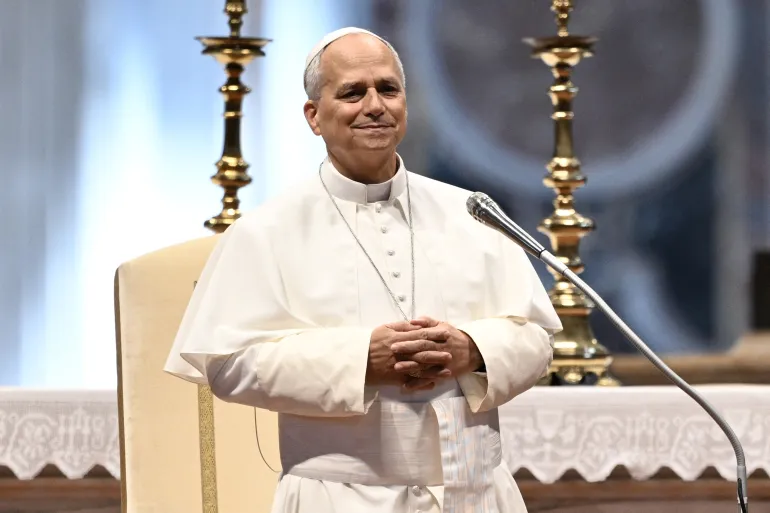
Pope Leo XIV has declared that the death penalty is “inadmissible” while his home country, the United States, announces plans to livestream an execution by firing squad.
Marking World Day Against the Death Penalty on Saturday, the pope reiterated the Catholic Church’s teaching on capital punishment, writing on X that it was “inadmissible because it is an attack on the inviolability and dignity of the person”.
“The common good can be safeguarded and the requirements of justice can be met without recourse to capital punishment,” his post said.
“Effective systems of detention have been developed that protect citizens while at the same time do not completely deprive those who are guilty of the possibility of redemption,” added the leader of the Catholic Church.
The American Pope’s comments come days after US Secretary of Defense Pete Hegseth said on Thursday that the firing squad execution of Nidal Malik Hasan on December 3 will be livestreamed.
Hasan was convicted of killing 13 people and wounding 32 others in a shooting at the Fort Hood military base in 2009.
Pope Leo did not specifically refer to the planned execution, or last month’s botched execution attempt on Christa Pike, who survived two doses of the lethal injection in Tennessee.
But his post came hours after his top deputy, Cardinal Pietro Parolin, the Vatican secretary of state, told Vatican News that the plan to livestream Hasan’s execution was “unacceptable”.
It was Leo’s predecessor, Pope Francis, in 2018 who first amended official Catholic teaching to declare capital punishment “inadmissible” in all circumstances.
[Aljazeera]

Navy Commander attends Trans-Regional Seapower Symposium in Italy

Heavy showers about (100-150) mm are likely at some places in the Central, Sabaragamuwa, Uva and Southern provinces

Elephant enrichment programme centred on the Thabbowa Reservoir proves successful
Showers above 75 mm are likely at some places in the Western, Sabaragamuwa, Central, Southern, Uva and North-Western provinces and in Anuradhapura and Mannar districts.

New prison regulations for monks serving jail terms soon: President’s Office

CP alleges NPP has taken the blame for illegal US sanctions on Iranian vessels

‘Dates have the highest sugar content to fight Coronavirus’

Sunday Island 27 December – Headlines

#SundayIsland 17th December – Headlines

Sunday Island – 28th March

Sunday Island Headlines – 21 March

Sunday Island – 21st February – Headlines
-

 Features5 days ago
The Sri Lankan who made Scottish history
-

 Features7 days ago
Preventing grievances from becoming communal
-

 Sports5 days ago
Nissanka absence opens door for Sri Lanka’s young guns
-

 News6 days ago
Gnansara Thera to be assigned to prison printing section: Officials
-

 News4 days ago
NDB fraud Rs 60mn more than reported
-

 News4 days ago
Removing monk’s robes matter for Sangha to decide: Mahanayake Theras
-

 Features5 days ago
Future of Sri Lanka’s state university system: Should it be shut down and reopened?
-
 News6 days ago
OIC of FCID summoned before Maligakanda Magistrate