
News
Preparations for SLN’s Red Sea operations will cost USD 40 mn: expert

By Rathindra Kuruwita
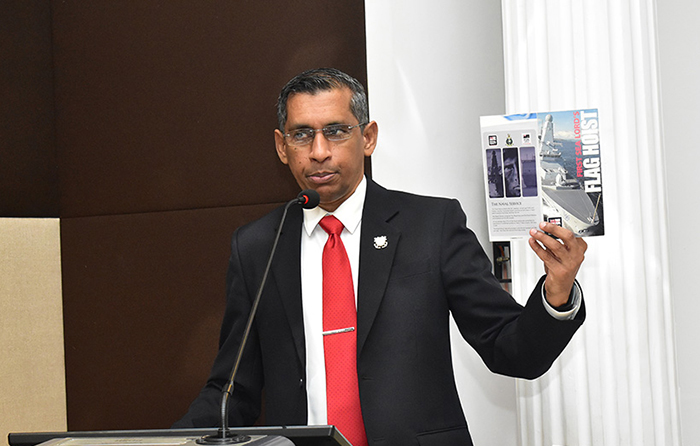
The government will have to spend about USD 40 million to upgrade the offshore patrol vessel to be sent to the Red Sea to take part in operations against the Houthi rebels, Y.N. Jayarathna, retired Rear Admiral and hydrographer, said in a televised interview this week.
The Sri Lanka Navy would be able to operate in the Red Sea if the government was willing to spend necessary funds for upgrading the ships and bear operational costs, Jayarathna said.
“We need to use offshore patrol vessels. We have these ships. During the last phase of the war, Sri Lanka decided to go after the LTTE’s floating armouries, which were almost on the South of the Equator. We sent a taskforce under Commodore Travis Sinnaiah,” he said.
Jayarathna added that the Navy had operated on the high seas to curb drug smuggling from Iran via the Arabian Sea.
When a journalist asked whether it would serve Lanka’s national interest to send ships to the Red Sea to fight someone else’s war, Jayarathna said that by sending a ship to the Red Sea, Sri Lanka was fulfilling international obligations in safeguarding sea lines of communication.
“The government has to word our mission there carefully. It will be disadvantageous if others believe we are fighting someone else’s war. We must come off as a regional Navy with the capacity to contribute to coalition patrols,” he said.
Jayarathna said Sri Lanka would have to invest in the ships to make them able to operate in the Red Sea.
“The Head of State wants the SLN to operate in the Red Sea, but does the government want to spend money? There will be operational costs, and there will be maintenance costs. The cost of diesel, alone for an offshore patrol vessel for a one-month patrol, comes to about Rs 60 million. There is a huge cost, and the government has to be ready for it,” Jayaratne said.
The retired Rear Admiral said Navies could not be built overnight and that they had to be maintained. “We have the vessels, but do we have the necessary technology? There is a lot more to be done before we are able to send the ships. We need some new equipment. We need to replace some of our obsolete equipment.”
The Sri Lankan Navy needed detection and stabilisation equipment, he said. If Sri Lanka wanted to buy the equipment quickly, it will have to pay crisis purchase prices, Jayaratne said.
“So, about USD 35 to 40 million will be needed. If the government wants naval ships to be there, the government should pay.”
The Sri Lankan Navy will not be operational in the high-intensity combat zone. But even at the periphery, Houthi rebels are using cruise and ballistic missiles.
“In the power politics of the Indian Ocean, the US and its allies want us to be in their camp. The Chinese want us to be in their camps. It seems that we are siding with the US and its allies. We can’t make decisions on impulse. The decisions we make here have repercussions. So, political masters must make wise decisions. These are not decisions that a single person is taking. A body of people must make these decisions. We don’t know what went on behind the scenes,” he said.
The volume of transshipment cargo that the Colombo Port received had gone up because ships are taking the long sea route to avoid the Red Sea, he said.
Jayarathna said that Sri Lanka should go and operate on the Northern part of the Arabian Sea, which is a main route for drugs that come here.
“This means we don’t even have to be on the periphery of the conflict area. We will be in the vicinity. This is a good opportunity for us to be there and operate for our national interest while protecting the sea lines of communications,” Jayaratne said.





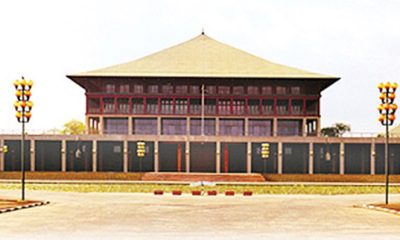








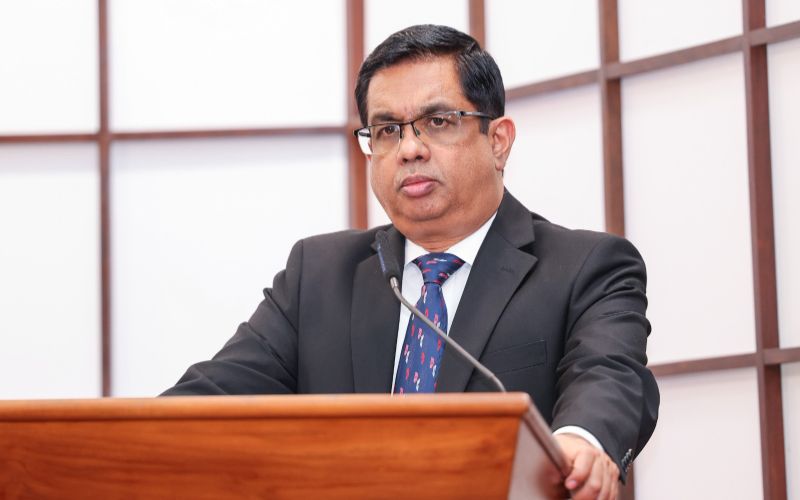
The Memorandum of Understanding (MoU) relating to the project to provide technological solutions to prevent wild elephants from being hit by trains was signed yesterday (01) afternoon at the President’s Media Centre, under the patronage of Secretary to the President Dr Nandika Sanath Kumanayake.
Coordinated through the “Clean Sri Lanka” programme, the project is being implemented as a public-private partnership, with the Railway Department, the Department of Wildlife Conservation and the Forest Conservation Department working together, with full financial support from People’s Bank.
The system consists of three-beam detection, passive infrared (PIR) sensors, automatic temperature sensors and a tamper alarm system to detect animals weighing more than 20 kilogrammes and unauthorised interference. Signal lights (red/yellow/green) installed on either side of the railway tracks, together with a special screen installed inside the locomotive cab, will alert the driver in advance to the exact location of an elephant.
A demonstration test of the system was successfully conducted at the Pinnawala Elephant Orphanage premises in the presence of the relevant officials, following which a report on the system was prepared.
The system will be implemented as a pilot project from next month at 13 locations where wild elephant accidents are frequent. A newly developed website is also scheduled to be launched to enable the progress of the project to be viewed live.
Additional General Manager of Railways P.D.S.B. Chandrasena, Director General of Wildlife Conservation M.S.L.R.P. Marasinghe, Conservator General of Forests S.C. Palamakuumbura and Chairman of People’s Bank Chandana Guniyangoda signed the relevant MoU. Officials from the Clean Sri Lanka Secretariat, including Presidential Additional Secretary (Clean Sri Lanka) Engineer S.P.C. Sugeeshwara, as well as senior officials from the Railway Department, Department of Wildlife Conservation, Forest Conservation Department and People’s Bank, were also present.
[President’s Media Division]

The Commissioner General of Examinations has announced that the results of the 2026 Grade 5 Scholarship Examination have been released online, and can be viewed on the department’s official website: www.doenets.lk

Prime Minister Dr. Harini Amarasuriya departed Sri Lanka on Monday, 31 August, to undertake an official visit to Bhutan to participate in the Global Conscious Food Systems Summit, scheduled to be held in Bhutan.
During her visit, Prime Minister Dr Amarasuriya participated in the opening plenary of the Summit on 1 September, where she delivered a keynote address under the theme “Rising to the Moment: Igniting Consciousness to Address the Polycrisis.”
The Prime Minister will also engage in discussions with international leaders and representatives on strengthening cooperation towards sustainable food systems, food security and resilient communities.

[Prime Minister’s Media Division]

Malta businessman acquitted of plotting journalist Caruana Galizia murder

Nilakshika fifty, Athapaththu seven-for rescue Sri Lanka against Indonesia

Winners to receive medals at Western Province School Games after many years

MoU signed for technology to prevent wild elephant-train collisions

Grade 5 scholarship exam results released

Prime Minister participates in Global Conscious Food Systems Summit in Bhutan

‘Dates have the highest sugar content to fight Coronavirus’

Sunday Island 27 December – Headlines

#SundayIsland 17th December – Headlines

Sunday Island – 28th March

Sunday Island Headlines – 21 March

Sunday Island – 21st February – Headlines
-

 News6 days ago
Eight politicians in drug kingpin probe
-

 Features4 days ago
“Wrap Me Up in My Blazer”— A Gentlemanly Bradby Reminiscence
-
 Business6 days ago
Sri Lanka opens up: A new season of direct connectivity
-

 Features3 days ago
When Sri Lankan stories find their own voice
-
 Latest News7 days ago
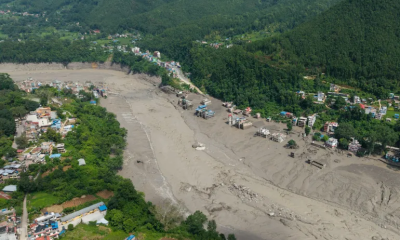
Nepal-Tibet floods: What happened, what caused them and who is missing?
-

 Features6 days ago
Redefining ageing in Sri Lanka
-

 Editorial7 days ago
Unfolding El Niño and burning issues
-

 Editorial6 days ago
The toxic legacy of two lakes