
News
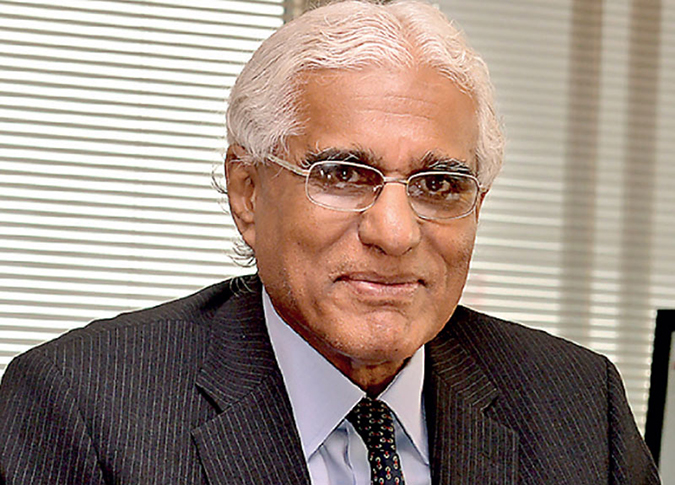
Don’t let elections distract from stabilization warns Indrajit Coomaraswamy

By HIMAL KOTELAWALA
ECONOMYNEXT – If Sri Lanka allows elections to distract from the path of recovery, stabilization and growth, the country will be hit by a fresh crisis far worse than any before, former central bank governor Indrajit Coomaraswamy said.
Speaking at a forum organized by Cal, a Colombo-based investment banking group, Coomaraswamy said on Tuesday (Sept. 5) that Sri Lanka’s election calendar has historically resulted in the reversal of progress made under the 16 International Monetary Fund (IMF) programs that SL had undertaken until the latest extended fund facility (EFF).
“Every single time there has been an election, Sri Lanka’s macroeconomic policies have become indisciplined. We’ve had 16 IMF programs before the current one. On many of them we did make progress in stabilization as we have done on this one. But as soon as an election approached, the progress that was made was reversed,” Coomaraswamy said.
“We’re supposed to be having elections next year. I hope we don’t have the same thing again. We must not allow the gains that we have made to be reversed through policy slippage.”
Critics of President Ranil Wickremesinghe and his administration have been demanding elections, but political analysts say there is no likelihood of a major election until the presidential polls due in November 2024.
Noting that Sri Lanka has never done well on structural reforms due to lack of political will in the face of the “losers’” being louder despite being fewer in number, Coomaraswamy said such reforms should now be pursued vigorously.
“Unless we do differently this time, we will not be able to get into a sustained recovery,” he said.
“This time around, if we allow elections to distract us from the path of stabilization and recovery and then sustained growth, the crisis that will hit us will be worse than anything that we’ve had in the past. It will be worse than what we had some 18 months ago. We should remember that.”
The former central bank chief called for a mould where economics is not seriously undermined by the electoral calendar.
“That has to change. If it doesn’t, we will lose what we have gained so far and the consequences will be far worse than we’ve ever experienced in the past,” he said.
Explaining why the next crisis, if it were to come to pass, would be worse, Coomaraswamy said Sri Lanka would be entering it with a far lower level of resilience, both in the economy and among the people. Next time around, he said, the impact is going to be much more painful.
“The multiple crises of the present have had such a devastating impact that we’ll be at a much much lower level of resilience going into the next one. We need to make sure we never allow that to happen,” he said.
The electoral calendar was among a series of risks that Coomaraswamy identified as possible obstacles to Sri Lanka’s recovery. Other risks he highlighted included climate risks such as the ongoing El Nino phenomenon and elevated geopolitical tensions which demand a more transparent and prudent external relations policy.
“The world has become a more tense place. That will have an impact on global supply chains and commodity prices. We need to be proactive and factor all that in and see how best to have contingency plans to cope with the impacts of this,” he said.
On the domestic front, the senior economist said Sri Lanka must achieve a primary surplus in the budget to keep the debt stock in check and must also work towards a transformation in exports, aiming at a more diversified export basket with a more complex set of products as well as a diversification of markets.
“Those two things will take us out of this twin-deficit category that we have been stuck in for many years, if we do it well,” he said.
Coomaraswamy said the programme now under way to restructure state-owned enterprises (SOEs) is also critical and should ideally move faster.
“We need to use whatever political capital is necessary to give tailwind to this process,” he said.
Coomaraswamy went on to say that Sri Lanka needs to move faster in factor market reforms, improving the investment climate and investment promotion. He also called for expediting new free trade agreements (FTAs).
“There are negotiations to convert the Indian FTA into an economic partnership agreement under ECTA (Economic and Technology Cooperation Agreement). Negotiations for an FTA with China are also ongoing, as well as with Thailand. These need to be pushed forward,” he said.
“The revitalization of the Singapore FTA is a good thing. It will give us opportunities in terms of investment as well as using that FTA to penetrate the ASEAN market, particularly in e-commerce.”
Coomaraswamy commented on President Wickremesinghe’s plans to join the Regional Comprehensive Economic Partnership (RCEP), a free trade agreement among the Asia-Pacific nations of Australia, Brunei, Cambodia, China, Indonesia, Japan, South Korea, Laos, Malaysia, Myanmar, New Zealand, the Philippines, Singapore, Thailand, and Vietnam.
“I don’t think we’ll be able to do it very quickly. The kind of reforms needed to be able to join RCEP will be quite challenging. But it’s a good aspiration to have and it’s a good signal to give to say that we’re keen on joining,” he said.
On Sri Lanka’s relations with India and proposals for a land bridge and grid connectivity on top of plans to improve sea and air connectivity, Coomaraswamy said Sri Lanka can benefit from increased connectivity with the Indian economy.
“We’ve had proximity [to India] forever but the very poor infrastructure in both countries has made transaction costs for cross border economic activity very high. India also had an inward looking strategy for a long time, but now it has its Neighbourhood First policy and its Made In India policy, all of which will create new opportunities for countries in the region,” he said, noting that transaction costs are in fact coming down with improvements in roads, railways, airports etc in both countries.
“We should make a concerted effort to piggyback onto the Indian story,” he said.
In terms of addressing corruption vulnerabilities, which is a key pillar of the ongoing IMF programme, Coomaraswamy said implementation is key.
“Laws mean nothing unless they’re implemented effectively. So it is to be seen whether the anti-corruption act which is better aligned with UN convention on corruption is implemented,” he said.
“The IMF diagnostic on addressing corruption vulnerabilities has just about been finalized. It should be shared with the government this month. Whether or not the government is serious about addressing vulnerabilities will be demonstrated in how it treats the recommendations of this diagnostics study. It will be a good litmus test for the government’s attitude,” he said.
Sri Lanka saw a 31% surge in poverty over the last four years – from four million people in 2019 to seven million in 2023, according to a study by LIRNEasia – and a number of reports have come out on increased vulnerability, child malnutrition and other indicators of socioeconomic deterioration. Coomaraswamy, while recognizing this, said however that the MF cannot be blamed. The ongoing anti-IMF rhetoric has centered its messaging around the IMF, laying the blame for all of Sri Lanka’s ongoing ills at its door.
“People blame the IMF program. People who do that fail to take into account that the country was in a very big hole before the IMF came. We had massive shortages of essentials, long queues, etc. Very severe problems. Dollar and LKR illiquidity at the time that was causing all these problems, which have been addressed to a significant extent because of the IMF program,” said Coomaraswamy.
“So you can’t blame the IMF program. These problems were there because of the hole we had fallen into and that hole was caused by various things which everybody knows,” he said, declining to elaborate on the causes.
The former central bank governor also called for a strengthened social safety net.
“When you have as big an adjustment as we have to make, when the hole is as big as the one that confronts us, there is a strong case for strengthening the social safety net upfront,” he said, adding that the ongoing Aswesuma programme should ideally have been launched sooner.
“It wouldn’t have done away with the increase in poverty and vulnerability, but it could’ve mitigated it to a significant extent,” he said.










Latest News
Workshop Explores Integration of Enterprise Development Programmes with the “Prajashakthi” National Movement

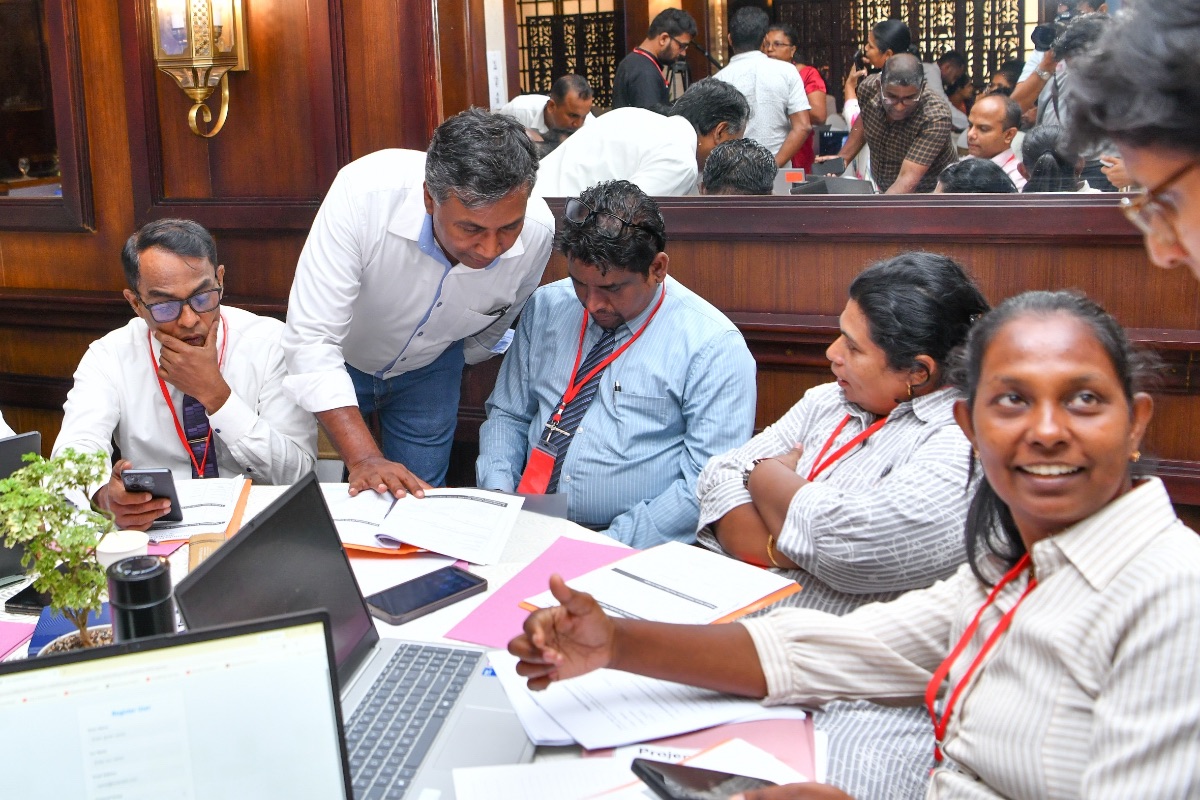
A special workshop was held today (06) at the Presidential Secretariat to explore the possibility of integrating programmes currently implemented by state institutions that directly contribute to enterprise development with the “Prajashakthi” National Movement.
Discussions focused on identifying development projects undertaken by government institutions for micro, small and medium-sized enterprises (MSMEs) and incorporating relevant information into a unified data management system.
Attention was also directed towards formulating a strategic framework for the coordinated implementation of these programmes, as well as identifying the nature, scope and eligibility criteria of the initiatives carried out by the respective institutions.
The participating government officials were further briefed on the criteria for selecting beneficiaries for programmes directly related to enterprise development.
In addition, discussions centred on identifying programmes that could be implemented independently or jointly by the relevant state institutions and the “Prajashakthi” National Movement. Particular attention was paid to preventing duplication and overlap in programme selection and implementation.
Senior Additional Secretary to the President Kapila Janaka Bandara, Secretary to the Ministry of Rural Development, Social Security and Community Empowerment Sampath Manthrinayake, resource persons Kalum Jayaveera and Madhava Muthukudaarachchi, officials of the Ministry of Rural Development, Social Security and Community Empowerment, government officials, and representatives of the Prajashakthi Secretariat were among those who attended the workshop.
(PMD)
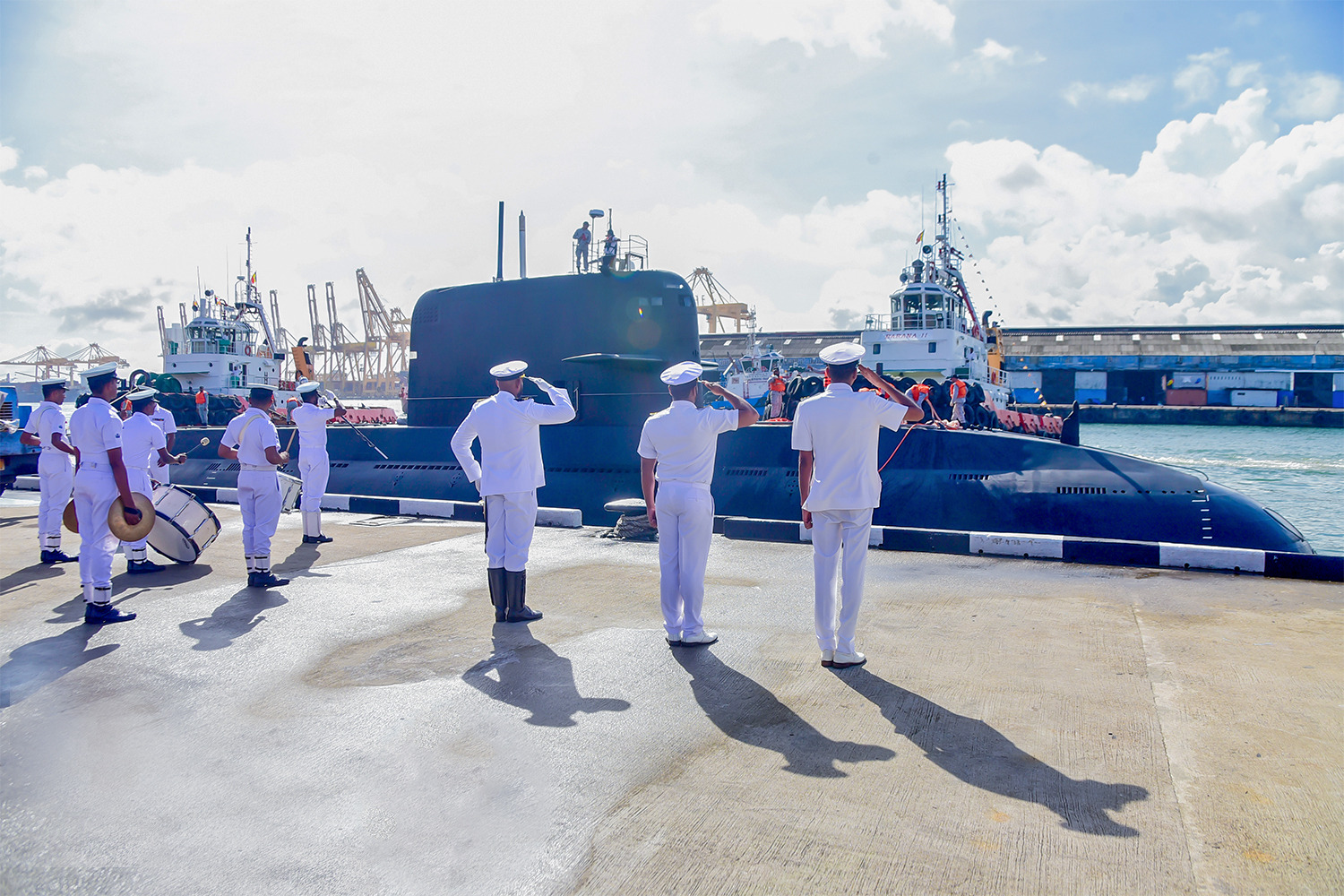
Wrapping up their goodwill and replenishment visit, the Pakistan Navy ships ‘PNS Taimur’ and ‘PNS Aslat’, along with the submarine ‘PNS/M Hangor’, departed the island on 04 Jun 26. The naval units, which arrived in Sri Lanka on 01 June, were accorded a traditional naval send-off by the Sri Lanka Navy at the Port of Colombo, upon their departure.
During their stay, the Commanding Officers of Pakistan Navy ships and submarine called on the Commander Western Naval Area and the Flag Officer Commanding Naval Fleet at the Western Naval Command Headquarters, where discussions were held on several matters of mutual interest.
Meanwhile, Sri Lanka Navy personnel had the opportunity to visit the visiting Pakistan Navy ships and submarine. Furthermore, the crews of the visiting vessels explored the rich heritage of Sri Lanka, taking time to tour several culturally significant landmarks across the island.
News
China, Lanka intensify cooperation to fight cross-border crimes spreading across Asia and beyond
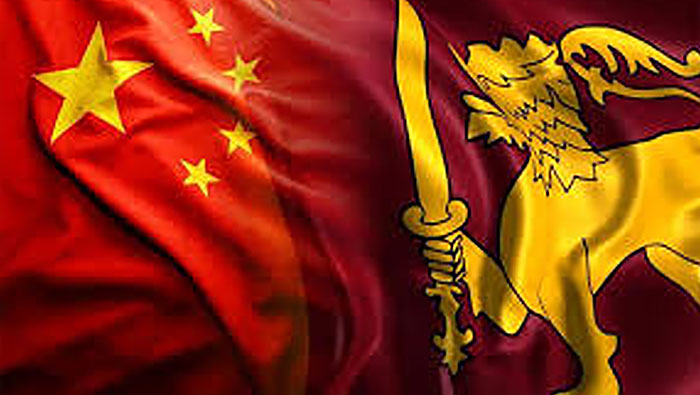
China and Sri Lanka have intensified joint law enforcement efforts to combat cross-border online gambling and telecom fraud, crimes that authorities warn are increasingly spreading across Asia and beyond.
The Chinese Embassy in Colombo said both countries are working closely to dismantle scam centres and fraud networks that have relocated to Sri Lanka from other parts of Southeast Asia. The Embassy noted that such operations often intertwine with human trafficking and other serious crimes, posing grave risks to public security and social stability.
China’s position on cross-border gambling remains firm: Chinese capital is prohibited from investing in overseas casinos, citizens are barred from operating them, and foreign casinos are forbidden from soliciting Chinese nationals. The Embassy stressed that gambling “almost invariably leads to financial ruin,” with tens of thousands of Chinese citizens suffering losses and harm. Recent amendments to China’s Criminal Law have criminalised cross-border gambling activities.
The Embassy pointed out that Sri Lankan authorities have carried out multiple raids in recent months, dismantling gambling and fraud dens and arresting suspects from several countries. Several Chinese nationals, involved in fraud-related crimes, have been handed over to Chinese authorities, producing what officials described as a strong deterrent effect.
The Chinese Embassy praised the efforts of Sri Lanka’s ministries of Foreign Affairs, Finance, and Public Security, particularly immigration and police officials, for their cooperation.
It warned that without firm and immediate measures, the spread of illegal gambling and fraud could damage Sri Lanka’s international image, undermine social stability, and harm the safety and security of its people.
China has already conducted similar law enforcement cooperation with countries including Spain, the UAE, Myanmar, and Cambodia, leading to arrests and repatriations of overseas fraud suspects. It has also proposed the creation of an international alliance against telecom and online fraud to coordinate global efforts, it said.
Going forward, China pledged to actively implement the Global Security Initiative and Global Civilization Initiative, while continuing to deepen law enforcement and security cooperation with Sri Lanka.
The Embassy said these efforts aim to safeguard lives and property, protect financial security, and build a “clean, safe, and beautiful Sri Lanka,” while contributing to a new global framework for combating transnational crime.

West Indies bowl first in drizzly Kingston; Malinga, Jangoo named in XIs

Workshop Explores Integration of Enterprise Development Programmes with the “Prajashakthi” National Movement

England make inroads after New Zealand set 254 to win

Rusty West Indies face upbeat Sri Lanka with series on the line

Pakistan naval trio leaves Colombo after goodwill visit

PEOTV secures media rights for FIFA World Cup

‘Dates have the highest sugar content to fight Coronavirus’

Sunday Island 27 December – Headlines

#SundayIsland 17th December – Headlines

Sunday Island – 28th March

Sunday Island Headlines – 21 March

Sunday Island – 21st February – Headlines
-

 News5 days ago
Lankan duo emerge winners in Latin dance championship held in Blackpool, UK
-

 Business6 days ago
IMF’s unstated rate:Sri Lanka’s $695m loan costs about 5.33% per annum
-
 Latest News3 days ago
Kusal Mendis, Pathum Nissanka, bowlers put Sri Lanka 1-0 up
-
 News3 days ago
New US tariffs proposed on 60 countries, including Sri Lanka
-

 Business6 days ago
Sri Lankan scientist-innovator Milinda Edirisinghe introduces AI-integrated gem testing system to gemological world
-

 Features7 days ago
Are threats to Buddha Sasana external or from within?
-

 News6 days ago
UNP challenges NPP move to amend Vihara – Devalagam Act
-

 Features2 days ago
Power crept into the Sangha and is now tearing it apart