
Features
First Provincial Council election, intrigue intensifies and disastrous IPKF helidrop

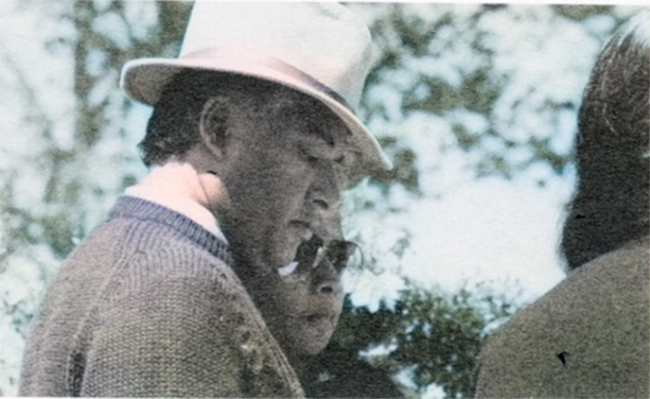
(Excerpted from volume ii of the Sarath Amunugama autobiography)
In Paris I learnt that JRJ, urged on by the Indians, had called for Provincial Council elections. He did not have the support of Premadasa who left the country on a long foreign tour telling the President that his astrologers were forcing him to leave the country as he had entered a ‘malefic period’. The SLFP too boycotted the election paving the way for Vijaya-Chandrika’s SLMP to be the chief adversary of the UNP at the hustings. As expected the UNP won the besieged election and proceeded to appoint Chief Ministers from the ranks of their second tier Parliamentarians, who deprived of the fleshpots as MPs, preferred to lord it over in their home towns and also put their hand into the till of the provincial budget.
JRJ’s earlier idea of appointing senior public servants as Chief Ministers was shot down by the Cabinet that did not welcome another set of competitors who were bound to emerge as grandees in their own bailiwicks. JRJ already enfeebled politically was in no position to oppose the politically oriented Chief Ministers who had their individual patrons in the Cabinet. He however used his authority to shift many non-performing seniors as Governors in the Provinces giving them powers to checkmate the excesses of the CMs.
Having strong Governors was a way of reinforcing the center as they were his representatives upholding the unitary nature of the State. All this had to be done in the face of implacable hostility by the JVP which unleashed its killer squads on each and every one who supported the Indo-Lanka agreement and the 13th Amendment.
In the North and East the Indians had established a client Chief Minister Varatharaja Perumal who had to bear the brunt of the LTTE assault. It was indeed a ‘time of trouble’ with murderous violence in all parts of the country. The growth model which had shown much promise was ripped apart and its chief advocates like Ronnie de Mel and Nissanka Wijeratne resigned signaling that the JRJ regime had lost its way.
While in Paris I was asked by WIF to visit the UN in New York for a consultation. Since my wife and daughter, Ramanika, were living in Rue Cambron in Paris at that time I thought of taking them also to the US as they had not been there before though they had traveled extensively in Europe. The main attraction was that my lifelong friend, Professor H.L. Seneviratne and his family had settled down in Charlottesville where the famous old University of Virginia was located. This was a University established by Thomas Jefferson and was one of the oldest in the country.
After my meeting in New York we took a train through Washington to the American South, past many famous civil war battle sites, to Charlottesville where we were met by the Seneviratnes. This was my first visit to the south though later as Minister of Finance I would visit Washington at least twice a year for IMF and World Bank meetings. Most times I would spend those intervening weekend holidays with the Seneviratnes in Charlottesville. At that time it was a peaceful small University town and certainly not the hate mongering venue of Trump’s fanatics that it later became.
Virginia is famous because Jefferson’s home and farm were located there. Many important events relating to the early days of the Republic are associated with his home which was called ‘Montecello’. We visited ‘Montecello’ which is now a historical site. Jefferson is reputed to have had a tolerant view of race relations, even having a black mistress who was relocated to Paris. The University of Virginia which was a brainchild of Jefferson was partly designed by him. Today it is better known because Edgar Allan Poe lived and wrote his macabre poems there.
We spent a wonderfully peaceful holiday with our lifelong friends and flew back to Paris and its bustling social life. This included visits by Lester and Sumitra Peries who were recognized as leading Asian film makers and promoters of serious cinema, especially after the incapacitation and eventual death of Satyajit Ray. I remember a visit to the Nantes film festival which had the Asian Cinema as its theme that year. We drove all the way and back in the Ambassador’s car and had a chance to enjoy the French countryside as well as provincial cuisine in small inns along the way.
A fellow participant at these French film festivals was Adoor Gopalakrishnan who was a friend of Lester and Sumitra and an award winner for his simple tales of South Indian life which were a welcome relief from the mega Hindi and Tamil extravaganzas which made India [Bollywood] a bigger film producer than Hollywood. But they were not recognized as art by the managers of French Film festivals.
Political Intrigues
I went back to Colombo to find it seething with intrigue. The Prime Minister was making it clear that he did not approve of the decisions of the President regarding the Indo-Lanka issue. Relations between the two had deteriorated to such an extent that they were loath to talk to each other. Premadasa appeared to be planning to make his own bid, if his claims for Presidential nomination were overlooked byJRJ and the party. He started using a different color [saffron] to distance himself from the ‘greens’ in his publicity campaign. This was replicated when he painted bridges and buildings constructed by his ministry in saffron.
Premadasa also started to build up his own coterie of supporters within the parliamentary group. He had banked heavily on senior Justice Raja Wanasundera prevailing on his colleagues of the Supreme Court to call for a referendum regarding the 13th amendment. When that failed he made it clear to the country that his heart was not in the Provincial Councils as he had been the progenitor of the concept of empowering the Pradeshiya Sabhas which he supervised as the Minister of Local Government. In spite of the political imperatives for devolution, particularly to the North and East, Premadasa saw no need for a second tier represented by the Provincial Councils.
At last JRJ appeared to be retaliating when he removed the PM’s favourites Sirisena Cooray and Mallimaratchchi from the working committee of the UNP. He also overlooked Wanasundera’s claims and appointed Parinda Ranasinghe as the Chief Justice. Insiders knew that it was a blow aimed at the PM. With Premadasa sulking in his tent and Ronnie de Mel resigning his crucial portfolio when the President was isolated, JRJ was in an unenviable position. But he was making his political calculations and realized that Premadasa’s candidature was necessary if the UNP was to face the looming presidential election successfully.
In this he was fortified by the views of Mrs Jayewardene and her ’round table’ in Braemar which echoed the public perception that without the Prime Minister as candidate UNP chances of victory were slim. All this confusion was adding to the confidence of the JVP and its military wing which was going on the rampage particularly in the south against both the UNP and the traditional left. Later when Mrs. Bandaranaike refused to accept JVP conditions during their dialogue with the SLFP, the JVP turned on her as well and even hatched plans to assassinate her.
Violence Intensified
This was perhaps the most unsettling period in JRJ’s two terms of office. He was constantly disturbed by daily reports from the countryside. In the south the JVP was threatening to bring the administration to a halt. In the North the IPKF was increasingly acting on their own and could not be controlled either by the President or by Dixit the Indian High Commissioner.
The Indians were severely embarrassed by their inability to militarily defeat the LTTE which was inflicting heavy blows to the IPKF. The IPKF in the early stages was manned by ‘peacekeepers’ rather than fighting generals and senior military staff officers. They were more keen on winning the ‘hearts and minds’ of the LTTE than in fighting them.
RAW intelligence was of little use because the LTTE were outsmarting them. This inadequacy was clearly seen in the Indian para drop which was planned at their highest levels to eliminate the LTTE leadership, which I will describe later. While this turn of events tended to isolate JRJ, he turned to Gamini Dissanayake as a reliable ally and a credible interlocutor with the Indian High Commissioner and New Delhi. I was drafted by Gamini to be his advisor at this difficult time. We did not know at that time that JRJ had authorized Lalith Athulathmudali to open negotiations with the JVP to end their violence by lifting the proscription and electing a new Parliament.
He would accommodate the JVP which would be given three portfolios. In this the JVP even scared the SLFP when they demanded the portfolio of Defence. Lalith jumped the gun and announced a successful result with a representative of the JVP leadership. But the JVP denied any involvement and the purported negotiator fled the country.
It was later found that if the JVP had been given more time for their internal consultations a deal may have been concluded .This period was traumatic for JRJ because his party network built up as his political legacy which he referred to when he boasted that ‘the countries electoral map’ could now ‘be rolled up’ echoing Napoleon’s claim that he had rolled up the map of Europe, was being dismantled through violence by the JVP. This was clear when the UNP Chairman and Secretary who had been handpicked by JRJ were assassinated within a few weeks of each other. His response was to appoint the military trained Ranjan Wijeratne to hold both these positions.
I was present in ‘Braemar’ when JRJ received the news that his Mirissa retreat ‘Red Cliffs’ had been burnt down with all the antique furniture in it. He was disturbed by the irrationality of it all. The MPs and party leaders of the South met him and demanded stern measures. The MP for Habaraduwa, Mr. GVS Silva had been killed a few days earlier. They asked for police powers of an ASP. Gazetted officers were authorized to bury victims without an inquest under Emergency powers. It is an indication of the critical state of affairs of that time that JRJ was willing to give into them. The note that he penned agreeing is now in my possession.
However Sepala Attygalle who had been summoned for this conference argued against issuing that order on the grounds that it would confuse the armed services and the police. He prevailed when he gave an assurance that he would personally respond to requests for the safety of the MPs and their supporters.
IPKF Helidrop
Perhaps the biggest debacle of the IPKF in their war in Sri Lanka was the air drop of its elite paratroopers onto the grounds of the Jaffna campus with the objective of eliminating the leaders of the LTTE. It is an irony of history that the food drop from the air into Jaffna which humiliated JRJ (Parippu drop) was matched by the disaster of the Indian helidrop which humiliated the Indian army and is considered even today as a low point in its modern history. I can recount here what happened that day because by chance I became the liason between the Indian High Commissioner and JRJ that fateful evening.
CHOGM or the conference of Heads of Commonwealth governments was to be held in Vancouver in mid October 1987. JRJ was very keen to attend this meeting because Rajiv Gandhi and Margaret Thatcher were to attend and he could discuss the local conflict, which was going from bad to worse, at the level of heads of state. He had made plans to leave that very night for Vancouver on an assurance given by Dixit that the LTTE will be decisively beaten in Jaffna following the helidrop. Perhaps the plan, which would have been approved by Rajiv himself, was for him to go with an IPKF victory to the Vancouver meeting with JRJ.
JRJ asked me to personally proceed to the Indian High Commissioner’s residence and get the latest information on the air drop. 1 drove to Dixit’s residence to find him deep in conversation with General Sunderjee who had come to Colombo to oversee the IPKF offensive planned to give a decisive turn to the northern war. ‘The Indians were severely challenged by the LTTE fighters – an intolerable situation for the biggest fighting force in South Asia.
Sunderjee was a small made but physically trim and active general who was in Colombo in his army uniform with Dixit signifying that he was actively engaged in the operation. He wanted me to inform JRJ that everything was going according to plan and that he could leave for the Vancouver meeting early in the morning.
I reported this to JRJ but he was anxious to get an assurance from Dixit himself and wanted me bring him to “Breamar”. So I drove Dixit and Sunderjee in my car to JRJs residence and after their brief meeting drove them back to India House and went home to sleep.
When I got up the following morning all hell had broken loose. Acting on RAW information that the LTTE were to meet in their office in a building on the Campus of Jaffna University, crack Indian paratroopers were airdropped to round up the LTTE central committee which would have meant the virtual end of the fighting.
The top LTTE leadership was to have been arrested and held in Indian custody. But this plan had gone horribly wrong notwithstanding the confidence of Sunderjee and Dixit. What had happened was that information regarding the airdrop had been leaked and the LTTE gunmen were ready and waiting to shoot at the descending Paras who were sitting ducks as they floated down from the Jaffna skies. Suspicion fell on the Indian army top brass in the North. Many of them were “peace keepers” not fighting units and they had established close ties with LTTE leaders.
After the debacle military inquiries showed their incompetence and some officers were cashiered and others were shunted aside. After retirement some of these officers published their memoirs and sought to justify their activities in Jaffna. But they were not believed and were later seen at seminars in New Delhi intervening vehemently when the airdrop disaster was discussed. Let us listen to General Shanta Kottegoda on the Helidrop fiasco.
“The LTTE having intercepted the IPKF radio communication had prior information of the impending raid and fortified the defences in the University and were prepared to take on the IPKF. When the airborne troops landed in the University complex they came under heavy fire from small arms, machine guns and snipers of the LTTE from all directions. The IPKF could only helidrop the first group of paracommandos and had to abort the air operation. The operation ended in disaster and the IPKF lost almost 35 men who died in action”.
In the event JRJ did not go to Vancouver as planned. He nominated Gamini Dissanayake to take a message to Rajiv much to the annoyance of Hameed who was the nominal leader of our delegation in JRJs absence. One can speculate that this airdrop disaster marked the “crossing of the Rubicon” as far as both the Indian Government and the LTTE were concerned. The Indian army intensified its attacks on the LTTE. The LTTE in turn killed 25 `Jawans’ in Mannar. Prabhakaran and his intelligence units may have decided that they would not have traction with Rajiv who was therefore to be assassinated. It also marked the depths of despair of the proud Indian Army and is recorded as a “black mark” in its history. General Sunderjee retired not long after.


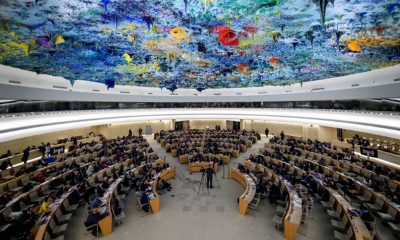






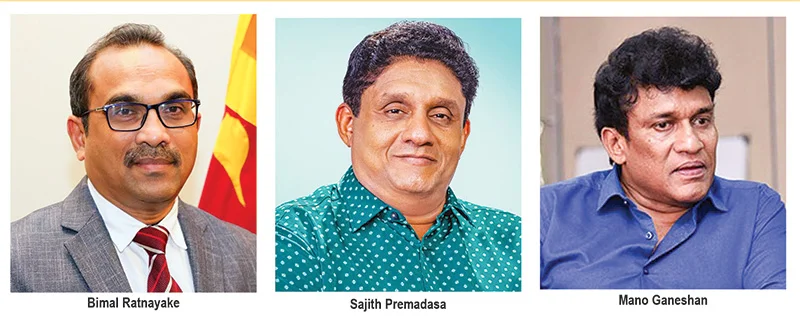
At a symposium on reconciliation organised by the National Peace Council last week, more than 250 religious clergy, civic activists and political representatives from different communities gathered to discuss the country’s future. Speaking at the event, Minister Bimal Rathnayake explained the government’s approach to national reconciliation. He said the government viewed the country’s recovery in terms of a three stage process. The first stage was stabilisation, the second was development and the third was transformation. Reconciliation, he implied, would come in that final stage. The participation of Opposition Leader Sajith Premadasa at the same symposium, and the constructive nature of his comments, strengthens that hope.
When the present NPP government took office in 2024, the country was emerging from one of the gravest crises in its post Independence history. The economic collapse of 2022 had led to shortages of fuel, food, medicines and electricity. Inflation soared, foreign reserves disappeared and long queues became part of daily life. The political upheaval that followed culminated in the resignation of former President Gotabaya Rajapaksa after mass public protests under the banner of the Aragalaya movement. The country was then governed by a leadership that spoke the language of reform and reconciliation but was widely perceived as lacking a direct popular mandate.
Sri Lanka’s past experience suggests that stabilisation and transformation cannot be treated as entirely separate stages. Postponing reconciliation until some future moment risks repeating the failures of the past. If transformation is endlessly delayed until a supposedly perfect moment arrives, there will always be new crises and new reasons for postponement. Minister Rathnayake’s contention that the government’s immediate priority has necessarily been stabilisation flows from the government’s awareness of the precarious situation the country is. Over the past two years, the government has succeeded to a significant extent in restoring economic and political stability. Inflation has reduced, shortages have ended and public institutions have regained a degree of functionality.
Guaranteed Changes
On the other hand, the country’s development continues to face challenges due to adverse global conditions, including disruptions caused by conflict in the Middle East and extreme weather events that have affected tourism, trade and the cost of living. The danger is that reconciliation may be indefinitely postponed in the name of stabilisation. This danger can be reduced if the government works proactively with the opposition and civil society to commence practical measures of transformation now rather than later. The participation of Opposition Leader Sajith Premadasa at the symposium, and the constructive nature of his comments, has strengthened the sense that bipartisan engagement on reconciliation may now be possible.
The urgency of transformation came through strongly in the presentations made by representatives of the Sri Lanka Tamil and Malaiyaha Tamil communities. ITAK parliamentarian S.Shritharan spoke of the frustration caused by unresolved post war issues in the north and east. He referred to disputes regarding land occupied during the war years, including controversies linked to Buddhist temples and state sponsored settlement activity in areas claimed by local communities. He also pointed to the continuing large scale presence of the security forces in the north and east nearly two decades after the end of the war. These grievances have remained central to Tamil political discourse since the end of the armed conflict in 2009. Families displaced by war continue to seek the return of ancestral lands. Civil society organisations in the north have repeatedly called for greater civilian control over local administration and a reduction in military involvement in civilian life.
Academic research and practical work on the ground have shown that reconciliation cannot be separated from questions of dignity, equality and justice. Former minister Mano Ganesan, leader of the Democratic People’s Front, focused on the longstanding problems faced by the Malaiyaha Tamil community. He spoke passionately about continuing housing shortages, landlessness and economic marginalisation, issues that have persisted since Independence. He also highlighted the devastating impact of recent extreme weather events on estate communities that remain socially and economically vulnerable. The condition of the Malaiyaha Tamil community remains one of the enduring social justice issues in Sri Lanka.
After Independence in 1948, a large proportion of them were denied citizenship and voting rights through legislation that rendered them stateless. Though citizenship rights were eventually restored, the social and economic consequences of exclusion continue to be felt generations later.
Many families still lack secure housing and land ownership despite their immense contribution to the country’s plantation economy. Minister Rathnayake’s responses to both these concerns were politically significant. He argued that recent political developments, including the declining influence of narrow ethnic politics across communities, indicated a major shift in public attitudes. According to him, the political ground has changed in ways that make it increasingly difficult for politicians who rely primarily on ethnic division and communal insecurity to retain public support.
Inter-Connected
There is evidence to support the assessment about the changing political grounding which sees future prospects in the resolution of long standing problems. . The economic collapse of 2022 affected all communities alike and generated a new politics centred on governance, anti corruption, accountability and economic justice. The Aragalaya protests brought together Sinhalese, Tamils and Muslims in a common demand for political change. Although ethnic grievances have not disappeared, the crisis created space for a broader understanding that the country’s future depends on cooperation rather than division. Opposition Leader Premadasa’s comments at the symposium reflected this changing political climate. He emphasised that national reconciliation could not be separated from economic justice and the need to address disparities between regions and social classes.v He also mentioned the need for civil society organisations to take this message to the community. This wider understanding of reconciliation is important because ethnic inequality and economic inequality have often reinforced each other in Sri Lanka’s history.
Academic studies have identified the denial of citizenship rights after Independence as a historic injustice that set back the Malaiyaha community for decades. The challenge now is to ensure that transformation becomes part of the stabilisation and development process itself. Practical first steps are both possible and necessary. The release of civilian lands still under state control, greater devolution of administrative authority, reduction of military involvement in civilian affairs, language equality in public administration and accelerated housing and land ownership programmes in the plantation sector are all measures that can begin immediately without waiting for a final stage of transformation.
The government’s recent commitment that provincial council elections will finally be held this year is therefore significant. These elections have been repeatedly postponed by successive governments. Holding them would not solve the ethnic conflict by itself. But it would signal a willingness to restore democratic institutions and share power in a meaningful way.
Sri Lanka has repeatedly postponed difficult reforms in the hope that a more convenient political moment would eventually arrive. But opportunities are invariably created and fought for instead of being provided as a gift by a benevolent government.
The present moment, shaped by the economic crisis and public demand for accountable government, offers a rare opportunity to move simultaneously towards stability, development and reconciliation. Provincial council elections can be the first meaningful step. But they must not be the last.
by Jehan Perera
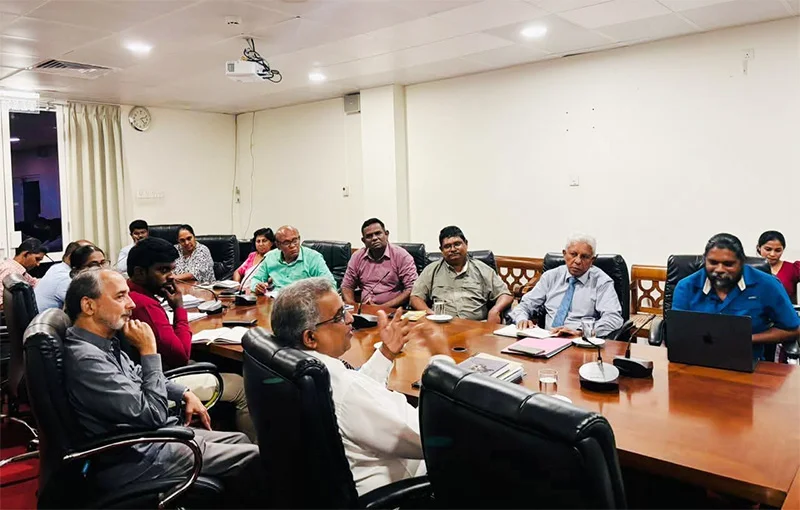
In a significant move aimed at steering Sri Lanka’s environmental governance towards a more science-based and evidence-driven path, the Ministry of Environment has initiated a new collaborative mechanism to integrate leading researchers into national policy formulation and conservation planning.
The initiative was discussed at a high-level meeting chaired by Dr. Dammika Patabendi at the Ministry of Environment on Tuesday, where top environmental scientists, wildlife experts and researchers were invited to contribute towards what officials described as a “strategic transition” in the country’s environmental management framework.
The discussions focused on strengthening the scientific basis of environmental conservation programmes and national policy decisions while creating a more research-friendly environment for academics and field scientists engaged in biodiversity and ecological studies.
Particular attention was paid to long-standing concerns raised by researchers regarding procedural and operational difficulties encountered when conducting studies in collaboration with the Department of Wildlife Conservation and the Forest Department.
Minister Patabendi stressed the need for environmental policies to be guided by credible scientific data rather than ad hoc administrative decisions, ministry sources said.
Among the key proposals discussed was the establishment of a streamlined mechanism that would reduce bureaucratic obstacles faced by researchers in obtaining approvals, accessing field sites and sharing scientific findings with state institutions.
The Minister highlighted the importance of building stronger partnerships between policymakers and the scientific community at a time when Sri Lanka is grappling with escalating environmental challenges including deforestation, biodiversity loss, human-elephant conflict, climate-related disasters and ecosystem degradation.
Environmentalists attending the meeting had also highlighted the urgent necessity of incorporating empirical research into national decision-making processes to ensure long-term ecological sustainability and better resource management.
The meeting brought together several of Sri Lanka’s leading environmental researchers and academics including Rohan Pethiyagoda, Saminda Fernando, Sewwandi Jayakody, Samantha Gunasekara, Dinidu Devapura, Himesh Jayasinghe, Manoj Prasanna, Mendis Wickramasinghe and Suranjan Karunarathna.
Director General of Wildlife Conservation Ranjan Marasinghe also participated in the deliberations.
Officials said the proposed framework is expected to pave the way for a more transparent, data-oriented and scientifically credible environmental governance structure capable of addressing emerging conservation challenges more effectively.
The government expects the new mechanism to support the implementation of practical and scientifically robust programmes aimed at safeguarding Sri Lanka’s ecological future while enhancing cooperation between state agencies and the country’s growing community of environmental researchers.
By Ifham Nizam
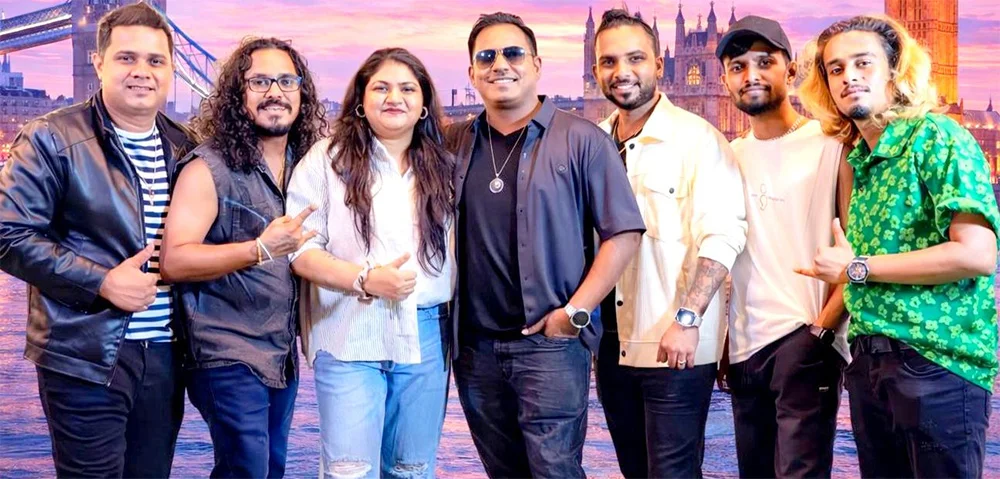
 Niluk Uswaththa, of Seven Notes fame, based in Dubai, surprised many when he and his wife Apeksha, turned up in Colombo, last week … unannounced.
Yes, they had a purpose in their surprise visit … to wish Apeksha’s mum for her birthday, which was on Monday, 18th May, and what a surprise it turned out to be!
In an exclusive chit-chat with The Island, Niluk said that the scene in Dubai is improving and Seven Notes do have work coming their way.
Since the members of Seven Notes are all employed (doing day jobs), they operate only on Saturdays and Sundays.
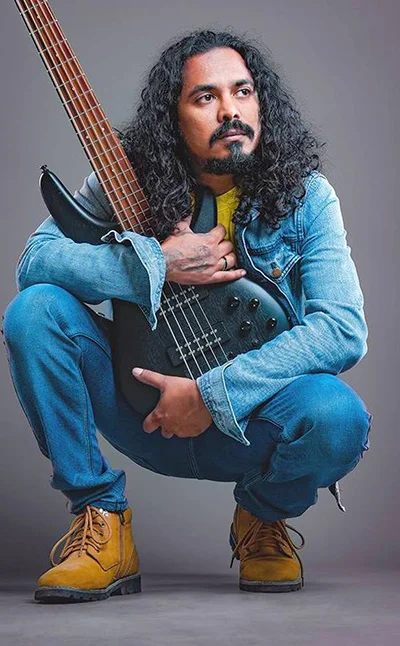
Niluk: Didn’t come prepared to perform, but obliged
friends in Galle
In fact, to get to Colombo for the birthday surprise (on Monday, 18th May), the band had to skip their 17th May, Sunday gig.
“Although it’s a short vacation, my wife and I are enjoying the setup here,” said Niluk, adding that they spent two days in Galle and that their next destination is Anuradhapura.”
Niluk didn’t come prepared to perform, but he obliged the crowd present, at a friend’s birthday celebrations, in Galle, singing and playing guitar.
They are scheduled to leave for their home, in Dubai, in the first week of June.
Seven Notes is an outfit made up of Sri Lankans and the band has been around for almost nine years.
Niluk came into their scene nearly seven years ago.
“When I went to Dubai, I had offers coming my way but it was Seven Notes that impressed me because of their acoustic style.”
The Dubai’s entertainment scene is showing clear signs of bouncing back and even levelling up in the next few months.
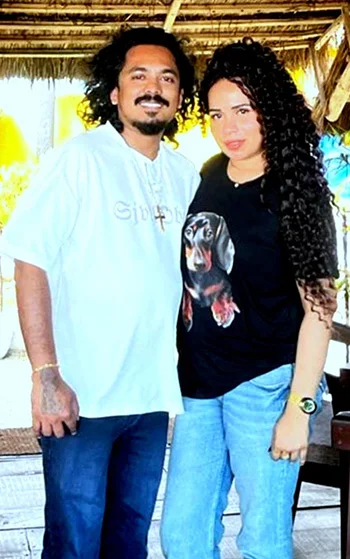
Niluk and Apeksha: Enjoying their short vacation
After a slowdown earlier this year due to regional tensions, shows and festivals are back on the calendar, and organisers say late 2026 could be the busiest concert season in years.
Time Out Dubai says “the 2026 concert calendar is filling up nicely” and “the city is ready to party once again” after some reschedules.
Dubai Summer Surprises in July brings retail activations, comedy nights, and indoor art exhibitions.
Organisers point to a backlog of postponed events that are being rescheduled for late 2026 and early 2027.
Yes, Dubai is calm on the surface but on alert. Life is mostly normal in the city, but there’s a “balancing act” as people watch for escalation.

Cabinet approves sale of Paddy stocks held by the Paddy Marketing Board
Amendment to the Promotion of Export Agriculture Act, No. 46 of 1992 to be gazatted
Ms. M.K.D.N. Madampe, appointed as Director General of the Department of Management Services

Cabinet approves collaboration agreement between Sri Lanka and Brazil for the implementation of the “Sugarcane Project in Sri Lanka”
Cabinet approval for Implementation of a Project for the Joint Exchange of Genetic Resources between Sri Lanka and Vietnam and the Development of High-Yielding and Salinity-resilient Rice Varieties.

Landslide Early Warnings issued to the Districts of Kalutara, Kegalle, Nuwara Eliya and Ratnapura extended till1600 hrs on Wednesday [27]

‘Dates have the highest sugar content to fight Coronavirus’

Sunday Island 27 December – Headlines

#SundayIsland 17th December – Headlines

Sunday Island – 28th March

Sunday Island Headlines – 21 March

Sunday Island – 21st February – Headlines
-
 Features7 days ago
Octopus, Leech, and Snake: How Sri Lanka’s banks feast while the nation starves
-
 Sports7 days ago
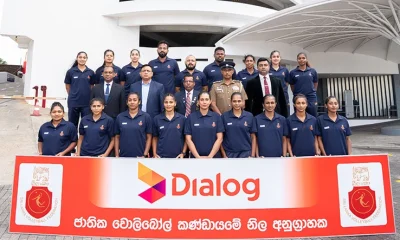
Sri Lanka women’s volleyball team ready for Central Asian challenge
-
 Opinion6 days ago
Murder of Ehelepola family, Bogambara Wewa and Sightings of Wangediya
-

 Business5 days ago
Historic launch of CCWE Fashion Week & International Summit 2026
-
 News6 days ago
Steps underway to safeguard Sri Lanka’s maritime heritage
-
 News2 days ago
Police probe underway to ascertain links between criminals deported from UAE and local politicians
-
 Features3 days ago
The NPP’s pivot to the past
-

 Editorial6 days ago
A play without its protagonist