
Foreign News
‘Inch by inch’: Myanmar rebels close in on key military base in Chin State

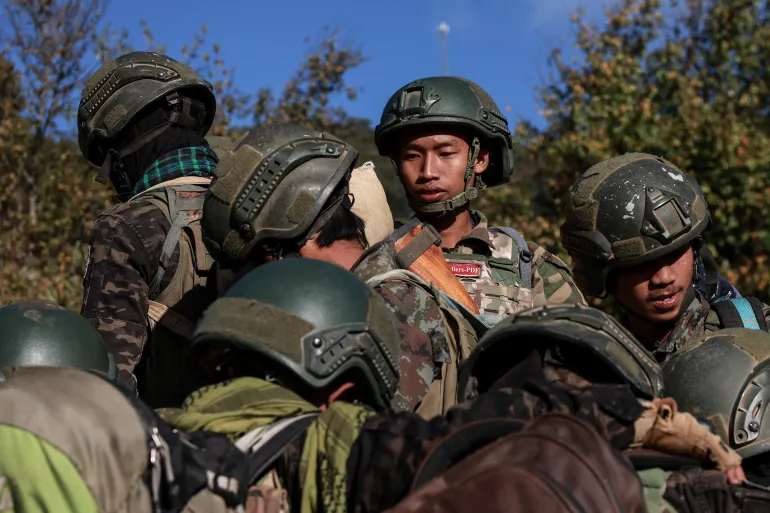
In the mountains of western Myanmar, photographs of fallen fighters line a wall of a rebel headquarters – an honour roll of some 80 young men, beginning with 28-year-old Salai Cung Naw Piang, who was killed in May 2021.
The true toll on the Chin National Defence Force (CNDF) extends beyond this hall and grows as war against Myanmar’s military grinds on in Chin State – a Christian region of the country bordering India where ethnic Chin fighters have expelled the military from most of their territory.
“Even if they don’t surrender, we will go till the end, inch by inch,” CNDF Vice President Peter Thang told Al Jazeera in a recent interview.
Launched in mid-November, the Chin offensive to capture the town of Falam – codenamed “Mission Jerusalem” – has come at a heavy cost. About 50 CNDF and allied fighters were killed in the first six weeks, some buried alive after direct air strikes by jet fighters of Myanmar’s military regime on earthen bunkers, Thang said.
Thang estimated similar casualties among Myanmar’s military, and more than 100 government soldiers captured, in the continuing operation.
Formed by civilians to fight the military after the 2021 coup in Myanmar, the CNDF has encircled the regime’s last garrison in a hilltop base in Falam.
“We are facing a difficult time,” Thang admitted.
“If God is willing to hand over the enemy, we will take it,” he said of Mission Jerusalem’s ultimate objective.
Taking and holding Falam – Chin State’s former capital – would also mark the first district centre captured by the country’s new rebel forces without support from established ethnic armies, according to Thang, who ran a travel agency in Myanmar’s commercial capital Yangon before the coup.
“We have more challenges than others,” he said.
“The military has so much technology. We have limited weapons, and even some of them we can’t operate,” he added.
![Peter Thang, Chin National Defence Force (CNDF) vice president, sits in front of the CNDF flag during an interview in a village at the frontline in Falam, Chin State, Myanmar, January 2, 2025. [Valeria Mongelli/Al Jazeera]](https://www.aljazeera.com/wp-content/uploads/2025/03/AB5A6226-1742020482.jpg?w=770&resize=770%2C513&quality=80)
With the CNDF supported by fighters from 15 newly formed armed groups, including from Myanmar’s ethnic Bamar majority, about 600 rebels have besieged Falam and the roughly 120 government soldiers who, confined to their hilltop base, depend on supplies dropped by helicopter for their survival.
Unlike established ethnic armies who are fighting to gain more territory for themselves, the rebel forces massed in Chin State said they aim to overthrow Myanmar’s military regime entirely.
While the CNDF and allies in the Chin Brotherhood (CB) coalition scored previous victories against the military with help from the powerful Arkan Army [AA] to thesouth in Rakhine State, seizing Falam independently would represent a new phase in Myanmar’s revolution.
But the biggest challenge in the battle remains aerial attacks by the military.
Operations against the hilltop base in Falam trigger bombardments from the military’s Russian and Chinese fighter jets, along with rocket-propelled grenades, artillery, sniper and machinegun fire from troops defending the outpost.
![A Chin National Defence Force (CNDF) fighter points to the Myanmar military's base in Falam, Chin State, Myanmar, December 31, 2024. Peter Thang, Chin National Defence Force (CNDF) vice president, sits in front of the CNDF flag during an interview in a village at the frontline in Falam, Chin State, Myanmar, January 2, 2025. [Valeria Mongelli/Al Jazeera]](https://www.aljazeera.com/wp-content/uploads/2025/03/0H1A3676-1742020649.jpg?w=770&resize=770%2C513&quality=80)
CNDF commanders told how the besieged soldiers once chatted freely with locals and some had even married local Chin women. But that all changed when Myanmar’s security forces shot peaceful protesters demonstrating against the military’s ousting of Aung San Suu Kyi’s elected government in 2021.
Demonstrators fought back, and an uprising was born that has become steeped in blood and the lore of many martyrs.
Mya Thwe Thwe Khaing, a 19-year-old protester, was the first victim – shot in the head by police on February 9, 2021 in the country’s capital, Naypyidaw.
In April 2021, armed with hunting rifles, the Chin launched the first significant battle of Myanmar’s uprising in Mindat town, which has since been liberated.
Now the rebels are equipped with assault rifles and grenade launchers. They control most of the countryside and several towns, but remain outgunned, as the military entrenches itself in urban centres. Unable to launch ground offensives from their depleted ranks, the regime’s generals have turned to forced conscription and indiscriminate air strikes nationwide.
According to rights group the Assistance Association for Political Prisoners, the military has killed at least 6,533 civilians since the coup. With at least 3.5 million people displaced inside the country, according to the United Nations, observers predict even fiercer fighting this year.

In Falam, CNDF defence secretary Olivia Thawng Luai said spouses live with some of the soldiers in the surrounded hilltop holdout.
“Most soldiers want to leave their base but they are under the commander’s control,” said Olivia Thawng Luai, a former national karate champion. “They aren’t allowed to leave the base or use their phones,” she said.
Another senior CNDF figure, Timmy Htut, said the commander in the besieged base still has his own phone – and the rebels call his number regularly.
“One day he will pick up,” he said. “When he’s ready.”
Attempts by the military to send reinforcements to Falam have failed. Helicopters, facing sheets of gunfire, have dropped conscripted airborne recruits on Falam’s outskirts, ordering them to fight their way into the town. None has succeeded.
![Olivia Thawng Luai, Chin National Defence Force (CNDF)'s defence secretary, is portrayed in a village at the frontline in Falam, Chin State, Myanmar, January 1, 2025. [Olivia Thawng Luai, Chin National Defence Force (CNDF)'s defence secretary, sits in front of the CNDF flag during an interview in a village at the frontline in Falam, Chin State, Myanmar, January 1, 2025 A Chin National Defence Force (CNDF) fighter stands on the ruins of a church bombed by a Myanmar military jet in Falam township, Chin State, Myanmar, December 31, 2024. [Valeria Mongelli/Al Jazeera]](https://www.aljazeera.com/wp-content/uploads/2025/03/AB5A6023-1742020999.jpg?w=770&resize=770%2C513&quality=80)
A captured soldier said his unit was dropped in without a plan, and, under heavy fire and pursued by resistance fighters, they scattered in chaos.
“Some died, others ran in all directions,” the soldier told Al Jazeera.
“The headquarters said they couldn’t waste their jet sorties for just a few of us,” he said. The military, he continued, has lost “many skilful, valuable” soldiers since the coup.
“They gave their lives for nothing,” he said.
“In the end, the military leaders will offer peace talks, and there will probably be democracy.”
Among the people displaced by fighting in Falam, and who are forced to shelter under bridges and tarpaulins, a new generation prepares to fight.
Junior, 15, who assists at a Chin hospital camp, spoke from an air raid shelter within earshot of jets dropping bombs.
“I’ll do whatever I can,” Junior said. “There’s no way to study in Myanmar. I don’t want future generations to face this,” she said.

But the Chin resistance is also grappling with internal division. It has split into two factions: one led by the Chin National Front (CNF), established in 1988, along with its allies, and the other, the Chin Brotherhood, comprising six post-coup resistance groups, including the CNDF.
Their dispute centres on who shapes Chin’s future – the CNF favouring a dialect-based governance structure, the CB preferring the governing of townships. This distinction between language and land determines the distribution of power, and, coupled with tribal rivalries and traditional mistrust, has led to occasional violent clashes among the Chin groups.
Myanmar analyst R Lakher described the divide as “serious”, though mediation efforts by northeast India’s Mizoram authorities show progress.
On February 26, the two rival factions announced they would merge to form the Chin National Council, with a goal of uniting different armed groups under one military leadership and administration.
While welcoming the development, Lakher stressed the process must be “very systematic” and include key political leaders from either side, not only advocacy groups.
“Chin civilians have suffered most,” he said. “Despite liberation, some cannot return home because of this internal conflict.”
Capturing Falam would be “significant”, he said, as nearby Tedim town would then present an easier target, potentially freeing up more territory for the CB and strengthening their negotiating position with the CNF coalition.
Lakher estimated more than 70 percent of Chin State has been liberated.
“We’ve seen the junta being defeated across Myanmar,” he said. “But pro-democracy forces need unity.”
He said the onus was on the National Unity Government – described as Myanmar’s shadow government – to “bring all democratic forces together”.
“With so many armed groups, there’s concern they’ll fight each other without strong leadership,” he said. “Ethnic areas are being liberated while Bamar lands remain under military control. The revolution’s pace now depends on the Bamar people.”

Along the road leading out of Falam town, two trucks loaded with captured regime soldiers drove past Chin’s bombed churches, gardens of mustard leaf, and mothers cradling babies under heavy shawls. As the trucks crossed paths with resistance fighters heading to the front, the nervous prisoners of war claimed they had been forced into military service.
“You were conscripted five months ago,” a rebel fighter remonstrated with prisoners in the truck. “What were you doing before then? he asked. He then added: “We’ve been fighting the revolution.”
Another rebel joined in the rebuke.
“Count yourselves lucky to be captured here,” he said – and not in the country’s harsh central drylands, where rebel units roam unchecked.
“None of you would be alive there,” he added.
[Aljazeera]


A cleaning team was combing Mount Everest’s perilous upper slopes for rubbish last Thursday, after a busy climbing season, when they spotted a man in a bright blue summit suit crawling at the foot of the Khumbu Icefall, widely regarded as one of the most dangerous sections of the world’s highest peak.
It was Hillary Dawa Sherpa, a climbing guide who got separated from his clients when descending the mountain six days earlier. He had been presumed dead – yet another life claimed by Everest’s treacherous slopes. By the time the 57-year-old reappeared, his family had already begun funeral rites for him.
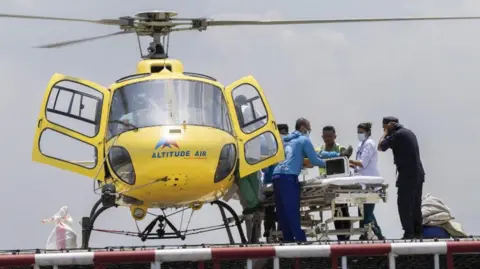
Although frostbitten and thoroughly spent, Hillary Dawa could still sit upright and talk to those who found him, before he was airlifted to a hospital in Kathmandu, Nepal’s capital.
News of his miraculous survival made international headlines and sent shockwaves throughout the mountaineering community.
However, it also raises troubling questions for the booming high-altitude tourism industry, and shines a spotlight on the deadly risks Sherpas who work on Mount Everest face.
Himalayan Traverse Adventure (HTA), the company that Hillary Dawa was working for, maintains that all its processes in handling the incident were above board, and that poor weather hampered rescue efforts
But many are asking whether the company, known for offering packages below market rates, has done enough to look after their guides.
Hillary Dawa was hired as a camp cook – why then was he leading clients up the 8,849m (29,032ft) mountain? Why was a search launched only three days after he disappeared, and would it have begun sooner if he had been a client and not a guide?
The Sherpa’s family has filed a police report accusing HTA of negligence, and Nepal’s tourism department is investigating the incident.
Disaster at 7,500m
HTA had initially employed Hillary Dawa as a cook to be stationed at Camp 2, but ended up using him as a substitute for a guide who “fell sick at Base Camp”, the company said.
He took up the spontaneous change in assignment because he “wanted to earn some extra money”, HTA manager Angfurba Sherpa tells the BBC.
That’s how Hillary Dawa ended up accompanying two clients, British climber Chris Thrall and Polish climber Mariusz Chmielewski on his ill-fated trek up Mount Everest. Also with them was fellow guide Pasang Kaji Sherpa.
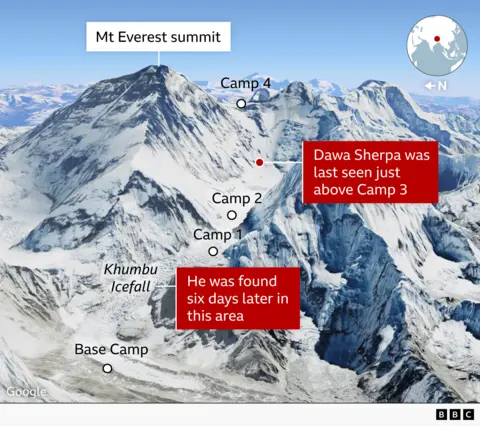
On the southern route to Everest there are four camps established above the main Base Camp, which climbers typically use as resting and acclimatisation points. Camp 4, which sits at 7,920m above sea level, is the highest.
The group started their descent from Camp 4 on 29 May, with Pasang Kaji and Chmielewski going first, as Chmielewski was running out of oxygen.
Thrall, who followed behind with Hillary Dawa, said the Sherpa had stopped to sit on his backpack just above Camp 3, at around 7,500m, “as he had done hundreds of times before to take a short rest”.
“I turned around and said, ‘Hillary, are you okay brother?'” Thrall recounted in a video on Instagram. “He says, ‘Yes, yes, I’m fine Chris, please go.'”
The former British soldier described his dilemma of whether to turn back for Hillary Dawa or catch up with the rest.
“Do I go back for the Sherpa who’s probably going to rock up and be fine as he has done hundreds of times before, or do I help my fellow climber who’s got no oxygen, frostbite in his fingers, and obviously, you’re never far off hypothermia up there?”
Responding to allegations that the team had left Hillary Dawa behind to die, Thrall said: “It’s really different on Everest, folks. I had one tank of oxygen that’s half empty [by then].
“To try to get back up… would have taken pretty much all of my oxygen. I’m not trying to offload my responsibility. I’m just saying you’ve got to be real.”
In a subsequent interview with BBC Newshour, Thrall said he decided to “turn to the weakest member of the trio”, referring to Chmielewski, with whom he shared his dwindling supply of oxygen as they continued down the mountain amid a severe snowstorm.
The conditions were so bad that Thrall and Chmielewski both recorded farewell messages for their loved ones, thinking they may not make it back alive.
The group took some 38 hours to finally arrive at Base Camp. At this point, they had assumed Hillary Dawa was dead.
“It was a complete whiteout,” Thrall said. “All the ropes were a foot under snow… In none of the time when I looked back up the mountain did I see any sign of Hillary.”
Chmielewski, meanwhile, has also accused HTA of negligence.
“Look, Hillary Dawa was left alone; he rescued himself,” Chmielewski tells the BBC. “This shows the sad truth about how Himalayan Traverse regards its employees. Customers are treated similarly.”
Chmielewski claims that Pasang Kaji Sherpa, the other mountain guide in their group, had notified the company on 30 May that Hillary Dawa was missing, but that no search operation was launched until days later.
Chmielewski, who was also admitted to hospital with frostbite, further suggests that decisions were made haphazardly during the expedition, and that the company appeared unprepared.
“I have huge reservations about the agency that organised this expedition,” he says. “I think they should lose their licence.”
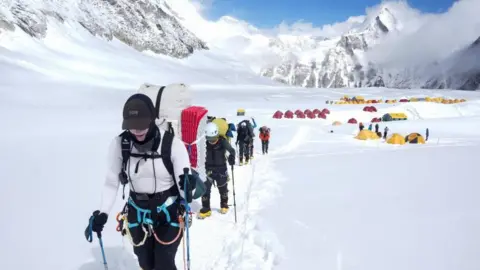
Hillary Dawa maintains he was “forced to stay behind” near Camp 3, which sits about 7,200m above sea level, because he had run out of oxygen and could no longer walk.
Without supplemental oxygen, a fully acclimatised climber would typically survive only two to three days at that altitude.
“I couldn’t walk… I didn’t eat anything for the first two days. Then I began chewing ice, but it pained my teeth,” Hillary Dawa told BBC Nepali from HAMS Hospital in Kathmandu. “I didn’t think I would be alive.”
Then he discovered chocolates in his pocket, and managed to get some melted ice to drink.
He made his way down slowly, only to fall into a crevasse, according to two people who spoke to him about his ordeal.
Then, an avalanche that sent snow tumbling into the crevasse gave him the first hope he had had in days.
“Stepping on the snow, I stood up and looked above… It felt like I could get out from there,” he said.
Once he scrambled out, he found ropes nearby that helped him manoeuvre further down. It was there he saw the cleaning team, the first people he had encountered in almost a week.
Hillary Dawa was transferred from the intensive care unit to a general ward early this week and is “recovering well”, his family tells BBC Nepali.
HTA’s founder and president Dawa Sherpa said that when his company had realised on 30 May that Hillary Dawa was uncontactable, it had notified its partner, 8K Expeditions, the larger expedition company that helped issue Thrall and Chmielewski’s climbing permits.
“The search operation was delayed solely due to adverse weather conditions, but it does not mean there was negligence,” he tells the BBC.
“The weather was really bad, it was a whiteout, meaning we had deep snow continually for a few days. It wouldn’t have been possible to send a helicopter immediately. I would have been sending the rescuers to die.”
Dawa adds that 8K Expeditions should be the company executing the rescue, because they were the ones who issued the permits, but 8K Expeditions maintains it was not responsible for providing the logistics or operational services for this particular expedition.
“Nevertheless, as part of our responsibility and commitment to supporting the mountaineering community, we did our best to assist in the search,” the company’s managing director, Lakpa Sherpa, tells the BBC.
Lakpa confirmed that HTA had indeed made first contact on 30 May, but later fell off the radar. HTA did not respond to these claims.
“We attempted multiple times to contact Himalayan Traverse Adventure for further information and co-ordination,” Lakpa says. “However, they were unreachable… On 2 June, we established contact with Hillary’s family and co-ordinated an aerial search operation.”
That search came up empty.
8K Expeditions has called Hillary Dawa’s ordeal a “true self-rescue” and “nothing short of a miracle”.
Everest experts say camp cooks are rarely equipped to scale the mountain.
“Generally, local guides that take clients to the summit of 8,000m peaks are trained specifically for this purpose,” says Ben Ayers, a longtime Everest reporter for Outside Magazine.
“Hillary Dawa had experience working in this capacity in previous years, but he was late in his career.”
Chmielewski, the Polish climber, says HTA told them Hillary Dawa was re-assigned as a climbing guide “because their original guide had drinking problems and a health problem”.
“We weren’t told exactly what it was,” he tells the BBC.
In a second call with the BBC, HTA manager Angfurba claims the two clients did not want to pay the additional cost for a more experienced guide after their original one was removed.
Thrall and Chmielewski each paid about $37,500 (about £28,000) for the expedition, which includes an attempt up Everest and the 6,189m Island Peak, Angfurba explains.
“They paid one of the cheapest prices and yet they expect VIP service,” he says, adding that other companies charge six-figure sums for similar trips.
Chmielewski dismissed this comment as “absurd and outrageous”. The climbers paid an additional “several thousand dollars” expecting a qualified climbing guide, he says, but Hillary Dawa was put on the job “due to a lack of personnel”.
Angfurba also suggests that Hillary Dawa should have established contact to let the company know he was still alive.
“He had a functioning walkie talkie with extra batteries,” Angfurba says. “It would have taken 10 seconds.”
Hillary Dawa’s family and friends, however, argue that the Sherpa was abandoned. As he recovers in hospital, they demand that justice be served to those accountable.
“I believe this problem occurred because they took him as a cook but used him as a guide,” his longtime friend Pasang Dawa Sherpa told BBC Nepali.
“Our main question is: why wasn’t a search initiated right after he got trapped? We want to know why there was such negligence.”
[BBC]
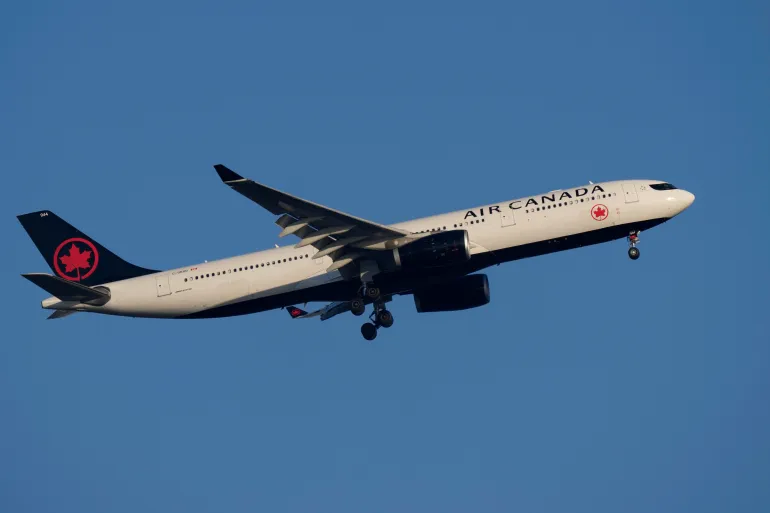
A former airline pilot in Canada has been arrested for allegedly flying hundreds of flights without a proper licence for nearly 17 years.
Police in Peel, Ontario, said on Tuesday that they had charged former Air Canada captain Geoffrey Wall with fraud and other charges following a four-month investigation.
The Peel Regional Police said Wall, 59, had used fraudulent pilot licences to command more than 900 domestic and international flights between 2009 and 2025.
Police said they obtained evidence to suggest that Wall had deceived both Air Canada and civil aviation authorities about his credentials before his retirement in 2025.
While Wall did hold a valid commercial pilot licence, he did not have an airline transport pilot licence, the highest level of pilot certification required to captain commercial aircraft, police said.
Wall faces one count of fraud, two counts of uttering forged documents, three counts of possessing a counterfeit trademark, and one count of public mischief.
Al Jazeera was unable to locate Wall’s legal representatives for comment.
“This case is deeply concerning and strikes at the heart of public trust and safety, as the accused is alleged to have put hundreds of thousands of passengers at risk across more than 900 domestic and international flights,” Peel Regional Police Chief Nishan Duraiappah said in a statement.
Air Canada said that while it viewed the pilot’s alleged actions with “utmost seriousness”, passenger safety had not been compromised, as all pilots undergo mandatory training every six months to assess their competency, in addition to an annual flight check with a certified pilot.
The airline said that Wall had “successfully met or exceeded” his training requirements and demonstrated “a high level of competency to safely operate large aircraft”.
The Canadian flag carrier also said it had found no other instances of non-compliance with licensing requirements following an audit of its pilots.
“Immediately upon Air Canada’s discovery of this, the individual was removed from active duty, and the company voluntarily reported the matter to Transport Canada,” the airline said in a statement.
Hassan Shahidi, a licensed pilot who heads the US-based Flight Safety Foundation nonprofit, described the charges against Wall as an “exceptionally rare case”.
“If the allegations are proven, the key issue isn’t that an untrained person was flying airliners, but that this pilot bypassed a fundamental regulatory requirement for many years,” Shahidi told Al Jazeera.
“The case could point to weaknesses in licence verification and oversight processes, particularly if fraudulent credentials were able to evade detection for so long.”
Shahidi said that Wall’s alleged actions did not appear to have exposed passengers to the same level of risk that they would have faced if an untrained pilot were at the controls.
“The larger concern is the apparent failure of a regulatory safeguard that is supposed to ensure trust in the system,” he said.
[Aljazeera]

Donald Trump has been booed at a basketball match in New York as he became the first sitting US president to attend the NBA Finals.
The catcalls came after frustrated ticketholders waited for hours in queues that stretched more than two blocks outside Madison Square Garden on Monday due to the intense security restrictions that came with the US president’s appearance.
The New York Knicks lost 111-115 to the San Antonio Spurs in game three of the best-of-seven NBA finals, cutting the Knicks’ lead in the series to 2-1.
After the game, Trump told reporters: “It was, I think, mostly cheers. It was loud, and it was very enthusiastic.”
Booing broke out on Monday evening when a camera showed Trump on large screens in the arena, saluting as a singer performed the national anthem.
The president attended with his granddaughter Kai Trump and Knicks owner James Dolan, along with members of his administration that included Transportation Secretary Sean Duffy, Interior Secretary Doug Burgum, EPA administrator Lee Zeldin and special envoy Steve Witkoff.
The Republican president, who was born in the New York City borough of Queens, has had a difficult relationship with his heavily Democratic hometown.
Trump, who had been at his New Jersey golf club earlier in the day, flew to downtown Manhattan by taking the Marine One helicopter. He then travelled by motorcade to the venue.
Trump’s arrival meant the streets around Madison Square Garden were shut down to foot and vehicle traffic. Thousands of New York Police Department officers and hundreds of Secret Service officers were deployed.
Metal barriers were put up at each block as sports fans faced an airport-style gauntlet of security.
For bars in the area showing the finals game, this would normally be a lucrative night. But the barriers stopped foot traffic and left many pubs empty.
Disgruntled Knicks fans as well as regular commuters struggled to navigate the celebrations.
One New Yorker told the BBC the high security was “killing the vibe of the Knicks”.
This season has represented a stunning reversal of fortune for the Knicks, appearing in their first Finals since 1999 after decades as one of the worst teams in the league.

Celebrities including Tracy Morgan, Tina Fey, Christine Taylor, Ben Stiller and Timothée Chalamet filled courtside seats.
New York Mayor Zohran Mamdani was there.
Manhattan was crowded with fans of the Knicks decked out in orange and blue, many watching the game in the streets and at watch parties.
The streets around popular Bryant Park were filled as fans gathered at a community watch party after one outside Madison Square Garden, where the game is happening, was cancelled due to Trump’s appearance.
People ran up and down the streets near Bryant Park, celebrating and cheering every time the Knicks scored a point. As the game started, some fans could be seen climbing scaffolding attached to buildings. Others in the busy streets crowded around a laptop to watch the game.
One 44-year-old fan, who watched the game at Bryant Park, said he was 17 years old the last time the Knicks were in finals, when like this year, they played the San Antonio Spurs.
He said the disruption caused by Trump’s visit was “very annoying”.
But not everyone was angry at Trump.
Knicks fan Anthony Pulley, 43, told AFP news agency he found the disruption annoying, but he appreciated Trump coming to the game.
“I think it really put a damper on all the watch parties,” he said. “But it’s pretty cool he wants to show up and be a part of it.”

From the Empire State Building to One World Trade Center, skyscrapers were lit up orange and blue – the Knicks’ team colours.
On the last two game nights, throngs of supporters in Knicks gear took over streets near the arena – even though their team was playing at their opponents’ arena in Texas – leading to dozens of arrests as fans climbed lampposts, jumped on to food carts, and blocked traffic.
Many fans weren’t able to afford tickets to the first series home game, with the cheapest online resale tickets going for more than $10,000 (£7,500) and going up to more than $100,000.
Regular Knicks games already rank among the most expensive in the NBA.
“That’s the way life goes,” Trump said on Friday when asked about the extreme prices. “It’s sort of semi-free to watch it on television.”
Mayor Mamdani told reporters he paid nearly $1,000 for his ticket to the game.
[BBC]

President chairs discussion on potential El Niño impacts and institutional preparedness

New Sasakawa Memorial Sri Lanka–Japan Cultural Centre reflects enduring friendship between Sri Lanka and Japan – PM

Ja’Kobe Tharp breaks world 110m hurdles record in Eugene

Canada introduces bill to ban social media for children under 16

Lutkenhaus, 17, upsets Olympic champion Wanyonyi in Oslo

An Everest guide’s miraculous survival raises questions for tourism industry

‘Dates have the highest sugar content to fight Coronavirus’

Sunday Island 27 December – Headlines

#SundayIsland 17th December – Headlines

Sunday Island – 28th March

Sunday Island Headlines – 21 March

Sunday Island – 21st February – Headlines
-
 Features6 days ago
Power crept into the Sangha and is now tearing it apart
-

 Features6 days ago
Kondachchi wind farm and battery storage project to boost energy security, says Power Ministry Secretary
-

 News4 days ago
Women’s T20 World Cup 2026 warm-up: Chamari Athapaththu’s 94 helps Sri Lanka beat Pakistan
-
 Features6 days ago
Saudi Arabia sets new benchmark in Hajj management as 1.7 million pilgrims complete sacred journey
-

 News5 days ago
Asst. Manager, security officer arrested over Rs 30 mn snatch at Horana PB branch
-

 Editorial3 days ago
Probe Sallay’s complaint
-
 News4 days ago
Lankan-Canadian inducted to Toronto Sports Hall of Fame
-
 News1 day ago
Local firms move millions of dollars overseas for phantom imports: Govt.