
Foreign News
An Everest guide’s miraculous survival raises questions for tourism industry


A cleaning team was combing Mount Everest’s perilous upper slopes for rubbish last Thursday, after a busy climbing season, when they spotted a man in a bright blue summit suit crawling at the foot of the Khumbu Icefall, widely regarded as one of the most dangerous sections of the world’s highest peak.
It was Hillary Dawa Sherpa, a climbing guide who got separated from his clients when descending the mountain six days earlier. He had been presumed dead – yet another life claimed by Everest’s treacherous slopes. By the time the 57-year-old reappeared, his family had already begun funeral rites for him.
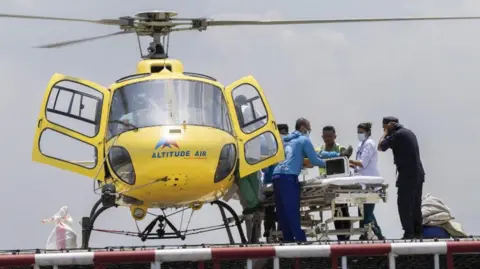
Although frostbitten and thoroughly spent, Hillary Dawa could still sit upright and talk to those who found him, before he was airlifted to a hospital in Kathmandu, Nepal’s capital.
News of his miraculous survival made international headlines and sent shockwaves throughout the mountaineering community.
However, it also raises troubling questions for the booming high-altitude tourism industry, and shines a spotlight on the deadly risks Sherpas who work on Mount Everest face.
Himalayan Traverse Adventure (HTA), the company that Hillary Dawa was working for, maintains that all its processes in handling the incident were above board, and that poor weather hampered rescue efforts
But many are asking whether the company, known for offering packages below market rates, has done enough to look after their guides.
Hillary Dawa was hired as a camp cook – why then was he leading clients up the 8,849m (29,032ft) mountain? Why was a search launched only three days after he disappeared, and would it have begun sooner if he had been a client and not a guide?
The Sherpa’s family has filed a police report accusing HTA of negligence, and Nepal’s tourism department is investigating the incident.
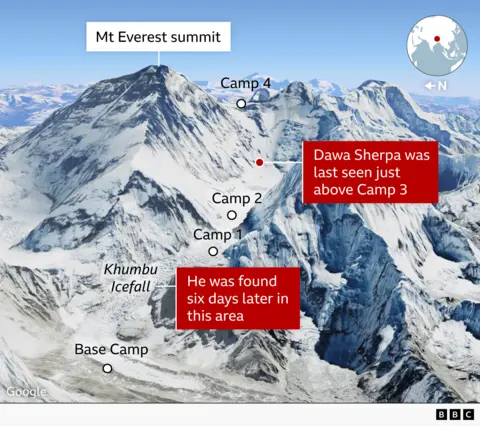
Disaster at 7,500m
HTA had initially employed Hillary Dawa as a cook to be stationed at Camp 2, but ended up using him as a substitute for a guide who “fell sick at Base Camp”, the company said.
He took up the spontaneous change in assignment because he “wanted to earn some extra money”, HTA manager Angfurba Sherpa tells the BBC.
That’s how Hillary Dawa ended up accompanying two clients, British climber Chris Thrall and Polish climber Mariusz Chmielewski on his ill-fated trek up Mount Everest. Also with them was fellow guide Pasang Kaji Sherpa.
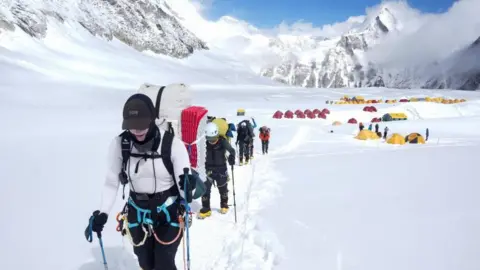
On the southern route to Everest there are four camps established above the main Base Camp, which climbers typically use as resting and acclimatisation points. Camp 4, which sits at 7,920m above sea level, is the highest.
The group started their descent from Camp 4 on 29 May, with Pasang Kaji and Chmielewski going first, as Chmielewski was running out of oxygen.
Thrall, who followed behind with Hillary Dawa, said the Sherpa had stopped to sit on his backpack just above Camp 3, at around 7,500m, “as he had done hundreds of times before to take a short rest”.
“I turned around and said, ‘Hillary, are you okay brother?'” Thrall recounted in a video on Instagram. “He says, ‘Yes, yes, I’m fine Chris, please go.'”
The former British soldier described his dilemma of whether to turn back for Hillary Dawa or catch up with the rest.
“Do I go back for the Sherpa who’s probably going to rock up and be fine as he has done hundreds of times before, or do I help my fellow climber who’s got no oxygen, frostbite in his fingers, and obviously, you’re never far off hypothermia up there?”
Responding to allegations that the team had left Hillary Dawa behind to die, Thrall said: “It’s really different on Everest, folks. I had one tank of oxygen that’s half empty [by then].
“To try to get back up… would have taken pretty much all of my oxygen. I’m not trying to offload my responsibility. I’m just saying you’ve got to be real.”
In a subsequent interview with BBC Newshour, Thrall said he decided to “turn to the weakest member of the trio”, referring to Chmielewski, with whom he shared his dwindling supply of oxygen as they continued down the mountain amid a severe snowstorm.
The conditions were so bad that Thrall and Chmielewski both recorded farewell messages for their loved ones, thinking they may not make it back alive.
The group took some 38 hours to finally arrive at Base Camp. At this point, they had assumed Hillary Dawa was dead.
“It was a complete whiteout,” Thrall said. “All the ropes were a foot under snow… In none of the time when I looked back up the mountain did I see any sign of Hillary.”
Chmielewski, meanwhile, has also accused HTA of negligence.
“Look, Hillary Dawa was left alone; he rescued himself,” Chmielewski tells the BBC. “This shows the sad truth about how Himalayan Traverse regards its employees. Customers are treated similarly.”
Chmielewski claims that Pasang Kaji Sherpa, the other mountain guide in their group, had notified the company on 30 May that Hillary Dawa was missing, but that no search operation was launched until days later.
Chmielewski, who was also admitted to hospital with frostbite, further suggests that decisions were made haphazardly during the expedition, and that the company appeared unprepared.
“I have huge reservations about the agency that organised this expedition,” he says. “I think they should lose their licence.”
Hillary Dawa maintains he was “forced to stay behind” near Camp 3, which sits about 7,200m above sea level, because he had run out of oxygen and could no longer walk.
Without supplemental oxygen, a fully acclimatised climber would typically survive only two to three days at that altitude.
“I couldn’t walk… I didn’t eat anything for the first two days. Then I began chewing ice, but it pained my teeth,” Hillary Dawa told BBC Nepali from HAMS Hospital in Kathmandu. “I didn’t think I would be alive.”
Then he discovered chocolates in his pocket, and managed to get some melted ice to drink.
He made his way down slowly, only to fall into a crevasse, according to two people who spoke to him about his ordeal.
Then, an avalanche that sent snow tumbling into the crevasse gave him the first hope he had had in days.
“Stepping on the snow, I stood up and looked above… It felt like I could get out from there,” he said.
Once he scrambled out, he found ropes nearby that helped him manoeuvre further down. It was there he saw the cleaning team, the first people he had encountered in almost a week.
Hillary Dawa was transferred from the intensive care unit to a general ward early this week and is “recovering well”, his family tells BBC Nepali.
HTA’s founder and president Dawa Sherpa said that when his company had realised on 30 May that Hillary Dawa was uncontactable, it had notified its partner, 8K Expeditions, the larger expedition company that helped issue Thrall and Chmielewski’s climbing permits.
“The search operation was delayed solely due to adverse weather conditions, but it does not mean there was negligence,” he tells the BBC.
“The weather was really bad, it was a whiteout, meaning we had deep snow continually for a few days. It wouldn’t have been possible to send a helicopter immediately. I would have been sending the rescuers to die.”
Dawa adds that 8K Expeditions should be the company executing the rescue, because they were the ones who issued the permits, but 8K Expeditions maintains it was not responsible for providing the logistics or operational services for this particular expedition.
“Nevertheless, as part of our responsibility and commitment to supporting the mountaineering community, we did our best to assist in the search,” the company’s managing director, Lakpa Sherpa, tells the BBC.
Lakpa confirmed that HTA had indeed made first contact on 30 May, but later fell off the radar. HTA did not respond to these claims.
“We attempted multiple times to contact Himalayan Traverse Adventure for further information and co-ordination,” Lakpa says. “However, they were unreachable… On 2 June, we established contact with Hillary’s family and co-ordinated an aerial search operation.”
That search came up empty.
8K Expeditions has called Hillary Dawa’s ordeal a “true self-rescue” and “nothing short of a miracle”.
Everest experts say camp cooks are rarely equipped to scale the mountain.
“Generally, local guides that take clients to the summit of 8,000m peaks are trained specifically for this purpose,” says Ben Ayers, a longtime Everest reporter for Outside Magazine.
“Hillary Dawa had experience working in this capacity in previous years, but he was late in his career.”
Chmielewski, the Polish climber, says HTA told them Hillary Dawa was re-assigned as a climbing guide “because their original guide had drinking problems and a health problem”.
“We weren’t told exactly what it was,” he tells the BBC.
In a second call with the BBC, HTA manager Angfurba claims the two clients did not want to pay the additional cost for a more experienced guide after their original one was removed.
Thrall and Chmielewski each paid about $37,500 (about £28,000) for the expedition, which includes an attempt up Everest and the 6,189m Island Peak, Angfurba explains.
“They paid one of the cheapest prices and yet they expect VIP service,” he says, adding that other companies charge six-figure sums for similar trips.
Chmielewski dismissed this comment as “absurd and outrageous”. The climbers paid an additional “several thousand dollars” expecting a qualified climbing guide, he says, but Hillary Dawa was put on the job “due to a lack of personnel”.
Angfurba also suggests that Hillary Dawa should have established contact to let the company know he was still alive.
“He had a functioning walkie talkie with extra batteries,” Angfurba says. “It would have taken 10 seconds.”
Hillary Dawa’s family and friends, however, argue that the Sherpa was abandoned. As he recovers in hospital, they demand that justice be served to those accountable.
“I believe this problem occurred because they took him as a cook but used him as a guide,” his longtime friend Pasang Dawa Sherpa told BBC Nepali.
“Our main question is: why wasn’t a search initiated right after he got trapped? We want to know why there was such negligence.”
[BBC]


The Philippine Coast Guard says it has recovered 41 bodies from the wreckage of a ferry that caught fire this week, bringing the total death toll to 76.
More than 130 people were on board the MV June Aster when the blaze erupted on Wednesday as it neared its destination at the tourist hotspot of Coron, after departing from Manila.
The coast guard said on Saturday the number of survivors remained 43, with many receiving treatment in hospital, but 13 people remain unaccounted for.
Recovery of bodies had been hampered due to toxic fumes and lingering heat, which meant authorities were unable to board until Friday.
Geronimo Tuvilla, an official for the Philippine Coast Guard, said the priority was identifying victims and determining the cause of the blaze.
Kristine Ablana, a tourism official in Coron, said relatives were being asked to help identify family members through personal items and DNA testing.
“Once someone is able to verify that this photo or these belongings are indeed those of their relative, they will be asked to provide a DNA sample,” she said.
Coast Guard spokesperson Commodore Noemie Cayabyab said the fire began in a cargo hold before spreading.
She said survivors had described hearing a loud explosion, “the appearance of smoke and then fire. It spread very quickly”. She added that those who had made it off the ship did not have time to put on lifejackets.
A survivor who was hauled to safety on a rescue boat told the BBC he had heard frantic cries onboard when the fire erupted, and was trampled by panicked people as he tried to escape.
The ferry, built in 2002, held valid safety certificates and passed an enforcement inspection in March, but investigators are looking into potential manifest discrepancies, cargo loading integrity, and crew emergency response protocols, the Palawan Daily reported.
The vessel was carrying 117 passengers and 17 crew members.
Atienza Interisland Ferries, the vessel’s operator, has pledged full co-operation with the inquiry.
[BBC]
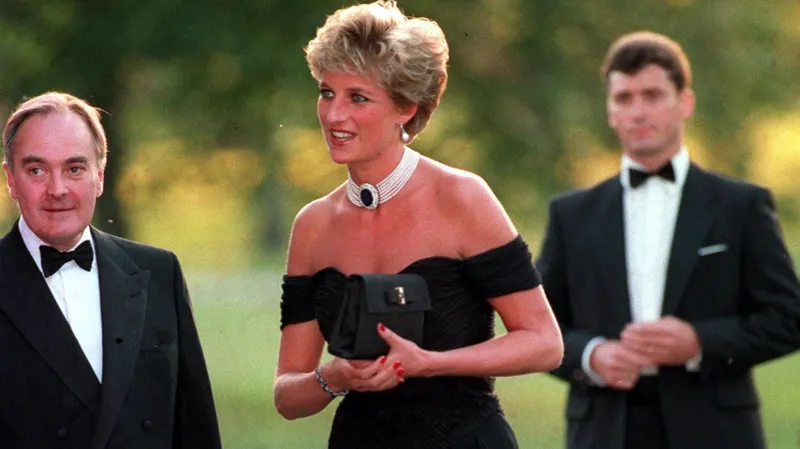
A dress worn by Princess Diana to a party in London hours after a documentary was televised in which the then-Prince Charles admitted to committing adultery during their marriage is going up for auction.
Her dramatic arrival at the Serpentine Gallery in 1994 in a custom-made black silk evening dress by designer Christina Stambolian became an iconic pop-culture moment.
The media dubbed her outfit the “revenge dress”.
Auction house Sotheby’s expects the dress to sell for up to £220,000 ($300,000) when it goes under the hammer on 9 December.
A press release from Sotheby’s said it is the first time the dress has been offered at auction since 1997, when the late princess sold 79 of her dresses to raise money for charities.
Morgane Halimi, Sotheby’s Global Head of Handbags and Fashion, said in a statement that Princess Diana “understood instinctively” that fashion can be a language in its own right.
“On her own terms, Princess Diana turned the dress into one of the most powerful messages she ever made, during one of the most scrutinised and emotionally charged episodes of her life,” Halimi said.
“She walked into a moment in which so much of her story was being told for her and, through what she chose to wear, reclaimed the narrative for herself.”

According to Sotheby’s, Anna Harvey, her stylist at the time, said Diana “wanted to look a million dollars”.
The princess made a last-minute wardrobe change for the fundraising dinner and chose the strapless evening dress by the Greek designer Christina Stambolian – which she accessorised with a royal jewel, a black clutch and black heels.
The vintage Jaguar XJ40 car that Diana arrived in at the event was sold at auction earlier this year for £66,250.
The revenge dress is expected to fetch a considerably higher price.
If it does, it will not be the first time an item from the princess’s wardrobe has sold for a significant sum.
Princess Diana’s sweater featuring a black sheep among rows of white ones was sold for £920,000 at an auction by Sotheby’s in New York in 2023.
[BBC]

A Pakistan Under-19 cricket team suddenly became the centre of focus when it was mistaken for a group of asylum seekers in Portsmouth. A group of protesters gathered outside the Marriott Hotel in Portsmouth after reports that asylum seekers were staying there. The situation had to be later diffused when it was ascertained that the hotel was hosting the Pakistan Under-19 team.
According to the Guardian, the situation became tense when a crowd gathered outside the Marriott hotel after reports that about 40 men who did not seem to be English arrived at the hotel. George Madgwick, a Reform councillor, called the hotel to mediate between the Pakistan Under-19 staff and the assembled crowd, following which the crowd dispersed.
“I spoke to the coach of the team, who was very understanding,” Madgwick told the Guardian. “I went out to the protesters and told them, ‘You’ve got it wrong guys, it’s a cricket club.’ They left within a couple of minutes. It was a massively unfortunate incident.
“From the perspective of the people of Portsmouth who are already on high alert, this was a coach from the same company which was turning up with about 40 foreign men.”
The ECB has been in touch with the Pakistan management following the incident and is reviewing security arrangements.
The Pakistan Under-19 team played a four-day game against England Under-19 in Arundel from September 2 to 5, which they lost by ten runs. The two teams faced off in a Youth ODI on September 9, with Pakistan winning by 177 runs. Pakistan’s senior men’s team are also playing the third and final Test against England at Edgbaston.
[Cricinfo]

Construction of Accident and Emergency unit at Mannar District General Hospital begins under President’s patronage

Special Cabinet Subcommittee and Officials’ Committee appointed to address El Niño Climate Impact meet

Showers about 75 mm are likely at some places in the Western, Sabaragamuwa, Central and Southern provinces

Brook, Buttler, Baker star as Sri Lanka slump to 119-run rout

Where is Gnanasara Thera?Police pass buck to court

Russian citizens in Lanka to vote in State Duma elections

‘Dates have the highest sugar content to fight Coronavirus’

Sunday Island 27 December – Headlines

#SundayIsland 17th December – Headlines

Sunday Island – 28th March

Sunday Island Headlines – 21 March

Sunday Island – 21st February – Headlines
-

 Sports6 days ago
DDS set to lose Test captaincy
-

 News5 days ago
Sri Lanka faces new grid challenge as rooftop solar surges: former CEB GM
-

 Latest News5 days ago
Shafali, Deepti power India into sixth T20 Asia Cup final
-

 Latest News5 days ago
Sri Lanka thwart Fatima Sana challenge to secure Asia Cup final spot
-

 News3 days ago
Gnanasara Thero absconding after SC ruling
-
 Features7 days ago
Lost for 90 years: Rare Goby resurfaces in Jaffna
-

 News5 days ago
Ammunition cache found in old Kandy bungalow
-
 Latest News7 days ago
Italian Naval Vessel ‘ITS Giuseppe Garibaldi’ arrives in Colombo