
Foreign News
Iran promotes message of continuity and revenge at Khamenei commemoration

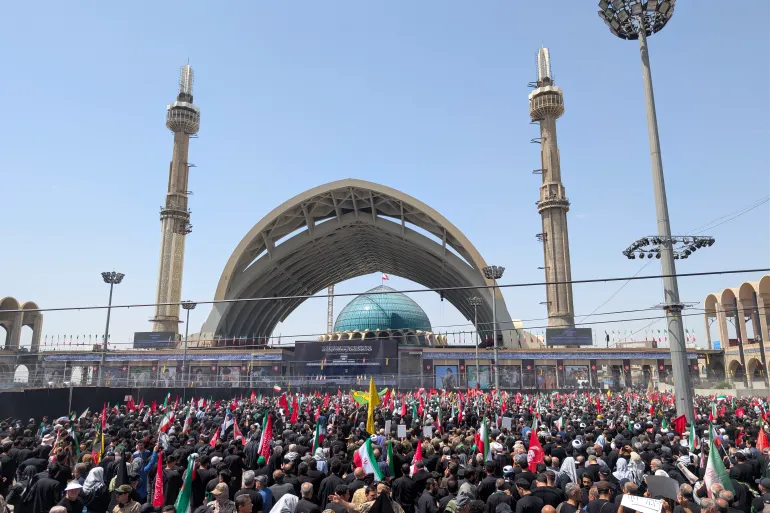
Large-scale public commemorations for former Iranian Supreme Leader Ayatollah Ali Khamenei have commenced in the capital, with authorities promoting a message of continuity for the Islamic Republic and vengeance for his killing.
Khamenei, 86, was targeted in an airstrike at the start of the war with the United States and Israel on February 28, after ruling Iran with absolute power for nearly 37 years
Red flags, commonly associated with martyrdom but also viewed as a symbol of revenge in Shia Islam, were seen throughout the Grand Mosalla commemoration site in Tehran and other mass gatherings.
“We must rise,” was the official slogan used for the ceremonies, accompanied by an image of Khamenei’s clenched fist on a red and black background.
Thousands gathered inside the huge religious complex used for the funeral from the early hours of Saturday morning to pay their respects to the assassinated supreme leader.
Khamenei’s coffin, carried to the funeral site by a lorry, was displayed at the centre of the stage and draped in flags. Positioned on an elevated platform in the central court, surrounded by glass and guarded by Islamic Revolutionary Guard Corps (IRGC) personnel, authorities were ready to deal with crowds attempting to reach his coffin.
Visiting men and women were separated by a large barrier to observe Islamic values. Religious chanting and slogans blasted from loudspeakers around the complex.
Videos circulated by state media showed crowds chanting “Death to America” and “Death to Israel” at a number of metro stations.
“We are all here to seek blood vengeance for our leader,” Fatemeh, a 55-year-old woman travelling in a group of women clad in black chadors, told Al Jazeera while waiting to enter through a northern gate of the complex.
“We will all listen to his son. He will guide the revolution forward,” she said, in reference to Mojtaba Khameni, who was quickly selected as supreme leader by a clerical body in March following his father’s killing.
![The commemoration has attracted thousands of people from across Tehran to mourn Khamenei [Maziar Motamedi/Al Jazeera]](https://www.aljazeera.com/wp-content/uploads/2026/07/9-1783177414.jpg?w=770&resize=770%2C580&quality=80)
A heavy security presence continues in the capital, with armoured vehicles, heavy machine guns and snipers visible throughout the areas surrounding the farewell ceremonies.
Men were body searched as they entered the Mosalla, while electronic devices – such as power banks, earphones and lighters – were confiscated from the mourners by security.
Mojtaba Khamenei, who has not been seen publicly since he took office, will not attend the funeral due to security concerns.
State-affiliated newspapers and television reported that the supreme leader’s killing had rallied supporters of the Islamic Republic government, which has been in power since the 1979 revolution overthrew Iran’s last shah, Mohammad Reza Shah Pahlavi.
Authorities are expecting similar huge numbers as attended the 1989 funeral of Ruhollah Khomeini, the founder of the Islamic Republic. At least eight mourners died in the crowds, forcing the military to evacuate his body by helicopter.
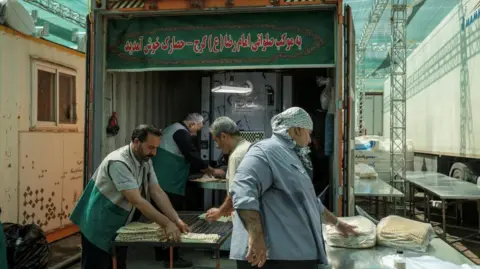
Thousands of “mokebs”, or temporary religious service stations, were set up across Tehran, blasting out Islamic Shia chants and rhythmic eulogies to Khamenei.
![Government messages and images of Khamenei were plastered across Tehran during the commemoration [Maziar Motamedi/Al Jazeera]](https://www.aljazeera.com/wp-content/uploads/2026/07/3-1783178247.jpg?w=770&resize=770%2C580&quality=80)
Some volunteers handed out flags, banners and images to the crowd. As temperatures rose to 36 degrees Celsius (97 degrees Fahrenheit), other mokebs were equipped with giant cooling fans and volunteers distributed free drinks to the thousands of mourners.
Emergency services were stationed across the area to assist with any health problems due to the crowds or the heat, but so far authorities have reported no security incidents or medical emergencies.
Large parts of Tehran have been cordoned off with barriers and non-official vehicles are barred from entering or exiting.
The whole of Iran has been effectively shut down until the end of Monday, in an apparent effort to encourage public participation, with 10 million Iranians expected to take part in the proceedings across the country.
Khamenei’s remains are expected to be moved through Tehran during the funeral procession on Monday. It is then expected to pass through some of Shia’s holiest sites, including Qom, Najaf and Karbala, before burial in his hometown of Mashhad in northeastern Iran on Thursday.
Some Iranians have used the public holiday to escape the crowds and the heat of Tehran for the cooler northern provinces by the Caspian Sea, as they regularly do on multi-day public events in the capital. Long lines of traffic were seen on the Tehran-Shomal Freeway leading to the provinces, with travellers stuck for hours in jams.
IRGC commander-in-chief Ahmad Vahidi, who made his first appearance since the start of the war, told state TV during an event on Friday to grieve Khamenei so that “enemies will take their wish for our surrender to the grave”.
“The enemies must know that the pure blood of our martyred imam was another turning point in the victories of dear Islam against the global infidel front,” he said.
![Red flags, associated with martyrdom in Shia Islam and carrying religious messages, were carried by mourners [Maziar Motamedi/Al Jazeera]](https://www.aljazeera.com/wp-content/uploads/2026/07/1-1783178093.jpg?w=770&resize=770%2C580&quality=80)
IRGC aerospace chief Majid Mousavi, responsible for launching ballistic missiles and drones across the region during the war, also made a public appearance.
The central headquarters of armed forces issued a statement to warn against any military action during the ceremonies, after Israel’s Defence Minister, Israel Katz, said Mojtaba Khamenet was marked for dearh.
Representatives from dozens of countries were in Tehran on Friday to pay their respects to Khamenei and speak with Iranian officials during televised state ceremonies.
Pakistan’s Prime Minister, Shehbaz Sharif, who helped mediate talks between Iran and the US, was among the most senior officials present. Other countries sent lower-level dignitaries, while European countries were reportedly not invited.
Among the most prominent attendees on Friday were members of the IRGC-backed “Axis of Resistance”, including members of Hamas, the Houthis in Yemen and Hezbollah in Lebanon.
The Hezbollah delegation included members of Hassan Nasrallah’s family, the long-time head of the armed group killed by Israel in 2024, and relatives of Imad Mughniyeh, the commander killed by a car bomb in Syria in 2008.
(ALJAZEERA)

Warning: This story contains distressing details
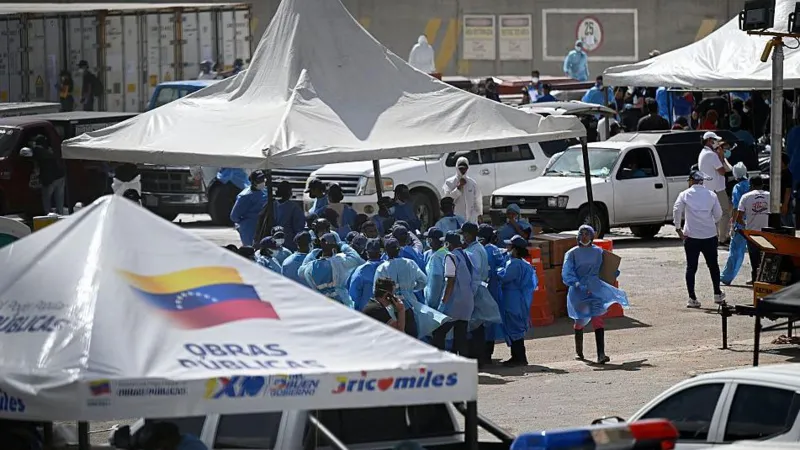
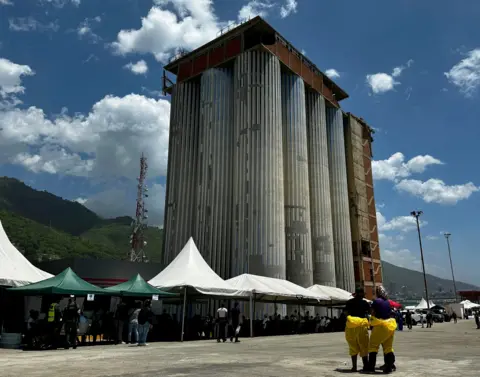
At a port storage facility transformed into a makeshift morgue in La Guaira, the same scene repeats itself again and again.
Families – many of whom have already spent days searching hospitals, shelters and rubble – wait hours to try and confirm the deaths of their loved ones.
As the death toll of Venezuela’s twin earthquakes surpasses 2,600, officials face the challenge of not only recovering victims, but identifying them.
The scale of the disaster has overwhelmed local services, forcing institutions to improvise.
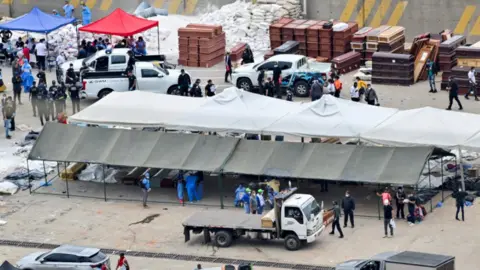
With little infrastructure left standing nine days after the tremors, bodies have been put outside or in temporary tents.
Under the blazing sun, dozens of families wait with a mixture of anguish and dread.
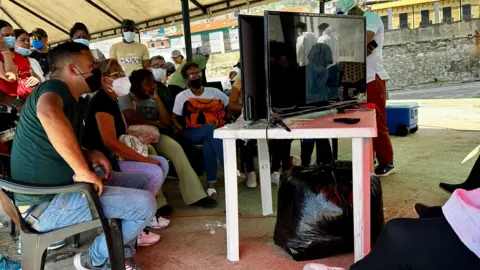
Rows of chairs have been placed inside and outside Los Silos, where sadness is contagious. No one speaks. Some stare blankly into space, others check their phones, reading the news or answering messages.
Just a few metres away, armed personnel from the Bolivarian Armed Forces control access to the site.
“I’m afraid of what I’m going to see in there, but it’s the only way to end this agony,” a woman says before passing through the gate. She has been searching for her nephew for nearly a week. “I’ve looked for him everywhere: in the building, in the hospitals, I’ve spoken to everyone… and no one knows anything.”
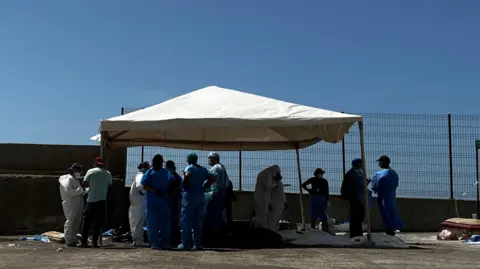
Inside, the smell of decomposition is the first thing that greets you. Some family members cover their mouths with their hands. Most wear cloth masks, which offer little relief. Within minutes, many stop reacting. They seem to grow used to it.
Nearby, hundreds of bodies lie in rows, wrapped in plastic bags and exposed to the sun. In the sweltering heat, decomposition is rapid.
The bodies are arranged according to when they were recovered.
At one end of the site, a tent offers free cremation services. At the other, forensic specialists use dental records to help identify victims whose bodies have become difficult to recognise.
Families face two options. Those who think they can identify a loved one by their clothing are taken to one area.
Most relatives, however, are directed to two television screens. There, a different ordeal begins.
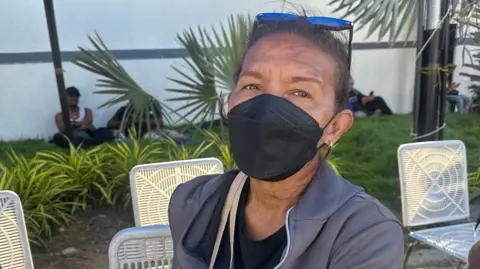
More than 1,000 images of bodies flash across the screens in a sequence that feels endless. Many are swollen, have darkened skin or bear the marks of injuries, making identification difficult.
Families search for any trace that might help identify their loved ones – a tattoo, a bracelet, a piece of clothing, or an item from their home.
Sometimes there is a pause, a moment of hope. The two workers scrolling through the photos on an iPad zoom in on teeth, tattoos, or scars.
In front of one of the screens, a woman bursts into tears as she recognises her son thanks to a dusty blanket. Another woman, a stranger, embraces her.
A phone rings and breaks the silence. A young man whispers into the phone that he is trying to identify his mother. But he says the state of the bodies is making it difficult.
“This is like a horror movie,” Liliana González, a 60-year-old resident of Catia La Mar, says as she leaves. She had come to look for her aunt, but in the end identified her 37-year-old nephew by his tattoo. “He wasn’t on the list,” she says. “I had to look at the images.”
“I saw my mum when she died, but this… this isn’t the same.”
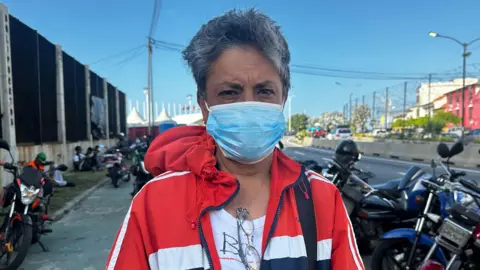
Modesta Alemán, 56, travelled from Carayaca, in western La Guaira, to look for her older sister Matilde. Her sister lived in Playa Grande – one of the hardest-hit areas.
“They told us there were no survivors,” she says. Volunteers later said they could hear voices calling from the building, “but no one could get them out”.
Modesta does not enter the makeshift morgue and waits outside while other relatives handle the identification process. Perhaps, she says, it is better this way.
The process can take hours. Once a body is identified, the arrangements to remove the remains begin. After identification, fingerprints are taken, if possible.
Then, the bodies are placed in coffins. Later, the paperwork for the death certificate begins – an essential document so funeral homes can collect the remains.
Jéssica Soto, 42, sits in a chair at the entrance to Los Silos.
For two days, she has been waiting for the remains of her 15-year-old daughter and three-year-old granddaughter, who got trapped in their apartment after the earthquakes. Their bodies were recovered on Tuesday, nearly a week later.
“They keep you waiting and waiting for the paperwork, the trucks, and who knows what else,” she tells BBC Mundo.
“They have had them there in a coffin, sitting out in the sun since yesterday. I have no choice but to wait and trust in God.”
Liliana says she panicked when she was told she would have to identify her nephew by herself. “But then, seeing me like that, two workers accompanied me to the body. They helped me find him so I wouldn’t suffer as much,” she recounts. “Thank God, because in a moment like that, it’s good to feel someone’s hand.”
Her aunt remains buried in the rubble. She fears having to return to the morgue in the coming days to repeat the process all over again.
[BBC]
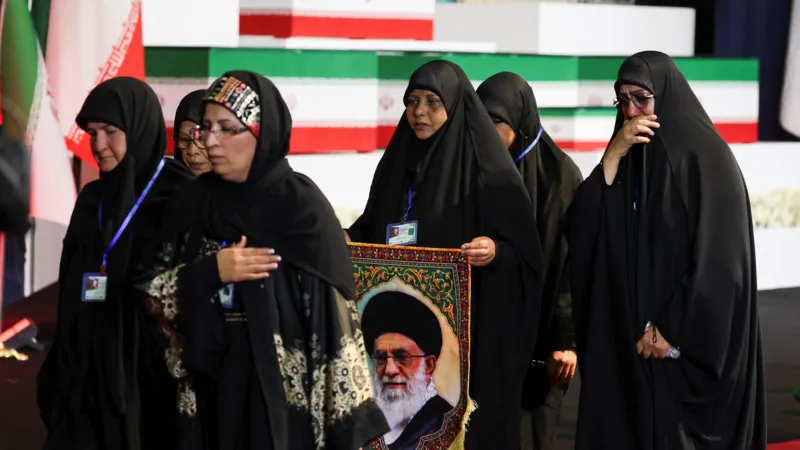
Iran has begun several days of public mourning and funeral processions for its former Supreme Leader, Ayatollah Ali Khamenei, more than four months after he was killed in strikes launched by the US and Israel.
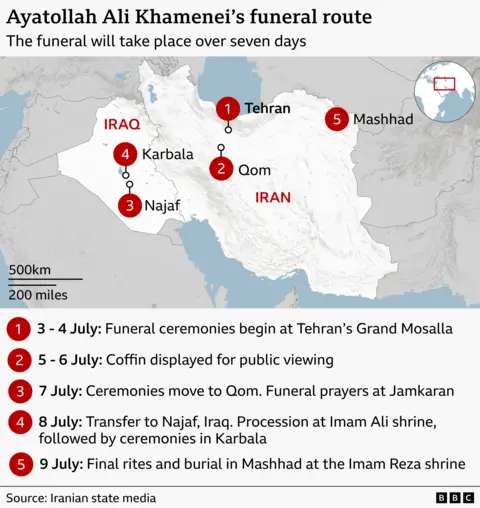
The former Ayatollah’s body will lie in state in Tehran’s Grand Mosalla from Friday, ahead of his burial in his hometown of Mashhad next Thursday.
Iranian authorities said 12 to 20 million people were expected to attend, which they are calling the “funeral of the century”.
It comes as Iran and the United States observe a fragile ceasefire after signing a preliminary deal to halt their conflict in June.
Six days of ceremonies will start at 06:00 (03:30 BST) on Saturday, at Tehran’s Imam Khomeini Mosalla, which visitors can visit to pay their respects until Sunday afternoon.
There will be an official funeral ceremony in Tehran on Saturday, which the Tehran-based Mohammad Rasulullah Corps is leading.
The group’s commander Hassan Hassanzadeh said Khamenei’s coffin would be displayed on an elevated platform, with crowd flows designed to allow visitors to enter and leave within 15 to 20 minutes.
Khamenei’s body will lie in the Grand Mosalla for three days, alongside the remains of family members who were also killed in the US and Israeli strikes in February.
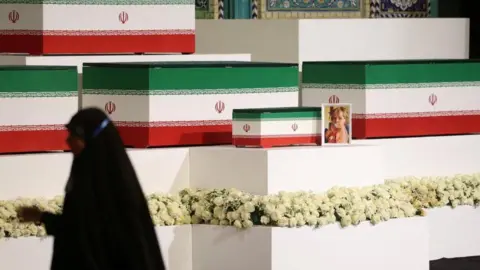
Authorities have ordered public and private offices in Tehran to close from Saturday through Monday, while traffic restrictions will shut down most of the city centre to private vehicles, AFP reported. The airspace over Tehran will be partially closed from Friday and fully closed on Monday.
On Tuesday, events will move to Qom, just south of Tehran, where a senior Shia cleric will lead funeral prayers at Jamkaran – one of Iran’s most prominent and symbolic religious sites.
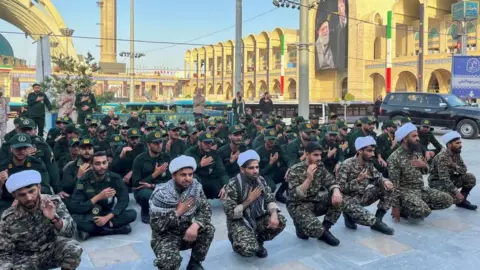
Khamenei’s body will then travel to Najaf in Iraq on Wednesday. Following a procession at the shrine of Imam Ali, Shia Islam’s first imam, ceremonies will continue in Karbala before the body returns to Iran.
Iranian officials say the Iraq events follow requests from Iraqi groups, with some analysts seeing them as representative of Khamenei’s influence across the Shia Muslim world and Iran’s religious and political ties across the region.
Iranian Foreign Minister Abbas Araghchi visited Baghdad to coordinate the arrangements, saying the funeral had a “symbolic importance”.
On Thursday, Khamenei will be buried in the city of his birth, Mashhad, at the Imam Reza Shrine, the mausoleum of Shia Islam’s eighth imam and Iran’s most important pilgrimage site, which attracts millions of visitors each year.
Representatives from multiple countries are expected to attend the ceremonies, including Pakistan’s Prime Minister Shehbaz Sharif.
Ceremonies will continue across the country for 40 days, with commemorative events planned until the first anniversary of Khamenei’s burial.
Khamenei was succeeded by his son, Mojtaba, who has not been seen in public since becoming supreme leader.
Key questions around the ceremony centre on whether Mojtaba will attend the funeral.
Last week, secretary of the organising committee, Ali Akbar Pourjamshidian, said any decision on Mojtaba’s attendance would be announced by the offices of the armed forces commander-in-chief and the supreme leader.
Questions also remain about who will lead the funeral prayer, as in Shia tradition the role carries religious and political significance.
[BBC]
Nigeria says it will seek compensation from South Africa for its citizens who have left the country following recent protests targeting undocumented migrants.
Foreign ministry spokesperson Kimiebi Imomotimi Ebienfa told the BBC that the issue would be discussed between the two governments “at the highest levels”.
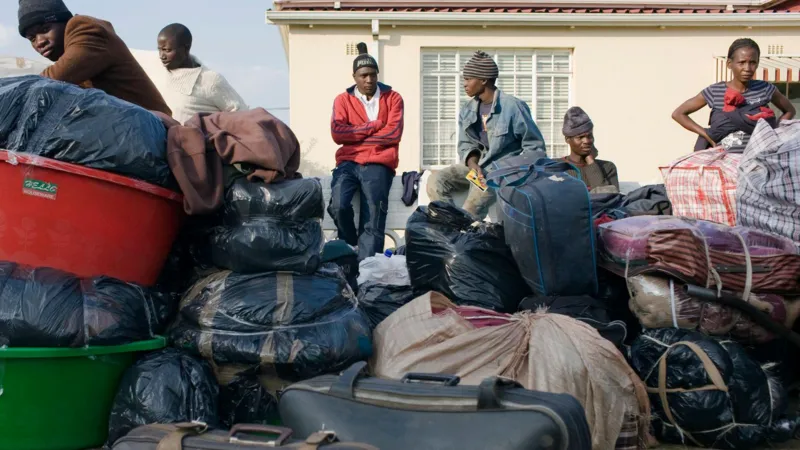
Acting High Commissioner to South Africa Alexander Ajayi said on local television on Tuesday that the government had begun documenting businesses and properties left behind by Nigerians.
One Nigerian trader waiting to be repatriated told the BBC he had lived in South Africa for nearly a decade and had abandoned his business and home because he feared for his safety.
Oghodero Erejor Wilson, 32, said he was losing “everything because of fear”.
“I left everything in my house including clothes.”
He is among hundreds of Nigerians still waiting to be evacuated from South Africa. More than 600 Nigerians have already been repatriated in recent weeks.
The South African authorities say those who have been flown home were in the country illegally – though this is disputed by Nigeria.
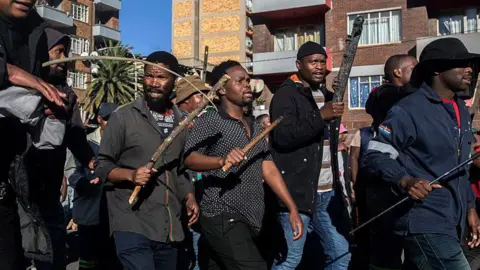
About 25,000 nationals of other African countries have left South Africa following a wave of protests in recent weeks by groups demanding that the government does more to curb illegal migration.
Some anti-migrant groups had given undocumented foreigners a deadline of 30 June to leave the country and organised marches attended by thousands of people on Tuesday. These were largely peaceful but there were isolated incidents of violence against foreigners.
The South African police say that about 900 people were arrested, mostly for immigration-related offences and looting.
The BBC has asked South Africa’s government for comment on Nigeria’s compensation demand.
Nigeria’s acting high commissioner said he had asked all of those who had left South Africa “to document very accurately those things they were leaving behind in terms of businesses, in terms of even cars, movable and immovable properties”.
Foreign ministry spokesperson Ebienfa told the BBC that all claims would be verified before any formal request was made
“We have not severed ties with South Africa, we are still engaging them at the highest level, we will sort those details using our usual diplomatic channels,” he said.
Wilson, the trader, said he had run a clothing business in the South African city of Centurion in Gauteng province for several years.
But he said he had now closed his shop and fled to stay near the Nigeria High Commission in South Africa’s capital, Pretoria.
Scheduled to leave on the next repatriation flight to Nigeria on Friday, he estimates the goods left in his shop are worth more than 16,000 rand ($975; £735).
Wilson said his residency documents had expired in 2021 and he had been unable to renew them.
He said he was not very hopeful about the prospect of getting compensation.
“If South Africa government can compensate it, it will be nice, but I know they won’t,” he said.
(BBC)

Iran promotes message of continuity and revenge at Khamenei commemoration

The Colombo Plan celebrates its 75th Anniversary

Mbappe draws level with Messi as France beat Paraguay to set up Morocco tie

Ticket prices plunge for USA-Belgium World Cup last-16 match

Ounahi fires Morocco into World Cup quarterfinals with 3-0 win over Canada

Huge crowds mourn Khamenei, Trump vows calm during funeral

‘Dates have the highest sugar content to fight Coronavirus’

Sunday Island 27 December – Headlines

#SundayIsland 17th December – Headlines

Sunday Island – 28th March

Sunday Island Headlines – 21 March

Sunday Island – 21st February – Headlines
-
 News6 days ago
LAWASIA warns against ad hoc initiative to increase judges’ retirement ages
-
 Features5 days ago
Climate action to bring South Asia together
-
 News5 days ago
Chamuditha to seek removal of injunction on Youtube programme
-
 News1 day ago
Freedom 250: US Embassy celebrates America’s 250th Independence Day through magic of American cinema
-
 News2 days ago
CIABOC to question Harak Kata on Rs. 200 mn bribery allegation
-
 News2 days ago
SLAF conducts successful rescue mission under UN command in Central African Republic
-

 Midweek Review4 days ago
H’tota port’s strategic status remains focal point of geopolitical scrutiny
-
 News5 days ago
CPRP alleges another death in custody, seeks protection for witness