
Features
“The Flyer With a Big Heart”


Remembering Thibba –
by Nilakshan Perera
My acquaintance with Thibba goes back to March 1979, when I was being inducted as a prefect. As prefects, we had to report to the college and be at the duty points by 6.55am. So I used to travel on the Moratuwa bus instead of my usual 100 Panadura school bus which usually arrived at college by 7.05am, where I met Thibba from opposite Airport Ratmalana, where he was residing down Airport Road. We used to occupy the long seat at the rear of the bus which was shared by the most “mischievous students” on the bus. This friendship blossomed with our shared interests in Cadetting, Cricket, Table tennis, and Swimming. Though Thibba was senior to me by one year we became good friends. After leaving college this great friendship strengthened even further. While Thibba joined the Airforce as an Officer Cadet I had the good fortune to be selected as an Officer Cadet at the Kotelawela Defence Academy (KDA). It so happened that Thibba, TTK Seneviratne, and Ruwan Punchihetti were stationed with us in our final year at the Cadet Wing of KDA in 1985, while doing their flying training attached to Ratmalana Airport which was adjoining KDA. As young cadets we shared many memorable adventures laced with strenuous training, partying, visiting friends, and sometimes playing truant.
28th Oct 1985 one of Thibba’s close friends and batchmate Harshan Jayasinghe ( retired as Squadron Leader in Dec 1996, presently residing in Perth Western Australia, Harshan is an experience banker cum lawyer) disclosed to Thibba from Batticolo where he was the OC of SLAF Batticaloa detachment, one of our schoolmates who played in the pivotal position of the full-back for many years in the Ananda Rugby team, SI Athula Perera (fondly known as Sudu Athula) died during a terrorist landmine explosion at Vellavali in Kalawanchikudy. Thibba suggested we pay our last respects and asked me to be ready by 2300hrs and came to pick me on a motorcycle. It was a blue color Honda CD 200 Roadmaster which he had borrowed from a friend of his down Borupone Road. On our way to the funeral house at Maharagama, Thibba asked me to ride as I love riding and especially this CD 200 as it gives a nice beat. When we were there at the funeral house I noticed that late Athula’s IP insignias were placed wrongly, so I rearranged it correctly. Then Thibba said, “You got a good eye for detail Machan, so please do the same at my funeral as well, and check that everything is in its correct place, if I die during the war”. I never realized nor believed it would happen nor the gravity of it. We spent a few hours there and came back via Bellanwila, not forgetting to have a good load of Koththu and Egg Hoppers from a Ra Kade at Bellaththara.
On our last day at KDA in Nov 1985, Thibba exchanged his photograph with me as this was a custom at KDA. TTK and Ruwan Punchihetti too did likewise and this was an emotional time for all of us( I still have those). During this period the War had escalated and we were all well aware we were facing uncertain times. Each of us embarked on our journeys chartering our destinies.
 I well remember my last meeting with Thibba and that day is vividly etched in my memory. It was on 11th Sept 1995 at Maj Jagath Rambukpotha’s ( retired as Major General on 7th July 2016 as Chief of Staff of the Office of Chief of Defence Staff, General with an abundance of military knowledge. A professional Gunnery Officer, who initiated and put in place many new ventures in the SL Artillery and who wears a pleasant smile always) wedding at Grand Orient Hotel. At our table, either side of me was Thibba, and my Course Officer, Lt Col Jayavi Fernando (An architect of Motive and Fighting skills of Special Forces, led troops from the front in many Special Forces battles and shared the pain. Lethal but human great officer lives in the hearts of as highly respected by his subordinates. Retired as Colonel on 31st Oct 1998 as Brigade Commander of Elite Special Forces ) we were reminiscing of our good old days and all those stories were related by Thibba to my wife Rasadari with great humor and laughter, as Thibba was a great storyteller with a lot of humor and light-heartedness.
Thejananda Jayanthalal Chandrasiri Bandara Thibbotumunuwe was born on 8th Nov 1961 to Mr. Ukkubanda Thibbotumunuwe ( A Locomotive Engineer) & Mrs. Somawathi Manike Thiibbotumunuwe (Housewife). He was the 7th child of their family of 9 children. Growing up in a large family may have had a very positive influence on him, as while at school and later on as an Officer in the Sri Lanka Air Force he had proved himself to be an absolute “Team Man” and had always put others before self. This supreme quality of his was displayed to the very end of his life. Like his father and older brother he too had his entire education at Ananda. While in school he was affectionately known as Thibba and even after leaving college this name stuck to him so much so that even after joining the Air Force he would be referred to as Squadron Leader Thibba or even as “Thibba Sir” to some of his juniors.
Even while at school, Thibba’s only ambition was to become a Flyer in the Air Force. His elder brother was an officer attached to Regiment of Artillery ( Maj Gen HB Thibbotumunuwe, retired on 08th Dec 2004, as Quarter Master General) and this too may have inspired Thibba (Jr) to aspire to join the Air Force. While at school Thibba was a keen sportsman. He was a great swimmer having represented the college at the highest level, member of the Under 17 Cricket Team which became All Island Runners up in 1979 under Lasitha Cumarathunge’s Captaincy. Senior Cadet in 1981 which Udeni Jayathillake led the Platoon, and he was also a keen Table Tennis player at college.
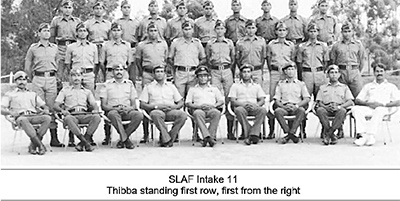
One day Thibba took a News Paper advertisement to his swimming teammate Lasitha Devendra. ( Known as Deva to his batchmates, left the SLAF and presently serves as an IT Consultant, also as a senior IT lecturer in leading state Universities, former Dean of Faculty of Information Technology at Aquinas ) On the same day, they both applied for the Cadetships of SLAF. After successful preliminary interviews, they both with 20 others were finally enlisted to the 11th Intake of Sri Lanka Air Force as Officer Cadets on 18th April 1983. There were 4 from Ananda, Thibba, Razali Noordeen, Lasitha Devendra, and Ushan Wickramasinghe, 3 from Royal, Harshan Jayasinghe, Buwaneka Abeysuriya, Kumar Kiridena, 2 from Nalanda, Chandana Welkala, Mahesh Jayasuriya, 2 from St Thomes’s Mt Lavina, Arulampalam & Kolitha Sri Nissanka, Prashan de Mel from Prince of Wales, TTK Seneviratne from Trinity, Indika Fernando from Joseph Vas Wennappuwa, Harsha Fernando from St Peter’s, Senerath Dissanayake from Gampola Central, Firshan Hassim from DS Senanayake, Rohintha Fernando from St Joseph’s, Suresh Nicholus from Maris Stella Negombo, Asitha Kodithuwakku from St Anthony’s Kandy, Sanjaka Wijemanne from St Anne’s Kurunegala, and Rohan Corea from St Anthony’s Wattala.
They were directly sent to Diyatalawa for Basic Military Training. His batch mates got to know the real Thibba during this physically enduring training programs. His patience, comradeship, dedication to supporting others under extreme conditions was par excellence. One can identify their true self only under very hard times during training. Tibba was a great team player. After exhaustive training days, Tibba was used to sleeping the entire night in a seated position and refused to use his arranged bed prepared for the next day’s morning inspections. He always encouraged, supported all his batch mates, and was probably the friendliest colleague to all. After completing the basic course, they were sent to ChinaBay, Trincomalee for their branch specialization training. Thibba was selected to be a pilot with TTK Seneviratne, while 5 joined Technical Engineering Branch and 15 joined Admin / Regiment Branch.
After being Commissioned as a Flyer Thibba was fully engaged in the flight operations of the Transport Squadron. He was very well conversant as a Captain of Y-8, Y-12, AN 32, and AVRO aircrafts used for air transportation of Troops and Logistics of the Three Services. Under normal situations, SLAF Base Ratmalana was the main airfield used for operating transport flights to Palaly, China Bay. Batticoloa, Vavuniya, etc. However when the ongoing war intensified SLAF decided to use SLAF Base Anuradhapura as the Central Airfield so that it could increase the number of sorties done per day as a result of this reduced flight time, enabling better utilization of available resources. During this period Thibba as well as other flyers were starting flights early in the morning and continuing till late at night. Their selfless, dedicated, and unconditional services were unmatched and greatly admired and appreciated by everyone in our Tri Forces. Thibba was a very familiar figure to everyone who sought Air passage for their leave or getting back to service.
 In mid-1990 the LTTE suddenly started attacking military camps in the East. At that time SLAF had only Italian made SIAI-Marchetti SF 260TP as ground-attack aircraft powered by a single Allison 250 Turboprop engine which could carry only 2 X 100Kg bombs as external loads. The entire fleet was fully deployed for air to ground attacks. These aircraft were stationed at Hingurakkoda, even though it was not a Base Camp then. At that time SLAF was short of qualified pilots for SIAI-Marchetti aircraft. As such few pilots including Thibba, Harsha Abeywickrama (a former Commander of the SLAF in 2012-14 and retired as Air Chief Marshel) RP Parkiyanathan ( Wing Commander died, on 13th Sept 1995 Aircraft crash), Bandu Kumbalathara ( retired as Wing Commander in 1999) who were flying transport flights volunteered to fly SIAI- Marchetti Aircraft. Once Thibba had been on a mission to destroy LTTE targets and after accomplishing it returned to base. Soon after he touched the runway the engine had stalled. The Engineering Officer in charge of the fleet, Flight Lieutenant Ruwan Upul Perera (retired in 2005 as Wing Commander) had got the ground crew to tow the aircraft to the Parking Apron. Subsequent checks revealed that the engine stopped due to fuel starvation as Thibba had used maximum fuel that was available to accomplish the mission to the best of his ability, Thibba was solucky that day that he could make a safe landing. If his mission got delayed by another few seconds he would have been in great danger.
Another incident was when Thibba was flying from Palali to Ratmalana with 120 soldiers on board coming on leave. When he was about to land he observed on the control panel that the wheels were not coming out for landing. Now his only option was to attempt a crash-landing without the wheels. To minimize the risk of a fire and even a possible explosion Thibba decided to empty the fuel tank by flying a few rounds above the sea and do a belly landing at Ratmalana. While he was flying around the Airport, a higher rank army officer who was on board had asked, “Aren’t we landing?” Thibba answered quietly and calmly that there was a problem with the landing gear and that he was trying to empty the fuel tank so that the risk of fire will be minimized while landing. After listening to this, everyone was most anxious and extremely worried. By now the airport control tower was informed and all firefighters and other emergency procedures were ready on either side of the runway. When he approached the runway to crash-land, Air Traffic Control had informed that the wheels had come out to do a normal safe landing. It turned out that it was only a faulty indicator on the control panel. Everyone breathed a sigh of relief when they heard that they can safely land. While everyone on board was anxious and even panicked, Thibba had been as cool as a cucumber even in the face of death. That speaks volumes for the great temperament of this gallant flyer. Thibba was a very skillful and adventurous pilot.
When Palali was under siege in the early 1990s and an Aircraft could not land, Thibba innovated new landing techniques, which surprised the SLAF top-brass, and continued to deliver rations and military hardware to troops stationed in the North. Once, at an airshow in China, Thibba piloted a Y-12 Chinese-made aircraft, and the maneuvering techniques he displayed astonished all the spectators, including the aircraft manufacturers. Thibba, with over 5000 flying hours, was not only one of the most experienced pilots, he was one of the most innovative pilots and was able to “make even the impossible possible.”
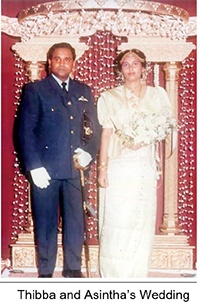
Thibba met Asintha Jayawardane, former Vishaka Vidyalaya Western Band Leader, through his batch-mate and pilot buddy TTK Seneviratne ( who died in an SIAI-Marchetti crash at Beruwala on 26th March 1986 with pilot, Officer Cadet Ruwan Punchihette). Asintha is TTK’s cousin. After a few years of association, they got married on 8th March 1990. Asintha and Thibba had decided to stay at Ratmalana Married Officer’s quarters. They were blessed with two sons, Menuka and Diluka.
Thibba was a very trusted and very sincere friend to many. He was chubby, round-faced and always with a smile, blessed with a great sense of humor and was extremely kindhearted and sympathetic towards everyone. These qualities were displayed many times to security force personnel who were at Palali Airport waiting desperately to go back home. Especially if your name was not in the flight manifest, you earnestly prayed to be sent by Thibba in his AVRO, Y-8, or Y -12. If he comes, he will ensure that you will be onboard. There was a period where Thibba was flying AVRO aircrafts continuously without any rest. Nobody knows how many casualties he flew. He had spoken to most of them personally, and reassured them, wishing them a speedy recovery. How many lives Thibba has saved is anyone’s guess. On many occasions, he has gone to the extent of arranging his vehicle to transport colleagues to let them attend family events, like birthdays or weddings. He has also spoken to his Zonal Commander during the flight and has arranged transport for others on many occasions regardless of rank or file.
‘No’ and ‘can’t’ were nonexistent in his vocabulary. If anyone ever wanted anything of him, he would do his utmost to oblige. He would even go to the extent of bending the rules as his desire to be of help to others took precedence over everything else. In short, “he had a heart of gold”. To add to his heart of gold he was blessed with exceptional skills and nerves of steel. He was a pilot par excellence. Adverse and risky encounters he took on his stride. It was almost second nature to him. On two occasions he had landed SLAFs “trusted Old War Horse” Avro’s with jammed nose wheels, for example. His dedication and commitment to duty were way beyond what was expected and he had been commended personally by the Commander of the Air Force on several occasions.
Operation Rivirasa was a combined military operation launched by the Sri Lankan Armed Forces in Jaffna in October 1995. The primary objective of the operation was the capture of the city of Jaffna and the rest of the Jaffna peninsula from the LTTE It is believed that Operation Riviresa was the largest and most successful military operation at that point in time. SLAF flights were fully engaged with heavy flying commitments and SLAF had lost three Transport and Ground Attack Aircraft during 1995 due to terrorist missile fire and none of them survived. The ever-present possibility of a surface-to-air missile was a relatively new phenomenon in the war and even though the pilots were well aware of the imminent danger there were many brave pilots like Thibba who volunteered to fly to Palali to facilitate troop movements and keep the vital air supply line open.
On 18th Nov 1995, there was a very important flight to be made, with a consignment of urgently needed military cargo for advancing troops of Operation Rivirasa as they were just two kilometers from the City of Jaffna. Around 6.00 am on that fateful day Thibba on his Maruti Jeep went to pick Sqd Ldr Lalith Nanayakkara,and then to pick up Sqd Ldr Bandu Kumbalathara. The flight was a Y-8 that could carry 120 onboard or 20,000kgs of cargo. Onboard with Thibba as Captain, Copilot Sqd Ldr Bandu Kumalatara, Squadron Leader Lalith Nanayakkara as Engineering Officer with Flight Lieutenant Prasanna Balasuriya as communicator, Flying Officer Sanjeewa Gunawardena the navigator, and Corporal Jayasinghe as loadmaster. They took off from Ratmalana by 6.50 am. When they hit 13,000 feet and approached Mannar Island they were all alert and serious about the territory and maintained a safe distance from the coastline to avoid possible ground attacks by the terrorists. Using a pre-arranged coded message Thibba informed the Palali control tower of their estimated time of arrival and started descending. Thibba reduced the engine power and set the Y – 8 in the descending altitude. The most prudent and safes air-path to Pallali was over the sea as the runway was only one kilometer from the coastal belt. Flying Officer Sanjeewa Gunawardane was searching for any unidentified boat movements as the sea was very calm. The flight now descended to 500 feet and speed was almost 300 kmph. They were 7-8 Kms from the airfield but over the sea as they did a low-level approach to avoid possible enemy missile attacks from the uncleared Thondamannar area. SL Navy Dvoras were visible patrolling the area as well as an armored helicopter already placed on their approach path to protect the Y-8. They descended to 300 feet now, and the runway and Palali communication tower were visible. Just then the navigator Fly Off Sanjeewa Gunawardane shouted “two high-speed boats are approaching on our left.” At the same time, Palali Control Tower also informed the same but before they could complete the message they heard the loud explosion on the left-wing.
Simultaneously the Aircraft went into an uncontrollable nosedive. Thibba and his co-pilot Kumbalathara tried their best to control the plane but within a few seconds of the explosion, the Shaanxi Y- 8, one of the most popular Aircraft of SL Security forces crashed into the sea almost 3 kms from the coastline with 6 persons onboard and a payload of 35,490Kgs. Before the huge aircraft submerged Thibba, Co-pilot, and Flight Engineer managed to creep through a window and get out of the Aircraft. They removed their boots and were floating expecting the hovering Helicopters which were giving air cover or Naval boats which were giving sea cover to come and rescue. Both Thibba and his Copilot were great swimmers having participated in the Mt Lavinia 2 miles swimming event as schoolboys, but unfortunately, the Flight Engineer was not good at swimming. By this time they were caught in the crossfire between Navy and LTTE. Flight Engineer Sqd Ldr Lalith Nanayakkara was a big made officer and bigger than Thibba. Thibba tried his best to hold him and swim and Kumbalatara drifted away with the waves. The rest of the crew were sadly trapped in the aircraft not being able to come out and they went down with the Aircraft. The BELL 212 helicopter which was hovering above was unable to reach them as the fire from LTTE was so intense. The Helicopter crew spotted the copilot who was drifting towards the other side and they threw an inflated tube connected to a lifeline and rescued him into the chopper.
Later Thubba and Lalith Nanayakkara were spotted floating very close to each other and their heads were beneath the water. They both were unconscious and the helicopter crew could not take them on board and the pilot directed Naval crafts to that location and flew off to Palali. Naval crafts managed to reach Thibba and Nanayakkara and took them to Palali Military hospital, but sadly by that time both were pronounced dead.
Wing Commander TJCB Thibbatumunawe RWP had made the supreme sacrifice not just protecting his Motherland but also doing his utmost to save his friend and colleague. Later that afternoon a Sri Lanka Air Force Antonon AN 32 carried the bodies of Thibba and Nana to Ratmalana. The next day the body of Bala was found trapped inside the ill-fated aircraft by divers but the bodies of Fly Officer Sanjeewa Gunawardane and Sgt Jayasinghe were not found. Thibba being an experienced swimmer and lifeguard had done his utmost to help his Flight Engineer even at the last minutes of his life. Thibba being a strong swimmer there was every possibility that he could have saved himself by swimming towards one of the Naval vessels which were in the vicinity. But our Thibba, “The Lion Heart” ,was not going to let go of his mate to save himself.
Thibba’s body was taken to their residence at Wewalduwa Road Kelaniya and the funeral was held on the 20th evening with full Military Honors at Borella Kanatta amidst a large gathering of Military personnel, his college friends, and relatives. To bid my final farewell to my dear friend Thibba was a heart-wrenching moment for me. What he said to me at our former schoolmate IP Athula Perera’s funeral was ringing in my ears –”You got a good eye for detail Machan, so please do the same at my funeral aswell, and check that everything is in its correct place, if I die during the war”. Through tear-filled eyes, when I looked, there was nothing left for me to do, everything was in perfect order. Only survivor Wing Commander Bandu Kumbalathara retired from SLAF in 1999 and is now a Captain for Sri Lankan flying A320/A330.
At the time of Thibba’s sudden demise, his loving wife Asintha was six months pregnant with their third son. The eldest Menuka was just 5 years and Dliuka was 3 1/2 years. Asintha being a courageous lady singlehandedly brought up the 3 children with sheer dedication and commitment. She volunteered to offer her services at Ananda primary Library as Librarian until her three sons completed their primary schooling. She was a dedicated mother and was right behind her three sons when they were doing after school activities. She truly was Mother Courage personified. Like Thibba all three sons were highly involved in Swimming and Basketball and they won Island championships while representing Ananda. The eldest, Menuka, joined Sri Lanka Air Force as a Pilot like his beloved father and he is a Flight Lieutenant and Helicopter Pilot based in Anuradhapura Air Base MI Squadron.
Menuka married Sahani Jayathilake ( Familien, Executive in Commercial Bank) on 16th May 2019 and were blessed with a baby boy, Ayuk Kiveth Bandara Thibbotumunuwe ( 4th Generation of Anandians)
Second son Diluka, former National record holder for breaststroke with many national records for swimming and also a South Asian Games Bronze Medalist while still a schoolboy at Ananda joined Sri Lanka Navy and is presently holding the rank of Lt attached to an Auxiliary Vessel A521 as a Diving Officer. Diluka is a qualified Diver having completed specialized courses in China and India and winning the accolades of Best Clearance Diving Officer and Best Combat Diver. Diluka got married to Madusha Welihinda (Vishakian, Senior Software Engineer at IFS) on 8th January 2020.
The youngest son, Chamika, who had not seen his father, is reading his MBA at the University of Wolverhampton after graduating with first-class Honors.
It is now 25 years since Thibba left us forever. We all miss him dearly but still relive some of the wonderful memories he left us with. Where ever he may be his heart must be filled with pride at how his boys have turned out to be. Asinitha the love of his life took on the mantle of bringing up his sons for both of them. How proud and happy he would have been to be with his family and friends today. We miss you Thibba but we all are so proud and privileged to have known you and thankful for the time we shared with you. I wish to end this tribute to my gallant friend with the following dedication to Thibba.
With nerves of steel and a heart of gold
Thibba you Legend – our Flyer so bold
Three sons and a loving wife, you cherished to hold
You left behind with sorrow untold.
You served Sri Lanka with flamboyant flair.
Always considerate kind and fair
You flew many sorties with no rest or care
You were the best – a flyer so rare.
From where you left, your sons take on
Protecting Lanka – their lives go on
Brave Flyer, true friend, you soldier on
You may be gone but your legend lives on…….
May you Rest In Peace my gallant friend and may your journey through Sansara be short.



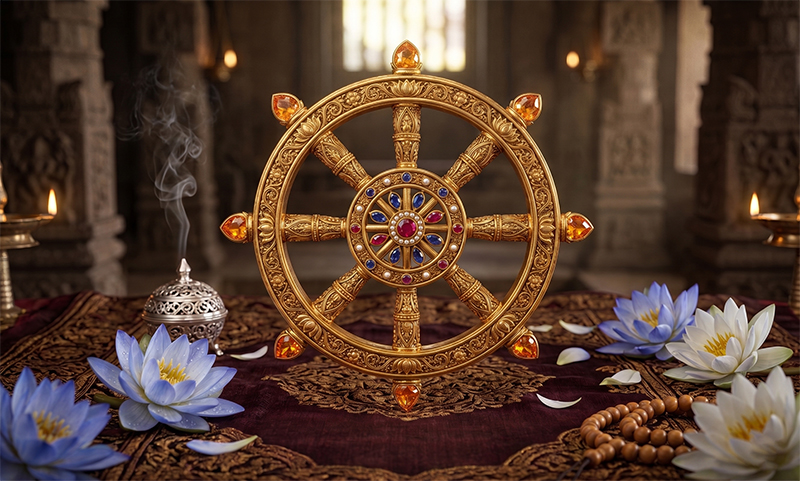
Life, by its very nature, invariably presents a myriad of challenges that are fundamental to the human experience. The various social ills that afflict humanity cannot be understood without recognizing the profound human dynamics at play. Navigating these challenges according to Buddhism involves shifting from attempting to control external circumstances to mastering one’s internal responses. Central to these challenges are certain detrimental drives stemming from pernicious distortions in the functioning of the human mind.
According to Buddhism, human suffering—both on a personal and societal level—arises from three unwholesome roots: greed, hatred, and ignorance or delusion. These roots manifest primarily as the unbridled proliferation of these negative states, serving as the foundation for our conduct. The Buddhist perspective offers profound insights for confronting these difficulties by emphasizing the nature of suffering, known as dukkha. Buddhism teaches that suffering (dukkha) is an inevitable part of life and is fueled by greed, hatred, and ignorance or delusion. This approach promotes mental transformation through mindfulness, ethical living, and the cultivation of wisdom, empowering individuals to confront their struggles with clarity and resilience.
Furthermore, accepting that suffering and difficulty are inherent parts of the human experience—while expecting life to be free of challenges—is, in itself, a cause of suffering. It is also important to recognize that all situations, whether good or bad, are temporary. This understanding helps reduce anxiety when facing difficult times, as these will eventually pass, and it prevents possessiveness during happy moments. Cultivating mindfulness (sati) and living in the present moment without dwelling on the past or worrying about the future is essential.
Understanding that all things—emotions, situations, relationships, and physical bodies—are constantly changing and in a state of flux helps reduce the fear of loss and provides comfort during difficult times, ensuring that we know pain will pass. Moreover, recognizing that the self, or ego, is not a fixed entity minimizes selfish grasping, arrogance, and the tendency to perceive challenges as personal attacks.
At the core of many human challenges lie the three unwholesome mental qualities identified by Buddhism: greed (raga), hatred (dovesa), and ignorance or delusion (avijja or moha). These states of mind serve as obstacles to spiritual progress and underlie a spectrum of harmful thoughts and actions. The Buddha employed powerful metaphors to illustrate these forces, referring to them as the three poisons or fires that ignite suffering and trap beings in the cycle of samsara.
Greed leads to insatiable desires that obscure our awareness of others’ needs, creating a cycle of frustration. Greed encompasses all forms of appetite, such as desire, lust, craving, and longing, manifesting in both physical and mental forms. It embodies the concept of grasping, leading to clinging and an inability to let go. As an unwholesome mental state, greed can become insatiable and inexhaustible. People are often drawn to pleasant things, and no amount of forms, sounds, smells, tastes, tangibles, or mental objects can satisfy their desires. In their intense thirst for possession or gratification of desire, individuals may become trapped in the wheel of samsara, overlooking the needs of marginalized groups based on religion and ethnicity (as noted by Piyadassi Thera). Those who overcome greed realize that all mundane pleasures are fleeting and transient. In a society driven by consumerism, people may find themselves endlessly chasing after things of little value, becoming enslaved by them.
Hatred is another unwholesome mental state that fosters division and conflict, distancing us from genuine relationships. It encompasses unwholesome mental states such as ill will, enmity, hostility, and prejudice. Hatred can be subtle, lying dormant in a person’s mind until it finds expression in unexpected moments. This destructive emotion can degenerate into mass-scale violence and bloodshed within society. Today, hatred and hostility against minorities based on religion and ethnicity are prevalent in many countries. People are often targeted by bigotry and hate, leading to a rise in antagonistic and derogatory behavior toward certain religious and ethnic groups. Hatred, enmity, and retaliation do not foster spiritual well-being; rather, they vitiate our own minds. Buddhists are encouraged to cultivate metta (loving-kindness). Greed and hatred, coupled with ignorance, are the chief causes of the evils that pervade this deluded world. As noted by Narada, “The enemy of the whole world is lust (greed), through which all evils come to living beings. This lust, when obstructed by some cause, transforms into wrath.”
The most profound of these afflictions, ignorance (avijja) or delusion (moha), clouds our judgment and obscures our capacity for understanding, causing us to harm ourselves and others through misguided actions. Addressing bhikkhus, the Buddha declared, ” I do not perceive any single hindrance other than the hindrance of ignorance by which mankind is obstructed, and for so long as in samsara, it is indeed through the hindrance of ignorance that humankind is obstructed and for a long time runs on, wanders in samsara. No other single thing exists like the hindrance of ignorance or delusion, which obstructs humankind and make wander forever. This unwholesome mindset generates negative speech, actions, and thoughts, perpetuating our own suffering. As stated in the Dhammapada, “All mental phenomena have mind as their forerunner; if one speaks or acts with an evil mind, suffering follows.”
Buddhism urges us to go beyond merely addressing the symptoms of our problems. Instead, it invites us to explore the roots of our suffering and examine how greed, hatred, and ignorance manifest in our lives. By uncovering these sources of distress, we can cultivate essential qualities such as compassion, loving-kindness (metta), and acceptance. These virtues are crucial for ethical engagement with significant societal issues, including environmental challenges and social inequality.
In a world marked by material prosperity and emotional chaos, many individuals may feel lost or overwhelmed. The teachings of the Buddha remain relevant today, reminding us that the origins of our struggles often reside within our own minds. By practising ethical self-discipline and steering clear of destructive emotions like jealousy, anger, and arrogance, we can transform our experiences and relationships.
Buddhism teaches that cultivating wholesome mental qualities is essential for spiritual advancement. The positive counterparts to the three unwholesome states are non-greed (alobha), non-hatred (adosa), and non-delusion (amoha). These virtues represent not merely the absence of negativity but also the active presence of beneficial qualities such as generosity (dana), loving kindness (metta), and wisdom (panna). Each of these six mental states serves as a foundation for both personal growth and societal harmony.
Human beings are often tempted by moral transgressions rooted in unwholesome qualities. Actions driven by greed, hatred and ignorance require wisdom and mindful awareness to overcome them, allowing us to see the interconnectedness of all beings and act accordingly.
As we strive to abandon these unwholesome states of mind and cultivate awareness, we contribute positively to our lives and the broader world. By embracing Buddhist teachings, we learn that transforming our minds can significantly impact our experiences and the lives of those around us. Through this mindful practice, we can aspire to create a more compassionate, harmonious existence, transcending the limitations of unwholesome mental states and fostering a deeper connection with ourselves and others.
by Dr. Chandradasa Nanayakkara

Buddhism, perhaps, is not a religion if the definition of religion is strictly applied. However, by an extension of that definition, as well as by consensus, Buddhism is considered a religion and is the fourth largest religion with about half a billion followers worldwide. Of the four great religions in the world, Christianity is still way ahead with 2.6 billion adherents, followed by Islam with 1.9 billion and Hinduism with 1.2 billion followers. In most Western Christian countries church attendances are on the decline whilst the numbers following Islam are increasing with Islamic youth displaying signs of increasing religious ardour. There are recent reports that Buddhism has also joined the ranks of shrinking religions. Is this cause for concern? Is this happening by the very nature of Buddhism?
Hinduism, the world’s oldest living religion rooted in the Indus Valley Civilization and dating back at least four millennia, is considered to have evolved from ancient cultural and religious practices than being founded by a single individual, unlike the other three religions. The Buddha differs from Jesus Christ and Prophet Mohammed in many ways, the most important being that there is no higher power involved in what the Buddha discovered.
Jesus Christ is considered the ‘Son of God’ and Christianity is built on the life, resurrection and teachings of Christ with emphasis on the belief in one God expressed through the Trinity: God the Father, Jesus the Son and the Holy Spirit. Therefore, there is no room for questioning the words of the Almighty passed through the Son.
Islam, with its Five Pillars of faith, frequent daily prayers, charity, fasting during Ramadan and pilgrimage to Mecca, is founded on revelations made by Almighty God, Allah, to Mohammed, the last of his Prophets, which are recorded in verse in the Holy Book, Quran. Muslims consider the Quran to be verbatim words of God and the unaltered, final revelation. This leaves even less room for questioning.
In contrast, the Buddha achieved everything by himself with no help from any higher source. Rebelling against some of the practices in the religion to which he was born and seeking a solution to the ever-pervading sense of dissatisfaction, Prince Siddhartha embarked on a journey of discovery that culminated in Enlightenment, under the Bodhi tree on the full moon day of the month of Vesak.
Hinduism, or Sanatana Dharma as traditionally referred to by followers, encompasses the concepts of Karma, Samsara, Moksha and Dharma with a creator Brahma, preserver Vishnu and destroyer Shiva. In addition, there are multitudes of gods serving various functions and there are ritual practices of Puja (worship), Bhakti (devotion), Yajna (sacrificial rites) in addition to meditation and Yoga. The one thing that has blighted Hinduism, on top of sacrifices, is the caste system. The uncompromising attitude of Brahmins led to the formation Sikhism as well, long after the establishment of Buddhism.
Prince Siddhartha studied under eminent teachers of the day, of which there were many, but realised the limitations of their knowledge. Having already given up the extreme of luxury, he went to the other extreme of self-deprivation which after a search for six years, he realised also was not the solution to the problem. Exploring through his mind he realised the truth and came up with the Four Noble Truths and the Noble Eightfold Path. He shunned extremes and proposed the Middle Path which seems to hold sway in many spheres of life, even today.
Buddha’s greatest achievement was the analysis of the mind and scientists are only now establishing the accuracy of the concepts the Buddha elucidated, not with the help of supernatural powers or sophisticated machinery at the disposal of modern-day scientists but by the exploration of the mind by turning the searchlight inwards.
Having discovered the cause of universal dissatisfaction and the path to overcome it, the Buddha walked across vast swathes of India, most likely barefoot, preaching to many, in terms they could understand, as evidenced by the different suttas illustrating the same fact in different ways; to the intelligent it was a short explanation but for others it was a more detailed discussion.
In sharp contrast to all other religious leaders, the Buddha encouraged discussion and challenge before acceptance. What the Buddha stated in the Kalama Sutta, acceptance only after conviction, laid the foundation for scientific thinking.
The Buddha, being a human not supernatural, never claimed infallibility as evidenced by his agreement with his father King Suddhodana that ordaining his son Rahula without permission was a mistake and took steps to ensure that this did not happen again. In fact, the entire Vinaya Pitaka is not an arbitrary rule book laid down by the Buddha, but are the rules the Buddha laid down for the Sangha, based on errant actions by Bhikkhus. Long before the legal concept of retroactive justice was established, the Buddha implemented it in the Vinaya Pitaka.
In an interesting video on YouTube titled “Nature of Buddhism”, Bhante Dhammika of Australia (https://www.youtube.com/watch?v=KY8WfGJq2FI) discusses some unique aspects of Buddhism. Some religions are ‘high demand’ religions where the followers are required to strictly adhere to certain rules which is not the case in Buddhism and he opines that this has led to the gentleness of Buddhists, at times leading to even being lackadaisical! Interestingly, as a widely travelled person, he describes his personal experience of the change of people’s attitudes on going from places with Buddhist influence to others. Speaking of Sri Lanka, where he spent many years, he commends the traditional hospitality as well as lack of cruelty to animals. He refers to “Law based religions” where some things are compulsory whereas in Buddhism there is no compulsion. Buddha was not a lawgiver but recommended good behaviour, giving reasons why and encouraged thinking. Some religions are exclusivist, claiming that there is nothing in other religions. Buddhism is not and Bhante Dhammika refers to an incident where the Buddha encouraged a disciple who converted from Jainism to continue to give alms to his former Jain colleagues.
Have all these strengths of Buddhism become its weakness and the reason for the shrinking number of followers? Had Buddhism demanded more from followers would it have flourished better? Is the numbers game that important? These are interesting questions to ponder over and I am sure, in time, researchers would write theses on these.
Whilst total numbers may diminish in traditional Buddhist areas, more people in the West are recognising the value of the philosophy of Buddhism. Mindfulness, a concept the Buddha introduced is gaining wide acceptance and is increasingly applied in many spheres of modern life. Perhaps, what is important is not the numbers that practise Buddhism as a religion but the lasting influence of the Buddha’s concepts and foundations he laid for modern scientific thinking and analysis of the mind!
By Dr Upul Wijayawardhana

 It would not be particularly revelatory to say that the US is plagued by ‘gun violence’. It is a deeply entrenched and widespread malaise that has come in tandem with the relative ease with which firearms could be acquired and owned by sections of the US public, besides other causes.
However, a third apparent attempt on the life of US President Donald Trump in around two and a half years is both thought-provoking and unsettling for the defenders of democracy. After all, whatever its short comings the US remains the world’s most vibrant democracy and in fact the ‘mightiest’ one. And the US must remain a foremost democracy for the purpose of balancing and offsetting the growing power of authoritarian states in the global power system, who are no friends of genuine representational governance.
Therefore, the recent breaching of the security cordon surrounding the White House Correspondents’ Dinner in Washington at which President Trump and his inner Cabinet were present, by an apparently ‘Lone Wolf’ gunman, besides raising issues relating to the reliability of the security measures deployed for the President, indicates a notable spike in anti-VVIP political violence in particular in the US. It is a pointer to a strong and widespread emergence of anti-democratic forces which seem to be gaining in virulence and destructiveness.
The issues raised by the attack are in the main for the US’ political Right and its supporters. They have smugly and complacently stood by while the extremists in their midst have taken centre stage and begun to dictate the course of Right wing politics. It is the political culture bred by them that leads to ‘Lone Wolf’ gunmen, for instance, who see themselves as being repressed or victimized, taking the law into their own hands, so to speak, and perpetrating ‘revenge attacks’ on the state and society.
A disproportionate degree of attention has been paid particularly internationally to Donald Trump’s personality and his eccentricities but such political persons cannot be divorced from the political culture in which they originate and have their being. That is, “structural” questions matter. Put simply, Donald Trump is a ‘true son’ of the Far Right, his principal support base. The issues raised are therefore for the President as well as his supporters of the Right.
We are obliged to respect the choices of the voting public but in the case of Trump’s election to the highest public position in the US, this columnist is inclined to see in those sections that voted for Trump blind followers of the latter who cared not for their candidate’s suitability, in every relevant respect, and therefore acted irrationally. It would seem that the Right in the US wanted their candidate to win by ‘hook or by crook’ and exercise power on their behalf.
By making the above observations this columnist does not intend to imply that voting publics everywhere in the world of democracy cast their vote sensibly. In the case of Sri Lanka, for example, the question could be raised whether the voters of the country used their vote sensibly when voting into office the majority of Executive Presidents and other persons holding high public office. The obvious answer is ‘no’ and this should lead to a wider public discussion on the dire need for thoroughgoing voter education. The issue is a ‘huge’ one that needs to be addressed in the appropriate forums and is beyond the scope of this column.
Looking back it could be said that the actions of Trump and his die-hard support base led to the Rule of Law in the US being undermined as perhaps never before in modern times. A shaming moment in this connection was the protest march, virtually motivated by Trump, of his supporters to the US Capitol on January 6th, 2021, with the aim of scuttling the presidential poll result of that year. Much violence and unruly behaviour, as known, was let loose. This amounted to denigrating the democratic process and encouraging the violent take over of the state.
In a public address, prior to the unruly conduct of his supporters, Trump is on record as blaring forth the following: ‘We won this election and we won by a landslide’, ‘We will stop the steal’, ‘We will never give up. We will never concede. It doesn’t happen’, ‘If you don’t fight like hell, you’re not going to have a country anymore.’
It is plain to see that such inflammatory utterances could lead impressionable minds in particular to revolt violently. Besides, they should have led the more rationally inclined to wonder whether their candidate was the most suitable person to hold the office of President.
Unfortunately, the latter process was not to be and the question could be raised whether the US is in the ‘safest pair of hands’. Needless to say, as events have revealed, Donald Trump is proving to be one of the most erratic heads of state the US has ever had.
However, the latest attempt on the life of President Trump suggests that considerable damage has been done to the democratic integrity of the US and none other than the President himself has to take on himself a considerable proportion of the blame for such degeneration, besides the US’ Far Right. They could be said to be ‘reaping the whirlwind.’
It is a time for soul-searching by the US Right. The political Right has the right to exist, so the speak, in a functional democracy but it needs to take cognizance of how its political culture is affecting the democratic integrity or health of the US. Ironically, the repressive and chauvinistic politics advocated by it is having the effect of activating counter-violence of the most murderous kind, as was witnessed at the White House Correspondents’ Dinner. Continued repressive politics could only produce more such incidents that could be self-defeating for the US.
Some past US Presidents were assassinated but the present political violence in the country brings into focus as perhaps never before the role that an anti-democratic political culture could play in unraveling the gains that the US has made over the decades. A duty is cast on pro-democracy forces to work collectively towards protecting the democratic integrity and strength of the US.

Spirit Airlines shutting down after rescue talks collapse

Jacobs’ blazing 62* counters Shoriful three-for as New Zealand level series

Chamari Athapaththu’s all-round heroics carries Sri Lanka to 3-0 sweep of Bangladesh

US said to be withdrawing 5,000 troops from Germany over Iran war spat

Bangladesh eye rare double-series win over New Zealand in rainy Dhaka

Rahul, Nissanka fifties lead 226 chase as Delhi Capitals return to winning ways

‘Dates have the highest sugar content to fight Coronavirus’

Sunday Island 27 December – Headlines

#SundayIsland 17th December – Headlines

Sunday Island – 28th March

Sunday Island Headlines – 21 March

Sunday Island – 21st February – Headlines
-
 News4 days ago
Treasury chief’s citizenship details sought from Australia
-

 News6 days ago
BIA drug bust: 25 monks including three masterminds arrested
-

 Business7 days ago
Nestlé Lanka Announces Change in Leadership
-
 News7 days ago
Hackers steal $3.2 Mn from Finance Ministry
-

 News6 days ago
Banks alert customers to phishing attacks
-

 News3 days ago
Rooftop Solar at Crossroads as Sri Lanka Shifts to Distributed Energy Future
-
 News5 days ago
Govt. assures UN of readiness to introduce ‘vetting process’ for troops on overseas missions
-

 Business5 days ago
ADB-backed grid upgrade tender signals next phase of Sri Lanka’s energy transition