
Features
“The Flyer With a Big Heart”


Remembering Thibba –
by Nilakshan Perera
My acquaintance with Thibba goes back to March 1979, when I was being inducted as a prefect. As prefects, we had to report to the college and be at the duty points by 6.55am. So I used to travel on the Moratuwa bus instead of my usual 100 Panadura school bus which usually arrived at college by 7.05am, where I met Thibba from opposite Airport Ratmalana, where he was residing down Airport Road. We used to occupy the long seat at the rear of the bus which was shared by the most “mischievous students” on the bus. This friendship blossomed with our shared interests in Cadetting, Cricket, Table tennis, and Swimming. Though Thibba was senior to me by one year we became good friends. After leaving college this great friendship strengthened even further. While Thibba joined the Airforce as an Officer Cadet I had the good fortune to be selected as an Officer Cadet at the Kotelawela Defence Academy (KDA). It so happened that Thibba, TTK Seneviratne, and Ruwan Punchihetti were stationed with us in our final year at the Cadet Wing of KDA in 1985, while doing their flying training attached to Ratmalana Airport which was adjoining KDA. As young cadets we shared many memorable adventures laced with strenuous training, partying, visiting friends, and sometimes playing truant.
28th Oct 1985 one of Thibba’s close friends and batchmate Harshan Jayasinghe ( retired as Squadron Leader in Dec 1996, presently residing in Perth Western Australia, Harshan is an experience banker cum lawyer) disclosed to Thibba from Batticolo where he was the OC of SLAF Batticaloa detachment, one of our schoolmates who played in the pivotal position of the full-back for many years in the Ananda Rugby team, SI Athula Perera (fondly known as Sudu Athula) died during a terrorist landmine explosion at Vellavali in Kalawanchikudy. Thibba suggested we pay our last respects and asked me to be ready by 2300hrs and came to pick me on a motorcycle. It was a blue color Honda CD 200 Roadmaster which he had borrowed from a friend of his down Borupone Road. On our way to the funeral house at Maharagama, Thibba asked me to ride as I love riding and especially this CD 200 as it gives a nice beat. When we were there at the funeral house I noticed that late Athula’s IP insignias were placed wrongly, so I rearranged it correctly. Then Thibba said, “You got a good eye for detail Machan, so please do the same at my funeral as well, and check that everything is in its correct place, if I die during the war”. I never realized nor believed it would happen nor the gravity of it. We spent a few hours there and came back via Bellanwila, not forgetting to have a good load of Koththu and Egg Hoppers from a Ra Kade at Bellaththara.
On our last day at KDA in Nov 1985, Thibba exchanged his photograph with me as this was a custom at KDA. TTK and Ruwan Punchihetti too did likewise and this was an emotional time for all of us( I still have those). During this period the War had escalated and we were all well aware we were facing uncertain times. Each of us embarked on our journeys chartering our destinies.
 I well remember my last meeting with Thibba and that day is vividly etched in my memory. It was on 11th Sept 1995 at Maj Jagath Rambukpotha’s ( retired as Major General on 7th July 2016 as Chief of Staff of the Office of Chief of Defence Staff, General with an abundance of military knowledge. A professional Gunnery Officer, who initiated and put in place many new ventures in the SL Artillery and who wears a pleasant smile always) wedding at Grand Orient Hotel. At our table, either side of me was Thibba, and my Course Officer, Lt Col Jayavi Fernando (An architect of Motive and Fighting skills of Special Forces, led troops from the front in many Special Forces battles and shared the pain. Lethal but human great officer lives in the hearts of as highly respected by his subordinates. Retired as Colonel on 31st Oct 1998 as Brigade Commander of Elite Special Forces ) we were reminiscing of our good old days and all those stories were related by Thibba to my wife Rasadari with great humor and laughter, as Thibba was a great storyteller with a lot of humor and light-heartedness.
Thejananda Jayanthalal Chandrasiri Bandara Thibbotumunuwe was born on 8th Nov 1961 to Mr. Ukkubanda Thibbotumunuwe ( A Locomotive Engineer) & Mrs. Somawathi Manike Thiibbotumunuwe (Housewife). He was the 7th child of their family of 9 children. Growing up in a large family may have had a very positive influence on him, as while at school and later on as an Officer in the Sri Lanka Air Force he had proved himself to be an absolute “Team Man” and had always put others before self. This supreme quality of his was displayed to the very end of his life. Like his father and older brother he too had his entire education at Ananda. While in school he was affectionately known as Thibba and even after leaving college this name stuck to him so much so that even after joining the Air Force he would be referred to as Squadron Leader Thibba or even as “Thibba Sir” to some of his juniors.
Even while at school, Thibba’s only ambition was to become a Flyer in the Air Force. His elder brother was an officer attached to Regiment of Artillery ( Maj Gen HB Thibbotumunuwe, retired on 08th Dec 2004, as Quarter Master General) and this too may have inspired Thibba (Jr) to aspire to join the Air Force. While at school Thibba was a keen sportsman. He was a great swimmer having represented the college at the highest level, member of the Under 17 Cricket Team which became All Island Runners up in 1979 under Lasitha Cumarathunge’s Captaincy. Senior Cadet in 1981 which Udeni Jayathillake led the Platoon, and he was also a keen Table Tennis player at college.
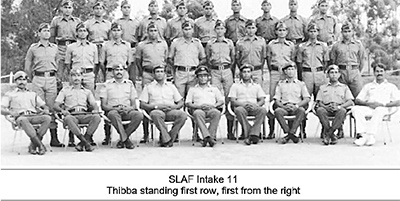
One day Thibba took a News Paper advertisement to his swimming teammate Lasitha Devendra. ( Known as Deva to his batchmates, left the SLAF and presently serves as an IT Consultant, also as a senior IT lecturer in leading state Universities, former Dean of Faculty of Information Technology at Aquinas ) On the same day, they both applied for the Cadetships of SLAF. After successful preliminary interviews, they both with 20 others were finally enlisted to the 11th Intake of Sri Lanka Air Force as Officer Cadets on 18th April 1983. There were 4 from Ananda, Thibba, Razali Noordeen, Lasitha Devendra, and Ushan Wickramasinghe, 3 from Royal, Harshan Jayasinghe, Buwaneka Abeysuriya, Kumar Kiridena, 2 from Nalanda, Chandana Welkala, Mahesh Jayasuriya, 2 from St Thomes’s Mt Lavina, Arulampalam & Kolitha Sri Nissanka, Prashan de Mel from Prince of Wales, TTK Seneviratne from Trinity, Indika Fernando from Joseph Vas Wennappuwa, Harsha Fernando from St Peter’s, Senerath Dissanayake from Gampola Central, Firshan Hassim from DS Senanayake, Rohintha Fernando from St Joseph’s, Suresh Nicholus from Maris Stella Negombo, Asitha Kodithuwakku from St Anthony’s Kandy, Sanjaka Wijemanne from St Anne’s Kurunegala, and Rohan Corea from St Anthony’s Wattala.
They were directly sent to Diyatalawa for Basic Military Training. His batch mates got to know the real Thibba during this physically enduring training programs. His patience, comradeship, dedication to supporting others under extreme conditions was par excellence. One can identify their true self only under very hard times during training. Tibba was a great team player. After exhaustive training days, Tibba was used to sleeping the entire night in a seated position and refused to use his arranged bed prepared for the next day’s morning inspections. He always encouraged, supported all his batch mates, and was probably the friendliest colleague to all. After completing the basic course, they were sent to ChinaBay, Trincomalee for their branch specialization training. Thibba was selected to be a pilot with TTK Seneviratne, while 5 joined Technical Engineering Branch and 15 joined Admin / Regiment Branch.
After being Commissioned as a Flyer Thibba was fully engaged in the flight operations of the Transport Squadron. He was very well conversant as a Captain of Y-8, Y-12, AN 32, and AVRO aircrafts used for air transportation of Troops and Logistics of the Three Services. Under normal situations, SLAF Base Ratmalana was the main airfield used for operating transport flights to Palaly, China Bay. Batticoloa, Vavuniya, etc. However when the ongoing war intensified SLAF decided to use SLAF Base Anuradhapura as the Central Airfield so that it could increase the number of sorties done per day as a result of this reduced flight time, enabling better utilization of available resources. During this period Thibba as well as other flyers were starting flights early in the morning and continuing till late at night. Their selfless, dedicated, and unconditional services were unmatched and greatly admired and appreciated by everyone in our Tri Forces. Thibba was a very familiar figure to everyone who sought Air passage for their leave or getting back to service.
 In mid-1990 the LTTE suddenly started attacking military camps in the East. At that time SLAF had only Italian made SIAI-Marchetti SF 260TP as ground-attack aircraft powered by a single Allison 250 Turboprop engine which could carry only 2 X 100Kg bombs as external loads. The entire fleet was fully deployed for air to ground attacks. These aircraft were stationed at Hingurakkoda, even though it was not a Base Camp then. At that time SLAF was short of qualified pilots for SIAI-Marchetti aircraft. As such few pilots including Thibba, Harsha Abeywickrama (a former Commander of the SLAF in 2012-14 and retired as Air Chief Marshel) RP Parkiyanathan ( Wing Commander died, on 13th Sept 1995 Aircraft crash), Bandu Kumbalathara ( retired as Wing Commander in 1999) who were flying transport flights volunteered to fly SIAI- Marchetti Aircraft. Once Thibba had been on a mission to destroy LTTE targets and after accomplishing it returned to base. Soon after he touched the runway the engine had stalled. The Engineering Officer in charge of the fleet, Flight Lieutenant Ruwan Upul Perera (retired in 2005 as Wing Commander) had got the ground crew to tow the aircraft to the Parking Apron. Subsequent checks revealed that the engine stopped due to fuel starvation as Thibba had used maximum fuel that was available to accomplish the mission to the best of his ability, Thibba was solucky that day that he could make a safe landing. If his mission got delayed by another few seconds he would have been in great danger.
Another incident was when Thibba was flying from Palali to Ratmalana with 120 soldiers on board coming on leave. When he was about to land he observed on the control panel that the wheels were not coming out for landing. Now his only option was to attempt a crash-landing without the wheels. To minimize the risk of a fire and even a possible explosion Thibba decided to empty the fuel tank by flying a few rounds above the sea and do a belly landing at Ratmalana. While he was flying around the Airport, a higher rank army officer who was on board had asked, “Aren’t we landing?” Thibba answered quietly and calmly that there was a problem with the landing gear and that he was trying to empty the fuel tank so that the risk of fire will be minimized while landing. After listening to this, everyone was most anxious and extremely worried. By now the airport control tower was informed and all firefighters and other emergency procedures were ready on either side of the runway. When he approached the runway to crash-land, Air Traffic Control had informed that the wheels had come out to do a normal safe landing. It turned out that it was only a faulty indicator on the control panel. Everyone breathed a sigh of relief when they heard that they can safely land. While everyone on board was anxious and even panicked, Thibba had been as cool as a cucumber even in the face of death. That speaks volumes for the great temperament of this gallant flyer. Thibba was a very skillful and adventurous pilot.
When Palali was under siege in the early 1990s and an Aircraft could not land, Thibba innovated new landing techniques, which surprised the SLAF top-brass, and continued to deliver rations and military hardware to troops stationed in the North. Once, at an airshow in China, Thibba piloted a Y-12 Chinese-made aircraft, and the maneuvering techniques he displayed astonished all the spectators, including the aircraft manufacturers. Thibba, with over 5000 flying hours, was not only one of the most experienced pilots, he was one of the most innovative pilots and was able to “make even the impossible possible.”
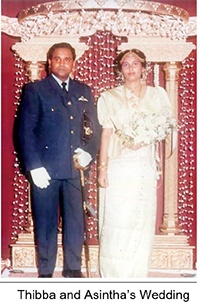
Thibba met Asintha Jayawardane, former Vishaka Vidyalaya Western Band Leader, through his batch-mate and pilot buddy TTK Seneviratne ( who died in an SIAI-Marchetti crash at Beruwala on 26th March 1986 with pilot, Officer Cadet Ruwan Punchihette). Asintha is TTK’s cousin. After a few years of association, they got married on 8th March 1990. Asintha and Thibba had decided to stay at Ratmalana Married Officer’s quarters. They were blessed with two sons, Menuka and Diluka.
Thibba was a very trusted and very sincere friend to many. He was chubby, round-faced and always with a smile, blessed with a great sense of humor and was extremely kindhearted and sympathetic towards everyone. These qualities were displayed many times to security force personnel who were at Palali Airport waiting desperately to go back home. Especially if your name was not in the flight manifest, you earnestly prayed to be sent by Thibba in his AVRO, Y-8, or Y -12. If he comes, he will ensure that you will be onboard. There was a period where Thibba was flying AVRO aircrafts continuously without any rest. Nobody knows how many casualties he flew. He had spoken to most of them personally, and reassured them, wishing them a speedy recovery. How many lives Thibba has saved is anyone’s guess. On many occasions, he has gone to the extent of arranging his vehicle to transport colleagues to let them attend family events, like birthdays or weddings. He has also spoken to his Zonal Commander during the flight and has arranged transport for others on many occasions regardless of rank or file.
‘No’ and ‘can’t’ were nonexistent in his vocabulary. If anyone ever wanted anything of him, he would do his utmost to oblige. He would even go to the extent of bending the rules as his desire to be of help to others took precedence over everything else. In short, “he had a heart of gold”. To add to his heart of gold he was blessed with exceptional skills and nerves of steel. He was a pilot par excellence. Adverse and risky encounters he took on his stride. It was almost second nature to him. On two occasions he had landed SLAFs “trusted Old War Horse” Avro’s with jammed nose wheels, for example. His dedication and commitment to duty were way beyond what was expected and he had been commended personally by the Commander of the Air Force on several occasions.
Operation Rivirasa was a combined military operation launched by the Sri Lankan Armed Forces in Jaffna in October 1995. The primary objective of the operation was the capture of the city of Jaffna and the rest of the Jaffna peninsula from the LTTE It is believed that Operation Riviresa was the largest and most successful military operation at that point in time. SLAF flights were fully engaged with heavy flying commitments and SLAF had lost three Transport and Ground Attack Aircraft during 1995 due to terrorist missile fire and none of them survived. The ever-present possibility of a surface-to-air missile was a relatively new phenomenon in the war and even though the pilots were well aware of the imminent danger there were many brave pilots like Thibba who volunteered to fly to Palali to facilitate troop movements and keep the vital air supply line open.
On 18th Nov 1995, there was a very important flight to be made, with a consignment of urgently needed military cargo for advancing troops of Operation Rivirasa as they were just two kilometers from the City of Jaffna. Around 6.00 am on that fateful day Thibba on his Maruti Jeep went to pick Sqd Ldr Lalith Nanayakkara,and then to pick up Sqd Ldr Bandu Kumbalathara. The flight was a Y-8 that could carry 120 onboard or 20,000kgs of cargo. Onboard with Thibba as Captain, Copilot Sqd Ldr Bandu Kumalatara, Squadron Leader Lalith Nanayakkara as Engineering Officer with Flight Lieutenant Prasanna Balasuriya as communicator, Flying Officer Sanjeewa Gunawardena the navigator, and Corporal Jayasinghe as loadmaster. They took off from Ratmalana by 6.50 am. When they hit 13,000 feet and approached Mannar Island they were all alert and serious about the territory and maintained a safe distance from the coastline to avoid possible ground attacks by the terrorists. Using a pre-arranged coded message Thibba informed the Palali control tower of their estimated time of arrival and started descending. Thibba reduced the engine power and set the Y – 8 in the descending altitude. The most prudent and safes air-path to Pallali was over the sea as the runway was only one kilometer from the coastal belt. Flying Officer Sanjeewa Gunawardane was searching for any unidentified boat movements as the sea was very calm. The flight now descended to 500 feet and speed was almost 300 kmph. They were 7-8 Kms from the airfield but over the sea as they did a low-level approach to avoid possible enemy missile attacks from the uncleared Thondamannar area. SL Navy Dvoras were visible patrolling the area as well as an armored helicopter already placed on their approach path to protect the Y-8. They descended to 300 feet now, and the runway and Palali communication tower were visible. Just then the navigator Fly Off Sanjeewa Gunawardane shouted “two high-speed boats are approaching on our left.” At the same time, Palali Control Tower also informed the same but before they could complete the message they heard the loud explosion on the left-wing.
Simultaneously the Aircraft went into an uncontrollable nosedive. Thibba and his co-pilot Kumbalathara tried their best to control the plane but within a few seconds of the explosion, the Shaanxi Y- 8, one of the most popular Aircraft of SL Security forces crashed into the sea almost 3 kms from the coastline with 6 persons onboard and a payload of 35,490Kgs. Before the huge aircraft submerged Thibba, Co-pilot, and Flight Engineer managed to creep through a window and get out of the Aircraft. They removed their boots and were floating expecting the hovering Helicopters which were giving air cover or Naval boats which were giving sea cover to come and rescue. Both Thibba and his Copilot were great swimmers having participated in the Mt Lavinia 2 miles swimming event as schoolboys, but unfortunately, the Flight Engineer was not good at swimming. By this time they were caught in the crossfire between Navy and LTTE. Flight Engineer Sqd Ldr Lalith Nanayakkara was a big made officer and bigger than Thibba. Thibba tried his best to hold him and swim and Kumbalatara drifted away with the waves. The rest of the crew were sadly trapped in the aircraft not being able to come out and they went down with the Aircraft. The BELL 212 helicopter which was hovering above was unable to reach them as the fire from LTTE was so intense. The Helicopter crew spotted the copilot who was drifting towards the other side and they threw an inflated tube connected to a lifeline and rescued him into the chopper.
Later Thubba and Lalith Nanayakkara were spotted floating very close to each other and their heads were beneath the water. They both were unconscious and the helicopter crew could not take them on board and the pilot directed Naval crafts to that location and flew off to Palali. Naval crafts managed to reach Thibba and Nanayakkara and took them to Palali Military hospital, but sadly by that time both were pronounced dead.
Wing Commander TJCB Thibbatumunawe RWP had made the supreme sacrifice not just protecting his Motherland but also doing his utmost to save his friend and colleague. Later that afternoon a Sri Lanka Air Force Antonon AN 32 carried the bodies of Thibba and Nana to Ratmalana. The next day the body of Bala was found trapped inside the ill-fated aircraft by divers but the bodies of Fly Officer Sanjeewa Gunawardane and Sgt Jayasinghe were not found. Thibba being an experienced swimmer and lifeguard had done his utmost to help his Flight Engineer even at the last minutes of his life. Thibba being a strong swimmer there was every possibility that he could have saved himself by swimming towards one of the Naval vessels which were in the vicinity. But our Thibba, “The Lion Heart” ,was not going to let go of his mate to save himself.
Thibba’s body was taken to their residence at Wewalduwa Road Kelaniya and the funeral was held on the 20th evening with full Military Honors at Borella Kanatta amidst a large gathering of Military personnel, his college friends, and relatives. To bid my final farewell to my dear friend Thibba was a heart-wrenching moment for me. What he said to me at our former schoolmate IP Athula Perera’s funeral was ringing in my ears –”You got a good eye for detail Machan, so please do the same at my funeral aswell, and check that everything is in its correct place, if I die during the war”. Through tear-filled eyes, when I looked, there was nothing left for me to do, everything was in perfect order. Only survivor Wing Commander Bandu Kumbalathara retired from SLAF in 1999 and is now a Captain for Sri Lankan flying A320/A330.
At the time of Thibba’s sudden demise, his loving wife Asintha was six months pregnant with their third son. The eldest Menuka was just 5 years and Dliuka was 3 1/2 years. Asintha being a courageous lady singlehandedly brought up the 3 children with sheer dedication and commitment. She volunteered to offer her services at Ananda primary Library as Librarian until her three sons completed their primary schooling. She was a dedicated mother and was right behind her three sons when they were doing after school activities. She truly was Mother Courage personified. Like Thibba all three sons were highly involved in Swimming and Basketball and they won Island championships while representing Ananda. The eldest, Menuka, joined Sri Lanka Air Force as a Pilot like his beloved father and he is a Flight Lieutenant and Helicopter Pilot based in Anuradhapura Air Base MI Squadron.
Menuka married Sahani Jayathilake ( Familien, Executive in Commercial Bank) on 16th May 2019 and were blessed with a baby boy, Ayuk Kiveth Bandara Thibbotumunuwe ( 4th Generation of Anandians)
Second son Diluka, former National record holder for breaststroke with many national records for swimming and also a South Asian Games Bronze Medalist while still a schoolboy at Ananda joined Sri Lanka Navy and is presently holding the rank of Lt attached to an Auxiliary Vessel A521 as a Diving Officer. Diluka is a qualified Diver having completed specialized courses in China and India and winning the accolades of Best Clearance Diving Officer and Best Combat Diver. Diluka got married to Madusha Welihinda (Vishakian, Senior Software Engineer at IFS) on 8th January 2020.
The youngest son, Chamika, who had not seen his father, is reading his MBA at the University of Wolverhampton after graduating with first-class Honors.
It is now 25 years since Thibba left us forever. We all miss him dearly but still relive some of the wonderful memories he left us with. Where ever he may be his heart must be filled with pride at how his boys have turned out to be. Asinitha the love of his life took on the mantle of bringing up his sons for both of them. How proud and happy he would have been to be with his family and friends today. We miss you Thibba but we all are so proud and privileged to have known you and thankful for the time we shared with you. I wish to end this tribute to my gallant friend with the following dedication to Thibba.
With nerves of steel and a heart of gold
Thibba you Legend – our Flyer so bold
Three sons and a loving wife, you cherished to hold
You left behind with sorrow untold.
You served Sri Lanka with flamboyant flair.
Always considerate kind and fair
You flew many sorties with no rest or care
You were the best – a flyer so rare.
From where you left, your sons take on
Protecting Lanka – their lives go on
Brave Flyer, true friend, you soldier on
You may be gone but your legend lives on…….
May you Rest In Peace my gallant friend and may your journey through Sansara be short.








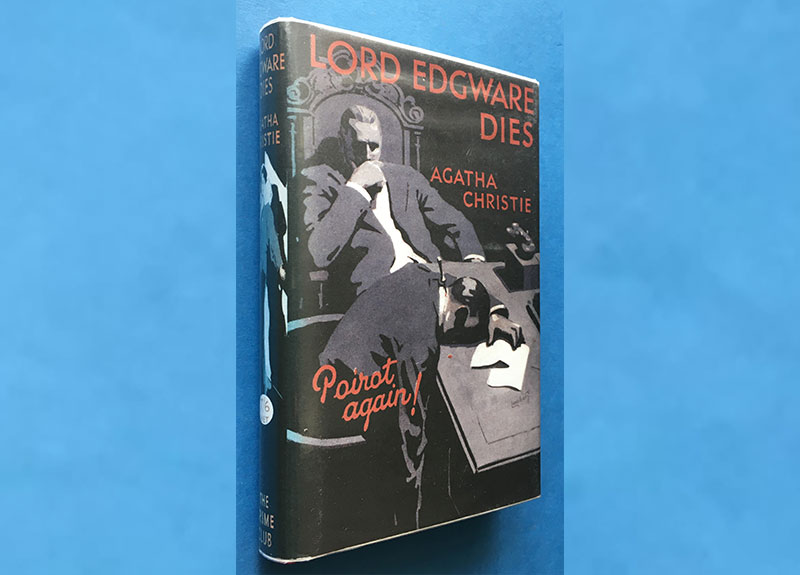
It has been some time since I read an Agatha Christie, the plot of which I cannot remember. So, I was delighted to find on the shelves of a friend Lord Edgware Dies, which I had a vague memory of, but no certainty about who had done it.
When I read it, I found that my memory of who was probably the killer was correct, but I could not be certain and the red herrings Christie threw in were so diverting that until almost the very end I wondered if I had been wrong.
The plot is very simple. Jane Wilkinson, who is married to Lord Edgware, tells him that she is desperate for a divorce since she is in love with a very proper Anglo-Catholic peer, Lord Melton, but Edgware refuses to divorce her. She asks Poirot to talk to him, which he does, and is surprised to find that Edgware has told Jane he is prepared to give her a divorce. This was, after he had categorically refused, through a letter, which Jane said she had not received.
That night Edgware is murdered, after Jane had been to see him, or so the butler said, and also Edgware’s secretary. But Jane had been that evening at a grand dinner many miles away, where a dozen fellow guests could swear to her presence.
There was a solution however to the mystery of two Jane Wilkinsons, namely a skilful impersonator called Carlotta Adams who, in the opening chapter had impersonated Jane Wilkinson, who had also been at the performance. But when Poirot goes to see her, he finds that she had been found dead on the morning after Edgware had been killed, of an overdose. And in her bag was a gold case, with a strange inscription, that contained the drug, along with a pair of pince-nez.
Her maid said she had written a letter to her sister in America and posted it the previous night. Poirot asks Inspector Japp to get the letter, and a transcript is received from America, and in it the name of Edgware’s nephew Ronald Marsh is mentioned; he had taken Carlotta to dinner after her performance, with which the book opens, and had then set her a challenge. Japp arrests Marsh, but Poirot is not happy and asks for the original of the letter, which the sister sends him. That shows that a page is missing, and the tear is obvious, though that raises the question as to why it had not simply been cut.
Matters are further complicated by the fact that Marsh had gone in a taxi to the Edgware house, along with Edgware’s daughter Geraldine, in the interval of an opera which had previously seemed to provide them with cast iron alibis. Geraldine had gone in to fetch her pearls so that Marsh could raise money he needed, and thus had an opportunity to kill Edgware, as did Marsh, for the driver said he had got out of the taxi while waiting and gone into the house.
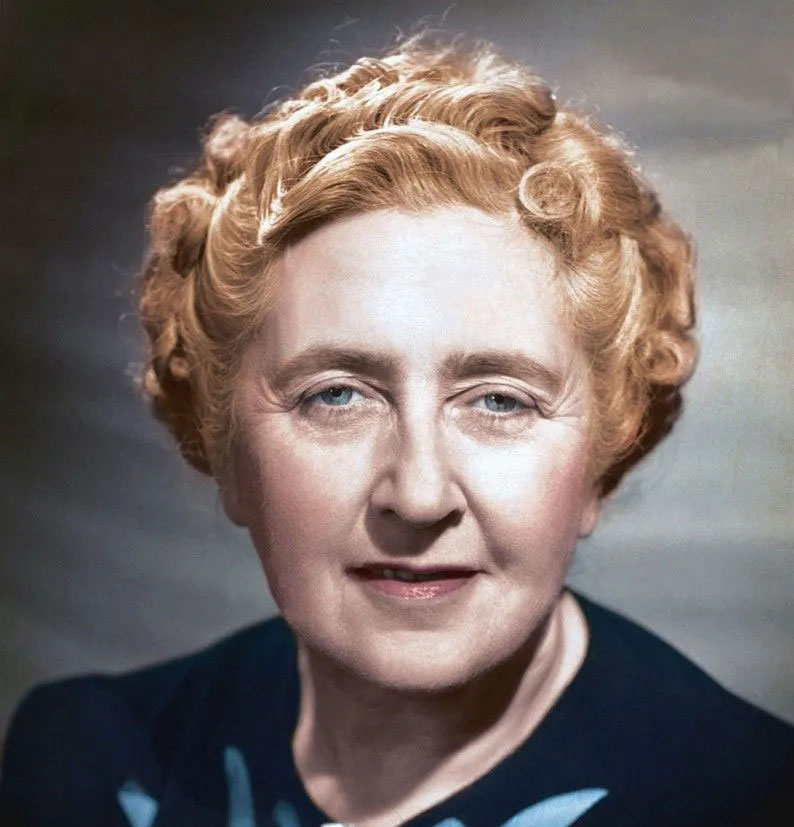
Agatha Christie
Marsh explained why he had gone to the house on the night of the murder as having followed Bryan Martin, an American actor, who had been in love with Jane, whom he saw go into the house with a key. But there was no one visible when he entered, and Geraldine almost immediately came down and they left together. And Martin too has become an object of suspicion to Poirot, for he had been to see him before the murders were discovered with a story of being followed by a man with a gold tooth – a story Poirot immediately realized was false when he was asked how old the man was, and was told he was young, for young people did not have gold teeth.
A heap of French money Edgware had got for a trip to Paris was missing, but since Marsh had no need for it after his cousin’s offer of help, Poirot deduces that it must have been taken by the butler, who has disappeared. Christie has stressed that he is astonishingly handsome, unusual in a butler, and Poirot notes a resemblance to Martin, so he thinks the mysterious man going into the house must have been him.
Incidentally, later Poirot assumes that Edgware’s change of mind was because he was involved in some scandal, and I believe Christie intends us to see the cause of this in his handsome butler, though this is not specified.
Meanwhile, Poirot has asked Japp to find out the provenance of the case found in Carlotta’s handbag, and it turns out to have been made in Paris, specially commissioned, and collected by a woman with pince-nez.
But then another murder occurs—that of another guest at the grand dinner, which provided Jane with her alibi. The victim is an actor who had been bemused when Jane, at a lunch, thought the Judgment of Paris referred to the city. He told Hastings he wanted to see Poirot, but was killed before he could get to the appointment. Poirot had rushed there when told about his request, but it was too late.
Meanwhile, Poirot has tried out the pince-nez on Edgware’s secretary, but she could not see through these. It was only a chance remark heard outside the theatre that led him to try them out on Wilkinson’s maid Ellis, a spare pair that had been appropriated for the night of the murders.
Poirot then lays things out, having summoned Martin and told him that he probably suppressed Edgware’s letter, as he had been dropped by then and he did not want Jane to marry another. But after teasing Martin, Poirot says that Jane was in fact the murderer, and she got Carlotta to impersonate her at the dinner while she went to the house and killed her husband. After meeting Carlotta later and checking with her through a call that she had not been rumbled, Jane had gone ahead with the murder – she put veronal into her drink and the case with veronal into the handbag. She forgot to take out the pince-nez she had used earlier to imitate an American. Carlotta had registered as the American in a hotel and Jane had gone to see her, and there they exchanged identities. After seen the letter, she made use of it by tearing off the page that referred to her, and the S of She, so that the person who had challenged Carlotta to impersonate her seemed to be a man.
There is a coda in which Jane, condemned to death, writes to Hastings, still full of pride at her ingenuity hoping she will be remembered.
by Prof. O. A. Ileperuma
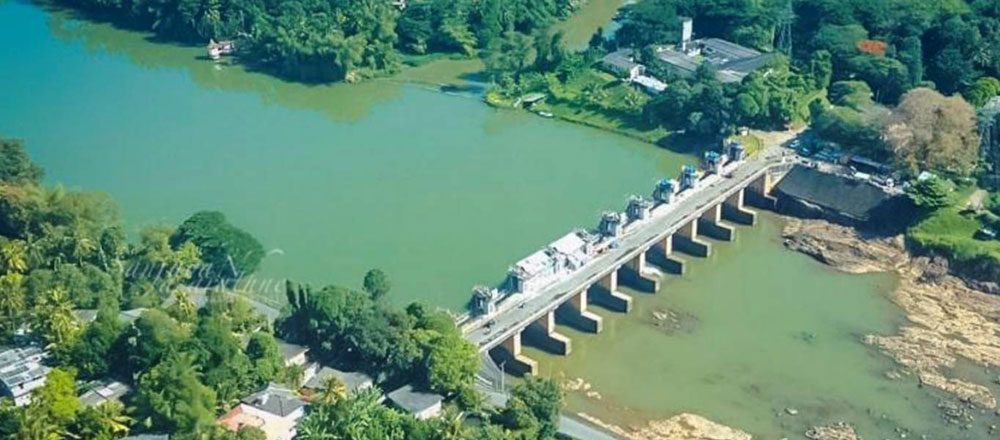
Silting of reservoirs is a major problem today affecting our hydropower production and irrigation systems. The main Mahaweli reservoirs are silted to a considerable extent reducing the water holding capacity of them. Due to poor soil management practices, floodwaters deposit large amounts of silt in these reservoirs. When the Polgolla reservoir was fully drained about two years back, one could see mountains of silt in the lower reaches of the reservoir. A rough estimate is that 50% of the total capacity of these reservoirs has been lost to siltation. This is a serious issue which affects not only power and agriculture but also flood control.
Our ancient irrigation systems ensured that desilting of reservoirs took place under royal decree where all users of the reservoirs were ordered to carry out desilting of reservoirs during the dry season. The clay thus collected was used in making bricks for the construction of great stupas which dot the landscape of our ancient kingdoms. This ensured that the reservoirs had their full capacity filled with water for the next cultivating season. Our ancient kings were clever enough not to construct reservoirs by blocking main rivers such as the Mahaweli. A classic example is the Minipe left canal where they tapped only the surface water of Mahaweli. Even the bigger tanks such as Nuwara Wewa and Parakrama Samudraya were fed with minor rivulets. There were also other ingenious features in the cascade irrigation systems built by the ancient kings, such as mud sluice canals and forest reservations between the reservoirs in the cascade system. These reservations helped trap silt and remove excess nutrients, which could otherwise contribute to increasing salinity as water flowed from one reservoir to another.
-

- Parakrama Samudraya
-

- Kalawewa
-
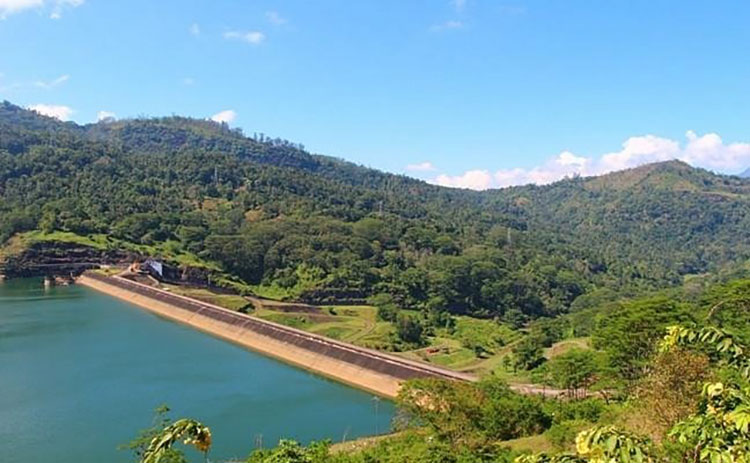
- Kotmale

Victoria
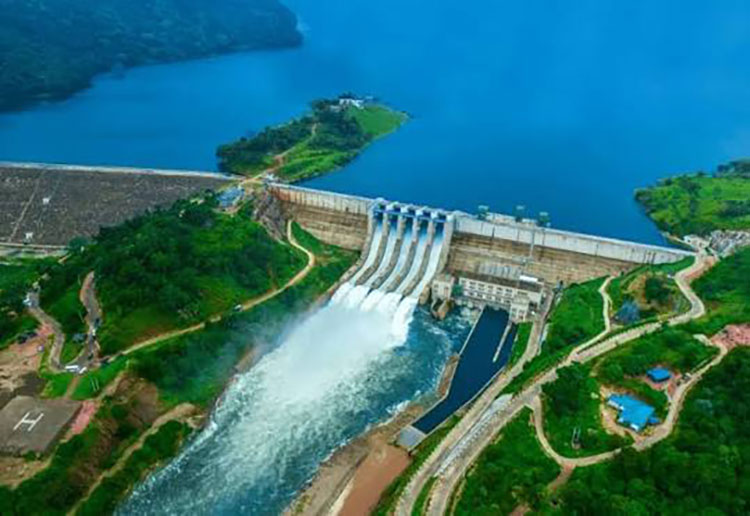
Moragahakanda
A classic engineering marvel is the former Yoda Ela, which carries water from Kalawewa to Nuwara Wewa and Tissa Wewa. It is 87 km long although the straight distance between these points is only about 40 km. The gradient of this canal is about 10 cm per km or 6 inches per mile. Yodha Ela functions as a moving reservoir and feeds about 4,600 hectares of paddy lands. It is a winding canal with about 120 smaller reservoirs on its way. It was constructed during the reign of King Dhatusena around 459 AD and later expanded by King Parakramabahu by connecting more reservoirs to the network. Unfortunately, during the Mahaweli project our modern-day engineers constructed a concrete canal replacing the winding path of this Yoda Ela also called Jaya Ganga. This effectively removed the ability of the old Yoda Ela to remove silt and nutrients. The bank of this Ela has wet zone trees such as jak and areca nut growing well. They take up the nutrients from the flowing stream making the water suitable for irrigation later.
Ancient Mesopotamian civilisations depended on dams constructed along the two main rivers, Euphrates and Tigris. After continuous irrigation of their fields over several thousand years, salinity of the irrigated lands increased making them unsuitable for agriculture. People died due to famine and this clearly illustrates the danger of blocking main rivers for agriculture. There is scientific evidence that the salinity of paddy soils in the Mahaweli C area is increasing.
We saw the devastation caused by Cyclone Ditwah. The sluice gates of the Kotmale Reservoir were opened, and Kandy and Peradeniya were flooded. If the reservoir had had greater storage capacity, couldn’t the opening of the gates have been delayed? This may not be an argument that modern-day engineers would readily accept, and I am not an irrigation expert. These ideas may well be naïve. But most of us tend to think of reservoirs mainly in terms of hydropower generation and irrigation, while their role in flood control receives much less attention. The question therefore deserves serious consideration. Could restoring lost reservoir capacity through desilting help improve our ability to manage extreme rainfall and reduce flood risks?
Desilting our reservoirs should be considered a national priority.
Export diversification – Missing the wood for the trees – Part III
by Gomi Senadhira
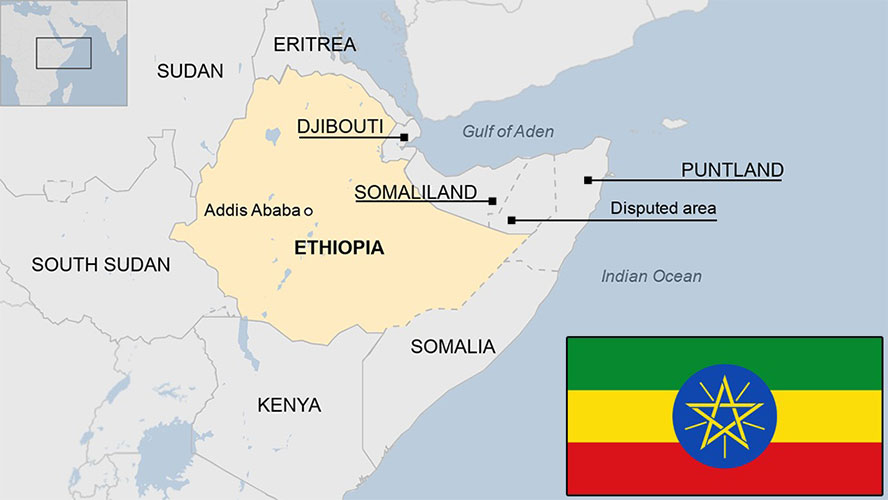
In Sri Lanka, the word “Ethiopia” is often used as disparaging slang to describe individuals or areas experiencing extreme poverty, starvation, or severe economic hardship. This linguistic habit originated in the 1980s with the Western media coverage of the devastating Ethiopian famine of 1983-85. That media coverage shocked the world but also left an outdated and offensive global stereotype that the country is permanently starving. Much has changed since then. By now, with an annual growth rate of around 9%, it is the fastest-growing economy in sub-Saharan Africa. Ethiopia has also emerged as a highly competitive exporter and is challenging not only its competitors in the region but also countries like Sri Lanka. This article is on how Sri Lanka has lost ground to Ethiopia (and a few other countries) in the GCC markets for agricultural and floricultural products.
Sri Lanka – A Pioneer in the Agriculture and Floricultural Market in the GCC
As discussed in Part II of this article, by the mid-1980s Sri Lanka had established a strong foothold in the GCC’s fruit, vegetable, and floricultural market. Geographical proximity and well-established shipping and air links gave Sri Lanka a strong comparative advantage over Southeast Asian and African nations. Thailand, Vietnam, and Kenya were not even in the market. At that time, Ethiopia was experiencing (as BBC news reports described) “a biblical famine”.
The market was not very large, but it was lucrative and growing. Trade Minister Lalith Athulathmudali as well as the Chairman of the Export Development Board, Victor Santiapillai, who visited Kuwait (and the GCC countries), recognised the market potential for these products and encouraged us to continue with our work. The minister was particularly keen to further develop links between the market for these products, exporters, and his Export Production Villages (EPVs). So, it was becoming a successful case not only for export diversification but also for transferring gains from exports directly to rural households.
From Trailblazer to Tailender
As a result, even by the beginning of this century Sri Lanka had a larger market share than most of its competitors from Asia or Africa. But since then, our competitiveness has weakened significantly. The tables below provide a comparative snapshot of Sri Lanka’s performance vis-à-vis Thailand, Vietnam, Kenya and Ethiopia in the GCC market for vegetables, fruits and floricultural products. As illustrated therein, in 2001 Sri Lanka was ahead of Thailand, Kenya and Ethiopia in this small but rapidly growing market. Since then, we have fallen behind Thailand, Kenya and many other countries in that lucrative market. If this trend continues, Sri Lanka will fall behind Ethiopia within the next few years. (See Table 1)
In the GCC market for vegetables (covered in HS chapter 07), Sri Lanka was ahead of most other competitors in 2001. As illustrated in Table 1 , Sri Lanka had failed to develop this market, while Thailand, Kenya, and even Ethiopia had very efficiently increased their market shares. The GCC is a market to which Sri Lanka can supply some vegetables, like cabbages, by sea. It appears Sri Lanka had also failed to exploit this mode of supply.
We can see a similar trend in the market for fruits. Vietnam, Kenya, and Thailand have emerged as major players, while exports from Sri Lanka have staggered on slowly. In this segment, Vietnam has emerged as a leading player during the last twenty years and the GCC imports from Viet Nam have shot up from US$44 thousand in 2001 to US$346 million by 2024. In part one of these articles, I discussed the remarkable increase of jackfruit exports from Vietnam “…just $3 million in 2015 to an impressive $236.8 million in 2023” while most of our jackfruit production rots under the trees. This explains how countries develop their markets, geographically and product-wise. (See Table 2)
Sri Lanka’s performance has been weakest in the market for floricultural products (HS Chapter 06), which groups live trees, cut flowers, and ornamental foliage. When we first entered the market in the 1980s, the market was dominated by the Netherlands, and Kenya and Ethiopia were not even in the market. At that time, we identified the Gulf states as a market where Sri Lanka could have a dominant presence due to geographical proximity. Even in 2001, Sri Lanka was ahead of Kenya, Ethiopia, and Thailand. But by now, Kenya has emerged as the dominant supplier. Ethiopia is also expanding its market share and is the third-largest exporter. (See Table 3)
Missing the Wood for the Trees
In the mid-1980s, Sri Lanka first established its foothold in the GCC market. Since then, Thailand, Vietnam, Kenya, and even Ethiopia have moved well ahead of us and have become leading players. Why did we lag behind in our export diversification efforts in general and, more particularly, in the GCC market?
The reasons are very clear. After the initial attempts in the 1980s and early 1990s, Sri Lanka has not been proactively involved in identifying, developing, and promoting new products and markets, or protecting and further developing new markets already established. The focus has simply been on traditional exports: tea, coconut, cinnamon, and garments, while other products were almost ignored. In essence, we have been and continue to focus intensely on a narrow group of products and markets, and we have lost sight of the bigger picture.
(The writer can be reached at senadhiragomi@gmail.com)

ITS Giuseppe Garibaldi’ departs Colombo

Green Climate Fund (GCF) Regional Dialogue for East and South Asia will be held from 14 to 17 September 2026 at Cinnamon Life at City of Dreams Hotel, Colombo

Showers will occur in the Western, North-western and Sabaragamuwa provinces and in Kandy, Nuwara-Eliya, Galle and Matara districts

Prof. Pieris says Buddha Dhamma recognised as source of law under Constitution

GR leaves FCID after making statement over MiG deal

Dengue cases top 97,000 in 2026

‘Dates have the highest sugar content to fight Coronavirus’

Sunday Island 27 December – Headlines

#SundayIsland 17th December – Headlines

Sunday Island – 28th March

Sunday Island Headlines – 21 March

Sunday Island – 21st February – Headlines
-

 Sports2 days ago
DDS set to lose Test captaincy
-

 Latest News6 days ago
Tharanga creates history with Diamond League crown in Brussels
-

 Features6 days ago
After the parade: What a traffic OIC’s walk-out tells us
-

 News7 days ago
Dispute which triggered listed company director being detained at BIA resolved
-

 Editorial6 days ago
Arrests as theatre
-

 Latest News5 days ago
Harshitha’s composed knock seals Sri Lanka’s semi-final berth
-
 News5 days ago
Thailand shuts door on undesirables from Sri Lanka
-

 News6 days ago
‘Choka Malli’ slips out of country before travel ban