
Features
JRJ begins to lose control, gets me back to Colombo and some inside stories of the day

(Excerpted from volume ii of the Sarath Amunugama autobiography)
This was about the nadir of JRJ’s administration. He was beginning to lose control. On one side the JVP which was sent underground by his fiat, realized that the parliamentary road was not immediately open to them. Wijeweera is reputed to have said that it would take the JVP 50 years to win a popular election. Unlike in 1971 they succeeded in unleashing a reign of terror after the signing of the Indo-Lanka accord which paralyzed the country.
JRJ could not fight on two fronts – the north and south – which Premadasa compared to a fire at both ends of a `flambeau’ [Vilakku] used in Sinhala healing rituals. The northern situation was reaching a stalemate since India was exerting strong diplomatic pressure which crippled the efforts of the armed forces. When the army under Lalith Athulathmudali had the LTTE encircled in Vadamaradchi, they were forced to call off the assault by the President.
The LTTE was armed and trained by Indian irregulars. The West that JRJ turned to had comforting words but was not willing to take India to task. The socialist block saw no reason to come to the aid of a leader who claimed to ‘roll back socialism’. It was in those bleak circumstances for JRJ that Indira Gandhi was killed by her Sikh bodyguard, which led to another twist in the fate of the Sri Lankan government.
In Paris we were glued to our TV sets as pictures from the funeral ceremony of Indira in Delhi were beamed on ‘real time’ to our drawing rooms. The nation was in shock and the vast concourse that assembled in ‘Shand Vana’ saw Rajiv Gandhi not only taking the leading role in the ceremony but being positioned by the power brokers of the Congress to succeed his mother, even though he was initially uncertain.
But if the power brokers thought they could continue with business as usual, they were mistaken. After a short while a new generation of tech savvy advisors came to the fore. Businessmen like Tatas, of Parsee origins like the new Prime Minister, replaced the Gujeratis like the Ambanis and a new pro-West shift replaced Indira’s ingrained hostility to the West, which was also a contributory factor for her jaundiced view of JRJ and his government.
In Tamil Nadu affairs Parathasarathy as advisor was replaced by Romesh Bandari. I felt this immediately in Paris as GP lost his clout and was replaced as head of the Indian delegation by Foreign Service officers like Dixit and Kaul. Gamini Dissanayake, who was backed strongly by the Maharaja Group, now entered the scene in a big way because as the head of the Board of Control of Cricket he could interact freely with the Indian elite who were cricket fanatics.
At that time we were knocking on the door to be recognized for test cricket and Gamini with his charm and ample financial backing, was determined to gain entry. The key to unlocking this conundrum was Indian support and that was obtained by Gamini with his customary flair. A favourable factor, which can be now disclosed, was Gamini’s links with the Balfour Beatty company, a British giant which was the contractor for the Victoria Reservoir project. This company threw its weight behind our application.
The Head of the company in the UK was the chief fund raiser for Thatcher’s Conservative Party. Gamini used the clout of Balfour — Beatty to twist the arm of the MCC. I once went with Gamini and High Commissioner Monerawela to view an early match between England and Sri Lanka at Lords. We were welcomed to the distinguished visitors’ gallery and served champagne and wafer thin smoked salmon as well as cucumber sandwiches ordered from Fortnum and Mason. By that time Sri Lanka was in the select group with test status and in that match Wettimuny, if my memory serves, scored a century.
Another of Gamin’s `coup’s was to get Sir Garfield Sobers as a coach. He was at the height of his fame and his involvement was a great inspiration for our boys. Arjuna Ranatunga who is a fearless leader, brought the World cup won by our team straight from the airport to Gamini’s house and presented it to Srima in gratitude for her husband’s superb contribution, even though Gamini was dead by then and his rival Chandrika was President. It stands to Chandrika’s credit that she took this act of grace with dignity.
Cricket brought Gamini into contact with Ram of the Hindu newspaper group and they became firm friends. I can attest to this since I too was brought into the circle of Ram’s friends. When Gamini was killed, Ram flew down from Chennai for the funeral and I took him in my car to the cremation ground. An aside I can reveal that Ram gifted high class Labrador to both Gamini and Chandrika. Though they were rivals the Presidency their favourite dogs came from the same source.
Chandrika’s dog was well known when she was President pet would follow her everywhere and was a signal that CBK was near. Chandrika was congenitally late and we would anxiously await the entry of the dog, particularly at Cabinet meetings, we could prepare ourselves for the discussion as soon as the four-footed herald ambled in and curled itself under the President’s chair. It was the custom for us to get up when the President entered the room. However, one lady minister known for sycophancy would shoot up as soon as she saw the dog much to our amusement. When Chandrika left office this minister was the first to abandon her heroine and literally fall at the feet of Mahinda Rajapakse.
Unexpected deaths
By the end of 1985 our group of friends in Paris had to two shocks. They were the unexpected deaths of Sarath Muttetuwegama and Esmond Wickremesinghe. Both were close to me and had stayed with us in Paris and the news their deaths was extremely disturbing. Sarath M. who was longtime friend and relative, had lived with his family on Siripa road just a few houses away from ours. His children – Ramani and Maitri – and ours were the closest of friends and were in and am of our respective homes.
On our invitation the Muttetuwegama children spent their long vacation with us visiting the tourist sites in France. They flew to Paris via Moscow by Aeroflot and their-return journey to Colombo, again through Moscow, led is a hilarious misunderstanding by the USSR officials. In typical bureaucratic style information had been conveyed by the Russian embassy in Colombo that Mr. and Mrs. Muttetuwegama were in transit. Officials had prepared a warm welcome to the rising star of the Ceylon Communist Party and his wife.
Imagine their surprise when two kids came down the gangway answering to the name of Muttetuwegama. To make matters worse young Maithri Muttetuwegama was waving the cowboy hat I had bought for him in Paris. I was told that the officials, loath to admit their error, had wined and dined the two children not forgetting to propose several toasts with good wishes for Sri Lanka-USSR friendship. Not long after, Sarath was killed in a road accident in Ratnapura and we lost a brilliant and incorruptible politician. His role as a brave Opposition Parliamentarian in the era of JRJ, as the lone Marxist voice, has entered the stuff of legend and is a lesson to all young politicians of today.
Esmond’s death was equally shocking. We had looked forward to his regular visits to Paris and the inside information about Sri Lankan politics that he freely provided. He was always conscious of his family’s proclivity to heart disease. His father and two younger brothers, Tissa and Lakshman, had died at a comparatively young age. In typical style he had studied the literature on heart disease, consulted his physician Dr. Thenuwara and selected Dr. de Bakey of Houston, who was the world’s best known heart surgeon, to perform a surgical procedure on him. On his way to Texas, he stayed with us in Rue Jean Daudin and a few of us took him to the airport for his flight to the US. He was in the best of spirits, and we knew that he was very keen to regain his vitality and get back to Colombo to resume his backroom involvement as JRJ’s chief political advisor and hatchet man.
Unfortunately, everything started going wrong in the US. De Bakey was planning to leave on a holiday and was ready to operate immediately without regard to an old man’s-tired condition after coming halfway across the world. By the time Esmond began to come to after his operation De Bakey had left on his holiday. When his kidneys began to fail there were no kidney specialists on call. Dr. Thenuwara was at his wits end but there was nothing he could do. Esmond held on for a few days.
Ranil managed to reach his father’s bedside after a marathon flight but Esmond breathed his last not long after. We were saddened by this misadventure, which in our estimation, could have been avoided had he sought treatment in an Asian hospital. Manu, Premachandra and I and several of the embassy minor staff organized a ‘dane’ in his memory at the Paris Vihara and I conveyed our condolences to Ranil when I met him at his home sometime later.
While these deaths cast a pall of sorrow on our group in Paris, the news from Sri Lanka was equally bad. The ethnic conflict had now transformed itself into a shooting war. Whenever I met my friends Gamini Dissanayake, and Wickreme Weerasooria I was told that in addition to the military debacles we were also losing the media war. As the Biafra and Belfast insurrections showed, the media could be manipulated by rebels to portray state forces as merciless killers – particularly child killers – and occupy moral high ground in the face of international opinion. In fact the Biafran war drew attention to the role of western advertising agencies who launched expensive global media campaigns to gain political support and funds for their rebel clients.
Today it is axiomatic that anti-state fighters need to use propaganda as much as guns in their battles, The LTTE with its tentacles in the Tamil diaspora and assiduous wooing of western journalists was winning the propaganda war. The Government information apparatus and the Foreign Service were no match for the fanatical LTTE propagandists, many of them having personal knowledge of the terror of July 1983.
Anandatissa de Alwis the Minister of Information, was ill and beset with family problems. He was also demoralized by what he perceived as JRJ’s unwillingness to recreate what had earlier been a ‘special relationship’ between the two of them.
Time had passed and new aspirants to leadership like Gamini and Lalith had overtaken him. In the Ministry, my batchmate in the CCS, Buddhin Gunatunga, who was my dear friend, was the Permanent Secretary. He was a laid-back bureaucrat who was not particularly interested in media affairs.
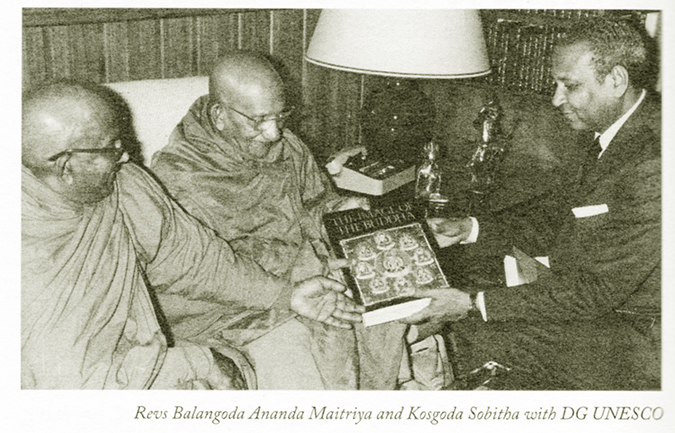
The Ministry had yet to play a positive role in the ethnic crisis. Buddhin may not have been in the best of health either as he was to die a few years later. In this background the President wanted me to come back and help him in the field of information at this crucial juncture. He wrote the following letter to M’Bow the DG of UNESCO and my employer in Paris on April 22, 1986.
“I am writing this letter to you to seek your assistance in a matter of considerable importance to Sri Lanka. As you may perhaps be aware, we have had to face many difficulties in the last few years due to terrorist activities in certain parts of the country.
My government has tried its utmost to find ways of settling this issue through negotiation with the different groups involved. It is clear to me that in order to assist this process of negotiation and conciliation it is necessary to inform the public both of my country and abroad of the issues involved and to create an environment conducive to a peaceful settlement. For this purpose, I intend to reorganize the information services of Sri Lanka in the near future.
“I will be greatly assisted in this task if I could obtain the services of Mr. Sarath Amunugama, Director of the International Programme for the Development of Communication of UNESCO, for a period of six months beginning June 1986. Prior to his joining UNESCO Mr. Amunugama was the Secretary to the Ministry of State which is responsible for Information and Broadcasting. He has established good working relations with the local and foreign media which can play a very important role in the present context of Sri Lanka. I sincerely hope it would be possible for you to release Mr. Amunugama for the period requested by me”.
M’Bow had extended my tenure for another four years in a letter dated August 11, 1986, which thanked me for my services and looked forward to a continuing association. I had only to respond positively to carry on in Paris with an enhanced salary. My two children were well settled in University and the overseas British school respectively. My wife was keen to continue in Paris where the family would be together and enjoy all the creature comforts.
On the other hand if I continued in Paris I would have ended up as a permanent resident in a foreign land. All my friends who remained behind were reconciled to their children marrying locals and settling down to a life in France. As parents they did not come back home after retirement or came back much later in time in their lives when they were ill or infirm. I was averse to the idea of coming back only to die in my motherland as some of my colleagues had done.
M’Bow helped me defer taking a decision when he responding to JRJ’s letter gave me a month’s paid leave to get back to Sri Lanka. This was a great gesture since the preparatory work for the annual General Meeting of IPDC had begun and my input was necessary at that juncture. I thought that a month-long visit to Sri Lanka would help me to clarify my situation and chart my future course of action. I made ready to leave for Colombo.
Rajiv and Romesh Bhandari
The death of Indira Gandhi and the succession of her son Rajiv as PM of India brought about a sea change in India’s approach towards the Sikhs as well as the Tamils in Sri Lanka. Most of the Tamilian officials principally Parathsarathy and Venketeshwaran were moved out and his personal loyalists like Romesh Bhandari, Chidambaram and Ram became his advisors on the Sri Lanka issue. Having won the Parliamentary election following Indira’s death, with an unprecedented majority, Rajiv had the freedom to change policies as well as infuse a sense of urgency in foreign -Affairs.
He was not dependent on the Tamil vote in the Lok Sabha. His tilt towards an open economy and closer relations with the west, a departure from his mother’s outdated socialism, summarized in her slogan ‘Garibi Hatao’ [Abolish Poverty], which proved to be a failure, made him a favourite of western governments and the media. I was in Paris when he made a successful state visit to France. Its high point was the pouring of Ganges water Rajiv had brought with him, into the Seine highlighting the confluence of their cultures and aspirations.
But what most impressed the Europeans was the shifting of arms procurement from the Russian arsenal to French, Italian and Swedish products. Thus French attack airplanes like the Dassault and long range guns from Bofors of Sweden entered the weaponry of the burgeoning Indian armed forces. This led to much criticism from the left leaning politicians and media practitioners who were constantly harping on the Italian birth nationality of Sonia, the PM’s assertive wife. They launched an attack on Rajiv’s purchase of modern long range guns from Bofors but could not deflect him from following modern economic policies.
This shift helped Rajiv to get western support for his initiatives in both Punjab and Sri Lanka. After the bloodbath of Sikhs living outside the Punjab following Indira’s assassination, a compromise was worked out and the Khalistan issue was laid to rest, at least for a long time. Rajiv then turned to the Sri Lanka issue with the same philosophy of cooperation, maximum devolution and a good neighbour policy. This approach held much promise and all in India and Sri Lanka were enthusiastic about giving it a chance.
His point man in this effort was Romesh Bhandari, a senior Foreign Service officer who was an amiable person unlike the dour Tamils who were Indira’s advisors. Accordingly, both Rajiv and his Foreign Secretary struck up a cordial relationship with JRJ. Rajiv called JRJ ‘uncle’ and I was aware that our wily leader reminisced about his friendship with the PM’s grandfather Nehru and his experiences with the Congress leaders of his youth when he participated in the Ramgarh Congress meeting prior to independence.
JRJ referred to his correspondence with Nehru is the pre-Independence period. At my urging he wrote an article about his links with the Congress leaders of that time. He wanted it published in India. I contacted my friend Dilip Padgoankar who was an advisor to the Jain family, the owners of the Times of India group of newspapers. Later Dilip became the Editor of the Times of India. We decided that the article should be published in the Illustrated Weekly of India which also was owned by the Jain group.
The article was published by the magazines editor Rafik Zakaria. This magazine was very popular among top elite and we were able to position JRJ as ‘a lover of India’ in the context of much anti Sri Lanka feeling generated during the time of Indira Gandhi. The fly in the ointment was Zakaria’s unhelpful headline which read “An Old Fox Remembers”.
I spent quite some time in brushing up JRJ’s image prior to the SAARC meeting to be held in Bangalore in November 1986. At this meeting the two leaders were to discuss the ethnic issue on the sidelines of the meeting which according to its mandate did not formally discuss bilateral matters. In consultation with JRJ, I decided that we should make a special media effort to woo Rajiv. I also, in discussion with my friend Gamini Dissanayake on whom JRJ was depending more on and more to handle the ethnic issue, decided to come back to my home country and assist him and JRJ in a more sustained manner. Accordingly, I terminated my employment with UNESCO with the following letter to M’Bow:
“I thank you for your letter in which you kindly inform me of your decision to extend the engagement of my services to UNESCO. I would have been very happy to accept but the President of Sri Lanka has requested me to return so that he could make use of my services in a very crucial area of his Government. In these circumstances I have decided, reluctantly, that I will not seek an extension of my contract. May I thank you most sincerely for the courtesy, understanding and friendship you have extended to me during my tenure of office. I look forward to working closely with you in the future.”









 Looking back over the years since the 9/11 catastrophe, it could be said that barring former Iranian President Mohammad Khatami no world political leader of note has made an earnest effort to change the nature of global political discourse for the better. Khatami won world acclaim for his pronouncement that the time is right to launch and sustain a ‘Dialogue among Civilizations’.
This was in marked contrast to US political scientist Samuel P. Huntingdon’s epochal theses, formulated in the wake of 9/11 and other global political tumults that the Post Cold War era is essentially one of conflicts among civilizations. That is, people’s identity markers, such as culture and religion, are the prime shaping forces of international conflicts.
From a Political Realism standpoint, Huntingdon’s theory may seem to have gained in credibility over the years but it is Khatami’s pronouncement that has evoked an empathetic response in the hearts and minds of publics world wide. So much so, 2001 was proclaimed by the UN General Assembly as the ‘Year of Dialogue among Civilizations’.
It could be said that the latter proclamation was an endeavour to give back to humans their essential identity of peace-makers. It was an eschewing of the position that war and conflict are central to the human condition and amounted to upholding constructive dialogue among peoples and civilizations as a path to peace.
That things have not worked out in the world in keeping with the expectations of peace makers does not in any way invalidate the thesis that peace is the essential propensity of humans.
If peace-making is seemingly ineffective it is primarily because the path to peace is narrow, tortuous and time-consuming. On the other hand, violence usually misleadingly recommends itself to the human as the more expedient, cost-effective way out of a conflictual situation. However, the ultimate cost of the latter approach is prohibitive because it brutalizes the human beyond recognition.
Some of the evidence is before our eyes. The Trump administration, for example, has, minus much forethought, unleashed what may be described as a ‘quick-fix’ war against Iran but is now finding that it is in a veritable military quagmire in West Asia. The priority for the administration now seems to be a face-saving escape strategy. Such are the costs of the war option.
However, there is no denying that much remains to be done by the world community to bring peoples and cultures together with a view to enabling them to work as one for the cause of a less dangerous world.
Meanwhile, the broad divisions in international politics continue and past political polarities are lingering to the detriment of enhanced international understanding. The East and the West and the South and the North, for instance, are continuing to work in separate collectives, more or less, and no notable efforts are being made by the international community to bring these sides together for the purpose of united constructive action that could usher greater international well being.
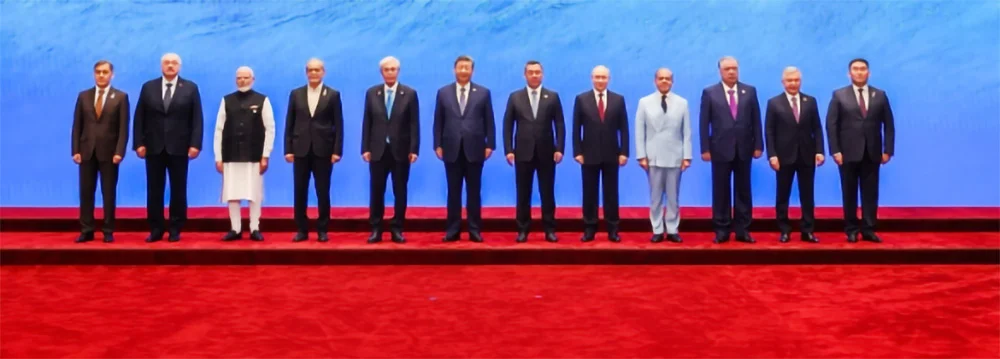
The recent Shanghai Cooperation Organization Summit, 2026, held in Kyrgyztan was a replication of the above broad trends but there were some statements at the forum by Indian Prime Minister Narendra Modi that deserve special scrutiny and comment.
Modi was quoted saying among other things: ‘The land of Gandhi and the land of Buddha share a single message: the path to peace!..We must move away from endless war towards an end to the war. This is essentially for the well being of humanity. A peaceful resolution to all issues at the earliest is the call of humanity, and this is India’s message.’
The above is the language of international peace and unity. It is such language that will help in building bridges among civilizations and advance the cause of world peace. Besides, it will help bring a measure of understanding between North and South.
In this regard, the Trump administration could take a leaf or more from the Modi government. Unless it makes a ‘U turn’, as it were, in the direction of peace and reconciliation it is very unlikely that the US and the world would experience any stability worth speaking of.
Right now the US is savaging the sovereignty of Venezuela. It is a question of the ‘Empire striking back’ but Venezuela is a far cry from Iran. Iran has outsmarted the US on the battle field and is in a position to influence broad trends in the world economy since it still has control over the Hormuz Straits. That is, Iran could exercise a determining influence over world oil, gas and energy prices. In short, the US consumer’s future peace of mind is very much in the hands of Iran.
Given the above backdrop it should have dawned on the US political leadership that working towards cordial relations with Iran is the most advisable option. The US, simply, has too much to lose otherwise.
Likewise, Russia too needs to take a leaf from India. It is plain to see that its invasion of Ukraine is proving totally ineffective. It has not brought any measure of peace for the Russian people. Russia is right now experiencing a rerun of its military misadventure in Afghanistan. On the other hand, sections of the peoples concerned have been victimized and even brutalized.
Accordingly, there needs to be a coming together of democratic opinion worldwide for a fresh consideration of the options facing humanity. There is a dire need for value-based politics to take the place of Realpolitik. Besides, the language of peace and humanity needs to replace current divisive discourse with its stress on polarities and antagonisms.
International organizations of the stature of the UN need to take the lead in spearheading the above initiatives. Right now the UN gives the impression of being a spent force. This columnist hopes that he would be proved wrong on this score because the UN remains the only hope of the poor and victimized. It will be in the interests of all peoples for the UN to rejuvenate itself and dedicate itself increasingly enthusiastically to the cause of international peace.
Whether it be the South or North, dynamic, visionary political leadership and direction emerges as essential. The need is for voices that would espouse peace and accord across boundaries and divisions. For South Asia, India and Pakistan have the potential to fill this lacuna.
by Shelton Dharmaratne
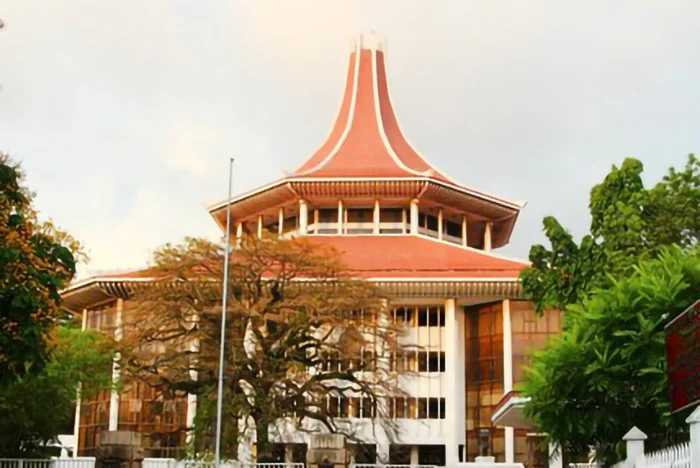
Sri Lanka has reached an important constitutional moment.
The proposed 22nd Amendment has moved beyond political debate and into the constitutional process through which its validity will be examined. That development should change the character of the national discussion.
That is understandable in a politically contested environment. But Sri Lanka should now resist reducing a question of constitutional design to a contest over political positions.
The deeper issue concerns the relationship between constitutional reform, judicial independence and public confidence in the institutions of the State.
The Supreme Court will determine the constitutional questions before it. Public commentators should therefore exercise restraint in predicting, interpreting or seeking to influence that determination. But restraint does not require silence. It requires a more rigorous discussion of the institutional principles at stake.
A narrower constitutional question than the political debate suggests
The proposed amendment principally concerns the retirement ages of judges of the Supreme Court and Court of Appeal, together with an increase in the maximum number of judges permitted on the Court of Appeal.
Under the proposal, the retirement age of Supreme Court judges would rise from 65 to 67 and that of Court of Appeal judges from 63 to 65. The maximum number of Court of Appeal judges would also increase from 19 to 24.
Other proposed changes concerning the retirement ages of judges in the lower courts arise under separate legislation. This distinction matters because the public debate has sometimes treated the wider package of judicial reform as though it formed a single constitutional proposal.
Nor should the central issue be reduced to whether retaining experienced judges is inherently good or inherently dangerous. Both propositions are too simplistic.
Sri Lanka faces a substantial burden of pending litigation, and delays in the administration of justice impose significant costs on citizens, businesses and the State. Experienced judges represent an institutional resource. Continuity, accumulated knowledge and familiarity with complex areas of law cannot always be replaced immediately.
Those are legitimate policy considerations.
But the opposing concern is equally important: judicial tenure is not merely an employment condition. It is a structural component of judicial independence.
The real question is institutional
The critical question is not whether an individual judge is capable of acting impartially. It is whether the constitutional structure provides adequate protection against circumstances in which judicial tenure could become connected, directly or indirectly, with political authority.
That is an institutional question, not an accusation against individual judges.
A judge may be entirely conscientious and independent while the institutional arrangements surrounding the judiciary nevertheless create public doubts about independence. Constitutional democracies therefore cannot depend solely on the personal integrity of office-holders. They must construct institutions capable of preserving independence even when governments, individuals and political circumstances change.
This is particularly relevant when constitutional reform concerns the tenure of serving members of the superior judiciary.
The institutional sensitivity of such a proposal should neither be exaggerated into an allegation of improper motive nor dismissed as irrelevant. The appropriate response is transparency, procedural fairness and confidence in constitutional safeguards.
Legitimate objectives do not settle constitutional questions
The government has stated that its objectives include strengthening the administration of justice, addressing delays, retaining judicial experience and increasing institutional capacity.
Those objectives deserve serious consideration. Sri Lanka needs judicial reform. Citizens waiting years for their cases to be concluded experience the justice system very differently from those discussing it in Parliament, courtrooms or universities.
A government is therefore entitled to propose reforms designed to improve judicial efficiency.
But legitimate objectives do not automatically resolve constitutional objections. The relevant question is whether the means chosen are compatible with the constitutional structure and whether sufficient safeguards exist against unintended institutional consequences.
That is precisely why constitutional scrutiny matters.
The concerns of the Bar Association of Sri Lanka (BASL) should likewise be examined without political labelling. Opposition to the proposed changes should not automatically be characterised as opposition to judicial reform or an attempt to obstruct the government. At the same time, invoking judicial independence does not place any argument beyond scrutiny.
The appropriate questions are straightforward:
Does extending judicial tenure strengthen the administration of justice?
What risks, if any, could it create for judicial independence?
Are adequate institutional safeguards in place?
Does the proposal operate prospectively, or does it affect judges already serving?
Could the same objectives be achieved by filling vacancies, increasing judicial capacity, improving court administration and strengthening case management?
These questions can be examined rationally without attributing improper motives to either side.
Judicial vacancies and institutional confidence
Recent concerns raised by the BASL regarding judicial vacancies add another dimension to the debate. The BASL has argued that vacancies in the Supreme Court contributed to the retirement of a senior Court of Appeal judge without promotion to the Supreme Court, despite vacancies having existed. It has also raised concerns regarding forthcoming judicial retirements and the need for timely consideration of appointments.
Such matters should not be treated as evidence of the motives behind the proposed amendment. They do, however, illustrate a broader principle.
Judicial independence is shaped not only by the retirement age written into the Constitution. It is also influenced by how vacancies are filled, how promotions are determined, how seniority and merit are assessed, and whether judicial officers and the public believe that institutional decisions are made according to transparent and defensible criteria.
The government has an opportunity to address these concerns constructively.
Prompt appointments based on publicly defensible principles would strengthen confidence in the judiciary irrespective of the eventual outcome of the constitutional debate.
Seniority, merit and transparent criteria
The controversy also exposes a longstanding question concerning judicial appointments.
Seniority has traditionally carried considerable weight in judicial advancement. Yet seniority alone need not be the sole measure of merit. Conversely, replacing established practices with undefined assessments of “merit” could create another institutional problem.
If governments or appointing authorities can determine which judges are sufficiently meritorious without clear and objective criteria, uncertainty itself may become a source of institutional anxiety.
Sri Lanka would therefore benefit from clearer, objective and defensible standards governing judicial appointments and promotions.
Such standards would protect judges as well as appointing authorities. They would reduce opportunities for favouritism, strengthen institutional confidence and make it harder for political actors to portray every appointment as politically motivated.
Institutional rules are stronger safeguards than assurances of good intentions.
The State is larger than any government
One principle deserves particular emphasis: a government is not the State.
Governments are temporary. The constitutional State is continuing. Political parties change, parliamentary majorities change and political priorities change. The judiciary, however, must continue to function independently of whoever occupies the government benches.
The judiciary is neither a government institution in the political sense nor an Opposition institution. It is an institution of the State whose legitimacy depends upon its independence from both.
For that reason, governments should exercise particular caution when proposing constitutional changes affecting the judiciary, even where the policy objectives are legitimate.
The stronger a government is politically, the greater its responsibility to demonstrate institutional restraint.
That is not political weakness. It is constitutional maturity.
Public confidence is a constitutional asset
The most consequential issue may ultimately be neither retirement age nor judicial capacity, but public confidence.
Courts do not possess political power in the conventional sense. Their authority rests substantially on the acceptance of their decisions as legitimate.
Citizens will sometimes disagree with judicial decisions. But where the judiciary is perceived as independent, even unpopular decisions can command respect. If judicial institutions are perceived as being shaped by political convenience, even legally sound decisions may become vulnerable to suspicion.
Constitutional reform affecting judicial tenure must therefore be evaluated not only by its immediate administrative benefits but also by its effect on institutional credibility.
A reform that produces short-term efficiency while weakening confidence in judicial independence could impose a greater long-term cost. Conversely, reform that improves efficiency while preserving independence can strengthen both justice and public trust.
The challenge is not to choose between judicial efficiency and judicial independence. It is to achieve both.
If a referendum arises …
If the constitutional process ultimately requires approval by the people at a referendum, the debate should rise above the conventional government versus Opposition contest.
The electorate should be given a clear constitutional question and sufficient information to assess it.
Citizens should understand what problem the amendment seeks to address, why the proposed mechanism is considered necessary, what institutional risks have been identified, what safeguards exist and whether alternative measures could achieve the same objectives.
A constitutional referendum deserves a higher standard of public discussion than an ordinary election campaign.
The people would not merely be choosing a political side. They would be deciding the institutional framework within which political power and judicial authority operate.
Beyond who wins
The most important question arising from the proposed Twenty-Second Amendment is therefore not simply whether the government succeeds or whether the Opposition and BASL prevail.
Nor is it ultimately whether judicial retirement ages become 67 and 65 or remain unchanged.
Those are immediate constitutional questions. The deeper issue is what Sri Lanka learns from the controversy.
If the government seeks to modernise and strengthen the justice system, that objective deserves serious consideration. If the BASL and others warn that particular reforms may affect judicial independence, those concerns deserve equally serious examination.
Neither side strengthens the country by assuming that the other is acting in bad faith.
The constitutional system is strongest when legitimate disagreements are resolved through institutions rather than political pressure.
Whatever the eventual constitutional outcome, Sri Lanka will still face the underlying challenges of judicial vacancies, case delays, institutional capacity, judicial appointments and public confidence. Those problems will not disappear with a judicial determination, nor should the national conversation end there.
Sri Lanka should instead seek a broader consensus around a fundamental proposition:
Judicial reform and judicial independence are not competing objectives.
The real challenge is to pursue reform in a manner that strengthens the judiciary without placing its independence under suspicion.
That requires sound legislation, transparent appointments, adequate resources, efficient court administration, responsible political conduct and safeguards capable of surviving changes of government.
The present controversy will eventually pass. Political arguments surrounding it will fade.
But constitutional arrangements can endure for decades.
That is why Sri Lanka must look beyond the immediate political contest.
The ultimate test is not who wins today’s constitutional argument. It is whether, when the political moment has passed, Sri Lanka has a judiciary that is more efficient, more accessible and more trusted—while remaining sufficiently independent to hold every government, including future governments, within the boundaries of the Constitution.

 Sri Lanka’s fashion world lost one of its brightest stars Monday morning – veteran model, actress, and elite pageant trainer Chulpadmendra “Chula” Kumarapathirana.
Her sudden demise has certainly come as a shock to many.
Chula had just completed a major event on Sunday (30th August), and was no more in the land of the living the following day (31st August).
Born in Colombo, she was an old girl of Buddhist Ladies’ College and later studied at the National Institute of Business Management, and has many awesome achievements to her credit.
In 2006, she won the “Miss Tourism Model of the World Press Award” in Tanzania.
She entered the entertainment industry, as an actress, and gained popularity through the teledrama “Wahinna Muthu Wessak.”
Chulpadmendra has been on TV, and many Sri Lankan hip-hop music videos, including “Hanthane” and “Heena Hirimal”, and has had several other minor acting jobs since then.
She hosted the Derana Miss Sri Lanka for Miss World 2008 and even participated in the reality TV show Sirasa Dancing Star.
For over 25 years Chula was active in local and international fashion and founded the Chulpadmendra Catwalk Studio to train young newcomers
She trained hundreds of models for runway, photoshoots, auditions, and international pageants.
She was known as a fierce mentor who believed in “not just learning to walk, but learning to command the runway”.
Many young models called graduating from her studio their “happiest moment.”

Chulpadmendra “Chula” Kumarapathirana: Many young models called graduating
from her studio their “happiest moment.” (L)/ Won the “Miss Tourism Model of the World Press Award” in Tanzania (R)
Chula was very fond of The Island newspaper and kept in touch with us on a regular basis.
Her last message to The Island was a ‘thank you’ note for the article ‘New benchmark in pageant industry’:
“Thank you, Ivan, for writing such a beautiful article about me. Your unwavering support, encouragement, and belief in me throughout my career mean more than words can express. I am truly grateful for your kindness and generosity.
“My heartfelt thanks also go to The Island newspaper for featuring the article. It is a great honour, and I sincerely appreciate the recognition and support.
“Thank you once again.”
In fact, just a couple weeks ago, she sent a photo of herself for our Glam Scene and that picture I publish today, as part of this story.
May she rest in peace. Our deepest condolences to her family, students, and all who loved her.

India to host inaugural Women’s Champions Trophy in February

Sun directly overhead Madampe, Thorayaya, Thotagamuwa, Rattota and Kalavanchikudy about 12.09 noon today (03)

Afternoon thundershowers in the Northern, North-central, Eastern and Uva provinces in next few days, starting from today (03).

22A: SC urged to suspend hearing, appoint full bench

Govt. seeks NATO assistance

Recent ‘Ice’ detection at the Colombo Port made on US intelligence – Embassy

‘Dates have the highest sugar content to fight Coronavirus’

Sunday Island 27 December – Headlines

#SundayIsland 17th December – Headlines

Sunday Island – 28th March

Sunday Island Headlines – 21 March

Sunday Island – 21st February – Headlines
-

 News7 days ago
Eight politicians in drug kingpin probe
-

 Features5 days ago
“Wrap Me Up in My Blazer”— A Gentlemanly Bradby Reminiscence
-

 Business7 days ago
Sri Lanka opens up: A new season of direct connectivity
-

 Features4 days ago
When Sri Lankan stories find their own voice
-

 Features7 days ago
Redefining ageing in Sri Lanka
-

 Editorial7 days ago
The toxic legacy of two lakes
-
 Business7 days ago
Jaffna Teaching Hospital secures lifeline water supply via ADB-funded Thalaiyadi sea water desalination plant
-
 Features5 days ago
JVP/NPP government as seen from outside by Lionel Bopage now domiciled in Australia