
Opinion
Conflict resolution might be way out!


By Dr Laksiri Fernando
Sri Lankan crisis cannot be separated from the international crisis both in economic and political terms. This is a warning for the political leaders to resolve their differences and conflicts in an amicable manner. Holding (or not holding) of Local Government elections and the newly-introduced Advance Personal Income Tax (APIT) regime are the main contentious issues between the main political parties and their trade unions at present.
While there are only nine recognised parliamentary political parties in the Australian federal system, sixty-two political parties are recognised in the Sri Lankan parliamentary system giving rise to both superficial and unwarranted conflicts and competitions between them. As a result, there is no stability in the political party system. Where are the UNP, the SLFP, the Federal Party or the Ceylon Workers Congress today? All these main parties from the early years of independence have suffered crippling splits.
Conflicts and Conflicts
Intense political rivalries at the political party level are undoubtedly a reflection of the psychological mood and orientation of the public and the people. These rivalries are not uncommon to many other political systems including the developed democratic countries. France at present is one example while many parts of America have been inundated in this situation for a long time.
However, to my experience and observation, extreme politicisation and rivalries are much higher in the case of Sri Lanka. There has been a tendency among the people (both young and old) to look almost everything from a prism of politics. Even at social events or even family parties, mainly men, get involved in political debates. The drinking of liquor (excessively) at these occasions might be a contributing factor.
The world undoubtedly is going through a civilisational crisis. The war in Ukraine has become a mess and human disaster. The invasion by Russia was unwarranted even in terms security or prestige of its country. However, instead of resolving the conflict through peace and negotiations, the NATO countries and America have intensified the war through supplying arms and ammunition to Ukraine to continue a fight. The major failure has been on the part of the UN which has become hopeless in terms of conflict resolution and peace. There is a possibility of the war becoming a nuclear disaster.
This is not an isolated case. Humanity, civilisation, the so-called developed nations, and the UN have continuously failed to prevent war between Israel and Palestinians and many other wars and conflicts in the Middle East and Africa. These conflicts have given bad examples to many other developing countries like Sri Lanka, Myanmar, Pakistan, etc. Similar conflicts have continued in the Latin American nations. This is the civilisational crisis today. Although humans have developed in terms of science and technology, they have terribly failed in terms of human relations, justice, peace, and conflict resolution. This is also one reason for the natural disasters and environmental problems.
Facets of Economic Crisis
Sri Lanka should not be callous in addressing the present economic problems. The IMF does not have a magic wand while those who oppose the IMF are misled by old leftist arguments. Sri Lanka has been a member of the IMF since 1950. If there are disagreeable conditions from the IMF, those should be discussed and negotiated. I was surprised to observe that many international media reported that the last general strike in Sri Lanka was held in opposition to the IMF! While the trade unions undoubtedly have many grievances, they should sober their positions and slogans to suit an amicable resolution to the present crisis.
The emerging international signals are continuously worrisome. Two major banks in America, Silicon Valley Bank, and the Signature Bank, have completely melted down. The signal clearly is for a world recession sooner than later. The repercussions are now shaking the Credit Suisse bank (the second largest) in Switzerland. If the government leaders in the country are trying to give a rosy picture after obtaining a small amount of IMF loan, and restructuring the debt repayments, it is a complete distortion of the situation.
The loan taking during the last ten fifteen years have been completely irresponsible. There was no transparency. There were no discussions to reveal the plans and objectives and to take inputs from independent specialists and/or the people. The political leaders and the top bureaucrats were not even keeping the accounts or information properly. When it became revealed that Sri Lanka is not able to fulfill the debt obligations, it was a shock to everyone. That was the result of the irresponsibility of the political leaders.
Still they move in the same direction of duplicity. The so-called debt restructuring is often pictured as debt cancellation. These restructured debts must be paid later while the government is still taking loans from countries and multilateral institutions. Apart from debt restructuring, the country needs to restructure the economy. Although some measures have been taken, no clear plan or programme is put forward before the people. The people’s support is imperative for any economic recovery. This is where the conflict resolution is necessary.
Relevance of Conflict Resolution
The last year 2022 was a mess both in political and economic sense. According to reliable figures the economy had contracted by 8 percent. This will not significantly change this year. A global recession will adversely affect the Sri Lankan efforts to resuscitate the economy and develop the country. These are the matters on which the political parties, trade unions and civil society organisations should come to a common understanding. That is one aspect of conflict resolution. However, there are so many other aspects.
Although the open war is over, the Sinhala-Tamil conflict is still a major obstacle for the country’s development and peace. The failure to understand each other, and respect other people’s values and culture is common even among religious, language, cast, gender, professional, regional (up-country vs. low country) and other groups. Under such a situation, peace and conflict resolution should be taught to children from the beginning of school years. There can be a mass movement and a massive effort to fulfill this task transcending political parties, divisions, and groups.
Let us take few examples. On the advice of the IMF, the present administration has declared that over 40 loss-making state institutions would be closed. To my view, this is a necessary measure to manage the economy better, and the support of all groups should be sought. Although not overtly expressed, there can be conflict of views on this and other matters. What are these institutions? What kind of an economic position that they are engaged in? These facts and information should be revealed to the public to open a healthy conflict resolution discussion.
Strengthening Positives
This does not mean that the situation in the country is completely hopeless. The younger generations are quite skillful with modern ideas and views as revealed through social media and new social engagements. Although they are highly frustrated about the present situation, they could be mobilised and motivated for new ventures and paths. It is unfortunate that the present university students are disoriented and discouraged. While curricula should be changed to modern directions, the medium of instruction should be English for future prospects. Sri Lanka should be a modern country and old views, values and practices should be discarded.
During the last two decades, the development trajectory had taken a distorted form. While large infrastructure (ports, airports, major roadways) is a must to the country, they should have been the second priority, giving much prominence to industrial, entrepreneurial, and export-oriented enterprises. What are the main pillars of the economy? Traditional exports (tea, rubber, coconut) have not improved enough with value additions. New exports (textile, garments, gems, and labour) are also a fragile pillar without long term agreements or understandings with importing countries.
Of course, tourism is a promising area although affected by the Covid and political instability in the country. Unless the two major current issues of local government elections and APIT tax are remedied amicably through conflict resolution, the tourism sector also would be badly affected.
On the question of elections, the government is now playing with the idea of a presidential election at the end of this year. Although a presidential election could resolve the de-legitimacy of the present President, the logical step is to have the local government elections first to safeguard and preserve democracy. There can be negotiations, but soon. Even in resolving the tax issue, there should be negotiations and the government can easily reduce some percentage of the tax while trying to resurrect the abandoned files of the people who were excluded from the tax net under the last government.
It is not good for the country to have continuous strikes, protests, and demonstrations that could lead to violence and destroy not only the reputation but also the economic recovery of the country. It is my wish particularly for the universities to commence their sessions/teaching soon and for the students to study well and contribute innovatively to the economy, country, society, and democracy. There should be amicable conflict resolution in this sphere.


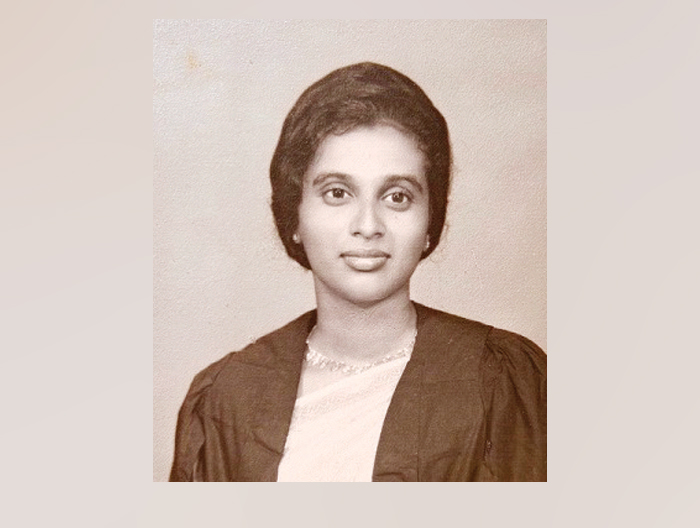
It was with shock that I realized that the article in the Sunday Island of April 5 about the winsome graduate gazing serenely at her surroundings was, in fact, an obituary about Nilanthi Jayasinghe, a former colleague who I had held in high esteem. I had lost touch with Nilanthi since my retirement and this news that she had passed away, saddened me deeply
I knew and had worked with Nilanthi – Mrs Jayasinghe as we used to call her – at the Open University of Sri Lanka in the 1990s. As Director, Operations, she was a figure that we as heads of academic departments, relied on; a central bastion of the complex structure that underpinned academic activities at Sri Lanka’s major distance education provider. Few people realize what it takes to provide distance education in an environment not geared to this form of teaching/learning – the volume of Information that has to be created, printed and delivered; the variety of timetables that have to be scheduled; the massive amount of continuous assessment assignments and tests that have to be prepared and sent out; the organization of a multitude of face-to face teaching sessions; the complex scheduling of examinations and tests – all this needed to be attended to for a student population of more than 20,000 and for 23 centres of study dotted across Sri Lanka.
It was an unenviable task but Nilanthi Jayasinghe with her flair for organization, handled it all with aplomb and a deep sense of commitment. If there were delays and inconclusive action on our part, she never reprimanded but would work with us to sort things out. Her work as Director, Operations brought her into contact with staff across the spectrum-from the Vice-Chancellor to the apprentice in the Open University’s Printing Press. Nilanthi treated everyone with dignity and as a result, was respected by all at the university. She was sensitive, kind-hearted, a good friend who would readily share problems and help to solve them. The year NIlanthi retired, I was out of the island. When I came back to the Open University, I felt bereft without the steadfast support of her stalwart presence .
The article in the ‘Sunday Island’ describes her life after retirement, looking after family members and enjoying the presence of a granddaughter.
After a lifetime of commitment to others, Nilanthi Jayasinghe truly deserved this happiness.
May she be blessed with peace.
Ryhana Raheem
Professor Emeritus
Open University of Sri Lanka.
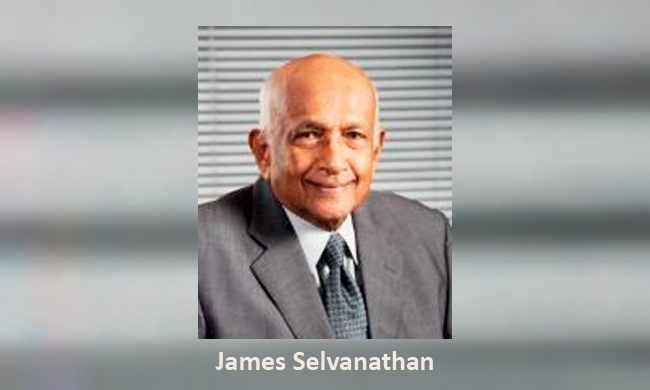
James Mather (Selvan to all of us) who passed away recently at the age of 95 was one of the leading Chartered Accountants in the country. He was the senior partner of Ernst and Young for long years, and the mentor for a generation of chartered accountants. He was confidante and adviser to many of the leading businessmen of his time. His career spanned over six decades. A man who never sought the limelight, he was very influential in Ceylon/Sri Lanka’s business world.
Selvan Mather was born in 1930 to a well-known Christian family in Jaffna. His father, Rev. James Mather was Head of the Methodist Church in Ceylon. Selvan was educated at Trinity College Kandy, and he had a life-long connection with the school. He entered the University of Ceylon in the late 1940s, at a time when Ivor Jennings was Vice-Chancellor.
He read economics and passed out with an honours degree. For short periods he was in the Department of Income Tax and with the newly established Central Bank of Ceylon. The Central Bank facilitated him to go to England to qualify as a chartered accountant. His two referees, when seeking admission to an accountancy firm in the U.K. were M.D.H. Jayawardena, then Minister of Finance and the Auditor General of Ceylon, L.A. Weerasinghe. Being a chartered accountant was a rare event those days.
On his return from England, his career was with Ernst and Young where he became senior partner. He was close advisor and confidante to many of the leading businessmen. He was admitted to its Hall of Fame by the Institute of Chartered Accountants.
To strike a personal note, I got to know him 50 years ago when he applied for a fellowship given by the Asian Productivity Organisation (APO) in Tokyo. I was in the Ministry of Planning and Economic Affairs at the time, and the Ministry was handling APO affairs in Colombo. He told me later that he enjoyed his time in Tokyo. From that time, we kept up a friendship with him and Nelun, which lasted 50 years.
My wife, Rukmal, and I lived in Windsor England, for about 25 years. During that time, Nelun and Selvan were regular visitors to England. I remember taking him for long walks in Windsor Great Park, and on the grounds of Eton College which were nearby. We went on long car tours in England covering the Cotswolds, the Peak districts and the Potteries. I remember celebrating Selvan’s 70th birthday in London at a Greek restaurant, along with his great friends, Nihal and Doreen Vitarana. Memories remain, although Selvan is no more.
In the last decades of his life we saw Nelun and him often. A few of us, Manik de Silva, Nihal and Srima Seneviratne and a few others met regulsrly for lunch. We will all miss Selvan who was mine of his life and times very much.
Selvan leaves his wife Nelun and three children and their husbands – Rohan, Shyamala and Indi, and Rehana and Akram. It was a close-knit family and they will miss him.
Leelananda De Silva.

Broader Strategic Consequences
One of the most significant strategic consequences of the war is the accelerated erosion of U.S. political and moral hegemony. This is not a sudden phenomenon precipitated solely by the present conflict; rather, the war has served to illuminate an already evolving global reality—that the era of uncontested U.S. dominance is in decline. The resurgence of Donald Trump and the reassertion of his “America First” doctrine reflect deep-seated domestic economic and political challenges within the United States. These internal pressures have, in turn, shaped a more unilateral and inward-looking foreign policy posture, further constraining Washington’s capacity to exercise global leadership.
Moreover, the conduct of the war has significantly undermined the political and moral authority of the United States. Perceived violations of international humanitarian law, coupled with the selective application of international norms, have weakened the credibility of U.S. advocacy for a “rules-based international order.” Such inconsistencies have reinforced perceptions of double standards, particularly among states in the Global South. Skepticism toward Western normative leadership is expected to deepen, contributing to the gradual fragmentation of the international system. In this broader context, the ongoing crisis can be seen as symptomatic of a more fundamental transformation: the progressive waning of a global order historically anchored in U.S. hegemony and the emergence of a more contested and pluralistic international landscape.
The regional implications of the crisis are likely to be profound, particularly given the centrality of the Persian Gulf to the global political economy. As a critical hub of energy production and maritime trade, instability in this region carries systemic consequences that extend far beyond its immediate geography. Whatever may be the outcome, whether through the decisive weakening of Iran or the inability of external powers to dismantle its leadership and strategic capabilities, the post-conflict regional order will differ markedly from its pre-war configuration. In this evolving context, traditional power hierarchies, alliance structures, and deterrence dynamics are likely to undergo significant recalibration.
A key lesson underscored by the war is the deep interconnectivity of the contemporary global economic order. In an era of highly integrated production networks and supply chains, disruptions in a single strategic node can generate cascading effects across the global system. As such, regional conflicts increasingly assume global significance. The structural realities of globalisation make it difficult to contain economic and strategic shocks within regional boundaries, as impacts rapidly transmit through trade, energy, and financial networks. In this context, peace and stability are no longer purely regional concerns but global public goods, essential to the functioning and resilience of the international system
The conflict highlights the emergence of a new paradigm of warfare shaped by the integration of artificial intelligence, cyber capabilities, and unmanned systems. The extensive use of unmanned combat aerial vehicles (UCAVs)—a trend previously demonstrated in the Russia–Ukraine War—has been further validated in this theatre. However, unlike the Ukraine conflict, where Western powers have provided sustained military, technological, and financial backing, the present confrontation reflects a more direct asymmetry between a dominant global hegemon and a Global South state. Iran’s deployment of drone swarms and AI-enabled targeting systems illustrates that key elements of Fourth Industrial Revolution (4IR) warfare are no longer confined to technologically advanced Western states. These capabilities are increasingly accessible to Global South actors, lowering barriers to entry and significantly enhancing their capacity to wage effective asymmetric warfare. In this evolving context, technological diffusion is reshaping the strategic landscape, challenging traditional military hierarchies and altering the balance between conventional superiority and innovative, cost-effective combat strategies.
The war further exposed and deepened the weakening of global governance institutions, particularly the United Nations. Many of these institutions were established in 1945, reflecting the balance of power and geopolitical realities of the immediate post-Second World War era. However, the profound transformations in the international system since then have rendered aspects of this institutional architecture increasingly outdated and less effective.
The war has underscored the urgent need for comprehensive international governance reforms to ensure that international institutions remain credible, representative, and capable of addressing contemporary security challenges. The perceived ineffectiveness of UN human rights mechanisms in responding to violations of international humanitarian law—particularly in contexts such as the West Bank and the Gaza Strip, and more recently in Iran—has amplified calls for institutional renewal or the development of alternative frameworks for maintaining international peace and security. Moreover, the selective enforcement of international law and the persistent paralysis in conflict resolution mechanisms risk accelerating the fragmentation of global norms. If sustained, this trajectory would signal not merely the weakening but the possible demise of the so-called liberal international order, accelerating the erosion of both the legitimacy and the effective authority of existing multilateral institutions, and deepening the crisis of global governance.
Historically, major wars have often served as harbingers of new eras in international politics, marking painful yet decisive transitions from one order to another. Periods of systemic decline are typically accompanied by instability, uncertainty, and profound disruption; yet, it is through such crises that the contours of an emerging order begin to take shape. The present conflict appears to reflect such a moment of transition, where the strains within the existing global system are becoming increasingly visible.
Notably, key European powers are exhibiting a gradual shift away from exclusive reliance on the U.S. security umbrella, seeking instead a more autonomous and assertive role in global affairs. At the same time, the war is likely to create strategic space for China to expand its influence. As the United States becomes more deeply entangled militarily and politically, China may consolidate its position as a stabilising economic actor and an alternative strategic partner. This could be reflected in intensified energy diplomacy, expanded infrastructure investments, and a more proactive role in regional conflict management, advancing Beijing’s long-term objective of reshaping global governance structures.
However, this transition does not imply a simple replacement of Pax Americana with Pax Sinica. Rather, the emerging global order is likely to be more diffuse, pluralistic, and multilateral in character. In this sense, the ongoing transformation aligns with broader narratives of an “Asian Century,” in which power is redistributed across multiple centers rather than concentrated in a single hegemon. The war, therefore, may ultimately be understood not merely as a geopolitical crisis, but as a defining inflection point in the reconfiguration of the global order.
Conclusion: A New Era on the Horizon
History shows that major wars often signal the birth of new eras—painful, disruptive, yet transformative. The present conflict is no exception. It has exposed the vulnerabilities of the existing world order, challenged U.S. dominance, and revealed the limits of established global governance.
European powers are beginning to chart a more independent course, reducing reliance on the U.S. security umbrella, while China is poised to expand its influence as an economic stabiliser and strategic partner. Through energy diplomacy, infrastructure investments, and active engagement in regional conflicts, Beijing is quietly shaping the contours of a more multipolar world. Yet this is not the rise of Pax Sinica replacing Pax Americana. The emerging order is likely to be multilateral, fluid, and competitive—a world in which multiple powers, old and new, share the stage. The war, in all its turbulence, may therefore mark the dawn of a genuinely new global era, one where uncertainty coexists with opportunity, and where the next chapter of international politics is being written before our eyes.
by Gamini Keerawella
(First part of this article appeared yesterday (08 April)

Bodies of 50 infants dumped at Trinidad graveyard

Indonesian Navy Sailing Ship KRI BIMA SUCI – 945 concludes official goodwill visit to Sri Lanka

Malinga, Reddy sink Chennai Super Kings chase to defend under-par 194 in Hyderabad

Stubbs, Miller win Delhi Capitals a thriller against Royal Challengers Bengaluru

Showers predicted in the Western, Central, Sabaragamuwa, Uva, North-western, North-central and Southern provinces after 1.00 pm.

Heat Index at Caution Level in the Northern, North-central, North-western, Western, Sabaragamuwa, Eastern and Southern provinces and in Monaragala district

‘Dates have the highest sugar content to fight Coronavirus’

Sunday Island 27 December – Headlines

#SundayIsland 17th December – Headlines

Sunday Island – 28th March

Sunday Island Headlines – 21 March

Sunday Island – 21st February – Headlines
-
 Latest News7 days ago
PNS TAIMUR & ASLAT arrive in Colombo
-
 Latest News7 days ago
Prasidh, Buttler set up comfortable win for Gujarat Titans
-

 News4 days ago
PNS TAIMUR & ASLAT set sail from Colombo
-

 Latest News6 days ago
“I extend my heartfelt wishes to all Sri Lankans for a peaceful and joyous Sinhala and Tamil New Year!” – President
-

 Business2 days ago
Harnessing nature’s wisdom: Experts highlight “Resist–Align” path to resilience
-
 Latest News7 days ago
Heat Index at Caution level’ in the Northern, North-central, North-western, Western and Southern provinces and in Trincomalee district.
-

 News2 days ago
Gratiaen Trust announces longlist for the 33rd Annual Gratiaen Prize
-
 News2 days ago
Heroin haul transported on 50-million-rupee contract