
Opinion
A change of economic policies for Sri Lanka


Millions of Sri Lankans are anxiously waiting to see what actions will be taken to make life bearable again.If we follow the example of successful countries we see them exploit their opportunities, and use the wealth created, not to import cars and go on luxury trips abroad, but to re-invest the money proceeds in further projects to bring in even more money. They proceed in this way until their citizens have good standard of living. Probably, the best example of that compounding of wealth is Singapore.
Singapore exploited its geographic advantages. It provided cruise ships with bunkering services and repair, later they provided airlines with refueling and expanded that to one night free stop- overs for passengers to buy luxury goods at their glamorous, tax-free shopping malls. The Japanese were making wonderful new gadgets: cameras, music players, portable radio cassette players, binoculars, all available in the malls and sold tax free!! Lee Kuan Yu forbade the ladies to wear denim jeans, and to wear dresses with hem lines coming down two inches below the knee! He even instructed the ladies to smile! No man could have long hair for fear of arrest. Littering was prohibited, so was chewing gum and smoking butts on the roads and pavements. The place was kept clean!
They used the proceeds arising from all this commercial activity to build housing blocks, develop new roads and other beneficial projects. (Individuals were not allowed to walk away with the profits, just to fritter them away.) Sentosa Island had installed a communications dish antenna connecting it with New York and the financial markets. This was an example of intelligent seizing of opportunities. I account for this intelligent development as due to the high educational and knowledge of Singapore’s progressive management. The result is a firm currency, holding its value.
Something similar has happened to Russia. Russia is rich. It is under progressive intelligent management. Stalin had developed the railway network across the full eleven time zones. But many areas remained to be connected. Putin found the finances to develop coal mines, develop oil and gas deposits and build railway bridges and tunnels for better access to markets and their demand for Russian products. Even as you read this, trains of 70 plus trucks, each with 70 tons of coal are grinding their way to China, day and night. Gas is flowing through an extensive network of pipelines, both east to China and west to friendly countries in Southern Europe. Mr. Putin and his men have succeeded in getting Russia fully functional. And the more Russians there are to spend money, so the more demand for goods and services: shops, etc., providing multiplying employment in Russia.
Mr. Putin wants to build a road and rail link south through Iran to India. A design plan is in the works. It is being discussed with Iran and India. Putin is displaying initiative for the benefit of Russia and its citizens. Putin cares for the citizens of Russia and is creating both wealth and jobs too. Architects are designing attractive living spaces and buildings which provide a better environment for Russians and contractors are building it. Education of Russian citizens is playing a big part in Mr. Putin’s thinking, too. Russia needs a talented workforce.
The result is that the currency, the Ruble is strong and does not devalue. It keeps its value.Belarus, Russia’s neighbour, can also be praised for outstanding development. The population in the big towns is cossetted with amenities and facilities which provides a luxurious way of life for townspeople especially those with industrial jobs. However, it must be admitted, the standard of life for the minority 30% population living in the countryside has yet to catch up. The administration is strict and everyone is law abiding. For example, you can leave your hand phone at your seat while you visit the toilet conveniences and it will remain undisturbed until you return.
Belarus, being a mostly agricultural country has a big tractor manufacturing plant, it has a fertiliser mining and producing plant, it has a commercial vehicle plant, DK MAZ which produces industrial trucks such as fire extinguishing trucks and also produces the most comfortable, bright, low step buses and so on, and of course, Belarus makes its own industrial vehicle tyres. The towns are prosperous and clean and Minsk, the capital is a beautifully laid out city. Town apartment blocks are multi-storied living spaces, but are so well designed and fitted as to provide pleasant living spaces for its people. These reduce urban sprawl across the wooded countryside.
What are Sri Lanka’s strengths? It is a small island thus making communications short and sweet. Its location in the Indian Ocean is a plus, its scenic beauty is a plus allowing a thriving tourist trade for people from colder climates, and its soil and climate allows almost anything to be grown. Therefore its agriculture is a great strength. Its long coastline can provide fish if the fisherised. It has deposits of graphite and phosphates which can be exploited to produce profits for further investment in development projects. It has its illiminite sands which are an extremely valuable asset but need to be controlled and exploitation expanded. It has a whole gem mining industry which need to be managed in way beneficial to the government. It has several government owned businesses which need to be overhauled and modernized to convert losses to profits. The rupee in 1948 was equal to the English pound, now it is around 450 rupees to the Pound. That gives a good description of Sri Lankan past governance.
Profits from projects need to be ploughed back into further projects to bring about a higher standard of living for all its inhabitants. Then the Lankan reputation of being a paradise island with happy people will be restored.
Priyantha Hettige

Opinion
When the decisive vote changes hands: Sri Lanka’s next electoral shift may already be underway

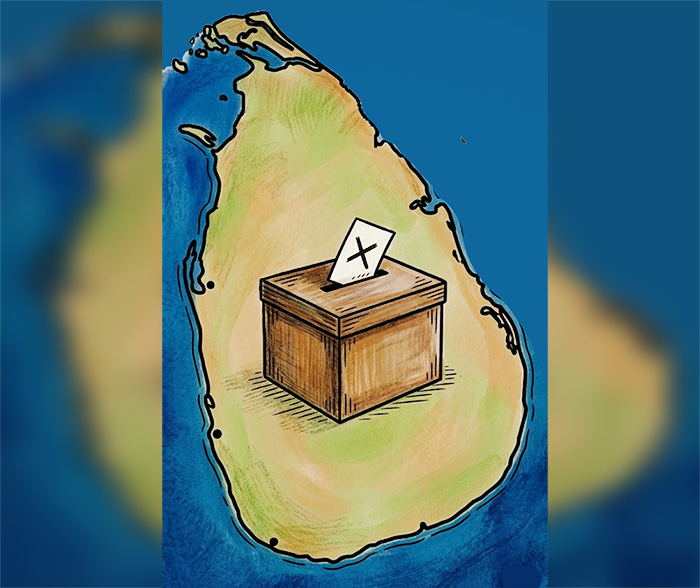
In the summer of 1789, as the French Revolution gathered momentum, delegates of the National Assembly assembled in Versailles to debate the future of France. The seating arrangement inside the chamber was not planned to shape political vocabulary for centuries to come. Yet it did. Those who favoured sweeping political change, greater equality, and the dismantling of inherited privilege gravitated to the left side of the hall. Those who defended the monarchy, established institutions, and traditional social hierarchies took their seats on the right. What began as a matter of convenience soon became a political metaphor. More than two centuries later, we still speak of the “left” and the “right” to describe competing visions of society.
Since then, the terms have evolved and acquired different meanings across countries and historical periods. Yet, the broad distinction remains remarkably durable. Ideologies associated with the left generally place greater emphasis on social, political, and economic equality, often advocating a more active role for the state in addressing disparities and expanding collective welfare. Ideologies associated with the right tend to place greater value on tradition, market mechanisms, authority, and various forms of social hierarchy, arguing that stability and prosperity emerge from preserving established institutions and incentives. Most political movements, of course, occupy positions somewhere between these poles, combining elements of both traditions in different proportions.
Few elections have altered the course of Sri Lankan politics as dramatically as the general election of 1977. Sweeping to power with an unprecedented five-sixths majority in Parliament, the United National Party ushered in a new political and economic era under the leadership of J. R. Jayewardene. He would later become the country’s first Executive President under a constitutional framework that vested extensive powers in the office. The changes that followed reflected a decisive move towards market-oriented reforms and a political outlook that leaned more to the right than anything Sri Lanka had previously experienced.
Yet even a political machine as formidable as the UNP’s could not hold power indefinitely. After nearly seventeen years of dominance, its grip on the electorate weakened. In 1994, the pendulum swung once again, bringing Chandrika Bandaranaike Kumaratunga. The victory was widely interpreted as a return to a more socially conscious and centre-left political vision.
What followed was not merely a change of government but the emergence of a recurring pattern in Sri Lankan political landscape. Since 1994, governments of varying compositions and personalities have risen to power with crucial support from parties and constituencies positioned on the left of the political spectrum. Whether through formal coalitions, strategic alliances, or ideological influence, the left has often provided the decisive electoral weight needed to secure victory. In many cases, without that support, the arithmetic of power would have looked very different.
Yet it is equally important to recognise what Sri Lanka has not become. Despite the enduring influence of left-wing thought, the country has never embraced an uncompromising far-left political project. Instead, successive governments have largely occupied a centre-left space, balancing market economics with welfare commitments, nationalism with social reform, and political pragmatism with egalitarian aspirations. The result has been a political landscape where power changes hands, parties rise and fall, and personalities dominate headlines, but the centre of gravity remains remarkably leftist. Sri Lanka’s electorate has repeatedly rewarded those who speak the language of social justice, even while stopping short of endorsing political extremes.
One possible explanation for this enduring centre-left tendency lies not in political parties themselves, but in the cultural formation of the electorate. For much of the period between the 1960s and the liberalisation of the economy in 1977–78, Russian literature occupied a prominent place in Sri Lanka’s reading culture. Affordable translations of the works of writers such as Tolstoy, Dostoevsky, Gorky, Chekhov and Pushkin circulated widely among students, teachers and ordinary readers. Alongside their literary value, these works exposed generations of Sri Lankans to questions of social justice, class inequality, collective responsibility and the moral obligations of society toward the vulnerable.
By the early 1990s, the generation that had grown up reading this literature had come of age politically. As they entered the electorate in larger numbers, they helped shape the contours of public opinion. Their voting preferences did not necessarily favour revolutionary socialism or radical left-wing politics. Rather, they appeared to support governments that combined commitments to welfare, social protection and egalitarian ideals with the practical realities of governing a developing nation. In this sense, the centre-left orientation that has characterised much of Sri Lanka’s political landscape since 1994 may owe as much to the country’s literary and intellectual culture as to the strategies of political parties themselves.
Yet there is an apparent paradox at the heart of this story. While successive governments often drew legitimacy from centre-left political ideals, their economic policies frequently moved in a different direction. Confronted by fiscal constraints, global economic pressures and shifting geopolitical realities, they operated within an international economic order largely shaped by market-oriented principles. Institutions such as the International Monetary Fund exerted considerable influence over economic policymaking, encouraging reforms associated more closely with liberalisation, fiscal discipline and market efficiency than with traditional left-wing economics.
It was thus a balancing act that defined Sri Lankan governance for decades after 1994: governments elected on promises of social justice and collective welfare, yet compelled to pursue economic strategies shaped by the imperatives of a global market economy. Politically, the country remained centre-left. Economically, it often travelled along a more market-oriented path.
Sri Lanka may have settled its political direction for the next few years, but the next truly decisive moment may arrive closer to 2030. By then, the composition of the electorate will have changed once again. A growing share of voters will belong to Generation Z and Generation Alpha, generations whose intellectual and cultural worlds differ markedly from those that came before them.
If the electorate that emerged in the 1990s was shaped, in part, by the values encountered in Russian literature and a reading culture that emphasised questions of social responsibility, collective welfare and inequality, the generations now entering political maturity have been formed by a different landscape altogether. Their influences are increasingly digital, global and instantaneous, are shaped more by algorithms and by social media feeds, content creators and transnational cultural currents. Many have grown up in a world where entrepreneurship, individual success, innovation and market-driven solutions occupy a far more visible place in public discourse.
This generational shift is unfolding alongside broader transformations in global politics. Across much of the world, including major powers such as the United Kingdom and the United States, contemporary political movements that emphasise markets, national interests, economic competitiveness, and stronger state authority have gained momentum. Whether these trends will find a lasting echo in Sri Lanka remains a question that deserves careful attention, not merely as an electoral matter, but as one intertwined with some of the defining challenges of our time.
Today, concerns of national sovereignty, security, strategic influence and even soft power are increasingly mediated through economic strength and market performance. Nations are judged not only by their political ideals but also by their ability to compete, innovate and secure their place within an interconnected global economy. Sri Lanka, still navigating the aftermath of economic crisis and charting its future development path, finds itself at the centre of these debates.
Against this backdrop, if the decisive vote is gradually passing from a generation shaped by the books that once filled the nation’s shelves to one shaped by the screens that now fill its hands, the question therefore does not simply become who will win the next election. It is whether the intellectual and cultural influences that shaped Sri Lanka’s centre-left political consensus can retain their hold on a new electorate formed by different experiences, different technologies, and different aspirations.
If every era is ultimately defined by the stories it tells itself, what story is the next generation of Sri Lankan voters already beginning to write? Will it move the centre of gravity towards a more market-oriented, centre-right vision? The answer may well determine not only the outcome of future elections, but the ideological direction of Sri Lanka itself.
By Viran Maddumage PhD (Reading), Macquarie University,
and Sanduni Rathnayake, AAL
Reimagining Sri Lanka’s Old Boys’ Unions into Lifelong Alumni Ecosystems A National Call for Ethical Citizenship, Educational Transformation and Social Renewal
For more than a century, Sri Lanka’s schools and colleges have produced generations of citizens who contributed immensely to the nation’s administration, education, medicine, engineering, law, agriculture, business, military service, arts, and leadership. Alongside these institutions emerged Old Boys’ Unions and alumni associations that represented far more than ceremonial organisations. They symbolised loyalty, institutional pride, brotherhood, continuity, and shared values that transcended generations. In many ways, these alumni associations became the emotional and moral extension of school life itself.
However, Sri Lanka now stands at a crossroads. While annual dinners, jubilees, and big matches continue to preserve nostalgia and tradition, many alumni organisations are increasingly struggling to remain relevant to younger generations. The modern world has changed rapidly, yet many alumni systems have remained largely unchanged. Today’s youth face digital disruption, migration pressures, economic uncertainty, social fragmentation, mental stress, and intense competition. As a result, younger alumni increasingly seek practical value from institutional networks through mentorship, career guidance, entrepreneurship support, emotional wellbeing systems, digital networking, and lifelong learning opportunities. Unfortunately, many traditional alumni associations continue functioning mainly as event-driven organisations rather than dynamic ecosystems capable of supporting individuals throughout life.
Globally, leading educational institutions in countries such as Singapore, the United States, the United Kingdom, Australia, Japan, and India have transformed their alumni organisations into sophisticated lifelong engagement ecosystems. These institutions maintain integrated digital platforms that support graduates from the moment they leave school until retirement and beyond. Their alumni systems provide mentorship, startup incubation, executive education, mental health assistance, professional networking, welfare support, diaspora engagement, retirement communities, and AI-driven alumni management systems. These modern ecosystems have evolved into strategic human capital development platforms that strengthen institutions, economies, and societies.
Sri Lanka possesses one of the strongest school identity cultures in Asia. The emotional attachment Sri Lankans maintain toward their alma mater remains exceptionally powerful even decades after leaving school. This cultural strength presents a historic national opportunity. If properly restructured, professionally governed, digitally transformed, and strategically managed, Sri Lankan alumni associations could become one of the country’s strongest long-term mechanisms for shaping ethical citizenship, reducing corruption, strengthening social cohesion, and nurturing morally grounded future generations.
One of the major weaknesses in modern society is that moral guidance and ethical accountability often decline sharply after formal schooling ends. During school life, students operate within structured environments shaped by discipline, institutional culture, accountability, and values. Yet, once individuals leave school, many gradually disconnect from those value systems and become increasingly exposed to political manipulation, unethical business cultures, social isolation, corruption, and declining civic responsibility. The absence of long-term moral ecosystems contributes significantly to the erosion of social ethics within society.
This is where modern Alumni Ecosystems can play a transformative role. A properly functioning alumni system should not merely preserve memories of the past. It should reinforce ethical citizenship and moral accountability throughout adulthood. Alumni communities can continuously remind individuals where they came from, what values shaped them, and what responsibilities they carry toward society. Such ecosystems can cultivate leadership ethics, civic consciousness, professional integrity, and social responsibility across generations. In this context, alumni associations become not merely educational bodies, but important instruments of national governance and social development.
A well-managed alumni ecosystem can therefore contribute meaningfully toward building a corruption-free society. Ethical peer influence, mentorship from respected senior alumni, intergenerational accountability, and strong institutional identity can discourage unethical behaviour and reinforce integrity in professional and public life. Sri Lanka should envision a future where every student entering adulthood remains connected to a structured lifelong support network. School leavers could receive career guidance and mentorship, entrepreneurs could access ethical business networks and investment opportunities, migrant professionals could reconnect globally through alumni platforms, and retired alumni could continue contributing through mentoring and community service. Elderly alumni could receive welfare support, companionship, and dignity during the later stages of life.
Another important concept is the “1950 Generation Acid Test” for alumni organisations. The true strength of an alumni association should not be measured merely by the number of events conducted or sponsorships obtained. Instead, institutions must ask how many of their oldest surviving alumni — particularly those born around 1950 or earlier — remain actively connected, respected, cared for, and meaningfully engaged by the institution. The demographic profile, wellbeing, engagement, and continued institutional connectivity of the oldest surviving members should be recognized as one of the most important indicators of the true strength, ethical legitimacy, and long-term sustainability of any alumni ecosystem.
Sri Lanka now urgently requires a National Alumni Transformation Framework under the Ministry of Education. Such a framework should modernise alumni constitutions, establish professional alumni offices, digitise databases, introduce transparent governance standards, integrate youth representation, strengthen diaspora engagement, establish welfare and wellness units, and create lifelong mentorship ecosystems. A structured tripartite partnership involving the College Alumni Association, the Principal of the respective college, and the Provincial Education Authorities could become a transformative governance mechanism to ensure continuity, accountability, intergenerational engagement, and value-based citizenship development.
Sri Lanka’s long-term transformation will not be achieved through infrastructure development alone. It will be achieved through people — and people are shaped not only during schooling, but through the lifelong communities they remain connected to afterward. The next decade may therefore determine whether Sri Lanka’s Old Boys’ Unions gradually decline into ceremonial nostalgia-driven organisations or evolve into intelligent, intergenerational Alumni Ecosystems capable of shaping ethical citizenship, corruption-free leadership cultures, and national transformation itself.
by Dammike Kobbekaduwe
FIPM (SL), Member-CIPM (SL), MBA (HRM)Founder Director of the Proprietary Planters Alliance (Pvt) Ltd
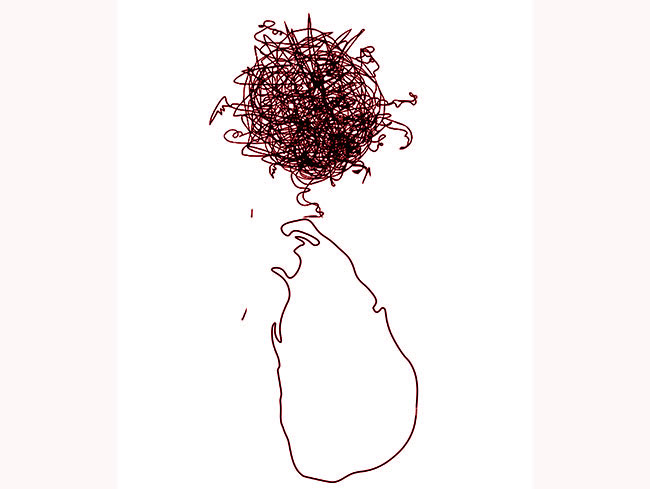
There is an abiding and tragic irony in Sri Lanka’s geography, as well as its history. We inhabit a land blessed with fertile soil, kissed by perennial sunshine, surrounded by the deep blue sea and wrapped in natural beauty that the rest of the world envies. Yet for all that, for decades, the story of this island has not been one of prosperity, but of a steady, agonising descent into unclassified chaos as judged by every possible dimension. Successive governments, populated by so-called leaders and politicians of every conceivable hue, have systematically brought this nation down, lower and lower, into a chasm of economic ruin and social despair. Today, despite grandiose promises of “system change” and “political resets”, the reality on the ground remains an indictment of a ruling class of politicians that has consistently put self-interest above statecraft.
Our woes are a miserable legion, and the vast majority of them are entirely man-made. The fundamental tragedy of Sri Lanka is that we have never had a true statesman: a leader of vision, integrity, and courage, who could drag us out of this hell hole and elevate our status to dizzy heights. Instead, we have been cursed with a rotating theatre of loud-mouthed politicians whose ideological and grandiose proclamations, which are quite different from their opponents’, evaporate even without a trace, the moment they taste unbridled power. Whether wearing the colours of old dynastic parties or wrapping themselves in the mantle of new populist alliances, the current set of politicians have absolutely nothing worthwhile to offer. The faces change, but the underlying mechanisms of stellar governance remain totally shattered. There are even many superlatives, grandiose adjectives and the highest accolades, used by the people and even the media, to describe our politicians of the past. Those words are not worth even the paper that they are written on.
The Blight of Rampant Corruption
At the heart of our national decay lies rampant, unchecked corruption. It is a cancer that has sent out its roots into every organ of the state. For decades, public office has been viewed not as a sacred duty to our nation, but as a gateway to personal enrichment. Irregularities mar multimillion-dollar contracts, public funds vanish into the ether of foreign bank accounts, and even international loans meant for national development are shamelessly preyed upon by hackers and bureaucratic thieves.
When a nation’s moral fabric is torn from the top, the rot inevitably trickles down, just as a fish starts to rot from the head downwards. The independent oversight bodies that should act as the state’s watchdog guard-rail systems, are routinely weakened, bypassed, or detrimentally politicised. We are repeatedly treated to the spectacle of high-profile arrests and anti-graft investigations, yet for all that, these exercises often feel more like political theatre than a genuine purification of the system. Politicians with handcuffs and wide smiles are bandied about in the media as if at a political rally, while hardcore criminals and murderers are allowed to cover their faces when they are featured in the media. True accountability remains elusive because the system is designed by the corrupt, principally for the corrupt. While the elite insulate themselves with their plundered wealth, the ordinary citizen is left to pay the bills for their profligacy.
The Betrayal of the Farmer and Food Insecurity
Perhaps there is no greater crime committed by our rulers than the systemic betrayal of our agricultural sector. Sri Lanka possesses the climate and the traditional knowledge to be completely self-sufficient in food production. Yet, our farmers are treated with scant respect and given minimal facilities or totally inadequate structural support. They are left at the mercy of climatic upheavals, volatile markets, inadequate storage infrastructure, a determined and fabulously rich mafia of unscrupulous and scheming middlemen, as well as erratic policy decisions that seem designed to fail, time and time, again and again.
It is an absolute travesty of justice that an island capable of feeding itself more than comfortably, is forced to spend its precious, hard-earned foreign exchange importing basic food articles. We are witnesses to the absurd spectacle of importing foods, fruits, confectionery, and sweets from abroad. Many of these items are what we already produce locally and which are of an exceptionally high quality and with the ability to stand on their own against any of the imports. Our homegrown endeavours based on agricultural produce such as tea, coconuts and spices, some of which have the reputation of being the best in the world, are stifled by a lack of state encouragement and a flood of imports favoured by policy loopholes and obeisance to political cronies. By failing to protect and subsidise our agricultural base, our leaders have not only impoverished the rural masses but have left the entire nation vulnerable to global supply shocks. A country that cannot feed itself from its own ever-so-rich soil can never truly claim to be sovereign.
The Crushing Burden of the Living
As a consequence of this economic mismanagement, the cost of living has soared to heights that are actively suffocating the average household. The price of basic commodities, fuel, and utilities has turned daily survival into an exercise in desperation. To appease international creditors and patch up the fiscal black hole dug by previous administrations, the state has resorted to implementing virtually punitive and totally suffocating taxes.
However, the high flyers are well-known to devise their own ways of circumventing these taxes. We do not hear of the Inland Revenue Department asking for details of how they acquired the wealth to import vehicles to the tune of tens and even hundreds of millions of rupees. In contrast, the tax people are well known to go after professionals who strive ever so hard to make a few honest bucks. These taxes do not target the wealthy elite who engineered the crisis. Instead, they fall disproportionately on the middle class and the absolute poor.
The burden of fiscal recovery has been placed squarely on the sagging shoulders of those least able to cope. At the same time, arbitrary economic restrictions, such as the prolonged and convoluted policies surrounding the importation of motor vehicles, have distorted the local market, making transport and commerce prohibitively expensive. The middle class is being systematically dismantled, held by the neck and squeezed, and forced to choose between economic stagnation at home or fleeing the country in search of better horizons.
The Collapse of the Social Safety Net: Education and Health
For generations, Sri Lanka has prided itself on its robust social indicators, anchored by free education and free healthcare, both free at the point of delivery. These were the twin pillars that allowed for social mobility and guaranteed a basic dignity of life. Today, those pillars are also crumbling.
Our public education system is failing, and has been failing for many a decade. It is blatantly starved of resources, and burdened by outdated curricula that do not prepare our youth for a changing world. Teachers are underpaid, schools lack basic infrastructure, and the universities have become battlegrounds of frustration rather than centres of excellence. There are no facilities at all to detect and foster our gifted children. If only our administrators and politicians remove their eye pads and look around the globe, the will be able to see the light of day that will usher in the sort of education that would change the entire landscape.
Simultaneously, the healthcare system is in a state of terminal decline. Public hospitals are plagued by critical shortages of essential medicines, surgical equipment, and specialised personnel. The “brain drain” triggered by the economic crisis has seen thousands of our finest doctors, nurses, and academics abandoning the country, leaving behind a hollowed-out and inadequate system.
When a citizen can no longer rely on the state to educate their child or save their life in an emergency, the social contract between the governor and the governed is entirely dead. The sheer grain of responsibility and accountability has been fractured forever, hardly ever, if not never, able to recover.
A Land Punished by Man and Nature
As if the misrule by politicians were not enough, nature itself seems to have turned its face away from us. In recent years, Sri Lanka has been repeatedly battered by an array of natural disasters, from severe droughts that parch our agricultural heartlands to supercharged monsoons, floods, and landslides that even sweep away entire villages. It certainly looks as if the Gods are against us.
Yet for all that, even these environmental calamities reveal the incompetence of our leadership. Climate change may be a global phenomenon, but the devastation caused by these disasters is magnified tenfold by local corruption and incompetence. Deforestation, unregulated construction on fragile hillsides, and the complete absence of modern disaster-preparedness infrastructure, ensure that every heavy rainfall transforms itself into a national tragedy. Nature has punished us…, YES, but our so-called leaders have stripped us of the armour needed to survive the blows.
The Elusive Search for a Glorious Humane Statesperson
We find ourselves in a totally miserable cul-de-sac, an impasse that is totally unfathomable, akin to a bottomless pit of despair. Our woes are a legion, and the historical ledger of our political class is a catalogue of failure, betrayal, and unfulfilled promises. The current political landscape offers no solace; it is populated by factions that excel at critique but are utterly bankrupt when it comes to execution of noble promises. They offer cosmetic adjustments to an economic framework that really requires a radical, ethical overhaul. Indeed, they can only excel at patchwork solutions.
What we need is neither a partisan autocratic politician nor another coalition born of electoral opportunism. We need a true statesperson, a man or a woman; a leader who has the moral authority, singular courage, and the aptitudes to enforce the rule of law, the vision to prioritise domestic production and agricultural sovereignty, as well as the honest valour to demand sacrifices from the wealthy rather than the vulnerable poor. Until such leadership emerges from the very soil of this country, we will remain trapped in this self-inflicted hovel, gazing pensively at the immense potential of our magnificent island, while living in the reality of its total and substantial ruin.
It is time for the citizens of Sri Lanka to stop waiting for spontaneous salvation from the current political hues, and demand a complete, uncompromised reconstruction of the state and our thrice-blessed Motherland. Towards that end, your guess is as good as mine as to whether our gullible, easily manipulated, and terribly short-sighted inhabitants of this isle of potential splendour would have even an iota of wisdom to do what is so desperately needed. Till that time, when the currently despondent and impulsive masses of this country, of all hues, castes, creeds and ethnicities, wake up from their nonchalant slumber, and rise up as a nation to clamour for their just desserts, we will continue to remain in this abyss of despair. At the end of the day, the celebrated architects of resurrection would be the people, very definitely, for the people.
By an Old Aficionado

Foreign nationals among at least 21 killed in Delhi fire

US and Iran launch new strikes, as Kuwait says airport hit by Iranian drones

Ukraine’s Kostyuk blasts Russia stars in French Open outburst over war

Iran armed forces vow to fight ‘to the death’ on Khomeini death anniversary

Urgent meeting called for amid BBL chaos; ACA says merger has caused ‘anxiety’

Measures taken to promote integrity in State Revenue Collection Institutions reviewed

‘Dates have the highest sugar content to fight Coronavirus’

Sunday Island 27 December – Headlines

#SundayIsland 17th December – Headlines

Sunday Island – 28th March

Sunday Island Headlines – 21 March

Sunday Island – 21st February – Headlines
-

 News5 days ago
IMF urges Lanka not to meddle with exchange rate
-
 Business6 days ago
Sri Lanka’s construction industry losing ground while no one watches
-
 Business3 days ago
IMF’s unstated rate:Sri Lanka’s $695m loan costs about 5.33% per annum
-
 News5 days ago
State of emergency extended
-

 Features6 days ago
The Division Bell Mystery
-

 News2 days ago
Lankan duo emerge winners in Latin dance championship held in Blackpool, UK
-
 News3 days ago
UNP challenges NPP move to amend Vihara – Devalagam Act
-
 Features4 days ago
Are threats to Buddha Sasana external or from within?