
Features
Yoruba cultural and statist symbolism today

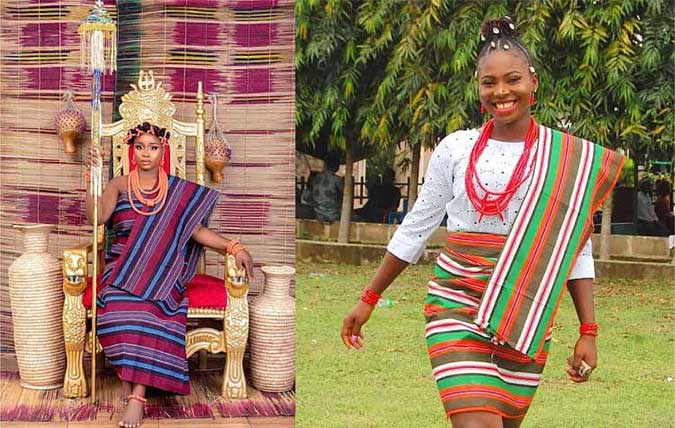
by Kumar David
One point of theoretical interest is the thesis that material benefit alone dictates the evolution of society and culture and the state-craft are mere appendages that tack along. Is it reasonable to say that the different stages of human historical evolution are a movement of society from slavery to serfdom, from classical (Greco-Roman, Xian China or pre-Mohenjo-Daro Indus Valley) to feudal, serf, medieval and capitalism today? That is too simplistic because each stage in social evolution carried within the transition vestiges of the culture and statecraft of its origin.
In more recent times migration has crafted a course of worldwide penetration quite distinct from the aforesaid Out of Africa 2 experiences. It has left dominant markers – for example Chinese cuisine, without challenge the most diverse and delicious in the world – has spanned a legion of China Towns all over the world. Indian indentured labour built the railways of North and South America or settled down into stable plantation communities all over Asia and Africa. None of this of course is to be confused with the much earlier pre-history which I have referred to as the Out of Africa 2 period.
It is my observation that in North America (US and Canada), the UK and Australia what is taking shape in the Lankan expatriate community is the emergence of separate Tamil and Sinhala cultural formations not a Sri Lankan culture; take for example “clubs”, religious occasions and even weddings (except the formal event when “everyone” has to be invited). This is the shape of things to come in ‘expatriate Lanka’. The creation of Tamil and Sinhala cultural communities, not a Sri Lankan expatriate culture is what I see.
If the fight for devolution of power to communities and regions is taken boldly forward by entities within the country, the aforesaid bifurcation in the expatriate arena will be unimportant. This is one reason why I have in this column, ever since the Gotabaya-circus was driven out, placed so much emphasis on the role of entities like the NPP to influence the JVP, the positive role of progressive liberal classes and the potential for Sinhala, Tamil and Muslim progressive bourgeois political parties.
In the West the Indian and Pakistani expatriate communities maintain social distances and neither mixes closely with Sri Lankans. Indeed, there is some distance between the American Blacks and Africans who have migrated to the West in recent years. This is despite the fight against slavery and its residues by American Blacks and heroic role of the Civil Rights Movement. All goes to show that even when the colonial master is not pulling the ‘divide and rule’ strings these distances will long prevail.
The Out-of-Africa-2 hypothesis
which dominates scientific opinion today proposes that a migration out of Africa of the species homo-sapiens-sapiens, or modern man, took place about 100,000 years ago. These modern humans of African origin conquered the world by completely replacing archaic human populations (homo erectus, homo habilis, homo needletails, etc) which had crossed out of Africa much earlier, from about one million years ago. This modern theory allows for the possibility of minor cross breeding between the two populations in isolated theatres. https://www.nature.com/scitable/content/out-of-africa-versus-the-multiregional-hypothesis-6391/
In this first stage of “Out of Africa 2”, as said, homo sapiens moved out of Africa about 100,000 years ago spreading over the Middle Eastern land mass, entering India, moving north across Central Asia into China and maybe 50,000 years ago crossing over into New Guinea and then Australia. The available anthropological and scientific literature is rich and these two paras are intended no more than to point readers in this direction. What is certain is that social organisation was very rudimentary in the hunter-gatherer societies that preceded settled civilisation in the Tigris-Euphrates Valleys, the Fertile Crescent and Mesopotamia commencing about 12,000 BC. There are hardly any cultural symbols (burial sites) or methods of state-craft carried over from say 30,000+ years ago. Prehistoric, in our case pre-Balangoda Man simply existed. His state-craft is unknown and cultural artefacts mostly lost.
Then why on earth should anybody in this country be interested in a people and culture that dominated north-east Nigeria, unless it has resonances with political evolution in this country? I grant that the number of people in Lanka who have ever heard of the Yoruba people and their culture is small though the Internet provides a number of leads. The significance of the Yoruba’s for north-western Nigeria and in the regions west of the northern part of the Niger River is profound. The Atlantic coast from where the river joins the sea to Benin, Togo and all the way beyond Ghana is known as the Tonkin Gulf, the Gulf of Guinea or the Bight of Benin. The region and coast share a superficial history similar to the East and North-West Cost of Lanka and there are some historical parallels to Lanka’s late-medieval period.
Archaeological evidence of the existence of Yoruba culture in the region can be traced to the first millennium BC. The people who lived in Yorubaland up to the seventh century BC, though not known as the Yoruba, by the first millennium BC shared a common ethnicity and language group; something similar to the pre-Sinhala and pre-Tamil inhabitants of this Island. These Ethnic groups, including the Yoruba became well known internationally due to their trading with the Portuguese which gave them access to guns and other weapons. In late 1800s, they entered into a treaty with the British and were colonized by Britain in 1901. Recall that the Kandyan Kingdom succumbed to the British in 1815. Eighty-six years in the anthropological time scale is but the blink of an eye.
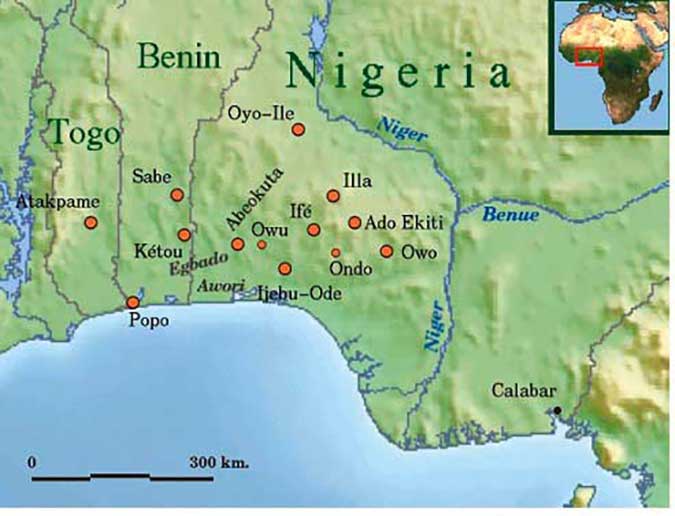
By the 1st millennium BC Yoruba cultural practices, traditions of social organisation and ‘state-forms’ were influential. Today common cultural practices are widely dispersed in expatriate Tamil communities in the UK, Canada and the USA while a sliver of Tamil expatriate entities struggle to sustain the fiction of revanchist organisations that can keep alive an Eelam-state ideology in these countries – the Transnational Government of Eelam (TGTE) for example. In the case of the Yoruba the continuity of social-organisational structure into modern times is less fictional and more authentic.
One point of theoretical interest is the thesis that material benefit alone dictates the evolution of society and culture and the state-craft are mere appendages that tack along. Is it reasonable to say that the different stages of human historical evolution are a movement of society from slavery to serfdom, from classical (Greco-Roman, Xian China or pre-Mohenjo-Daro Indus Valley) to feudal, serf, medieval and capitalism today? That is too simplistic because each stage in social evolution carried within the transition vestiges of the culture and statecraft of its origin.
In more recent times migration has crafted a course of worldwide penetration quite distinct from the aforesaid Out of Africa 2 experiences. It has left dominant markers – for example Chinese cuisine, without challenge the most diverse and delicious in the world – has spanned a legion of China Towns all over the world. Indian indentured labour built the railways of North and South America or settled down into stable plantation communities all over Asia and Africa. None of this of course is to be confused with the much earlier pre-history which I have referred to as the Out of Africa 2 period.
It is my observation that in North America (US and Canada), the UK and Australia what is taking shape in the Lankan expatriate community is the emergence of separate Tamil and Sinhala cultural formations not a Sri Lankan culture; take for example “clubs”, religious occasions and even weddings (except the formal event when “everyone” has to be invited). This is the shape of things to come in ‘expatriate Lanka’. The creation of Tamil and Sinhala cultural communities, not a Sri Lankan expatriate culture is what I see.
If the fight for devolution of power to communities and regions is taken boldly forward by entities within the country, the aforesaid bifurcation in the expatriate arena will be unimportant. This is one reason why I have in this column, ever since the Gotabaya-circus was driven out, placed so much emphasis on the role of entities like the NPP to influence the JVP, the positive role of progressive liberal classes and the potential for Sinhala, Tamil and Muslim progressive bourgeois political parties.
In the West the Indian and Pakistani expatriate communities maintain social distances and neither mixes closely with Sri Lankans. Indeed, there is some distance between the American Blacks and Africans who have migrated to the West in recent years. This is despite the fight against slavery and its residues by American Blacks and heroic role of the Civil Rights Movement. All goes to show that even when the colonial master is not pulling the ‘divide and rule’ strings these distances will long prevail.

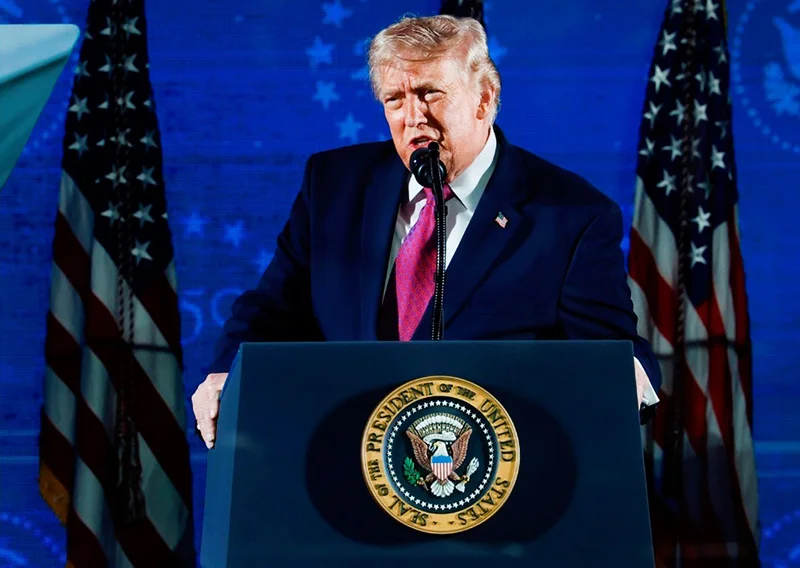
 Democratic and progressive opinion in the US and the world over would likely have been further jolted by the divisive rhetoric blared forth by US President Donald Trump on no less an occasion than the 250th anniversary of the US Declaration of Independence from Britain. The world has been placed on notice that what it would be having in the main is aggravated polarization on multiple fronts during what’s left of the Trump tenure.
If the world was expecting positive moves by the Trump administration to bridge divisions, heal rifts and usher in a more harmonious international political order, this is very unlikely to be. Instead, in all probability we would be left with a far more ‘dangerous place to live in’.
Some of the more thought-provoking recent ‘takes’ from President Trump are : ‘A generation after we fought and won the cold war against the menace of communism, there is now a resurgence of the communist menace in our land, including from newcomers to our country who embrace ideas totally opposed to our way of life and our great success.’ ‘We will send them (immigrants) quickly away, and we will continue to build our country bigger and better than ever before.’ ‘We are going to give our country its identity back.’ ‘You can be loyal to Karl Marx or you can be loyal to America. You can be a communist or you can be a patriot. You cannot be both.’
Accordingly, what the world would have in increasing measure going forward are stepped-up attempts to consolidate a white supremacist administration in the US accompanied by a suppression of ethnic, religious and cultural minorities at home along with renewed attempts to spread and consolidate US hegemonism world wide.
The latter project would mainly translate into US military interventions abroad of the Venezuelan type and a persistence if not a resurgence of identity based conflicts globally. Violent reactions internationally to what are seen as attempts by the US to bring recalcitrant sections in particularly the South under white supremacist control will provide the basis for the steadfast presence and spiking of identity politics globally.
Moreover, the path has been paved for stepped-up ethnic, religious and cultural disharmony within the US. A united state is far from possible, given this backdrop. Put simply, it would be a question of steeper political polarization at home and abroad.
The persistent, widespread support for the hard line Islamic regime in Iran locally and globally should serve as an eye-opener for the political decision-makers of the US. Huge crowds at the funerals of Iran’s political leaders could very well be state-orchestrated but they are a pointer to the fact that political Islam is far from on the decline. To the extent to which this is so, the phenomenon could be a hurdle in the path of a stridently expansionist US.
Looking back, it was the consolidation of the Islamic regime in Iran in the late seventies of the last century that, besides proving a major challenge to the unfettered global power expansion of the US and its Western allies, provided the motive force as it were for the proliferation of Islam-based identity politics in particularly the South. This continues to be so.
Going forward, the US would need to figure out how best it could manage the persistent presence of Islamic fundamentalism world wide, and for that matter other forms of identity politics, without drastically losing its global power and influence.
The recent successful challenge by Iran to the US’ efforts to exercise its diktat in West Asia should prove an ‘eye-opener’. In these confrontations both sides were bloodied but Iran proved that it could successfully take on the US militarily. The inference for the US ought to be that projecting its military might in the Middle East in a no-holds-barred fashion would not prove easy.
Arising from the foregoing a foremost policy challenge for the US would be to curb Iranian military power while avoiding another major military confrontation with the Islamic state that would cost the US and the world dearly in particularly economic and material terms. The US would have no choice but to persist with the often flagging West Asian peace effort and to render it fully workable.
Ukraine presents the US with another formidable challenge. As is known, Ukraine is proving no easy ‘push-over’ for Russia, but it is badly in need of more sophisticated Western arms, particularly effective air defense systems, to fully neutralize the Russian invasion. What would the US choose to do; go to Ukraine’s assistance fully or opt not to ruffle and antagonize the Putin regime, with which it is on some cordial terms?
A negotiated solution is best in Ukraine and the Trump administration would do well not to lose sight of this ideal but Russia too should see the need for a diplomatic solution if it is to salvage itself from its military stalemate in Ukraine. The US needs to try being a peace mediator in the latter theatre but if the Russian political leadership fails to opt for peace the US would have no choice but to join the rest of NATO and Europe in continuing to arm Ukraine.
The US would need to take the latter course if the ‘world’s mightiest democracy’ is to remain committed to its founding ideals. If President Trump fails to meet this challenge he would prove that he is nothing more than an ‘empty rhetorician’.
However, it should not come as a surprise to the world if Trump chooses not to strongly back the rest of the West on Ukraine. Domestic and foreign policy are closely intertwined. Since the Trump administration is committed to building a white supremacist state at home, democratic development worldwide has been of the least importance to it.
The Trump administration’s strong affinities to white jingoism would increasingly compel it to opt for a policy of international isolationism. As a result Ukraine could prove unimportant for the US going forward.
Consequently, US-Western Europe friction in particular is only likely to intensify in the days ahead. Coupled with the contentious issues growing out of the persistence of identity politics, the Trump administration’s far-sightedness in managing foreign policy issues would be tested to the fullest. Whether the world would have comparative peace or continued blood-letting would depend crucially on such judiciousness.
Features
Beyond concrete: Sunela Jayewardene urges Sri Lanka to rediscover an ancient wisdom for a planet in peril

It was more than a lecture on architecture. It was a challenge to rethink civilisation itself.
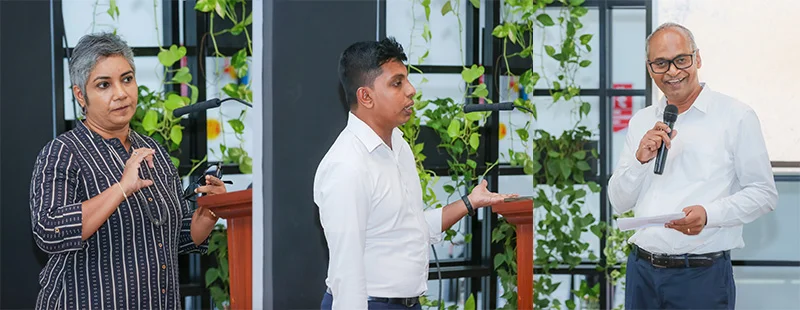
Standing before a packed audience at Dilmah by Genesis in Maligawatte, internationally acclaimed environmental architect, author and conservationist Sunela Jayewardene delivered a keynote that transcended blueprints, buildings and urban planning.
Instead, she invited her listeners on an intellectual journey into Sri Lanka’s ancient past, arguing that the answers to some of the world’s gravest environmental crises may already exist within the island’s forgotten ecological wisdom.
Her address, titled “Beyond Concrete: Architecture for the Coexistence of Species,” was at once philosophical, historical and deeply practical. It questioned humanity’s obsession with dominating nature and called for a return to a design ethic rooted in respect, restraint and coexistence.
“The road is actually very simple,” Jayewardene said. “We have simply forgotten it.”
That observation became the defining thread of an afternoon that challenged conventional thinking about architecture and development.
According to Jayewardene, modern society has inherited a worldview shaped largely by colonial values that placed human needs above those of every other living organism.
“Our value system was turned on its head,” she observed. “We accepted a Western way of looking at nature without questioning it. Today we can clearly see the consequences. The world is in crisis. Species are in crisis. Our lifestyles are in crisis.”
She was careful not to romanticise the past, nor was she dismissive of modern science. Instead, she argued that Sri Lanka’s pre-colonial civilisation possessed a sophisticated environmental philosophy that modern planners and architects have largely ignored.
For Jayewardene, environmental architecture is not about fashionable sustainability slogans or cosmetic landscaping.
It begins with humility.
It begins by recognising that humans are only one species among millions sharing the same landscape.
“The built environment should not exist in opposition to nature,” she said. “It should become part of nature.”
One of the most captivating moments of her presentation came when she introduced her own research into the island’s ancient sacred geography.
Using digital mapping and satellite imagery, Jayewardene demonstrated the remarkable alignment of Sri Lanka’s four original Saman Devalayas, whose axes converge on Sri Pada, historically known as Samanthakuta.
The extraordinary precision of these alignments, she argued, raises profound questions about the scientific and surveying capabilities of ancient Sri Lankan civilisation.
“What kind of technology enabled them to achieve this?” she asked the audience.
Her purpose was not to offer speculative answers but to challenge deeply ingrained assumptions that ancient societies lacked scientific sophistication.
“We often underestimate what our ancestors knew,” she said. “Yet the evidence around us tells a very different story.”
That forgotten knowledge, she argued, extended well beyond engineering.
It shaped an entire philosophy of living with the landscape rather than imposing human will upon it.
Displaying photographs from archaeological sites including Ritigala, ancient monasteries and rock pavilions hidden within Sri Lanka’s forests, Jayewardene illustrated how builders carved steps around natural boulders, integrated structures into existing rock formations and preserved the contours of the land.
Modern construction, she suggested, would almost certainly have bulldozed those landscapes into submission.
“Our ancestors honoured the land,” she said. “They accepted the landscape instead of trying to conquer it.”
For Jayewardene, that principle remains the foundation of every project she undertakes.
She described environmental architecture as an exercise in listening rather than commanding.
Every site, she explained, possesses its own identity, ecological history and natural rhythm.
The responsibility of the architect is to understand that identity before attempting to intervene.
“The land tells you what it wants to become,” she said.
Throughout the presentation, one word repeatedly surfaced—context.
Without understanding context, she argued, architecture becomes little more than sculpture.
Good design cannot be copied indiscriminately from one country to another or even from one district to another.
Climate differs.
Rainfall differs.
Vegetation differs.
Wildlife differs.
Culture differs.
Even the stories associated with landscapes differ.
All of these, Jayewardene insisted, must shape architecture.
“When I speak about inhabitants, I don’t mean only human beings,” she explained.
“The birds, insects, reptiles, mammals, trees and every living organism already occupying that land must become part of the design equation.”
This broader understanding forms the basis of what she describes as non-human-centred design—an approach that rejects the notion that cities exist exclusively for people.
Instead, landscapes should provide refuge for biodiversity while simultaneously serving human communities.
It is an idea that resonates strongly at a time when rapid urbanisation continues to erode habitats across Sri Lanka.
Jayewardene also challenged prevailing attitudes towards development itself.
Too often, she argued, “development” has become synonymous with replacing natural systems by concrete infrastructure.
She questioned whether flattening hillsides, redirecting streams and clearing vegetation can genuinely be described as progress.
In her view, genuine development should first ask what ecological value already exists before deciding what should be built.
One of the simplest yet most profound examples she offered concerned water.
“I always say it is acceptable to interrupt water,” she remarked. “But never disrupt it.”
That distinction reflects an ecological understanding often absent from conventional engineering.
Natural drainage systems, she warned, perform countless functions that remain invisible until they are damaged.
Floods, soil erosion, biodiversity decline and even changes in local climate frequently follow.
“We disrupt far more than water,” she said. “We disrupt entire ecological relationships.”
Equally significant was her distinction between degraded brownfield sites and relatively untouched greenfield landscapes.
Brownfield sites require ecological restoration, rehabilitation and renewal.
Greenfield sites demand restraint.
Minimal intervention, she argued, is often the highest form of environmental design.
The keynote found an appropriate setting within Dilmah Conservation’s own efforts to restore degraded urban landscapes.
Earlier in the programme, Rishan Sampath of Dilmah Conservation outlined the organisation’s transformation of an abandoned industrial property in Moratuwa into a flourishing urban forest containing over 300 tree species and more than 1,000 individual plants.
Scientific studies conducted within the restored forest have already demonstrated improvements in air quality compared with adjoining urban roads, providing measurable evidence that biodiversity restoration can improve city life.
For Jayewardene, such initiatives represent far more than beautification projects.
They demonstrate that ecological restoration can become a guiding philosophy for future urban planning.
Her address ultimately became a call to rethink humanity’s place within nature.
Architecture, she argued, should no longer celebrate domination over landscapes.
It should celebrate coexistence.
Every building should strengthen biodiversity.
Every development should restore ecological balance.
Every designer should ask not merely how a project serves people, but how it serves life itself.
As the audience left the hall, they carried with them more than architectural ideas.
They carried a challenge
To question inherited assumptions.
To rediscover indigenous ecological wisdom.
And to recognise that Sri Lanka’s greatest contribution to global sustainability may not lie in importing new environmental models, but in rediscovering the timeless principles embedded within its own civilisation.
For Sunela Jayewardene, the future will not be secured by building more impressive skylines.
It will be secured when humanity learns once again to build gently, intelligently and respectfully—allowing architecture to become not an act of conquest, but an expression of coexistence.
By Ifham Nizam
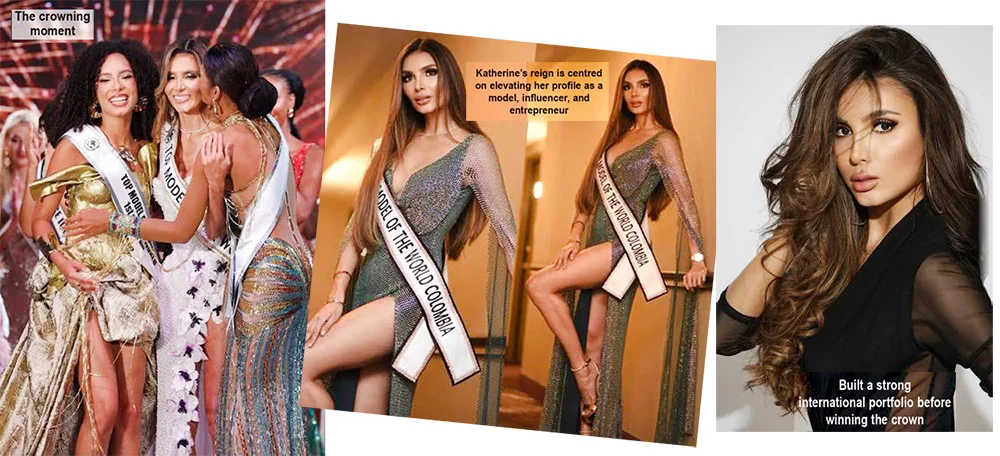
 Beyond modelling, Colombia’s Katherine Castaño, who captured the crown at the Top Model of the World 2026, in Egypt, is also a TV host, entrepreneur and social media influencer.
She’s based in Miami, Florida right now — a hub for fashion and influencer work — a city she calls home base, while representing Colombia on the world stage.
Her Miami base gives her access to fashion, entertainment, and business networks, while her title keeps Colombia front and centre in the global modelling conversation.
Off the runway, she says she enjoys singing, playing the piano, and tennis.
Katherine didn’t make the trip to Egypt as a newcomer. She’s built a strong international portfolio before winning the crown.
In fact, her résumé reads like a fashion passport: Colombia Moda, New York Fashion Week, Miami Swim Week, Miami Fashion Week, Nicaragua Diseña, IXEL Moda, and Mercedes-Benz San José.
On June 8, 2026, Katherine Castaño was crowned by outgoing winner Natalia Garizabal Vera, also of Colombia. That gave Colombia a historic back-to-back victory — the first time any country has done it in the competition’s history, and Colombia’s 4th win overall.
As Top Model of the World 2026, Katherine’s reign is centred on elevating her profile as a model, influencer, and entrepreneur.

She’s built a personal brand around beauty, ambition, style, and professionalism, with strong reach across fashion, social media, and business.
As titleholder, she’s now the face of the pageant’s international fashion platform, representing Colombia globally, while based out of Miami.
Ahead of the competition she was clear about the stakes: “This is bigger than me. This is for my country. This is for the story I’m here to write… And I’m not going quietly… we’re going for that back to back.”
As the reigning titleholder, Katherine Castaño’s role extends far beyond the sash. She’s using the platform to grow her brand as a model, influencer, and entrepreneur rooted in “beauty, ambition, style, and professionalism”.
She will also be doing runway shows, photoshoots, brand appearances, and fashion events.
Sri Lanka’s representative at this pageant was NetalieWithanage.

Several spells of showers will occur in the Western and Sabaragamuwa provinces and in Galle, Matara, Kandy and Nuwara-Eliya districts

Prison officers urge Justice Minister to protect their colleague who opened fire

Negombo Prison riot: Ensuring protection of prisoners fundamental responsibility of the state – UN

Govt. considers banning or restricting social media for children under 16: PM

Brandix donates vital ECG machine to Mirigama Base Hospital Emergency Care Unit

High-scoring draw gives West Indies rare series win

‘Dates have the highest sugar content to fight Coronavirus’

Sunday Island 27 December – Headlines

#SundayIsland 17th December – Headlines

Sunday Island – 28th March

Sunday Island Headlines – 21 March

Sunday Island – 21st February – Headlines
-

 News4 days ago
Singapore-based Buddhist monk marks nearly four decades of humanitarian service
-
 News6 days ago
CIABOC to question Harak Kata on Rs. 200 mn bribery allegation
-

 News5 days ago
Freedom 250: US Embassy celebrates America’s 250th Independence Day through magic of American cinema
-
 News6 days ago
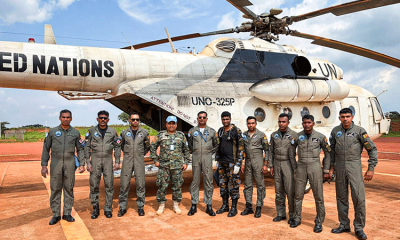
SLAF conducts successful rescue mission under UN command in Central African Republic
-

 News3 days ago
AI concerned over proposed SL military deployment in Haiti
-

 Business6 days ago
‘Dialog Air Fibre powers a new era of Ultra Fast Home WiFi’
-
 News6 days ago
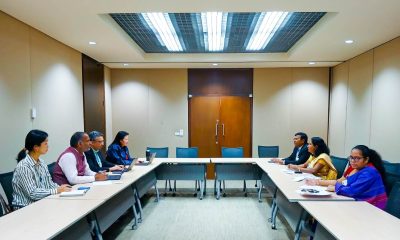
UNEP support pledged to strengthen Sri Lanka’s Environmental Priorities
-

 Midweek Review1 day ago
Unexpected focus on ‘pieces of tin’ worn by military men