
Sports
Where is accountability?

by Rex Clementine
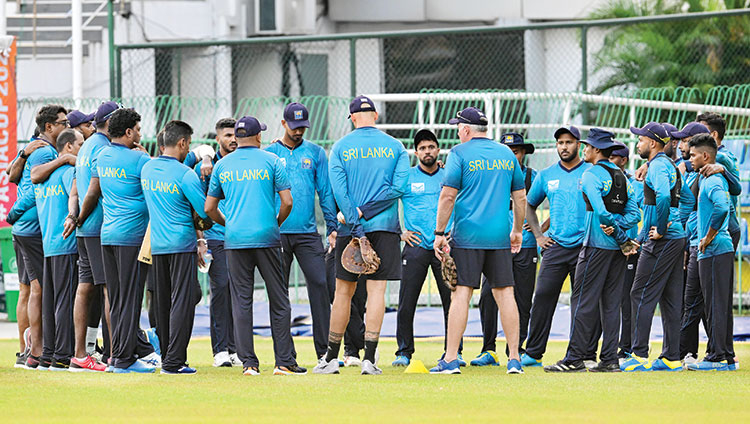
Following Sri Lanka’s embarrassing exit in the ICC Cricket World Cup, where they finished ninth and suffered first ever losses to Afghanistan and Bangladesh and missed out on the Champions Trophy, you expected many changes to be made. However, barring the selectors nobody has been held accountable for the horrible show.
The selectors also would have survived if Sri Lanka Cricket had the authority to retain them. However, the appointment of selectors is with the Sports Minister and Harin Fernando cracked the whip. Fernando also should ask his friends at the cricket board to get rid of the coaching staff now that his political boss has soft-pedaled with SLC.
The World Cup campaign was the worst by a Sri Lankan team in history and losing out on a slot for the Champions Trophy was a bitter pill to swallow. This will be the first ICC event Sri Lanka will not be taking part since playing the inaugural event in 1975.
There were too many batting collapses during the World Cup campaign and the 55 all out against India in Bombay was not just a one off. Sri Lanka were not able to utilize their quota of 50 overs in six of their nine games. Their fielding was a laughingstock as 16 catches were spilled and they cost them dearly. Sri Lanka were the worst fielding unit in the competition. Both the Batting Coach and Fielding Coach have survived after such an embarrassing performance.
With a few months left in the coaches’ contracts, there is no harm in allowing them to finish their terms, but do they need to remain in the set up of the national team for obviously they have failed to deliver and should be held accountable.
Former captain Mahela Jayawardene continues to throw his weight around causing much displeasure within the team. His policies have not only brought disaster for the national cricket team but has affected even the Under-19 side as evident by the recent performance in the Asia Cup. The structures he has introduced to school cricket and domestic cricket has been criticized not by observers like us but by both former and current players.
Any person with self-respect would have stepped down after such a poor show in the World Cup but now that nobody has stepped down, SLC should take matters into their hands. If the board doesn’t act, the Sports Minister has to intervene.
Fresh thinking is the need of the hour after Sri Lankan cricket hit new lows with people holding key positions often contradicting themselves.
For example, lack of skill levels of players have been pointed out for the poor run of the national cricket team but those people have conveniently forgotten that it is they who kicked out half a dozen seniors from white ball cricket.
Poor fitness levels has been pointed out as the reason for fielding standards going down but for years the authorities have tolerated players who had failed the two-kilometer run or the skin fold test.
Their theories are often outdated as well. While the masterminds in Sri Lanka used someone who is capable of building an innings like Dhananjaya de Silva at the number six slot during the World Cup, rest of the world was going in opposite direction utilizing finishers at six. While India had Suryakumar Yadav, South Africa employed David Miller. Glenn Maxwell of course was a godsend for the Aussies.
While the new selection panel has made efforts to address several of these issues, we need to have changes in other areas as well and all members of the coaching staff need to be taken out with the exception of Chris Silverwood. Why spare Silverwood, one may ask. Well, the only thing that showed some improvement last year was the team’s fast bowling.












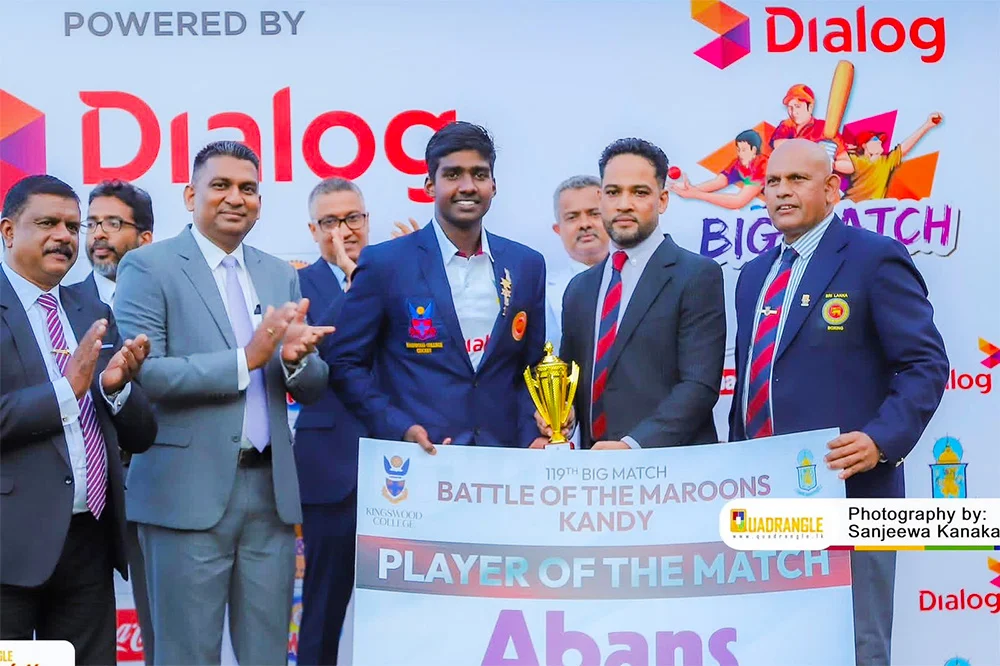
Kingswood College are riding high on confidence after ending a decades-long wait for victory against arch rivals Dharmaraja in their annual Big Match, but the Kandy school has little time to celebrate as they now shift focus towards securing promotion to Division I in the Under-19 Schools Cricket tournament.
Following their historic triumph on Sunday, Kingswood will next compete in the knockout stage of the Division II Tier ‘A’ competition. Victories in both the quarter-final and semi-final will secure the much-anticipated promotion to the Division I of the premier Under-19 cricket tournament.
Kingswood had spent several seasons in Division II before coming under the guidance of coach Susantha Basnayaka. Their steady progress over the last few years saw them reach the final of the Division II Tier B tournament last season, which earned them promotion to the Tier ‘A’ segment. That gradual development has now placed them on the brink of Division I status.
The school has also gained recognition for producing players capable of performing at the national junior level. One such product is Kavija Gamage, who represented Sri Lanka at the last ICC Under-19 Youth World Cup.
Gamage delivered a remarkable all-round performance to lead Kingswood’s historic win — their first Big Match victory over Dharmaraja in more than 60 years — and was undoubtedly the standout performer of the contest.
No player in the big match season had dominated a game as comprehensively as Gamage, whose contributions with both bat and ball helped Kingswood punch above their weight against a side competing in a higher division.
Despite Kingswood’s growing strength, Dharmaraja entered the encounter as favourites, having held the Big Match trophy for an unprecedented 68 years.
Gamage’s influence was felt from the very first innings. Batting on a difficult surface, he produced a superb knock of 112 — the only score above 20 in the Kingswood innings. His 149-ball effort included 13 fours and two sixes as Kingswood struggled against the bowling of Sasith Bandara (5/80), Sumeda Prasad (2/37) and Keshan Gunawardhana (3/53).
Coach Basnayaka later described the innings as the turning point of the match.
”The century in the first innings was the turning point. We were six wickets down for 99 runs at one stage. Kavija’s century helped us recover and post a formidable total on a difficult wicket,” Basnayaka told The Island.
In the second innings, Kingswood adopted a more aggressive approach as they aimed to accelerate the scoring before declaring. Gamage once again rose to the occasion.
”Our plan was to score as much as possible in the first 15 overs in the morning and declare. Kavija was in his 90s at the end of those overs and we decided to declare after he reached the century,” Basnayaka explained.
Opening batsman Aadhel Sheriff provided excellent support during that phase. Sheriff — the team’s leading run scorer of the season with more than 700 runs — shared a valuable 70-run stand with Gamage for the third wicket.
Gamage went on to complete his second century of the match with an unbeaten 100 off just 80 deliveries, striking six fours and five sixes as Kingswood declared soon afterwards.
Dharmaraja, chasing the target, were eventually bowled out for 166. Spinner Kenula Pihilianga delivered a match-winning spell to claim a remarkable match haul of 11 wickets, while Gamage capped off his outstanding performance by finishing with eight wickets in the match.
While Kingswood now look ahead to the possibility of earning promotion to Division I, Dharmaraja face a contrasting challenge. They currently sit at the bottom of their Division I Tier ‘B’ group and are battling to avoid relegation.
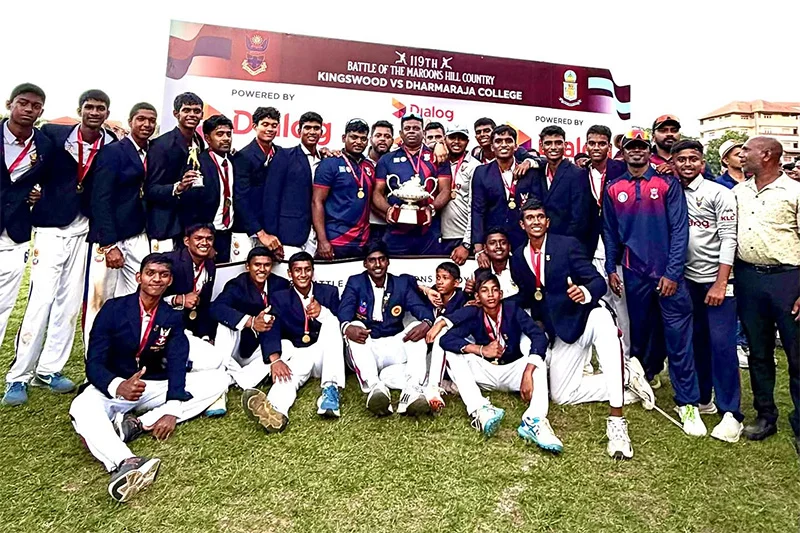
Kingswood team celebrate after recording a historic victory. Coach Susantha Basnayaka is seen in the centre with the trophy.
by Reemus Fernando
Sports
JF&I Packaging, Stafford Motors, Home Lands, Acuity Analytics, Maliban Biscuits, CDB and LOLC Insurance register wins on Saturday


15TH STAFFORD MOTORS – MCA G DIVISION T20 LEAGUE CRICKET TOURNAMENT
JF&I Packaging, Stafford Motors, Home Lands, Acuity Analytics, Maliban Biscuits, CDB and LOLC Insurance registered wins in the league stage matches of the Stafford Motors – MCA G division cricket tournament continued on Saturday [20].
At the D S Senanayake grounds on Saturday morning JF&I Packaging anchored by two half tons from Chamath Yatawara and Dinesh Viswajith, overcame CIC Holdings by seven wickets. In the afternoon game, Stafford Motors [the sponsors of the tournament]defeated Coats Thread by 96 runs. Gajindu Yasas smashed 77 runs in 38 balls which included a dozen boundaries and two sixes for the victors.
At the Nalanda College grounds, Thevindu Senarathne made a quick fire unbeaten 91 off 42 balls with five fours and nine towering sixes to help Home Lands win the game with five wickets in hand an 10 balls to spare.Yohan Ravishka scored 55 off 33 balls for Allianz Insurance. In the afternoon game Prabath de Silva [56*] and Nadeera Ranathunga [34] puton a 91 run stand for the first wicket to help Acuity Analytics register their first win in four outings
At the University of Colombo grounds Mohamed Shilmi smashed an unbeaten 101 off 64 balls with a dozen boundaries and two sixes for Maliban Biscuits and followed it up with a four wicket haul [4-15] to see his team win by 136 runs. In the afternoon game Isuru Jayaranga smashed 0 runs off 51 balls to help CDB ‘B’ overcome WSO2 by seven wickets with two overs to spare.
In the only game played at Dharmapala College ground on Saturday, Malith de Silva scored 53 runs to help LOLC Insurance post 128/5 against MAS Active Kreeda, which their bowlers defended successfully.
Scores:
At D S Senanayake Grounds
JF&I Packaging by 7 wickets
CIC Holdings
154/7 in 20 overs [Eranga Madushan 19, Achala Jayalath 59, Tharaka Jayarathna 12, Anushan Bandara 32, Shehan Jayasinghe 16*; Dihan Darshan 2-21, Chamath Yatawara 2-11, Dinesh Vishwajith 1-29, Gayan Hasanka 1-20]
JF&I Packaging
155/3 in 19.1 overs [Chamath Yatawara 57, Dhanushka Kevitiyagala 12, Dinesh Viswajith 54, Sarinda Malavige 13*, Gayan Hasanka 11*]
Stafford Motors by 96 runs
Stafford Motors
214/7 in 20 overs [Gajindu Yasas 77, Vihanga Malith 14, Shanaka Sampath 46, Sanjaya Fernando 39, Vuishwa Rajapaksha 15; Thusha Malintha 2-24, Arun Nagalingam 2-34, Thilina Gunathilaka 1-60, Heshan Madushanka 1-36]
Coats Thread Exports
118/8 in 20 overs [Duminda de Costa 42, Heshan Madushanka 11, Naveen Pradeep 12,Thushan Malintha 13; Janith Maduwantha 1-22, Shanaka Sampah 2-10, Dammika Kumara 1-18, Venura Nisalitha 1-06, Sajeewa Vishan 1-10, Ravindralal Wimalasena 1-06]
At Nalanda College Grounds:
Home Lands by five wickets
Allianz Insurance
162/10 in 18.4 overs [Yohan Ravishka 55, Charinda Fernando 26, Ranga Dias 35, Dinesh Ranathnga 18; Sanura Dias 2-34, Umesh Lakshan 1-21, Thiwanka Ginige 3-21, Suranga Gamage 2-48, Reshan Basnayake 2-18]
Home Lands
168/5 in 18.2 overs [Suranga Gamage 13, Thevindu Senarathne 91*, Sehan Herath 26, Prasad Karunarathne 25*; Mayura Ranasinghe 1-35, Charinda Fernando 1-27, Ranga Dias 1-18, Sameera Fernando 1-32]
Acuity Analytics by nine wickets
99X
112/10 in 18.5 overs [Yasith Fernando 18, Kirulu Samarakoon 22, Saranga Liyanage 20, Prasanna Lakmal 24*; Prabath de Silva 3-21, Mihindu Samarasinghe 2—14. Maheshwarn Vinthakaran 1-10, Kasun Hettige 3-08, Hamdhan Othman 1-06]
Acuity Analytics
114/1 in 9.4 overs [Prabath de Silva 56*, Nadeera Ranathunga 34; Ishrath Raji 1-24]
At University of Colombo:
Mohamed Shilmi stars with bat and ball in Maliban Biscuits’ 136 run win
Maliban Biscuits ‘B’
229/4 in 20 overs [Tharinda Siriwardena 15, Mohamed Shilmi 101*, Manchuka Nadun Kumara 67, Anjula Perera 12; Tharindu Almeida 1-15, Nisal Perera 2-32]
Jetwing Travels
93/10 in 17.5 overs [Ranusha Pigera 11, Budhdhika Chathuranga 10, Dinuka Peiris 18, Ashan Wijerathne 16*; Chamara Rathnayake 1-18, Dilip Sandaruwan 2-20, Chathuranga Dewapriya 2-22, Mohamed Shilmi 4-15, Dilan Chathuranga Alwis 1-14]
CDB ‘B’ by seven wickets
WSO2 151/7 in 20 overs [Isuru Ruhunage 44, Osanda Herath 52, Dev Wijewardena 30*; Vishwa Dhananjaya 2-07, Praveen Abeysinghe 1-27, Chamod Madushan 1-27, Dasun Senevirathne 2-14]
CDB ‘B’
152/3 in 18.0 overs [Chathuranga Dikkumbura 40, Isuru Jayaranga 70, Themira Niyomal 15*, Dhanushka Dharmasiri 10, Chamathkar Namith 12*; Rakitha Rupasinghe 1-21, Dimuthu Madushan 2-26]
At Dharmapala College Grounds;
LOLC Insurance by 10 runs
LOLC Insurance
128/5 in 20 overs [Malith de Alwis 53, Asanka de Silva 20, Hashan Shalinda 29*, Chamara Thennakon 11*; Pasindu Wijesinghe 1-23, Anju Amaradasa 1-25, Muruganravi Muralitharan 1-14, Chamath Sumithraarachchi 1-16]
MAS Active Kreeda
118/8 in 20 overs [Adeesha Miyusara 12, Anju Amaradasa 50, Subuthi Ranathunga 18; Chamara Thennakon 2-26, Dinesh Chathuranga 3-10, Tharinduu Mohan 1-21, Neranjaya Madushanka 2-18]

IPL captains’ meeting: What’s on the agenda?

Russia launches 948 drones at Ukraine in largest attack over 24-hour period

Oil at $150 will trigger global recession, says boss of financial giant BlackRock

Showers will occur at several places in the Western and Sabaragamuwa provinces and in Galle and Matara districts after 2.00 pm

Senior citizens above 70 years to receive March allowances on Thursday (26)

CEB Engineers warn public to be prepared for power cuts after New Year

‘Dates have the highest sugar content to fight Coronavirus’

Sunday Island 27 December – Headlines

#SundayIsland 17th December – Headlines

Sunday Island – 28th March

Sunday Island Headlines – 21 March

Sunday Island – 21st February – Headlines
-

 Features2 days ago
Trincomalee oil tank farm: An engineering marvel
-

 News6 days ago
Bailey Bridge inaugurated at Chilaw
-

 News5 days ago
CIABOC tells court Kapila gave Rs 60 mn to MR and Rs. 20 mn to Priyankara
-

 News6 days ago
Pay hike demand: CEB workers climb down from 40 % to 15–20%
-

 Features5 days ago
Science and diplomacy in a changing world
-

 News4 days ago
Colombo, Oslo steps up efforts to strengthen bilateral cooperation in key environmental priority areas
-

 Features2 days ago
The scientist who was finally heard
-

 News2 days ago
Substandard coal deepens energy crisis, warns former CEB Chief