
Editorial
War on drugs


Neither friend nor foe can have any quarrel with Public Security Minister Tiran Alles for launching the ongoing offensive against the narcotics business. It is much more than a trade nowadays with drug lords, big and small, running not only just fiefdoms but also their own empires. There’s hardly anybody in this country of ours unaware of the dangerous proportions to which the drug menace has grown today.
Parents are terrified of their children being exposed to drugs in and near their schools and at social events. The news media is full of stories on drug detection every day. But however many dealers, smugglers and pushers are arrested, and whatever quantities of narcotics seized, the problem continues to grow and not diminish. It is no exaggeration to say this is one of the biggest problems confronting not only this island but the whole world.
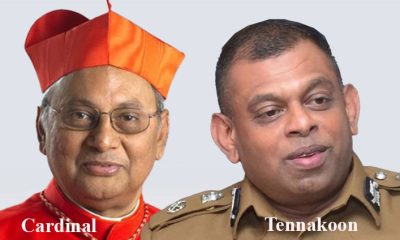
Minister Alles has assumed responsibility for the recent appointment of Senior DIG Deshabandu Tennakoon as the acting IGP for a three month period. It was speculated that President Ranil Wicremesinghe resorted to the device of extending the tenure of the previous incumbent, Chandana Wickremaratne, by several short extensions to stall the appointment of Tennakoon who was reported to have Alles’ backing. In fact, the minister’s public admission that he backed the appointment is considered by some to be a command performance orchestrated by Wickremesinghe.
However that be, the appointment, albeit in an acting capacity, stands. It could have not come at a worse time because Tennakoon and three other police officers have been ordered by the Supreme Court soon thereafter to pay damages of Rs. 500,000 each from personal funds to a torture victim who had successfully filed a human right case. Tennakoon is alleged to have himself participated in the third degree methods employed.
Soon after the smelly stuff hit the fan, the public outrage that resulted was inevitable. The government, predictably, is under pressure to negate Tennakoon’s appointment. Malcolm Cardinal Ranjith, the Archbishop of Colombo and head of the Catholic Church, the Lawyers’ Collective, a prominent legal advocacy group led by many of the country’s top flight lawyers and several other groups both individually and collectively are pressuring the president to revoke this appointment.
Tennakoon has no right of appeal to a higher court. But he has been given an opportunity to demonstrate to the country that he can successfully take on the drug Mafia. Since the current anti-narcotic offensive began a few days ago, police public relations have been on overdrive in an effort to show the country that the massive operation that has been launched is showing results.
Evening television news bulletins are full of images of large contingents of police, sometimes complemented by troops, and police dogs trained to sniff out narcotics. There are also reports of hundreds if not thousands of suspects arrested. It is already common knowledge that the country’s prisons are bursting at the seams stuffed with convicted and remanded drug offenders.
It is also very well known that the rate of convictions obtained against the accused in all manner of criminal cases is appallingly low. Whether successful prosecutions can be mounted against suspects who are being rounded up in the present operation is an open question. Readers are well aware that samples described as drugs sent to the Government Analyst were found to be plain wheat flour. Whether law enforcers were responsible for such lucrative metamorphosis or whether switches occurred elsewhere has not been established. But anything is possible in this land like no other.
Only time will tell how successful the current campaign is going to be. There were previous occasions when President Gotabaya Rajapaksa declared war on drugs soon after his election. Then President Maithripala Sirisena, crowned by UNP votes, spoke admiringly of Philippines President Rodrigo Duterte who launched a no holds barred offensive against narcotics in his country. This included bumping off suspects in what amounted to extra judicial executions.
We have also known similar operations here, though not relating to drugs, but directed at the JVP during its second adventure in 1988 – 89. This, though to a much lesser extent, happened also in 1971, when various politicians were given a god given opportunity of identifying their political opponents as “terrorists” and having them bumped off by law enforcers.
There is no doubt that during the current offensive there will be considerable whistle blowing and finger pointing from within the narcotics underworld which will seize the opportunity to have their rivals in the drug trade eliminated via a law and order operation mounted by the government. Minister Tiran Alles did not directly say that those in the drug business would be bumped off. But he did clearly imply that they carried that risk.
He has even publicly questioned the ethics of lawyers defending drug offenders. This has predictably triggered the obvious reaction from the legal profession arguing that appearing for any client retaining them was the professional obligation of lawyers. That debate remains inconclusive for the time being.
Alles says that his life has been threatened “within seven poya days” by an anonymous overseas caller. He had retorted that he intends resolving the problem “within two poya days.” He says that neither he nor President Wickremesinghe will be influenced to pull their punches at the behest of any drug Mafia.
Given the size of the big bucks generated by the narcotics industry, it is extremely unlikely that the trade is without political godfathers. An election is round the corner and political war chests need replenishing. The narcotic czars will be only too happy to dig deep into their pockets. But as the saying goes, there is no free lunch.







Saturday 12th September, 2026
Killings are reported with monotonous regularity in this country. Two children were killed in a grenade attack on a house in Dehiwala in the early hours yesterday. Their father, who sustained serious injury in the attack, is receiving treatment in hospital. The attackers came, lobbed the grenade and fled in a trishaw. The police have blamed an underworld gang for the attack, claiming that the attackers had mistaken the victims’ house for the residence of an associate of a rival drug dealer.
Whenever a shooting incident occurs, the police promptly attribute it to gang rivalries. True as their claims may be, the fact remains that the underworld has demonstrated its ability to strike anywhere at will. Nobody is safe. When the members of dangerous criminal gangs become targets of assassins, the vulnerability of law-abiding citizens goes without saying. The government and the police insist that their operations against underworld gangs have weakened crime syndicates considerably. If so, how is it possible that criminal gangs are operating so freely?
Crime syndicates have emerged so powerful that they even intimidate the lay custodians of holy shrines dedicated to the guardian deities of this country. They threaten to attack religious processions. One may recall that two months ago a drug dealer, known as Kanjipani Imran, operating from overseas, threatened to kill the Basnayake Nilame of the Devinuwara Devale if the annual perahera of the shrine included the popular kavadi segment without the participation of a group of dancers banned by the Devale authorities on disciplinary grounds. Imran demanded that the ban be lifted so that the dancers loyal to him could perform in the procession. The Basnayake Nilame refused to give in despite repeated threats. The police decided to have the kavadi dance scrapped in view of underworld threats and announced their decision. They claimed they had been compelled to do so as there were complaints of indecent exposure against sarong-clad kavadi dancers. No sooner had they made that announcement than they had to make an about-turn under government pressure, allowing all kavadi groups, including the one backed by Imran, to participate in the perahera. Thus, Kanjipani Imran had the last laugh.
Previous governments had their favourites in the underworld and shielded them. The J. R. Jayewardene government had criminals, such as Gonawala Sunil and Kalu Lucky, to do its dirty work. Kalu Lucky threw stones at the Supreme Court judges’ houses at the behest of his political masters who were resentful over some apex court judgements. The Ranasinghe Premadasa government shielded the likes of Soththi Upali. Beddegana Sanjeewa worked for the Chandrika Kumaratunga government, and the Mahinda Rajapaksa government had an underworld army led by notorious criminals like Julampitiya Amare and Wambotta. It is being asked in some quarters why Kanjipani Imran has not been arrested overseas and brought back. Even Makandure Madush, known as Sri Lanka’s Napoleon of Crime, was arrested in Dubai and brought here in 2019.
Frequent incidents of violence that snuff out lives may arise from fierce turf wars among drug dealers, as the police claim, but they pose a serious threat to public security. Hence the need for stringent action to prevent them. Informants are also among the victims of underworld violence. It is incumbent upon the police to redouble their efforts to neutralise the underworld.
Friday 11th September, 2026
President Anura Kumara Dissanayake’s recent announcement that the government would set up 50 new universities came while university teachers were urging the government to solve a host of issues affecting their institutions. The Federation of University Teachers’ Associations (FUTA) lost no time in responding to the President’s grand plan.
FUTA Secretary Senior Lecturer Charudatta Ilangasinghe stressed that the government should focus on maintaining, funding, and improving the existing 17 state universities. Several key Opposition figures and opinion makers have also questioned the feasibility and prioritisation of establishing 50 more universities.
FUTA staged a protest the other day to pressure the government into addressing the structural problems affecting the university system. It is doubtful whether the government took any notice of the FUTA trade union action. Power blinds rulers to ground reality and drives them to bulldoze their way through.
The JVP-NPP government ought to get its priorities right. True, it cannot be held responsible for the current university crisis, which is not of recent origin. But it will have to take urgent steps to address the problems besetting the state universities. Previous governments let their political agendas take precedence over the wellbeing of the university system. They increased university admissions without adequately expanding academic staff and infrastructure. There is no gainsaying that university intakes should be increased for the benefit of students, but there should be a corresponding increase in resource allocations if universities are to function efficiently. FUTA has warned that university admissions based on the 2025 GCE A/L results could be delayed by one to two years until the enrolment of two previous batches.
All state universities in this country are being pushed beyond their capacity. Rising student numbers have placed enormous pressure on the already inadequate academic and physical resources. In 2025, FUTA pointed out that the annual student intake had steeply increased from around 25,000 in 2015/2016 to about 45,000, causing a severe strain on the entire university system. According to media reports quoting FUTA, state universities are operating with only about 6,800 permanent academics though there is a requirement of 12,000–13,000 teachers. FUTA has stated that PhD holders are unwilling to work for the current salaries, which are heavily taxed. Universities are among the state institutions worst affected by the human capital flight.
Among the burning issues highlighted by FUTA over the years are chronic staff shortages, brain drain, funding constraints and insufficient remuneration, lack of infrastructure and research, challenges to university autonomy and academic freedom, deterioration of the quality of higher education, and the misdirection of education reforms. Successive governments have sought political solutions to serious structural problems affecting the state university system.
As we pointed out in a previous comment, students in other Asian countries typically complete their first university degrees before they turn 21–24 years, but Sri Lankan students, particularly those in the state university system, often graduate in their mid-20s, with 24–26 years being a commonly observed range, according to the OECD (Organisation for Economic Co-operation and Development) data. The late entry of Sri Lankan graduates into the workforce has economic, political and social consequences, and, above all, the delayed graduation places Sri Lankan graduates at a disadvantage in the global job market. This sorry state of affairs is basically due to cumulative institutional delays involving, among other things, the GCE A/L examination, university admissions, disruptions caused by strikes, irregular academic calendars, a shortage of academic and non-academic staff, student protests and university closures.
Modern universities are more than centres of academic excellence. They are central to the development of nations; they not only educate graduates in the conventional sense of the term but also generate new knowledge, skills and innovations, driving modern economies. The OECD has identified higher education as a key source of advanced skills in many countries, universities being the main providers of basic research that underpins innovation.
It is hoped that the government will put its grandiose plan to set up 50 universities on hold and intensify its focus on equipping the existing 17 seats of higher learning to meet current and future challenges.


Thursday 10th September, 2026
Sri Lankan politicians are notorious for carrying out personal attacks instead of countering arguments. So, the JVP-NPP government’s attack on the Commonwealth Lawyers’ Association (CLA) in Parliament on Tuesday (08) came as no surprise. The CLA, whose President Steven Thiru attended the recent Supreme Court (SC) hearing of petitions against the 22nd constitutional amendment (22A) bill, as an observer, has raised concern over several key issues, such as the rejection of a request for a full bench, the refusal of a request for the Chief Justice’s recusal, non-inclusion of senior judges on the SC bench, and the denial of opportunity for petitioners to make oral submissions.
Minister of Justice Harshana Nanayakkara took great pains to belittle the CLA, in Parliament on Tuesday, claiming that it was not an organisation officially recognised or registered under the Commonwealth Secretariat. It was a private club whose members paid fees for membership, he claimed. Deputy Minister Sunil Watagala joined the Justice Minister in bashing the CLA. Both of them are lawyers.
The government also resorted to the classical straw-man approach; misrepresenting the CLA arguments as biased views of an organisation lacking Commonwealth recognition, it claimed that they were both unacceptable and unworthy of consideration. The CLA’s observations on the SC hearings went unchallenged in Parliament for all intents and purposes.
Defending the CLA and its observations, Opposition Leader Sajith Premadasa said that if the government did not recognise the CLA it ought to make a formal statement in Parliament to that effect. The ruling party members ignored his challenge. Another Opposition MP demanded to know why the Justice Minister said he had agreed to meet Steven Thiru if he thought the CLA was only a private club.
There is no way the government can justify its diatribe against the CLA. This is what the Commonwealth Secretariat’s own website says about the CLA: “The CLA’s objectives are to maintain and promote the rule of law throughout the Commonwealth: CLA is a pan-Commonwealth organisation which seeks to uphold the rule of law in the Commonwealth by encouraging exchange of ideas between legal professionals, academics and students, through projects and by driving improvements in legal education. It holds a number of short events throughout the year and has a biennial conference, the Commonwealth Law conference, which regularly attracts over 1,000 delegates including some of the finest legal professionals in the world today to discuss issues of interest to the profession over a four-day period.” It will be interesting to hear what the government has to say about this? One can only hope that in a bid to defend the indefensible, the JVP-NPP bigwigs will not condemn the Commonwealth itself as a colonial relic that perpetuates the imperial legacy, facilitates British soft power, reproduces unequal North-South relationship, retains the monarchy as an important symbol of its imperial past, and serves elite interests.
Besides the CLA, the International Association of Judges, representing 93 national organisations across five continents, LAWASIA and the French National Bar Council have taken exception to 22A. In fact, counsel, warnings and criticism need not come from experts for them to be worthy of consideration. For example, a warning that the rear wheels of a heavy vehicle being reversed are dangerously close to the edge of a precipice could come from a child. To disregard such warnings is to invite disaster. One may recall that it was a child who told the proverbial emperor that he was waking in the buff while everyone else was pretending to admire his new clothes.
Meanwhile, the position of some prominent civil society activists and public intellectuals on 22A defies logic. One could argue that they are engaged in an intellectual steeplechase, skillfully clearing all obstacles except the key issues, especially the possible politico-legal consequences of 22A. Perhaps, they are wary of offending President Anura Kumara Dissanayake by expressing their candid views and therefore behave like the proverbial curate who lacked the courage to say an egg on his plate was bad and in deference to his host and Bishop claimed that parts of it were excellent.
If raising mandatory retirement ages is a sine qua non for making a system efficient and doing away with delays, as the government has claimed in the case of the judiciary, then one can argue that the retirement ages of doctors, university teachers, and other state employees must also be raised as part of a strategy to do away with delays that characterise government hospitals, universities, the Department of Motor Traffic, the Department of Registration of Persons, the Department of Immigration and Emigration, the Colombo Port, the state-owned bus service, etc.
The SC determination on 22A is yet to be announced. Nevertheless, if the legitimacy and acceptability of laws derive solely from SC determinations thereon, then one can argue that no one should be critical of the 18th Amendment (2010), which abolished the presidential term limit and concentrated more power in the executive presidency for the benefit of the then President Mahinda Rajapaksa, and the 20th Amendment (2020), which allowed dual citizens to serve as legislators, benefiting the then President Gotabaya Rajapaksa’s sibling Basil. Those amendments passed muster with the apex court but obviously lacked legitimacy and acceptability. The Prevention of Terrorism Act was also ‘duly passed’ by Parliament, but it is one of the worst laws this country has ever seen. The same holds true for 22A, crafted to enable the JVP-led government to consolidate its grip on power and lay the foundation for the perpetuation of its rule. NPP General Secretary Dr. Nihal Abeysinghe has publicly stated that the JVP/NPP will be in power until 2050. One may recall that the JVP went on a killing spree and destroyed state assets worth billions of dollars in a bid to scuttle the 13th Amendment, which was passed by Parliament with a five-sixths majority. So, as for 22A, problems will not go away even if the government succeeds in securing its passage.

ITS Giuseppe Garibaldi’ departs Colombo

Green Climate Fund (GCF) Regional Dialogue for East and South Asia will be held from 14 to 17 September 2026 at Cinnamon Life at City of Dreams Hotel, Colombo

Showers will occur in the Western, North-western and Sabaragamuwa provinces and in Kandy, Nuwara-Eliya, Galle and Matara districts

Prof. Pieris says Buddha Dhamma recognised as source of law under Constitution

GR leaves FCID after making statement over MiG deal

Dengue cases top 97,000 in 2026

‘Dates have the highest sugar content to fight Coronavirus’

Sunday Island 27 December – Headlines

#SundayIsland 17th December – Headlines

Sunday Island – 28th March

Sunday Island Headlines – 21 March

Sunday Island – 21st February – Headlines
-

 Sports2 days ago
DDS set to lose Test captaincy
-

 Latest News6 days ago
Tharanga creates history with Diamond League crown in Brussels
-

 Features6 days ago
After the parade: What a traffic OIC’s walk-out tells us
-

 News7 days ago
Dispute which triggered listed company director being detained at BIA resolved
-

 Editorial6 days ago
Arrests as theatre
-

 Latest News5 days ago
Harshitha’s composed knock seals Sri Lanka’s semi-final berth
-
 News5 days ago
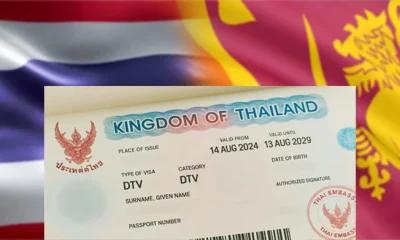
Thailand shuts door on undesirables from Sri Lanka
-

 News6 days ago
‘Choka Malli’ slips out of country before travel ban