
Foreign News
‘Unparalleled’ snake antivenom made from man bitten 200 times


The blood of a US man who deliberately injected himself with snake venom for nearly two decades has led to an “unparalleled” antivenom, say scientists.
Antibodies found in Tim Friede’s blood have been shown to protect against fatal doses from a wide range of species in animal tests.
Current therapies have to match the specific species of venomous snake anyone has been bitten by.
But Mr Friede’s 18-year mission could be a significant step in finding a universal antivenom against all snakebites – which kill up to 14,000 people a year and leave three times as many needing amputations or facing permanent disability.
In total, Mr Friede has endured more than 200 bites and more than 700 injections of venom he prepared from some of the world’s deadliest snakes, including multiple species of mambas, cobras, taipans and kraits.
He initially wanted to build up his immunity to protect himself when handling snakes, documenting his exploits on YouTube.
But the former truck mechanic said that he had “completely screwed up” early on when two cobra bites in quick succession left him in a coma.
“I didn’t want to die. I didn’t want to lose a finger. I didn’t want to miss work,” he told the BBC.
Mr Friede’s motivation was to develop better therapies for the rest of the world, explaining: “It just became a lifestyle and I just kept pushing and pushing and pushing as hard as I could push – for the people who are 8,000 miles away from me who die from snakebite”.
Antivenom is currently made by injecting small doses of snake venom into animals, such as horses. Their immune system fights the venom by producing antibodies and these are harvested to be used as a therapy.
But venom and antivenom have to be closely matched because the toxins in a venomous bite vary from one species to another.
There is even wide variety within the same species – antivenom made from snakes in India is less effective against the same species in Sri Lanka.
A team of researchers began searching for a type of immune defence called broadly neutralising antibodies. Instead of targeting the part of a toxin that makes it unique, they target the parts that are common to entire classes of toxin.
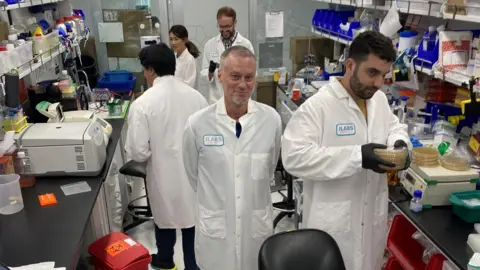
That’s when Dr Jacob Glanville, chief executive of biotech company Centivax, came across Tim Friede.
“Immediately I was like ‘if anybody in the world has developed these broadly neutralising antibodies, it’s going to be him’ and so I reached out,” he said.
“The first call, I was like ‘this might be awkward, but I’d love to get my hands on some of your blood’.”
Mr Friede agreed and the work was given ethical approval because the study would only take blood, rather than giving him more venom.
The research focused on elapids – one of the two families of venomous snakes – such as coral snakes, mambas, cobras, taipans and kraits.
Elapids primarily use neurotoxins in their venom, which paralyses their victim and is fatal when it stops the muscles needed to breathe.
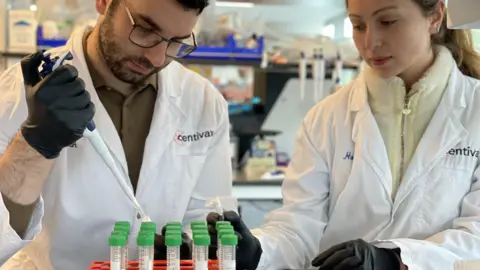
Researchers picked 19 elapids identified by the World Health Organization as being among the deadliest snakes on the planet. They then began scouring Mr Friede’s blood for protective defences.
Their work, detailed in the journal Cell, identified two broadly neutralising antibodies that could target two classes of neurotoxin. They added in a drug that targets a third to make their antivenom cocktail.
In experiments on mice, the cocktail meant the animals survived fatal doses from 13 of the 19 species of venomous snake. They had partial protection against the remaining six.
This is “unparalleled” breadth of protection, according to Dr Glanville, who said it “likely covers a whole bunch of elapids for which there is no current antivenom”.
The team is trying to refine the antibodies further and see if adding a fourth component could lead to total protection against elapid snake venom.
The other class of snake – the vipers – rely more on haemotoxins, which attack the blood, rather than neurotoxins. In total there are around a dozen broad classes of toxin in snake venom, which also includes cytotoxins that directly kill cells.
“I think in the next 10 or 15 years we’ll have something effective against each one of those toxin classes,” said Prof Peter Kwong, one of the researchers at Columbia University.
And the hunt continues inside Mr Friede’s blood samples.
“Tim’s antibodies are really quite extraordinary – he taught his immune system to get this very, very broad recognition,” said Prof Kwong.
The ultimate hope is to have either a single antivenom that can do everything, or one injection for elapids and one for vipers.
Prof Nick Casewell, who is the head of the centre for snakebite research and interventions at the Liverpool School of Tropical Medicine, said the breadth of protection reported was “certainly novel” and provided “a strong piece of evidence” that this was a feasible approach.
“There is no doubt that this work moves the field forwards in an exciting direction.”
But he cautioned there was “much work to do” and that the antivenom still needed extensive testing before it could be used in people.
But for Mr Friede, reaching this stage “makes me feel good”.
“I’m doing something good for humanity and that was very important to me. I’m proud of it. It’s pretty cool.”
[BBC]

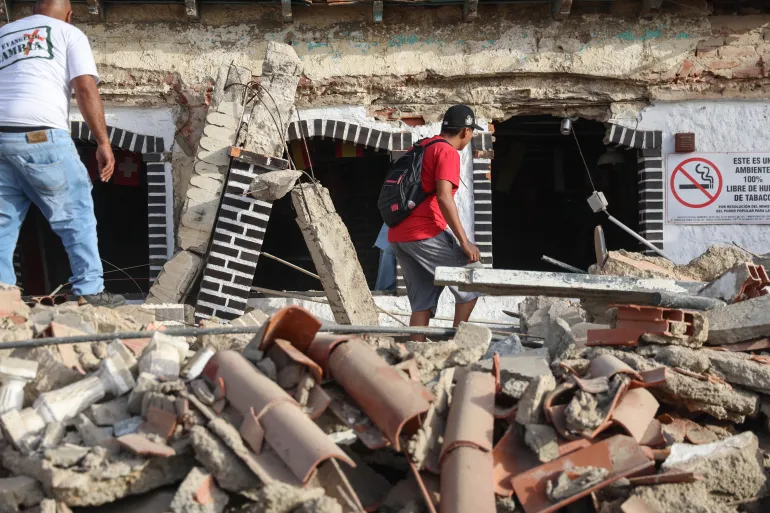
Rescuers are racing against time in Venezuela,three days after two powerful earthquakes struck, with at least 1,430 people confirmed dead and more than 51,000 still missing.
The twin earthquakes struck on Wednesday, hitting magnitudes of 7.2 and 7.5 on the nine-point Richter scale and devastating the coastal area around La Guaira.
Authorities moved on Friday night to restrict access to the area, as traffic chaos began to hamper search efforts.
With a scarcity of government rescue teams, Venezuelans have become desperate in the hardest-hit areas, digging through rubble with their hands. Aid agencies have warned that the critical 72-hour survival window is closing fast.
Officials said anyone who wants to enter the area around La Guaira will now have to seek official permits, but provided few details of who would be allowed in.
People reported seeing few state rescue teams in the hardest-hit areas, despite authorities projecting an image of a robust government response.
“Each person saved is a miracle,” said Jorge Rodriguez, president of the National Assembly.
“We are not going to hide absolutely anything about the magnitude of this tragedy.”
Government forces distributed food and water to survivors in La Guaira, and acting President Delcy Rodriguez said her government was mounting a full response during these “critical hours for rescuing people alive”.
She welcomed the arrival of international rescuers and humanitarian aid.
Rodriguez said La Guaira had been “militarised” and more help was on the way, even as residents said it was just a fraction of what they needed.
Rodriguez, the former vice president, took office in January after the United States captured and removed then-President Nicolas Maduro.
Venezuela has been facing economic disarray for more than a decade, and many people reject the legitimacy of the political movement Rodriguez represents.
On Saturday, the United Nations Development Programme estimated the direct physical damage of the quakes could cost between $4.7 to $8.7 billion dollars.
Meanwhile, another 4.8 magnitude earthquake hit off of Aragua state on Saturday, according to the European-Mediterranean Seismological Centre, although no major damage was reported.
[Aljazeera]

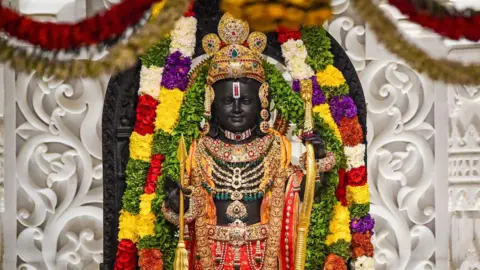
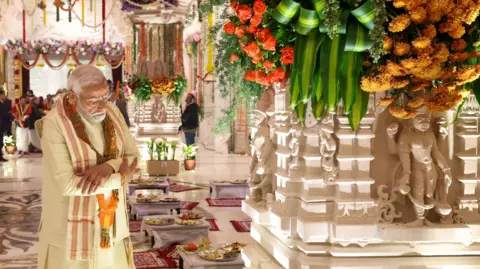
Two-and-a-half years after Indian Prime Minister Narendra Modi inaugurated a grand temple to Hindu god Ram, the shrine is embroiled in an unsavoury row over allegations that donations from devotees worth tens of millions of rupees have been embezzled.
The temple in the once-flashpoint city of Ayodhya in the northern state of Uttar Pradesh replaced a 16th-Century mosque torn down by Hindu mobs in 1992, sparking riots in which nearly 2,000 people died.
Since its inauguration in January 2024, the three-storey temple spread over 2.7 acres has become one of India’s most important pilgrimage centres, attracting an estimated 50 million visitors annually.
But in recent weeks, questions over the handling of cash, valuable jewellery, gold and silver offered by devotees have triggered a political controversy and petitions have been filed in the Supreme Court seeking a court-monitored investigation by the federal police.
The Shri Ram Janmabhoomi Teerth Kshetra Trust – an independent trust which manages the shrine – has denied any wrongdoing. The state government has set up a three-member Special Investigation Team (SIT) to inquire into the allegations.
Following an interim report from SIT, Ayodhya police registered a case of alleged embezzlement on Thursday, naming eight people.
All eight are in custody and being questioned, senior police officer Gaurav Grover told BBC Hindi. They are expected to be produced before a magistrate within a day or two, he added.
The temple complex, which also includes six smaller shrines, draws 70,000 to 80,000 devotees daily, with crowds tripling on weekends and festivals. Most leave offerings in about 35 donation boxes around the site.
The trust – which collects, sorts and counts the offerings – recorded an annual income of 3.27bn rupees ($35m; £26m) in the financial year 2024-25, making it one of India’s largest temples in terms of earnings, the Hindustan Times reported.
A former city legislator has alleged more than 70m rupees ($739,550; £560,420) have gone missing.
The temple trust rejected claims that donations or offerings were improperly handled.
In a video statement on Facebook, its general secretary Champat Rai said the trust’s activities, including the process used to count donations and even the counting room, were routinely audited by their trustees and workers along with some State Bank of India employees.
“This work continues for several days. This is what is happening nowadays. No-one has noticed any discrepancy yet,” he added.
The allegations of embezzlement at what is considered one of India’s most consequential religious sites has made headlines in India. The temple stands on a site that has been at the centre of one of India’s most consequential religious, political and legal disputes for decades.
Many Hindus believe Ayodhya to be the birthplace of deity Ram. A vigorous nation-wide campaign spearheaded by Bharatiya Janata Party (BJP) to reclaim the land led to the demolition of the Babri mosque by Hindu activists in 1992.
After a long legal battle, the Supreme Court in 2019 awarded the disputed land for the construction of a temple and ordered that alternative land be provided for a mosque.
The dispute shaped Indian politics for decades and became closely associated with the rise of the BJP in the 1990s in a country where 80% of the population is Hindu.
The construction of the temple was one of the main election promises of the BJP and its opening in January 2024 is believed to have contributed to Modi’s win in the general election held a few months later.
So even though the temple is managed by an independent trust, opposition parties are demanding answers from Modi and his BJP – which is also in power in the state.
The alleged irregularities in the handling of donations and offerings made by devotees were first made by Mahipal Singh, who previously supervised the trust’s accounts team and is now being called the “whistleblower”.
Singh has publicly claimed that he was replaced after he raised concerns internally about the handling of cash offerings and precious metals received as gifts. When contacted by BBC Hindi, Singh refused to talk citing threat to his life.
“I have received death threats. I am under immense pressure and stress. I am not in a position to say anything. Whatever I have said in public so far, please accept it as my word,” he said.
The concerns raised by Singh have not been independently verified, but the issue gained political attention on 7 June when former state chief minister and Samajwadi Party chief Akhilesh Yadav raised questions about the alleged siphoning off of donations and called for an investigation.
In a series of social media posts, he demanded explanations from those managing donations and questioned what he described as a lack of clarity over the matter.
His party colleague Ayodhya MP Awadhesh Prasad said the matter should be investigated by a court-monitored team. He also called for trust members to be suspended from their positions while any inquiry is under way.
Several other politicians – from the opposition as well as the BJP – also raised questions about the alleged financial irregularities.
Local BJP leader Rajneesh Singh sought an investigation into issues linked to donations and the people involved in managing them.
Meanwhile, the long-time residents of Ayodhya told BBC Hindi that they were shocked by the allegations of corruption at the temple.
“The offerings are meant for the temple’s upkeep and for the welfare of pilgrims. It’s not meant for people to take home,” said Vijay Lakshmi.
Santosh Puri called the allegations “a fatal blow to our religion”.
Talking about the claims, Ajay Kumar Varma described Ayodhya as “god’s abode” and said such things should not happen here. “The people being blamed have been involved with the temple for a long time, so it’s hard to believe that they could do this,” he said.
BP Pandey called the allegations “a stain” on the government and the trust. “The government must ensure that there is no repeat of this sort of thing.”
Meanwhile, the SIT has sought more time to complete the inquiry. Chief Minister Yogi Adityanath has urged anyone with evidence to submit it to investigators. He said the inquiry would establish the facts and appealed to devotees not to prejudge the outcome.
Adityanath added that people who had waited centuries for the construction of the Ram temple could wait a few more days for the SIT to complete its work.
But there’s a growing clamour to hand over the investigation to the federal police as it’s a matter involving one of India’s most prominent religious institutions.
A number of petitions have been filed in the state high court and the Supreme Court asking for a police complaint to be registered and judges to supervise the investigation.
A top court lawyer has also written a letter to the prime minister, the state chief minister and chief justice, seeking an investigation by the Central Bureau of Investigation “to restore the faith of the devotees”.
“These were not ordinary commercial receipts, but sacred offering,” he wrote. “Any diversion or embezzlement of funds constitutes a profound betrayal of the faith reposed by millions of devotees in one of the most sacred institutions of Hindu faith.”
[BBC]
Foreign News
Zambia ex-president’s family wins latest legal battle over what should happen to his body
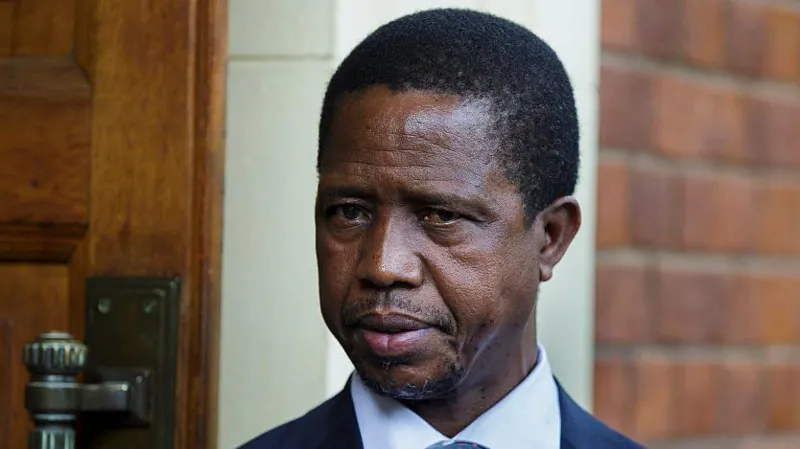
More than a year after the death of Zambia’s former President Edgar Lungu, his family have won their appeal to have his body buried in South Africa where he died – overturning a high court ruling that allowed the Zambian government to repatriate the corpse.
Tuesday’s Supreme Court of Appeal judgement finally puts to rest the legal battle over what should happen to his remains following a long-standing feud between Lungu and his successor, President Hakainde Hichilema.
The Zambian government has said while it disagrees with the ruling it will “not be taking the matter any further”.
It had long argued that, as a former head of state, Lungu should be honoured in the country.
The Zambian government wished to see him laid to rest alongside his predecessors in the special presidential burial ground in the capital, Lusaka.
But Lungu’s family wanted a private burial after negotiations with the government over the funeral arrangements broke down.
“The very ritual intended to bring closure has, instead, pitted family against the state in a hard-fought legal dispute far from the protagonists’ home,” said Justice Raylene May Keightley in Tuesday’s judgement.
Last August, the South African high court in Pretoria ruled that Zambia’s govrnment could repatrite the body and give him a state funeral – an outcome that left Lungu’s relatives visibly distraught in the courtroom.
The family appealed against the decision but, in a surprise announcement in April Zambia’s government said Lungu’s remains had been “formally transferred” to the state by the South African court.
But just a few hours later, the same South African court ordered the Zambian government to return the body until the matter went to court again.
The former president died of an undisclosed illness aged 68 at a clinic in Pretoria. Chaos ensued following his death, with mourners receiving conflicting information from the government and Lungu’s political party, the Patriotic Front (PF).
Two separate mourning periods were announced and at one point there were competing condolence books.
Lungu, who led Zambia from 2015 until 2021, had numerous rows with Hichilema, who was the opposition leader for many years before finally unseating his bitter rival.
After Lungu’s death, his family said the ex-president did not want Hichilema to be at his funeral or “anywhere near” his body.
In this latest ruling at the Supreme Court of Appeal, the judges said it was clear that the former president “viewed himself to be persona non grata in his own country” of Zambia and “felt that he would not be afforded a dignified send-off” if his successor was present.
[BBC]

Zafar, Feroza lead Pakistan to consolation win

Jangoo 233, Chase 194 put West Indies in commanding position

Showers will occur at times in the Western, Sabaragamuwa and North-western provinces and in Galle, Matara, Kandy and Nuwara-Eliya districts

Venezuelans dig for earthquake survivors as death toll rises to 1,430

Chemmani mass graves: Govt to seek international forensic help

ADB approves $57.4 million package to boost Lanka’s rooftop solar drive

‘Dates have the highest sugar content to fight Coronavirus’

Sunday Island 27 December – Headlines

#SundayIsland 17th December – Headlines

Sunday Island – 28th March

Sunday Island Headlines – 21 March

Sunday Island – 21st February – Headlines
-

 Features7 days ago
Sri Lanka developing independent hydrographic capabilities
-
 Opinion6 days ago
Ranasinghe Premadasa: The man who would not take ‘No’ for an answer
-
 News1 day ago
Another 1,132 Sri Lankan Personnel to be deployed for United Nations Peacekeeping Missions
-

 Opinion5 days ago
Sri Lanka’s national security: Justice, reconciliation, and forward-looking vigilance
-

 News5 days ago
US Assistant Secretary of State for South and Central Asian Affairs meets President
-

 News3 days ago
Kelaniya emerges as highest ranked Lankan uni in Times Higher Education Sustainability Impact Ratings
-
 Opinion4 days ago
A triumph for Pakistan’s skilled diplomacy at Iran-US talks
-

 Business7 days ago
University of West London opens Sri Lanka’s first full UK university branch campus