
Latest News
Trump sentenced in New York hush-money case days before taking office


Donald Trump has become the first former United States president ever sentenced for a crime.
But the US president-elect avoided penalties for his conviction for falsifying business documents in relation to hush-money payments made to an adult film actress.
Judge Juan Merchan sentenced Trump to an “unconditional discharge” on Friday, a day after the US Supreme Court rejected an attempt by Trump’s legal team to delay the sentencing, which took place before the Republican leader’s inauguration on January 20.
The decision means that Trump’s conviction will appear on his permanent record, but he does not face imprisonment, a fine or probation — leaving him unencumbered to enter the White House.
Trump, who previously served as president from 2017 to 2021, was found guilty in late May, on 34 counts of falsifying business documents related to a $130,000 payment made to Stormy Daniels, among other things.
The US president-elect has denied any wrongdoing and said he plans to appeal his conviction.

Appearing virtually at Friday’s sentencing hearing, Trump said his criminal trial and conviction had “been a very terrible experience” and insisted he committed no crime.
“It’s been a political witch-hunt,” Trump said before the judge issued his decision. “It was done to damage my reputation so I would lose the election and obviously that didn’t work.”
Prosecutors in the New York case had argued that the hush-money payments aimed to conceal allegations of a sexual relationship with Daniels that could have been politically damaging.
The payments were made ahead of the 2016 US presidential election, which saw Trump defeat Democrat Hillary Clinton to win the White House.
Trump, who pleaded not guilty in the case, has denied any sexual relationship took place.
Reporting from Washington, DC, on Friday morning, Al Jazeera’s Alan Fisher said prosecutors had argued “it was important that Donald Trump was held responsible”.
“The judge himself said this was a unique and difficult case, but in the end, he decided that the sentence had to be an unconditional discharge,” Fisher said.
Under New York’s penal code, a court can sentence a defendant to an unconditional discharge if it “is of the opinion that no proper purpose would be served by imposing any condition upon the defendant’s release”.
Earlier this week, Trump’s lawyers had asked the Supreme Court to delay the sentencing “to prevent grave injustice and harm to the institution of the Presidency and the operations of the federal government”.
They argued that a ruling last year by the top court grants presidents broad immunity from criminal prosecution, and that means some of the evidence should not have been presented in the case
But a majority of the justices on the Supreme Court said in a decision late on Thursday that the “alleged evidentiary violations” at Trump’s state-court trial “can be addressed in the ordinary course on appeal”.
They also said “the burden that sentencing will impose” on Trump’s responsibilities “is relatively insubstantial in light of the trial court’s stated intent to impose a sentence of ‘unconditional discharge’ after a brief virtual hearing”.
Now that he has been sentenced, Trump is free to pursue the appeal, a process that could take years and play out while he is serving his second four-year term as president.
“Today’s event was a despicable charade, and now that it is over, we will appeal this Hoax, which has no merit, and restore the trust of Americans in our once great System of Justice,” Trump wrote on his Truth Social platform after his sentencing.
(Aljazeera)

Latest News
A strong Technical and Vocational Education and Training (TVET) system equips individuals with practical, relevant, and future-oriented skills helping to innovate responsibly towards a greener and sustainable future – PM
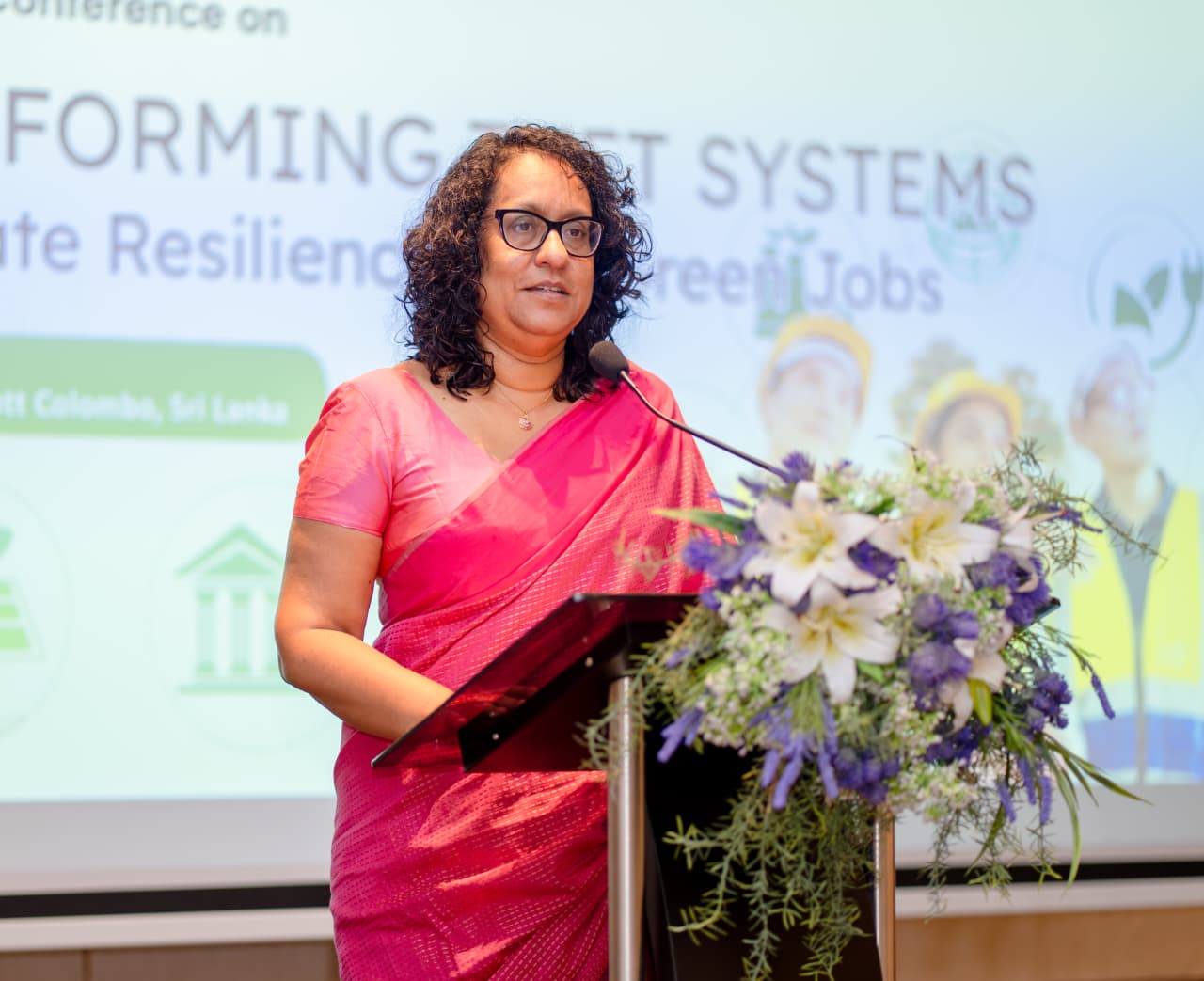
The Prime Minister, Minister of Education, Higher Education and Vocational Education Dr. Harini Amarasuriya participated as the Chief Guest in the international conference on ’Transforming TVET Systems for climate resilience and green jobs’ organized by Colombo Plan Staff College, Philippines together with the Ministry of Education, Higher Education and Vocational Education Sri Lanka on 24 th of March at Courtyard by Marriott Colombo, Sri Lanka.
The Conference serves as the flagship event of the five-day Regional Programme on “Transforming TVET for a Digital, Green, and Inclusive Economy” (23-27 March 2026), which continues throughout the week, bringing together representatives from CPSC member countries including Bhutan, Fiji, Malaysia, Maldives, Myanmar, Nepal, Philippines, Thailand, Pakistan, and Sri Lanka, fostering high-level dialogue and knowledge sharing on climate-resilient and green skills development.
The Conference features technical and plenary sessions on climate-responsive TVET systems, green skills development, national policy frameworks, and emerging technologies shaping industry transformation.
Addressing at the event, the Prime Minister emphasized the role of Technical and Vocational Education and Training (TVET) that equips individuals with practical, relevant, and future-oriented skills in addressing climate change and shaping a sustainable future.
The Prime Minister reaffirmed that this transformation remains a national priority for Sri Lanka. She stressed that education must go beyond knowledge dissemination to empower individuals with opportunities, dignity, and the capacity to contribute meaningfully to society.
She further emphasized the need to integrate environmental sustainability into education and training systems by embedding green skills in curricula, investing in modern training facilities, promoting innovation, and fostering collaboration between training institutions and emerging green industries.
Highlighting the importance of ensuring equity the Prime Minister further stated, that opportunities arising from the green transition must be accessible to all, including youth, young women, people with special needs, and marginalized communities.
Reaffirming Sri Lanka’s commitment to working closely with regional and international partnerships, the Prime Minister emphasized the importance of transforming them to actual benefits and partnerships.
The occasion was attended by the Secretary to the Ministry of Education, Higher Education and Vocational Education Nalaka Kaluwewa, Additional Secretary (Vocational Training) Ms. Samanthi Senanayake Director General Colombo Plan Staff College Prof. Dr. Suresh K. Dhameja , TVET administrators, institutional leaders, policymakers, instructors, industry representatives, and international delegates from across the region and seniors officials and officials from Ministries.
(Prime Minister’s Media division)
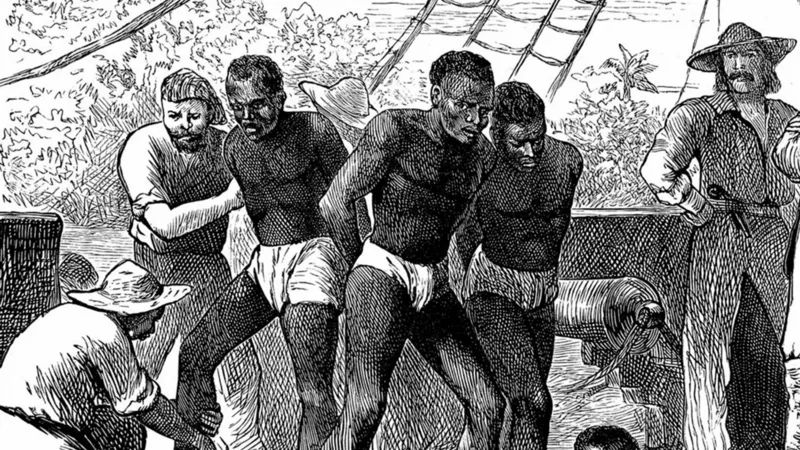
The United Nations General Assembly has voted to recognise the enslavement of Africans during the transatlantic slave trade as “the gravest crime against humanity”, a move advocates hope will pave the way for healing and justice.
The resolution – proposed by Ghana – called for this designation, while also urging UN member states to consider apologising for the slave trade and contributing to a reparations fund. It does not mention a specific amount of money.
The proposal was adopted with 123 votes in favour and three against – the United States, Israel and Argentina.
Fifty-two countries abstained, including the United Kingdom and European Union member states.
Countries like the UK have long rejected calls to pay reparations, saying today’s institutions cannot be held responsible for past wrongs.
Unlike UN Security Council resolutions, those from the General Assembly are not legally binding, though they carry the weight of global opinion.
“Let it be recorded that when history beckoned, we did what was right for the memory of the millions who suffered the indignity of the slave trade and those who continue to suffer racial discrimination,” Ghana’s President John Mahama told the assembly ahead of the vote.
”The adoption of this resolution serves as a safeguard against forgetting. It also challenges the enduring scars of slavery,” he said.
Earlier, his foreign minister, Samuel Okudzeto Ablakwa, told the BBC’s Newsday programme: “We are demanding compensation – and let us be clear, African leaders are not asking for money for themselves.
“We want justice for the victims and causes to be supported, educational and endowment funds, skills training funds.”
The campaign for reparations has gained significant momentum in recent years – “reparatory justice” was the African Union’s official theme for 2025 and Commonwealth leaders have jointly called for dialogue on the matter.
Ablakwa also said that, with the resolution, Ghana was not ranking its pain above anyone else’s, but simply documenting a historical fact.
Between 1500 and 1800, around 12-15 million people were captured in Africa and taken to the Americas where they were forced to work as slaves. It is estimated that over two million people died on the journey.
[BBC]
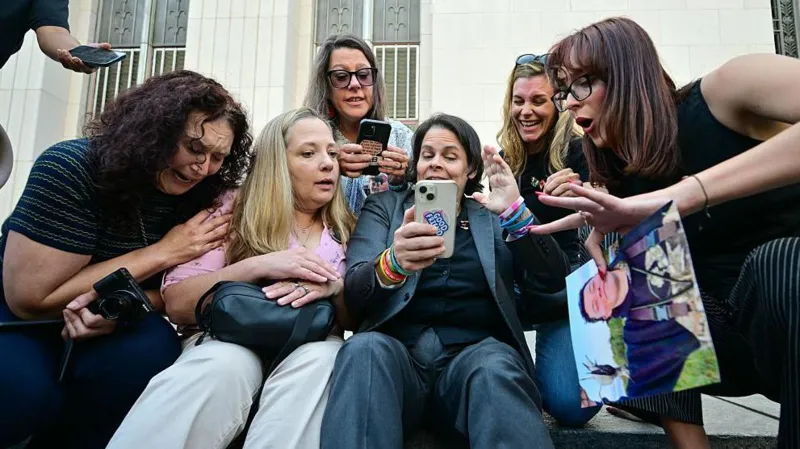
A Los Angeles jury has handed down an unprecedented win for a young woman who sued Meta and YouTube over her childhood addiction to social media.
Jurors found that Meta, which owns Instagram, Facebook and WhatsApp, and Google, owner of YouTube, intentionally built addictive social media platforms that harmed the 20-year old’s mental health.
The woman, known as Kaley, was awarded $6m (£4.5m) in damages, a result likely to have implications for hundreds of similar cases now winding their way through US courts.
Meta and Google said separately that they disagreed with the verdict and would both appeal. Meta said: “Teen mental health is profoundly complex and cannot be linked to a single app.
“We will continue to defend ourselves vigorously as every case is different, and we remain confident in our record of protecting teens online.”
A spokesperson for Google said: “This case misunderstands YouTube, which is a responsibly built streaming platform, not a social media site.”
Jurors found that Kaley should receive $3m in compensatory damages and an additional $3m punitive damages, because they determined Meta and Google “acted with malice, oppression, or fraud” in the way the companies operated their platforms.
Meta will be expected to shoulder 70% of Kaley’s damages award, with Google the remaining 30%.
Parents of other children, who are not part of Kaley’s lawsuit but claim they also were harmed by social media, were outside the courthouse on Wednesday, as they had been many days throughout the five-week trial.
When the verdict came through, parents like Amy Neville were seen celebrating, and hugging other parents and supporters who had been waiting for a decision.
The LA verdict came a day after a jury in New Mexico found Meta liable for the way in which its platforms endangered children and exposed them to sexually explicit material and contact with sexual predators.
Mike Proulx, a research director for Forrester, said the back-to-back verdicts underline a “breaking point” between social media companies and the public.
In recent months, countries such as Australia have imposed restrictions for children to stop or limit their use of social media. The UK is currently running a pilot program to see how a ban of social media for people aged under 16 may work.
“Negative sentiment toward social media has been building for years, and now it’s finally boiled over,” Proulx said.
During his appearance before the jury in February, Mark Zuckerberg, Meta’s chairman and chief executive, relied on his company’s longstanding policy of not allowing users under the age of 13 on any of its platforms.
When presented with internal research and documents showing that Meta knew young children were, in fact, using its platforms, Zuckerberg said he “always wished” for faster progress to identify users under 13. He insisted the company had reached the “right place over time”.
While Google, as the owner of video-sharing site YouTube, was also a defendant in the case, most of the trial proceedings focused on Instagram and Meta.
Snap and TikTok were also initially defendants, but both companies reached undisclosed settlements with Kaley prior to trial.
As for Kaley’s lawyers, they argued that Meta and YouTube had built “addiction machines” and failed in their responsibility to prevent children from accessing their platforms.
Kaley said she started using Instagram aged nine and YouTube aged six, and encountered no attempts to block her because of her age.
“I stopped engaging with family because I was spending all my time on social media,” Kaley said during her testimony.
Kaley said she was 10-years-old when she started having feelings of anxiety and depression, disorders for which she would be diagnosed years later by a therapist.
She also started to obsess about her physical appearance and began using Instagram filters that would change the way she looked – making her nose smaller and her eyes bigger – almost as soon as she started using the platform as a child.
Kaley has since been diagnosed with body dysmorphia, a condition which causes people to worry excessively about their physical appearance and prevents them from seeing themselves as others do.
Her lawyers argued that features of Instagram, like infinite scroll, were designed to be addictive.
Meta’s growth goals were aimed at getting young people to use its platforms, Kaley’s lawyers said.
Using testimony from experts and former Meta executives, they argued the company wanted young users because they were more likely to stick with its platforms for longer stretches of time.
When lawyers for Kaley told Adam Mosseri, the head of Instagram, that her longest single day of use of the platform stretched to 16 hours, he denied that it was evidence of an addiction.
Instead, he called a teenager spending most hours of the day on Instagram “problematic”.
Lawyers for Kaley said Wednesday that the jury’s verdict “sends an unmistakable message that no company is above accountability when it comes to our children.”
Another case against Meta and other social media platforms over their alleged harms to children is poised to begin in June in California federal court.
[BBC]

A strong Technical and Vocational Education and Training (TVET) system equips individuals with practical, relevant, and future-oriented skills helping to innovate responsibly towards a greener and sustainable future – PM

PM reviews progress of the committee appointed for the establishment of a National Nursing University

UN votes to recognise enslavement of Africans as ‘gravest crime against humanity’

Meta and YouTube found liable in landmark social media addiction trial

Showers expected in the Western and Sabaragamuwa provinces and in Galle and Matara districts after 2.00 pm.

Heat Index at ‘Caution level’ in the Western, Sabaragamuwa, Southern and North-western provinces and in Anuradhapura, Mannar, Vavuniya and Monaragala districts

‘Dates have the highest sugar content to fight Coronavirus’

Sunday Island 27 December – Headlines

#SundayIsland 17th December – Headlines

Sunday Island – 28th March

Sunday Island Headlines – 21 March

Sunday Island – 21st February – Headlines
-

 Features3 days ago
Trincomalee oil tank farm: An engineering marvel
-

 News1 day ago
Senior citizens above 70 years to receive March allowances on Thursday (26)
-

 News6 days ago
CIABOC tells court Kapila gave Rs 60 mn to MR and Rs. 20 mn to Priyankara
-
 Features6 days ago
Science and diplomacy in a changing world
-

 Features3 days ago
The scientist who was finally heard
-
 News1 day ago
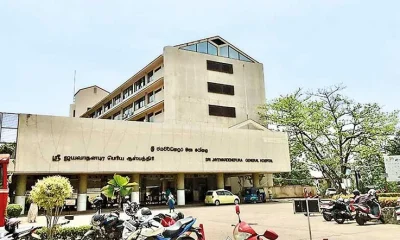
Japanese boost to Sri J’pura Hospital, an outright gift from Tokyo during JRJ rule
-

 News1 day ago
CEB Engineers warn public to be prepared for power cuts after New Year
-

 News5 days ago
Colombo, Oslo steps up efforts to strengthen bilateral cooperation in key environmental priority areas