



News
Treasury bond scam case: Controversy over flawed indictments that caused dismissal of some charges against Ravi, Mahendran, PTL, others
Trial-at-Bar highlights major flaw in Offences against Public Property Act, AG Dept.’s failure
By Shamindra Ferdinando
The Colombo High Court Trial-at-Bar had dismissed some of the charges filed against former Finance Minister Ravi Karunanayake, fugitive ex-Central Bank Governor Arjuna Mahendran and nine others in respect of Treasury bond scam perpetrated on 29 March 2016, due to the flawed indictments, legal sources told The Island yesterday (5).
Former President of the Bar Association of Sri Lanka (BASL), who is also the advisor to the Justice Ministry U. R. de Silva, PC, confirmed the issue at hand.
The Trial-at-Bar comprising Damith Thotawatte (Chairman), Manjula Thilakaratne and M. Izzadeen by a majority decision dismissed the relevant charges.
The court turned down a plea by State Counsel Lakmini Girihagama to alter the charge sheet last Friday (4). Karunanayake’s Counsel, Shavendra Fernando, PC, objected to the request made on behalf of the Attorney General. Judge Issadeen stated that charges could be maintained.Responding to The Island query, U.R. de Silva explained that under the Public Property Act (1982) only individuals could be indicted. But in the case of Treasury bond scam both individuals and Perpetual Treasuries (PTL) had been indicted, the President’s Counsel said, acknowledging it was a matter for serious concern. The first accused was the PTL, and other individuals.
The court was told the word ‘person’ hadn’t been interpreted in the Public Property Act hence the dispute. The Trial-at-Bar also held that though the interpretation in respect of ‘person’ in Penal Code could have been used but the Public Property Act didn’t make any reference to in this regard. The Trial-at-Bar, pointed out a major flaw in filing of the charges.
The incumbent President of BASL Saliya Peiris, PC, was not available for comment.
The indictments were filed during Dappula de Livera’s tenure as the AG. Sanjay Rajaratnam succeeded de Livera in May last year.
Attorney-at-Law and civil society activist Nagananda Kodituwakku said Friday’s discharge of Treasury bond scam suspects had prompted him to make inquiries from relevant parties.
Lawyer Kodituwakku said that those charged for Treasury bond scam had been discharged by the HC Trial-at-Bar only from some of the charges on the basis that only natural persons could be charged for robbing public funds and not companies such as the Perpetual Properties under the Public Property Act. There had been a similar judgment given by the HC in the recent past and that decision had been challenged by the Attorney General and the matter was still pending, the lawyer said.
Earlier, on 30 December 2017, a Presidential Commission of Inquiry (PCoI) headed by Justice K T Chitrasiri, had probed the Treasury bond scams, identified these suspects as being responsible for the fraud, and directed the Attorney General to initiate criminal proceedings against them, Kodituwakku said. Therefore, there was no truth in what was being circulated in the public domain that all suspects have been discharged by the judiciary, the lawyer said.
The PCoI consisted of Chairman Justice K.T. Chitrasiri, the late Justice P S Jayawardene and retired Deputy Auditor General, V Kandasamy.
Earlier, on 06 Dec., 2021, 11 persons including former MP Karunanayake and Arjuna Mahendran were indicted.
The three-judge Trial at Bar declared that as the 11 charges filed against the suspects couldn’t be sustained, they were dismissed.
The AG filed indictments against the suspects for conspiracy to commit criminal misappropriation in respect of Treasury bonds to the face value of Rs 36.98 billion on March 29, 2016.
The first Treasury bond scam was perpetrated on 27 Feb. 2015. The suspects are Ravi Karunanayaka, Arjuna Mahendran, Arjun Aloysius, Kasun Palisena, Jeffrey Joseph Aloysius, Chitta Ranjan Hulugalle, Muthuraja Surendran, Ajahn Gardige Punchihewea and Batugoda Hewa Indika Saman Kumara.
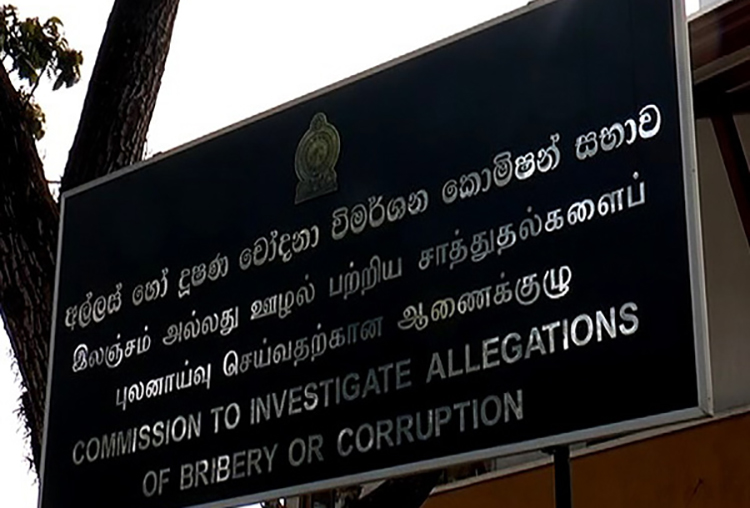
Kodituwakku pointed out that the dismissal of some of the charges in respect of the high-profile Treasury bond scam should be examined against the backdrop of the AG and the Commission to Investigate Allegations of Bribery or Corruption (CIABOC) withdrawing over 50 cases since the last presidential election.
The competence of the AG’s Department was raised in the Colombo High Court rulings given in respect of former Defence Secretary Hemasiri Fernando and ex-IGP Pujith Jayasundera in the Easter Sunday case.
Latest News
Interment of singer Latha Walpola at Borella on Wednesday [31st]
Family sources have confirmed that the interment of singer Latha Walpola will be performed at the General Cemetery Borella on Wednesday (31 December).
News
Western Naval Command conducts beach cleanup to mark Navy’s 75th anniversary
In an environmental initiative commemorating the 75th anniversary of the Sri Lanka Navy, the Western Naval Command organized a cleanup programme at Galle Face Beach on Saturday (27 Dec 25).
The programme focused on the removal of substantial solid waste littering the beachfront, including accumulated plastic and polythene debris. All collected wastey was systematically disposed of utilizing methods designed to safeguard the sensitive coastal ecosystem.
Demonstrating a strong commitment to the cause, the cleanup effort saw the participation of the Commander Western Naval Area and a group of over 200 naval personnel.
News
Environmentalists warn Sri Lanka’s ecological safeguards are failing
Sri Lanka’s environmental protection framework is rapidly eroding, with weak law enforcement, politically driven development and the routine sidelining of environmental safeguards pushing the country towards an ecological crisis, leading environmentalists have warned.
Dilena Pathragoda, Managing Director of the Centre for Environmental Justice (CEJ), has said the growing environmental damage across the island is not the result of regulatory gaps, but of persistent failure to enforce existing laws.
“Sri Lanka does not suffer from a lack of environmental regulations — it suffers from a lack of political will to enforce them,” Pathragoda told The Sunday Island. “Environmental destruction is taking place openly, often with official knowledge, and almost always without accountability.”
Dr. Pathragoda has said environmental impact assessments are increasingly treated as procedural formalities rather than binding safeguards, allowing ecologically sensitive areas to be cleared or altered with minimal oversight.
“When environmental approvals are rushed, diluted or ignored altogether, the consequences are predictable — habitat loss, biodiversity decline and escalating conflict between humans and nature,” Pathragoda said.
Environmental activist Janaka Withanage warned that unregulated development and land-use changes are dismantling natural ecosystems that have sustained rural communities for generations.
“We are destroying natural buffers that protect people from floods, droughts and soil erosion,” Withanage said. “Once wetlands, forests and river catchments are damaged, the impacts are felt far beyond the project site.”
Withanage said communities are increasingly left vulnerable as environmental degradation accelerates, while those responsible rarely face legal consequences.
“What we see is selective enforcement,” he said. “Small-scale offenders are targeted, while large-scale violations linked to powerful interests continue unchecked.”
Both environmentalists warned that climate variability is amplifying the damage caused by poor planning, placing additional strain on ecosystems already weakened by deforestation, sand mining and infrastructure expansion.
Pathragoda stressed that environmental protection must be treated as a national priority rather than a development obstacle.
“Environmental laws exist to protect people, livelihoods and the economy,” he said. “Ignoring them will only increase disaster risk and long-term economic losses.”
Withanage echoed the call for urgent reform, warning that continued neglect would result in irreversible damage.
“If this trajectory continues, future generations will inherit an island far more vulnerable and far less resilient,” he said.
Environmental groups say Sri Lanka’s standing as a biodiversity hotspot — and its resilience to climate-driven disasters — will ultimately depend on whether environmental governance is restored before critical thresholds are crossed.
By Ifham Nizam ✍️
-
News5 days agoMembers of Lankan Community in Washington D.C. donates to ‘Rebuilding Sri Lanka’ Flood Relief Fund
-
News3 days agoBritish MP calls on Foreign Secretary to expand sanction package against ‘Sri Lankan war criminals’
-
News6 days agoAir quality deteriorating in Sri Lanka
-
News6 days agoCardinal urges govt. not to weaken key socio-cultural institutions
-
Features5 days agoGeneral education reforms: What about language and ethnicity?
-
Opinion6 days agoRanwala crash: Govt. lays bare its true face
-
News5 days agoSuspension of Indian drug part of cover-up by NMRA: Academy of Health Professionals
-
News6 days agoCID probes unauthorised access to PNB’s vessel monitoring system