
Opinion
The Walk for Peace in America a Sri Lankan initiative: A startling truth hidden by govt.

When we come to it
We, this people, on this wayward, floating body
Created on this earth, of this earth
Have the power to fashion for this earth
A climate where every man and every woman
Can live freely without sanctimonious piety
Without crippling fearWhen we come to it
We must confess that we are the possible
We are the miraculous, the true wonder of this world
That is when, and only when
We come to it.
· Concluding lines of the poem ‘A brave and startling truth’
(1995)
– Maya Angelou
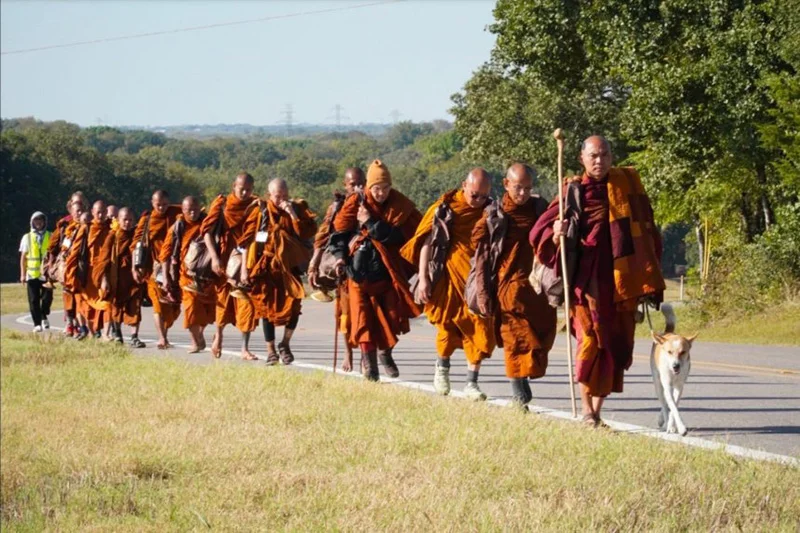
Ven. Dr Melpitiye Wimalakitti Nayake Thera, Head Monk of the Wijesundararamaya, Asgiriya, Kandy, and the Chief Incumbent of the Gotama Viharaya Monastery, Fort Worth, Texas, USA, claims that the ongoing Texas to Washington Walk for Peace march led by the American monk of Vietnam origin Ven. Pannakara is ‘an initiative of ours’ (ape wedak). He made this claim during a recent podcast hosted by the well-known YouTuber and journalist Chamuditha Samarawickrema (CNB/February 5, 2026). The Huong Dao Monastery of Bhante Pannakara, who is leading the peace walk is close to the Gotama Viharaya Monastery of Wimalakitti Thera, who tells us that he has had a strong connection with Vietnamese monks and has already collaborated with them in many Buddhist activities.
Talking about Ven. Pannakara, Ven. Wimalakitti says that he is a pupil of senior Vietnamese bhikkhu Ven. Ratanaguna of the same Huong Dao Monastery in Fort Worth Texas. He is leading a team of 24 Buddhist monks from different countries in the (Southeast Asian) region including Vietnam, Cambodia, Thailand, Bangladesh, Laos, etc., taking part in the Walk for Peace (from Fort Worth in Texas to Washington D.C.). It is going to be 2723 miles long according to Wimalakitti Thera. The Walk for Peace started on October 26, 2025 and is due to pass through 4 time zones and 10 states, braving extremes of weather and trekking through patches of harsh terrain.
It was 40 degrees Celsius in Texas, when they started. In seven days, the Peace Walkers reached Georgia in Atlanta. It was raining there. Then, they arrived in South Carolina, where it was cold, the temperature usually being under 20 degrees Celsius. By the time of the podcast with Chamuditha, the Walk for Peace was proceeding through the even colder North Carolina, the temperature barely rising above 1 or 2 degrees Celsius. Then, they reached Virginia with heavy snowfall, but the Walk went ahead nonstop.
The original plan was to walk 8 hours and cover 20 miles in a day. Now they want to do 10 hours a day and cover a targeted 40 miles. They hoped to have at least 20 participants in the Walk at any time. The whole Walk is expected to take 120 days and end on February 13, 2026.
America is a big democratic country, the monk says. The ordinary people are more interested in inner peace than in politics. There are 125 Sri Lankan Buddhist pansalas in America, 15 of which stand on the route of the continuing Walk for Peace. Sri Lankan monks resident in these monasteries, in partnership with monks from other countries, provide the Walkers with essential food, temporary lodgings, and hygienic facilities. They also work out security arrangements for the peace-walking monks in coordination with government and municipal authorities and Police.
Ven. Wimalakitti provides this information as a member and a director of the organising committee responsible for the Walk for Peace project. According to him, Ven. Pannakara takes part in an annual walk in India from Buddha Gaya to Kolkata (the capital city of India’s West Bengal state) as a dhutanga practice (one of the 13 strict ascetic practices recommended for bhikkhus in Theravada Buddhism that aim at perfecting austerity, mental purification, and renunciation). About 200 Buddhist monks join Bhikkhu Pannakara on this walk.
The dog now celebrated as Aloka started following Ven. Pannakara at Buddha Gaya and reached Kolkata with him. He followed the monk even to the airport. Bhikkhu Pannakara could not leave the dog behind in India and fly back to America. So, he canceled his flight and stayed back in India for eight months, during which he trained the dog and completed the paperwork necessary to take him to America with him. Once in America, Aloka sometimes started growling at people at first, because he was not used to the new environment. So, they put a pet cone around his neck to calm him while on the move. Now he participates in the Walk without the pet cone and walks beside Bhikkhu Pannakara at the head of the column of Walkers. The monk usually takes Aloka on a leash and occasionally, off-leash. Aloka had a paw injury during the walk and had to be hospitalised for a few days for surgery. He has rejoined the walk now. The dog has a car reserved for him to move with the walking party whenever he is unable to walk.
Ven. Wimalakitti Thera says he took part in six discussions held at the Huong Dao pansala when the peace walk was being planned. They had to discuss security matters with the Police. Concerns were raised about possible assassination attempts on Bhikkhu Pannakara. The dedicated monk said that he was ready to lay down his life for the cause of the Walk. Wimalakitti Thera said Bhikkhu Pannakara is only 37 years old.
At the beginning of the fourth week into the Walk, there was a serious traffic accident. The monks were walking along the shoulder of the road (near Dayton, Texas, east of Houston, on November 19, 2025) guided by a slow-moving escort vehicle (with hazard lights on). A truck hit the rear of the pilot car pushing it into the monks. The impact left two monks injured, one of them (Phra Ajarn Maha Dam Phommasan, aka Bhante Dam Phommasan) very seriously. The injured monks were airlifted to Houston for medical attention. Bhante Dam Phommasan had to undergo multiple surgeries, including the amputation of his leg. (The information given within parentheses in this piece of writing is added by me for clarity.)
On another occasion (in early January 2026, in Walton County, near Good Hope, Georgia) an unidentified protestor accompanied by a group of his supporters blocked the monks’ path (holding signs like ‘JESUS SAVES’, ‘Turn to Christ’; WARNING: ‘walking to hell’, ‘Hell awaits’, etc., but the people gathered there cheered on the monks, and asked the protestors to just move on). Ven. Wimalakitti (who was presumably on the scene) says that the police diverted them onto an alternative route. The unperturbed monks did not react to the disruptors and continued their walk in silence. The night routes were decided by the Police. The initial hostility petered out gradually, as thousands gathered on the roadsides to watch the monks walking and to listen to the sermons in the night.
(On Christmas Day 2025, the monks stopped at a church in Alabama, before entering into Georgia the next day.) Ven. Wimalakitti says that when Bhikkhu Pannakara made an address in the church that evening, it was filled to capacity, and his speech had to be broadcast on outdoor screens.
The Walk actually began as a dhutanga (please, see above) observance as Ven. Wimalakitti explains during the discursive podcast, which forms the basis of this essay. But, on the third day, the name was changed to ‘Walk for Peace’. Its purpose is non-religious and non-political. ‘Today is my day of peace’ is the theme. (Ven. Pannakara exhorts) “When you get up in the morning, say to yourself ‘Today is going to be my day of peace’”. When Wimalakitti Thera says “Ordinary Americans are really interested in Meditation (bhavana). They are much less interested in the dhamma”, he is making an obvious oversimplification that seems to be limited exclusively to the current Walk for Peace context.
WimalakittiThera claims that a single Pakistani individual from Texas ‘provides security for the Walk’. However much I tried, I couldn’t catch his name as the monk pronounced it. So I sought AI help. AI clarifies that ‘Based on the results of the 2025-2026 Walk for Peace from Texas to Washington D.C., the security and the logistics for the Buddhist monks are primarily handled by local law enforcement agencies (sheriffs and police departments) who secure the roads as the group walks’.(So, there is no mention of a Pakistani (American) providing security for the walk). The monk might be mistaken about the matter. But that piece of information is not so important. Though the monks have absolutely no political motives, the Sri Lankan monk thinks they expect (US President Donald) Trump to be there when they reach Washington, near the White House. A reception for the monks is scheduled to take place on that occasion with the participation of the Sri Lankan ambassador.
The highlight of the Chamuditha News Brief (CNB) podcast featuring Ven. Dr Melpitiye Wimalakitti uploaded on February 5, 2026 is his revelation of a well-kept secret, which is that the Sri Lankan monks living in America played the major pioneering role in organising the Walk for Peace across America project and that they wanted the Sri Lankan government to support it. The 17-member organising committee under the leadership of Ven. Wimalakitti, including the Vietnamese American bhikkhu Ven. Pannakara (who is now leading the Walk for Peace march) visited Sri Lanka in this connection in May 2025, that is, nine months ago. Ven. Wimalakitti showed the group photographs that the visiting monks took with prime minister Harini Amarasuriya, some ministers and other dignitaries. Still, ordinary Sri Lankans are unaware of this momentous event, it seems.
Unfortunately, there had not been any response to the monks’ request up to the day that Chamuditha did the podcast with Ven. Wimalakitti. The monk said that he broke off his participation in the Walk in order to visit Sri Lanka again for the express purpose of urging the Sri Lankan government’s participation in the Vesak celebration at Walk team leader Ven. Pannakara’s monastery in Texas in May. Ven. Wimalakitti said he gave the president and the prime minister (as I think he claimed) formal invitation cards requesting them to arrange for government delegates to attend the Vesak ceremony set to be held at the Huong Dao Monastery of Ven. Bhante Pannakara in Dallas, Fort Worth, Texas on May 26 this year (2026). He also wants them to grace the transport of relics from Sri Lanka. The monk was due to leave for America the night following the day of the programme with Chamuditha; but he had still got no reply from those important invitees. However,the Sri Lankan Ambassador in Washington is taking a great interest in this event, according to Ven. Wimalakitti.
At the end of the podcast, Ven. Wimalakitti voiced two important messages: “I want to say a word of diplomatic importance. This is a great opportunity for Sri Lanka, diplomatically speaking. This is a moment of awakening, not only for America but also for the whole world. All of you citizens of the Democratic Socialist Republic of Sri Lanka as a Theravada Buddhist state, can make your contribution to this global awakening. I urgently request that this great opportunity be not missed”. (The Walk for Peace, the peace pilgrimage across America, from Texas to Washington D.C., is performed by a group of Theravada Buddhist monks. It showcases the key Buddhist spiritual values of compassion, loving-kindness, non-violence, and peace that underlie Sri Lanka’s dominant religious culture. These values are a source of soft power for Sri Lanka in its diplomatic and cultural relations with the powerful United States of America.)
“Secondly, as Buddhists of Sri Lanka, please don’t criticise our monks or the Buddhist religion, simply because others do so. Please, think about this (insulting the monks and the Dhamma) with great equanimity. Both Buddhist monks and laypersons must keep updated about current trends. Some of our monks often attract criticism because they fail to adjust to changing times.”
By Rohana R. Wasala

Although the Public Utilities Commission of Sri Lanka (PUCSL) has appropriately invited public consultation on the proposed electricity tariff revision from 27 February to 18 March, the online submission portal appears to contain a non-functioning submission tab. If this technical issue persists, it risks undermining the integrity and effectiveness of the entire consultation process. Consequently, I have chosen to present this letter openly for public consideration, including by the PUCSL.
Current geopolitical tensions in the Middle East underscore the urgent need for Sri Lanka to minimise its dependence on imported fossil fuels and prioritise the development of domestic renewable energy resources, including solar, hydro, and wind power. Such a transition is essential to securing a stable and independent energy supply. Regrettably, the Ceylon Electricity Board (CEB) appears to be moving in the opposite direction.
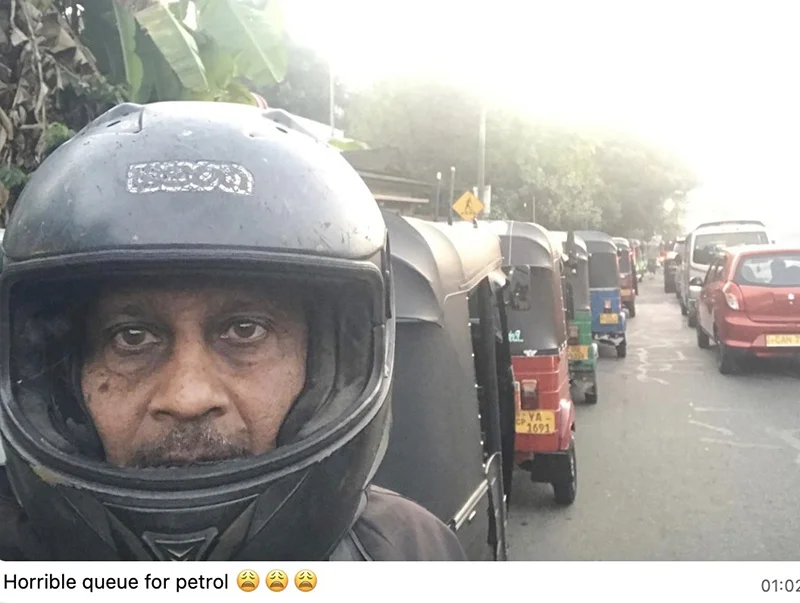
Promoting solar-powered electric vehicles supported by home-based renewable charging systems would strengthen national energy security and reduce pressure on imported fuel supplies. The fuel queues witnessed during periods of crisis, most notably in 2022, serve as a stark reminder of the risks associated with excessive dependence on external energy sources and the national anarchy that can follow.
As a small nation operating within a volatile global economy, Sri Lanka must remain as non-aligned and self-reliant as possible. Strengthening self-sufficiency in strategic sectors is critical to avoiding collateral damage amid escalating geopolitical rivalries among major powers. India has made steady progress along this path; Sri Lanka would be well-advised to do the same.
Raising electricity tariffs — a measure repeatedly adopted over the past decades to offset the high cost of fossil-fuel-based power generation — places an unfair burden on debt-ridden households and struggling businesses. Resorting once again to tariff increases, rather than addressing structural inefficiencies and fuel dependency, reflects a failure of long-term planning. The nation must instead pursue sustainable energy solutions that reduce costs over time.
As a debt-burdened country, Sri Lanka urgently requires pragmatic, forward-looking strategies that ease the pressure on citizens while strengthening resilience in times of geopolitical instability. Energy pricing is not a peripheral issue; it is a central pillar of economic stability and national security, demanding serious and immediate attention.
Established on 1 November 1969, the CEB was entrusted with the responsibility of generating and distributing electricity across the island while promoting social and economic development through the optimal use of national resources.
Recent developments suggest that the Ceylon Electricity Board has fallen short of these foundational objectives. Over the past two decades, electricity tariffs have been increased repeatedly under various justifications yet supply reliability has not consistently improved. The current proposed revision appears to perpetuate the same pattern: continued dependence on imported fossil fuels, directly contradicting the principle of optimally utilising national resources. This trajectory risks returning the country to recurring crises, including the prolonged fuel shortages and power cuts experienced in recent years.
Energy is not an ordinary commodity confined to a single sector; it affects every dimension of national life. High energy costs increase the cost of living by inflating expenses related to food production, transportation, manufacturing, and consumer goods. Ultimately, these costs are borne by citizens.
Moreover, elevated energy prices undermine national competitiveness by discouraging foreign investment and constraining local entrepreneurship, technological advancement, industrial expansion, and job creation. High-cost energy impedes national development.
Low-cost energy should therefore be formally adopted as a national policy objective. The CEB must adhere to its original mandate of optimising national resources for cost-effective electricity generation. Any deviation from this principle must be fully transparent and supported by clear, evidence-based justification.
Even in the sphere of renewable energy, concerns arise about the apparent preference for large-scale solar and battery storage projects that require substantial public funding. Previous claims of “grid instability” attributed to household rooftop solar generation were used to justify policy shifts. If electricity generated by rooftop solar during daylight hours was considered problematic, how would significantly larger solar installations differ in principle? Without systematic and transparent grid modernisation, such projects risk becoming costly stopgap measures rather than sustainable long-term solutions.
Poorly planned initiatives could once again expose the country to high delivery costs, reflected in elevated tariffs. They may also increase the risk of power disruptions due to battery limitations, spare-part shortages, infrastructure weaknesses, or maintenance failures. Sri Lanka has previously endured six- to ten-hour power outages, with severe economic and social consequences. The nation cannot afford a return to such instability.
It must also be recognised that rooftop solar installations, financed by homeowners — often through personal loans — have provided a crucial safety net for many families. By purchasing surplus energy from these “prosumers,” the system has functioned in a mutually beneficial manner for both households and the nation. Rather than discouraging decentralised generation, Sri Lanka should modernise its grid and meaningfully integrate citizen-led energy production. Short- and medium-term grid improvements could be facilitated through structured private-sector participation, including by prosumers themselves.
Globally, affordable energy underpins economic growth. Countries such as China, the United States, Norway, Brazil, and Canada have leveraged domestic energy resources to produce cost-effective power and accelerate development.
Sri Lanka must adopt a clear national policy centred on low-cost energy, fully utilising its natural endowments — solar, hydro, wind, and emerging technologies. Proposals prioritising imported fuels should be considered secondary and strictly transitional.
A nation that endures long queues for essential energy supplies cannot reasonably expect its citizens and businesses to remain productive and resilient. These realities are fundamentally incompatible.
Encouraging decentralised energy production would:
* Reduce the cost of living
* Improve national resilience
* Attract foreign investment
* Create employment
* Enhance export competitiveness
The people have entrusted the government with this responsibility. The time has come for a decisive, transparent, and forward-looking policy shift.
Chula Goonasekera
(cgoonase@sltnet.lk)
A concerned citizen

The purchase of substandard coal using a faulty tendering process has become news lately. This enormous financial loss to the country indicates the urgent need for the Government to pass stronger contract laws and have their proper implementation in Sri Lanka by professionals. It is recommended that “Model” contracts need to be drawn up as typical examples and these made available to governmental departments who may need to enter into similar contracts. Do not ask a busy manager to design a contract, a legal document from scratch! Perhaps a whole department should be set up to monitor (police?) government and local government administration of contracts under English Contract Law and contracts under the United Nations Convention for International Sale of Goods (CISG). Perhaps now, it seems that anyone in government can draw up a contract and design it to suit his own whims and fancies!
I suggest here models of typical contracts, useable for different cases are made available for anyone or any department required to enter into a contract to enable them, or at least assist them to first formulate, and draw up an effective contract which must have certain important clauses. Contract administrators and supervisors need to be well trained, motivated and independent in order to administer Government contracts as the law of Sri Lanka should demand.
Contract Management
In the West, mutually agreed contracts are considered legal agreements enforceable by law under a given jurisdiction. There is the initiator of the contract named the Owner and a Main Contractor who agrees to implement the work for a price consideration, and who may delegate part, or all of the work to sub-contractors.
Contracts must provide all the information required by a contractor to complete the work. Contract clauses must incorporate all foreseeable eventualities. For example, the acceptance, as agreed and signed between the contacting parties by the supplier or lead contractor, needs to have clauses that allow for design changes (change orders), additional time and the formulation of related costs and profit accordingly. Such ‘in progress’ changes have procedures which are given in clauses dealing with ‘change orders’ which require assessing the cost of the change order implementation. Change order management may best be done by a firm of Quantity Surveyors.
The main contractor agrees with the owner to supply labour, materials and specialist equipment to fulfil the terms of the agreement or contract for a price. Special tax concessions, customs clearances and other legal requirements can fall on the shoulders of the Owner, or as negotiated from the outset. All these matters need to be clarified from the outset of any contract.
Time is of the essence. The time value of money is always at the forefront of the contract manager’s mind. The work is usually expected to be carried out to a time frame set by the owner. Therefore, the implementation of an agreement should be set in an agreed time frame with easily defined milestones marking progress and marking when appropriate payments become due.
Of course, contract administrators must make payments only when the work is verified as satisfactorily completed at each of previously agreed stages of the contract. Usually, there are time limitations, with penalties for time overruns. Owners want their goods delivered on time and to meet all contractual specifications on quality and performance. There should be clauses stipulating quality and quantity guarantees and guarantees of remedial repairs, continuing service agreements to be settled before an official handover and signing on completion of a contract. Final payment should be withheld until the guarantee period has expired. Preparing for these events needs computers, foresight and experience.
Small contracts are usually managed by the owner, but large, multimillion dollar contracts may be administered by an independent organisation. A contract is enforceable by law, with stated financial penalties for failures to abide by the terms of the contract, but all is subject to “Force Majeure.” This is when progress of the work is seriously impeded or impossible due to events totally outside the control of the Subcontractor.
Contract implementation is a large area, well catered for by laws in the English language. This letter can only raise questions about the quality of contract administration in Sri Lanka. Unfortunately, so few legislators have sufficient knowledge of English, resulting in loopholes allowing manipulation which may result in Sri Lankan public having to pay through the nose, pay dearly for incompetent practice.
I can suggest these improvements, but my actual experience is that all my letters, in English, to officialdom go unanswered and ignored.
Roger. O. Smith

A systemic diagnosis of a fading legacy
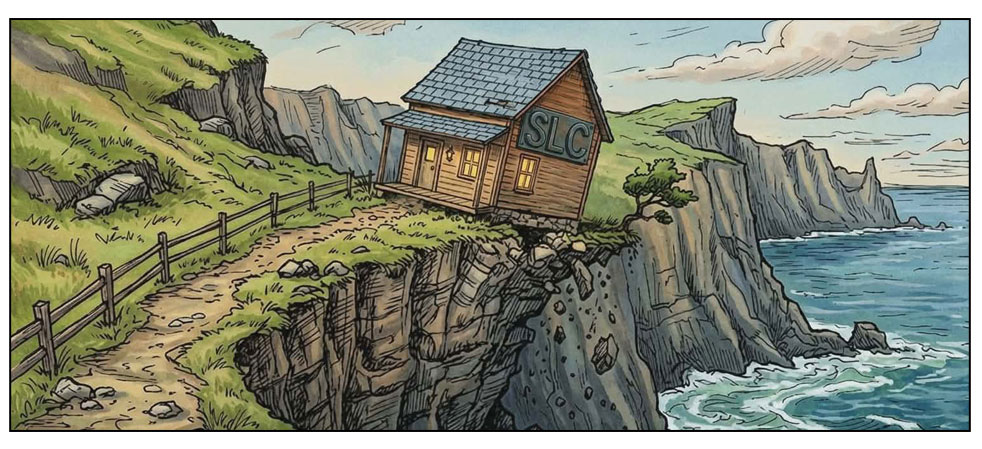
The outcome of the 2026 T20 World Cup, coupled with the trajectory of the sport in recent years, provides harrowing evidence that Sri Lankan cricket is suffering from a terminal malignancy.The Doomsday clock for Sri Lankan cricket has not just started ticking—it has reached its final hour.
Therefore this note is written to call the attention of the cricketing elite who love the sport.
The current state of affairs suggests a pathology so deep-seated that conventional remedies—be it revolving-door coaching changes or fleeting, opportunistic victories—can no longer arrest its spread.
What we are witnessing is not a mere slump in form or a temporary lapse in rhythm; it is a profound systemic collapse that threatens the very foundation of our national pastime.
The Illusion of Recovery: The “Sanath Factor” as Palliative Care:
Since late 2024, the appointment of Sanath Jayasuriya as Head Coach injected a much-needed surge of adrenaline into the national side.
Statistically, the highlights were historic: a first ODI series win against India in 27 years, a Test victory at The Oval after a decade, and a clinical 2-0 whitewash of New Zealand.
However, a data-driven autopsy reveals that these will be “palliative” successes rather than a cure.
Under Jayasuriya’s tenure, the team maintained a win rate of approximately 50 percent (29 wins in 60 matches).
While analysts optimistically labeled this a “transitional phase,” the recent T20 series against England and Pakistan exposed the raw truth: in high-pressure “crunch” moments, the team’s performance metrics—specifically Strike Rate (SR) and Fielding Efficiency—regress to amateur levels.
We are not transitioning; we are stagnating in a professional abyss.
The Scientific Gap:
Why India and Australia Lead
The disparity between Sri Lanka and global giants such as the BCCI and Cricket Australia (CA) is now rooted in High-Performance Science and Algorithmic Management.
Predictive Analytics & Biometrics
In Australia, fast bowlers utilise wearable sensors to monitor workload and biomechanical stress.
AI models analyse this data to predict stress fractures before they occur.
Sri Lanka, conversely, continues to cycle through injured pacemen with no predictive oversight.
Virtual Reality (VR) Training
While Australian batters use VR to simulate the trajectories of elite global bowlers, Sri Lankan players remain tethered to traditional net sessions on deteriorating domestic tracks.
Data-Driven Talent Identification:
India’s “transmission system” utilises automated data analysis across thousands of domestic matches to identify players who thrive under specific pressure indices.
In Sri Lanka, 85 percent of national talent still originates from just four districts—a statistical failure in talent scouting and geographic expansion.
Infrastructure vs. Intellect:
A Misallocation of Capital
Sri Lanka Cricket (SLC) boasts massive reserves, yet its investment strategy is fundamentally flawed.
Capital is funneled into “bricks and mortar”—grand stadiums and administrative buildings—rather than the human capital of the sport.
We build colosseums but fail to train the gladiators.
The domestic structure remains a “spin trap.”
By producing “rank turners” to suit club politics, we have effectively de-skilled our batters against elite pace and rendered our spinners ineffective on the flat, true wickets required for international success.
The Leadership Deficit:
A Failure of Succession Planning
The crisis of leadership post-Sangakkara and Mahela is a byproduct of poor “Succession Science.”
Australia maintains a “Culture of Continuity,” backing leadership even through lean periods to ensure stability.
India employs a rigid “Succession Roadmap,” ensuring the next generation is integrated into the system long before the veterans depart.
In contrast, SLC operates on a “carousel of convenience,” changing captains and coaches to distract from administrative failures.
This lack of imaginative management stems from a low literacy in modern Sports Governance.
From a philosophical perspective, our established cricketing traditions have failed to absorb the antithesis of the modern, hyper-professionalized global game.
As a result, a truly modern Sri Lankan brand of cricket has failed to materialise.
Instead, we are trapped in what is called a “Static Synthesis,” where the administration clings to the glories of 1996 and 2014 as a shield against the necessity of change.
This is not a transition; it is a refusal to evolve
We are witnessing the alienation of the sport from its people, where the “Master” (the administration) has become detached from the “Slave” (the grassroots talent and the fans).
The Verdict:
A National Emergency
The “cancer” in Sri Lankan cricket is a trifecta of political interference, irrational management, and a refusal to embrace the Fourth Industrial Revolution (AI, VR, and Big Data).
As someone who contributed to the formation of the Sri Lankan Professional Cricketers’ Association, I see the current trajectory as a betrayal of the players’ potential and the nation’s heritage.
Sri Lanka Cricket does not need another “review committee” or a new coach to act as a human shield for the board.
It needs a “Bitter Pill”—an aggressive, independent restructuring that prioritises scientific professionalisation over cronyism.
Without this, our cricket will remain at the bottom of the well, looking up at a world that has moved light-years ahead.
Shiral Lakthilaka
LLB, LLM/MA
Attorney-at-Law
Former Advisor to H.E. the President of Sri Lanka
Former Member of the Western Provincial Council
Executive Committee member of the Asian Social Democratic Political Parities

Dry weather will prevail in most parts of the island

AKD warns of far reaching economic consequences of Middle East war

Pope invited to visit Sri Lanka

New Tourism Act to strengthen legal action against visa violators

Court of Appeal grants interim relief, allows foreigners to drive three-wheelers

War in Middle East sends shockwaves through Sri Lanka’s export sector

‘Dates have the highest sugar content to fight Coronavirus’

Sunday Island 27 December – Headlines

#SundayIsland 17th December – Headlines

Sunday Island – 28th March

Sunday Island Headlines – 21 March

Sunday Island – 21st February – Headlines
-
 Opinion5 days ago
Jamming and re-setting the world: What is the role of Donald Trump?
-
 Features5 days ago
An innocent bystander or a passive onlooker?
-
 Features2 days ago
Brilliant Navy officer no more
-
 Features6 days ago
Ratmalana Airport: The Truth, The Whole Truth, And Nothing But The Truth
-
 Opinion2 days ago
Sri Lanka – world’s worst facilities for cricket fans
-
 Business6 days ago
IRCSL transforms Sri Lanka’s insurance industry with first-ever Centralized Insurance Data Repository
-

 Business5 days ago
An efficacious strategy to boost exports of Sri Lanka in medium term
-
 Features3 days ago
Overseas visits to drum up foreign assistance for Sri Lanka