
Life style
THE VULNERABLE SRI LANKAN LEOPARD: One of only two island sub-species

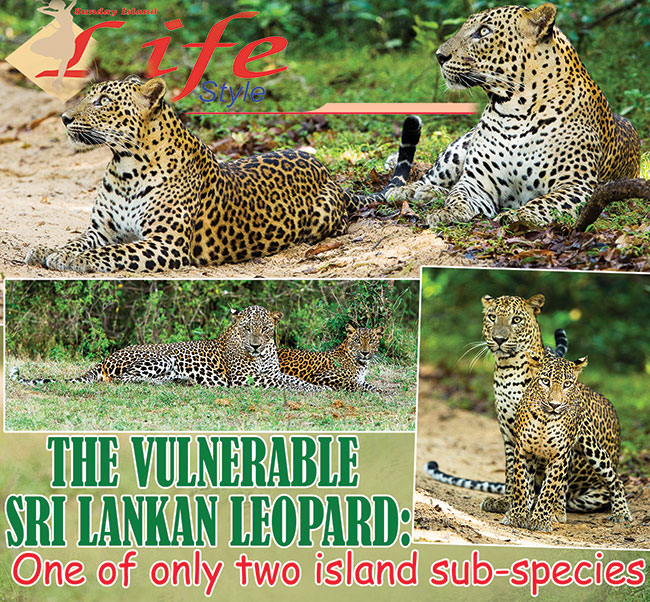
Sri Lanka Leopard Day today
by Rukshan Jayewardene
Today, leopards live in 26 range countries scattered across the African and Asian continents and are subdivided into nine sub-species based on their genetic divergence and distinction. Of these, the Sri Lankan leopard (Panthera pardus kotiya) is one of only two sub-species restricted to islands. The other sub-species (Panthera pardus melas) live on the Indonesian Island of Java. The Javan leopard clings precariously to existence in several protected areas and high-altitude forests. Their total number is estimated to be down to 250 adult individuals and it is considered to be critically endangered by IUCN. Java’s forest cover is also below 10% of the total land area of the island. The predicament faced by the Javan leopard should be a wake-up call for all those who wish to ensure the conservation of the Sri Lankan leopard.
 Population pressure, land conversion to agriculture (loss of habitat), prey depletion and untimely death at the hands of humans are common problems faced by these two island leopards. If one were to make a geophysical comparison of these two tropical islands, Java has a land area of 128,297 sq km and 145 million people (2015) while the island of Sri Lanka has an area of 65,610 sq km and 22 million people. Therefore, Java has approximately twice the land area of Sri Lanka and six and a half times its population. When compared in this way, it is plain to see that Java’s pressure on the land for agriculture and settlements is immense. Although Sri Lanka’s equation is far better, we are still a densely populated agricultural land, with our population unevenly distributed across the island. This so called maldistribution allows for living space for wildlife away from humans, especially in the comparatively sparsely populated dry zone districts.
An irreplaceable role
Wise land use policies and practice, and the strict enforcement of the laws that govern the extensive protected area network, is a key to conservation of all but the elephant (who require separate attention). Recent reversals regarding the legal safeguards put in place to conserve forest land, as well as haphazard, non-consultative land use policies especially concerning agriculture has accelerated deforestation, wildlife habitat loss and population pressure on wilderness lands.
The leopard is an important animal in the wild, a keystone species that plays an important regulatory role in the eco-systems in which they naturally occur. Here, in Sri Lanka, it is an apex predator (at the apex of all food webs on land), plays an irreplaceable role, and its extirpation would create a void that cannot be filled by any other animal. The leopard can be characterized by three qualities; intelligence, adaptability and resilience. Its intelligence and agility makes the leopard a behaviorally interesting animal, and its beauty makes it one of the most sought after wild animals in the world.
A counter-productive ‘numbers’ game
The leopard’s tourism potential is not fully utilized and generally mismanaged by both the government and private sectors. It is a special animal that needs focused conservation attention as well as knowledgeable field guides, trackers and naturalists. Up to this point in time, the bulk of wildlife tourism is sustained by the mass market and package tours that this country courts. These tours are unwieldy for the most part and consist of “beach holiday” visitors who are only cursorily interested in this valuable and fragile resource of ours. Therefore, tourism’s stamp on the protected areas of Sri Lanka is heavy, ecologically insensitive and for the most part ignorantly so.
Leopard-centric tourism, as practiced by this country, exerts damaging pressure on a few national parks that are victims of their own popularity. If this valuable animal and its habitat are to be protected, and at the same time maximum revenue is to be earned, it is never going to be done through a tourist arrival head count. Wildlife/nature/eco-tourism as practiced in this country is a ‘numbers game’ which is counter-productive to the long-term conservation of species and habitats.
Starving a Natural Heritage
Importantly the Department of Wildlife Conservation has to be empowered with manpower, legal knowledge and capacity, as well as state-of-the-art training and other material resources to deal with the ever more sophisticated threat posed by poachers and encroachers within and outside protected areas. As long as wildlife and wilderness remain a State monopoly in the custodianship of the government, legislators must see fit to give the relevant departments adequate funds and resources as stated above to enable effective conservation.
By starving these ministries and departments of resources, a case cannot be made for privatization of the natural heritage common to all present and future Sri Lankan citizens. In Sri Lanka natural assets in private hands have always been governed by an overriding profit motive and exclusivity which is not conducive to managing natural assets for the benefit of its citizenry Alternatively Public-Private partnerships are an option that can be explored. However, regulatory mechanisms and oversight must remain in government hands at all times or else these too will not serve the nation in any meaningful fashion.
On this Sri Lankan “Leopard Day” while celebrating this unique animal, it is apposite to give thought to the management of wild leopards as much as the concerns regarding their conservation.
Pix by Rukshan Jayewardene



 At Colombo Fashion Week,held recently at Cinnamon Grand,designer Aslam Hussein delivered a collection that spoke the language of quiet confidence and refined glamour, positioning him firmly as a Fashion Edit, favourite this season.
‘His collection unfolded like a carefully composed symphony – each piece moving with a rhythm of elegance and poise. Aslam Hussein’s runaway was more than a presentation – it was a story of refined luxury, individuality and timeless beauty where couture met emotion and each garment became a living expression of artistry.
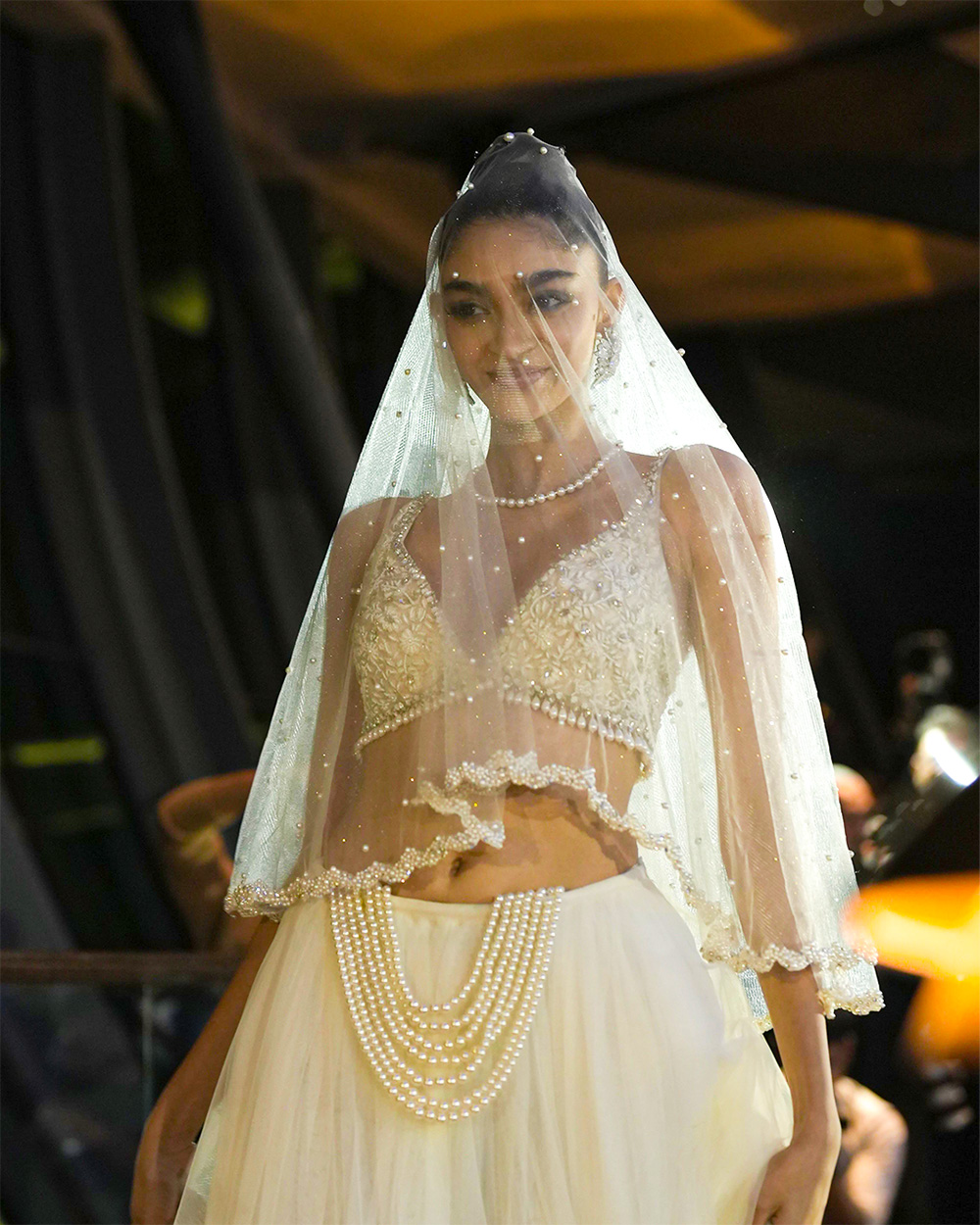
Colombo Fashion Week was held this November at Cinnamon Grand ,namely Couture + Trousseau . The event was part of the luxury edit focused on high fashion,bridal wear and destination wedding,celebrating CFW’’s 22 rd anniversary Aslam Hussein opened the runway and his collection balanced sharp tailoring with fluid silhouettes, creating looks that felt both modern and enduring. Clean lines, thoughtful construction and an understated palette allowed craftsmanship to take centre stage. The colour palette was muted yet rich, allowing texture and craftsmanship to speak. Luxurious fabrics caught the light with every step, revealing subtle interplay between movement and form. Each silhouette told a story of – timeless, modern and effortless elegance
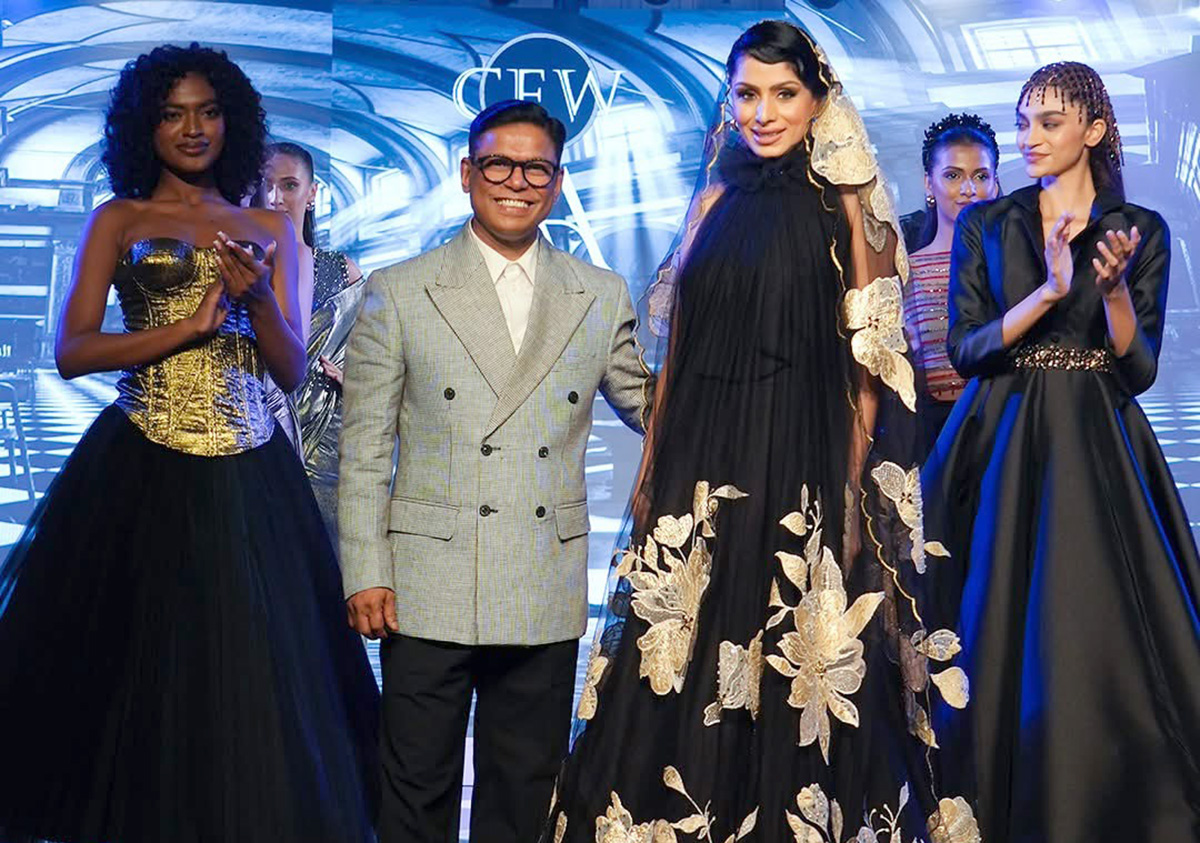
Aslam Hussein redefines elegance at CFW
Fluid silhouettes, muted palettes and clean tailoring defined his collection.
On the ramp,models moved with understated confidence, their hairstyles were created by. Ramani Fernando salons,the soft luminous makeup complemented the collection’s quiet sophistication. Each silhouette reflected Aslam’s commitment to craftsmanship, versatility and timeless style. Since establishing his label, he has been a staple on Sri Lanka’s fashion calendar, consistently presenting at Colombo Fashion Weeks and earning recognition for his designs.
His collection this year re-affirmed his mastery of understated elegance and contemporary luxury. Neutral tones were punctioned with occasion, deep shades, allowing fabric, cut and texture to take centre stage. Models carried the collection with measured poise. Make up was luminous yet natural, letting the silhouettes and individual model presence shine. Through his designs, Aslam Huseein has cultivated a following among modern cosmopolitan clientele who appreciate understated glamour, versatility and the quiet power of elegance.
His contributions have solidified his reputation as a designer who bridges Sri Lanka’s rich fashion heritage with an international sensibility.
Colombo Fashion Week is Sri Lanka’s premier event, showcasing the country’s top designers alongside emerging talent and is one of the glamorous events in the fashion landscape. The visionary is Ajay Vir Singh, founder of Colombo Fashion Week, whose leadership continues to elevate Sri Lanka’s premier fashion platform to international level.



Ramani Fernando salons is a name that has taken men and women’s grooming to new heights since its inception at Mount Lavinia. The salon has made its mark on the locals and celebrities alike. Over the years, Ramani Fernando Salons has not just set a benchmark for luxury grooming services but has also redefined how men perceive self-care, hair styling, and professional grooming. This salon at Mount Lavinia under its Manager Kappitiya Godage, namely Niroshan known by clients has become a favourite destination for those who sought more than just a haircut. The salon introduces a range of services—from precision styling and beard grooming to men’s makeup for photoshoots. The manager at Mount Lavinia is Niroshan Suresh. His philosophy emphasized that grooming is not just about appearance but also about confidence and self-expression and most importantly – self-care. He says make-up and grooming are not just limited to the opposite gender!
What makes Ramani Fernando Salon at Mount stand out. It is its innovative style and technique to men and women’s grooming. This branch prides itself on using cutting-edge tools and premium products that ensure every client leaves with a polished, customized look. The salon focus is on continuous learning and staying ahead of trends has earned it the loyalty of a discerning clientele.
Working at Ramani salons, Niroshan has spent many years perfecting the craft of styling, cutting and grooming men’s and woman’s hair, blending technical skill with a keen understanding of contemporary fashion trends. With years of experience, he guides clients on hairstyles and on the selection and proper use of styling products. His presence at Ramani Fernando salon at Mount Lavinia reinforce the brand’s reputation for excellence but also highlights the vital role of a skilled male stylist in shaping men and women’s grooming culture in Sri Lanka.
In the evolving world of men’s grooming, where style isn’t just about guiding a haircut but crafting a confident identity Niroshan at Mount Lavinia represent more than just a stylist or a place to cut hair. With Niroshan at the helm, this salon has become a place where style, innovation and meticulous grooming are curated for any client who walks in.
He is part of Ramani Fernando salons creative team, and brings creativity and precision to every look reflecting the high standards of Ramani Fernando’s renowned beauty collection
Niroshan has been with Ramani Fernando for several years and he is popular among his clients for those seeking sharp, modern and personalised hairstyles. With many years of experience, he has combined technical expertise with an eye for current trends ensuring each client leaves the salon looking confident and polished, Niroshan begins with a consultation, he carefully considers face shape, hair texture and personal style before recommending a look: He tailors each style to suit individual preferences, while ensuring easy to maintenance.
Beyond haircuts and grooming, his services include beard shaping, scalp and hair treatments and guidance on styling products. He makes each client of his leave the salon not just with a haircut but walk with confidence. He enjoys seeing his clients happy and self-assured. His experience, professionalism and knowledge make him a standard stylist in Colombo’s competitive grooming scene. He is very grateful to his senior and dynamic hairdresser Kamal for his guidance and expertise and who has been instrumental in shaping his approach to styling and artistry
by Zanita Careem ✍️

The Kingsbury, Colombo, welcomes the festive season with a spirit of warmth, elegance and celebration. This year’s Christmas and New Year offerings have been curated to bring guests together through moments of comfort, connection and shared joy across the hotel.
Harbour Court sets the tone for the season with its Christmas Eve Dinner Buffet, Christmas Day Brunch and Christmas Dinner on 24th and 25th December, followed by the New Year’s Eve Dinner Buffet on 31st December and the New Year’s Day Lunch and Dinner Buffets on 1st January. Kings Steakbar brings festive fine dining to Colombo with its Sunday Gourmet Carvery every Sunday in December, the Christmas Gourmet Carvery on 24th and 25th December, an á la carte Christmas Dinner on Christmas Day and a Seven-course Gourmet Dinner on New Year’s Eve.
Yue Chuan offers authentic Chinese cuisine with its signature Peking Duck Experience throughout December, daily Dim Sum and a special All You Can Eat menu on 24th, 25th and 31st December. At Tenk?, guests can enjoy elegant Japanese cuisine with the daily Teppanyaki Show, festive á la carte menus on 24th and 25th December and a New Year’s Eve Tasting Menu. Ocean highlights the best of coastal cuisine with festive á la carte menus on 24th, 25th and 31st December. Bringing Sri Lankan authenticity to the season, Tavern presents an Arrack Tasting Experience throughout December.
Festive cheer continues outdoors at Honey Beach Club with live music from 19th to 23rd December, poolside Festive party packages, and the signature New Year’s Eve celebration “Dancing Into 2026,” featuring Infinity and DJ E2. At Sky Lounge, guests can enjoy elevated festivities with Corporate Celebration packages, festive set menus, seasonal cocktails and the New Year’s Eve event “Party in the Sky,” featuring The Kingdom. Seas
For those celebrating at home, The Kingsbury offers Seasonal Roasts and festive hampers, available both ready-made and customisable, while Indulgence provides five-star delivery throughout the season. Families can also enjoy special offers, with children below six dining free and children aged six to ten receiving 50% off buffet dining. Seasonal cocktails, wine menus and bottle deals are available across all outlets.
This year, The Kingsbury, Colombo, invites guests to embrace the season with kindness, hope and cherished moments. Whether dining out, gathering with loved ones or gifting thoughtfully, we are honoured to share a season of splendour with you.

NMRA laboratory lacks SLAB accreditation

Air quality deteriorating in Sri Lanka

Cardinal urges govt. not to weaken key socio-cultural institutions

CID probes unauthorised access to PNB’s vessel monitoring system

NBRO identifies landslide risks in 14 districts

Danger of weak drug regulation

‘Dates have the highest sugar content to fight Coronavirus’

Sunday Island 27 December – Headlines

#SundayIsland 17th December – Headlines

Sunday Island – 28th March

Sunday Island Headlines – 21 March

Sunday Island – 21st February – Headlines
-

 Midweek Review5 days ago
How massive Akuregoda defence complex was built with proceeds from sale of Galle Face land to Shangri-La
-
 News4 days ago
Pope fires broadside: ‘The Holy See won’t be a silent bystander to the grave disparities, injustices, and fundamental human rights violations’
-

 News4 days ago
Pakistan hands over 200 tonnes of humanitarian aid to Lanka
-
 News5 days ago
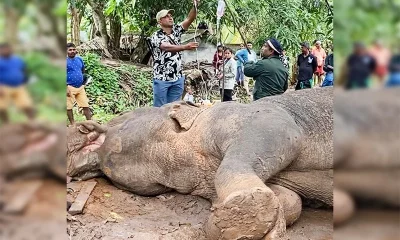
Burnt elephant dies after delayed rescue; activists demand arrests
-

 Business3 days ago
Unlocking Sri Lanka’s hidden wealth: A $2 billion mineral opportunity awaits
-

 Editorial5 days ago
Colombo Port facing strategic neglect
-

 News3 days ago
Army engineers set up new Nayaru emergency bridge
-

 News5 days ago
Sri Lanka, Romania discuss illegal recruitment, etc.