
Life style
THE VULNERABLE SRI LANKAN LEOPARD: One of only two island sub-species

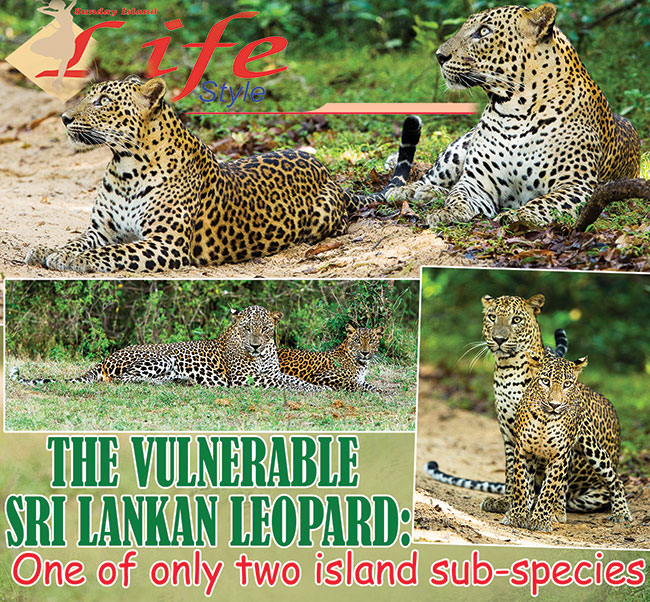
Sri Lanka Leopard Day today
by Rukshan Jayewardene
Today, leopards live in 26 range countries scattered across the African and Asian continents and are subdivided into nine sub-species based on their genetic divergence and distinction. Of these, the Sri Lankan leopard (Panthera pardus kotiya) is one of only two sub-species restricted to islands. The other sub-species (Panthera pardus melas) live on the Indonesian Island of Java. The Javan leopard clings precariously to existence in several protected areas and high-altitude forests. Their total number is estimated to be down to 250 adult individuals and it is considered to be critically endangered by IUCN. Java’s forest cover is also below 10% of the total land area of the island. The predicament faced by the Javan leopard should be a wake-up call for all those who wish to ensure the conservation of the Sri Lankan leopard.
 Population pressure, land conversion to agriculture (loss of habitat), prey depletion and untimely death at the hands of humans are common problems faced by these two island leopards. If one were to make a geophysical comparison of these two tropical islands, Java has a land area of 128,297 sq km and 145 million people (2015) while the island of Sri Lanka has an area of 65,610 sq km and 22 million people. Therefore, Java has approximately twice the land area of Sri Lanka and six and a half times its population. When compared in this way, it is plain to see that Java’s pressure on the land for agriculture and settlements is immense. Although Sri Lanka’s equation is far better, we are still a densely populated agricultural land, with our population unevenly distributed across the island. This so called maldistribution allows for living space for wildlife away from humans, especially in the comparatively sparsely populated dry zone districts.
An irreplaceable role
Wise land use policies and practice, and the strict enforcement of the laws that govern the extensive protected area network, is a key to conservation of all but the elephant (who require separate attention). Recent reversals regarding the legal safeguards put in place to conserve forest land, as well as haphazard, non-consultative land use policies especially concerning agriculture has accelerated deforestation, wildlife habitat loss and population pressure on wilderness lands.
The leopard is an important animal in the wild, a keystone species that plays an important regulatory role in the eco-systems in which they naturally occur. Here, in Sri Lanka, it is an apex predator (at the apex of all food webs on land), plays an irreplaceable role, and its extirpation would create a void that cannot be filled by any other animal. The leopard can be characterized by three qualities; intelligence, adaptability and resilience. Its intelligence and agility makes the leopard a behaviorally interesting animal, and its beauty makes it one of the most sought after wild animals in the world.
A counter-productive ‘numbers’ game
The leopard’s tourism potential is not fully utilized and generally mismanaged by both the government and private sectors. It is a special animal that needs focused conservation attention as well as knowledgeable field guides, trackers and naturalists. Up to this point in time, the bulk of wildlife tourism is sustained by the mass market and package tours that this country courts. These tours are unwieldy for the most part and consist of “beach holiday” visitors who are only cursorily interested in this valuable and fragile resource of ours. Therefore, tourism’s stamp on the protected areas of Sri Lanka is heavy, ecologically insensitive and for the most part ignorantly so.
Leopard-centric tourism, as practiced by this country, exerts damaging pressure on a few national parks that are victims of their own popularity. If this valuable animal and its habitat are to be protected, and at the same time maximum revenue is to be earned, it is never going to be done through a tourist arrival head count. Wildlife/nature/eco-tourism as practiced in this country is a ‘numbers game’ which is counter-productive to the long-term conservation of species and habitats.
Starving a Natural Heritage
Importantly the Department of Wildlife Conservation has to be empowered with manpower, legal knowledge and capacity, as well as state-of-the-art training and other material resources to deal with the ever more sophisticated threat posed by poachers and encroachers within and outside protected areas. As long as wildlife and wilderness remain a State monopoly in the custodianship of the government, legislators must see fit to give the relevant departments adequate funds and resources as stated above to enable effective conservation.
By starving these ministries and departments of resources, a case cannot be made for privatization of the natural heritage common to all present and future Sri Lankan citizens. In Sri Lanka natural assets in private hands have always been governed by an overriding profit motive and exclusivity which is not conducive to managing natural assets for the benefit of its citizenry Alternatively Public-Private partnerships are an option that can be explored. However, regulatory mechanisms and oversight must remain in government hands at all times or else these too will not serve the nation in any meaningful fashion.
On this Sri Lankan “Leopard Day” while celebrating this unique animal, it is apposite to give thought to the management of wild leopards as much as the concerns regarding their conservation.
Pix by Rukshan Jayewardene


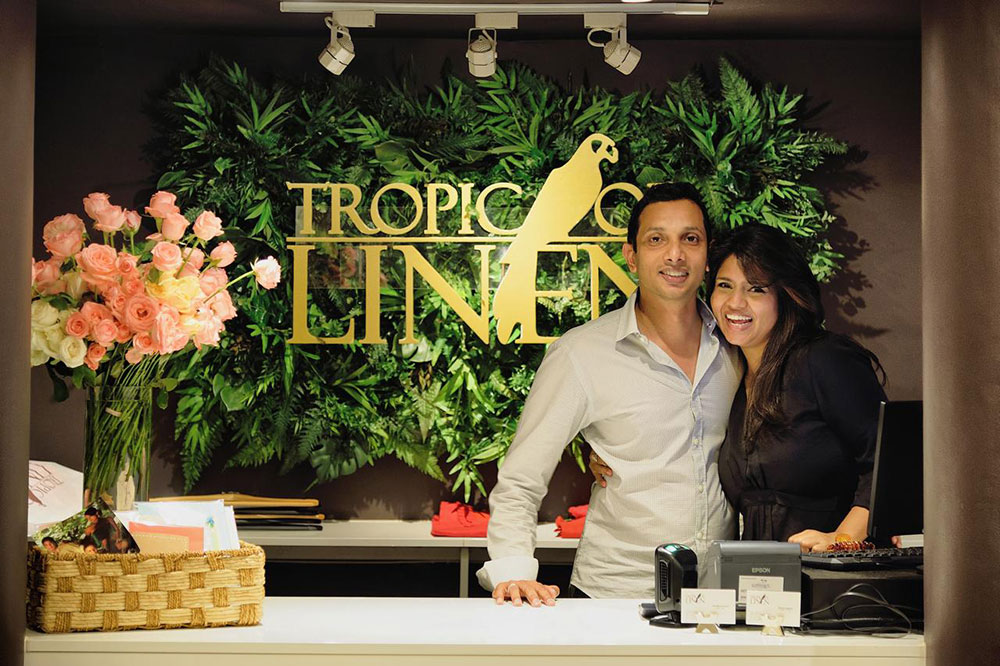
By Zanita Careem
Linen has evolved from a timeless natural fabric into a modern lifestyle statement, and Minha Akram founder of ‘Tropic of Linen,’ has made linen her signature brand.
With her first store at Ward Place and its newest outlet at the Shoppers at Cinnamon Life, the brand continues to bring effortless, tropical elegance to contemporary fashion. In this interview, Minha speaks about her designs and the journey of taking ‘Tropic of Linen’ into a new chapter.
(Q) Why has linen become such an important fabric in today’s fashion and lifestyle market?
(A) I think linen has always had the qualities that people are looking for today. It is natural, breathable, durable and has a very particular beauty to it. What has changed is that people are now paying much more attention to those qualities.
There is also a growing interest in buying fewer things but choosing them more carefully. People want clothes that are comfortable enough to live in, but still have a sense of style and individuality. Linen fits very naturally into that way of dressing.
For us, the appeal of linen has always been quite instinctive. We didn’t choose it because it was fashionable at the time. We chose it because we loved the fabric and felt it was particularly relevant to how people live in Sri Lanka.
(Q) What inspired you to establish a linen-focused brand and bring it to Cinnamon?
(A) I had always been interested in fashion and design, and I studied Fine Art and Design at the University of Cape Town. That gave me a strong creative foundation, but my career subsequently took me into other areas before I eventually came to fashion as a business.
When Shukran and I started discussing the possibility of working together, we realised that our different experiences could complement each other very well. He had a strong understanding of apparel and linen, while I was coming from a creative perspective. Linen became a natural meeting point between the two.
We also felt there was an opportunity to create something that was specifically relevant to Sri Lanka rather than simply bringing international fashion concepts into the local market.

Where effortless elegance meets style
The move to Cinnamon is an exciting new chapter for us. We wanted to take the essence of ‘Tropic of Linen’ into a setting where both local customers and visitors could discover the brand and experience what we have been building over the years.
(Q) Why is linen particularly suited to Sri Lanka’s tropical climate?
(A) Our climate makes comfort an important consideration when you get dressed, and linen is naturally very good at dealing with heat. It is light, breathable and doesn’t cling to the body in the way that some other fabrics can.
But I think its suitability goes beyond the practical side. Linen has a relaxed quality that works beautifully with the Sri Lankan way of life. You can wear it during the day, to lunch, while travelling or in the evening, and it can be styled in very different ways.
That versatility is important to us. We aren’t designing clothing simply because it is appropriate for hot weather; we are designing clothes that people can genuinely incorporate into their lives.
(Q) How has the perception of linen changed from being seen as a simple summer fabric to becoming a fashionable, premium material?
(A) I think people have become much more sophisticated in the way they look at fabrics. Linen is no longer being judged purely on whether it is practical for warm weather. People appreciate its texture, its natural movement and the way it changes with wear.
There is also a growing understanding that the little imperfections of linen are part of what makes it beautiful. It doesn’t need to look completely rigid or perfectly pressed to look elegant.
And from a design perspective, linen can be incredibly versatile. The quality of the cut, construction and finishing can completely change the way the fabric looks and feels. That has helped move it beyond the idea of being simply a casual holiday fabric.
(Q) Today it has become a symbol of effortless style, comfort and conscious living. What do you think has driven this remarkable change in the way people view linen?
(A) I think our relationship with clothing has changed. There is much more awareness now of what we are buying, how often we are buying it and whether something is actually going to remain part of our lives.
Linen has a very natural relationship with that shift because it doesn’t need to be constantly reinvented. A good linen garment can be worn for years and can look different as it becomes part of your wardrobe.
There is also something very appealing about the fact that linen doesn’t try too hard. It has an ease to it. I think that resonates with people who want to look considered without looking overly dressed.
(Q) What inspired you to become an entrepreneur and enter the industry?
(A) For me, it was less about deciding one day that I wanted to become an entrepreneur and more about recognising an opportunity and having the courage to pursue it.
I have always enjoyed the process of taking an idea and developing it into something tangible. Building a business gives you the opportunity to do that in a very complete way. You are constantly moving between the creative side, the people side and the practical side of running a company.
With ‘Tropic of Linen,’ there was a clear sense that we were creating something that we believed was missing. That gave me the motivation to take the risk and see where it could go.
(Q) Tell us about your journey from your early beginnings to establishing your own brand?
(A) It has been a gradual process rather than a carefully mapped-out career path. Before ‘Tropic of Linen,’ I worked in events, marketing and advertising, so I came into the business with experience in areas that were quite different from running a clothing brand.
When Shukran and I began working together, we started experimenting and learning what worked. We were able to draw on his knowledge of the manufacturing side and my experience in the creative and commercial side.
The business grew from there. We started relatively small and allowed the customer response to guide us. Over time, we learned more about what people wanted, refined our designs and developed a clearer understanding of what ‘Tropic of Linen’ should be.
I think that gradual evolution has actually been one of the strengths of the brand. It has given us time to develop an identity rather than having to create one overnight.
(Q) How did you develop your vision for the brand?
(A) A lot of it came from observing the people around us and thinking about what was practical and desirable for them.
We wanted to create clothing that made sense in Sri Lanka; not just because of the weather, but because of the way people here dress, socialise, travel and live. That meant thinking carefully about proportions, silhouettes and the different ways people want to wear their clothes.
I also didn’t want the brand to be dependent on a particular fashion moment. The idea was always to create pieces that could remain relevant beyond a single season.
Over time, those ideas have developed into what I think of as the ‘Tropic of Linen’ aesthetic: relaxed but considered, comfortable but polished, and very much connected to where we are.
(Q) How do you keep yourself informed about changing trends while maintaining your own identity?
(A) I think you need to be curious about what is happening around you. I follow fashion internationally, but I don’t necessarily look at trends with the intention of reproducing them.
Instead, I look at how people’s attitudes to clothing are changing; what they are wearing, how they are styling things, what colours and shapes are emerging and, perhaps most importantly, what people are responding to.
Then I filter all of that through our own perspective. Something may be very fashionable internationally, but that doesn’t automatically mean it belongs in our collection.
The brand has its own language now, and I think it is important to keep that intact while allowing it to evolve.
(Q) Where do you see the brand in the next few years?
(A) I would like to see ‘Tropic of Linen’ continue to grow, both locally and beyond Sri Lanka, while retaining the qualities that have made people connect with it in the first place.
The next stage is about reaching more people and giving the brand greater visibility, but I don’t want that to mean becoming less personal or less distinctive. I think there is a real opportunity to show that a Sri Lankan brand can have a strong point of view and appeal to people well beyond our shores.
Ultimately, I would like Tropic of Linen to be recognised as a design brand in its own right, with linen at its heart but with an identity that goes beyond the fabric. I want the brand to continue evolving while always retaining that connection to Sri Lanka and to the way we live here.

Professor Upul Premarathne on offshore exploration
By Zanita Careem
Professor Upul Premarathne is a professor in Oceanography and Marine Geology at the University of Ruhuna, as well as a chartered geologist. He formerly served as a Petroleum Geologist in the Economic Research Department of the Central Bank of Sri Lanka. He holds a PhD in Petroleum Geology from Hokkaido University, Japan; an MSc in Petroleum Geosciences from the Norwegian University of Science and Technology (NTNU); and a BSc (Hons) in Geology from the University of Peradeniya. With over 20 years experience in petroleum and marine geosciences, his research focuses on petroleum systems, basin analysis, tectonics, and seismic interpretation, particularly in Sri Lanka.
Professor Upal Premarathne of the University of Ruhunu is an academic and researcher in the field of oceanography and maritime geology, with a strong interest in Sri Lanka’s marine resources, ocean research and related environmental issues. He provides insights into Sri Lanka’s offshore petroleum, exploration prospects and the challenges of developing this emerging sector responsibly.
(Q) Which areas of Sri Lanka are considered the most promising for offshore, petroleum exploration, and why?
(A) When it comes to the petroleum potential of Sri Lanka, the land areas have relatively poor potential. This is because we do not have sedimentary basins on land with more than three kilometres of sediment thickness, which is required for the formation of commercial petroleum deposits. Therefore, petroleum exploration in Sri Lanka has mainly focused on the offshore sedimentary basins, particularly the Cauvery and Mannar basins.
The Cauvery Basin is located off the northern and northwestern coast of Sri Lanka, while the Mannar Basin lies south of Mannar Island, off the western and southwestern coast of the country. Both basins are shared between India and Sri Lanka.
On the Indian side, around 30 oil and natural gas deposits have so far been discovered in the Cauvery Basin. Though six hydrocarbon exploration wells were drilled in the Sri Lankan side of the Cauvery Basin from 1970 to 1981, none of them encountered a commercially viable hydrocarbon deposit.
On the other hand, two of the three exploration wells, Dorado and Barracuda, drilled in the Mannar Basin in 2011, encountered natural gas, while Dorado-North was a dry well. These discoveries established the existence of an active petroleum system in the Mannar Basin. In addition, high-resolution seismic data indicate more than 6 kilometres of sediment thickness, along with the geological structures required for the formation of larger petroleum deposits. Therefore, the Mannar Basin is currently the area of greatest interest for hydrocarbon exploration in Sri Lanka.
(Q) How strong is the geological evidence that commercially viable oil or gas deposits could exist in Sri Lankan waters?
(A) We have direct evidence of hydrocarbons because of the Dorado and Barracuda natural gas discoveries. However, the occurrence of crude oil has not yet been established. Analysis of drill cuttings and other important scientific data from previous exploration wells in the Mannar Basin, combined with basin and petroleum system modelling studies, shows that there is also a possibility of crude oil occurring in the basin.
However, finding hydrocarbons is not the same as finding a commercially viable petroleum field. We still need to establish the size of any accumulation, the quality of hydrocarbons, the recoverable volume, the production rate, the reservoir characteristics, and, ultimately, whether development would be economically viable.
So, scientifically, there is a sound basis for further exploration. But I would not say that Sri Lanka has yet to establish commercially producible oil or natural gas reserves.
(Q) Sri Lanka is embarking on another offshore oil and gas exploration drive. What makes this exploration round different from the earlier exploration?
(A) It has been about 15 years since the last exploration drilling in the Mannar Basin. However, during this period, there have been significant changes to the legal, fiscal, environmental, and administrative frameworks governing the Exploration and Production (E&P) sector in Sri Lanka.
To address some of the shortcomings, identified during the previous exploration round, the Parliament enacted the Petroleum Resources Act No. 21 of 2021 repealing the Petroleum Resources Act No. 26 of 2003. This new legislation restructured the former E&P sector regulator, the Petroleum Resources Development Secretariat (PRDS), into the Petroleum Development Authority of Sri Lanka (PDASL), giving it greater powers to make decisions more efficiently and in a timely manner.
Previously, Sri Lanka entered into petroleum exploration without having direct scientific evidence confirming the occurrence of hydrocarbons in the Mannar Basin. This time, however, bids are being invited for a basin with proven hydrocarbon potential. This has significantly reduced the exploration risk. As a result, the Mannar Basin could be more attractive to international oil companies than it was during the 2007 licensing round.
There is also a difference in the way the exploration area has been divided. In the 2007 licensing round, only three out of the eight exploration blocks, covering approximately 42,200 square kilometres of the Mannar Basin, were offered for exploration. In the current licensing round, an area of 33,963.97 square kilometres in the Mannar Basin has been divided into only four exploration blocks. This means that exploration companies will have access to a larger area for petroleum exploration under a single exploration license.
There have also been significant changes to the fiscal and legal terms, the profit-sharing mechanism, the bidding criteria, the environmental regime, and the availability of exploration data.
(Q) What does offshore oil exploration mean for Sri Lanka?
(A) Sri Lanka has a large offshore area with significant geological complexity, but only a relatively small part of it has been systematically explored. Exploration can help us determine whether hydrocarbons are present, where they occur, how large the accumulations may be, and whether they have any commercial potential.
Oil exploration can bring a range of direct and indirect benefits to Sri Lanka, including the creation of new job opportunities. It can also generate opportunities for local businesses and service providers that support exploration activities.
If a commercial discovery is eventually made, the implications could be significant for the country. It could reduce our dependency on oil imports and strengthen the country’s energy security. A reduction in the annual oil import bill could also improve the country’s balance of payments and support greater economic growth.
However, I think we should first focus on establishing what resources actually exist, rather than assuming that petroleum wealth is already there.
(Q) Where exactly will the exploration take place?
(A) The current licensing round covers four exploration blocks, with a total offshore area of 33,963.97 square kilometres in the Mannar Basin.
The first two blocks, 2026-MB-01 and 2026-MB-02, are located in the northern part of the Mannar Basin, in water depths ranging from 100 to 2,500 metres. They cover areas of 5,948.95 and 5,689.05 square kilometres, respectively.
The other two blocks, 2026-MB-03 and 2026-MB-04, are located in areas with water depths ranging from 100 to 3,000 metres. They cover 10,597.67 and 11,728.30 square kilometres, respectively.
(Q) What is the biggest opportunity and the biggest challenge in this new exploration drive ?
(A) The biggest opportunity is that we now have a much better geological foundation on which to build. We have previous seismic data, well data, drill cuttings, and other geological and geophysical datasets, as well as direct evidence of hydrocarbons. Modern exploration technologies also allow us to reinterpret these existing data in much greater detail and with greater accuracy.
At the same time, the biggest challenge is the uncertainty combined with the high cost of exploration. Offshore petroleum exploration is riskier than exploration on land. Some of the prospects are located in deep and ultra-deep waters, with water depths ranging from around 1,000 to 2,500 metres and, in some areas, exceeding 2,500 metres. Exploration in such environments requires sophisticated technology and specialised drilling vessels, making it extremely expensive. Higher exploration costs mean that we need to discover larger petroleum deposits with greater recoverable volumes of oil for those discoveries to be commercially viable.
On the other hand, international oil companies have other attractive basins to choose from in different parts of the world, such as the Santos and Campos basins in Brazil, the North Sea offshore Norway, etc. In Norway, the government reimburses a large percentage of exploration costs if an exploration company could not discover oil or natural gas at the end of its exploration period. Therefore, oil companies are naturally more attracted to such locations for petroleum exploration.
(Q) From a petroleum geology point of view, how significant could a successful discovery be for Sri Lanka?
(A) From a petroleum geological perspective, a successful discovery would be very significant because it would provide much more information about the evolution of the Mannar Basin and its petroleum systems.
Such a discovery would help us understand how hydrocarbons were generated, migrated, and accumulated beneath the seabed. It could also provide important insights into the geological history and architecture of the Mannar Basin.
Of course, if the discovery proved to be commercially viable, its economic significance could extend far beyond geology.
(Q) Does Sri Lanka have the scientific expertise needed to properly monitor offshore exploration?
(A) One of the challenges is the shortage of scientific expertise needed to properly monitor offshore exploration activities. Some degree programmes at local universities already offer subjects relevant to the petroleum industry, including seismic technology, seismic data processing and interpretation, petropoliss, and petroleum economics.
However, we should recognise that a modern petroleum industry requires expertise across a much broader range of disciplines, including geochemistry, drilling, reservoir engineering, environmental management, economics, and petroleum law.
Therefore, I would say that we have a foundation, but we need to strengthen our capacity substantially. Access to modem software, computing facilities, real geological datasets, and research funding is particularly important.
We should use this new phase of exploration as an opportunity to build Sri Lankan expertise and capacity, rather than simply depending on foreign expertise.
(Q) As a petroleum geologist, how hopeful are you about Sri Lanka’s offshore oil and gas potential?
(A) I am cautiously hopeful. There are genuine geological reasons to continue exploring the Mannar Basin. We have a thick sedimentary succession, favourable basin architecture, prospective structures, and, most importantly, proven hydrocarbon occurrences.
However, I would not consider these a guarantee of commercially viable oil or gas. Petroleum exploration always involves uncertainty. The Dorado-North well illustrates this very clearly. It was drilled only about 2.5 kilometres north of the successful Dorado well, yet it turned out to be a dry hole.
So, my position is that Sri Lanka has a strong geological basis for further exploration. But ultimately, we should allow the exploration data to determine how much petroleum potential actually exists.
(Q) Finally, do you believe Sri Lanka has a significant opportunity beneath its sea that is yet to be fully explored?
(A) I believe Sri Lanka has an important geological opportunity that has not yet been fully evaluated. The Dorado and Barracuda wells have proven that hydrocarbons occur beneath our waters. What we do not know yet is whether those hydrocarbons occur in commercial quantities or not.
Our experience over several decades suggests that the main issue may not be the lack of petroleum potential. One of the bigger challenges has been that we have never explored our offshore basins continuously and systematically enough to determine their full potential.
So, I would describe this as a golden opportunity for Sri Lanka. We should explore seriously, make much better use of our existing data, strengthen our scientific capacity, and ensure that any eventual benefits are managed in the long-term national development.

Sri Lankan-origin actress Bhavithra Gananathan made her professional acting debut as Sita in the major arena production Diwali Story: The Journey of Ram – a musical at OVO Arena Wembley recently
The 19-year-old multidisciplinary artist and university student will appear opposite Kiran Kaanan, who plays Ram, in the large-scale musical retelling of the Ramayana. The professional cast will be joined by approximately 100 community actors and dancers. The production follows the success of the show’s sold-out 2025 staging at the Royal Albert Hall and will feature new material and original music.
Bhavithra is an actoress, writer and classically trained Bharatanatyam dancer. She began acting at the age of five, when she played Ursula in a production of The Little Mermaid. During the ensuing 14 years, she trained and performed with organisations, including the National Youth Theatre and the Rose Theatre. She currently trains at the Collective Acting Studio and won the National Iris Breuer Writing Award in 2024.
She began learning Bharatanatyam at the age of seven under her aunt, Smt Meena Elankumaran, and completed her Arangetram in March 2025. Bhavithra has also trained in Carnatic vocal music since she was 12.
Commenting on Sita’s connection with Sri Lanka, Bhavithra said: “As a young woman, it is especially meaningful to portray Sita. An important part of her journey unfolds in Sri Lanka, and the island’s landscape, history and traditions retain a powerful connection with the Ramayana. Playing Sita allows me to explore that connection while helping to bring this timeless story to a new generation.”
The musical begins in the home of a contemporary British family, where a teenager, named Luv, is introduced by his grandparents to the deeper meaning of the story of Ram and Sita. The production explores exile, sacrifice, duty and difficult choices while presenting the Ramayana in a way designed to engage audiences across different generations.
The Wembley production included original songs and music by Indian composer Rahul Ranade, with celebrated playback singer and Padma Shri recipient Kavita Krishnamurthy contributing to the new score. A newly created third act explored the five days of Diwali and the continuing influence of the Ramayana’s values on contemporary family traditions.
Directed and co-written by Sâmir Bhamra, the production was presented by Sanatan Events Ltd in partnership with The Palan Foundation and Golden Tours.

Sri Lanka ITEC Alumni Association formally launched

Measures underway to protect Diyagama Forest as a Reserve — Deputy Minister of Environment

Showers or thundershowers will occur in most parts of the island after 1.00 p.m.

NPP govt. reminded of its responsibilities as US warship leaves Colombo

CERT: Beware of foreign Uni. scams on social media

Shiranthi receives treatment at National Eye Hospital

‘Dates have the highest sugar content to fight Coronavirus’

Sunday Island 27 December – Headlines

#SundayIsland 17th December – Headlines

Sunday Island – 28th March

Sunday Island Headlines – 21 March

Sunday Island – 21st February – Headlines
-

 Features6 days ago
The first woman in the foreign service or Ceylon Overseas Service it was then called
-

 News5 days ago
Geneva takes up Sallay’s case and govt. ignores opportunity to answer accusations
-

 Foreign News7 days ago
Ten injured after car crashes into rugby supporters in Australia
-

 News6 days ago
Nearly 20 Iranian tankers stranded off Lanka amid US sanctions
-

 Features4 days ago
Preventing grievances from becoming communal
-

 Sports2 days ago
Nissanka absence opens door for Sri Lanka’s young guns
-

 Features5 days ago
Sri Lanka Cricket Bill: Governance reform is not yet a cricket strategy
-

 News3 days ago
Gnansara Thera to be assigned to prison printing section: Officials