
Opinion
The science of love


A remarkable increase in marriage proposals in newspapers and the thriving matchmaking outfits in major cities indicate the difficulty in finding the perfect partners. Academics have done much research in interpersonal attraction or love. There was an era when young people were heavily influenced by romantic fiction. They learned how opposites attract and absence makes the heart grow fonder. There was, of course, an old adage: Out of sight out of mind.
Some people find it difficult to fall in love or they simply do not believe in love. They usually go for arranged marriages. Some of them think that love begins after marriage. There is an on-going debate whether love marriages are better than arranged marriages or vice versa. However, modern psychologists have shed some light on the science of love. By understanding it you might be able to find the ideal life partner.
To start with, do not believe that opposites attract. It is purely a myth. If you wish to fall in love, look for someone like you. You may not find them 100 per cent similar to you, but chances are that you will meet someone who is somewhat similar to you. We usually prefer partners who have similar backgrounds, interests, values and beliefs because they validate our own.
Common trait
It is a common trait that we gravitate towards those who are like us physically. The resemblance of spouses has been studied by scientists more than 100 years ago. According to them, physical resemblance is a key factor in falling in love. For instance, if you are a tall person, you are unlikely to fall in love with a short person. Similarly, overweight young people are attracted to similar types. As in everything in life, there may be exceptions. You may have seen some tall men in love with short women.
If you are interested in someone, declare your love in words or gestures. Some people have strong feelings about others but they never make them known. If you fancy someone, make it known. If you remain silent you will miss a great opportunity forever. In fact if someone loves you, you will feel good about yourself. Such feelings will strengthen love. If someone flatters you, be nice to them. It may be the beginning of a great love affair.
Some people like Romeo and Juliet fall in love at first sight. It has been scientifically confirmed that the longer a pair of prospective partners lock eyes upon their first meeting they are very likely to remain lovers. They say eyes have it. If you cannot stay without seeing your partner, you are in love! Whenever you meet your lover, look at their eyes with dilated pupils. Enlarged pupils signal intense arousal.
Body language
If you wish to fall in love, learn something about body language. There are many books written on the subject. The knowledge of body language will help you to understand non-verbal communication easily. It is quite obvious that lovers do not express their love in so many words. Women usually will not say ‘I love you’ except in films. They express their love tacitly with a shy smile or preening their hair in the presence of their lovers.
Allan Pease, author of The Definitive Guide to Body Language says, “What really turn men on are female submission gestures which include exposing vulnerable areas such as the wrists or neck.” Leg twine was something Princess Diana was good at. It involves crossing the legs hooking the upper leg’s foot behind the lower leg’s ankle. She was an expert in the art of love. Men have their own ways. In order to look more dominant than their partners they engage in crotch display with their thumbs hooked in pockets. Michael Jackson always did it.
If you are looking for a partner, be a good-looking guy. Dress well and behave sensibly. If your dress is unclean or crumpled, nobody will take any notice of you. According to sociologists, men usually prefer women with long hair and proper hip measurements. Similarly, women prefer taller and older men because they look nice and can be trusted to raise a family.
Proximity rule
You do not have to travel long distances to find your ideal partner. He or she may be living in your neighbourhood or working at the same office. The proximity rule ensures repeated exposure. Lovers should meet regularly in order to enrich their love. On most occasions we marry a girl or boy living next door. Never compare your partner with your favourite film star. Beauty lies in the eyes of the beholder. Therefore be content with your partner’s physical appearance. Each individual is unique. Never look for another Cleopatra or Romeo. Sometimes you may find that your neighbour’s wife is more beautiful than yours. On such occasions turn to the Bible which says, “Thou shalt not covet thy neighbour’s wife.”
There are many plain Janes and penniless men in society. How are they going to find their partners? If they are warm people, sociable, wise and popular, they too can find partners easily. Partners in a marriage need not be highly educated, but they must be intelligent enough to face life’s problems. Osho compared love to a river always flowing. The very movement is the life of the river. Once it stops it becomes stagnant. Then it is no longer a river. The very word river shows a process, the very sound of it gives you the feeling of movement.
Although we view love as a science today, it has been treated as an art in the past. In fact Erich Fromm wrote The Art of Loving. Science or art, love is a terrific feeling.
karunaratners@gmail.com
By R.S. Karunaratne

First, let us see why the war started by Israel and the US against Iran may be seen as a stupid undertaking. Israel was aiming for regional hegemony and US world dominance, which could be called an utterly foolish dream in today’s multipolar world order, which the theatre of war now reveals. They may have underestimated Iran’s capacity and also the economic fallout due to its ability to control the Strait of Hormuz.
In February 2026, reports emerged that General Dan Caine, the U.S. Chairman of the Joint Chiefs of Staff, privately warned President Trump about the significant risks of a major war with Iran, including potential U.S. casualties, depleted ammunition stockpiles and entanglement in a prolonged conflict. However, President Trump publicly dismissed these reports as incorrect. General Caine’s appointment by President Trump was considered controversial, as Caine was chosen over many active-duty four-star generals and lacks experience as a combatant commander or service chief. Under these circumstances Caine would have been expected to be subservient to Trump, yet he opted to disagree as he saw the danger. Trump countered his arguments saying it would be a quick job, take out the leadership, destroy the military structure and the people will take over the country. This did not happen and now most of the scenarios that Caine said was possible are gradually coming true.
Israel suffers damage
For Israel, too, damage is much more than expected and could prove to be decisive in its expansionist ambitions in the region if not its very existence. It had previously tried to drag former US presidents, Bush, Obama and Biden into a war with Iran, but they were aware of the underlying danger. The Gulf countries too were hit hard and the US could not protect them, and they may be regretting that they ever let the US set up military bases on their soil. Former US secretary of state Henry Kissinger once famously said, “To be America’s enemy is dangerous, to be its friend is fatal”.
The US may have succeeded in making states, such as Iraq, Syria and Libya, fail, but Iran is a different kettle of fish. Trump was jubilant after capturing the Venezuelan president and may have been planning to lay his hands on Cuba and Turkey and then try to annex Canada and Greenland. A man who promised a “no war” policy in his presidential campaign has converted his department of defence into a department of war in the real sense of the term. Trump must realise that he cannot act like a global policeman and undermine the sovereignty of other nations with impunity. Trump says “we have won” but has nothing to show as gains in the Iran war.
Trump’s concern about BRICS
Another factor in the equation is that Trump may have been concerned about the growing influence and membership of BRICS, which in effect appears to be anti-American if one were to go by its attempt to de-dollarise world trade. Of particular concern may have been the recent admission into BRICS, of several countries supposed to be staunch US allies, such as Saudi Arabia, UAE, and Egypt. Iran is an active member and was mending its fences with Saudi Arabia under the mediation of China. Further, two of the arch rivals of the US, China and Russia, are leading members of BRICS, which has become the meeting ground for the friends as well as foes of the US, under the stewardship of China. The US saw all this as a huge challenge to its dominant position in the world and Trump, who was trying to “make America great again”, saw that his dream may go up in smoke. He threatened countries which tried to adopt an alternative to the dollar with sanctions. He may have thought if Iran could be destabilised and structurally broken up, he would be able to kill two birds with one stone. He may have se an enemy of both the US and also its ally Israel and disrupt the BRICS organisation.
The war is affecting the economy of the BRICS countries quite badly. The fuel shortage due to closure of Strait of Hormuz has hit India hard and also China. The economies of the Gulf countries, whose oil is transported via the Persian Gulf and the Gulf of Oman, have also suffered immensely. South Africa, a founding member of BRICS imports oil mainly from the Middle East. Brazil, another founder member, though an exporter of oil, imports refined fuels from the Middle East. A large portion of food requirements also of the Gulf countries come through these sea routes. Thus, the BRICS organisation must be concerned about the consequences of the war if it drags on. It obviously augers ill for the BRICS, and it must act quickly to bring about a ceasefire and an amicable settlement as soon as possible.
Jeffrey Sachs’ opinion
Prof. Jeffrey Sachs, the eminent American economist, has argued that BRICS nations have a critical responsibility to play a leading role in stopping the war in the Middle East, particularly regarding the escalating conflict between the US/Israel and Iran. He contends that because the US is pursuing “global hegemony” and attempting to control the region, BRICS serves as the only effective “standing bulwark” against American domination.
Sachs has stated that if BRICS countries, particularly India, China, and Russia, stand together and demand an end to the war, “it will actually end”. He has described this collective action as the only way to make the world safe. Arguing that the Middle East conflict is a planned campaign by the US and Israel for regional dominance rather than a defensive action, he has called on BRICS to stop the US from running the world. He warned that a continued conflict, especially one that disrupts energy supplies, will cause enormous economic costs for Asia, Europe, and the US.
Sachs has argued that India should not have joined Quad, as he views Washington as using a “divide and conquer” strategy. He has characterised the BRICS countries as a fast-growing, multipolar bulwark that rejects the notion of a single “emperor” (referring to US influence). Sachs has warned that if the conflict is not stopped, it could lead to World War III and catastrophic regional consequences (India Today).
China and Russia, though rivals of the US, have the economic and military clout to exert pressure on the US. India is a friend of both the US and Israel and could act as a mediator to bring about an end to this meaningless war. Gulf countries, some of whom are BRICS members, could make a strong appeal to their friend and benefactor, the US, to see what its senseless aggression is doing to their countries.
Unity of BRICS essential
As of 2026, the expanded BRICS group (including Brazil, Russia, India, China, South Africa, Egypt, Ethiopia, Iran, Saudi Arabia, UAE, and Indonesia) represents approximately 49% of the world’s population. Moreover, its collective GDP is 35 – 40% of the global GDP when measured in PPP terms, which may be considered as higher compared to G7 countries which record 30%. Thus, BRICS is a force to be reckoned with provided its members stand together. However, they have not been able to do so though it is obvious that it would be beneficial to all of them. Bilateral conflicts within the BRICS, apparently intractable, are preventing any concerted action by these countries. In this regard, as Prof. Sachs says the onus is on China, Russia and India to come together to stop the war, which if allowed to drag on, will irreparably damage the economy and unity of BRICS and worse it would never be possible to attain any of its objectives. It is time the founder members Brazil, Russia, India, China and South Africa got together and review its goals, the need for such an organisation as BRICS, and the present danger it faces and take remedial steps as soon as possible if it is to remain a viable force with the potential to counter the hegemonic imperialist forces.
Further, the BRICS, as it consists of stakeholders of a new world order and also countries directly involved in the Middle East turmoil, may have an important role to play in working out an arrangement that could bring permanent and stable peace to the region. Once the dust settles on the military front, and the futility of war becomes apparent it may be time for the BRICS countries to raise a voice to demand a settlement based on the two-state solution that was adopted by the UN. Though Trump brushed this UN resolution aside and started taking over Gaza, once the war is over and he contemplates the economic cost of it to the US public – it costs US 1 – 2 billion dollars a day – he may realize the need for a solution acceptable to all. There have been several US presidents who were strong proponents of the two-state solution—an independent Palestinian state alongside Israel—as a core policy goal. Key proponents included George W. Bush (who first formally backed it in 2002), Bill Clinton, Barack Obama, and Joe Biden; they have viewed it as the most viable path to peace. Israel too after sustaining enormous damage may be forced to agree to a solution, if the US pressures it. Both Trump and Netanyahu, perhaps for personal reasons, wanted a war but they did not expect it to take the turn it has taken. Netanyahu’s days in power may be numbered and Trump may be forced by Republicans to change course as the majority of the US public does not approve of the war.
Therefore, time may be opportune for BRICS to stand together and call for a permanent solution to the Palestinian problem which is at the core of the Middle East conflict. Peace in the Middle East is vital for the further development of BRICS.
by N. A. de S. Amaratunga
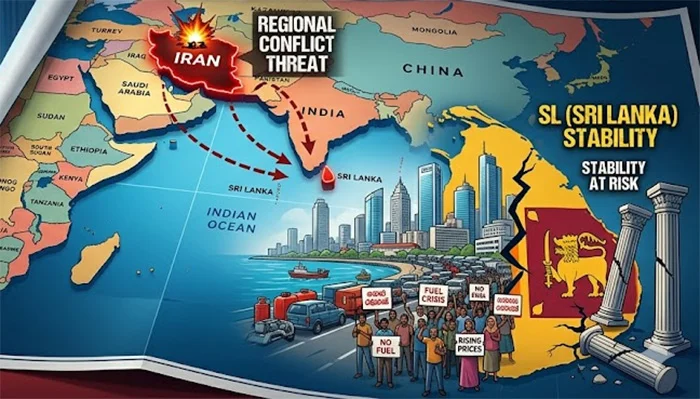
The Asia Progress Forum warns that the recent military attack by the United States and Israel on Iran has triggered a global emergency with severe implications for Sri Lanka’s economy, food security, and social stability.
There appears to have been no serious discussion of the unfolding crisis within government forums. The performance of the administration over the past year demonstrates not a coherent plan to address the structural roots of the crisis, but rather a pattern of adhoc measures designed only to manage its daytoday manifestations. This lack of foresight has left the country dangerously exposed.
The IMF’s Extended Fund Facility (EFF) has not provided a pathway out of our difficulties. Instead, it has exacerbated the suffering of working people through austerity measures, higher taxation, and cuts to essential services. The evidence is clear: this framework does not work for Sri Lanka. It has failed to stabilize the economy, failed to protect livelihoods, and failed to chart a sustainable future.
A Global Shock with Direct Local Consequences
The escalation of conflict in the Gulf imposed by US / Israel coalition on Iran threatens the Strait of Hormuz, through which 20% of global oil, onethird of LNG supplies, and one third of the world’s seaborne fertilizer trades pass. The Asia Progress Forum warns that Sri Lanka will face:
* Severe fuel shortages and sharp price spikes
* Disruptions to shipping routes and global supply chains
* Inflation exceeding postUkraine war levels
* Fertiliser shortages threatening the Yala season yields
* Production slowdowns in tea, garments, and agriculture
* Transport paralysis affecting buses, lorries, tractors, and harvesters
* Potential food queues and shortages reminiscent of the 1970s oil shock
* Risk of starvation among vulnerable households
This is not a distant geopolitical event. It is a direct threat to Sri Lanka’s economic stability, food security, and social cohesion.
National Emergency Plan: Key Measures
The Asia Progress Forum’s plan outlines urgent national, sectoral, and community-level actions.
1. Energy Security
* Accelerate solar, wind, biomass, minihydro, and villagelevel algae biofuel production
* Expand fuel storage in Trincomalee, Sapugaskanda, and regional storage complexes
* Negotiate emergency petroleum supplies with India, Russia, Iran, and ASEAN
* Build strategic reserves of fuel, fertiliser, and essential commodities
2. Streamlined Transport Services
To keep factories and offices functioning:
* Mandated carpooling and corporate ridesharing
* Integrated SLTB–Railway feeder bus network with private buses operationally under SLTB.
* App/SMS system for bus and van schedules
* Expanded van services in suburban and rural areas
* Guaranteed fuel quotas for threewheelers providing essential transport
3. Food & Agriculture Security
* Immediate establishment of a national rice buffer stock
* Emergency fertiliser procurement (organic and inorganic)
* Diversification into vegetables, pulses, and short-duration crops
* Strengthening village-level grain banks and community storage
* Expansion of domestic milk powder production using cow, buffalo, and goat milk
4. Protection of Migrant Workers
* Activation of protocols for evacuation from dangerous situations and repatriation
* Coordination with Gulf governments and international agencies
* Reintegration support including housing, employment, and microfinance
5. International Coordination
* Engagement with UN agencies and Red Cross
* Diplomatic efforts to keep shipping lanes open
* New Development Bank (BRICS BANK)/ Asian Infrastructure Investment Bank/ China/ India/ Russia support to buffer economic shocks
* Regional cooperation through SAARC and BIMSTEC
A Call for Economic Sovereignty
The Forum emphasises that the crisis exposes the fragility of Sri Lanka’s dependence on global markets and IMF-driven austerity. It calls for a decisive shift toward economic sovereignty, including:
* Self-sufficiency in food and energy
* Domestic production of fertiliser and fuel alternatives
* Trade and finance aligned with national priorities
* Protection of working people from austerity burdens
Economic sovereignty is not isolationism. It is resilience. The government should renegotiate with the IMF regarding repayment of loans as, given the rise in import costs and potential decline in remittance and tourism, Sri Lanka is very unlikely to meet debt servicing expectations.
Community-Level Preparedness
The plan urges households and communities to:
* Begin home gardening and food preservation
* Reduce waste and share resources
* Support local farmers and cooperatives
* Establish village grain banks
* Promote school gardens and renewable energy for farming
The Asia Progress Forum warns that Sri Lanka must act immediately to avoid a humanitarian and economic catastrophe. The Forum calls on the government, private sector, civil society, and citizens to work together as the country prepares for a period of global instability. Swift coordinated action can protect lives, livelihoods, and national stability. Sri Lanka must move onto a war footing, a state of maximum readiness, mobilisation, and intense preparation, to face this crisis. Moreover, we must recognise that the centre of gravity of the global economy has shifted to Asia, changing balance of forces of the international order. Sri Lanka must therefore reorient its geoeconomic strategy to align with the Global South.
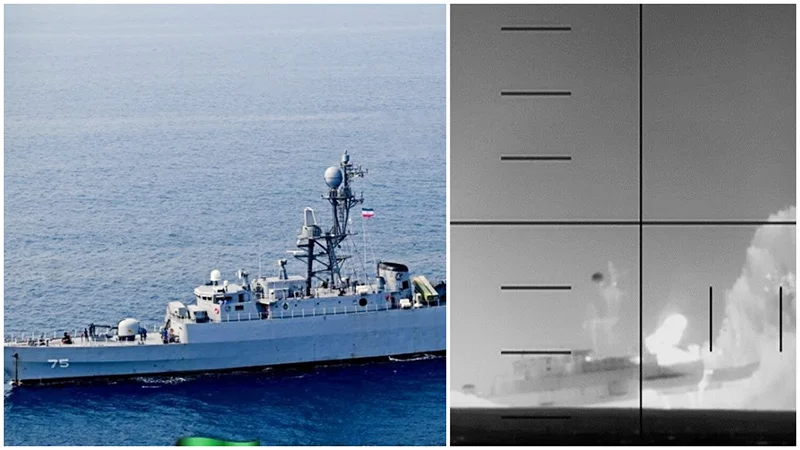
 The terms ‘nonalignment’ and ‘neutrality’ are being touted in local and global news due to Sri Lanka’s denial to Iran to dock three of its naval vessels in national harbors for an unplanned ‘goodwill visit’ between 9 and 13 March, and refusal to the United States to land two of its fighters at the civilian airport in Mattala between 4 and 8 March. Intriguingly, both requests were received on the same day, 26 February 2026, just 48 hours prior to the onset of hostilities.
Though Sri Lanka denied permission for the so-called ‘goodwill visit’ its Navy and Airforce rescued over 30 Iranian crew members and recovered over 80 bodies when their ship, the IRIS Dena was sunk by the US Navy and allowed another Iranian ship, the IRIS Bushehr to dock in Trincomalee as it claimed technical difficulties. This was done only after taking the ship under Sri Lankan control, by separating its sailors from the ship and bringing it to Colombo, thereby ensuring it no longer had any offensive military intent.
The Sri Lankan President in a press conference in Colombo on 5 March noted on the Iranian issue, “our position has been to safeguard our neutrality while demonstrating our humanitarian values.” As he further noted, “amidst all this, as a government, we have intervened in a manner that safeguards the reputation and dignity of our country, protects human lives and demonstrates our commitment to international conventions.” Explaining what he meant by neutrality, he noted, “we do not act in a biased manner towards any state, nor do we submit to any state … we firmly believe that this is the most courageous and humanitarian course of action that a state can take.” On the US issue, the President observed in Parliament on 20 March, “they wanted to bring two warplanes armed with eight anti-ship missiles from a base in Djibouti” and “we turned down the request to maintain Sri Lanka’s neutrality.”
In both incidents, in addition to reiterating Sri Lanka’s neutrality, the other point that has been emphasis+ed is Sri Lanka’s long-standing official position of ‘non-alignment.’ As the President noted in his parliamentary speech, “with two requests before us, the decision was clear… we denied both in order to avoid taking sides.” Suddenly, the concepts of neutrality and non-alignment are in the forefront of Sri Lanka’s political discourse after a considerable time, but it has emerged more in a rhetorical sense than at a considered policy position at the level of government thinking and popular acceptance.
I say this because two crucial concepts are missing in these conversations and pronouncements. These are ‘morality’ and ‘national interest’ even though they are irrevocably linked to the previous concepts which would be meaningless if adequate heed is not paid to the latter two. Let me be clear. I agree with Sri Lanka’s position with regard to both incidents and the diplomatic and statesman-like way both were handled. It brought to the fore something on which I have written about in the past. That is, the necessity and the reasonable possibility of smaller states to take clear positions when dealing with powerful countries. Sri Lanka has done so this time.
However, both neutrality and nonalignment cannot be taken out of context merely as terms. They must be situated in a broader historical and political context which can only be done if morality and national interest are not only brought into the equation, but also into policy and the public consciousness. Non-alignment as an international relations concept found its genesis at the time of the Cold War on the basis of which nations, which mostly consisted of former European colonies or what were known collectively at the time as the ‘Third World’, decided not to join major power blocs of the time, i.e. the US and the Soviet Union as well as former imperial centers.
At least, this was the official position and, in this sense, indicated a desire to follow an independent path stressing national sovereignty and national interest, rather than neutrality in the conventional sense. But in practice, even in the heyday of the Nonaligned Movement’s influence in the 1970s, many of its members were very clearly aligned to one or the other of the superpowers based on matters of political necessity and simple survival. The formal dictionary meaning of neutrality is, “not taking sides in a dispute, conflict, or contest, often implying a position of impartiality, independence, or non-participation.” These are the two rhetorical positions Sri Lanka took with regard to both incidents referred to above.
But both decisions should have been more specifically taken, and the local and global discourses emanating from them cautiously guided, based on principles of morality and national interest. These do not contradict nonalignment and neutrality in their general sense. Sri Lanka’s decision to not approve docking or landing rights to both warring countries in this context is correct. But where is morality? It is partly embedded in the President’s stated interest in ensuring no further lives were lost.
What is missing in this moral position however is the clearly articulated fact that the war against Iran by the US and Israel are illegal, immoral and contradicts all applicable international laws and conventions. Sri Lanka’s statements and what is publicly available on the President’s and the Foreign Minister’s reported conversations with Gulf leaders are inconsequential and bland. Despite Iran’s bleak track record when it comes to democracy and human rights within, the country has stood by Sri Lanka during the civil war years supplying weapons when very few states did, and also when Sri Lanka was named and shamed in the circus of the UN’s Human Rights Council for almost two decades. Taking a position regarding the illegality of the war against Iran does not mean Sri Lanka cannot be neutral or non-aligned. It could have still taken the same decision it has already taken. But it would have been able to do so from a moral high ground.
The other reason often given for harping on neutrality and non-alignment is the fear of being reprimanded by the mad men and women currently holding power in the US. But the Republican Party or President Trump are not the Caesars of the Roman Empire. Trump’s term ends in January 2029. The Republican Party is already feeling the negative consequences of the war at home. Given the chaos Trump has brought in, which has added to the cost of living of US citizens, the needless expenditure the war has burdened the US taxpayers with, and the US’s continued marginalisation in the international order, it is very unlikely any of the present practices (note: not policies) will be carried forward in the same nonsensical sense. This is precisely the time to take the moral high ground. If we do, and continue to do so, it will become apparent that we as a nation act upon principles and laws. Such continuity will earn the country respect in the global arena even though not necessarily make us popular. This is a crucial asset small nations must have when dealing with global powers. But this must be earned through consistent practice and not be the result of accidents.
This is also where national interest comes in as a matter of policy. Sri Lanka needs to reiterate not only for the present but also for the future that its decisions are based on national interest. This could include permitting the US or any other country to land or dock in a future conflict if it benefits us in terms of local defense. But such a decision should not be a decision forced upon us. This is not old-school nonalignment or neutrality. Instead, it is about taking a position – not a particular side – in the interest of safeguarding the national interest as a matter of principle and taking the moral high ground in international relations which will ensure both nonalignment and neutrality in a pragmatic and beneficial sense in the long term.
Our leaders and our people need to learn how to be pro-Sri Lankan both in domestic and global matters as a national operational principle.

UN votes to recognise enslavement of Africans as ‘gravest crime against humanity’

Meta and YouTube found liable in landmark social media addiction trial

Showers expected in the Western and Sabaragamuwa provinces and in Galle and Matara districts after 2.00 pm.

Heat Index at ‘Caution level’ in the Western, Sabaragamuwa, Southern and North-western provinces and in Anuradhapura, Mannar, Vavuniya and Monaragala districts

US dodges question on AKD’s claim SL denied permission for military aircraft to land

No decrease in remittances from workers due to Gulf conflict, but significant drop in tourist arrivals – CB Governor

‘Dates have the highest sugar content to fight Coronavirus’

Sunday Island 27 December – Headlines

#SundayIsland 17th December – Headlines

Sunday Island – 28th March

Sunday Island Headlines – 21 March

Sunday Island – 21st February – Headlines
-

 Features3 days ago
Trincomalee oil tank farm: An engineering marvel
-

 News6 days ago
CIABOC tells court Kapila gave Rs 60 mn to MR and Rs. 20 mn to Priyankara
-
 Features6 days ago
Science and diplomacy in a changing world
-

 Features3 days ago
The scientist who was finally heard
-

 News1 day ago
Senior citizens above 70 years to receive March allowances on Thursday (26)
-
 News1 day ago
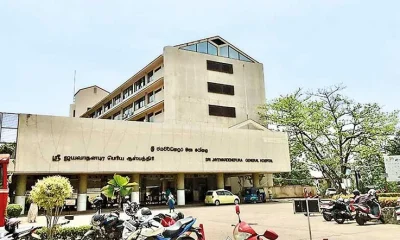
Japanese boost to Sri J’pura Hospital, an outright gift from Tokyo during JRJ rule
-

 News5 days ago
Colombo, Oslo steps up efforts to strengthen bilateral cooperation in key environmental priority areas
-

 News1 day ago
CEB Engineers warn public to be prepared for power cuts after New Year