
Business
The Rise of Aviyana: Sri Lanka’s luxury hospitality revolution

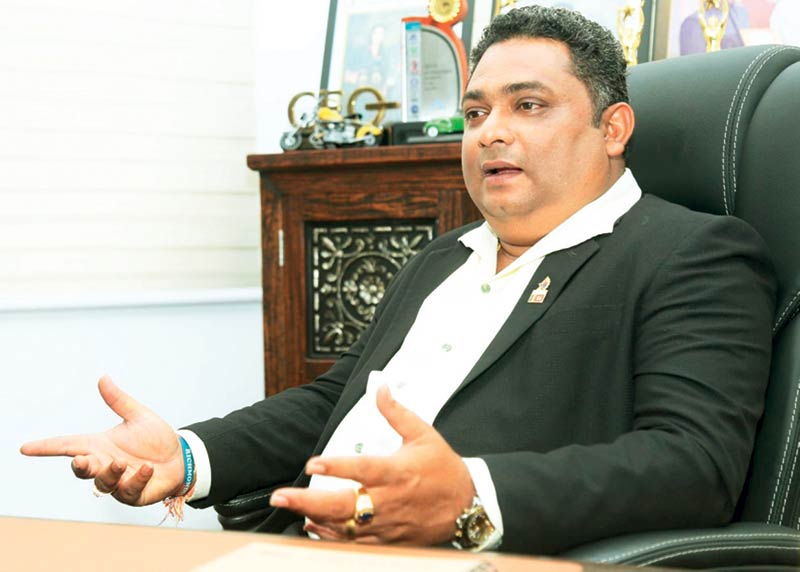
By Saman Indrajith
As Sri Lanka ushers in 2025, the nation prepares to unveil a game-changing addition to its hospitality landscape—Aviyana Ceylon, the country’s first seven-star luxury hotel. Situated amid the serene hills of Udispattuwa, Kandy, this extraordinary property promises to set a new global benchmark for opulence and innovation. Spanning 24 acres with a masterfully designed balance of wellness and bespoke experiences, Aviyana offers an unparalleled blend of tranquility and adventure, crowned by breathtaking views of the Knuckles Mountain Range.
“Aviyana Ceylon is not just a hotel; it is a gateway to Sri Lanka’s future as a global leader in luxury hospitality. This year, we welcome the world to discover the extraordinary – a legacy that celebrates both innovation and our nation’s rich cultural heritage,” said Dr. Thisara Hewawasam, Chairman of Aviyana during an interview with the Sunday Island.
Excerpts of the interview:
Q: What inspired you to create Sri Lanka’s first seven-star luxury hotel, Aviyana Ceylon, and how do you see it reshaping the country’s hospitality landscape?
A: Tourism in Sri Lanka dates to the arrival of Prince Vijaya, followed by centuries of foreign visits driven by trade. However, in modern times, there’s been a shift towards offering more than just basic accommodation for tourists. While Sri Lanka attracts around two million visitors annually, spending an average of USD 2,000 each, countries like the Maldives see tourists spending up to USD 5,000. To bridge this gap, I believe Sri Lanka needs a new kind of luxury experience.
We currently lack facilities that cater to high-net-worth individuals. The star hotels in Sri Lanka, typically charge between Rs 15,000 and Rs 75,000 per night, while few top-tier hotels charge over Rs 200,000. To attract ultra-wealthy tourists, we need a seven-star hotel that offers unparalleled luxury, combining all the best facilities under one roof.
Aviyana Ceylon is designed with this vision in mind: to raise the average income from foreign guests and contribute to the local economy. Many feared this ambitious project would fail, especially since most leading hotels here are international chains. However, our focus is on promoting Sri Lankan culture, wellness, traditional medicine, and Ayurveda, which will strengthen our identity in the hospitality industry. This marks a pivotal moment for Sri Lanka’s tourism.
Q: Aviyana Ceylon, nestled in the hills of Kandy, emphasizes wellness and bespoke experiences. How does the hotel blend Sri Lanka’s cultural heritage with modern luxury?
A: There are two key factors when creating a memorable resort experience: the facilities provided and the location’s offerings. At Aviyana Ceylon, we excel in both. While other hotels, like Mount Lavinia, boast a heritage and coastal view, Aviyana’s location is unique. It offers a sweeping view of one-tenth of Sri Lanka’s land area, spanning five districts. This breathtaking scenery is complemented by a diverse climate, where guests can experience five different temperatures in a single day—something no other hotel in the country offers.
Our surroundings are rich with nature—lush greenery, medicinal plants like Aralu and Nelli, and pure water from the Knuckles range, considered the cleanest in the world. The area also offers activities such as bungee jumping, bird watching, and hiking, all framed by nature’s beauty.
Beyond nature, we bring Sri Lanka’s renowned hospitality to the forefront. We celebrate our food culture by serving dishes from King Rajasinghe’s menu, where food offers both nutrition and medicinal benefits. We also embrace customer-centric service, adjusting the hotel’s offerings to suit the guest’s preferences, from security to connectivity.
Aviyana Ceylon will host traditional events weekly, featuring artists from the Dalada Perahera in Kandy. We’re also bringing world-renowned chefs who have not visited Sri Lanka before. Security is a top priority, with advanced systems ensuring the safety of all guests. The hotel includes an on-site hospital, helicopter service, and an underground area for emergencies.
Aviyana Ceylon also stands out by offering unique experiences, such as temporary ordination for Buddhist guests, access to indigenous medicine, and a dedicated hospital and helicopter service for emergencies. This fusion of luxury, culture, and wellness creates an unforgettable experience.
Q: Aviyana’s strategic partnership with the Al Nahyan Royal Family of Abu Dhabi is a significant milestone. How do you see this collaboration enhancing Sri Lanka’s global appeal as a luxury travel destination?
A: When we first approached the royal family, they viewed Sri Lanka only as a country from where they get their housemaids. To change this perception, we showed them a five-minute video showcasing the beauty and offerings of the country, which they found astonishing. This seven-star hotel concept is designed to cater to wealthy clients from Arabic countries, who have long played a key role in international trade, from the Silk Route to modern times. The Al Nahyan family has been instrumental in connecting us with high-net-worth individuals. We plan to expand our partnerships globally, reaching markets in India, the US, Europe, Russia, and other Western countries. Our vision is to host not only the royal family but also former world leaders, renowned sports figures, and artists at Aviyana Ceylon.
Q: Sustainability is often a key focus in high-end hospitality today. How does Aviyana Ceylon balance opulence with environmental responsibility, particularly in Kandy’s scenic highlands?
A: At Aviyana Ceylon, sustainability is integral to our design. We only removed 33 trees, leaving much of the 24-acre property untouched. Instead of building a massive 6,000-7,000 room hotel, we chose just eight acres for construction. We’ve also launched the ‘Breath’ project, planting 33,000 trees to date. Acknowledging the impact of carbon emissions, we invite guests to plant a tree during their visit, with their name and GPS location, so they can track its growth worldwide.
Given the hotel’s mountaintop location, we ensure no waste leaves the property. We’ve implemented an advanced Japanese waste recycling system at a significant cost. Wastewater is treated before being released into the ground. Our broader vision is to create a tourism zone in Kandy, linking local attractions like Victoria Falls, the Knuckles Range, and the Dalada Maligawa, positioning the area as a major tourism hub in the next 10-15 years.
Q: As Aviyana prepares for its grand opening, what specific features or experiences do you believe will set it apart from other luxury hotels, and what are your long-term aspirations for the brand?
A: Sri Lanka, known mainly for cricket and Ceylon tea, lacks a strong tourism brand and policy. Despite being one of the best destinations globally, we fail to leverage the opportunities tourism presents. Aviyana Ceylon aims to change that by becoming Sri Lanka’s defining luxury brand, much like cricket. We’re working with top global influencers to promote the hotel, with plans to invite one from each of 160 countries to cover our opening. With social media reach, we hope to captivate millions worldwide, offering a marketing campaign unlike anything seen before.
Our goal is to create a lasting impact not only for Aviyana Ceylon but for Sri Lanka’s tourism sector. We plan to introduce a hotline and travel insurance for all tourists to enhance their experience, benefiting the entire industry.
As we near completion of the seven-star hotel, we expect heads of state from Arab countries to attend our opening. With the government’s support, we anticipate a 20% boost in tourism revenue and increased hotel prices in Colombo. Looking ahead, we’re also planning the Aviyana-2 project, with a world-first gem showroom and hospital, bringing Sri Lanka’s pride to the global stage.


By Ifham Nizam
A potentially dangerous El Niño is gathering strength across the Pacific, with the World Meteorological Organization (WMO) warning that the climate event is expected to become very strong and continue into February 2027, raising the risks of drought, floods, extreme heat and major disruptions to rainfall patterns worldwide.
The warning has particular significance for Sri Lanka, where communities in several agricultural districts are already facing severe drought, depleted water sources and shrinking farm incomes.
The WMO said yesterday that forecasts from its Global Producing Centres show an “exceptionally high likelihood of nearly 100%” that El Niño will persist through February next year. The organisation said this is the first time one of its El Niño/La Niña updates has been so unequivocal, reflecting strong agreement among forecasting systems.
The event, driven by exceptionally warm waters in the tropical Pacific, is expected to strengthen further in the coming months, reach very strong intensity and peak towards the end of this year. Its climate impacts, however, are expected to continue well into 2027.
According to Meteorological Organization
Sri Lanka is already experiencing the consequences.
A Reuters report published on Wednesday from drought-affected areas said rainfall deficits of between 85% and 100% have been recorded in important farming regions including Ampara and Monaragala.
Wells, tanks, rivers and lakes have dried up, while tens of thousands of people are depending on government water deliveries, with some remote communities reportedly waiting up to 23 days for supplies.
The drought is also rapidly becoming an economic problem for rural communities. Croplands have withered, livestock operations have been affected and farmers who have lost their harvests are being forced to seek daily-paid employment to survive.
The latest WMO outlook also warns that the consequences of El Niño will not necessarily be uniform. The severity and timing of impacts in individual countries depend on geography, season and other climate drivers, including conditions in the Indian and Atlantic oceans.
For Sri Lanka, the Indian Ocean Dipole (IOD) will therefore be crucial. The WMO expects a positive IOD to develop, with a September-November seasonal mean of about 0.9°C. This could modify the normal influence of El Niño on rainfall over the region.
That creates another potential risk for Sri Lanka: the country may have to prepare not only for continued drought but also for episodes of intense rainfall, flooding and landslides later in the year. Climate variability increasingly means that a prolonged water shortage can be followed by sudden and destructive rainfall rather than a gradual return to normal conditions.
For Sri Lanka, the warning should therefore be viewed as an economic and national-planning issue, not simply a meteorological forecast. Agriculture, drinking water, electricity generation, food imports, public expenditure and rural livelihoods could all be affected.
Business
ABC Trade & Investment – All-China Environment Federation partner to drive Sri Lanka’s green infrastructure and investment

ABC Trade & Investments (Pvt) Ltd, a leading homegrown conglomerate in Sri Lanka’s ICT distribution and diversified business landscape, has formally entered into a strategic Memorandum of Understanding (MoU) with the All-China Environment Federation (ACEF). The partnership establishes a collaborative framework aimed at accelerating new-energy development, water management, and environmental protection projects across Sri Lanka.
The agreement bridges advanced Chinese engineering capabilities, equipment, technical expertise, and investment resources with ABC Trade & Investments’ local operational strength, market insight, and project implementation skills. By pairing international technology with on-the-ground execution, the initiative is designed to address Sri Lanka’s long-term environmental and civil infrastructure priorities.
The MoU was signed by Amalrajah Jayaseelan, Director/CEO of ABC Trade & Investment (Pvt) Ltd, and Shi Xiang, Secretary-General of the Belt & Road Eco-Industry Cooperation Working Committee of ACEF. The signing took place during the China–Sri Lanka Environmental & Energy Exchange and Cooperation Meeting at the Nondescripts Cricket Club Grounds in Colombo, held under the theme “Empower Green Development, Jointly Build a New Pattern of China–Sri Lanka Environmental & Energy Industry.”

By Hiran H. Senewiratne
The CSE yesterday was very active at the outset but later slowed down due to heavy buying interest noted for select stocks.Amid those developments both indices moved upwards. The S and P SL20 went up by 23.73 points. Turnover stood at Rs 2.44 billion with 10 crossings.
The crossings were: Renuka Foods 19 million shares crossed for Rs 502 million; its shares traded at Rs 25.30, Dipped Products 1.9 million shares crossed to the tune of Rs 117 million; its shares traded at Rs 60.50, JKH 3.9 million shares crossed for Rs 78 million; its shares sold at Rs 19.70, Dialog Axiata 1 million shares crossed to the tune of Rs 46.6 million; its shares traded at Rs 46.40, Tokyo Cement 500,000 shares crossed for Rs 39.5 million; its shares sold at Rs 79 and Watawela Plantations 800,000 shares crossed for Rs 34 million; its shares were Rs 42.50 each.
In the retail market companies that mainly contributed to the turnover were; Vallibel Finance Rs 281 million (3.3 million shares traded), Dipped Products Rs 114 million (1.9 million shares traded), Haycarb Rs 90 million (424,000 shares traded), Alumax Rs 42 million (2.6 million shares traded), HNB Rs 38.5 million (102,000 shares traded), Swisstec Rs 30 million (506,000 shares traded) and Sierra Cables Rs 34 million (880,000 shares traded). During the day 118 million share volumes changed hands in 17802 transactions.
It is said that mixed market reactions were noted during the day. Financial sector, especially Vallibel Finance, performed well, while the manufacturing sector, especially JKH and Hayleys , performed significantly.
Meanwhile, Co-operative Insurance Company announced the redemption of 1,100,000 cumulative redeemable preference shares issued in December 2020 to the Health Department Co-Operative Thrift & Credit Society.
The total redemption consideration of Rs 16.61 million, including a 9 percent per annum cumulative dividend, is set for settlement on August 31, 2026.
Yesterday the rupee was quoted at Rs 328.25/35 to the US dollar in the spot market, stronger from Rs 328.30/60 the previous day, while bond yields were somewhat steady, dealers said.

SLPP MP Namal Rajapaksa arrested by CIABOC

Devapathiraja clinch U15 Division I title with 33-run win over Royal

Mandhana’s record ton powers India into semi-finals

Sun directly overhead Nittambuwa, Algama, Malwana, Aranayake, Meegahakiula and Panamkadu about 12.09 noon today (04)

Showers expected in the Uva, Central and Eastern provinces and in Polonnaruwa and Mullaittivu districts after 2.00 p.m

Norochcholai digs into dwindling coal stocks, two units slash generation

‘Dates have the highest sugar content to fight Coronavirus’

Sunday Island 27 December – Headlines

#SundayIsland 17th December – Headlines

Sunday Island – 28th March

Sunday Island Headlines – 21 March

Sunday Island – 21st February – Headlines
-

 Features6 days ago
“Wrap Me Up in My Blazer”— A Gentlemanly Bradby Reminiscence
-

 Features5 days ago
When Sri Lankan stories find their own voice
-

 Features6 days ago
JVP/NPP government as seen from outside by Lionel Bopage now domiciled in Australia
-

 News5 days ago
BASL takes exception to Justice Ganepola being denied a place in SC
-

 Editorial7 days ago
Govt. trying to dupe UN Rapporteur?
-

 Features6 days ago
Prof. Savitri Goonesekere: What has she done?
-

 News2 days ago
Denied of promotion to SC despite vacancies, justice Gurusinghe retires
-

 Features6 days ago
World Trade Politics: Canada rebuffs Trump’s tariff blackmail