
Sports
The need to treat legends with dignity


by Rex Clementine
The scathing remarks of Professor Charitha Herath during a COPE hearing pertaining to Sri Lanka Cricket exposed severe deficiencies in our cricket administration and the public could get a firsthand experience of how poorly the sport has been run as SLC took on former great Chaminda Vaas earlier this week.
Rather than sorting matters out behind closed doors, like it happens in professional environments, SLC opted to wash dirty linen in public and did not adhere to the best of corporate practices.
When the national cricket team’s Fast Bowling Coach David Saker left Colombo in January without informing his employers, SLC treated the Aussie with kid’s gloves. The board even didn’t mind going for an amicable settlement. Saker is a proven coach and SLC needs to be commended for the way they handled matters.
However, two weeks later, they were on the war path with another fast bowler – Chaminda Vaas. Was Vaas treated in that way because he is a local?
SLC paid Saker US$ 15,000 a month. They pay Vaas only US$ 3500. That is not correct. Vaas only asked for US$ 5000 more. But SLC made to look as if he was asking for the pound of flesh.
Interestingly, the decision that Vaas will replace Saker for the tour of West Indies was taken in the second week of February. But SLC had little communication with Vaas. Instead, they issued a media release announcing his appointment. But, the terms and conditions had not been discussed as it would happen in a professional environment.
Vaas was officially informed only on Friday, 72 hours before the team left for the Caribbean.
In previous instances when other coaches had to come in as replacements, SLC had compensated them handsomely. Nic Pothas is an example. When he replaced his former mentor Graeme Ford as Head Coach in 2017, the board paid him well. So why not Vaas? Again it’s back to square one. Is it because he was a local? Black lives do matter.
What Vaas wanted was a raise of his daily allowance from US$ 75 to US$ 200. What it meant was a raise of US$ 5000 for the entire tour of the Caribbean. But SLC chief Shammi Silva was not willing to negotiate. He would not budge an inch from his stance, which was go on the tour and come back and then we shall negotiate. Rather than taking the nation’s most successful fast bowler head on, Silva could have been better off had he handled matters diplomatically. But he did not. It has been claimed that he refused to meet Vaas. SLC has denied.
SLC officials claimed that they were willing to pay Vaas a sum of Rs. 750,000 on his return from the trip. Although it is slightly less than what Vaas had asked for, the former fast bowler would have been foolish to turn down that offer. Here’s the next interesting question. There have been several e-mail exchanges between Vaas and SLC. Did in any of those exchanges SLC mention that he will be paid the said Rs. 750,000?
There have been similar crises in cricket before. There are individuals within SLC who have handled matters completely differently.
Jayantha Dharmadasa was President of SLC when suddenly the selectors decided to fly in Sanath Jayasuriya as an additional player to England in 2006. The team and in particular Head Coach Tom Moody resisted. Dharmadasa intervened and drove home the point that having Jayasuriya in England early could turn out to be productive as he could acclimatize and be ready by the time the limited over games come. True to form Jayasuriya was in red hot form and slammed two hundreds in the ODIs and was named Player of the Series as Sri Lanka completed a 5-0 drubbing.
Mohan de Silva, another former President of SLC had to face a similar predicament after the tsunami in 2004 when players were adamant to return home but New Zealand Cricket wanted the series to go ahead. De Silva did not antagonize the players and in the meantime dealt diplomatically with hosts New Zealand and promised that the team will return the following year to complete the series. Accordingly in 2005, Sri Lanka made two trips to Kiwi land – in March to play Tests and in December to play ODIs. It was a win-win situation for all.
Such diplomacy was missing in the case of Vaas. The media release that SLC put out should have only said the board and Vaas had parted ways. Instead, it went to minute details. It should not have happened.
SLC seem to be having not many supporters these days. Their biggest supporter seems to be Sports Minister Namal Rajapaksa, who took the side of the board addressing the Parliament. Namal needs to watch his steps here. As his Parliamentary colleague Professor Herath pointed out at the COPE hearing, the public does not have a good image of SLC.






A display straight out of Gujarat Titans‘ (GT) time-tested playbook – high-quality fast bowling to restrict the opposition, and a chase of a below-par target led by the silken Shubman Gill – ensured Kolkata Knight Riders (KKR) remained winless six games into their IPL 2026 campaign.
KKR began the contest with a questionable selection – they left out Finn Allen, their highest-ceiling top-order option – and a questionable toss decision – they opted to bat when the home captain, Gill, expected dew to set in later in the evening. And for most of the 39.4 overs of the actual match, they were distinctly second-best.
There was only one brief period of KKR dominance, when they scored 52 in three overs (12th to 14th) as Cameron Green went on a boundary-hitting spree. Green’s 55-ball 79, however, was a strange and ultimately frustrating innings: he struggled for fluency early on, scoring 27 off his first 29 balls, and finished with a whimper, scoring just four off his last 11, a period in which KKR collapsed around him while starving him of strike: they went from 147 for 4 in the 15th over to 180 all out.
The conditions weren’t the flattest – Mohammed Siraj and Kagiso Rabada swung the new ball right through the powerplay, and all of GT’s quicks found a bit of seam movement – but this was, nonetheless, a below-par total.
This set up a chase made for GT’s top order. Gill picked off the boundaries surgically in the powerplay – he scored 34 off 15 in that phase – and slowed down when the field spread. He slowed down dramatically, in fact – he only scored 52 off 35 outside the powerplay – but he could afford to because GT had knocked 71 runs off their target in the first six overs, with B Sai Sudharsan and Jos Buttler contributing quick cameos.
The rest of the chase showed the question marks that still hang over this GT line-up – they continued to huff and puff even when the required rate was in the region of a-run-a-ball, and eventually got home with just two balls remaining – and KKR would have ended the match wishing they had scored 20 runs more.
Every ball of Siraj’s first over was an outswinger, and while Tim Seifert – playing his first IPL game since 2022 – put away one that offered a little too much width, the others all asked questions, and one of them took out Ajinkya Rahane, the KKR captain, skewing one high in the air with the swing causing his bat to twist in his hands.
The second over was similar, with Seifert pulling Rabada for a six before the bowler struck back to remove the other batter. This time, the ball swung from a hard length, with extra bounce, and Angkrish Raghuvanshi nicked off in Test-match manner.
GT stuck with their new-ball pair through the entire powerplay, and both bowlers kept asking questions with their accuracy and movement. There was one more wicket – Seifert slapping an innocuous ball from Rabada straight to point – and not many more runs. KKR’s 37 for 1 was the fifth-lowest six-over score of IPL 2026, and their second entry in the bottom five.
Green struggled to middle the ball early on, and went at less than a-run-a-ball – and at a control percentage in the mid-50s – for nearly 30 balls. Then he flicked on a switch, putting his long levers to devastating use, particularly against Rashid Khan, whom he put under pressure with decisive use of the feet. Ashok Sharma, who had dismissed Rovman Powell by changing up from mid-140s hard length to a back-of-the-hand slower one at 106kph, also travelled, and KKR found momentum out of nowhere.
At 147 for 4 in the 15th over, KKR were well on course for 200.
Then came the strangest of collapses. Green was stuck at one end, facing just two balls while KKR lost 5 for 26 at the other. When Green finally got on strike in the 19th over – via Kartik Tyagi getting run-out in the attempt to steal a bye – Prasidh Krishna tied him down expertly, nailing his yorkers even when Green presented a moving target.
And Green, having lost his rhythm, struggled spectacularly in the 20th over, against Rashid, whom he had till then dominated. He scored just one run off the bat off the five balls he faced in the over – a questionable single with No. 11 at the other end – and his most positive scorecard contribution came when he charged, missed, and collected four byes with the unsighted Buttler missing the stumping. Green nicked off to a wide legbreak off the last ball of KKR’s innings, bringing an odd and ultimately unconvincing knock to a close.
Gill stroked three buttery fours in the first two overs, and launched Anukul Roy’s left-arm spin for an effortless inside-out six in the third. Then he took a single and let Sai Sudharsan take on his favourable match-up, which he did with two leg-side sixes to close out a 20-run over.
GT were 40 for no loss in three overs, and Gill kept the momentum going with a sumptuous straight six off Vaibhav Arora in the fifth over. GT didn’t cede any control even when Sunil Narine took out Sai Sudharsan in the sixth over, with Buttler hitting him for two fours – one fortuitous, off the inside edge – and a six off the first five balls he faced. At 71 for 1 with 14 overs to go, there was only going to be one winner.
Gill’s middle-overs slowdown made perfect sense from a situation point of view. KKR needed quick wickets to win this, and they weren’t going to get them from one end as long as Gill was in the middle. But boundaries dried up at the other end too, particularly when Varun Chakravarthy dismissed Buttler in the tenth over.
Washington Sundar scored a run-a-ball 13, and Glenn Phillips struggled to time the ball, and when Gill sliced Arora to a diving Green at deep point in the 17th over, the contest began to look ever so slightly interesting.
The boundaries came in a drip, and Phillips and Rahul Tewatia entered the final over with five runs needed. All of KKR’s main bowlers had bowled out, and Roy’s left-arm fingerspin wasn’t going to be risked with the left-handed Tewatia at the crease. Green, struggling with cramps, hadn’t bowled all evening.
So the task of bowling the last over fell to the military-medium Ramandeep Singh, and he managed to get a bouncer to climb high enough to have Phillips caught on the boundary off his first legal ball, leaving GT with four to get off five balls. GT ultimately got there, but who knows what a more challenging target could have done to them.
Brief scores:
Gujarat Titans 181 for 5 in 19.4 overs (Sai Sudarshan 22, Shubman Gill 86, Jos Buttler 25, Washington Sundar 13, Glenn Phillip 19; Vaibhav Arora 1-35, Sunil Narine 1-28, Varun Chakravarthy 2-34, Ramandeep Singh 1-05) beat Kolkata Knight Riders 180 in 20 overs (Tim Seifert 19, Cameron Green 79, Rovman Powell 27, Ramandeep Singh 17; Kaiso Rabada 3-29, Mohammed Siraj 2-23, Prasidh Krishna 1-32, Ashok Sharma 2-45, Rashid Khan 1-44) by five wickets
[Cricinfo]


Sri Lanka speedster Matheesha Pathirana has passed his fitness tests with Sri Lanka Cricket and linked up with Kolkata Knight Riders, ready to steam in again after a frustrating spell on the sidelines.
The Knight Riders are propping up the table without a win, their campaign already wobbling placed last. Injuries and indifferent form have left their bowling attack looking toothless and Pathirana’s return could be just the spark they need to stop the rot.
The slinger will undergo further assessment by the franchise’s medical staff, but is tipped to be in the mix for Sunday’s clash against Rajasthan Royals at Eden Gardens.
“It’s been a challenging few months for me following an unfortunate injury, but I’m grateful for the support throughout this period,” Pathirana said. “I’m now focused on regaining my confidence during the ongoing IPL, contributing to Kolkata Knight Riders and performing to the best of my abilities. I’m looking forward to making a strong comeback and earning my place back in the national team.”
Pathirana, who fetched close to USD 2 million at the auction after being released by CSK, had his progress stalled by a calf injury picked up during Sri Lanka’s T20 World Cup campaign, a tournament where the co-hosts were forced to juggle their resources as injuries ripped through their bowling ranks.
Sri Lanka Cricket, tightening the screws on player fitness, made it mandatory for players to pass tests before being granted No Objection Certificates. While the likes of Wanindu Hasaranga and Nuwan Thushara failed to clear the bar, Pathirana ticked all the boxes and got the green light to join the IPL.
Still only 23, the fast bowler with the slingy, Lasith Malinga-esque action has been a handful for batters worldwide, firing in yorkers at will when on song. But his career has been a stop-start affair, with niggles halting his run just when he seemed to be hitting top gear.
KKR, meanwhile, are in desperate need of a breakthrough. Their bowling unit has struggled with Akash Deep and Harshit Rana ruled out with injuries, while seasoned campaigner Mustafizur Rahman had to pull out before the tournament. To make matters worse, mystery spinner Varun Chakravarthy, the world’s number two-ranked bowler, has struggled to find his rhythm.
If Pathirana can hit his straps early, KKR might just find a way to drag themselves back into the contest. For now, though, they are staring down the barrel and hoping the new arrival can deliver a match-winning spell.
Telecom Asia Sport

Rwanda will host the inaugural Women’s Challenge Trophy, which starts on April 18 in Kigali with Rwanda taking on Italy, in the first game and Nepal facing USA in the second game later in the day. The tournament, which will run till May 1, also features Vanuatu, and has a total of 20 games over ten match days.
The tournament is a new one in the ICC’s calendar, organised to provide match exposure to the second rung of Associate women’s teams. The eight-team Emerging Nations Trophy, introduced last year, featured the highest-placed teams from the ICC’s five regions, and this one pits the next-highest-placed teams. The teams were confirmed based on their positions at the regional T20 World Cup qualifiers last year.
“A double round-robin format assures maximum match exposure for teams, so that participants are better prepared to play stronger opposition in the years to come,” the ICC said in a statement. “This falls in line with the ICC’s commitment to deliver competitive cricket with context for all its members as it moves to continuously grow the women’s game.”
The matches will be played at Gahanga Cricket Stadium, a facility that has two adjoining grounds which host international cricket – Gahanga Cricket Stadium Main Oval and Gahanga Cricket Stadium Oval B.
“This tournament is a testament to the growth of Rwandan cricket and would not be possible without the unwavering support of our stakeholders, partners, and the ministry of sports,” president of Rwanda Cricket Association Stephen Musaale said. “To our incredible fans: we call on you to fill the stands at Gahanga with your energy and passion. Let us show the world the warmth of Rwandan hospitality as we cheer on our team in this historic chapter of our sporting journey.”
Schedule of matches
April 18: Rwanda vs Italy and Nepal vs USA
April 19: Rwanda vs Vanuatu and Italy vs Nepal
April 21: Rwanda vs USA and Vanuatu vs Italy
April 22: Rwanda vs Nepal and USA vs Vanuatu
April 24: Nepal vs Vanuatu and Italy vs USA
April 26: Rwanda vs Vanuatu and USA vs Nepal
April 27: Rwanda vs Italy and USA vs Vanuatu
April 28: Rwanda vs Nepal and Italy vs Vanuatu
April 30: Italy vs USA and Nepal vs Vanuatu
May 1: Rwanda vs USA and Italy vs Nepal
(The first matches will start at 9am local time and the second at 1pm local time)

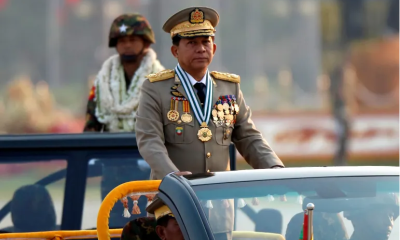
Myanmar pardons over 4,000 prisoners, including deposed president

Hormuz Strait shut down again over US ‘piracy’, says Tehran

Gill’s silken 86 keeps Kolkata Knight Riders winless after six games

Showers expected in the Western, Sabaragamuwa and Southern provinces and in Nuwara-Eliya district after 1.00 pm.

Ex-lawmakers group calls for IPU’s intervention to check “irregularities” in Parliament

Power and Energy Minister, Ministry Secy resign over coal probe

‘Dates have the highest sugar content to fight Coronavirus’

Sunday Island 27 December – Headlines

#SundayIsland 17th December – Headlines

Sunday Island – 28th March

Sunday Island Headlines – 21 March

Sunday Island – 21st February – Headlines
-

 News7 days ago
CEB orders temporary shutdown of large rooftop solar systems
-
 Features7 days ago
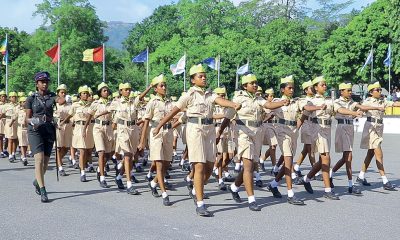
From Royal College Platoon to National Cadet Corps: 145 years of discipline, leadership, and modern challenges
-

 Latest News6 days ago
PNS TAIMUR & ASLAT arrive in Colombo
-

 Features7 days ago
CIA’s hidden weapon in Iran
-
 Latest News6 days ago
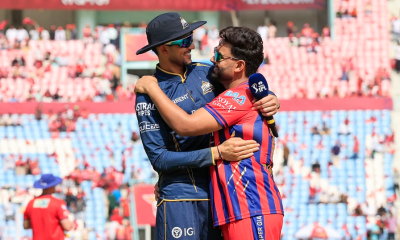
Prasidh, Buttler set up comfortable win for Gujarat Titans
-

 News3 days ago
PNS TAIMUR & ASLAT set sail from Colombo
-

 Features7 days ago
A Fragile Ceasefire: Pakistan’s Glory and Israel’s Sabotage
-

 Latest News7 days ago
Heat index likely to increase up to ‘Caution level’ at some places in the Northern, North-central, North-western, Western, Sabaragamuwa, Southern and Eastern provinces and Monaragala district