
Features
THE HISTORY OF COLOMBO


By AN OCTOGENERIAN
A few years ago there was a series of articles in which the residents of Colombo were referred to as ‘Colombians.’ This inspired this writer to trace the history of Colombo and the derivation of its name.
It is reasonable to assume that the history of this city commenced from as early as the eighth century when traders from such diverse and distant countries as Arabia, China and Rome sailed into the harbor to barter their products in exchange for spices, specially cinnamon, for which our island –known to them as ‘Serendib’ had gained a world wide reputation.
Much later in 1344 the renowned Moroccan traveler Ibin Batuta had visited the island and referred to Colombo as Kalanbu. However from that year onward there have been conflicting interpretations of the manner by which ‘Colombo’ had got its name.
Firstly in 1505 when the Portuguese fleet had been blown by adverse winds and had drifted into the harbor they named the adjoining city as Colombo. This name had been derived from the ancient Sinhala term ‘Kolon Thota,’ which meant the port on the river Kelani. The second interpretation is that the name of the city had been derived from the Sinhala term ‘Kola Amba Thota’ which meant the harbor near which grew mango- (‘Amba’) trees which had plenty of leaves – (‘Kola’). A similar observation had been made by Robert Knox in his book titled ‘ A Historical Relation of Ceylon’ which was published in 1681.
Most readers would be aware that Robert Knox was no stranger to this island, having been held as a captive for 20 years by the king of the Kandyan Kingdom – Rajasinghe II who ruled from 1629 – 1687. Yet another interpretation is associated with the renowned explorer and navigator, Christopher Colombus whose name in Italian was Christoforo Colombo. Since he was married to a Portuguese and had lived in Lisbon for several years, his Portuguese connection was the most likely reason for this city to be named in his honor.
The Portuguese after having arrived in Colombo sent a delegation to meet King Vira Parakramabahu VIII (1484 to 1518 ) who reigned over the Kingdom of Kotte which during that period included the city of Colombo were cordially received in audience with the King. The Portuguese who were determined to consolidate their position in Colombo took the opportunity to obtain the permission of King Vira Parakramabahu to build a fort in Colombo.
Their first fort was constructed in 1518 and named ‘Santa Barbara.’ This was abandoned in 1524 and a new fort built on the same site in 1554. Archaeologists have identified this site as having been located between the present Colombo harbor and the Beira lake.
The history of Colombo continues by referring to the churches they built. The first of the many Roman Catholic churches built by the Portuguese was named ‘Nossa Senhora Milagres’ which meant Our Lady of Miracles. It is where the present Anglican church of St Paul’s is located in Milagiriya. The name Milagiriya having been derived from the Sinhalised form of the Portuguese word ‘milagre’ which meant miracle.
Along Ginthupitiya street there is another building of historical significance. This is the 19th century built Sri Siva Subramania Swamy Kovil dedicated to Lord Muruga also referred to as the God of Kataragama, which can be seen even today. It is also recorded that many years ago Ginthupitiya, was named as ‘ San Thome Pitiya,’ because many Christians believed that St Thomas the Apostle had visited this site and preached to the people. However it must be emphasized that there is no authenticated evidence that St Thomas had ever visited Ginthupitiya/San Thome Pitiya.
The Dutch who arrived in the island in 1640 made Colombo their stronghold, referring to it as their Operational Centre. Not being Roman Catholics but Protestants they did not want to be outdone by the Portuguese who had, as mentioned earlier, built many churches. For this reason they decided to build their own churches in accordance with their faith.
The best known Dutch church is the Wolvendaal Church, which they referred to as Wolvendaalse Kirk, which even today is a place of worship for the Non- Roman Catholics. Another edifice built by them was the Dutch Hospital which is considered to be one of the oldest buildings in Colombo Fort. It has now been converted to be an imposing and impressionable shopping arcade and a popular dining rendezvous.
The British who defeated the Dutch made Colombo their main city but went further by establishing it as the island’s capital. At the risk of striking a sad and somber note, it needs to be stated that in 1866 the British donated to Colombo the 48- acre burial grounds referred to as Kanatte. Here among the many thousands who rest in peaceful slumber is the prominent science- fiction writer Sir Arthur C. Clarke.
There is also what may be referred to as the second grave of Sri Lanka’s valiant martyr Henry Pedris who was executed for treason by the British on July 7, 1915. In keeping with British military tradition his body was buried in an unmarked location in a secret plot far from Colombo. But in 1987 his relatives unearthed his body and buried it in Kanatte.
Colombo has another cemetery which is located along Jawatte road in what is referred today as Colombo 05. Unknown to many it is the largest Commonwealth War cemetery in the island. On July 8, 2005 it was declared as an archaeological site. Furthermore it is interesting to note that ‘Ja’ which are the first two letters of ‘Jawatte’ refers to the Malay community, who had purchased the block of land for use as a cemetery in 1941
Readers will be surprised to know that in Colombo the British had built many well known edifices which today are considered to be landmarks such as the Galle Face Hotel, Cargills Building. Also built in British times were the University of Colombo Building which was originally built for Royal College, the Joseph Frazer Nursing Home, the old House of Parliament, Temple Trees, the President’s House, the former General Post Office, Lloyds Building, the National Museum and the Old Town Hall located in Pettah which is presently a Museum and contains a fascinating collection of memorabilia such as street signs, steam rollers and printing presses.
Mention must also be made of another British contribution to the city of Colombo. This was the tramcar network, which operated on two main routes, Fort – Grandpass and Fort – Borella . This network was discontinued 1953.
To continue the history of Colombo it is now relevant to refer to World War II ( September 1, 1939 – September 2, 1945 ) and in particular to the involvement of Japan. It was during this period that under Emperor Hirohito the Japanese carried out a campaign of ruthless expansionism and militarization in the countries of South East Asia. It commenced with the unprovoked destruction of the American fleet berthed in Pearl harbor in Hawaii on December 7, 1941.
From then onwards they systematically ravaged every country in South Asia. Finally when on February 15, 1942 Singapore was captured, it was inevitable that their next conquest would be Ceylon. During this period Ceylon – as our island was referred to, was a British colony and the Allied forces comprising British, Canadian and troops from the independent dominions of the British Commonwealth were stationed in many parts of the island but were concentrated in Colombo and Trincomalee. But since this article is about the history of Colombo, a description of the Japanese attack on Trincomalee will regrettably have to be left for another day.
It was the intention of the Japanese forces to have complete control of the Indian ocean thereby disrupting the British sea lanes with India and the Middle East and also to be within striking distance of the oil fields in the Persian Gulf over which Britain had a virtual monopoly. It was in anticipation of a Japanese attack which if successful would have been irreparably detrimental to the British that the Allied forces stationed in Colombo were compelled to take numerous precautionary measures which to the citizens of Colombo were more often than not a source of irritation and impatience.
Every evening by sunset all street lights were switched off. The time was advanced by one hour to enable office workers to return to their homes before darkness covered the city. The movement of vehicles was prohibited, unless the owner/driver had a special pass in which case the head lamps had to be covered leaving just enough space for a glimmer of light to appear to prevent the driver from taking the wrong turn.
There were also what has been referred to as ‘Black Out’ nights. Residents living within the city were compelled to drape black curtains or fix sheets of cardboard over every window in their houses to prevent any light from appearing from outside. Colombo was in complete darkness, thereby making it impossible for Japanese bombers to identify any important landmarks. Sirens were installed to warn the people whenever there was a possibility of an air raid and on hearing the eerie screech of the siren they had to take refuge in the specially built underground air-raid shelters which were located at key points within the city .
A Mobile Air-Raid Precaution (ARP) team was formed mainly comprising of Rover Scouts which was headed by the Scout Commissioner. Their duty was to ensure that the public adhered to the regulations which had been enforced to safeguard them in case of a Japanese attack. Co-operative Stores were established throughout the city and a coupon system introduced for the purchase of essential groceries. Nevertheless there was a scarcity of rice for which a substitute referred to as ‘bajiri’ was issued. Even though many quite justifiably complained that it tasted like straw, there was no alternative.
Early in the morning on Sunday April 5, 1942, the worst fears of the Allied forces materialized. The Japanese armada led by Vice Admiral Mitsuo Fuchida who was responsible for the attack on the American fleet in Pearl harbor bombed Colombo devastating strategic installations in the city and harbor. The Japanese attack was so relentless that one pilot carefully avoiding the balloon barrages connected to the ground by steel wires which swayed high in the air over the harbor, demonstrated his devotion to his country and his Emperor by committing the ultimate sacrifice of ‘Harakiri’ by diving bombing into the funnel of a British destroyer berthed in the harbor bursting its fuel tanks and sinking the ship.
It is now relevant to quote the statement issued by the war-time Prime Minister of Britain, Sir Winston Churchill: “The most dangerous moment of the war and the one which caused me the greatest alarm was when the Japanese fleet was heading for Ceylon and the naval base there,” this being a reference to the Colombo harbor.
The war-time history of Colombo needs to be continued with the mention of Flight Lieutenant Leonard Birchall who was acclaimed as the ‘Savior of Ceylon.’ because while piloting his Catalina sea plane he was alarmed to see the Japanese fleet just 360 miles off the coast of the island and heading for the Colombo harbor. He was barely able to send a message of warning to the Allied forces stationed in Colombo when his plane was shot down and he was captured by the Japanese crew and taken to a Prisoner of War camp in Japan, to be questioned under torture as to whether he did send a message to the Allied forces stationed in Colombo.
It was his fortuitous warning which enabled the Allied forces in Colombo to be prepared for the impending Japanese attack. During the raid many residents of Colombo were in such a state of frenzied panic that they fled seeking refuge in homes far away from Colombo. Those who remained behind were able to watch the unforgettable sight in the sky above of what had been referred to as ‘dog fights’ between the RAF (Royal Air Force) Hawker Hurricanes and the Japanese Mitsubishi Zero fighter planes. When the raid was over burning wrecks of Japanese aircraft were found in places outside Colombo. However according to an unconfirmed report one wreck was found on Galle Face Green and another in Maradana.
Finally the writer is pleased to mention that one of the most unforgettable contributions made by the British to Ceylon was the game of cricket. Even though it is not rated as the national sport it is certainly the most popular, making us a cricket crazy country, perhaps second only to India.


 It would not be particularly revelatory to say that the US is plagued by ‘gun violence’. It is a deeply entrenched and widespread malaise that has come in tandem with the relative ease with which firearms could be acquired and owned by sections of the US public, besides other causes.
However, a third apparent attempt on the life of US President Donald Trump in around two and a half years is both thought-provoking and unsettling for the defenders of democracy. After all, whatever its short comings the US remains the world’s most vibrant democracy and in fact the ‘mightiest’ one. And the US must remain a foremost democracy for the purpose of balancing and offsetting the growing power of authoritarian states in the global power system, who are no friends of genuine representational governance.
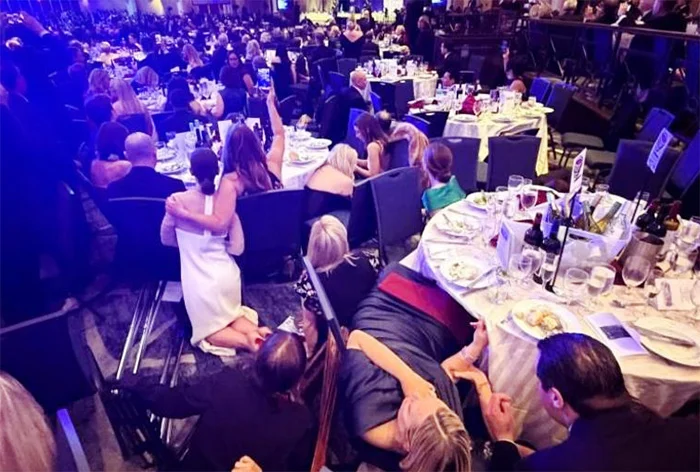
Therefore, the recent breaching of the security cordon surrounding the White House Correspondents’ Dinner in Washington at which President Trump and his inner Cabinet were present, by an apparently ‘Lone Wolf’ gunman, besides raising issues relating to the reliability of the security measures deployed for the President, indicates a notable spike in anti-VVIP political violence in particular in the US. It is a pointer to a strong and widespread emergence of anti-democratic forces which seem to be gaining in virulence and destructiveness.
The issues raised by the attack are in the main for the US’ political Right and its supporters. They have smugly and complacently stood by while the extremists in their midst have taken centre stage and begun to dictate the course of Right wing politics. It is the political culture bred by them that leads to ‘Lone Wolf’ gunmen, for instance, who see themselves as being repressed or victimized, taking the law into their own hands, so to speak, and perpetrating ‘revenge attacks’ on the state and society.
A disproportionate degree of attention has been paid particularly internationally to Donald Trump’s personality and his eccentricities but such political persons cannot be divorced from the political culture in which they originate and have their being. That is, “structural” questions matter. Put simply, Donald Trump is a ‘true son’ of the Far Right, his principal support base. The issues raised are therefore for the President as well as his supporters of the Right.
We are obliged to respect the choices of the voting public but in the case of Trump’s election to the highest public position in the US, this columnist is inclined to see in those sections that voted for Trump blind followers of the latter who cared not for their candidate’s suitability, in every relevant respect, and therefore acted irrationally. It would seem that the Right in the US wanted their candidate to win by ‘hook or by crook’ and exercise power on their behalf.
By making the above observations this columnist does not intend to imply that voting publics everywhere in the world of democracy cast their vote sensibly. In the case of Sri Lanka, for example, the question could be raised whether the voters of the country used their vote sensibly when voting into office the majority of Executive Presidents and other persons holding high public office. The obvious answer is ‘no’ and this should lead to a wider public discussion on the dire need for thoroughgoing voter education. The issue is a ‘huge’ one that needs to be addressed in the appropriate forums and is beyond the scope of this column.
Looking back it could be said that the actions of Trump and his die-hard support base led to the Rule of Law in the US being undermined as perhaps never before in modern times. A shaming moment in this connection was the protest march, virtually motivated by Trump, of his supporters to the US Capitol on January 6th, 2021, with the aim of scuttling the presidential poll result of that year. Much violence and unruly behaviour, as known, was let loose. This amounted to denigrating the democratic process and encouraging the violent take over of the state.
In a public address, prior to the unruly conduct of his supporters, Trump is on record as blaring forth the following: ‘We won this election and we won by a landslide’, ‘We will stop the steal’, ‘We will never give up. We will never concede. It doesn’t happen’, ‘If you don’t fight like hell, you’re not going to have a country anymore.’
It is plain to see that such inflammatory utterances could lead impressionable minds in particular to revolt violently. Besides, they should have led the more rationally inclined to wonder whether their candidate was the most suitable person to hold the office of President.
Unfortunately, the latter process was not to be and the question could be raised whether the US is in the ‘safest pair of hands’. Needless to say, as events have revealed, Donald Trump is proving to be one of the most erratic heads of state the US has ever had.
However, the latest attempt on the life of President Trump suggests that considerable damage has been done to the democratic integrity of the US and none other than the President himself has to take on himself a considerable proportion of the blame for such degeneration, besides the US’ Far Right. They could be said to be ‘reaping the whirlwind.’
It is a time for soul-searching by the US Right. The political Right has the right to exist, so the speak, in a functional democracy but it needs to take cognizance of how its political culture is affecting the democratic integrity or health of the US. Ironically, the repressive and chauvinistic politics advocated by it is having the effect of activating counter-violence of the most murderous kind, as was witnessed at the White House Correspondents’ Dinner. Continued repressive politics could only produce more such incidents that could be self-defeating for the US.
Some past US Presidents were assassinated but the present political violence in the country brings into focus as perhaps never before the role that an anti-democratic political culture could play in unraveling the gains that the US has made over the decades. A duty is cast on pro-democracy forces to work collectively towards protecting the democratic integrity and strength of the US.

 The Editor-in-Chief of The Sri Lankan Anchorman, a Toronto-based monthly, celebrating Sri Lankan community life in Canada, is none other than veteran Sri Lankan journalist Dirk Tissera, who moved to Canada in 1997. His wife, Michelle, whom he calls his “tower of strength”, is the Design Editor.
According to reports coming my way, the paper has turned out to be extremely popular in Toronto.
In fact, The Sri Lankan Anchorman won a press award in Toronto for excellence in editorial content and visual presentation.
However, the buzz in the air in Canada, right now, is The Sri Lankan Anchorman’s 22nd Anniversary Gala, to be held on Friday, 12 June, 2026, at the J&J Swagat Banquet Convention Centre, in Toronto.
An action-packed programme has been put together for the night, featuring some of the very best artistes in the Toronto scene.
The Skylines, who are classified as ‘the local musical band in Toronto’, will headline the event.
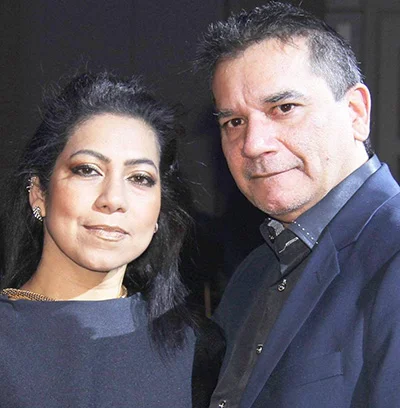
Dirk Tissera and wife Michelle: Supporting Sri Lanka-Canada community events, in Toronto, since launching The Anchorman
in 2002
They have performed and backed many legendary Sri Lanka singers.
According to Dirk, The Skylines can belt out a rhythm with gusto … be it Western, Sinhala or Tamil hits.
Also adding sparkle to the evening will be the legendary Fahmy Nazick, who, with his smooth and velvety vocals, will have the crowd on the floor.
Fahmy who was a household name, back in Sri Lanka, will be flying down from Virginia, USA.
He has captivated audiences in Sri Lanka, the Middle East and North America, and this will be his fourth visit to Toronto – back by popular demand,
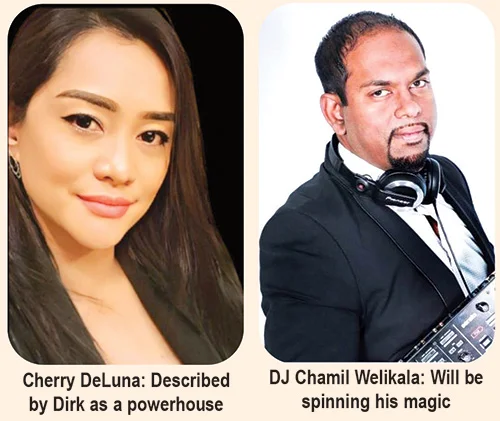
Cherry DeLuna, who is described by Dirk as a powerhouse, also makes her appearance on stage and is all set to stir up the tempo with her cool and easy delivery.
“She’s got a great voice and vocal range that has captivated audiences out here”, says Dirk.
Chamil Welikala, said to be one of the hottest DJs in town, will be spinning his magic … in English, Sinhala, Tamil and Latin.
Both Jive and Baila competitions are on the cards among many other surprises on the night of 12 June.
This is The Anchorman’s fifth annual dance in a row – starting from 2022, 2023, 2024 and 2025 – and both Dirk and Michelle, and The Anchorman, have always produced elegant social events in Toronto.
“We intend to knock this one out of the park,” the duo says, adding that Western music and Sinhala and Tamil songs is something they’ve always delivered and the crowd loves it.
“We have always supported Sri Lanka-Canada community events, in Toronto, since launching The Anchorman, in 2002, and we intend to keep it that way.”
No doubt, there will be a large crowd of Sri Lankans, from all communities, turning up, on 12 June, to support Dirk, Michelle and The Anchorman.
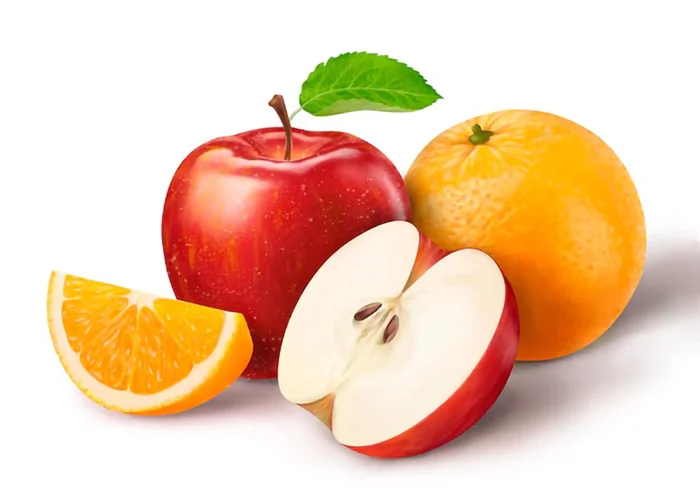
 * Apple and Orange:
Blend a few apple and orange pieces together. Add to it a pinch of turmeric and one tablespoon of honey. Apply it to the face and neck and rinse off after 30 minutes. This face pack is suitable for all skin types.
According to experts, apple is one of the best fruits for your skin health with Vitamin A, B complex and Vitamin C and minerals, while, with the orange peel, excessive oil secretion can be easily balanced.
* Mango and Curd:
Ripe mango pulp, mixed with curd, can be rubbed directly onto the skin to remove dirt and cleanse clogged pores. Rinse off after a few minutes.
Yes, of course, mango is a tasty and delicious fruit and this is the mango season in our part of the world, and it has extra-ordinary benefits to skin health. Vitamins C and E in mangoes protect the skin from the UV rays of the sun and promotes cell regeneration. It also promotes skin elasticity and fights skin dullness and acne, while curd, in combination, further adds to it.
* Grapes and Kiwi:
Take a handful of grapes and make a pulp of it. Simultaneously, take one kiwi fruit and mash it after peeling its skin. Now mix them and add some yoghurt to it. Apply it on your face for few minutes and wash it off.
Here again experts say that kiwi is the best nutrient-rich fruit with high vitamin C, minerals, Omega-3 fatty acids and vitamin E, while grapes contain flavonoids, which is an antioxidant that protects the skin from free radical damage. This homemade face pack acts as a natural cleanser and slows down the ageing process.

Food Security is vital to ensuring a Nation’s Sovereignty and National Security – Prime Minister

Showers or thundershowers will occur in the most parts of the island after 1.00 pm

Explanation sought from AKD on ‘Russian energy supplies’

US reiterates its commitment to enhancing relations with Northern Sri Lanka

Rooftop Solar at Crossroads as Sri Lanka Shifts to Distributed Energy Future

Indonesia-SL agreement on Visa Exemption for Diplomatic and Official passports soon

‘Dates have the highest sugar content to fight Coronavirus’

Sunday Island 27 December – Headlines

#SundayIsland 17th December – Headlines

Sunday Island – 28th March

Sunday Island Headlines – 21 March

Sunday Island – 21st February – Headlines
-
 News6 days ago
Whistleblowers ask Treasury Chief to resign over theft of USD 2.5 mn
-

 News6 days ago
No cyber hack: Fintech expert exposes shocking legacy flaws that led to $2.5 million theft
-

 News3 days ago
BIA drug bust: 25 monks including three masterminds arrested
-
 Business4 days ago
Nestlé Lanka Announces Change in Leadership
-
 News1 day ago
Treasury chief’s citizenship details sought from Australia
-

 News3 days ago
Banks alert customers to phishing attacks
-
 News4 days ago
Hackers steal $3.2 Mn from Finance Ministry
-
 Business6 days ago
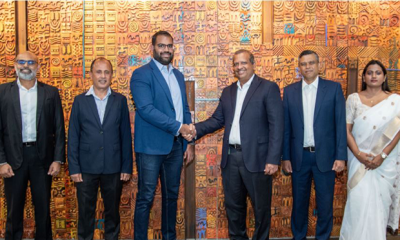
Dialog Enterprise partners Star Garments: Pioneering 5G innovation in Sri Lanka’s apparel industry