
Business
Tea industry calls for ‘collaborative effort’ to resolve wage hike crisis

A proposed 70% minimum wage hike for tea plantation workers in Sri Lanka has caused widespread concern among industry stakeholders. While the goal of enhancing workers livelihoods is commendable, the Planters Association of Ceylon warns that such a drastic increase could have dire consequences for the industry, potentially harming both employers and employees, a press release said.
The release adds: ‘Sri Lanka’s tea industry is a cornerstone of the national economy, being one of the highest foreign exchange earners for the country. It encompasses 21 Regional Plantation Companies (RPCs), 427 small and medium-sized tea factories and with 500,000 Small and Medium Tea Estate Owners. However, the industry is already under significant pressure due to the highest production costs globally, making it challenging to compete in the international market. Implementing a 70% wage increase overnight would exacerbate this issue, given that Sri Lanka is already the most expensive tea producer worldwide. Additionally, tea productivity has been on the decline over recent years, compounding the industry’s struggles.
‘Roshan Rajadurai, Managing Director of Kelani Valley Plantations, Talawakelle Tea Estates PLC said, ‘While the proposed 70% wage hike for tea plantation workers is well-intentioned, it threatens to cripple the tea industry due to the already exorbitant production costs. A productivity-based pay system is a more viable solution, balancing fair compensation for workers with the economic realities of the industry, thereby safeguarding both their welfare and the industry's future”.
‘In response to these challenges, the Planters Association of Ceylon has introduced an alternative productivity-based wage scheme. This model is designed not only to safeguard the industry’s viability but also to enhance the welfare of estate workers. Based on current industry standards, employees could potentially earn a minimum of Rs. 1820/- and onwards, under this proposed structure. This approach strives to strike a balance between ensuring fair compensation for workers and acknowledging the economic constraints that impact the tea sector.
‘Most workers currently earn more than Rs. 1700, with many earning over Rs. 50,000 per month in a market-based model that benefits both the worker and the company. Expanding this model across the upcountry estate sector without state interference in increasing fixed wage costs without corresponding output compensation would be beneficial. A state-mandated 70% fixed wage increase could lead to financial ruin for many companies, resulting in job losses and negative impacts on the financial sector due to the companies' heavy borrowings.
‘The Planters Association of Ceylon is calling for a meeting with all concerned stakeholders to discuss this matter further. Such a dialogue is crucial for reaching a solution that ensures the prosperity of the tea industry and the well-being of its workers. The association has expressed its readiness to collaborate with the government to find a sustainable and mutually beneficial resolution.
‘While improving plantation workers wages is essential, it must be done without jeopardizing the industry viability. The proposed productivity-based wage scheme offers a balanced solution, ensuring both fair compensation for workers and the industry survival. It is now imperative for all stakeholders to unite, discuss, and implement a strategy that supports the long-term health and sustainability of Sri Lanka tea industry. Only through collaborative efforts can we secure a prosperous future for both the workers and the industry.’


A five star 100-room Maldivian resort hotel property controlled by Browns Investments PLC has been disposed for USD 57.5 million, Browns Investment said in a stock exchange filing on Friday. The company had previously disclosed in September that the deal was in the pipeline pending completion of precedent conditions.
The property. Barcelo’ Whale Lagoon Maldives, belonged to Browns Ari Resort (Private) Ltd., a subsidiary of Browns investments, was purchased by ASB Hotel Properties Maldives Private Ltd.
“The transaction was completed following the satisfaction of the conditions precedent set out in the Sale and Purchase Agreement, for a total consideration of USD 57,500,000,” the filing said. The price was considered “significant” but was not the highest in the Maldives where high end hotel properties command top dollar.
Browns Investments (BIL) has a significant presence in the Maldives, developing multiple properties, notably through partnerships with Spain’s Barceló Hotel Group for projects like Barceló Whale Lagoon (now sold), Barceló Nasandhura (city hotel/apartments), and the Bodufaru Beach Resort (a major integrated project with three hotels) in North Male Lagoon, with BIL aiming to be a major Sri Lankan hotel operator in the Maldives with large room capacity.
BIL’s key Maldives projects are:
Bodufaru Beach Resort: A large-scale development in North Male Atoll with three five-star hotels, a significant undertaking with Barceló Hotel Group and Syno Hydro Corporation.
Nasandhura Palace Hotel (Barceló Nasandhura): A luxury city hotel and apartment complex in Male, managed by Barceló.
Strategy & Partners:
Browns Investments partners with Barceló Hotel Group, a Spanish hotel chain, for management and investment in their Maldivian properties.
The company aims to become the largest Sri Lankan hotel investor and operator in the Maldives, significantly expanding its room keys in the region, as described on the Browns Investment website.
Browns Investments is actively developing and managing luxury hotel properties in the Maldives, focusing on large integrated resorts and city hotels, leveraging international partnerships to grow its presence in the high-end tourism market, according to the company.
Business
Marketing Alumni Association of USJ Outlines Strategic Vision to Strengthen the Future of Marketing in Sri Lanka
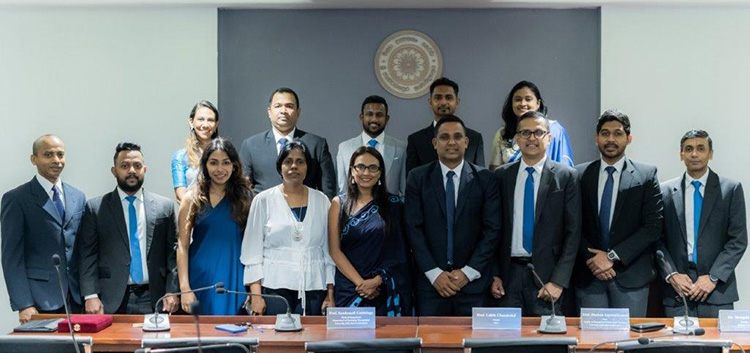
The Marketing Alumni Association (MAA) of the University of Sri Jayewardenepura (USJ) set out its strategic direction for the year ahead at its Annual General Meeting (AGM) held on 10 December 2025. The event brought together academic representatives from the Department of Marketing Management and a strong contingent of alumni, providing a platform to review the association’s progress and reaffirm its commitment to advancing the marketing profession in Sri Lanka.
As the official body representing graduates of the Department of Marketing Management of the University of Sri Jayewardenepura, the MAA has, over the past 25 years, supported a network of more than 1,500 marketing professionals who now hold influential roles in leading private and public sector organizations. The association remains committed to elevating the standing of the Japura Marketing degree by strengthening industry partnerships, supporting academic excellence, and fostering a high-performing alumni community.
A key focus of the AGM was the appointment of Oshadee Withanawasam as President of the MAA for the upcoming term (2025-2027). In his inaugural address, Mr. Withanawasam emphasized the importance of strategic leadership, industry relevance, and collaborative growth in positioning USJ and its alumni at the forefront of marketing innovation in Sri Lanka.
Over the past year, the MAA has intensified its engagement efforts through a series of high-impact initiatives. The Kings and Queens Dinner Dance 2025, which brought together over 200 members, strengthened camaraderie within the alumni network. On the academic front, the association’s flagship ‘Fine Touch’ guest lecture series, conducted in partnership with the Department of Marketing Management, USJ, continued to offer undergraduates valuable exposure to industry best practices and emerging trends.
A significant milestone for the association was the launch of its first structured mentoring program for undergraduates of the department. This initiative marks a notable advancement in bridging academic training with practical corporate experience, equipping students with the competencies required to excel in a competitive business environment.
The MAA also continued to deliver meaningful social impact through its ‘Bring a Smile’ initiative, which has supported rural schoolchildren for three consecutive years (2023–2025) by providing essential stationery supplies. Further strengthening its commitment to education, the association introduced a scholarship scheme in 2024 to support deserving undergraduates pursuing their higher education in marketing.
During the AGM, outgoing President Dr. Darshana Jayasinghe and the Head of the Department of Marketing Management of USJ, Prof. Sandamali Galdolage, commended the association’s continued progress and reiterated their support for its long-term vision.
The following office bearers were appointed for the new term: Oshadee Withanawasam (President), Amitha Amarasinghe (Deputy President), Nipuni Karunarathna (Vice President), Vimukthi Kaushalya (Secretary), Thisaru Menake (Assistant Secretary), Nuwan Indika (Treasurer), and Thilanka Kalpage (Assistant Treasurer). Committee Members for the term include Prof. Ashoka Malkanthie, Chandra Kodithuwakku, Manuri Jayasinghe, Champika Vincent, Naleendra Yasassri Perera, Kaushan Agalawatte, Chandranath Gamage, and Pamudi Ketawalage.
Dr. Darshana Jayasinghe and Lalith Sumanasiri will serve as Advisors, while Prof. Sandamali Galdolage, Manojee Dabare, and Prof. Lalith Chandralal will continue as Trustees of the MAA.
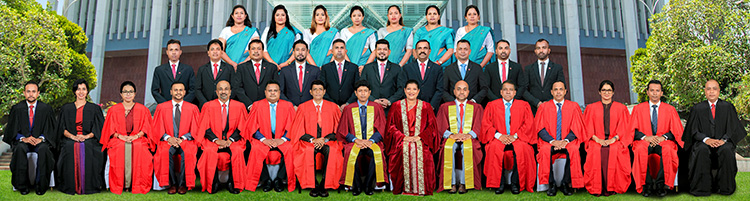
A graduation ceremony for 18 Certified Sales Training Consultants, qualified to mentor aspiring marketing professionals and enhance standards in the country’s sales sector, was held recently at the Bandaranaike International Conference Hall.
The graduates represent the first phase of a programme aimed at producing 50 Certified Sales Training Consultants nationwide. The training and certification were conducted by the Asian College of Sales and Marketing (ACSM).
According to ACSM Director and Learning Consultant Sugath Munasinghe, the need for professionally certified sales training consultants to raise the quality and effectiveness of the sales sector has been identified for some time. He added that ACSM, as a higher education institute, will continue to provide structured training and certification to meet this demand.

Imran Khan and wife given further jail terms after state gift fraud case

Rights groups condemn new record number of executions in Saudi Arabia

US seizes second oil tanker off Venezuela’s coast

Rodrigues fifty leads India’s chase after bowlers set up victory against Sri Lanka

Sameer Minhas 172 powers Pakistan to Under-19 Asia Cup title

No Christmas miracle for England as Australia make it 3-0 to retain the Ashes in 11 days

‘Dates have the highest sugar content to fight Coronavirus’

Sunday Island 27 December – Headlines

#SundayIsland 17th December – Headlines

Sunday Island – 28th March

Sunday Island Headlines – 21 March

Sunday Island – 21st February – Headlines
-

 Midweek Review5 days ago
How massive Akuregoda defence complex was built with proceeds from sale of Galle Face land to Shangri-La
-

 News4 days ago
Pope fires broadside: ‘The Holy See won’t be a silent bystander to the grave disparities, injustices, and fundamental human rights violations’
-

 News4 days ago
Pakistan hands over 200 tonnes of humanitarian aid to Lanka
-

 News5 days ago
Burnt elephant dies after delayed rescue; activists demand arrests
-

 Business3 days ago
Unlocking Sri Lanka’s hidden wealth: A $2 billion mineral opportunity awaits
-

 Editorial5 days ago
Colombo Port facing strategic neglect
-

 News3 days ago
Army engineers set up new Nayaru emergency bridge
-

 News5 days ago
Sri Lanka, Romania discuss illegal recruitment, etc.