
Sports
Tambyah Murugaser – An All-Rounder in the Truest Sense!

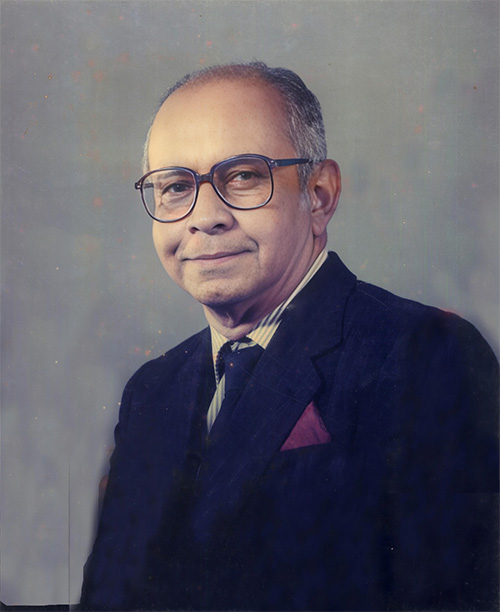
I thought long and hard before I put finger to keyboard to write this eulogy about my esteemed father, whose 101st birth anniversary falls on July 28.
Muru, as he was affectionately known, “Appa” to me, was born with the proverbial silver spoon to a prominent Tamil family. His maternal grandfather happened to be Sir Ponnambalam Arunachalam, the erudite scholar and statesman, whose achievements are well-chronicled. Muru’s father was a wealthy property tycoon, Murugaser Tambyah.
Muru’s academic career in Royal College was crowned by the Lorensz Prize, which is awarded to outstanding Classics students. He was one of those amazing all-round students, whom we don’t see very many of these days due to the heavy emphasis on academia. He opened batting for the First Eleven, played soccer, tennis and table tennis for the college and also indulged in rifle-shooting while being a member of the college Cadet Corps. I believe he was a Coloursman in all those that offered the award.
I remember my grandmother telling me how she surreptitiously bought him his cricket gear, to avoid him being reprimanded by his father for neglecting his studies. In fact, if I recall correctly, his father didn’t even know that he played in the Royal-Thomian in 1941. He played in 1942 too.
One of Muru’s biggest regrets were that he wasn’t allowed to study at Cambridge (the family had a long lineage of Cambridge scholars) on account of World War Two, as his brother Professor T.Nadaraja, (later to become Dean of the Law Faculty) was allowed to do. Muru entered University College, the precursor to the University of Ceylon, in Colombo. He continued following his passion, Classics, and secured a Second Upper, while captaining the University Cricket team. He also represented the University at Tennis and Table Tennis. Appa could play just about any sport.
In 1947, Muru married his childhood sweetheart Maheswari, who, as happened in those days, just happened to be his first cousin. They were a smart, well-groomed couple and very socially involved. They were intrepid travellers too, both in Sri Lanka and abroad. They had a daughter Sarla, a son Pratap and Little Ol’ Me!
Muru joined the star-studded Tamil Union side, which won the inaugural P. Sara Division One Tournament in the 1951/52 season. Some of his contemporaries in that side were Sathi Coomaraswamy, M. Sathasivam, Kasipillai, Dharmalingam and the brothers Parathalingam and Jayalingam. He continued playing for the Club for many years, captaining it, and then ending up as President, and Patron in his latter years. The Tamil Union honoured him by naming its prestigious “B” block after him, for which the family is deeply grateful.
He loved sharing stories of his early days and would proudly tell me of his first job cycling from butcher to butcher as a meat inspector in the Food Dept. Obviously, this was not his true calling as he entered the Inland Revenue Department, and swiftly demonstrated his prowess with the taxation process.
The enaction of the Official Languages Act in the late fifties saw a mass exodus from the government service from all communities, and my father was no exception. He was warmly accepted into the mercantile sector, where his good friend and mentor Terrence De Soysa welcomed him to the country’s biggest rubber exporter C. W. Mackie and Company.
Muru retired in the mid-eighties as Senior Director in charge of Finance, Personnel and Administration, and many are the tales I’ve been told by people who worked for him of how he nurtured them in their careers, sorted out their personal and financial problems, and steered the Company through the turbulent early seventies with the insurrections, strikes et al.
Prior to retirement however, in the business sector, Muru did not confine himself to the rubber industry alone. He was a Director of the Central Freight Bureau, Chairman of the Sri Lanka Shippers’ Council and was instrumental in setting up the Association of Shippers’ Councils of Bangladesh, India, Pakistan and Sri Lanka (ASCOBIPS), and for his efforts, was made its Founder Chairman, which was quite an achievement, given the status of his contemporaries from the other countries.
He was also invited to serve on many Boards – Ceylon Shipping Lines, Riverina Hotels, Eden Hotels, Ladyhill Hotels, Ceylon Services and Supplies are some I remember. Muru had a gut instinct for commerce and business, and was one of the first investors in Tourism, which soon developed into being a Thrust Industry of the future for Sri Lanka. He was so convinced in fact that I too was shepherded into the fledgling Aitken Spence Travels as one of its first three employees. It is now one of the largest Tourism Companies in Sri Lanka!
Appa lived, loved, and breathed cricket. Soon after his retirement from playing the game, he became extensively involved in the then Board of Control for Cricket in Sri Lanka (BCCSL), ably led by Dudley Senanayake’s brother Robert. A dedicated band of people guided cricket into the major leagues, working pro bono and many times dipping into their own pockets to ‘get the job done’. I still remember the early morning starts on match days and late nights this fun-loving, multi-ethnic band of die-hard cricket enthusiasts endured.
I don’t think there was a prouder man than Appa when, as Vice President of the Cricket Board under Gamini Dissanayake, Sri Lanka attained Test Status in 1981. This dedicated band compiled the bid and other processes presented by Gamini to the TCCB in his own inimitable way. Implementing the plans was also these peoples’ responsibility.
Appa was over-joyed that the Colombo Oval, owned by the Tamil Union, was the single reason that the English Test and County Cricket Board (TCCB – the precursor to the ICC) allowed Sri Lanka into the hallowed halls of Test Cricket – a dream envisaged by the late, great P. Saravanamuttu in the late thirties, when he designed, raised the finances, and built the Stadium. Thanks to the Hatton National Bank’s generous sponsorship and the Club members’ contributions, the venue was upgraded according to TCCB standards for the inaugural Test Match in 1982.
In July 1983 the Oval Pavilion was burnt to the ground by a hostile mob, thereby robbing it of all its treasured documents, records and photographs. Appa was heart-broken as he related the whole story to me much later.
Muru and the Club Committee at the time (people like Dr. G Wignarajam, Chandra Schaffter, Felix Perumal, Tryphon Mirando, Somasunderam Skandakumar, P. Somasunderam (also the BCCSL Treasurer then), and others too numerous to mention here, put their shoulders to the wheel, and raised funding to rebuild the Club. Apart from the Colombo Cricket Club’s donation and the Insurance monies received, there was no funding forthcoming from the Government nor the BCCSL. The P.Sara Stadium/Colombo Oval continues to stand unflinchingly, hosting not only cricket, but other sports as well.
I don’t think there was a happier man than Appa when he was appointed Manager of the Sri Lanka World Cup Cricket team in 1983 under Duleep Mendis. Players like Roy Dias and Sidath Wettimuny still regale me with anecdotes about my father and Sir Gary Sobers, who was the Consultant to the Board on that tour, and a legendary Party Animal. Muru was the ultimate social diplomat, comfortably able to network at all levels of society, among whom he moved freely.
An important facet of his life were his clubs. Apart from the Tamil Union, he was also President of the 80 Club (where many a Saturday afternoon was spent, much to my mother’s chagrin!), CR & FC and the Golf Club.
Muru was also an avid coconut plantation owner. He loved spending time on his Annaletchumy estate, a little over 100 acres of Coconut and Paddy in Nattandiya, and would visit almost every weekend, and stay over at the lovely old bungalow on the property. Savouring the cool breezes, the inspection walks, the home-cooked food (including lagoon crabs, if we got lucky), and his beloved milk cows brought him deep contentment. Although there was no electricity, he had hooked up a Lister generator, so we could get a few hours of evening light before bed. He ensured that he kept up with the latest cultivation techniques to obtain bountiful crops.
As the reader can imagine, given all this activity, it is fair to say that in my early years, I didn’t get to see much of my father. He took a keen interest in my life when I was well into my late-twenties – especially when my family and I decided to seek greener pastures in Australia in 1988. He was overjoyed when I returned in 1992 for a few years, as he then got an opportunity to get to know his two grand-daughters Divya and Archana, and I know how much he enjoyed having us all together.
This was probably when I got closest to him and was able to absorb a lot of what he knew about “mice and men”. I know I am the better man for the advice I gained, and it has helped me immensely in both my business and personal lives. It’s difficult to encapsulate all the facets of a marvelous life, lived by an all-rounder in the truest sense, but I’ve done my best!
Suresh Murugaser


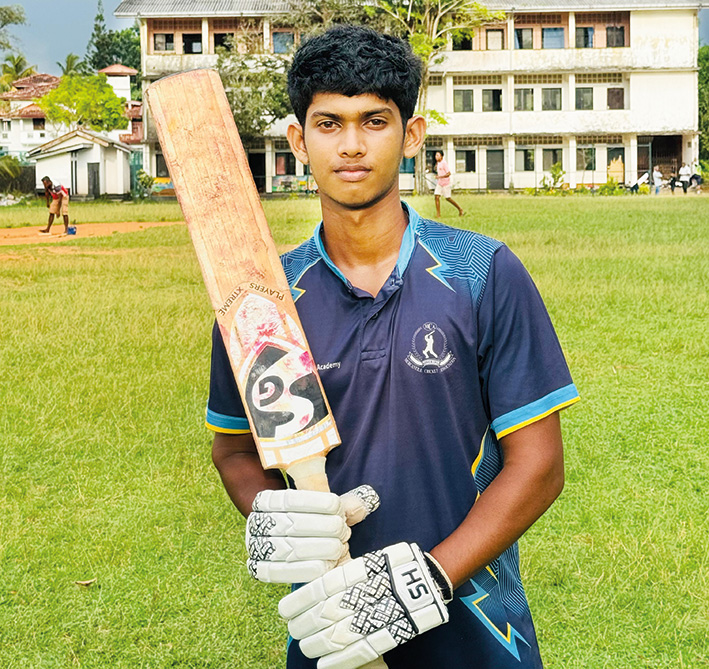
Young Pramod Madushan has become the talk in cricket circles after he scored 42 runs in an over for Mercantile Services Cricket Academy against Sigi Cricket Academy at Ambalangoda recently.
In an over that contained nine deliveries, including two no-balls and a wide, Madushan cut loose hitting three fours and five sixes. In all, the over bowled by Bihandu Sandiv went for 45 runs.
The young cricketer from D.S. Senanayake College, Colombo shares the same name as Sri Lanka fast bowler Pramod Madushan. However, the 19-year-old is a wicketkeeper batter.
His knock of 103 came in just 38 deliveries and contained eight fours and ten sixes.


Australia batter Usman Khawaja will retire from international cricket following the fifth Ashes Test against England in Sydney this week.
The 39-year-old will play his 88th and final Test on the ground where he made his debut against the same opponents in January 2011.
Khawaja was born in Pakistan and became the first Muslim to play for Australia when he took the place of Ricky Ponting at the end of England’s 3-1 series win 15 years ago.
The left-hander has made 6,206 Test runs at an average of 43.39, with 16 hundreds.
He has played in six Ashes series – winning two, losing two and drawing two.
He was also part of the Australia team that won the World Test Championship in 2023.
The final Test at the SCG starts on Sunday (23:30 GMT, Saturday).
Alongside Steve Smith, Khawaja is one of two remaining members of the Australia team beaten by England in their most recent series win in this country in 2010-11.
He needs 30 runs in his final Test to go above Mike Hussey and into 14th on Australia’s all-time run-scorers list, behind the great Donald Bradman in 13th.
Khawaja played the last of his 40 one-day internationals in 2019, having scored 1,554 runs at 42. He played in nine T20 internationals, scoring 241 runs at 26.77.
Now playing domestically for Queensland, Khawaja will end his career on the ground that was his home when he first played professional cricket for New South Wales in 2008.
Often in and out of the Australia team during his Test career, he found a home at the top of the order during the previous home Ashes in 2021-22.
However, his place has come under scrutiny during this series after he suffered back spasms in the first Test that prevented him from opening.
Travis Head took Khawaja’s place in the second innings and made a swashbuckling century to lead Australia to an eight-wicket win.
Khawaja subsequently missed the second Test with the back problem and was due to be left out of the third, only to receive a late call-up when Steve Smith fell ill.
He made 82 and 40 in Adelaide to retain his place for the fourth Test. Australia lead the series 3-1.
After the Ashes Australia will not play another Test until August, by which time Khawaja will be almost 40.
[BBC]
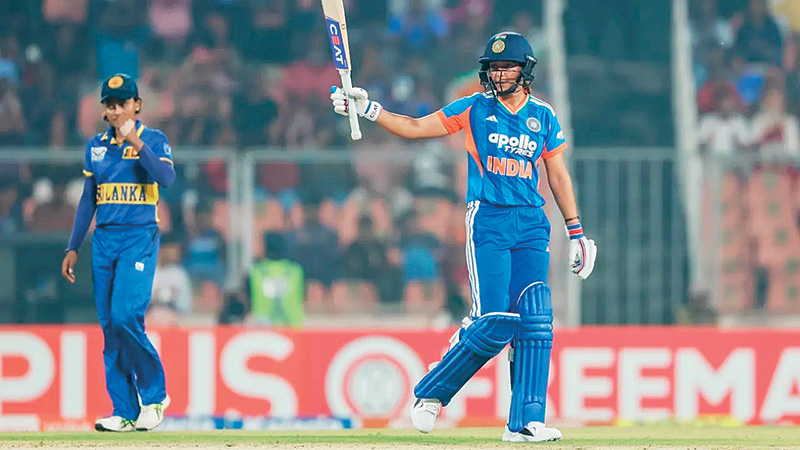
India were pushed more than they had been at any point in this series but still ran home victors in the final T20I at Trivandrum to complete a 5-0 series win over Sri Lanka – the first time they have swept a bilateral T20I series of this length at home. Besides a stronger performance from their opponents, the hosts faced sterner challenges – the rare failure of their top order, a dewy ball in defence but managed to overcome them all as they ran home winners by 15 runs.
The win was set up by the skipper Harmanpreet Kaur, who hadn’t crossed 21 in the four previous innings of this series but come a tricky situation, she stepped up with a 43-ball 68. After being put in to bat, India found themselves in early trouble at 27 for 2, with debutant G Kamalini, coming in for the rested Smriti Mandhana, following the in-form Shafali Verma back to the hut. Inside the 10th over, India also lost Harleen Deol and Richa Ghosh and were struggling for any kind of momentum.
But Harmanpreet rose to the moment with a commanding knock that mixed caution with aggression. She hit nine fours and a six and was particularly effective playing the field against the left-arm spinners. Even with Harmanpreet providing the backbone of the innings, India needed a late push from Arundhati Reddy and Amanjot Kaur, who scored a pair of useful 20s to push the score forward. Arundhati, in particular, smashed 27 off 11 balls as India found 66 runs in the final five overs to get to 175.
Chasing 176, Sri Lanka produced their best batting performance of the series, built around an excellent 79-run partnership off just 56 balls between Hasini Perera and Imesha Dulani for the second wicket. Perera, playing her 81st T20I, finally brought up her maiden half-century in the format, while Dulani also reached the milestone as the visitors raced to stay within touching distance of the target.
The momentum shifted dramatically when Amanjot Kaur struck with her very first delivery to dismiss Dulani, breaking the dangerous stand. Perera continued to fight, threatening to pull off an unlikely heist. But after clubbing a four and a six off Sree Charani, she was cleaned up by the left-arm spinner with a full delivery that slipped under Perera’s bat to knock out the stumps. Between that, Deepti Sharma trapped Nilakshi Silva to pass Megan Schutt as the format’s leading wicket-taker.
Those late wickets meant, Sri Lanka were left needing 34 runs from the final two overs. They got close, but ultimately not close enough to cause India enough jitters on the night.
Brief scores:
India Women 175 for 7 in 20 overs
(Gunalan Kamalini 12, Harleen Deol 13, Harmanpreet Kaur 68, Amanjot Kaur 21, Arundhati Reddy 27*; Nimasha Meepage 1-25, Kavisha Dilhari 2-11, Rashmika Sewwandi 2-42, Chamari Athapaththu 2-21) beat Sri Lanka Women 160 for 7 in 20 overs (Hasini Perera 65, Imesha Dulani 50, Rashmika Sewwamdi 14*; Deepti Sharma 1-28, Arundhati Reddy 1-16, Sneh Rana 1-31, Vaishnavi Sharma 1-33, Shree Charani 1-31, Amanjot Kaur 1-17 ) by 15 runs
[Cricbuzz]

Showery condition is expected to enhance in the Eastern, Northern and Uva provinces during the coming days, due to the development of a low-level atmospheric disturbance to the East of Sri Lanka

GMOA warns of trade union action unless govt. urgently resolves critical issues in health sector

Elephant census urged as death toll nears 400

CTU raises questions about education reforms

Navy lauds foreign warships that came to assist in disaster relief ops here

It’s PC polls, stupid

‘Dates have the highest sugar content to fight Coronavirus’

Sunday Island 27 December – Headlines

#SundayIsland 17th December – Headlines

Sunday Island – 28th March

Sunday Island Headlines – 21 March

Sunday Island – 21st February – Headlines
-

 Sports4 days ago
Gurusinha’s Boxing Day hundred celebrated in Melbourne
-
 News2 days ago
Leading the Nation’s Connectivity Recovery Amid Unprecedented Challenges
-

 Sports5 days ago
Time to close the Dickwella chapter
-

 Features3 days ago
It’s all over for Maxi Rozairo
-

 News5 days ago
Environmentalists warn Sri Lanka’s ecological safeguards are failing
-
 News3 days ago
Dr. Bellana: “I was removed as NHSL Deputy Director for exposing Rs. 900 mn fraud”
-
 Features5 days ago
Digambaram draws a broad brush canvas of SL’s existing political situation
-
 News2 days ago
Dons on warpath over alleged undue interference in university governance