
Sports
Tambyah Murugaser – An All-Rounder in the Truest Sense!

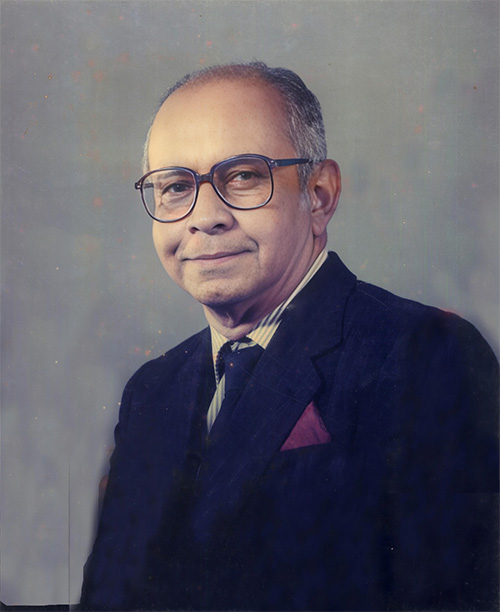
I thought long and hard before I put finger to keyboard to write this eulogy about my esteemed father, whose 101st birth anniversary falls on July 28.
Muru, as he was affectionately known, “Appa” to me, was born with the proverbial silver spoon to a prominent Tamil family. His maternal grandfather happened to be Sir Ponnambalam Arunachalam, the erudite scholar and statesman, whose achievements are well-chronicled. Muru’s father was a wealthy property tycoon, Murugaser Tambyah.
Muru’s academic career in Royal College was crowned by the Lorensz Prize, which is awarded to outstanding Classics students. He was one of those amazing all-round students, whom we don’t see very many of these days due to the heavy emphasis on academia. He opened batting for the First Eleven, played soccer, tennis and table tennis for the college and also indulged in rifle-shooting while being a member of the college Cadet Corps. I believe he was a Coloursman in all those that offered the award.
I remember my grandmother telling me how she surreptitiously bought him his cricket gear, to avoid him being reprimanded by his father for neglecting his studies. In fact, if I recall correctly, his father didn’t even know that he played in the Royal-Thomian in 1941. He played in 1942 too.
One of Muru’s biggest regrets were that he wasn’t allowed to study at Cambridge (the family had a long lineage of Cambridge scholars) on account of World War Two, as his brother Professor T.Nadaraja, (later to become Dean of the Law Faculty) was allowed to do. Muru entered University College, the precursor to the University of Ceylon, in Colombo. He continued following his passion, Classics, and secured a Second Upper, while captaining the University Cricket team. He also represented the University at Tennis and Table Tennis. Appa could play just about any sport.
In 1947, Muru married his childhood sweetheart Maheswari, who, as happened in those days, just happened to be his first cousin. They were a smart, well-groomed couple and very socially involved. They were intrepid travellers too, both in Sri Lanka and abroad. They had a daughter Sarla, a son Pratap and Little Ol’ Me!
Muru joined the star-studded Tamil Union side, which won the inaugural P. Sara Division One Tournament in the 1951/52 season. Some of his contemporaries in that side were Sathi Coomaraswamy, M. Sathasivam, Kasipillai, Dharmalingam and the brothers Parathalingam and Jayalingam. He continued playing for the Club for many years, captaining it, and then ending up as President, and Patron in his latter years. The Tamil Union honoured him by naming its prestigious “B” block after him, for which the family is deeply grateful.
He loved sharing stories of his early days and would proudly tell me of his first job cycling from butcher to butcher as a meat inspector in the Food Dept. Obviously, this was not his true calling as he entered the Inland Revenue Department, and swiftly demonstrated his prowess with the taxation process.
The enaction of the Official Languages Act in the late fifties saw a mass exodus from the government service from all communities, and my father was no exception. He was warmly accepted into the mercantile sector, where his good friend and mentor Terrence De Soysa welcomed him to the country’s biggest rubber exporter C. W. Mackie and Company.
Muru retired in the mid-eighties as Senior Director in charge of Finance, Personnel and Administration, and many are the tales I’ve been told by people who worked for him of how he nurtured them in their careers, sorted out their personal and financial problems, and steered the Company through the turbulent early seventies with the insurrections, strikes et al.
Prior to retirement however, in the business sector, Muru did not confine himself to the rubber industry alone. He was a Director of the Central Freight Bureau, Chairman of the Sri Lanka Shippers’ Council and was instrumental in setting up the Association of Shippers’ Councils of Bangladesh, India, Pakistan and Sri Lanka (ASCOBIPS), and for his efforts, was made its Founder Chairman, which was quite an achievement, given the status of his contemporaries from the other countries.
He was also invited to serve on many Boards – Ceylon Shipping Lines, Riverina Hotels, Eden Hotels, Ladyhill Hotels, Ceylon Services and Supplies are some I remember. Muru had a gut instinct for commerce and business, and was one of the first investors in Tourism, which soon developed into being a Thrust Industry of the future for Sri Lanka. He was so convinced in fact that I too was shepherded into the fledgling Aitken Spence Travels as one of its first three employees. It is now one of the largest Tourism Companies in Sri Lanka!
Appa lived, loved, and breathed cricket. Soon after his retirement from playing the game, he became extensively involved in the then Board of Control for Cricket in Sri Lanka (BCCSL), ably led by Dudley Senanayake’s brother Robert. A dedicated band of people guided cricket into the major leagues, working pro bono and many times dipping into their own pockets to ‘get the job done’. I still remember the early morning starts on match days and late nights this fun-loving, multi-ethnic band of die-hard cricket enthusiasts endured.
I don’t think there was a prouder man than Appa when, as Vice President of the Cricket Board under Gamini Dissanayake, Sri Lanka attained Test Status in 1981. This dedicated band compiled the bid and other processes presented by Gamini to the TCCB in his own inimitable way. Implementing the plans was also these peoples’ responsibility.
Appa was over-joyed that the Colombo Oval, owned by the Tamil Union, was the single reason that the English Test and County Cricket Board (TCCB – the precursor to the ICC) allowed Sri Lanka into the hallowed halls of Test Cricket – a dream envisaged by the late, great P. Saravanamuttu in the late thirties, when he designed, raised the finances, and built the Stadium. Thanks to the Hatton National Bank’s generous sponsorship and the Club members’ contributions, the venue was upgraded according to TCCB standards for the inaugural Test Match in 1982.
In July 1983 the Oval Pavilion was burnt to the ground by a hostile mob, thereby robbing it of all its treasured documents, records and photographs. Appa was heart-broken as he related the whole story to me much later.
Muru and the Club Committee at the time (people like Dr. G Wignarajam, Chandra Schaffter, Felix Perumal, Tryphon Mirando, Somasunderam Skandakumar, P. Somasunderam (also the BCCSL Treasurer then), and others too numerous to mention here, put their shoulders to the wheel, and raised funding to rebuild the Club. Apart from the Colombo Cricket Club’s donation and the Insurance monies received, there was no funding forthcoming from the Government nor the BCCSL. The P.Sara Stadium/Colombo Oval continues to stand unflinchingly, hosting not only cricket, but other sports as well.
I don’t think there was a happier man than Appa when he was appointed Manager of the Sri Lanka World Cup Cricket team in 1983 under Duleep Mendis. Players like Roy Dias and Sidath Wettimuny still regale me with anecdotes about my father and Sir Gary Sobers, who was the Consultant to the Board on that tour, and a legendary Party Animal. Muru was the ultimate social diplomat, comfortably able to network at all levels of society, among whom he moved freely.
An important facet of his life were his clubs. Apart from the Tamil Union, he was also President of the 80 Club (where many a Saturday afternoon was spent, much to my mother’s chagrin!), CR & FC and the Golf Club.
Muru was also an avid coconut plantation owner. He loved spending time on his Annaletchumy estate, a little over 100 acres of Coconut and Paddy in Nattandiya, and would visit almost every weekend, and stay over at the lovely old bungalow on the property. Savouring the cool breezes, the inspection walks, the home-cooked food (including lagoon crabs, if we got lucky), and his beloved milk cows brought him deep contentment. Although there was no electricity, he had hooked up a Lister generator, so we could get a few hours of evening light before bed. He ensured that he kept up with the latest cultivation techniques to obtain bountiful crops.
As the reader can imagine, given all this activity, it is fair to say that in my early years, I didn’t get to see much of my father. He took a keen interest in my life when I was well into my late-twenties – especially when my family and I decided to seek greener pastures in Australia in 1988. He was overjoyed when I returned in 1992 for a few years, as he then got an opportunity to get to know his two grand-daughters Divya and Archana, and I know how much he enjoyed having us all together.
This was probably when I got closest to him and was able to absorb a lot of what he knew about “mice and men”. I know I am the better man for the advice I gained, and it has helped me immensely in both my business and personal lives. It’s difficult to encapsulate all the facets of a marvelous life, lived by an all-rounder in the truest sense, but I’ve done my best!
Suresh Murugaser



by Reemus Fernando
Vetum Chandul de Zoysa of Galewela Central hogged the limelight on the opening day of the All Island School Games Athletics Championship as he shattered one of Rumesh Tharanga’s longstanding meet records on Friday.
Chandul, who is trained by his parents, both physical education instructors, improved Rumesh Tharanga’s 2017 record twice during the event.
He first shattered the record when he cleared 55.67 metres in his third attempt to enter the best eight as the leader.
Then he further improved the record with a performance of 55.83 metres.
Tharanga’s record of 55.58 metres stood unshaken since 2017.
Current world leader in the javelin throw, Rumesh Tharanga took part in both the javelin and discus throw when he was attending St. Peter’s College.
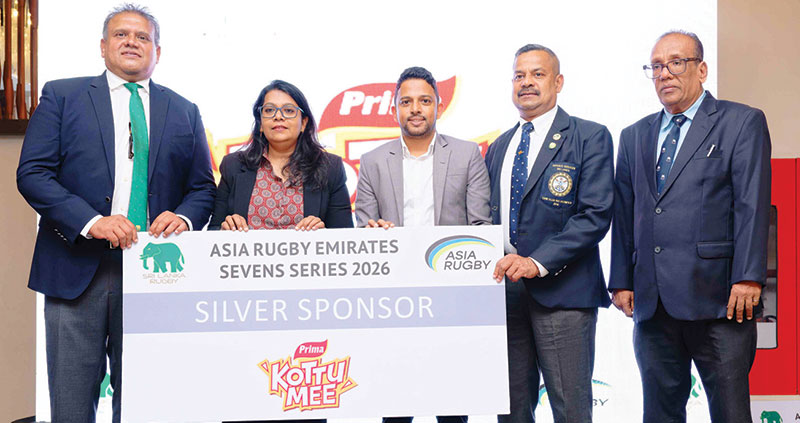
Prima KottuMee has come on board as the Silver Sponsor of the Asia Rugby Emirates Sevens Series 2026, throwing its weight behind Sri Lankan rugby as the national team prepares to take on the region’s best.
The prestigious tournament will reach its climax in Colombo on 17 and 18 October, giving local rugby enthusiasts an opportunity to witness some of Asia’s finest talent in action on home soil.
The 2026 edition features 24 national teams, with 12 sides each competing in the men’s and women’s categories, promising two days of fiercely contested rugby.
Prima KottuMee has been a longstanding supporter of Sri Lankan rugby, extending its backing to the sport at school, club and national levels.
Over the years, the brand has played an active role in supporting players, teams and tournaments, contributing to the development and promotion of rugby across the country.
With Colombo set to host the final leg of the series, Prima KottuMee hopes to add further momentum to the occasion while reaffirming its commitment to nurturing local sporting talent.

by Rex Clementine
The long awaited overhaul of Sri Lanka Cricket has reached a decisive stage, with the Supreme Court set to play a pivotal role next week in determining the fate of the proposed new constitution.
For months, legal experts have been burning the midnight oil, working on sweeping reforms aimed at dragging cricket administration into the modern era and bringing its governance structure into line with international standards. The draft constitution was presented to Parliament and following days of debate, received the legislature’s initial nod. The matter is now before the Supreme Court, where interested parties have been given an opportunity to raise objections.
A lawyer and former cricket board chief Thilanga Sumathipala have so far filed objections. The judges will examine whether these challenges have merit and more importantly, whether the proposed constitution is compatible with the law of the land.
One contentious provision that has raised eyebrows among key stakeholders is the proposal to strip District Cricket Associations of their voting rights.
October 20 is the deadline for submitting objections. The court will then fix dates for arguments, following which the judges are expected to communicate their determination to the Speaker of Parliament within 48 to 72 hours.
Parliament will subsequently have to complete the remaining legislative formalities before the new constitution can become law, potentially drawing the curtain on decades of mediocrity, mismanagement and administrative wrangling in cricket administration.
More objections had been anticipated from those who have called the shots at Maitland Place in recent years. Although several expressed reservations behind closed doors, few have shown any appetite for a courtroom battle.
There is a delicious irony here. When these gentlemen were running Sri Lanka Cricket, they would dash to Hulftsdorp at the drop of a hat, seeking judicial intervention even if a reporter called them ‘misfits’. Now, with the very structure that sustained them facing the axe, they appear to have developed a sudden case of cold feet.
The proposed constitution promises greater transparency in the running of the cash rich cricket board. Equally important is the emphasis on efficiency and professionalism, with suitably qualified individuals expected to occupy key administrative positions rather than appointments being dictated by friendships, club loyalties or reputations earned on the cricket field.
The Sunday Island learns that the Attorney General’s Department has been providing legal advice and expertise to the Cricket Transformation Committee from the outset.
Former ICC legal officer David Becker was also brought on board to lend his expertise to the drafting of the new constitution.
For years, successive governments have been reluctant to confront the cricket establishment, despite mounting public pressure for meaningful reform. Administrators survived one controversy after another, even weathering a unanimous parliamentary resolution calling for their removal following the national team’s disastrous performances.
Their survival owed much to their connections in the corridors of power. Whenever their positions came under serious threat, the spectre of Sri Lanka losing its ICC membership was raised, effectively holding the country’s cricketing future to ransom.
This time, however, the familiar manoeuvres have been conspicuous by their absence.
President Anura Kumara Dissanayake recognised the depth of public dissatisfaction with cricket administration and opted for a different approach. Rather than installing a political loyalist, as has so often been the practice when filling influential positions, he entrusted the responsibility to Eran Wickramaratne, a figure from the opposition political camp.
A former first-class cricketer and banker, Wickramaratne brought financial expertise to an institution where fiscal discipline had long been a subject of concern.
AKD also enlisted the services of three respected former cricketers; Kumar Sangakkara, Roshan Mahanama and Sidath Wettimuny, to help steer Sri Lankan cricket through a difficult period.
It is said that members of the Cricket Transformation Committee, despite hailing largely from the Colombo and Kandy elite, have been so impressed by President AKD’s vision and his hands off approach to cricket administration that they are now inclined to cast their votes for the NPP at the next election. That, if true, would be quite a political transformation in its own right.
The results on the field have not arrived as quickly as supporters would have wished. Sri Lanka’s performances remain a source of frustration and there is still a mountain to climb before the national team can regain its standing among the game’s elite.
But one significant change is already evident. Those entrusted with the responsibility of putting cricket back on its feet have sent an unmistakable message: no individual, however celebrated or influential, is bigger than the game.
Even the superstars are beginning to fall in line.
That, in itself, is no small achievement in a cricketing culture where reputations have too often carried more weight than results.
The real test, of course, lies ahead. A new constitution alone will not produce world class cricketers or restore Sri Lanka to its former glory. But sound administration is the foundation on which lasting success must be built.
After years of false starts, broken promises and endless power struggles, Sri Lankan cricket finally has an opportunity to turn the page.

Record 1,600 students take Russian Classical Ballet examination in Sri Lanka

Half a million people join protests in France, but some turn violent

Deadly fire breaks out at Canada military base

Showers or thundershowers will occur in most parts of the island after 1.00 p.m.

Buddhist hierarchy demands prison perks for monk convicts

Debate on NCM against Speaker postponed indefinitely

‘Dates have the highest sugar content to fight Coronavirus’

Sunday Island 27 December – Headlines

#SundayIsland 17th December – Headlines

Sunday Island – 28th March

Sunday Island Headlines – 21 March

Sunday Island – 21st February – Headlines
-

 Latest News5 days ago
Nissanka’s return headlines Sri Lanka’s Test squad against Pakistan
-

 Latest News6 days ago
Farhan and Sadaqat help Pakistan seal series in style
-

 Features6 days ago
Intake 16: 45 years of duty and honour
-
 News6 days ago
Malwathu Chapter issues statement on talks with President over Gnanasara Thera’s robes
-
 News6 days ago
CP alleges NPP has taken the blame for illegal US sanctions on Iranian vessels
-

 Opinion6 days ago
How long can Sri Lanka remain silent on its demographic crisis?
-

 News4 days ago
Sri Lanka, India caught in US-Iran ship crisis
-

 Latest News5 days ago
Kusal Mendis’ unbeaten 87 hands Sri Lanka consolation win