
Latest News
Hamza Shaikh century caps powerful display from Young Lions batters

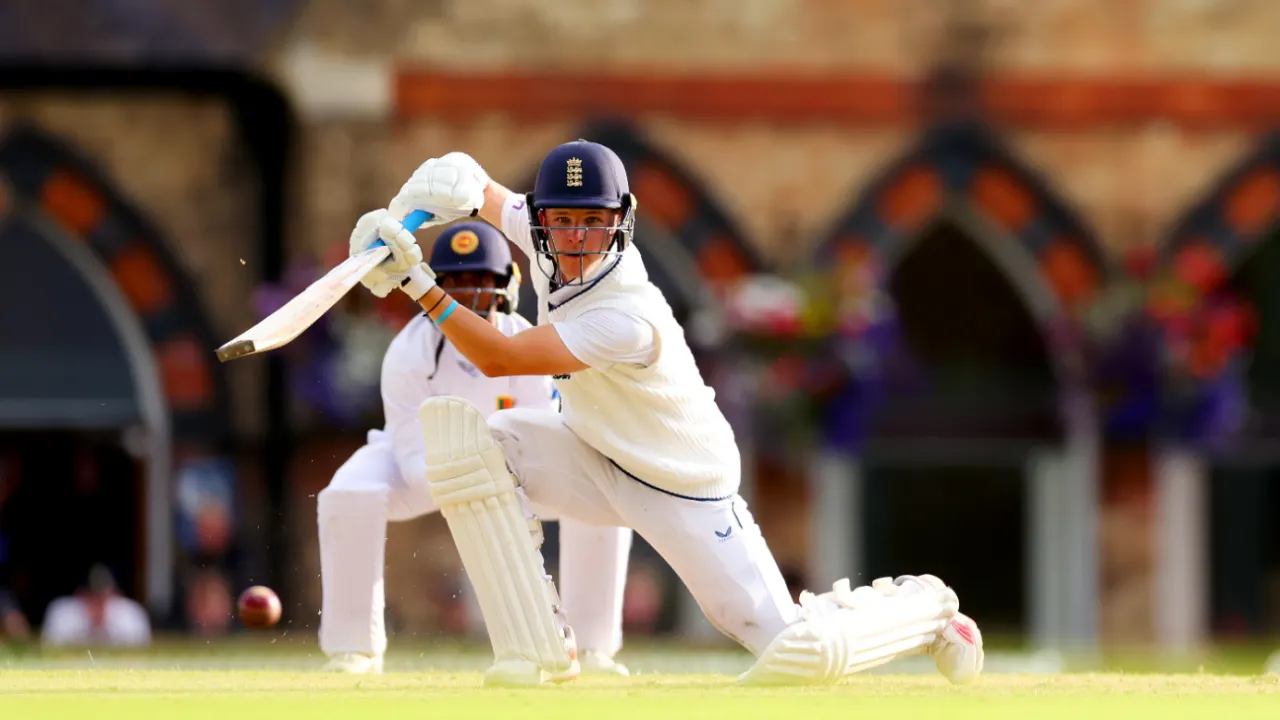
Hamza Shaikh played a true captain’s innings to put England firmly in control at the end of day two in the second Youth Men’s Test against Sri Lanka at Cheltenham.
Displaying an admirable work ethic, sound temperament and no little skill, the Warwickshire batsman fashioned a high-class innings of 107 from 210 balls and shared in a transformative partnership of 121 with Rocky Flintoff for the fifth wicket as England reached the close on 401 for 5, a handsome first-innings lead of 248.
Flintoff also impressed, raising a measured 82 not out from 148 deliveries with 8 fours and 2 sixes, while Jaydn Denyl posted 91 and Keshana Fonseka 76 as England fought hard to assume pre-eminence at the College Ground. Sri Lanka’s bowlers worked tirelessly throughout to build pressure on a true pitch, but it is the home side who will be in a position to dictate terms when they resume their first innings on day three with five wickets still standing.
With two days still to play, England have an opportunity to further extend their advantage and still allow themselves plenty of time to bowl Sri Lanka out and win the match and, with it, the series.
Resuming on 73 for 1, England’s initial goal was to overhaul Sri Lanka’s first-innings total of 153 with plenty of wickets in hand. This they achieved, thanks in large part to Denly, the Kent left-hander dominating a substantial second-wicket partnership of 85 in 24.5 overs with Fonseka.
How Sri Lanka must have rued passing up a wonderful opportunity to dismiss the opener before he had added to his overnight tally, Tisara Ekanayake fumbling a straightforward chance at mid-on off the bowling of Vihas Thewmika in the second over of the day. That near miss appeared to adversely affect Denly, who faced 21 balls without scoring.
He was soon into his stride and made the tourists pay for their profligacy, hoisting the aggrieved Thewmika over mid-wicket for six as the second wicket pair raised a 50 partnership in 99 balls. When skipper Dinura Kalupahana again struggled to hit his line and length, Sri Lanka deployed spin at both ends in their quest to engineer a breakthrough.
It arrived with the Young Lions still 14 runs in arrears, Denly pinned lbw on the front foot by leg spinner Praveen Maneesha and dismissed just nine runs shy of three figures. Spanning 120 balls and adorned by 15 fours and a six, his progressive knock afforded the innings solid foundations.
Shaikh then joined forces with Fonseka in a steadfast alliance of 64 that served to propel England into credit. A bundle of hyperactive energy, Fonseka raised an assured 50 from 85 deliveries and had a hundred firmly in his sights when he inexplicably pulled Kalupahana to mid-wicket and departed shortly after lunch. He had faced 119 balls, accrued 12 fours and a six and provided crucial top-order cohesion.
A period of stalemate now ensued as both sides wrestled for control, spinners Maneesha and Thewmika probing for flaws in technique, while Shaikh and new batsman Noah Thain set their stall out to bat long and build a commanding lead. Thain blinked first, driving at Thewmika and holing out to Manuja Chanthuka running back from mid-on.
A picture of concentration, Shaikh grafted his way to a patient 50 from 120 balls, raising that landmark with his sixth four, swept behind square off Maneesha. Demonstrating an acute understanding of what was required of him, Flintoff played conservatively, offering staunch support to his captain after Sri Lanka had taken the new ball and ushering England to 303 for 4 and a lead of 150 at tea.
Flintoff showed glimpses of his outrageous talent in the final session, the 16-year-old producing some glorious off drives and pull shots to go to an authoritative half century from 114 balls, with 6 fours. Playing within himself, Shaikh nevertheless appeared pleasing on the eye as he attained three figures from 203 deliveries, going to his hundred in the grand manner by lifting Chanthuka’s slow left arm high over long-on for six before raising his bat to acknowledge the warm ovation delivered by an appreciative Festival audience.
He was out soon afterwards, skying a catch to mid-off off the bowling of Chanthuka, who finished the day with 2 for 59 from 29 overs.
Brief scores:
England U19 401 for 5 in 117 overs (Hamza Shaikh 107, Jaydn Denly 91, Rocky Flintoff 82*, Keshana Fonseka 76; Manuja Chanthuka 2-59) lead Sri Lanka U19 153 in 45.2 overs (Gayana Weerasinghe 77; Naavya Sharma 5-44, Harry Moore 2-38, Charlie Barnard 2-35) by 248 runs
[Cricinfo]

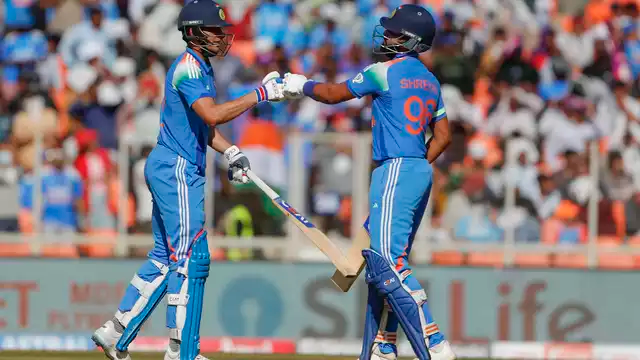
Squad for the first three ODIs: Shubman Gill [C], Rohit Sharma, Virat Kohli, Shreyas Iyer [VC], KL Rahul [WK], Nitish Kumar Reddy, Axar Patel, Naman Dhir, Anshul Kamboj, Gurnoor Brar, Ruturaj Gaikwad, Arshdeep Singh, Ishan Kishan [WK], Mohammed Siraj, Prasidh Krishna*, Kuldeep Yadav
Squad for fourth and fifth ODIs: Shreyas Iyer [C], Rohit Sharma, Virat Kohli, Tilak Varma, Ishan Kishan [WK, VC], Nitish Kumar Reddy, Axar Patel, Naman Dhir, Auqib Nabi, Gurnoor Brar, Ruturaj Gaikwad, Arshdeep Singh, Kumar Kushagra [WK], Mohammed Siraj, Yash Thakur, Kuldeep Yadav
[Cricbuzz]
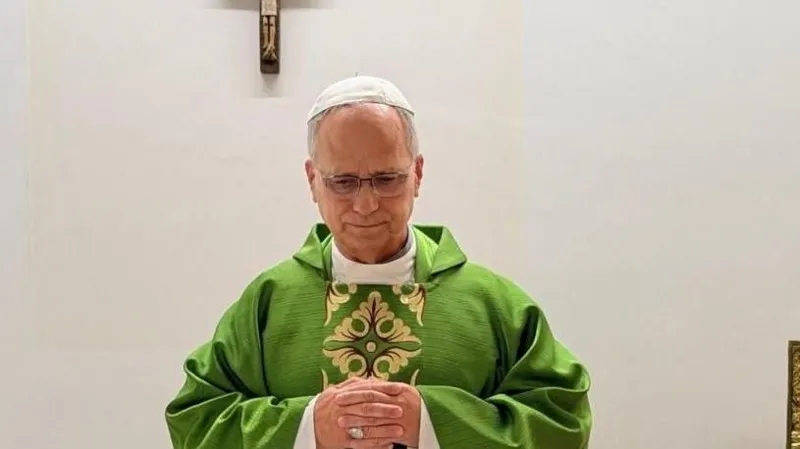
Pope Leo XIV has been pictured celebrating Mass from hospital, in the first images of him released by the Vatican since he underwent lung surgery.
The 71-year-old pontiff was diagnosed with lung cancer after the surgery at Rome’s Gemelli Hospital on Tuesday afternoon, which the Vatican said had been “successful” and proceeded without complications.
The images shared on Friday showed the Chicago-born Pope wearing a green robe while standing behind a makeshift altar on the tenth floor of the hospital.
Pope Leo “celebrated with the medical and nursing staff” and thanked workers for their service, the Vatican press office said.
On Friday, the Pope’s doctors said tests had shown “a steady improvement in his general condition” since his procedure.
His doctors said that a chest X-ray indicated “good recovery of the operated lung”.
The whole lower lobe of the Pope’s right lung was removed “to ensure the procedure was radical”, the Vatican said following the surgery.
“After the operation, the Pope awoke normally and returned after a brief period of observation to his room,” it said earlier, before he spent a “peaceful night” at the hospital.

Pope Leo first announced that he would be having the operation during his weekly Sunday prayers, telling the crowd in St Peter’s Square that doctors had found a “well-contained” nodule on his lung “at an early stage” and advised him to have it removed.
Nodules are quite common and not necessarily cancerous, but after it was examined the medical team confirmed it was, “as suspected by pre-operative tests”, the Vatican said. He was diagnosed with lung adenocarcinoma.
The Vatican has stressed that the Pope had shown no symptoms of infection or illness prior to the procedure.
[BBC]
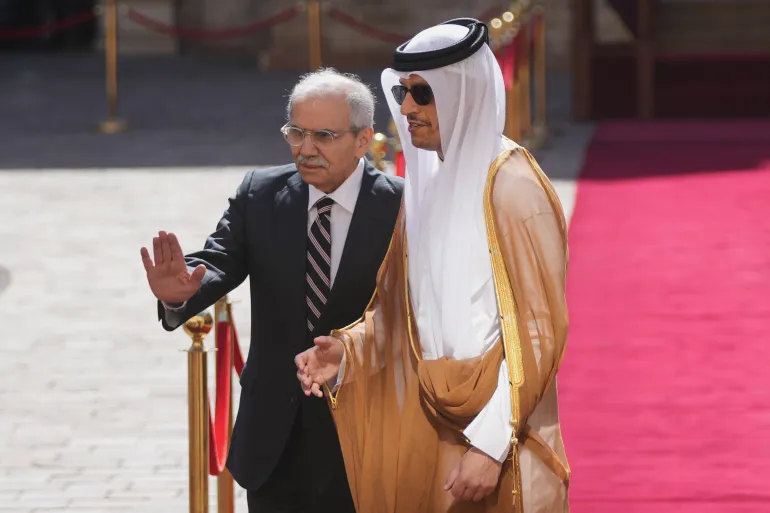
Qatar’s prime minister has announced plans to set up what he described as a “massive” solar plant in Lebanon to help ease its energy crisis.
Sheikh Mohammed bin Abdulrahman bin Jassim Al Thani made the announcement during his visit to Beirut on Friday, after meeting his Lebanese counterpart, Nawaf Salam.
“We have agreed to establish a comprehensive framework for cooperation in the energy sector and to present viable solutions,” Sheikh Mohammed said.
QatarEnergy has reached an agreement with French company TotalEnergies to jointly develop a solar power plant in Lebanon as an initial project.
The aim is to develop a major investment project “that would benefit the Lebanese economy, as well as the Qatari companies and entities participating in it”, he added.
Prime Minister Salam said he would put the plans for Lebanon’s electricity sector to the Lebanese Cabinet soon.
“The Qatari side will fund, implement and activate the project without any cost on the Lebanese state,” Lebanon’s leader said, adding that such a move is important because of the country’s financial crisis.
Lebanon’s state electricity company is one of the biggest sources of debt, haemorrhaging about $40bn over past decades with a bloated workforce and outdated infrastructure. The company provides only a few hours of electricity a day and the state, until a year ago, took advances from the Central Bank when diesel fuel ran out.
Sheikh Mohammed said Doha stands in “solidarity with the Lebanese people” and the entire region “in this dire hour”. Lebanon has been struggling with multiple energy crises in recent years and the situation has been compounded by the country’s financial collapse and Israel’s ongoing assault.
Earlier in the day, the Qatari PM also met Lebanon’s president and parliament speaker.
Among the topics discussed was the situation in southern Lebanon, where Israel continues its assault, capturing dozens of towns and villages.
Sheikh Mohammed said “Israeli violations within the Lebanese territories” were a large part of his talks.
He said that Israel should withdraw from Lebanon and cease its attacks, adding that Qatar is working in coordination with the United States to help lay the groundwork for future reconstruction in southern Lebanon to allow displaced people to return to their homes.
Israeli attacks on southern Lebanon have continued despite a ceasefire agreed in June. Under the agreement brokered by the US, the Lebanese government is to disarm Iran-backed Hezbollah. In return, Israeli forces will gradually withdraw from southern areas that they occupy. However, Hezbollah is not part of the agreement and has refused to disarm until Israel withdraws from the country.
Lebanese authorities say Israeli attacks have killed more than 4,300 people in the country since March. About 1.2 million people were also displaced in Lebanon at the height of the war.
Although most have returned home since the June ceasefire, more than 300,000 people remain displaced, according to the International Organization for Migration.
Lebanon’s PM Salam thanked Qatar for its “continuous” support during some of Lebanon’s “darkest hours”.
[A;jazeera]

Iyer to lead in last two New Zealand ODIs, Kushagra earns maiden call-up

Pope pictured for first time since surgery and cancer diagnosis

Qatar announces ‘massive’ solar plant project in Lebanon

Samagi Spice Exports to launch Ceylon Cinnamon based beverage range

Asian Cup in Saudi Arabia could be postponed by a year amid Houthi attacks

Houthi missile attack on Yemeni presidential palace kills five, minister says

‘Dates have the highest sugar content to fight Coronavirus’

Sunday Island 27 December – Headlines

#SundayIsland 17th December – Headlines

Sunday Island – 28th March

Sunday Island Headlines – 21 March

Sunday Island – 21st February – Headlines
-

 News6 days ago
Sri Lanka escalates anti-graft drive with Shiranthi’s jailing
-
 News7 days ago
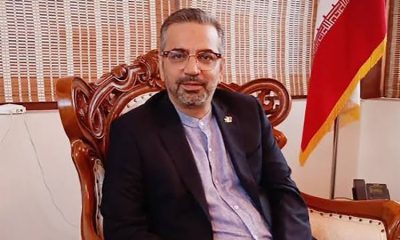
NPP govt. reminded of its responsibilities as US warship leaves Colombo
-

 Latest News5 days ago
Farhan and Sadaqat help Pakistan seal series in style
-

 News6 days ago
Iranian ships stranded, Lanka fears US sanctions
-

 Latest News4 days ago
Nissanka’s return headlines Sri Lanka’s Test squad against Pakistan
-
 News7 days ago
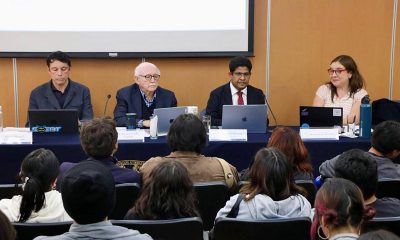
Interdicted top House official Kularatne receives special recognition in Mexican Parliament
-
 Features5 days ago
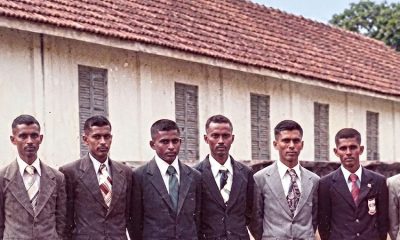
Intake 16: 45 years of duty and honour
-
 News5 days ago
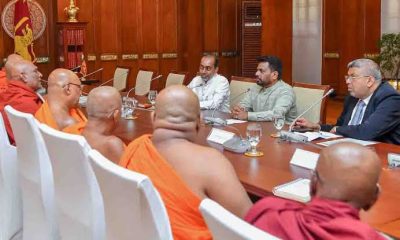
Malwathu Chapter issues statement on talks with President over Gnanasara Thera’s robes