
Business
Standard Chartered Sri Lanka globally recognised for gender equality with EDGE Certification

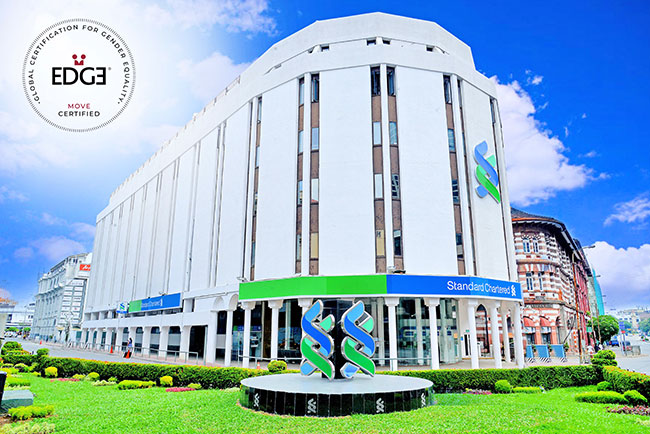
Standard Chartered Sri Lanka has been certified at the second highest level of the three-tiered Economic Dividends for Gender Equality (EDGE) Certification – “Move: Showcasing Progress”, marking a first for Sri Lanka. The Bank’s EDGE Certification, the process of which was supported by the International Finance Corporation (IFC) under the IFC-DFAT Women in Work programme, helps recognise its strategic commitment to creating a gender-equal workplace that benefits employees, customers and partners.
Launched at the World Economic Forum (WEF) in 2011, EDGE, is the leading global assessment methodology and business certification standard for evaluating corporate commitment to gender equality. Supported by IFC, a licensed partner of EDGE Certification, Standard Chartered Bank’s workplace gender equality performance was assessed and evaluated against global and industry benchmarks. This certification recognises the Bank’s People and Diversity & Inclusion Strategy to be a strong and effective institutional framework of policies and practices that showcase progress in equal representation, pay equity and equitable career flows.
Additionally, Standard Chartered offers several programmes that promote equality in the workplace, introducing a fair pay charter, employee support groups and mentoring programmes among others which led to achieving 50:50 gender balance in the workforce, 100% maternity return rates and 50% new women recruits. The Bank’s participation in the two-year IFC-DAFT Women in Work, SheWorks partnership, further enhanced these endeavours.
In some of the key highlights noted during the validation process, Standard Chartered was highly commended on areas such as equal access to leadership development opportunities, strong framework of policies and procedures, inclusivity of the work environment, balanced gender composition in management positions and flexible work conditions.
Bingumal Thewarathanthri, Chief Executive Officer, Standard Chartered Sri Lanka, commenting on the Bank being certified at the EDGE Move level said, “In an ever-changing corporate world, where competitiveness among firms have reached new heights and as the world moves towards adapting new ways of working, we at Standard Chartered continuously strive to ensure equality among our workforce, which is our greatest asset. We believe investing in the wellbeing of our workforce promotes empowerment and aids our employees to passionately engage in assigned duties. Therefore, this internationally recognised accreditation marks a significant milestone in our global journey towards positioning Standard Chartered as a thought leader for gender equality.”
Ransi Dharmasiriwardhana, Head of Human Resources & Country Chair, Diversity & Inclusion, Standard Chartered Sri Lanka stated, “At Standard Chartered Sri Lanka, we take great pride in our strong Diversity and Inclusion (D&I) culture, it is in our DNA and at the heart of our business. I am so proud that Standard Chartered Sri Lanka is one of two markets in our entire global network to have received this certification, a clear indication of the unique culture we have in Sri Lanka. Our success is driven by our exclusive benefits, robust systems, cutting edge policies and comprehensive procedures at all stages of the employee life cycle which has enabled a strong platform for equal opportunities, strong performance and professional growth for all our employees irrespective of their differences. We will continue the implementation of these best practices and build on the existing great work environment that promotes, empowers and most importantly takes care of our people!”
“Strengthening women’s role in the workplace not only helps to unlock opportunities for increased business impacts for a company, but also paves the way for economic growth and development in a country. For Sri Lanka, there is no better time for it than now as we work towards a resilient recovery from the COVID-19 pandemic,” said Victor Antonypillai, Acting Country Manager for IFC Sri Lanka and Maldives. “We are delighted that Standard Chartered Bank – an IFC SheWorks Sri Lanka partner – is moving towards this direction by stepping up their efforts in promoting an equal and inclusive workplace. We believe that this feat will encourage more Sri Lankan companies to commit to gender equal workplaces in the future.”
Further to being Great Place to Work® certified for the third consecutive year in 2021, the Bank was recently named one of the 10 ‘Best Workplaces™ for Women in Sri Lanka’ for implementing multiple initiatives to support the advancement of women in the workplace.

Business
ADB intervention offers an oasis for Delft, but basic infrastructure remains a daily struggle

A tour reveals the widening gap between Delft’s tourism promise and the realities of island life
By Sanath Nanayakkare
Stepping onto Neduntheevu – better known as Delft Island – can feel like slipping off the edge of the map into one of Sri Lanka’s least-explored frontiers.
For the traveller seeking an escape from the urban grid, this remote island off the Jaffna peninsula offers an alluring picture of a forgotten paradise: wild horses, coral and limestone fences, sun-bleached dwellings and a community accustomed to life at the margins.
But beneath that romantic veneer lies a far harsher reality.
For the people who live and work here, survival remains an everyday balancing act shaped by inadequate infrastructure, acute water scarcity, unreliable transport and growing frustration over what they see as years of neglect.
Some crucial lifelines, however, have begun to reach these distant shores, largely through the intervention of international development partners.
The Asian Development Bank (ADB) has played an important role in strengthening water security on Delft, through a Sea Water Reverse Osmosis (SWRO) plant designed to provide a critical source of potable water to the island.
The plant was designed with an initial capacity of about 50 cubic metres – or 50,000 litres – of potable water a day, with the potential to expand production to 100 cubic metres. At present, it supplies roughly 40% of Delft’s population.
For residents and local businesses, the plant has provided much-needed relief. Yet operational constraints mean that it currently runs for only about 20 minutes a day, limiting the volume of water available and forcing households and businesses to find additional sources simply to meet their daily needs.
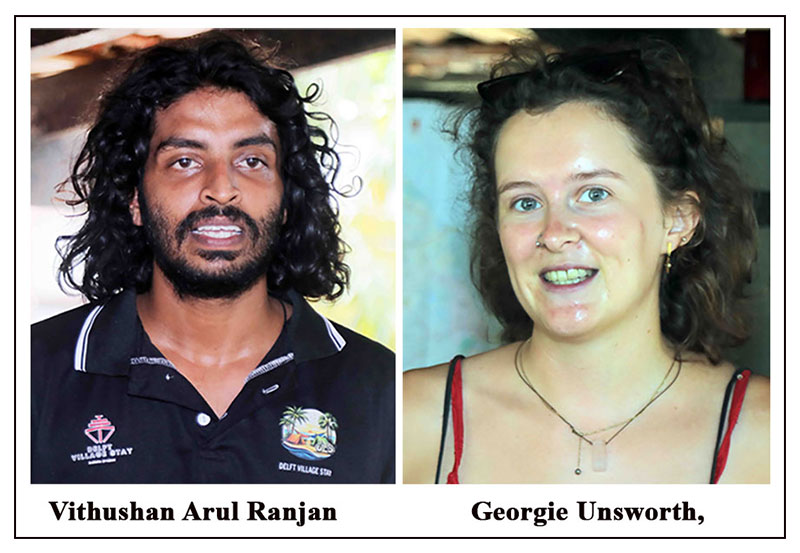
Few understand that struggle better than Vithushan Arul Ranjan, affectionately known as Tommy, a young Energy and Environmental Technology graduate of the University of Sri Jayewardenepura. In 2021, Vithushan launched Delft Village Stay on family land as a community-based tourism venture. It has since grown into an award-winning eco-retreat accommodating up to 25 guests in eco-huts and traditional rooms.
His enterprise has received recognition at both regional and international levels, including the Northern Province Tourism Award 2025 and a recommendation in the 2025 edition of the Lonely Planet Guide.
His business is built around responsible tourism, with an emphasis on bringing economic benefits to the local community. But operating an eco-retreat on one of Sri Lanka’s most isolated islands comes at a considerable cost.
“It is almost impossible to focus on the business when we are constantly in survival mode,” Vithushan says.
Georgie Unsworth, a UK/Belgium visitor turned team member at Delft Village Stay, highlights the stark contrast between Neduntheevu’s magical appeal and the harsh realities locals face regarding basic infrastructure and rights. While tourists want to support sustainable growth and prioritise resident needs – fearing a repeat of southern Sri Lanka’s over-tourism – they are often distressed by severe plastic pollution and a lack of recycling facilities. Ultimately, Unsworth emphasises that visitors prefer authentic, responsible experiences over luxury amenities like AC boats and swimming pools, urging that fundamental local needs be addressed before expanding tourism.
One of his biggest challenges is something most tourism businesses take for granted: drinking water. Because Delft’s groundwater is severely affected by salinity, Delft Village Stay has to transport drinking water from across the Jaffna peninsula. The business spends around Rs. 35,000 a month just to bring in enough water to meet the basic requirements of its guests.
The problem extends well beyond the tourism sector. Residents say Delft’s fragile connection with the mainland remains heavily dependent on a small fleet of vessels – two government ferries and one private boat – that are vulnerable to breakdowns, overcrowding and unpredictable schedules.
The consequences can be severe.
Recently, a month-long interruption to regular boat services effectively isolated the island, disrupting the supply of essentials including cooking gas and drinking water.
The island’s tourism ambitions have also exposed the gap between policy aspirations and ground realities.
Government plans to develop Delft as an eco-tourism destination have encouraged a growing flow of visitors, but residents and tourism operators argue that visitor numbers cannot be increased sustainably without first strengthening the island’s basic infrastructure.
The dangers became starkly apparent when an unofficial private boat carrying tourists capsized with 10 people on board. A potentially fatal tragedy was reportedly averted only after local fishermen and Navy personnel rushed to the rescue.
The incident offered a sobering reminder that tourism development in remote locations requires more than branding a destination as an ecological paradise.
For policymakers and development planners looking towards Sri Lanka’s north, Delft offers a clear lesson. Ambitions for zero-emission, community-based and environmentally sustainable tourism cannot move faster than the basic needs of the people who live there.
Reliable maritime transport, expanded water and wastewater management, proper waste disposal and functioning public amenities are not optional extras. They are the foundations upon which any sustainable tourism economy must be built.
The ADB-supported water infrastructure offers a glimpse of what targeted investment can achieve. But Delft’s experience also shows that a single intervention, however important, cannot resolve a much wider infrastructure deficit.
The island may have wild horses, coral walls, ancient ruins and a growing reputation among international travellers.
But before Delft can truly become the eco-tourism showcase policymakers envision, it must first become a place where its residents can reliably secure something as fundamental as water.
“That is the real test of whether the island’s tourism promise can translate into sustainable development – or whether the Lonely Planet image of Delft will remain little more than a façade over the daily hardships of its people,” says Vithushan Arul Ranjan.

By Sanath Nanayakkare
The unfolding developments surrounding the massive internal financial irregularity at the National Development Bank PLC (NDB), valued at approximately LKR 13.2 billion, continue to demand rigorous public scrutiny.
As months have passed since the initial disclosure of the fraud in early 2026, questions regarding institutional accountability, regulatory oversight, and corporate governance remain central to discussions concerning the stability and transparency of Sri Lanka’s financial sector.
First coming to light through corporate disclosures and subsequent regulatory reviews, the LKR 13.2 billion incident represents one of the largest internal fraud cases recorded within a major commercial institution in recent times. Because NDB is a systemically important institution – with major state-backed shareholding through entities such as the Employees’ Provident Fund (EPF), the Employees’ Trust Fund (ETF), Sri Lanka Insurance Corporation (SLIC), and the Bank of Ceylon (BOC) – the implications extend far beyond normal corporate missteps.
Public interest advocates and financial analysts have repeatedly emphasised that any major lapse in a bank of this magnitude warrants total transparency to maintain public confidence. Although the Central Bank of Sri Lanka (CBSL) and bank management have publicly assured stakeholders that customer deposits remain secure and day-to-day operations unaffected, the broader governance questions regarding how such significant vulnerabilities went undetected remain a subject of intense public debate.
A focal point of concern among financial analysts and governance watchdogs is the framework surrounding the independent forensic audit commissioned to investigate the transactions.
Entrusted to international expertise via Deloitte Touche Tohmatsu India LLP, the audit’s mandate includes examining the circumstances of the fraudulent operations as well as evaluating historical lapses in internal controls, oversight, and compliance.
However, critics, including public interest figures, have raised questions regarding the timeline for the finalisation and release of these findings.
Parliamentary oversight bodies, such as the Committee on Public Finance (CoPF), have previously engaged with regulatory authorities to review the matter.
Observers point out that timely public access to comprehensive audit findings – without compromising ongoing criminal investigations by entities like the Criminal Investigation Department (CID) – is vital to ensuring that systemic gaps are permanently closed.
The NDB case has also cast a sharp spotlight on broader corporate governance norms in Sri Lanka, bringing elements such as board oversight, the role of external auditors, and potential conflict-of-interest perceptions into sharper focus.
Critics argue that maintaining public trust requires strict adherence to ethical standards at every level of corporate leadership, from commercial bank directors to regulatory supervisors.
“As the country seeks to attract sustainable foreign direct investment, establishing an uncompromised standard of accountability is paramount. For the memory of this financial fraud to serve a constructive purpose, institutional watchdogs, lawmakers, and regulators must ensure that investigations are brought to a transparent, logical, and publicly accountable conclusion, ensuring that public resources and systemic financial integrity are robustly safeguarded,” keen observers of this massive brank fraud say.
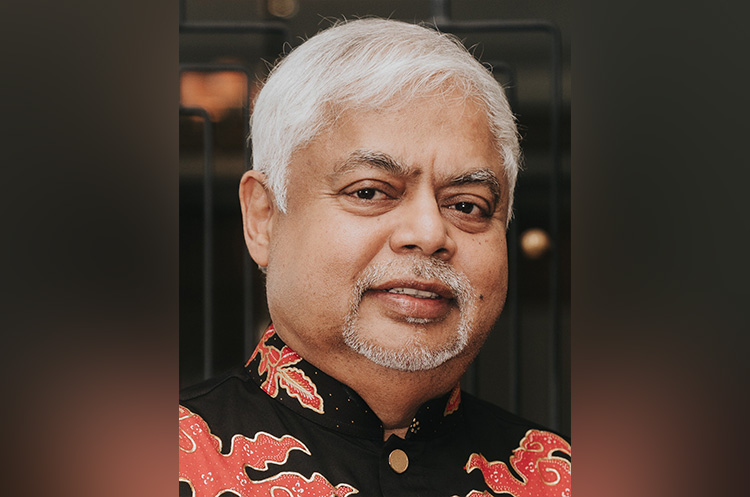
Trust and regulatory clarity are fast becoming ASEAN’s next major competitive advantages, according to Dato’ Sri Vijay Eswaran, Executive Chairman of the QI Group of Companies.
Writing in The Business Times Insights: ASEAN Intelligence 2026, Eswaran noted that while cost competitiveness remains central to the region’s economic appeal, geopolitical uncertainty, shifting supply chains, and rapid technological advancements mean cost is no longer the sole deciding factor for investors. Global companies are increasingly prioritizing stability, predictable policies, and reliable institutions.
Eswaran emphasized that sustainable growth depends on pairing the region’s traditional strengths—such as strategic manufacturing, a growing talent pool, and regional connectivity—with strong institutional governance. Pointing to the OECD’s Asia Capital Markets Report 2026, he highlighted that transparency and institutional maturity are key drivers of investor confidence.
Addressing the rapid integration of artificial intelligence, Eswaran argued that clear guardrails are essential to prevent business hesitation. He commended regional initiatives balancing innovation with oversight, including Malaysia’s AI infrastructure developments, Singapore’s AI Verify framework, Indonesia’s formalization of its National Artificial Intelligence Strategy, the Philippines’ National AI Strategy Roadmap 2.0, and Vietnam’s new risk-based legal framework.

Sun directly overhead Galle, Angulugaha, Imaduwa, Telijjawila, Yatiyana and Tangalle about 12.08 noon today (07)

Showers above 50 mm are likely at some places in the Uva and Eastern provinces.

Harshitha’s composed knock seals Sri Lanka’s semi-final berth

‘Choka Malli’ slips out of country before travel ban

Dengue death toll rises to 73

Ranil accuses govt. of undermining democracy

‘Dates have the highest sugar content to fight Coronavirus’

Sunday Island 27 December – Headlines

#SundayIsland 17th December – Headlines

Sunday Island – 28th March

Sunday Island Headlines – 21 March

Sunday Island – 21st February – Headlines
-

 News5 days ago
Denied of promotion to SC despite vacancies, justice Gurusinghe retires
-

 Latest News5 days ago
Grade 5 scholarship exam results released
-

 News5 days ago
22A: SC urged to suspend hearing, appoint full bench
-

 Midweek Review6 days ago
The local and global dynamics of Sri Lanka’s 22nd Amendment
-

 News3 days ago
Namal remanded until Sept. 18 over Airbus deal investigation
-
 News5 days ago
Govt. seeks NATO assistance
-

 Latest News2 days ago
Tharanga creates history with Diamond League crown in Brussels
-

 News6 days ago
40 professional organisations and TU oppose proposed 22A