
Opinion
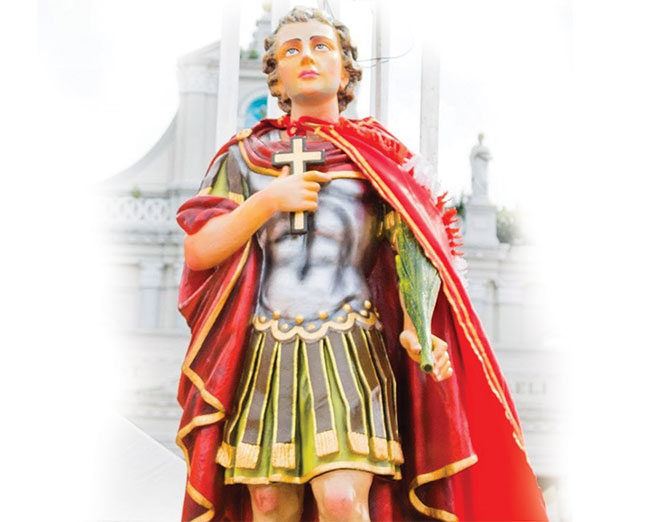
St. Sebastian Martyr and Soldier

By Godfrey Cooray
Senior Attorney-at-Law
Former Ambassador of Sri Lanka to Norway
President National Catholic Writers’ Association
According to legend, St. Sebastian was born at Narbonne in Gaul. He became a soldier in Rome and encouraged Marcellian and Marcus who were sentence to death to remain firm in their faith. St. Sebastian made several converts; among them were master of the rolls Nicostratus, who was in charge of prisoners and his wife Zoe, a deaf mute whom he cured.
Sebastian was named captain in the Roman army by Emperor Diocletian, by Emperor Maximian when Diocletian went to the east. Neither knew that Sebastian was a Christian. When it was discovered that Sebastian was indeed a Christian, he was ordered to be executed. He was shot with arrows and left to die but when the widow of St. Castulas went to recover his body, she found out that he was still alive and nursed him back to health. Soon after his recovery, St. Sebastian intercepted the Emperor; denounced him for his cruelty to Christians and was beaten to death on the Emperor’s order.
St. Sebastian was venerated in Milan as early as the time of St. Ambrose. St. Sebastian is the patron of archers, athletes, soldiers, the Saint of the youths and is appealed to protection against the plagues. St. Ambrose reveals that the parents that young Sebastian were living in Milan as a noble family. St. Ambrose further says that Sebastian along with his three friends, Pankasi, Pulvius and Thorvinus, completed his education successfully with the blessing of his mother, Luciana. Rev. Fr. Dishnef guided him through his spiritual life. From his childhood Sebastian wanted to join the Roman army and with the help of King Karnus, young Sebastian became a soldier and within a short span of time he was appointed as the Commander of the army of King Karnus. Emperor Diocletian declared Christians the enemy of the Roman Empire and instructed judges to punish Christians who have embraced the Catholic Church. Young Sebastian as one of the servants of Christ converted thousands of other believers into Christians. When Emperor Diocletian revealed that Sebastian had become a catholic, the angry Emperor ordered for Sebastian to be shot with arrows to death. After being shot by arrows, one of Sebastian supporters Irane treated him and cured him. When Sebastian was cured he came to the Emperor Diocletian and professed his faith for the second time disclosing that he is a servant of Christ. Astounded by the fact that Sebastian is a Christian, Emperor Diocletian ordered the Roman army to kill Sebastian with clubs.
In the liturgical calendar of the church, the feast of the St. Sebastian is celebrated on the 20 January. This day is indeed a mini Christmas to the people of Kandana irrespective of their religion. The feast commences with the hoisting of the flag staff on the 11th of January at 4 p.m. at the Kandana junction, along the Colombo Negombo road. There is a long history attached to the flag staff. The first flag staff which was an arecanut tree, 25 feet tall, was hoisted by the Aththidiya family of Kandana and today their descendants continue hoisting of the flag staff as a tradition. This year’s flag staff, too, was hoisted by the Raymond Aththidiya family. Several processions originating from different directions carrying flags meet at this flag staff junction. The pouring of milk on the flag staff has been a tradition in existence for a long time. The Nagasalan band was introduced by a well-known Jaffna businessman that had engaged in business in Kandana in the 1950s. The famous Kandaiyan Pille’s Nagasalan group takes the lead even today in the procession. Kiribath Dane in the Kandana town had been a tradition from the time immemorial.
According to the available history from the Catholic archives and volume III of the Catholic Church in Sri Lanka, the British period of vicariates of Colombo, written by Rev. Ft. Vito Perniola SJ in 1806, states that the British government granted the freedom of conscious and religion to the Catholics in Ceylon and abolished all the anti-Catholic legislation enacted by the Dutch. The proclamation was declared and issued on the 3rd of August 1796 by Colonel James Stuart, the officer commanding the British forces of Ceylon stated “freedom granted to Catholics” (Sri Lanka national archives 20/5).
Before the Europeans, the missioners were all Goans from South India. In the year 1834, on the 3rd of December, XVI Gregory the Pope, issued a document Ex Muwere pastoralis ministeric, after which Ceylon Catholic Church was made under the south Indian Cochin diocese. Very Rev. Fr. Vincent Rosario, the apostolic vicar general was appointed along with 18 Goan priests (The Oratorion Mission in Sri Lanka being a history of the Catholic Chruch 1796-1874 by Arthur C Dep Chapter 11 pg 12) Rev Fr. Joachim Alberto arrived in Sri Lanka as missionary on the 6th of March 1830 when he was 31 years old and he was appointed to look after catholics in Aluthkuru Korale consisting Kandana, Mabole, Nagodaa and Ragama. There have been one church built in 1810 in Wewala about 3 miles away from Kandana. Wewala Chruch was situated bordering Muthurajawela which rose to fame for its granary. History reveals that the entire area was under paddy cultivation of which most of them were either farmers or toddy tappers. History further reveals that there have been an old canal built by King Weera Parakrama Bahu. Later it was built to flow through the Kelani River and Muthurajawela up to Negombo which was named as the Dutch Canal (RL Brohier historian). During the British time this canal was named as Hamilton Canal and was used to transport toddy, spices, paddy and tree planks of which the latter were stored in Kandana. Therefore, Kandana name derives from Kandan Aana.
Rev. Fr. Joachim Alberto purchased a small piece of land called Haamuduruwange watte at Nadurupititya in Kandana and put up a small cadjan chapel and placed a picture of St. Sebastian for the benefit of his small congregation. In 1837 with the help of the devotees, he dug a small well of which water was used for the drinking and bathing and today this well is still operative. He bought several acres of land including the present cemetery premises. Moreover, he had put up the church at Kalaeliya in honour of his patron St. Joachim where his body has been laid to rest according to his wish of the Last will attested by Weerasinghe Arachchige Brasianu Thilakaratne. Notary public dated 19th of July 1855. Present Church was built on the property bought on the 13th of August 1875 on deed no. 146 attested by Graciano Fernando. Notary public of the land Gorakagahawatta Aluthkuru Korale Ragam Pattu in Kandana within the extend ¼ acre from and out of the 16 acres. According to the old plan number 374 made by P.A. H. Philipia, Licensed surveyor on the 31st of January 195, 9 acres and 25 perches belonged to St. Sebastian church. However, today only 3 acres, 3 roods and 16.5 perches are left according to plan number 397surveyed by the same surveyor while the rest had been sold to the villagers. According to the survey conducted by Orithorian priest on the 12th of February 1844 there were only 18 school going catholic students in AluthKuru Korale and only one Antonio was the teaching for all classes. In 1844 there was no school at Kandana (APF SCG India Volume 9829).
According to Sri Lanka National Archives (The Ceylon Almanac page 185) in the year 1852 there were 982 Catholics – male 265, female 290, children 365 with a total of 922. According to the census reports in 2014 prepared by Rev. Ft. Sumeda Dissanayake TOR, the director Franciscan Preaching group, Kadirana Negombo a survey revealed that there are 13,498 Catholics in Kandana.
According to the appointment of the Missionaries in the year 1866-1867 by Bishop Hillarien Sillani, Rev. Fr. Clement Pagnani OSB was sent to look after the missions in Negoda, Ragama, Batagama, Thudella, Kandana, Kala Eliya and Mabole. On the 18th of April 1866, the building of the new church commenced with a written agreement by and between Rev. Fr. Clement Pagnani and the then leaders of Kandana Catholic Village Committee. This committee consisted of Kanugalawattage Savial Perera Samarasinghe Welwidane, Amarathunga Arachchige Issak Perera Appuhamy, Jayasuriya Arachchige Don Isthewan Appuhamy, Jayasuriya Appuhamylage Elaris Perera Muhuppu, Padukkage Andiris Perera Opisara, Kanugalawattage Peduru Perera Annavi and Mallawa Arachchige Don Peduru Appujamy. The said agreement stated that they will give written undertaking that their labour and money will be utilised to build the new church of St. Sebastian and if they failed to do so they were ready to bear any punishment which will be imposed by the Catholic Church.
Rev. Fr. Bede Bercatta’s book “A History of the Vicariate of Colombo page 359” says that Rev. Fr. Stanislaus Tabarani had problems of finding rock stones to lay the foundation. He was greatly worried over this and placed his due trust in divine providence. He prayed for days to St. Sebastian for his intercession. One morning after mass, he was informed by some people that they had seen a small patch of granite at a place in Rilaulla, close to the church premises although such stones were never seen there earlier and requested him to inspect the place. The parish priest visited the location and was greatly delighted as his prayers has been answered. This small granite rock amount provided enough granite blocks for the full foundation of the present church. This place still known as “Rilaulla galwala”. The work on the building proceeded under successive parish priests but Rev. Fr. Stouter was responsible for much of it. The façade of the church was built so high that crashed on the 2nd of April 1893.
The present façade was then built and completed in the year 1905. The statue of St. Sebastian which is behind the altar had been carved off a “Madan tree”. It was done by Paravara man named Costa Mama, who was staying with a resident named Miguel Baas at Ridualle, Kandana. This statue was made at the request of Pavistina Perera Amaratunge, mother of former Member of Parliament gate muadliyer D. Panthi Jayasuirya. The church was completed during the time of Rev. Fr. Keegar and was blessed by then Archbishop of Colombo Dr. Anthony Courdert OMI on the 20th of January 1912. In 1926, Rev. Fr. Romauld Fernando was appointed as the parish priest to Kandana Church. He was an educationalist and a social worker. Without any hesitation he can be called as the father of education to Kandana. He was the pioneer to build three schools to Kandana: Kandana St. Sebastian Boys School, Kandana St. Sebastian English Girls School and, the Mazenod College Kandana. Later he was appointed as the principal of the St. Sebastian Boys English School. He bought a property at Kandana close to Ganemulla road and started De Mazenod College. Later, it was given officially to Christian Brothers of Sri Lanka, by then Archbishop of Colombo, Peter Mark. In 1931, there were three hundred students (history of De Lasalle brothers by Rev. Fr. Bro Michael Robert). Today, there are over three thousand five hundred students and is one of the leading catholic schools in Sri Lanka. In 1924, one Karolis Jayasuriya Widanage donated two acres to build De Mazenod College for its extension.
Frist priest from Kandana to be ordained was Rev. Fr. William Perera in 1904. With the help of Rev. Fr. Marcelline Jayakody, he composed the famous hymn “the Vikshopa Geethaya”, the hymn of our Lady of Sorrow.
The Life story of St. Sebastian was portrayed through a stage play called ” Wasappauwa” and the world famous German passion play Obar Amargave wchi was a sensation was initiated by Rev. Fr. Nicholas Perera. Legend reveals that in the year 1845 South Indian catholic on his way to meet his relatives in Colombo had brought down a wooden statue of St. Sebastian, one and half feet tail to be sold in Sri Lanka. When he reached Kalpitiya he had unexpectedly contracted malaria. He had made a vow at St. Anne’s Church,Thalawila, expecting a full recovery. En route to Colombo he had come to know about the church in Kandana and dedicated to St. Sebastian. In the absence of the then parish priest Rev. Fr. Joachim Alberto, the Muhuppu of the Church with the help of the others had agreed to buy the statue for 75 pathagas (one pahtaga was 75 cent). Even though the seller had left the money in the hands of the Muhuppu to be collected but he never returned.
On the 19 January 2006, Archbishop Oswald Gomis declared St. Sebastian Church as “St. Sebastian Shrine” by way of special notification and handed over the declaration to Rev. Fr. Susith Perera, the parish priest of Kandana.
On the 12 January 2014, Catholics in Sri Lanka celebrated the reception of a reliquary containing a fragment of the arm of St. Sebastian. The reliquary was gifted from the administrator of the Basilica of St. Anthony of Padua and was brought to Sri Lanka by Monsignor Neville Perera. His Eminence Cardinal Malcolm Ranjit, Archbishop of Colombo, accompanied by priests and a large gathering, received the relic at the Katunayake International Airport, and brought to Kandana led by a procession, and was enthroned at the St. Sebastian Shrine.
Rev. Fr. Lalith Expeditus the present administrator of the shrine has finalized all arrangements to conduct the feast of St. Sebastian on a grand scale.
The latest book written by Senior Lawyer Godfrey Cooray named “Santha Sebastian Puranaya Saha Kandana”. (The history of St. Sebastian and Kandana) was launched at De La Salle Auditorium De Mazenod College, Kandana.
The Archbishop of Colombo His Eminence Cardinal Malcolm Ranjith and former Chief Justice Priyasath Dep were the guests at the event.
The book discusses about the buried history of Muthurajawela and Aluth Kuru Korale civilization, the history of Kandana and St. Sebastian. The author discusses the historical and archaeological values and culture.
156th Annual Feast of St. Sebastian’s National Shrine Kandana will be held on 20th of January 2024. On the 19th of January, Friday at 7pm Solemn Vespers will be presided by His Eminence Cardinal Malcolm Ranjith, he Archbishop of Colombo. Festive High Mass will be presided by His Lordship Most Rev. Dr. J. D. Anthony, the Auxiliary Bishop of Colombo on the 20th of January at 8am.



Malimawa government and Yahapalanaya are dissimilar in many respects, the most important being whilst Yahapalanaya had to manage with a balancing act in the parliament, Malimawa has the luxury of a massive parliamentary majority. However, they share one thing in common; the main plank for the election of both presidents Dissanayake and Sirisena was their solemn pledge for the eradication of corruption. It looks as if both have failed miserably, on that count!
It did not take very long for Yahapalanaya’s first act of corruption; the bond scam. COPE, headed by the veteran politician D E W Gunasekara, picked on this but to prevent the presentation of the report, Sirisena dissolved the parliament which was done at the request of the Prime Minister Ranil, to whom Sirisena was obliged for the unexpected bonanza of becoming president. This enabled the second bond scam to take place, also masterminded by Ranil’s friend Mahendran, imported from Singapore!
Malimawa convinced the voters that they are the only group that could get rid of the 76-year curse of corruption and made a multitude of promises, most of which are already broken! What is inexcusable is that, in a short space of time, they seem to have become as corrupt as any previous government and they seem to excel their predecessors in doling out excuses. Of course, they have a band of devoted social media influencers who are very adept at throwing mud at their opponents which they hope would help to cover up their sins. How long this strategy is going to work is anybody’s guess!
Some of these issues were addressed in an article, “Squeaky clean image of JVP in tatters” by Shamindra Ferdinando (The Island, 22 April). I hasten to add that, though some of his supporters are still trying to paint an honest image of AKD, he should be held responsible for many of these misdeeds and irresponsible acts.
One of the first acts of the newly elected president AKD was to appoint two retired police officers, who openly worked for the NPP through the Retired Police Collective, to top posts; Ravi Seneviratne as Secretary to the Ministry of Public Security and Shani Abeysekara as the Director of CID. Both of them held top jobs in the CID when the Easter Sunday attack took place and were blamed, by some, that they too failed to prevent this horrendous act of terrorism. In addition, there was a case against Seneviratne for causing accidents whilst under the influence and Abeysekara was exposed as a ’fixer’ by the infamous Ranjan Ramanayaka tapes. No one would have objected had they been appointed after their names were cleared but AKD’s rash decision to appoint them, disregarding all norms, clearly showed what his long-term strategy was. Was this not political corruption?
Now these two tainted officers are heading the search for the mastermind of the Easter Sunday attacks! Are they being used to divert attention away from Ibrahim’s family that was supposed to have funded the project? After all, Mohamed Ibrahim, the father, was on the national list of the JVP, and the two sons were the leading suicide bombers. It is a matter of great surprise that the Catholic church led by Cardinal Ranjith is not demanding the removal of these two officers from the investigation, who obviously have a conflict of interest. It becomes even more surprising when the demand is made for the Deputy Minister of Defence Aruna Jayasekara to resign, for the same reason; as well stated in the editorial, “Of masterminds” (The Island, 21 April).
The first act of the new parliament was to elect ‘Dr’ Ranwala as the speaker and pretty soon his doctorate was challenged. He stepped down to look for the certificate, which he is still looking for! Though some of the ministers too have admitted that Ranwala may not have a PhD, AKD seems silent. When Ranwala was involved in an RTA, police had run out of breathalyser tubes and blood was taken after a safe period had elapsed. Why has AKD no guts to sack him?
Episode of the release of 323 containers, without the mandatory inspections, seems to be receding to the past and the long-awaited report may be gathering dust in the president’s office! It is very likely due to political intervention and we probably will never know who benefitted.
A minister, who claimed that he is living on his wife’s salary and on the generosity of the party faithfuls, seems to have been able to build a three-storey house in a suburb of Colombo. He claims that when he made that statement, his father was alive but has since died and he has inherited everything as he is the only son! What a shame that Marxists do not believe in sharing the family wealth with sisters? Though the opposite may be true, his explanation that he was able to build a house in Colombo by selling the land in Anuradhapura rings hollow!
The worst of all was the coal scam which would have long lasting consequences on our economy. I do not have to go into details as much has been written about this but wish to point out AKD’s role. In spite of ex-minister Kumara Jayakody being indicted by CIABOC, AKD continued to give unstinted support till it became pretty obvious that he had to go. In fact, he is being charged with an offence which was committed whilst he was serving the Ceylon Fertilizer Company which was under the purview of, guess who? AKD when he was the Minister of Agriculture.
Devastating report from the Auditor General,before Jayakody’s resignation, would not have happened if AKD had his way. He attempted a number of times to get one of his henchmen appointed to this coveted post, overlooking those experienced officers in the department. AKD’s political machinations were thwarted thanks to the integrity of some members of the Constitution Council. If not for them, AKD’s nominee would have been in post and, perhaps, his friend Jayakody would still be the minister.
Malimawa seems to have beaten Yahapalanaya rather than being the second!
By Dr Upul Wijayawardhana

Doctor Upul Wijayawardhana (eminent physician), posed a riddle for us. He wrote about that island Sri Lanka as ‘ this little dot in the ocean’ when deriding the remark of President Dissanayake who had said that Sri Lanka was a hunduva , a term that indicated a small volume: me hunduve inna puluvan da? (Can you live in this restricted space?) Most sensible people, even uneducated, judge that the volume of a little drop (of whatever) is smaller than that of a hunduva; so is weight. When the learned doctor emphatically maintains ‘….we are not a hunduva’ but ‘… a little dot in the ocean…’, is the pot calling the kettle black or worse?
Physically and population wise, Sri Lanka is neither ‘a little dot’ nor ‘a hunduva. This is all in the rich imaginations of Dissanayake and Wijayawardhana. I once counted that there were more than 50 members of the UN who were smaller than Sri Lanka in physical and population size. England was a sizeable island with a small population in the northwest corner of Europe in late 18th century when it began to become what China, with 1.3 billion people and jutting out to the Pacific, is now. From about 1850, when the population of Great Britain was about 20 million, less than that of Sri Lanka in 2026, it ruled more than half the world. Besides, do not forget Vanuatu, Kiribati, Cook Islands, Antigua and Barbuda, Barbados, Lesotho and New Zealand (who habitually beats us at cricket). New Zealand with 5 million population played against 1.5 billion population India (1:300) for the T20 cricket championship a few weeks ago. I quietly wished New Zealand would win; so much for crap about dots in the Indian Ocean or the south Pacific.
Dr. Wijayawardhana also wrote about history and about ‘The achievements of Hunduwa’. The massive reservoirs and extensive irrigation systems in rajarata and ruhuna as well as the stupa are indeed tremendous works of irrigation and bear witness to superior ingenuity and organising ability, for the time they were built. They compare very well among structures elsewhere in the ancient world. Terms like ‘granary of the East’ must be taken with more than a grain of salt. Facile use of such terms does not take account of whatever shreds of evidence there is of adversity in those times. Monsoon Asia over the ages has more or less regularly suffered from floods, droughts and consequent famines. The last dire famine was in Bengal in 1944. The irrigation works in Lanka were a magnificent response to those phenomena. The modern response has been scientific agriculture making India a major grain exporter, from near famine conditions in 1973-74. Recall Indira Gandhi’s garibi hatao (eliminate poverty) speech to the General Assembly of the UN, that year.
The bhikkhu who wrote down the tripitaka in aluvihara did so because there was the threat of a severe famine in the course of which learned bhikkhu might have come to harm. Buddhist thought over centuries had been passed from generation to generation vocally (saamici patipanno bhagavato savaka (listener) sangho) and the departure from that tradition must have required a major threat of famine. There are stories of bhikkhu from Lanka fleeing from dire straits. In the same vein, while the mahavamsa speaks of kings and their valiant deeds, there is little account of the large mass of little people who lived then. Sensible teaching of the history of a people must include the history of as much of the people as possible and some idea of the history of other peoples in comparable times to avoid feeling dangerously smug and arrogant, which we have seen many times over.
Usvatte-aratchi

The resignation of Energy Minister Kumara Jayakody comes after several weeks of controversy over his ministerial role. The controversy sharpened when the minister was indicted by the Commission on Bribery and Corruption for a transaction he was involved in ten years ago as a government official in the Fertiliser Corporation. The other issue was the government’s purchase of substandard coal from a new supplier. Minister Jayakody’s resignation followed the appointment of a Special Presidential Commission of Inquiry to investigate coal and petroleum purchases. The minister who resigned, along with the Secretary to the Ministry of Energy, Udayanga Hemapala, stated that they did not wish to compromise the integrity of the investigation to be undertaken by the Commission of Inquiry.
The government’s initial resistance to holding the minister accountable for the costly purchase was based on the argument that the official procedure had been followed in ordering the coal. However, the fact that the procedure permitted a disadvantageous purchase which has come to light on this occasion suggests a weakness in the process. The government’s appointment of the Special Presidential Commission of Inquiry to examine purchases as far back as 2009 follows from this observation. In this time 450 purchases are reported to have been made, and if several of them were as disadvantageous as this one, the cost to the country can be imagined. The need to investigate transactions since 2009 also arises from the possibility that loopholes in official government procedures in the past would have permitted private enrichment at a high cost to the country.
Concerns have been expressed in the past that the purchase of coal and petroleum, often on an emergency basis, enabled the use of emergency procurement processes which do not require going through the full tender procedures. The government has pledged to eradicate corruption as its priority. As a result, the general population would expect it to do everything within its power to correct those systems that permitted such corruption. Accountability is not only forward looking to ensure non-corrupt practices in the present, it is also backward looking to ensure that corrupt practices of the past are discontinued. This would be a matter of concern to those who headed government ministries and departments in previous governments. Those who have misapplied the systems can be expected to do their utmost to resist any investigation into the past.
Politically Astute
One of the main reasons for the government’s continuing popularity among the general population, as reflected in February 2026 public opinion poll by Verité Research, has been its willingness to address the problem of corruption. Public opinion studies have consistently shown that corruption remains one of the top concerns of citizens in Sri Lanka. The arrests and indictments of members of former governments have been viewed with general satisfaction as paving the way to a less corrupt society. At the same time, the resignations of Minister Kumara Jayakody and Secretary Udayanga Hemapala are an indication that not even government members will be spared if they are found to have crossed red lines. This is an important signal, as public confidence depends not only on holding political opponents to account but also on demonstrating fairness and consistency within one’s own ranks.
There appears to be a strategy on the part of the opposition to target government leaders and allege corruption so that ministers will be forced to step down. Organised protests against other ministers, and demonstrations outside their homes, are on the rise. The government appears not to want to give in to this opposition strategy and therefore delayed the resignation of Minister Jayakody until it had itself established the Special Presidential Commission of Inquiry. It enabled the minister to step down without it seeming that the government was yielding to opposition pressure. In political terms, this was a calibrated response that sought to balance the need for accountability with the need to maintain authority and coherence in governance.
The demand by opposition parties to focus attention on the coal problem could also be seen as an attempt to shift the national debate from the corruption of the past to controversies in the present. The opposition’s endeavour would be to take the heat off themselves in regard to the corruption of the past and turn it onto the government by making it the focus of inquiries into corruption. The decision to set up a Special Presidential Commission of Inquiry accompanied by the resignation of the minister and the ministry secretary was a politically astute way of demonstrating that the government will have no tolerance for corruption. It will also help to remind the general public about the rampant corruption of past governments which prevents the opposition’s corruption accusations against the government from gaining traction amongst the people.
New Practice
The resignation of a government minister who faces allegations but has not been convicted is still a relatively new practice in Sri Lanka. The general practice in Sri Lanka up to the present time has been for those in government service, if found to be at fault, to be transferred rather than removed from office. This is commonly seen in the case of police officers who, if found to have used excessive force or engaged in abuse, are transferred to another station rather than subjected to more serious disciplinary action. A similar pattern was seen in the case of former minister Keheliya Rambukwella, who faced allegations of corruption in the health field but was reassigned to a different portfolio rather than removed from government.
Against this background, the present resignation assumes greater importance. It signals a willingness to break with past practices and to establish a higher standard of conduct in public office. However, a single instance does not in itself create a lasting change. What is required is the consistent application of the same principle across all cases, irrespective of political affiliation or convenience. This is where the government has an opportunity to strengthen its credibility. By ensuring that the same standards of accountability are applied to its own members as to those of previous governments, it can demonstrate that its commitment to good governance is not selective.
The establishment of the Special Presidential Commission of Inquiry, the willingness to accept ministerial resignation, and the recognition of systemic weaknesses in procurement are all steps in the right direction. The challenge now is to ensure that these steps are followed through with determination and consistency. If the investigations are conducted impartially and lead to meaningful reforms, the present controversy could mark a turning point. The resignation of the minister should not be seen as an isolated event but as the beginning of a new practice. If it becomes part of a broader pattern of accountability, it can contribute to a new political culture and to restoring public trust in government.
by Jehan Perera

Opposition holds NPP Cabinet responsible for coal scam, three times bigger than bond fraud

Case against Yoshitha and Daisy Forrest postponed

Three-judge bench rejects request by ex-IGP Pujith

Johnston gets bail after four months

Thousands of pets affected by Avurudu firecrackers; over 10,000 cases of trauma reported

Inadequate LPG price hike compels the vulnerable to subsidize the wealthy: Advocata Institute

‘Dates have the highest sugar content to fight Coronavirus’

Sunday Island 27 December – Headlines

#SundayIsland 17th December – Headlines

Sunday Island – 28th March

Sunday Island Headlines – 21 March

Sunday Island – 21st February – Headlines
-
 News4 days ago
Rs 13 bn NDB fraud: Int’l forensic audit ordered
-

 Opinion5 days ago
Shutting roof top solar panels – a crime
-

 News6 days ago
From Nuwara Eliya to Dubai: Isha Holdings markets Agri products abroad
-

 News1 day ago
No cyber hack: Fintech expert exposes shocking legacy flaws that led to $2.5 million theft
-

 News2 days ago
Lanka faces crisis of conscience over fate of animals: Call for compassion, law reform, and ethical responsibility
-
 News1 day ago
Whistleblowers ask Treasury Chief to resign over theft of USD 2.5 mn
-
 News5 days ago
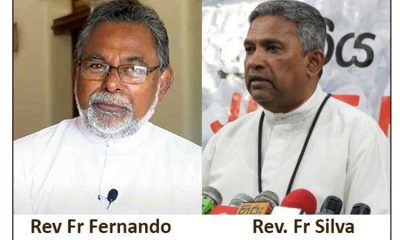
Church calls for Deputy Defence Minister’s removal, establishment of Independent Prosecutor’s Office
-
 Life style6 days ago
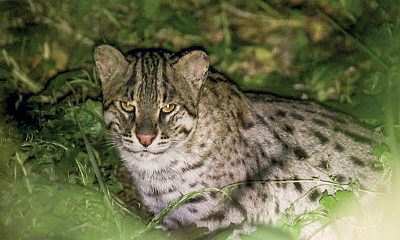
After dark in Sri Lanka: Tiny wild cats step into the spotlight