
Features
Sri Lanka Back as Donor Darling Ignores the BRICS


France’s Macron and the US Fish in the Indian Ocean
By Darini Rajasingham-Senanayake
COLOMBO. 23 August 2023 (IDN) —Sri Lanka continues to swing wildly between being a ‘Donor Darling’ flooded with foreign ‘aid’ and ‘advisors’ on the one hand to a ‘bankrupt’ pariah or outcast on the other.
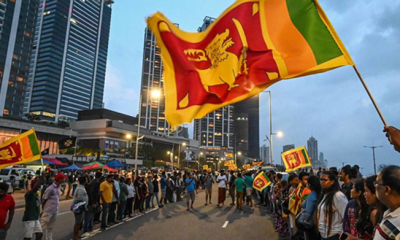
Last year, the strategic Indian Ocean Island went from South Asia’s wealthiest nation with the best social and human development indicators to a beggar—humiliated and shunned by the ‘international community.’ This was after staging its first-ever Sovereign Default due to a Eurobond debt trap and purported lack of US dollars.
The default triggered rapid rupee depreciation and instantly beggared citizens amid a distracting trans-nationally networked, remote-controlled ‘Aragalaya’ protest operation led by social media influencers. Ironically, there was a blockade on fuel shipments to the country amid the United States Marine’s ‘Sea Vision’ training program for the Sri Lanka Navy.
Only India, the South Asian regional hegemon and good neighbor, was willing and able to help at the time. The narrative in the local and global corporate media echo chamber was that there was no fuel, food, fertilizer, medicines, or tourists to generate exorbitantly privileged and copiously printed US dollars to buy necessities. As the rupee plummeted, newly appointed US-backed President Ranil Wickremesinghe promised famine and 15-hour power cuts by promoting fear, out-migration, and brain drain from the country.
Yet, miraculously, like the Phoenix risen from the ashes a year later, Sri Lanka is back, having taken mana from heaven in the form of an International Monetary Fund (IMF) loan of just $2.9 billion to be disbursed over four years, that enabled the magical US dollars to flow again!
Last week, the island hosted the Indo-Pacific Environmental Security Forum (IPESF) at Colombo’s Shangri La Hotel, which faces South Asia’s busiest Port. More than 140 senior officers from foreign defense forces and top-level environmentalists from 28 countries in the Indo-Pacific took part at the confab overlooking Galle Face, the Aragalaya protest site. The four-day Environmental Security conference was hosted by the US Indo-Pacific Command (INDOPACOM), Sri Lanka Navy (SLN), and Sri Lanka Coast Guard (SLCG).
Although described as an ‘environmental security’ conference, the IPESF did not discuss the environmentally devastating impacts and economic costs of the global military business industrial complex, including 750 plus US military bases worldwide, their carbon emissions, and military exercises.
Environmental impacts of military exercises and war, like the Nordstream pipeline destruction or stranding and death of Pilot Whales and Dolphins due to war games as sonar systems of aircraft carriers disorient large sea creatures, were NOT on the agenda.
Climate Hypocrisy
The environmental impact of the NATO war machine and ongoing wars in Ukraine and Africa were the elephant in the room at Colombo’s Shangri-La Environmental Security Forum. Instead, trendy topics like Debt for Nature Swaps (DFNS), also called Environment, Social and Governance (ESG) bonds based on opaque carbon credit calculations, urbanization, ocean plastics, partnerships for climate resilience, data science in climate risk management, etc. were agenda items.
Two weeks before the IPESF, on July 28, French President Emmanuel Macron paid a midnight visit to Sri Lanka, where the OECD’s Club de Paris, represents Eurobond holders who were primarily responsible for the default, was involved in ongoing IMF debt restructuring negotiations and Numbers Game that are set to deepen the country’s debt bondage.
Macron, attempting to Greenwash Odious Debt and the most corrupt, opaque, and crime-ridden sector of the Western global financial system—Bond trading and derivatives—had been promoting the ‘New Global Financing Pact,’ launched last month in Paris. Based on opaque Carbon Credit calculations, the ‘Anthropocene’ climate catastrophe narrative was used to market DFNS, or Green and Blue Bonds.
Predatory bond traders, principal among them BlackRock, have debt trapped over 55 countries in the Global South during COVID-19 lockdowns. Hence, anti-corruption activists in Sri Lanka had called for an outright ban on government borrowing on private bond markets, which caused the Sovereign Default worst economic crisis, and for the country to seek membership in BRICS and the New Development Bank.
Macron, facing a rout in West Africa, was fishing in Sri Lanka’s troubled waters and promised to set up an office of the French Agency for International Development (AFD) in Colombo.
French fisheries fleets stationed in the Seychelles have been accused of over-fishing and Ocean Grabbing and impoverishing Indian Ocean littoral fisheries communities for decades. Indeed, a Brookings Institution report pointed the finger at French fleets for depriving Somalian Fishers of their livelihoods and forcing them into piracy.
Hot on the heels of departing Macron, a Japanese Government team arrived in Colombo to shower aid on the Ranil-Rajapaksa regime and restart a rapid rail project. A couple of months before Macron’s visit, CIA chief William Burns had paid a top-secret visit to the country, and the United States Ambassador at Large for Cyberspace and Digital Policy, Nathaniel C. Fick, was expected in Colombo from 17 to 23 August 2023, according to the Department of State. The Chinese were in the country earlier.
Aid Dependence and a Corruption Pandemic
Is Sri Lanka, which sits on major global trade, energy, and Submarine Data Cable routes, back again as a ‘donor darling’? The strategic island, long deemed an “unsinkable aircraft carrier in the middle of the Indian Ocean,” clearly suffers from a geostrategic ‘Resource Curse,” as well as aid-induced Dutch Disease and de-industrialization:
The Island, although rich in valuable marine resources and minerals including Graphite, Zircon, Titanium, etc., now depends on European Union GSP plus handouts to export underwear stitched by women and girls, who are working long hours in Free Trade Zone factories and servicing tourists to earn foreign exchange.
Since Independence in 1948, ‘Aid’ dependency has permeated and penetrated the government, military, business elite, policy-making, and civil society institutions, impeding industrialization and development, particularly the leveraging of valuable marine and mineral resources, including Graphite and Phosphates for fertilizer.
So, too, national law and order and investigative agencies and institutions have been penetrated and compromised due to dependency on foreign aid and experts and politicization. This has left the country vulnerable to trans-nationally networked crime, corruption, and being pumped, dumped, and de-stabilized during staged exogenous economic shocks sans proper investigations, analysis, and research.
Policies of promoting brain drain and skilled out-migration have exacerbated dependency on foreign aid, advisors, and consultants in a country already reeling from two years of COVID-19 lockdowns that had debilitated institutions and oversight mechanisms and enabled Digital Colonialism also visible in the IMF and World Bank debt numbers games.
Middle-Income Country Trap to “Make the Economy Scream”
In 2019, the country was also pumped and dumped by World Bank ‘experts’ when Sri Lanka was upgraded to an Upper Middle-Income Country (MIC). MIC status rendered the island ineligible to access concessionary loans available to less developed countries.
During two years of economically devastating COVID-19 lockdowns, successive incompetent and corrupt Ranil-Rajapaksa regimes related business cronies borrowed from private capital markets and hedge funds like BlackRock that charge predatory interest rates because of the World Bank’s MIC trap—leading to the first-ever default in 2022.
Early in its post-colonial history, Ceylon/ Sri Lanka, caught in Cold War regional refractions, was subject to various exogenous political and economic shocks; the country’s first socialist Prime Minister, who set about nationalizing ports, airports, and plantations, was assassinated, and his successor faced a coup. Insurrections in the shape of ’Jakarta Method’ operations, followed by a 30-year globally networked ‘ethnic conflict.’
Then came the mysterious 2019 Islamic State (IS)-claimed attacks at Easter Sunday on tourist hotels and churches and Chinese investments to make the ‘economy and society scream’ and encourage the obdurately independent natives to accept the Millennium Challenge Corporation (MCC), compact and the Status of Forces Agreement (SOFA), to enable US boots on the ground.
Amid the Aragalaya protest drama, default, and regime change operation last year, there were shades of President Nixon’s instructions to the Central Intelligence Agency (CIA) to make Chile’s ‘economy scream’ as a prelude to the overthrow of democratically-elected Leftist President Salvador Allende and the installation of dictator General Pinochet in 1973 during the Cold War.
As protests unfolded, the newly installed pro-Washington Ranil-Rajapaksa regime predictably promoted the myth that “there is no alternative to the IMF” and further Eurobond borrowing and debt colonialism –seemingly in preparation for an IMF Firesale of assets (prime coastal and highland lands, energy, transport, and telecom infrastructure) to benefit Eurobond traders.
Resilient in the Asian 21st Century?
However, once again, the resilient island appears to be back in business and humming along, but this time, the pumping and dumping of Sri Lanka as a new hybrid Cold War ramps up in the Indian Ocean with remote Over the Horizon (OTH), cyber and economic war operations for Full Spectrum Dominance (FSD), by a crashing superpower seems different.
During the first Cold War, there was still space for the Non-Aligned Movement (NAM) to declare the Indian Ocean as a “Zone of Peace,’ free of nuclear weapons and foreign military bases—led by the world’s first female Prime Minister and a Socialist, Sirimavo Bandaranaike.
However, since the Sovereign Default last year, Sri Lanka has not only lost Economic Independence and Policy autonomy to the Washington Twins and colonial Club de Paris, ironically on its 75th year of so-called Independence after being pumped and dumped by the World Bank into an MIC Eurobond debt trap in 2019.
Sri Lanka has lost its voice and independent thinking due to an ill-conceived policy of Brain Drain promoted by the foreign ‘Force’ backed by the Ranil-Rajapaksa government. This, in the wake of COVID-19 lockdowns and hacking of national institutions and oversight mechanisms, is promoting (Digital) neo-colonialism, also apparent in the debt restructuring Numbers Games being played by the IMF’s experts and consultants, including Lazard, Clifford, and Chance.
While Sri Lanka is being carved up for an IMF Firesale of strategic assets, by IMF’s chosen accounting and legal firms, few among the remaining local intelligentsia have thought to question the adequacy of the exorbitantly privileged and copiously printed US Dollar to measure the ‘wealth of nations’ as the world de-dollarizes. After all, the US has a deficit of $32 Trillion and counting and was downgraded by one of its own rating agencies recently.
Perhaps Sri Lanka’s resilience and the quick turnaround this time also has to do with being flanked by Asian Giants, China and India, in what has been termed the ‘Asian 21st century,’ as the BRICS emerging economies overtake the traditional G7 economic heavyweights while de-dollarizing fast.
Ironically, while France’s Macron sought an invite to the BRICS party in Johannesburg, South Africa, this week, Colombo’s Ranil Wickremesinghe has turned a blind eye to calls that Sri Lanka join the BRICS and New Development Bank.
*The writer is a social and medical anthropologist with international development and political-economic analysis expertise.
[IDN-InDepthNews]








 ‘Adapt, shrink or die’ – thus runs the warning issued by the Trump administration to UN humanitarian agencies with brute insensitivity in the wake of its recent decision to drastically reduce to $2bn its humanitarian aid to the UN system. This is a substantial climb down from the $17bn the US usually provided to the UN for its humanitarian operations.
Considering that the US has hitherto been the UN’s biggest aid provider, it need hardly be said that the US decision would pose a daunting challenge to the UN’s humanitarian operations around the world. This would indeed mean that, among other things, people living in poverty and stifling material hardships, in particularly the Southern hemisphere, could dramatically increase. Coming on top of the US decision to bring to an end USAID operations, the poor of the world could be said to have been left to their devices as a consequence of these morally insensitive policy rethinks of the Trump administration.
Earlier, the UN had warned that it would be compelled to reduce its aid programs in the face of ‘the deepest funding cuts ever.’ In fact the UN is on record as requesting the world for $23bn for its 2026 aid operations.
If this UN appeal happens to go unheeded, the possibilities are that the UN would not be in a position to uphold the status it has hitherto held as the world’s foremost humanitarian aid provider. It would not be incorrect to state that a substantial part of the rationale for the UN’s existence could come in for questioning if its humanitarian identity is thus eroded.
Inherent in these developments is a challenge for those sections of the international community that wish to stand up and be counted as humanists and the ‘Conscience of the World.’ A responsibility is cast on them to not only keep the UN system going but to also ensure its increased efficiency as a humanitarian aid provider to particularly the poorest of the poor.
It is unfortunate that the US is increasingly opting for a position of international isolation. Such a policy position was adopted by it in the decades leading to World War Two and the consequences for the world as a result for this policy posture were most disquieting. For instance, it opened the door to the flourishing of dictatorial regimes in the West, such as that led by Adolph Hitler in Germany, which nearly paved the way for the subjugation of a good part of Europe by the Nazis.
If the US had not intervened militarily in the war on the side of the Allies, the West would have faced the distressing prospect of coming under the sway of the Nazis and as a result earned indefinite political and military repression. By entering World War Two the US helped to ward off these bleak outcomes and indeed helped the major democracies of Western Europe to hold their own and thrive against fascism and dictatorial rule.
Republican administrations in the US in particular have not proved the greatest defenders of democratic rule the world over, but by helping to keep the international power balance in favour of democracy and fundamental human rights they could keep under a tight leash fascism and linked anti-democratic forces even in contemporary times. Russia’s invasion and continued occupation of parts of Ukraine reminds us starkly that the democracy versus fascism battle is far from over.
Right now, the US needs to remain on the side of the rest of the West very firmly, lest fascism enjoys another unfettered lease of life through the absence of countervailing and substantial military and political power.
However, by reducing its financial support for the UN and backing away from sustaining its humanitarian programs the world over the US could be laying the ground work for an aggravation of poverty in the South in particular and its accompaniments, such as, political repression, runaway social discontent and anarchy.
What should not go unnoticed by the US is the fact that peace and social stability in the South and the flourishing of the same conditions in the global North are symbiotically linked, although not so apparent at first blush. For instance, if illegal migration from the South to the US is a major problem for the US today, it is because poor countries are not receiving development assistance from the UN system to the required degree. Such deprivation on the part of the South leads to aggravating social discontent in the latter and consequences such as illegal migratory movements from South to North.
Accordingly, it will be in the North’s best interests to ensure that the South is not deprived of sustained development assistance since the latter is an essential condition for social contentment and stable governance, which factors in turn would guard against the emergence of phenomena such as illegal migration.
Meanwhile, democratic sections of the rest of the world in particular need to consider it a matter of conscience to ensure the sustenance and flourishing of the UN system. To be sure, the UN system is considerably flawed but at present it could be called the most equitable and fair among international development organizations and the most far-flung one. Without it world poverty would have proved unmanageable along with the ills that come along with it.
Dehumanizing poverty is an indictment on humanity. It stands to reason that the world community should rally round the UN and ensure its survival lest the abomination which is poverty flourishes. In this undertaking the world needs to stand united. Ambiguities on this score could be self-defeating for the world community.
For example, all groupings of countries that could demonstrate economic muscle need to figure prominently in this initiative. One such grouping is BRICS. Inasmuch as the US and the West should shrug aside Realpolitik considerations in this enterprise, the same goes for organizations such as BRICS.
The arrival at the above international consensus would be greatly facilitated by stepped up dialogue among states on the continued importance of the UN system. Fresh efforts to speed-up UN reform would prove major catalysts in bringing about these positive changes as well. Also requiring to be shunned is the blind pursuit of narrow national interests.

 Hi! Great to be back after my Christmas break.
Thought of starting this week with egg white.
Yes, eggs are brimming with nutrients beneficial for your overall health and wellness, but did you know that eggs, especially the whites, are excellent for your complexion?
OK, if you have no idea about how to use egg whites for your face, read on.
Egg White, Lemon, Honey:
Separate the yolk from the egg white and add about a teaspoon of freshly squeezed lemon juice and about one and a half teaspoons of organic honey. Whisk all the ingredients together until they are mixed well.
Apply this mixture to your face and allow it to rest for about 15 minutes before cleansing your face with a gentle face wash.
Don’t forget to apply your favourite moisturiser, after using this face mask, to help seal in all the goodness.
Egg White, Avocado:
In a clean mixing bowl, start by mashing the avocado, until it turns into a soft, lump-free paste, and then add the whites of one egg, a teaspoon of yoghurt and mix everything together until it looks like a creamy paste.
Apply this mixture all over your face and neck area, and leave it on for about 20 to 30 minutes before washing it off with cold water and a gentle face wash.
Egg White, Cucumber, Yoghurt:
In a bowl, add one egg white, one teaspoon each of yoghurt, fresh cucumber juice and organic honey. Mix all the ingredients together until it forms a thick paste.
Apply this paste all over your face and neck area and leave it on for at least 20 minutes and then gently rinse off this face mask with lukewarm water and immediately follow it up with a gentle and nourishing moisturiser.
Egg White, Aloe Vera, Castor Oil:
To the egg white, add about a teaspoon each of aloe vera gel and castor oil and then mix all the ingredients together and apply it all over your face and neck area in a thin, even layer.
Leave it on for about 20 minutes and wash it off with a gentle face wash and some cold water. Follow it up with your favourite moisturiser.

 Superlatives galore were used, especially on social media, to highlight R&B singer Ne-Yo’s trip to Sri Lanka: Global superstar Ne-Yo to perform live in Colombo this December; Ne-Yo concert puts Sri Lanka back on the global entertainment map; A global music sensation is coming to Sri Lanka … and there were lots more!
At an official press conference, held at a five-star venue, in Colombo, it was indicated that the gathering marked a defining moment for Sri Lanka’s entertainment industry as international R&B powerhouse and three-time Grammy Award winner Ne-Yo prepares to take the stage in Colombo this December.
What’s more, the occasion was graced by the presence of Sunil Kumara Gamage, Minister of Sports & Youth Affairs of Sri Lanka, and Professor Ruwan Ranasinghe, Deputy Minister of Tourism, alongside distinguished dignitaries, sponsors, and members of the media.
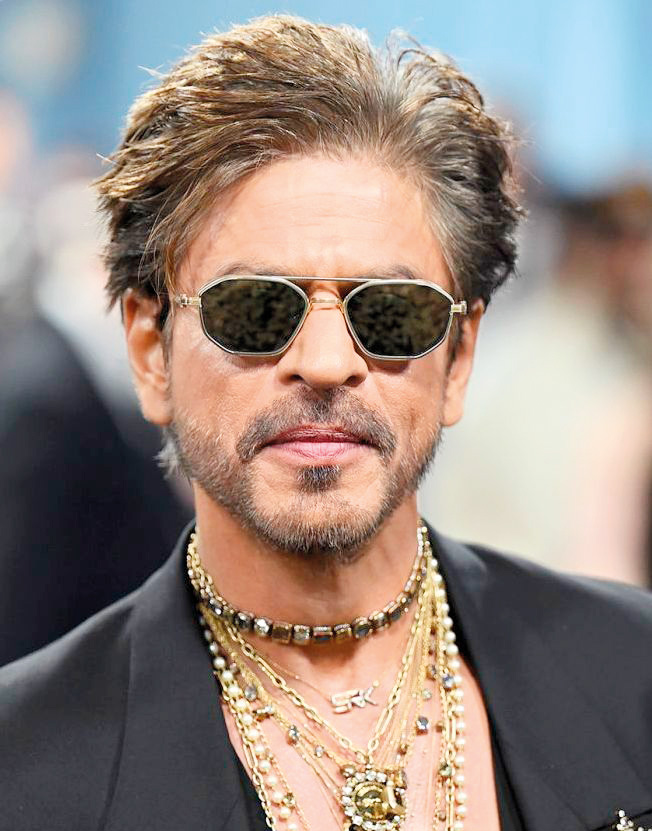
Shah Rukh Khan: Disappointed his fans in Sri Lanka
According to reports, the concert had received the official endorsement of the Sri Lanka Tourism Promotion Bureau, recognising it as a flagship initiative in developing the country’s concert economy by attracting fans, and media, from all over South Asia.

Nick Carter: His concert, too, was cancelled due to “Unforeseen circumstances
However, I had that strange feeling that this concert would not become a reality, keeping in mind what happened to Nick Carter’s Colombo concert – cancelled at the very last moment.
Carter issued a video message announcing he had to return to the USA due to “unforeseen circumstances” and a “family emergency”.
Though “unforeseen circumstances” was the official reason provided by Carter and the local organisers, there was speculation that low ticket sales may also have been a factor in the cancellation.
Well, “Unforeseen Circumstances” has cropped up again!
In a brief statement, via social media, the organisers of the Ne-Yo concert said the decision was taken due to “unforeseen circumstances and factors beyond their control.”
Ne-Yo, too, subsequently made an announcement, citing “Unforeseen circumstances.”
The public has a right to know what these “unforeseen circumstances” are, and who is to be blamed – the organisers or Ne-Yo!
Ne-Yo’s management certainly need to come out with the truth.
However, those who are aware of some of the happenings in the setup here put it down to poor ticket sales, mentioning that the tickets for the concert, and a meet-and-greet event, were exorbitantly high, considering that Ne-Yo is not a current mega star.
We also had a cancellation coming our way from Shah Rukh Khan, who was scheduled to visit Sri Lanka for the City of Dreams resort launch, and then this was received: “Unfortunately due to unforeseen personal reasons beyond his control, Mr. Khan is no longer able to attend.”
Referring to this kind of mess up, a leading showbiz personality said that it will only make people reluctant to buy their tickets, online.
“Tickets will go mostly at the gate and it will be very bad for the industry,” he added.

Donald Trump pauses US tariff hike on furniture, cabinets for one year

Usman Khawaja to retire after fifth Ashes Test

Around 40 dead in Swiss ski resort bar fire, police say

President pays homage to the Sacred Tooth Relic

Zohran Mamdani sworn in as New York City mayor

In pictures: New Year welcomed around the world

‘Dates have the highest sugar content to fight Coronavirus’

Sunday Island 27 December – Headlines

#SundayIsland 17th December – Headlines

Sunday Island – 28th March

Sunday Island Headlines – 21 March

Sunday Island – 21st February – Headlines
-
 News7 days ago
Street vendors banned from Kandy City
-

 Sports4 days ago
Gurusinha’s Boxing Day hundred celebrated in Melbourne
-
 News2 days ago
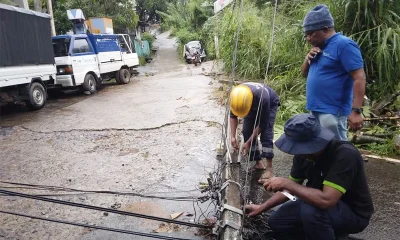
Leading the Nation’s Connectivity Recovery Amid Unprecedented Challenges
-

 News7 days ago
Lankan aircrew fly daring UN Medevac in hostile conditions in Africa
-

 Sports5 days ago
Time to close the Dickwella chapter
-

 Features3 days ago
It’s all over for Maxi Rozairo
-

 Features7 days ago
Rethinking post-disaster urban planning: Lessons from Peradeniya
-

 Opinion7 days ago
Are we reading the sky wrong?