
Sports
Schoolboy players must come out of their shackles


Western Province Rugby Sevens
by A Special Sports Correspondent
The much looked forward to schools rugby sevens is expected to kick off this weekend in Colombo as scheduled unless the restrictions imposed by the Covid pandemic upsets the applecart.
According to school rugby authorities and news published in newspaper, the inter-school rugby sevens tournament will be commenced with a ‘leg’ for Western Province schools at the Royal College Sports Complex in Colombo on December 18 and 19.
It’s good that the schools’ rugby authorities are having the sevens tournament for schools spread out in the provinces and with no involvement of spectators largely to protect the spectators. Just for the record sevens tournaments for schools have been lined up in Central Province (December 27), North Western Province (December 28), Sabaragamuwa Province (December 30) and Southern Province (December 31). We still don’t know whether the Sri Lanka Schools Rugby Football Association (SLSRFA) would get the winners of each category in these respective provincial tournaments to perform in a final showdown. Even if they don’t this is a good enough start for school rugby because we haven’t seen any rugby with schoolboys in action after March 14, 2020.
Schools produce much talent each year and this helps clubs absorb these products. But over the last two years clubs were severely handicapped because there was no school rugby; hence the feeder system for the clubs was derailed for some time. These sevens events are just what the doctor ordered for domestic rugby. Some schoolboy rugby players, who are hell bent on propping their profiles with sports achievements, had to bid adieu to their schools prematurely and migrate to better their prospects because of the absence of competitive rugby. It’s a small percentage of rugby players who manage both their studies and sports and excel as allround students.
It’s at a time like this that we must mention-despite this achievement being recorded at the Medical College and not in school rugby- how former Royalist Dr Maiya Gunasekera represented Sri Lanka while still being an undergraduate at Medical College. That record still stands; just showing what effort it takes for a player to balance reading for a degree in medical science and balancing sport at the national level.
Coming back to the schools rugby sevens it has been a much looked forward to event. Unlike in club rugby, schools rugby players have often made amends for their disappointments in the 15-a-side version of the game by coming on top when playing this abbreviated form of rugby. One good example came during the 1988 season where the all-conquering Royal College team- led by Lasitha Gunaratne- had to bow out of the semi-finals when they were shown the door by S. Thomas’ in a closely contested semi-final. There have been many memorable moments like that in schools rugby. Once Dharmaraja College, relegated to the B Division, produced thunder at the Royal College Sports Complex in 2012 when they beat Kingswood in the final. Then in 2019 Trinity, under the leadership of Reshan Bandaranayake, played cohesive rugby to down St. Peter’s College in the finals. Trinity hadn’t won this event till 2019 having last won the sevens plum under Ravi Balasuriya in 1977. Two schools which have enjoyed great success in the sevens version of rugby are Isipathana College and St. Peter’s College and both these academic institutes are expected to field teams for the Western Province schools rugby sevens coming up this weekend.
Sevens rugby is dazzling and eye-catching and players who are extremely fit and agile will have a field day. This form of rugby also serves in player identification and finding members for the 15-a-side version of the game.
Rugby Sevens has its own place in rugby union after the expansion of seven-a-side rugby in the world and its inclusion as a discipline at the Olympic Games. Hence schoolboys have everything to play for in the seven-a-side version of rugby union. Let the games begin!


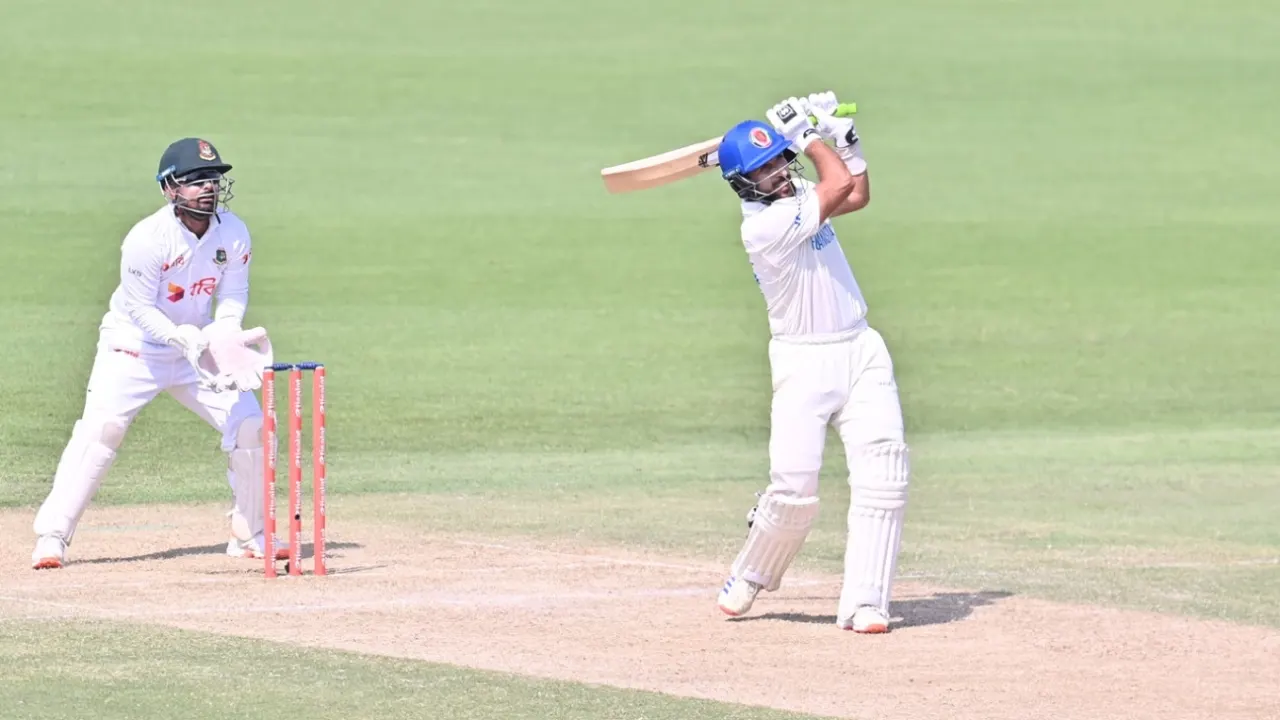
Captain Rahmat Shah played a crucial knock as he held Afghaniistan together on the second day in Abu Dhabi. He blunted Bangladesh’s threat by adding 72 runs for the unbroken fifth wicket with his deputy Ikram Alikhil.
Rahmat was unbeaten on 84 off 186 balls with eight fours and a six, while Alikhil’s 26 came off 91 balls. Ebadot Hossain was Bangladesh’s best bowler of the day.
Bangladesh wicketkeeper Litton Das got his side back into the contest shortly after the tea break. He first took a brilliant diving catch to his right, when the set Abdul Malik edged Ebadot five balls into the third session. Malik made 62 off 120 balls, with five boundaries including a six.
Next over, Litton completed a fine stumping when a Mehidy Hasan Miraz delivery turned and bounced sharply against Hashmatullah Shahidi. The former Afghanistan captain lasted just two balls as he fell for a duck.
Alikhil started with two well-timed boundaries before reining himself in for the next nine overs. Rahmat broke the boundary drought with two fours off Nayeem Hasan in the 60th over. He first pumped the offspinner through midwicket before finding the gap through mid-off for the second four.
Afghanistan then held off the Bangladesh bowling for the next 17 overs without a single boundary. Finally in the 77th over, Rahmat struck Mehidy for two fours in a row, both superb shots through extra cover, as he brought up Afghanistan’s 200.
The day began with the Afghanistan pace bowlers removing the two remaining Bangladesh wickets. It took them 8.3 overs, with Mohammad Saleem picking up his fourth wicket, having Taijul Islam caught behind and Yamin Ahmadzai removing Ebadot with a slower delivery.
Saleem finished with 4 for 82, having taken 6 for 140 against India in Afghanistan’s previous Test in June. Ahmadzai took three and Ismat Alam two wickets. This was the first time a fast bowling attack took nine wickets in a Test innings in Abu Dhabi.
After bowling out Bangladesh for 346, Afghanistan went to lunch on 34 for 1. Sediqullah Atal edged Hasan Mahmud to first slip. Atal struck three fours in his knock but also survived a caught-behind appeal in the third over. Replays showed that he had inside-edged it but Bangladesh did not use the review.
After lunch, Afghanistan batted positively. Shahidullah swept Mehidy while Mahmud conceded two fours early. Malik played the ball confidently, but Bangladesh kept things tight from both ends. It created a wicket when Shahidullah top-edged a hook against Ebadot in the 21st over. Mahmud took a good tumbling catch running in from fine-leg, as Shahidullah fell for 20 off 44 balls.
Rahmat though immediately stamped his authority with a crunchy cover drive in the same over. He hit Taijul for a straight six shortly afterwards, with Malik repeating the dose to the same bowler after a few more overs. Malik also cover-drove Nayeem before reaching his maiden Test half-century in the 34th over.
Scores:
Afghanistan 211 for 4 in 80.5 overs (Abdul Malik 62, Rahmat Shah 84*, Ikram Alkhi 32*; Ebadot Hossain 2-50) trail Bangladesh 346 in 92.3 overs (Shadman Islam 67, Tanzid Hasan 83, Litton Das 53; Mohammad Saleem 4-82, Yamim Ahmadzai 3-79, Ismat Alam 2-20) by 135 runs
[Cricinfo]

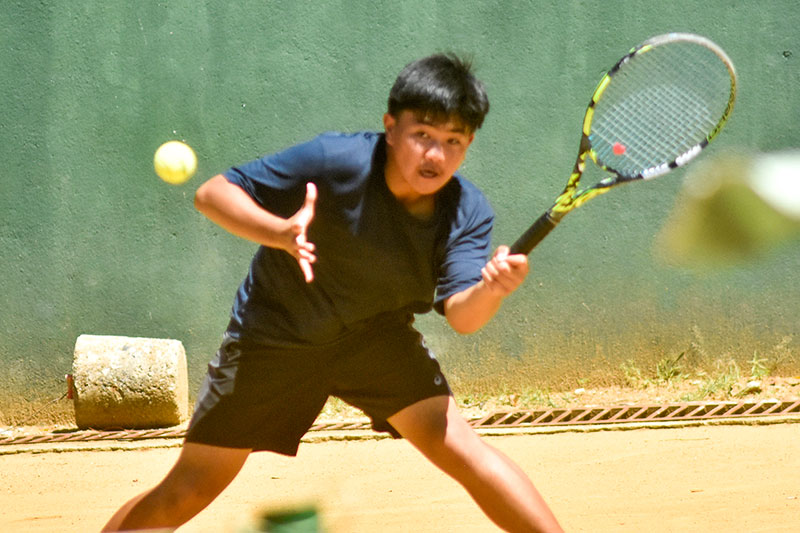
Risindi Hewawasam of Sri Lanka and Anthony Castigador of the Philippines won the girls’ and boys’ singles titles at the ATF 16 & Under Colombo 2026 – Week 1 tournament concluded at the Sri Lanka Tennis Association courts on Friday.
Castigador produced a dominant performance in the boys’ singles final, defeating India’s Gurshaan Chahal 6-2, 6-2 to secure the title. The Filipino maintained his advantage throughout the match, winning in straight sets to cap an impressive campaign.
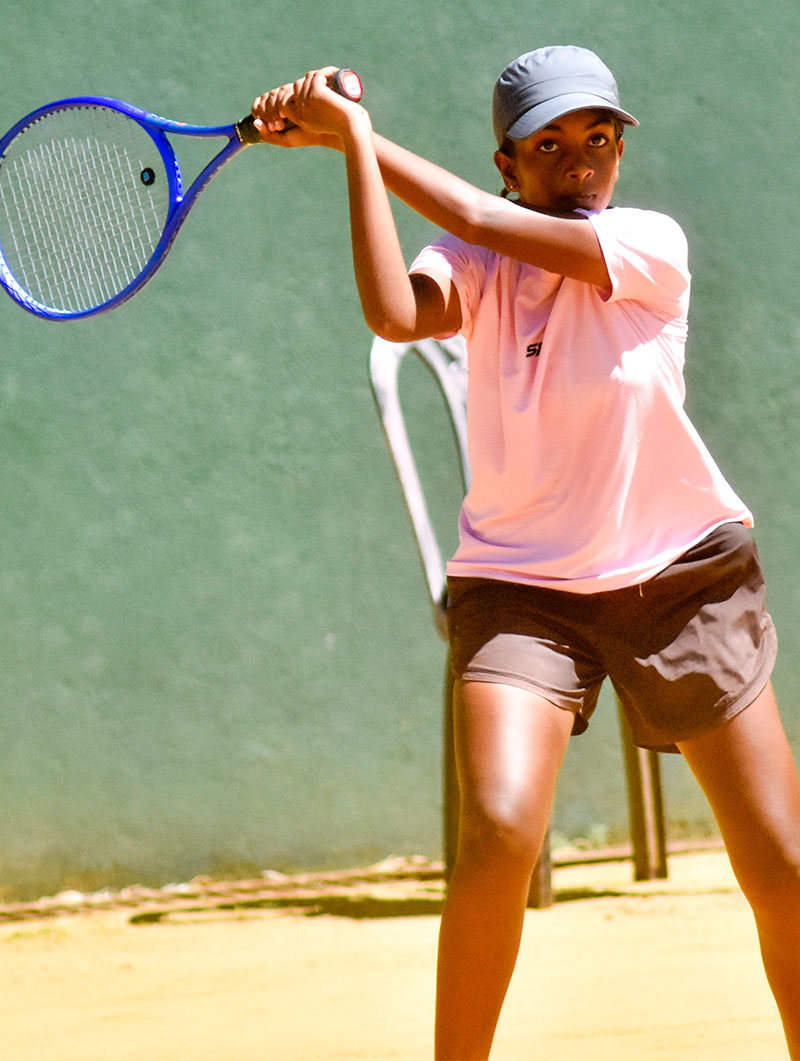
Risindi Hewawasam (Pix by Kamal Wanniarachchi)
In the girls’ singles final, Risindi delivered an equally dominant display to beat compatriot Kiara Jayamanne 6-1, 6-1. (RF)
by Rex Clementine
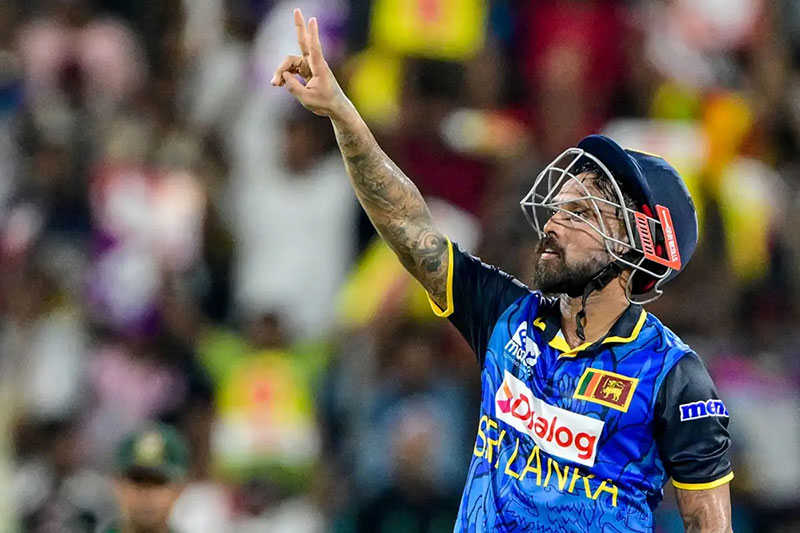
It is not often that a Test captain is replaced midway through a World Test Championship cycle. The fact that Dhananjaya de Silva has made way just days before the squad for the tour of Pakistan is announced is a clear indication that the cricket establishment was far from impressed with his leadership. He may now struggle to retain his place as a specialist batter, particularly if the selectors decide to relieve newly appointed Test captain Kusal Mendis of the wicketkeeping gloves.
Previous administrations of Sri Lanka Cricket would have taken the easy way out. They would have allowed the World Test Championship cycle to run its course before ringing in the changes. But when you have someone of Sidath Wettimuny’s calibre heading the Cricket Committee, tough calls are part of the package. Sidath has no favourites. He calls a spade a spade and has the best interests of the game at heart. It is no coincidence that Sri Lankan cricket flourished during his tenure as Chairman of Selectors from 1999 to 2001.
Kusal Mendis now suddenly finds himself captaining Sri Lanka across all three formats. Given his chequered past and bad boy image, there will inevitably be raised eyebrows over whether he deserves to wield so much influence over Sri Lankan cricket. But credit where it is due. Over the last five years, he has largely stayed out of trouble. More importantly, over the last three years, he has knuckled down, worked tirelessly on his game and earned the admiration of both the coaching staff and the cricket establishment.
The turning point came at Lord’s in 2024.
Every cricketer dreams of playing a Test match at the Home of Cricket. But the selectors pricked Kusal’s pride by dropping him for the showpiece occasion. The decision did not win them many admirers, with former captains Duleep Mendis and Aravinda de Silva among those who questioned the wisdom of the move.
But, as it turned out, the setback proved to be a blessing in disguise.
Kusal returned for the third Test at The Oval and produced an innings that was worth considerably more than the 39 runs against his name in the scorebook.
On a seaming surface, where England’s quicks were making life miserable for the Sri Lankan batters, Kusal showed admirable restraint without completely putting away his attacking instincts. His 39 came at less than a run a ball.
So what was so special about a knock that did not even reach fifty?
Plenty, as it turned out.
Kusal’s counterattack forced England to spread the field, taking the sting out of their bowling and allowing Pathum Nissanka to cash in. Pathum deservedly walked away with the plaudits for his magnificent hundred, but Kusal had done much of the groundwork.
It was not an innings that would find its way into cricket’s record books. But it was one that spoke volumes about Kusal’s changing attitude. Here was a player prepared to put the team’s cause ahead of personal milestones.
When Sri Lanka returned home for the Test series against New Zealand, the team management went a step further. They virtually created a position for Kusal, handing him the wicketkeeping gloves in Test cricket. He has remained a permanent fixture in the side ever since.
Since that Oval Test in 2024, Kusal has featured in nine Tests, scoring five half-centuries and a hundred. His work behind the stumps has been equally impressive, with hardly a blemish on his wicketkeeping record.
The maturity Kusal has displayed, both as white ball captain and as a senior member of the side, has impressed successive coaching teams. It is refreshing to see a cricketer learn from his mistakes, turn over a new leaf and allow his performances to do the talking.
Kusal has had his share of run ins with trouble over the years. Now comes the biggest challenge of his career. Leading Sri Lanka across all three formats is no small responsibility and the captaincy will test his temperament as much as his cricketing skills.
The selectors have placed their faith in a man who once struggled to keep himself out of the headlines for the wrong reasons. It is now up to Kusal to ensure that the headlines are about his leadership, his runs and, above all, Sri Lanka’s success.

Rahmat, Malik fifties lead Afghanistan’s strong reply

Showers above 75 mm are likely at some places in the Western, Sabaragamuwa, Central, Uva and North-Western provinces and in Galle, Matara, Anuradhapura and Mannar districts.

Iranian ships stranded, Lanka fears US sanctions

Sri Lanka CERT warns of overseas university admission scams

Navi Pillay’s Lankan affairs in focus as she wins 2026 Nobel Peace Prize

Lanka welcomes Indian SC remarks on Katchatheevu dispute

‘Dates have the highest sugar content to fight Coronavirus’

Sunday Island 27 December – Headlines

#SundayIsland 17th December – Headlines

Sunday Island – 28th March

Sunday Island Headlines – 21 March

Sunday Island – 21st February – Headlines
-

 News6 days ago
Geneva takes up Sallay’s case and govt. ignores opportunity to answer accusations
-

 Features5 days ago
Preventing grievances from becoming communal
-

 Features3 days ago
The Sri Lankan who made Scottish history
-

 Sports3 days ago
Nissanka absence opens door for Sri Lanka’s young guns
-

 News4 days ago
Gnansara Thera to be assigned to prison printing section: Officials
-

 Features6 days ago
Sri Lanka Cricket Bill: Governance reform is not yet a cricket strategy
-

 News2 days ago
NDB fraud Rs 60mn more than reported
-

 Features3 days ago
Future of Sri Lanka’s state university system: Should it be shut down and reopened?