
News
Sajith accepts far-reaching legal reforms, vows to thwart Ranil’s strategy

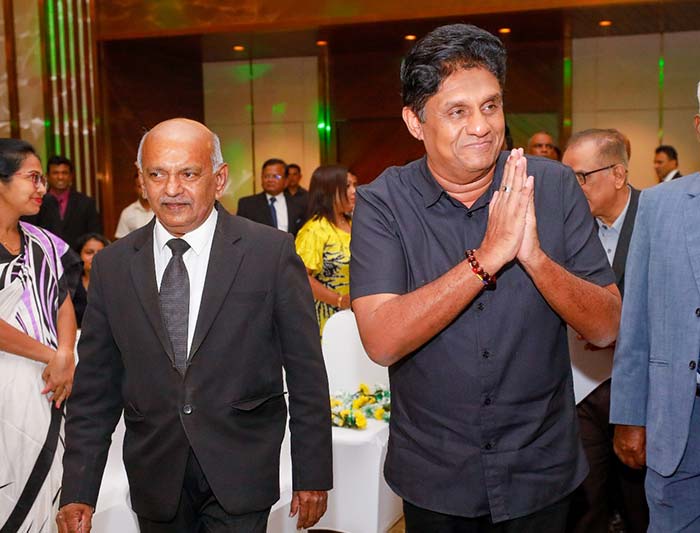
SJB and Opposition Leader Sajith Premadasa, MP, has accepted a set of far reaching and comprehensive legal reforms proposed by SJB Lawyers’ Association.Speaking at a well-attended event in Colombo this week, Premadasa, having received the proposals, vowed that President Ranil Wickremesinghe’s efforts to keep the Constitutional Council under his thumb would be thwarted.
MP Premadasa said that as a member of the CC he would along with other members stand up against Wickremesinghe’s agenda to put off the scheduled presidential poll in the guise of doing away with the executive presidency through constitutional means.
One of the most important proposals was to establish a truly independent Public Prosecutor (independent of the Attorney General) to facilitate prosecution of crimes that take place within such areas to be dealt with expeditiously and in an effective manner. Also consider optimal decentralisation of the prosecution function. There were altogether 116 proposals.
The following are some of the key proposals: 1) President to be required to engage in a consultative process with stakeholders prior to making judicial appointments. Views emerging through such consultative process to be conveyed to the Constitutional Council along with the name/s nominated for the approval.
2) There shall be a Constitutional Court. Retirement age of the judges shall be higher than the Judges of the Supreme Court. All appointments to the Constitutional Court, Supreme Court and Court of Appeal the Members of the Judicial Service Commission other than the Chairman shall be made by the President on the recommendation of the Constitutional Council.
3) In the discharge of its function relating to the appointment of the President and Judges of the Constitutional Court, Judges of the Supreme Court and the President and Judges of the Court of Appeal, the Council shall obtain the views of the Chief Justice and the two senior-most Judges of the Supreme Court.
4) A more transparent criterion will be proposed for judicial appointments. Including a collegiate system to recommend, based on transparent criteria.
Selection of such High Court Judges should be by a mixed and eminent panel consisting of most senior President’s Counsel, Attorney General, President BASL, President Court of Appeal and presided by the Chief Justice. Under normal circumstances the age limits will be as stipulated.
5) Allegations of misbehavior or incapacity contained in a resolution in the House of Representatives for the presentation of an address for the removal of a Judge of the Constitutional Court, Supreme Court or Court of Appeal shall be inquired into by a panel consisting of three retired Judges of the Constitutional Court or the Supreme Court. Such a panel shall be appointed by the Speaker on the recommendation of the Constitutional Council.
Parliament shall by law provide for all matters relating to the presentation of such an address, including the procedure for the passing of such resolution, the investigation and proof of the alleged misbehavior or incapacity and the right of such Judge to appear and to be heard in person or by a representative. Where the panel determines that the allegations of misbehavior or incapacity contained in the resolution are not proved, the resolution shall lapse.
6) There shall be a Code of Conduct applicable to Judges of the Constitutional Court, Supreme Court and Court of Appeal. Allegations of serious infractions of the Code of Conduct with negative implications for the Judiciary’s independence, integrity and public trust shall be inquired into by a panel consisting of three retired Judges of the Constitutional Court or the Supreme Court appointed by the President on the recommendation of the Constitutional Council. The panel shall submit its report to the President and the Constitutional Council for appropriate action.
7) All judges of the Court of Appeal and the Supreme Court shall be entitled to enjoy the same salary, same facilities and benefits until death, maintaining total independence of the Judiciary, economically and otherwise. However they shall not hold other offices except that are prescribed by Law.
8) The Court of Appeal to be decentralized (to sit like the Courts of Assize) to take the Appeal Court closer to the people. Senior President’s counsel and President BASL to be consulted in appointing temporary judges
9) The Court of Appeal shall conduct its sittings in each Province. It shall have an original fundamental rights and language rights jurisdiction. An appeal shall lie to the Supreme Court with leave from the Court of Appeal or special leave from the Supreme Court. The civil appellate jurisdiction of the Provincial High Courts shall be transferred to the Court of Appeal sitting in the provinces.
10) In the case of special courts such selected persons should be over the age of 62 years and below the age of 75 years. They should be selected from among retired High Court Judges with a proven track record. Only thereafter the President shall recommend such names to the Constitutional Council.
11) All judicial promotions shall be considered on the basis of completion of the ongoing cases and the delivery of orders and judgements and number of such cases sustained in the appellate court.
12) All judgments of court shall be complied immediately. In instances wherein frivolous appeals have been lodged by the state and damages along with legal interest has accumulated unconscionably, such officers shall be held personally liable for such enhanced damages.
13) A law relating to contempt of courts on the lines of Indian statute shall be passed.
14) The Office of the Attorney-General shall be an independent entity. The Attorney-General shall be the Chief Legal Officer of the Republic and shall uphold and safeguard the sovereignty of the People. It should be ensured that the Attorney General will hold the scales of justice evenly maintaining the highest traditions of the office of Attorney General without being a mouthpiece of the regime in power, in particular issuing certificates on draft legislation.
15) An independent Office of Public Prosecutor shall be set up by law.
16) An independent Office of the Public Defender shall be set up by law.
17) The Attorney-General, Chief Public Prosecutor and Public Defender shall be appointed by the President on the recommendation of the Constitutional Council.
18) Consider the feasibility and scope to recruit external lawyers to the AG’s Department at all levels based on objective criteria calculated to promote better competence and integrity. However, those internal candidates would be given due consideration.
19) Any appointee to the post of Attorney General or the Solicitor General shall not hold office in excess of three years.
20) Delays in serving indictments should be curtailed. All indictments should be filed within three months or the most 6 months of the alleged crime. In order to complete the backlog private Lawyers should be hired under the supervision of the AG. Allocation and coordination of such cases will be conducted by a decentralised public prosecutor.
21) In order to curtail delays in trials no postponement shall be granted on the basis that the Lawyer is in another court as is the practice in Indian Courts. This will also give more opportunities to younger Lawyers.
22) Consider timeframes for expeditious conclusion, such as if a criminal trial isn’t completed within a given time span, day to day trials should be held. The right to bail to be enhanced where prosecution isn’t commenced within a determinate time frame.








Latest News
Sun directly overhead Chilaw, Bingiriya, Halmillawewa, Panduwasnuwara, Gokarella, Kawudupelella, Koppaveli and Kirankulam about 12:12 noon. today (09)


On the apparent northward relative motion of the sun, it is going to be directly over the latitudes of Sri Lanka from the 05th to 15th of April this year.
The nearest areas of Sri Lanka over which the sun is overhead today (09th) are Chilaw, Bingiriya, Halmillawewa, Panduwasnuwara, Gokarella, Kawudupelella, Koppaveli and Kirankulam about 12:12 noon.
Latest News
Heat Index at Caution Level in the Western, Sabaragamuwa, Southern, Eastern, North-western, Northern and North-central provinces and in Monaragala district

Warm Weather Advisory
Issued by the Natural Hazards Early Warning Centre
Issued at 4.30 p.m. on 08 April 2026, valid for 09 April 2026.
The Heat index, the temperature felt on human body is likely to increase up to ‘Caution level’ at some places in the Western, Sabaragamuwa, Southern, Eastern, North-western, Northern and North-central provinces and in Monaragala district.
The Heat Index Forecast is calculated by using relative humidity and maximum temperature and this is the condition that is felt on your body. This is not the forecast of maximum temperature. It is generated by the Department of Meteorology for the next day period and prepared by using global numerical weather prediction model data.

Effect of the heat index on human body is mentioned in the above table and it is prepared on the advice of the Ministry of Health and Indigenous Medical Services.
ACTION REQUIRED
Job sites: Stay hydrated and takes breaks in the shade as often as possible.
Indoors: Check up on the elderly and the sick.
Vehicles: Never leave children unattended.
Outdoors: Limit strenuous outdoor activities, find shade and stay hydrated.
Dress: Wear lightweight and white or light-colored clothing.
Note:
In addition, please refer to advisories issued by the Disaster Preparedness & Response Division, Ministry
of Health in this regard as well. For further clarifications please contact 011-7446491.


The Auditor General has warned that delays in coal procurement and continued reliance on suppliers of questionable standards could disrupt the supply of electricity.
The special audit report on coal imports was presented to Parliament on Tuesday (07) by Bimal Ratnayake, Leader of the House, at the commencement of proceedings.
However, Opposition MPs complained to Speaker Dr Jagath Wickramaratne that copies of the report had not been distributed to Members of Parliament. Responding to the complaint, the Speaker said it was the responsibility of the Parliamentary Secretariat to ensure the report was provided to MPs.
The special audit, requested by the Committee on Public Enterprises (COPE), examined the coal procurement process of the Lanka Coal Company for the Lakvijaya Power Plant and purchases planned for the 2025/2026 season.
The audit revealed several irregularities in the tender process. It found that the laboratory issuing quality reports at the loading port for the controversial supplier Trident Company had its licence cancelled. The report also disclosed that at the time advertisements were published calling for tenders,the company had not completed its registration but was awarded the tender. In addition, three other suppliers who had not confirmed their registration were allowed to submit bids.
Coal shipments for the Lakvijaya Power Plant are tested at both loading and unloading ports. According to the audit, Mitra SK South Africa had been appointed to conduct testing at the loading port, but due to the absence of accreditation the task was assigned to PT Mitra SK Analisa Testama Samarinda, an Indonesian firm whose licence had been cancelled on December 29, 2025. Auditor General S. Jayarathne has noted that the audit could not confirm whether the licence had been renewed by March 31, 2026, and that all 12 shipment reports issued at the loading port lacked accreditation.
The report has further pointed to discrepancies between loading port laboratory reports and data recorded at the plant’s main control unit. Despite the availability of alternative verification methods, the Lanka Coal Company failed to use them to confirm the accuracy of the reports.
The audit also highlighted that no coal shipments were brought to Sri Lanka between November 13 and December 30, 2025, despite the need to secure maximum stocks during that period.
As a result of the shortage, an emergency procurement was carried out on March 18 this year, selecting Taranjot Resource Pvt Ltd. as the supplier. However, the Auditor General revealed that this company had failed within the previous 36 months to supply coal with the required calorific value of 5,900 or above to the Lakvijaya Power Plant.
The report warns that delays in coal imports and dependence on suppliers with questionable standards could adversely affect the continuous supply of electricity from the plant.
The National Audit Office of Sri Lanka has further estimated that the use of substandard coal has caused losses amounting to nearly Rs. 2.24 billion.
According to the report, losses incurred from individual shipments included more than Rs. 160 million from the first vessel (consignment No. 456), over Rs. 90 million from the second vessel (No. 457), more than Rs. 310 million from the third vessel (No. 458), and over Rs. 150 million from the fourth vessel (No. 459). Additional losses included nearly Rs. 180 million from the fifth vessel (No. 460), about Rs. 30 million from the sixth vessel (No. 461), over Rs. 240 million from the seventh vessel (No. 462), more than Rs. 390 million from the eighth vessel (No. 463) and over Rs. 390 million from the tenth vessel (No. 464).
The report has also noted that because the available coal stocks cannot generate electricity at the plant’s full capacity of 300 megawatts, additional power may have to be obtained from alternative sources. The estimated additional energy requirement for this purpose is 76,354,087 kilowatt-hours, the report has pointed out.
By Saman Indrajith

Greece to ban social media for under-15s from next year

Showers will occur at a few places in the Western, Sabaragamuwa and North-western provinces and in Galle, Matara, Kandy, Nuwara-Eliya and Mannar districts after 2.00 p.m.

Sun directly overhead Chilaw, Bingiriya, Halmillawewa, Panduwasnuwara, Gokarella, Kawudupelella, Koppaveli and Kirankulam about 12:12 noon. today (09)

Heat Index at Caution Level in the Western, Sabaragamuwa, Southern, Eastern, North-western, Northern and North-central provinces and in Monaragala district

AG: Coal procurement full of irregularities

Rs 13.2 bn NDB fraud: House committee declares serious breach in banking system

‘Dates have the highest sugar content to fight Coronavirus’

Sunday Island 27 December – Headlines

#SundayIsland 17th December – Headlines

Sunday Island – 28th March

Sunday Island Headlines – 21 March

Sunday Island – 21st February – Headlines
-

 Features4 days ago
Ranjith Siyambalapitiya turns custodian of a rare living collection
-

 News4 days ago
Global ‘Walk for Peace’ to be held in Lanka
-

 News2 days ago
Lankan-origin actress Subashini found dead in India
-
 Opinion6 days ago
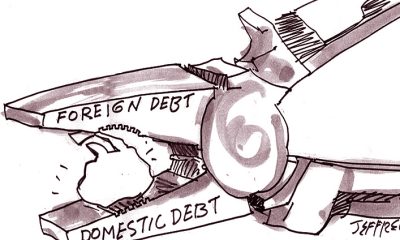
Hidden truth of Sri Lanka’s debt story: The untold narrative behind the report
-

 Features4 days ago
Beyond the Blue Skies: A Tribute to Captain Elmo Jayawardena
-

 Features4 days ago
Aspects of Ceylon/Sri Lanka Foreign Relations – 1948 to 1976
-

 Features6 days ago
The Ramadan War
-

 Editorial5 days ago
Brouhaha over a book