
News
Reptiles in rock and time: Unveiling Sri Lanka’s ancient herpetological art


Hidden beneath the ancient canopy of Sri Lanka’s dry forests and shaded cliff faces lies a gallery like no other — a prehistoric museum where stone meets story. Painted and engraved thousands of years ago, these rock surfaces reveal how early islanders saw their world: not as conquerors, but as companions to the wild.
Among the elephants, deer, and human forms that adorn these caves, reptiles take centre stage — monitor lizards, crocodiles, tortoises, pythons, and geckos, all rendered with striking realism and reverence.
“Each stroke, each figure, is a message from the island’s earliest naturalists,” says Dr. Nimal Rathnayake, archaeologist and herpetologist, who has explored dozens of rock shelters across the island. “They reveal not only how our ancestors lived, but how deeply they observed and understood reptiles — the creatures that shared their landscapes.”
Ancient Art, Living Legacy
The world’s oldest known cave paintings — abstract symbols in Spain’s Cave of Maltravieso — date back some 64,000 years, likely drawn by Neanderthals. In Indonesia, a wild pig painted 45,500 years ago represents the earliest figurative art.
In Sri Lanka, cave paintings at Fa-Hien Lena in the Western Province, dated to over 11,000 years old, mark South Asia’s oldest known artistic expressions. These vivid works portray human and animal figures with a symbolic richness that still defies complete interpretation.
“Every pigment, every chipped line represents a memory,” says Dr. Rathnayake. “These caves are living archives — where biodiversity and belief converge.”
Sri Lanka’s Reptilian Heritage in Paint
Sri Lanka’s record of prehistoric rock art parallels its modern status as a biodiversity hotspot. With 246 known reptile species — including 164 endemic to the island — it is no surprise that early inhabitants immortalised them on stone.
“From pythons and crocodiles to geckos and tortoises, reptiles dominate many of these cave paintings,” says Dr. Rathnayake. “These weren’t random decorations. The proportions, the posture, the detailing — all reveal an astonishing level of observation. These people knew their reptiles.”
Sites like Dorawakakanda, Tharulengala, Tantirimale, and Phillegodagalge show depictions of land monitors (Varanus bengalensis), star tortoises (Geochelone elegans), mugger crocodiles (Crocodylus palustris), Indian rock pythons (Python molurus), and the iconic Sri Lankan golden rock gecko (Calodactylodes illingworthorum).
The Tharulengala Wonder
In the dry lowlands of Hulannuge, Ampara, stands one of Sri Lanka’s most extraordinary rock art sites — the Tharulengala Rock Cave. Carbon dating places its paintings at around 4,800 years old. The cave’s 16-metre wall bursts with figures: humans, elephants, and reptiles painted in ash, red, and white pigments.
Among the most striking is an enormous gecko — nearly 84 cm in length — believed to represent Calodactylodes illingworthorum, the Sri Lankan golden rock gecko. “It’s almost herpetologically accurate,” Dr. Rathnayake notes. “The limbs, digits, and the curved tail — even the clusters of eggs painted nearby — correspond exactly with how we see them in nature today.”
Other reptiles — a crocodile, a Russell’s viper, and a land monitor — share the same wall, painted in naturalistic proportions. Archaeologists once mistook the gecko for a crocodile, but closer zoological study proved otherwise. “It’s a perfect example of art meeting science across millennia,” Rathnayake adds.
Dorawakakanda’s Engraved Menagerie
In Kegalle’s wet zone, Dorawakakanda Cave offers a different form of artistry. Instead of pigments, its ancient occupants used chisels — or rather, sharp stones — to engrave shapes into rock. Here, elephants, fish, humans, and two land monitors stand etched into the stone.
“Imagine carving these without metal tools,” says Dr. Rathnayake, admiring the craftsmanship. “The engravings capture both movement and life — even after two thousand years.”
The site’s significance extends beyond artistry. “These images show ecological coexistence,” he explains. “It tells us that people of this era didn’t just hunt; they observed, respected, and recorded what they saw.”
Phillegodagalge: The Python’s Shadow
Deep in Kudimbigala Forest Heritage, near the entrance to Kumana National Park, lies the cavernous Phillegodagalge Cave. At first glance, its long, ribbed figures resemble centipedes. But closer analysis reveals the unmistakable form of the Indian rock python (Python molurus).
“The rib patterns are too consistent for an invertebrate,” says Dr. Rathnayake. “These were skilled observers — the ribs, length, and proportions point clearly to a python.”
Deraniyagala’s early research suggested that pythons were consumed by prehistoric hunters, a fact echoed in the site’s depictions. “What you see here could be both a record of diet and devotion,” he adds. “A species feared, revered, and ultimately remembered in art.”
Tantirimale: Crocodiles and Sea Turtles
In the North Central Province, the caves of Tantirimale house some of the most evocative prehistoric paintings on the island. Believed to date back 4,000 years, these artworks feature geometric patterns and animal figures — including a Leatherback Turtle (Dermochelys coriacea) and a Crocodile.
“The artist has even captured the ridges on the turtle’s shell,” notes Dr. Rathnayake. “It’s a remarkably accurate representation.” Archaeological excavations in Anuradhapura unearthed marine turtle bones dating to around 800 BC — evidence that sea turtles were traded or used for ornaments. “That connection between coastal species and inland art tells us these people were travellers, traders, and naturalists,” he adds.
Two Women’s Cave — Genu Dennage Galge
Few sites in Sri Lanka remain as hauntingly untouched as the Two Women’s Cave, or Genu Dennage Galge, at Buddama Village in Monaragala. Its single chamber, framed by drip-ledges to divert water, contains ghostly figures of elephants, birds, and a land monitor painted in white and green pigment. “This cave might have had a very different purpose,” says Dr. Rathnayake. “Based on the drawings, it could have been a slaughterhouse — a place where animals were slaughtered for food. The land monitor, prominently displayed, reflects what was most commonly hunted and eaten.” The scene includes possible depictions of deer, birds, and elephants — but it’s the monitor that commands attention. “Even in death, it was remembered,” he says softly.

Who Were the Artists?
Scholars like H.C.P. Bell, the Seligmanns, and Somadeva agree that these paintings are the work of Veddas, Sri Lanka’s indigenous hunter-gatherers. Early 20th-century Vedda women told the Seligmanns that they created drawings while waiting for their men to return from hunting, mixing ash and saliva to make paint and applying it with their fingers.
But not all art is ancient. “In some caves, we find recent graffiti and carvings by visitors,” Dr. Rathnayake warns. “Distinguishing authentic prehistoric art from modern additions is a challenge — one that calls for better protection and research.”
Conservation: An Urgent Call
Despite their age and significance, many of Sri Lanka’s rock art sites remain vulnerable. At Tharulengala and Dorawakakanda, visitors have carved their names or touched the paintings, smudging ash drawings that survived nearly five millennia. “Even geckos — ironically, the same species painted on the walls — lay their eggs on these surfaces, further damaging the art,” notes Dr. Rathnayake. “We need a clear, coordinated conservation plan. Spraying protective acrylic coatings, managing access, and continuous monitoring are essential steps.”
The Archaeology Department, he believes, must work with herpetologists, conservators, and local communities. “These are not just archaeological artefacts; they are ecological documents — the earliest evidence of humans recording wildlife.”
Echoes in Stone
Standing inside Tharulengala or Two Women’s Cave, one can almost hear the prehistoric hum of life. The same geckos that inspired early artists still cling to those walls, their eggs adhering beside their ancient likenesses.
“These caves are time capsules,” Dr. Rathnayake reflects. “Few places in the world allow such direct continuity between species and story.”
For him, the study of rock art is more than academic. It’s an act of cultural and environmental recovery — a reminder that Sri Lanka’s earliest artists were also its first conservationists.
“They didn’t separate art, nature, or spirituality,” he says. “They lived within them. That’s the message we must rediscover today.”
By Ifham Nizam ✍️



It was decided at the committee appointed to oversee the distribution of essential goods to appoint five officials from the Ceylon Petroleum Corporation to cover all ministries in order to examine fuel-related issues and undertake the necessary interventions.
It was further discussed that the responsibility of these officials would be to examine fuel-related issues arising in institutions under each ministry and to intervene in providing solutions by maintaining coordination with the Corporation.
These matters were discussed at a meeting of the committee appointed to oversee the distribution of essential goods, chaired by Minister of Transport, Highways and Urban Development Bimal Rathnayake held on Friday (27) at the Presidential Secretariat.
It was also noted, with particular attention, that requests have been made by industrialists indicating that the current fuel quota allocated to vehicles for the distribution of their products across the country is insufficient. It was further discussed that, if these concerns are not addressed, there is a likelihood of an increase in the prices of goods, which could in turn cause significant hardship to the public during the festive season.
The committee also discussed the issuance of fuel for the distribution of essential food items by state and private institutions, including supermarkets such as Sathosa, wholesale importers, tourism-related service providers, hotels and other service-providing organisations.
Accordingly, it was discussed that requests for fuel quotas submitted by these institutions should be carefully considered and prompt action taken as necessary and that such requests should be forwarded to the Ministry of Energy through the relevant ministries.
Attention was also drawn to the need for the swift implementation of a QR code system for the issuance of fuel to other sectors, including agriculture and the fisheries industry, based on letters issued on the recommendations of the relevant government officials, including agricultural research officers, instead of the previous method of direct fuel allocation.
Minister Bimal Rathnayake emphasised the need to ensure a continuous and properly managed fuel supply, with particular focus on providing goods to the public without shortages and preventing excessive price increases during the forthcoming Sinhala and Hindu New Year season.
The discussion was attended by a group of government officials, including Minister of Trade, Commerce, Food Security and Cooperative Development Wasantha Samarasinghe, Deputy Minister of Power Arkam Ilyas, Senior Additional Secretary to the President, Kapila Janaka Bandara and Chairman of the Ceylon Petroleum Corporation, D. J. Rajakaruna.

Parliament:
… sexual harassment claims dismissed
Recommendations made by retired High Court Judge Ms. Sujatha Alahapperuma, following an inquiry into claims by a female employee of the Department of Information Systems and Management of Parliament, regarding sexual harassment, denial of due salary increments and other forms of harassment, were yet to be implemented, sources familiar with the investigation said.
The retired HC Judge handed over the report to Speaker Dr. Jagath Wickramaratne on 24 November, 2025. Secretary General of Parliament Kushani Rohanadeera was also present on that occasion.
The retired judge has recommended that administrative decisions be taken expeditiously to grant her salary increments due for 2024 and 2025, reevaluation of all employees attached to the Department of Information Systems and Management and keep them under close scrutiny and strengthening of the ‘Helpdesk’ to meet the requirements.
Sources said that none of the recommendations have been implemented and the concerned employee in spite of still being the Senior Helpdesk coordinator remained attached to the Supplies and Services Office. She had been ordered to report to the Supplies and Services Office in January 2025 following a continuing dispute with the top management of the Department of Information Systems and Management.
Parliamentary Staff Advisory Committee on 25.07.2025 decided to conduct an external investigation into the issue after the employee refused to accept the outcome of the internal inquiry conducted in the wake of SJB lawmaker Mujibur Rahman raising the issue in Parliament.
The retired judge has emphasised the urgent need to take tangible measures to address administrative issues with a view to enhance discipline and human resources management among other issues.
However, the retired judge has declared that the complainant or any other female employee attached to the of Department of Information Systems and Management hadn’t been subjected to any form of sexual harassment as alleged.
The retired judge further asserted that the complainant had been prejudicially treated by two interview boards when she appeared before them seeking posts of Database Administrator and Parliament Officer.
The retired judge has also asserted that the Supplies and Services Office where the complaint continued to serve even now was not suitable and not in line with her qualifications. Some of those who had appeared before the retired judge during the inquiry claimed that was a temporary transfer. However, the report dismissed that claim declaring that transfer appeared to have been done outside acceptable procedure and her increments stopped without giving any justifiable reason.
The retired judge has stated that for want of proper procedures and systems, the administration seems to be in turmoil.
By Shamindra Ferdinando
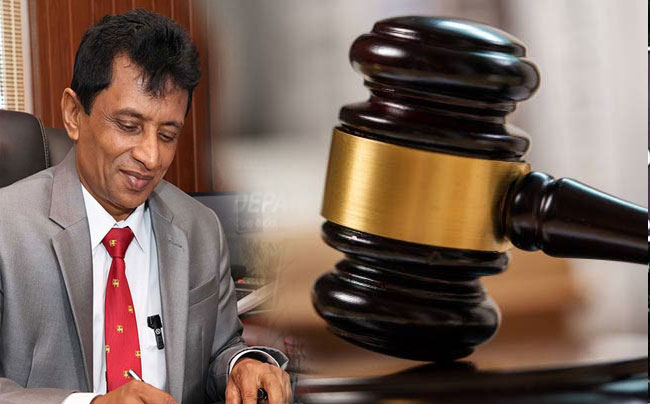
Motor Traffic Commissioner General Kamal Amarasinghe, taken into custody by the CID, was remanded until today (30) following his production before the Kurunegala Magistrate’s Court.
The investigation was launched after the Central Anti-Corruption Task Force received information regarding an illegally assembled taxi, which was later handed over to the CID for further inquiries.
Preliminary findings revealed that the vehicle’s registered chassis number had been altered and documents submitted to obtain a “weight certificate.” These documents were then used to assign a registration number to the taxi, while the chassis modification files were concealed. False declarations were allegedly made to facilitate the fraudulent assembly, with Commissioner General Amarasinghe accused of aiding and abetting the operation.
The suspect was taken into custody on the afternoon of Friday (27) by a CID team at the Hector Kobbekaduwa Road, Colombo 7.
In parallel, the Bribery and Corruption Commission has launched a separate probe into the matter.
The initial investigation was conducted under the direction of SSP Indika Weerasinghe, Head of the Central Anti-Corruption Task Force, along with DIG Rohan Olugala and Senior DIG of CID Kamal Ariyawansa.
BY Norman Palihawadane

A QR code system to be introduced for agricultural lands and other sectors requiring fuel

Rickelton, Rohit, Shardul break Mumbai’s first-game jinx

Oil tops $116 a barrel as Iran accuses US of preparing invasion

Iranian attack damages Kuwait power and desalination plant, kills worker

Warm weather conditions prevailing over the island are expected to continue

Inquiry into female employee’s complaint: Retired HC Judge’s recommendations ignored

‘Dates have the highest sugar content to fight Coronavirus’

Sunday Island 27 December – Headlines

#SundayIsland 17th December – Headlines

Sunday Island – 28th March

Sunday Island Headlines – 21 March

Sunday Island – 21st February – Headlines
-

 News5 days ago
Senior citizens above 70 years to receive March allowances on Thursday (26)
-

 Features2 days ago
A World Order in Crisis: War, Power, and Resistance
-

 News3 days ago
Energy Minister indicted on corruption charges ahead of no-faith motion against him
-

 News4 days ago
US dodges question on AKD’s claim SL denied permission for military aircraft to land
-

 Business4 days ago
Dialog Unveils Dialog Play Mini with Netflix and Apple TV
-

 Sports3 days ago
SLC to hold EGM in April
-

 News5 days ago
CEB Engineers warn public to be prepared for power cuts after New Year
-

 Business6 days ago
Postponement of Sri Lanka Investment Forum 2026