
Latest News
Record-breaking Root arms England with control of Manchester Test


England 544 for 7 in 135 overs (Zak Crawley 84, Ben Duckett 94, Ollie Pope 71, Joe Root 150, Stokes 77*; Washington Sundar 2-57, Ravindra Jadeja 2-117) lead India 358 in 114.1 overs [Yashasvi Jaiswal 58, KL Rahul 46, Sai Sudharsan 61, Rishabh Pant 54, Shardul Thakur 41; Ben Stokes 5-72, Joffra Archer 3-73] by 186 runs
This is the way Joe Root would have wanted to ascend to No. 2 on the Test run-scoring charts. With an immaculate 150, his 38th century, which did not just certify England’s command of this fourth Test – and, thus, the series – but took it out of India’s reach. They closed day three on 544 for 7, leading by 186 on a deteriorating surface. An innings victory for an insurmountable 3-1 lead in the series is not out of the question.
At Old Trafford, a sellout crowd hung on every tuck, flick, dab and drive as England’s greatest batter confirmed, statistically, he was the second greatest of all time. Illuminated by Manchester’s generous Friday sun, Root moved past the greats Rahul Dravid, Jacques Kallis and Ricky Ponting to sidle up next to Sachin Tendulkar. And though Tendulkar still commands an imposing lead at the summit, England’s own little master is coming for him.
It will take time. Certainly longer than it took to knock off three legends in one go. Upon moving to 31, Root snuck past Dravid (13,288) and Jacques Kallis (13,289), bumping the latter off the podium to join Tendulkar and Ponting. And, four minutes before the end of the second session, he walked down to open the face for a single down to third to move to 120, knocking Ponting (13,378) down a peg. The legendary Australian sung Root’s praises on Sky Sports upon being usurped.
Root did little more than raise a thumb to his skipper, Ben Stokes, with whom he shared a 142-run stand before Stokes was forced to retire hurt for the first time in his Test career, on 66.
It was here at Old Trafford that Stokes was carried off during the Hundred, suffering the first of two hamstring tears in six months. This, though, was just cramp in his left leg, shaken off 13.1 overs later to return to see out the day. Stokes wanted to embrace Root when he moved to 13,379 runs, as they had done for the century, after Root tickled his 178th delivery around the corner for his 12th boundary. Instead, turned down by the thumb, he applauded from his end.
Root’s hundred, by the way, was also noteworthy on the all time charts going level-fourth with Kumar Sangakkara on 38. It was also Root’s 12th century against India, the most by any player, now ahead of Steven Smith. And as if that was not enough, he became the first player to reach a 1000 Test runs at this venue.
Root would make it to 150, his 16th time to that score – another one over Ponting – before being stumped off Ravindra Jadeja. It was the third of four dismissals affected by Dhruv Jurel, the stand-in wicketkeeper in Rishabh Pant’s absence, and the only man on the field in Indian whites who could claim to have had a decent day.
Much of that was on Root, who had taken England to a 141-run lead by the time he had finished, more than flipping the deficit of 133 that existed on Friday morning. Both he and Ollie Pope ticked through a wicketless first session, with Pope registering his 25th 50-plus score before Root punched the card for his 104th from 99 deliveries.
Their stand of 144 was their sixth century partnership, putting them ahead of any other pairing under Stokes’ tenure. They ran brilliantly throughout, toying with the outfield, with just one moment of real alarm when Root was on 22.
With Root reeling from a Mohammed Siraj delivery that leapt off a length, Pope charged down while calling his partner through, forcing Root to head to the bowler’s end. Jadeja’s throw from point was off target, but both he and Siraj were furious that neither mid-off nor mid-on had taken the initiative to come up to the stumps. The single brought up the fifty-run stand for the third wicket.
Pope might have also been dismissed before his final score of 71, though his edge on 48 off Anshul Kamboj was as tough a chance as they come for Jurel, standing up to the stumps to keep the batter in his crease. Just when it looked like he might register two hundreds in a series for the first time after bagging one at Headingley, he edged his first ball after lunch through to KL Rahul at first slip. A repeat of his error at Lord’s, when a patient first-innings 44 was given away with the first ball after tea.
Washington Sundar was the man with the breakthrough – the first of the day – and he followed it up four overs later with Harry Brook for 3. A hint of drift forced the right-hander into a defensive block that ended up on the wrong line. Jurel had the bails off in a flash and Brook was stumped for the first time in Test cricket.
It was peculiar that India captain Shubman Gill had not turned to his offspinner earlier than the 69th over of the innings, which came 22 into the morning session. Washington’s 4 for 22 in the third Test had given them a short in the arm. The energy in the field upon his double strike here felt too little too late.
Jolted but only trailing by nine, England did not look back. Stokes walked out to join Root and, five wickets already in his back pocket from India’s first innings, looked at ease before cramp set in.
A relatively subdued half-century – just three boundaries, taking 97 deliveries, and his first since last November – took him to an exclusive club of his own. He is now one of three England captains to notch a five-for alongside at least a fifty in a Test.
It was during the 108th over, reverse-sweeping Washington that Stokes started to feel discomfort in his left calf. Seven overs later, his running had become so laboured that England physiotherapist Ben Davies came out to investigate. Stokes would last just one more over before deciding to momentarily call it quits, limping off and up the stairs to the home dressing room, as Jamie Smith replaced him.
Naturally, there were fears of something serious, as Stokes’ previous issues of a dodgy left knee and two right hamstring tears came to the forefront of people’s minds. And the fact that his 129 overs so far are the most he has bowled in a single series.
But shortly after 6pm, after Smith had become Jasprit Bumrah’s first wicket of the innings and 50th in England, and Chris Woakes had been bowled by one that kept low from Siraj, out walked Stokes. The ovation was akin to a hero’s return, joining Liam Dawson, who was batting in Tests for the first time since 2017. Stokes rests on 77, his highest score in ten innings.
Both lasted through to stumps, even though Bumrah and Siraj tried to unsettle them late in the day with some short stuff. India’s premier quicks looked spent as they walked off, themselves struggling with injuries throughout the day.
Bumrah only managed one over with the second new ball – taken in the 91st over – before leaving the field. Siraj then limped off before tea and showed his typical guts to return late in the day and take the last of the five wickets India managed in 89 overs. Bumrah had rolled his ankle going down the stairs while Siraj rolled his foot in one of the footholes, India’s bowling coach Morne Morkel would reveal later.
Saturday is set to bring more toil, and not even the forecasted rain will be long enough to spare them in a meaningful way. While this day will go down as one when Root ascended the second step of Test cricket’s podium, it was also the day this series was taken out of India’s control.
Brief scores: [Day 3 stumps]
England 544 for 7 in 135 overs (Zak Crawley 84, Ben Duckett 94, Ollie Pope 71, Joe Root 150, Stokes 77*; Washington Sundar 2-57, Ravindra Jadeja 2-117) lead India 358 in 114.1 overs [Yashasvi Jaiswal 58, KL Rahul 46, Sai Sudharsan 61, Rishabh Pant 54, Shardul Thakur 41; Ben Stokes 5-72, Joffra Archer 3-73] by 186 runs
[Cricinfo]

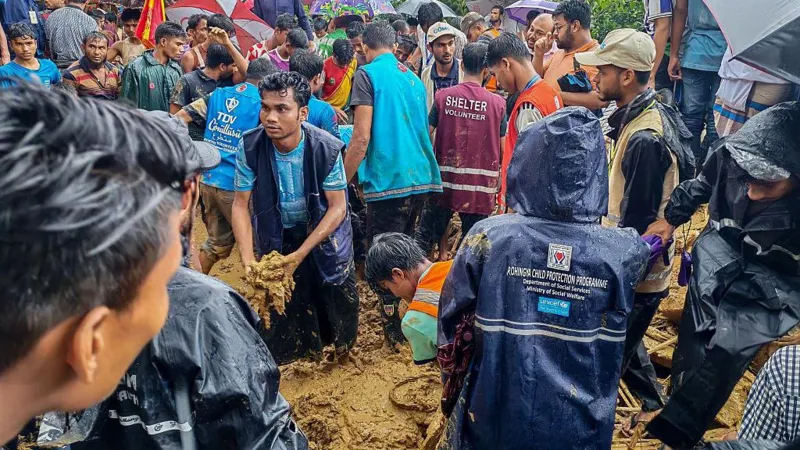
Seven students and a teacher have been killed in Bangladesh after a landslide hit a girls’ school inside a refugee camp
The Islamic study centre in the coastal city of Cox’s Bazar was buried by mud and debris on Wednesday afternoon, sparking frantic search and rescue efforts. It is unclear how many people were inside the school.
The country has been battered by monsoon rains since Sunday, with several deadly landslides reported in Cox’s Bazar.
More than one million Rohingya people live there in what is the world’s largest refugee settlement, having fled a deadly military crackdown in Myanmar.
Rescuers pulled 13 people from the mud that engulfed their school hut, eight of whom died, the Refugee Relief and Repatriation Commissioner Mohammed Mizanur Rahman said.
“Some of them are seven, eight, 11 or 12 years old,” Panna Akhter, a local district officer, told BBC Bangla.
The other five children were taken to hospital for treatment.

Earlier, officials said other landslides had killed at least eight Rohingya refugees, including five children, since Sunday.
Thousands of Rohingya, one of Myanmar’s many ethnic minorities, were killed and more than 700,000 fled to neighbouring Bangladesh during an army crackdown in Myanmar in 2017
The group, which is primarily Muslim, are denied citizenship by the government of Myanmar, a Buddhist-majority country.
Many face poor living conditions in Bangladesh, living in makeshift homes of tarpaulin and bamboo on steep hillsides.
More rain is forecast for the coming days, with authorities issuing warnings for more landslides and floods, and evacuating families in high risk areas.
(BBC)
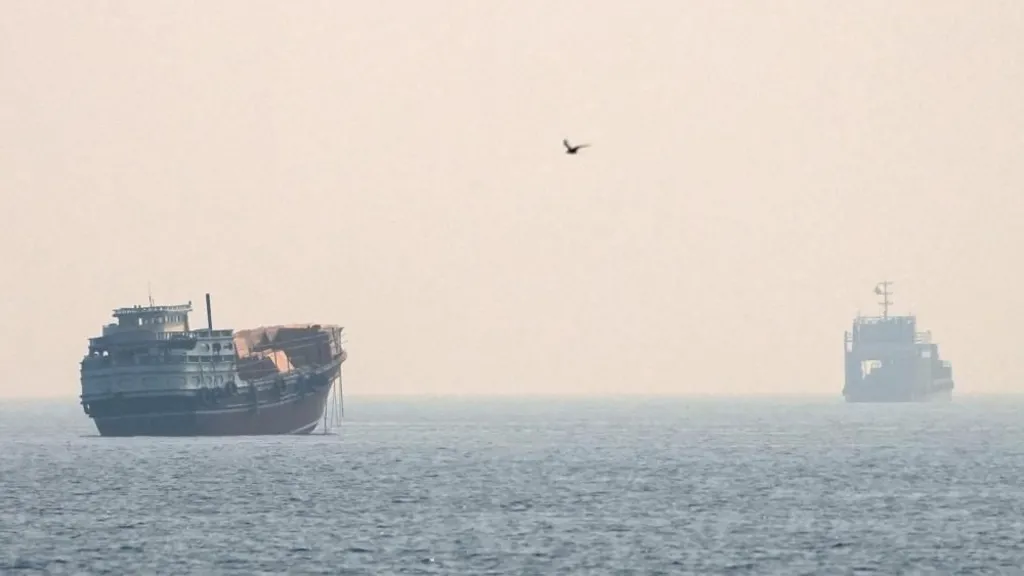
The US has launched a new round of strikes on Iran after President Donald Trump signalled he’d “hit them hard again tonight” following an overnight exchange of attacks on Tuesday.
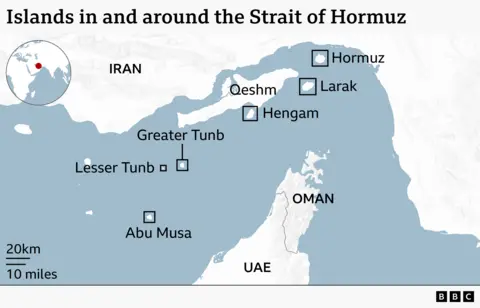
Explosions have been reported by Iranian state media in parts of the country’s south, including Sirik and Bandar Abbas – port cities on the Strait of Hormuz.
After the latest strikes, Trump said in a post on Truth Social: “This is in retribution for yesterday’s bombing of ships by Iran. If it happens again, it will get much worse!”
Iran has not yet commented, but senior officials earlier warned any attack from the US would be met with an “immediate response”.
US Central Command (Centcom) said the strikes were carried out to “further degrade Tehran’s ability to threaten freedom of navigation” in the vital waterway.
In a statement it added: “The United States is holding Iran accountable for recent unjustified aggression against commercial shipping and civilian crews freely navigating a vital international waterway.”
Several explosions have also reportedly been heard in other parts of the Iranian coast, including the cities of Konarak and Chabahar.
Iranian state TV reported eight explosions in Bandar Abbas, and said two missiles had hit the ports of both Sirik and Jask – also in southern Iran.
It added that two projectiles hit the island of Abu Musa, which has been the subject of a longstanding ownership dispute between Iran and the United Arab Emirates.
Air defence systems have been activated in Bandar Abbas, according to reports in Iranian state media.
The extent of damage from the US strikes is not yet known, but Iranian media has reported power cuts in Chabahar and a fire at an Islamic Revolutionary Guard Corps (IRGC) barracks in Bushehr.
Two of three power lines cut off in Chabahar had been restored quickly and a third would be operational soon, the Iranian Students’ News Agency said.
On Tuesday, the US military said it had launched “powerful” strikes in response to attacks on three tankers in the strait.
On Wednesday, Iran said it targeted US military sites in Bahrain and Kuwait in retaliation.
Tuesday into Wednesday saw the worst exchange of strikes between the US and Iran since the deal – known as a memorandum of understanding (MoU) – was signed on 17 June.
Trump said on Wednesday that the ceasefire agreement signed last month with Iran is “over”, and added the US “hit them very
hard last night” and will “probably hit them hard again tonight”.
In response, Iran’s Foreign Minister Abbas Araghchi said in a post on X: “We do not answer vulgarity with vulgarity, but with action: fearlessly and with great valour.”
The deal between the US and Iran included 14 points, among them a 60-day period for a ceasefire during which negotiations should continue, the safe passage of vessels through the Strait of Hormuz and the US lifting sanctions on Iran.
The 60-day-period for negotiations is not yet up, but Trump has said he saw further talks as “a waste of time”.
These are not the first strikes since the MoU was signed.
The US launched a series of strikes on Iran on 26 June after an Iranian projectile hit a cargo ship in the Strait of Hormuz.
Further US strikes took place on 27 June, following an attack on a tanker. But later that month both sides had agreed to “stand down”.

Pakistan is searching for a Boeing cargo aircraft missing over the Arabian Sea with five crew members on board.
The Karachi-bound 737-400 plane operated by a Pakistani carrier took off from Sharjah in the United Arab Emirates and lost contact with air traffic control about 9:18pm (16:18 GMT) on Tuesday after reporting a navigational system fault, the Pakistan Airports Authority said.
Minutes later, data from Flightradar24, a global flight-tracking service, showed the plane losing nearly 1,525 metres (5,000ft) of altitude in less than a minute before climbing about 1,830 metres (6,000ft) in the next 30 seconds. It then entered a final, near-vertical descent from a height of 11,140 metres (36,550ft).
Its last transmitted position placed it at 335 metres (1,100ft), descending at 22,400 feet per minute, or about 400 kilometres per hour. All contact was lost about 155 nautical miles (287km or 178 miles) west of Karachi.
Security sources told Al Jazeera a Pakistani navy ship, a merchant vessel operated by the Pakistan National Shipping Corporation and two navy aircraft are taking part in the search.
No wreckage or survivors have been found so far.
“We continue to pray, earnestly, for the safety of our colleagues,” K2 Airways, the Karachi-based private cargo airline that operated the flight, said in a statement on Wednesday, adding that it was fully cooperating with authorities on the search.
It was the only plane in the K2 Airways fleet.
If a crash is confirmed, the incident would mark Pakistan’s first major civilian air disaster since May 2020 when a Pakistan International Airlines plane crashed short of the runway in Karachi, killing 97 of the 99 people on board.
The 27-year-old K2 Airways’ 737-400 has flown for six operators.
Delivered to Russia’s Aeroflot as a passenger aircraft in 1999, it later flew for Garuda Indonesia before being converted into a freighter in 2012 for Belgium’s TNT Airways.
Aircraft tracking records show it was withdrawn from service in June 2023 and parked in France for about 10 months.
Irish company AerCap reactivated the aircraft in April 2024 before placing it back into storage, first in Jakarta and later in Karachi, where it remained for nearly six months before entering service with K2 Airways in December 2024.
In a statement, Pakistani Prime Minister Shehbaz Sharif expressed grief over the incident and offered his sympathies to the families of the missing crew members.
(Aljazeera)

Several spells of showers will occur in the Western and Sabaragamuwa provinces and in Galle, Matara, Kandy and Nuwara-Eliya districts

Prison officers urge Justice Minister to protect their colleague who opened fire

Negombo Prison riot: Ensuring protection of prisoners fundamental responsibility of the state – UN

Govt. considers banning or restricting social media for children under 16: PM

Brandix donates vital ECG machine to Mirigama Base Hospital Emergency Care Unit

High-scoring draw gives West Indies rare series win

‘Dates have the highest sugar content to fight Coronavirus’

Sunday Island 27 December – Headlines

#SundayIsland 17th December – Headlines

Sunday Island – 28th March

Sunday Island Headlines – 21 March

Sunday Island – 21st February – Headlines
-

 News4 days ago
Singapore-based Buddhist monk marks nearly four decades of humanitarian service
-

 News5 days ago
Freedom 250: US Embassy celebrates America’s 250th Independence Day through magic of American cinema
-

 News6 days ago
CIABOC to question Harak Kata on Rs. 200 mn bribery allegation
-
 News6 days ago
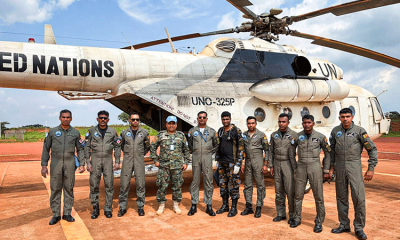
SLAF conducts successful rescue mission under UN command in Central African Republic
-

 News3 days ago
AI concerned over proposed SL military deployment in Haiti
-

 Business6 days ago
‘Dialog Air Fibre powers a new era of Ultra Fast Home WiFi’
-
 News6 days ago
UNEP support pledged to strengthen Sri Lanka’s Environmental Priorities
-

 Features4 days ago
The NPP’s New Challenge: Balancing Easter Lawfare and Economic Welfare