
News
Ray Jayawardhana named 16th Provost of Johns Hopkins University

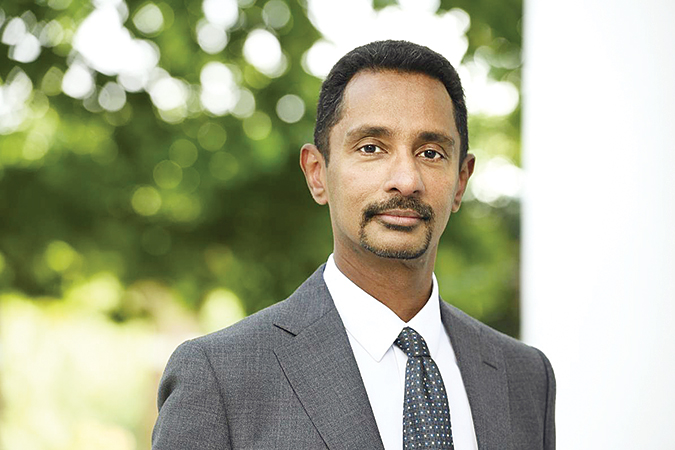
Renowned astrophysicist and accomplished academic leader joins JHU from Cornell, where he has served as dean of the College of Arts and Sciences since 2018Ray Jayawardhana, an accomplished academic leader, renowned and widely published scientist, and award-winning author who presently serves as dean of Cornell University’s College of Arts and Sciences, has been selected as Johns Hopkins University’s 16th provost.
Jayawardhana has led Cornell’s largest and most academically diverse college since 2018, overseeing enhancements to the student experience and the recruitment of 130 new faculty members, increasing the school’s scholarly distinction and impact in the process. He stood out among a strong group of candidates identified during a comprehensive national search.
The executive committee of the university’s board of trustees approved Jayawardhana’s appointment last week. His first day at Johns Hopkins will be Oct. 15.
“Dr. Jayawardhana is a visionary and collaborative leader who is driven by the same passionate pursuit of excellence and discovery that has been the hallmark of our institution since its founding,” JHU President Ron Daniels wrote in a message to the Hopkins community announcing Jayawardhana’s appointment.
“Dr. Jayawardhana’s record of accomplishments, his standards for excellence and integrity, and his commitment to driving collaboration across divisions and disciplines make him the ideal person to serve as Johns Hopkins University’s next provost.”
At Cornell, Jayawardhana has focused on four strategic priorities—faculty renewal and support, research and creative excellence, academic innovation and student experience, and public engagement and impact. During his tenure as dean, the College of Arts and Sciences has adopted a new undergraduate curriculum, introduced first-year advising seminars, implemented a selective and prestigious program that pairs liberal arts pursuits with the study of technology and data, and promoted active learning approaches. He also advanced opportunity and access through a wide range of academic and student programs, established a set of coveted postdoctoral fellowships for outstanding emerging scholars, and elevated public and media engagement dramatically. During his tenure, the college raised more than $300 million in philanthropic support.
Jayawardhana was instrumental in launching enhanced, cross-college departments of sociology, psychology, and economics. He also partnered with deans and faculty across the university to develop and lead signature initiatives in three critical areas of inquiry—climate, artificial intelligence, and quantum research.
As provost at Johns Hopkins, he will serve as the university’s chief academic officer, working closely with President Daniels and with leaders from across JHU on interdisciplinary initiatives, academic policies and procedures, and key priorities that support the university’s research and education missions.
“Johns Hopkins is on a remarkable trajectory, with bold ambitions and tremendous momentum,” Jayawardhana said. “I am excited to join this exceptionally dynamic community, and partner with President Daniels and others to help advance the university’s excellence and impact.”
Prior to joining Cornell’s faculty, Jayawardhana served as dean of science and professor of physics and astronomy at York University in Canada. This followed a decade on the faculty at the University of Toronto, where he served as a Canada Research Chair, professor of astronomy and astrophysics, and senior advisor to the president for science engagement.
A native of Sri Lanka, Jayawardhana earned a bachelor of science degree in astronomy and physics from Yale University and a PhD in astronomy from Harvard. He is the winner of numerous awards and accolades, including a Guggenheim Fellowship, a Rutherford Medal in Physics from the Royal Society of Canada, and a Carl Sagan Medal from the American Astronomical Society’s Division of Planetary Sciences. Asteroid (4668) Rayjay is named after him.
His research focuses on the diversity, origins, and evolution of planetary systems. His group uses large telescopes on the ground and in space to characterize planets outside our solar system, with an eye toward investigating the prospects for life elsewhere in the universe. He is a core science team member for the Near Infrared Imager and Slitless Spectrograph (NIRISS) instrument on the James Webb Space Telescope, and has authored more than 150 refereed papers in scientific journals.
Jayawardhana is also an acclaimed writer whose articles have appeared in The Economist, The New York Times, and The Wall Street Journal, among other publications. He is the author of four books, including Strange New Worlds, an insider’s account of the search for life on other planets; Neutrino Hunters, a tale of the chase for the so-called ghost particle that won the Canadian Science Writers Association’s Book Award in 2014; and Child of the Universe, a children’s book published in 2020 meant to spark the same fascination with our universe that inspired him as a child.
The book aims to convey “the deep and enduring links—both physical and poetic—between the universe and us, and to nurture a sense of wonder about the great beyond,” Jayawardhana writes in his author’s note.
An avid traveler, Jayawardhana has visited more than 55 countries and all seven continents. His travels, for research and writing, have included visits to mountaintop observatories in Chile and Hawaii, a meteorite collecting expedition in Antarctica, a parabolic flight with the European Space Agency, a solar eclipse chase in western Mongolia, and a descent into a South African mine with geobiologists.
He succeeds Sunil Kumar, who served as JHU’s provost from September 2016 through April 2023 and recently became the president of Tufts University. Professor Stephen Gange of the Bloomberg School of Public Health has led the provost’s office on an interim basis since Kumar’s departure.



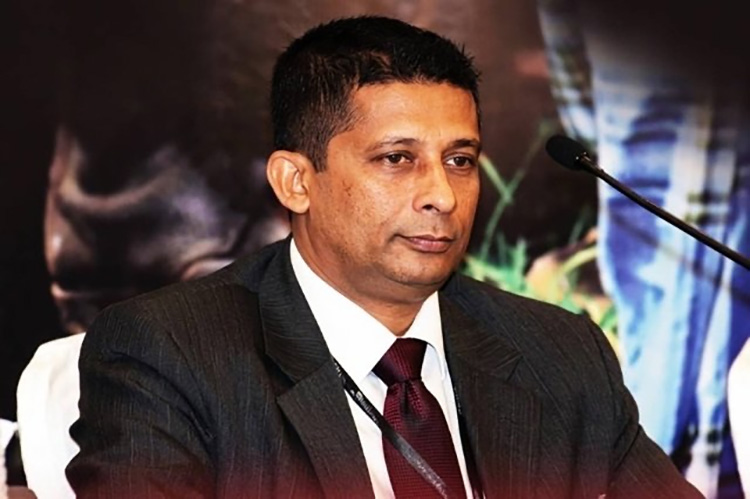
The government has chosen not to respond to questions raised by the United Nations Human Rights Council (UNHRC) regarding the detention of retired Maj. Gen. Suresh Sallay in connection with the ongoing investigations into the 2019 Easter Sunday attacks.
The Criminal Investigation Department (CID) arrested the ex-official in late February this year. The Special Rapporteur on the promotion and protection of human rights and fundamental freedoms while countering terrorism, the Working Group on Arbitrary Detention, the Special Rapporteur on the right of everyone to the enjoyment of the highest attainable standard of physical and mental health and the Special Rapporteur on the independence of judges and lawyers have jointly raised the issue on 20 July, 2026.
Drawing attention of President Anura Kumara Dissanayake to what they called alleged arbitrary detention of Sallay, former Director General of the State Intelligence Service (SIS) and former Director of Military Intelligence (DMI), under the Prevention of Terrorism Act (PTA), as well as allegations of torture and other cruel, inhuman or degrading treatment while in custody, resulting in the grave deterioration of his health, and imminent risks of retaliation through further torture and ill-treatment resulting in irreparable harm, should he be released from hospital and returned to custody, the UN sought the government explanation with a 60-day period.
The UN has stated: “This communication, and any response received from your Excellency’s Government, will be made public via the communications reporting website at the 60 days mark. Should your Excellency’s Government respond within 60 days, both the communication and the response, may be published before the 60 days mark. The communications and responses
will also be made available in the subsequent periodic report to be presented to the Human Rights Council.”
In the absence of the government’s response, the UN posted the letter, dated 20 July, 2026, addressed to President Dissanayake. The full letter can be accessed https://spcommreports.ohchr.org/TMResultsBase/DownLoadPublicCommunicationFile?gId=31125
News
Section of wartime KKS High Security Zone vacated to facilitate economic development in the area
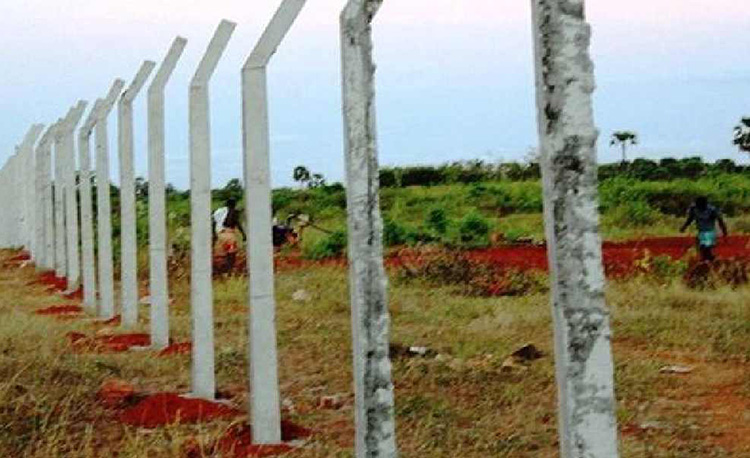
The Army, last week, vacated an area, within the wartime high security zone in the Jaffna peninsula. The Defence Ministry said that an extent of 187.56 acres of land, belonging to the Cement Corporation in Kankesanthurai, Jaffna, has been released by the military. The released land, located in Grama Niladhari Division J/233, Kankesanthurai West, within the Valikamam North (Tellippalai) Divisional Secretariat Division, had been utilised by the Sri Lanka Army since the middle of 1997.
The release of the 187.56-acre extent forms part of the initiative to make State land available for the proposed investment zone in Kankesanthurai, thereby facilitating future investment and economic development in the area.
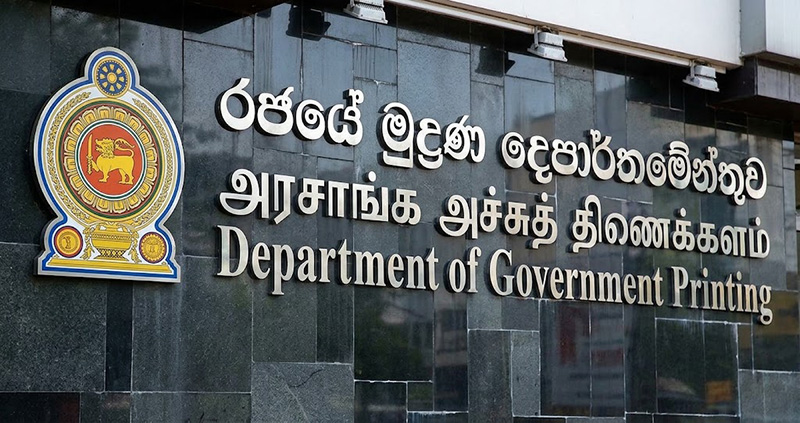
A complaint has been lodged with the Colombo Fraud Investigation Bureau against the Government Printer and the Secretary to the Ministry of Media regarding the online release of falsified documents bearing a forged Speaker’s certificate.
Attorney-at-Law Aruna Laksiri has lodged a complaint with the Colombo Fraud Investigation Bureau requesting legal action against the Government Printer of the Department of Government Printing (No. 118, Dr. Danister de Silva Mawatha, Colombo 08), Prasanna Jayaratne, and the Secretary to the Ministry of Mass Media (Asidisi Medura, 163, Kirulapone Mawatha, Polhengoda, Colombo 05), Dr. Anil Jasinghe.
The complaint alleges the commission of offences by forging and uploading falsified documents online using a forged Speaker’s certification, failure to perform statutory duties, and misappropriation of public property.
The complaint states that a copy of the English translation of the 22nd Amendment to the Constitution was downloaded and printed from the official website of the Government Printing Department (www.documents.gov.lk), which operates under the Ministry of Mass Media. On its outer cover and on page 1, the text “certified on 25th of September, 2026” is inscribed inside brackets.
The complaint pointed out that the Speaker has certified an English translation. Under Articles 23, 79, 83, and 80 of the Constitution, Parliament enacts laws and the Speaker certifies bills strictly in the Sinhala and Tamil languages; under the Constitution, therefore the Speaker cannot apply such certification to an English translation.

Showers or thundershowers will occur at several places in the most part of the island after 1.00 p.m

Geneva takes up Sallay’s case and govt. ignores opportunity to answer accusations

Section of wartime KKS High Security Zone vacated to facilitate economic development in the area

Lawyer lodges complaint against Govt. Printer, Media Ministry Secy.

Sri Lankan troops in joint anti-terrorist exercise in Russia

Nine Indian poachers brought to KKS with their boat

‘Dates have the highest sugar content to fight Coronavirus’

Sunday Island 27 December – Headlines

#SundayIsland 17th December – Headlines

Sunday Island – 28th March

Sunday Island Headlines – 21 March

Sunday Island – 21st February – Headlines
-

 Latest News5 days ago
Gold winner Tharanga gets brand-new Honda Vezel from SLAAJ
-

 Features5 days ago
Why Sri Lanka needs an Inclusive Civic Nationalism – urgently
-

 News4 days ago
US-assisted ‘Ice’ detection: NPC to examine IGP’s move to transfer drug-busting team
-

 Features6 days ago
Thailand’s biggest new global star …
-

 News6 days ago
First cases taken up by SC after enactment of 22A dismissed
-

 News5 days ago
Civil society activist accuses govt. of favouring Ven. Gnanasara
-

 Editorial3 days ago
Colombo Port drug bust: The plot thickens
-

 Editorial6 days ago
Aftershocks of 22A