
Latest News
Projects initiated this year must be steered towards achieving their specific targets within the same year – President

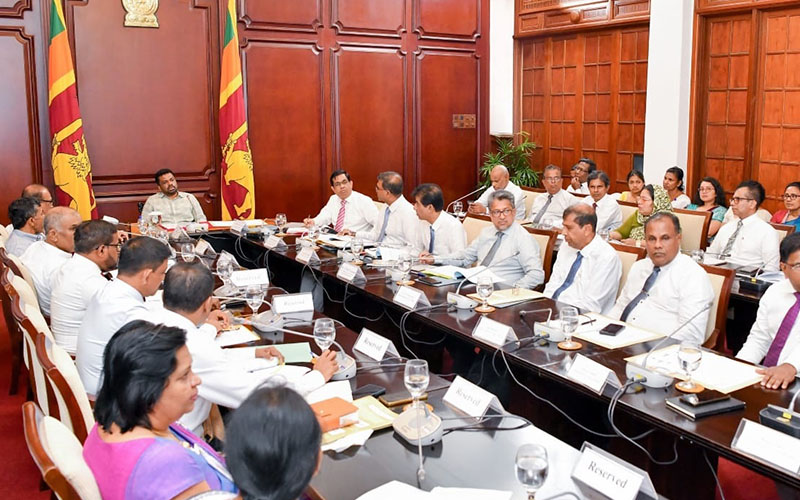
A review of the projects implemented under the 2025 budget allocations for the Ministry of Urban Development, Construction and Housing, along with a pre-budget discussions for 2026, was held on Monday (25) at the Presidential Secretariat under the patronage of President Anura Kumara Dissanayake.
The discussions focused on a wide range of sectors including urban and rural housing projects, urban development initiatives, city planning, solid waste management and environmental protection projects, as well as water supply and sanitation projects. The current progress of projects being implemented across all provinces of the country in these areas was also reviewed in detail.
Special attention was drawn to the challenges faced in resuming projects that were halted due to the recent economic crisis as well as in sustaining on-going projects. President Dissanayake emphasized the importance of ensuring that projects initiated this year are steered towards achieving their specific targets within the same year. He further pointed out that while the government allocates sufficient provisions to the relevant Ministries, failure to utilize those funds effectively within the stipulated time-frame becomes a serious concern.
The President also highlighted the need to give priority to the views and aspirations of local communities when undertaking housing and building construction as well as urban planning projects. He noted that due to ad-hoc construction projects carried out by previous administrations based solely on their preferences, many government buildings across the country remain underutilized or unused.
It was revealed that 18 bridge projects launched in the Hambantota District under the Ministry of Urban Development and Housing have been abandoned mid-construction. As a result, temporary access roads created for these projects have now deteriorated into muddy and hazardous paths, causing severe inconvenience to local residents. In response, the President instructed officials to explore the feasibility of completing the unfinished work.
Special attention was also given to the current status of housing projects implemented under Chinese and Indian loan assistance, with officials expressing optimism that the housing schemes related to resettlement in the Northern and Eastern Provinces could be completed within this year.
Furthermore, the progress of several major development initiatives was reviewed, including the road development projects connected to the “Homagama Tech City” project, the construction of the Polonnaruwa Administrative Complex and the current status of the “City Branding Project”.
The discussion also focused on issues arising in the handover of high-rise housing complexes already allocated to urban communities. President Dissanayake emphasized the importance of renovating and upgrading these housing units before transferring them to beneficiaries, as well as the need to establish a structured mechanism for their long-term maintenance once handed over.
In addition, the President highlighted the importance of conducting surveys to assess both the demand and interest of residents in semi-urban areas before initiating new high-rise housing projects.
Officials further briefed the President on the legal challenges associated with land acquisition payments and he directed them to prepare practical proposals to address and resolve these issues.
The discussion also addressed the establishment of a government-mediated mechanism for citizens who are eligible but have not yet benefited from state housing projects. The President instructed officials to explore the possibility of developing a framework in coordination with banks, with government support, to facilitate the allocation of benefits to these citizens.
Additionally, waste management and environmental protection projects were reviewed, including the current status of initiatives aimed at flood and disaster prevention across the country, such as the Veras River Project and the Kolonnawa Rainwater Project. Officials noted that these projects will continue to be implemented with the support of the “Clean Sri Lanka” programme. Discussions also covered pre-disaster preparedness planning, and the status of water supply and sanitation projects currently underway in areas including Jaffna, Greater Colombo, Kandy, Anuradhapura and Kalutara.
Discussions were also held on the streamlining of water supply in rural regions through the utilization of water pipelines that were brought in under previous administrations to increase water supply capacity and have been abandoned in various areas. Additionally, the need to modernize institutions under the Ministry of Urban Development, Construction and Housing was emphasized, particularly the importance of establishing advisory services for government-assisted construction projects.
The meeting was attended by Minister of Urban Development, Construction and Housing Anura Karunathilaka, Deputy Minister T.B. Sarath, Secretary to the President Dr. Nandika Sanath Kumanayake, Secretary to the Ministry of Finance Dr. Harshana Suriyapperuma, Secretary to the Ministry of Urban Development, Construction and Housing Ranjith Ariyaratne, Senior Economic Advisors to the President Duminda Hulangamuwa, Senior Additional Secretary to the President Russell Aponso, as well as officials from institutions under the Ministry of Urban Development, Construction and Housing and senior officers from the Ministry of Finance.

Latest News
Heat Index likely to increase up to ‘Caution level’ at some places in the Western, Sabaragamuwa, Southern, North-western, Northern and North- central provinces and in Monaragala district
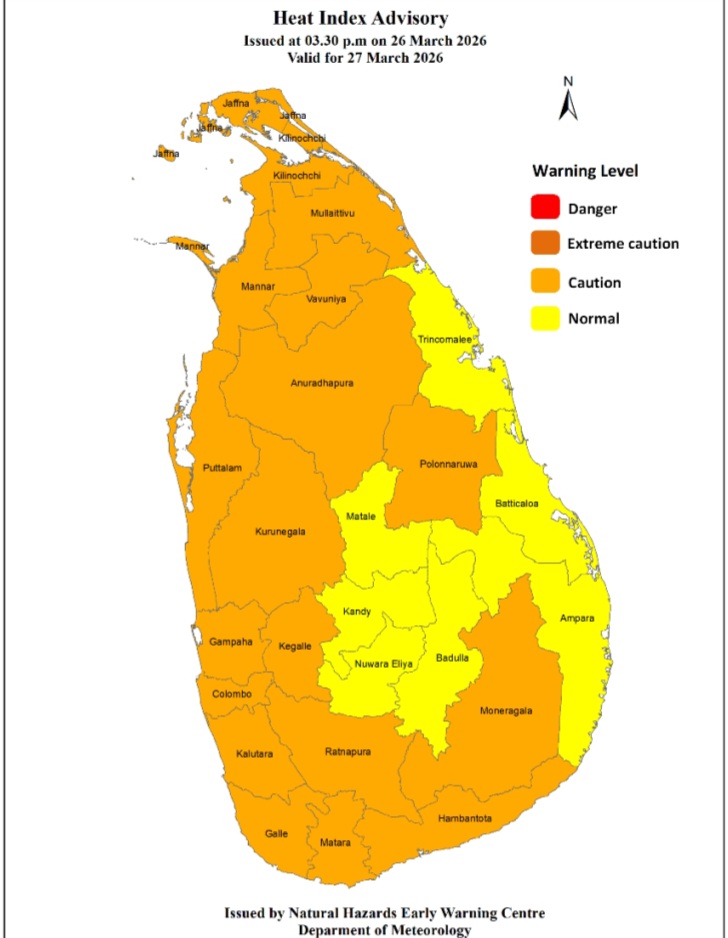
Warm Weather Advisory
Issued by the Natural Hazards Early Warning Centre of the Department of Meteorology
Issued at 3.30 p.m. on 26 March 2026, valid for 27 March 2026.
Thw Heat index, the temperature felt on human body is likely to increase up to ‘Caution level’ at some places in the Western, Sabaragamuwa, Southern, North-western, Northern and North-
central provinces and in Monaragala district.
The Heat Index Forecast is calculated by using relative humidity and maximum temperature and this is the condition that is felt on your body. This is not the forecast of maximum
temperature. It is generated by the Department of Meteorology for the next day period and prepared by using global numerical weather prediction model data.

Effect of the heat index on human body is mentioned in the above table and it is prepared on the advice of the Ministry of Health and Indigenous Medical Services.
ACTION REQUIRED
Job sites: Stay hydrated and takes breaks in the shade as often as possible.
Indoors: Check up on the elderly and the sick.
Vehicles: Never leave children unattended.
Outdoors: Limit strenuous outdoor activities, find shade and stay hydrated.
Dress: Wear lightweight and white or light-colored clothing.
Note:
In addition, please refer to advisories issued by the Disaster Preparedness & Response Division, Ministry of Health in this regard as well. For further clarifications please contact 011-7446491
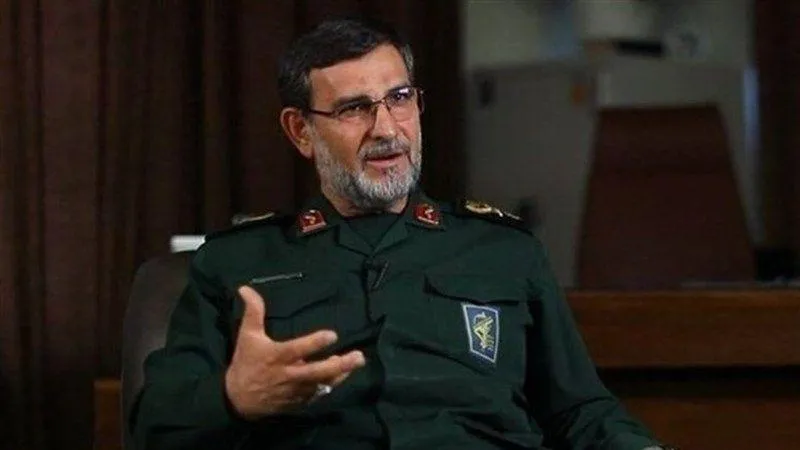
Israel says it has killed the Iranian navy chief overseeing what is a near-total blockade of the Strait of Hormuz.
Alireza Tangsiri, head of the Islamic Revolutionary Guards Corps (IRGC) navy, was “directly responsible for the terrorist act of bombing and blocking the Strait of Hormuz”, and has been “blown up”, according to Israel’s defence minister Israel Katz.
He added that a number of other “senior Navy command officials” have also been killed. Iran has not yet commented.
Since the start of the war on 28 February, Israel has assassinated several top Iranian officials, including Supreme Leader Ayatollah Ali Khamenei and security chief Ali Larijani.
Effectively blockading the Strait of Hormuz – the thin waterway between Iran, the United Arab Emirates (UAE) and Oman, through which around 20% of the world’s oil and liquefied natural gas normally passes – has been a key pillar of Iran’s strategy in the war.
Oil prices have consequently shot up, placing a direct price of the war on consumers in not only the US and Israel but across the world.
In recent weeks, an X account attributed to Tangsiri and cited by Iranian media has posted frequently about the Hormuz blockade, writing that “no vessel associated with the aggressors against Iran has the right to pass through”.
Tangsiri was appointed as the commander of the Navy in 2018, having previously served as deputy commander since 2010. In 2019, he was sanctioned by the US Treasury along with other IRGC commanders after Iran shot down a US surveillance drone near the strait.
Israeli Prime Minister Benjamin Netanyahu described Tangsiri as an individual with “a great deal of blood on his hands” and said his assassination was “yet another example of the co-operation between us and our friend, the United States, toward the common goal of achieving the objectives of the war”.
US Central Command said in a statement Tangsiri’s death “makes the region safer” and that the IRGC’s navy “is on an irreversible decline”. It also called on serving members of the IRGC to abandon their posts and return home “to avoid further risk of unnecessary injury or death”.
Israel’s military said in a statement posted on X that the head of the IRGC Navy’s intelligence directorate, Behnam Rezaei, was also “eliminated”.
(BBC)
Latest News
A strong Technical and Vocational Education and Training (TVET) system equips individuals with practical, relevant, and future-oriented skills helping to innovate responsibly towards a greener and sustainable future – PM
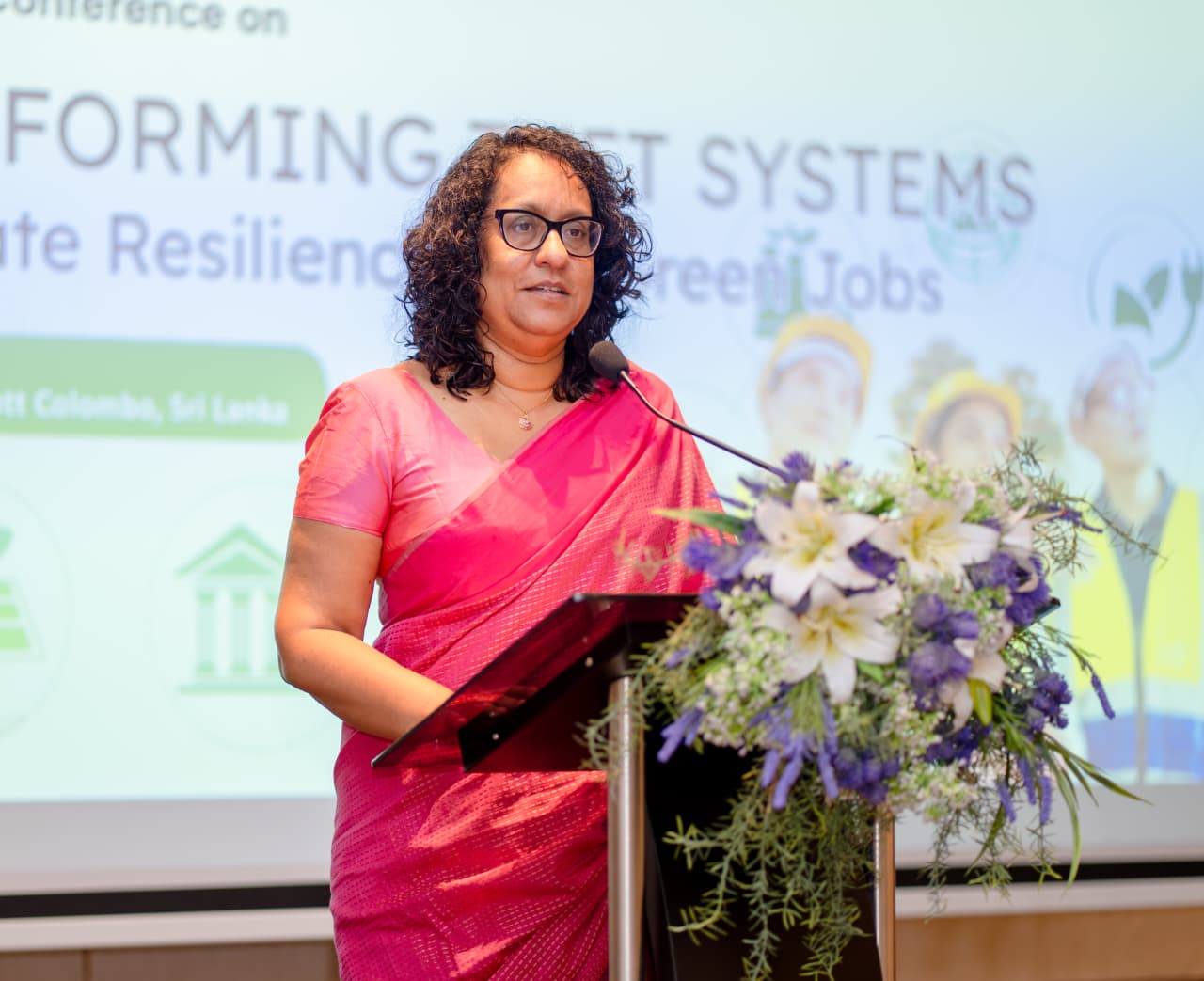
The Prime Minister, Minister of Education, Higher Education and Vocational Education Dr. Harini Amarasuriya participated as the Chief Guest in the international conference on ’Transforming TVET Systems for climate resilience and green jobs’ organized by Colombo Plan Staff College, Philippines together with the Ministry of Education, Higher Education and Vocational Education Sri Lanka on 24 th of March at Courtyard by Marriott Colombo, Sri Lanka.
The Conference serves as the flagship event of the five-day Regional Programme on “Transforming TVET for a Digital, Green, and Inclusive Economy” (23-27 March 2026), which continues throughout the week, bringing together representatives from CPSC member countries including Bhutan, Fiji, Malaysia, Maldives, Myanmar, Nepal, Philippines, Thailand, Pakistan, and Sri Lanka, fostering high-level dialogue and knowledge sharing on climate-resilient and green skills development.
The Conference features technical and plenary sessions on climate-responsive TVET systems, green skills development, national policy frameworks, and emerging technologies shaping industry transformation.
Addressing at the event, the Prime Minister emphasized the role of Technical and Vocational Education and Training (TVET) that equips individuals with practical, relevant, and future-oriented skills in addressing climate change and shaping a sustainable future.
The Prime Minister reaffirmed that this transformation remains a national priority for Sri Lanka. She stressed that education must go beyond knowledge dissemination to empower individuals with opportunities, dignity, and the capacity to contribute meaningfully to society.
She further emphasized the need to integrate environmental sustainability into education and training systems by embedding green skills in curricula, investing in modern training facilities, promoting innovation, and fostering collaboration between training institutions and emerging green industries.
Highlighting the importance of ensuring equity the Prime Minister further stated, that opportunities arising from the green transition must be accessible to all, including youth, young women, people with special needs, and marginalized communities.
Reaffirming Sri Lanka’s commitment to working closely with regional and international partnerships, the Prime Minister emphasized the importance of transforming them to actual benefits and partnerships.
The occasion was attended by the Secretary to the Ministry of Education, Higher Education and Vocational Education Nalaka Kaluwewa, Additional Secretary (Vocational Training) Ms. Samanthi Senanayake Director General Colombo Plan Staff College Prof. Dr. Suresh K. Dhameja , TVET administrators, institutional leaders, policymakers, instructors, industry representatives, and international delegates from across the region and seniors officials and officials from Ministries.
(Prime Minister’s Media division)

Heat Index likely to increase up to ‘Caution level’ at some places in the Western, Sabaragamuwa, Southern, North-western, Northern and North- central provinces and in Monaragala district

Israel says it has killed Iran’s navy chief overseeing Strait of Hormuz blockade

A strong Technical and Vocational Education and Training (TVET) system equips individuals with practical, relevant, and future-oriented skills helping to innovate responsibly towards a greener and sustainable future – PM

PM reviews progress of the committee appointed for the establishment of a National Nursing University

UN votes to recognise enslavement of Africans as ‘gravest crime against humanity’

Meta and YouTube found liable in landmark social media addiction trial

‘Dates have the highest sugar content to fight Coronavirus’

Sunday Island 27 December – Headlines

#SundayIsland 17th December – Headlines

Sunday Island – 28th March

Sunday Island Headlines – 21 March

Sunday Island – 21st February – Headlines
-

 News2 days ago
Senior citizens above 70 years to receive March allowances on Thursday (26)
-

 Features4 days ago
Trincomalee oil tank farm: An engineering marvel
-

 News7 days ago
CIABOC tells court Kapila gave Rs 60 mn to MR and Rs. 20 mn to Priyankara
-
 Features7 days ago
Science and diplomacy in a changing world
-

 Features4 days ago
The scientist who was finally heard
-

 Business23 hours ago
Dialog Unveils Dialog Play Mini with Netflix and Apple TV
-
 News2 days ago
Japanese boost to Sri J’pura Hospital, an outright gift from Tokyo during JRJ rule
-

 News2 days ago
CEB Engineers warn public to be prepared for power cuts after New Year