
Business
Private sector urged to play key role in shaping an inclusive, equitable and peaceful SL

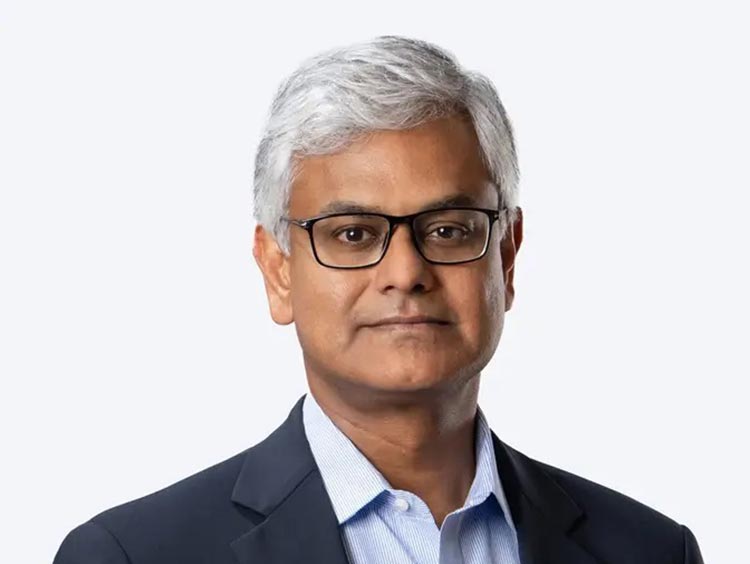
At the grand finale of the DEI Champion Awards 2025, held last week at the City of Dreams in Colombo, the private sector was called upon to play a transformative role in shaping an inclusive, equitable and peaceful Sri Lanka. Organised by the Ceylon Chamber of Commerce in partnership with the SCOPE Programme — co-financed by the European Union and the German Federal Foreign Office — the awards recognised pioneering organisations championing diversity, equity and inclusion (DEI) across Sri Lanka’s business landscape.
Chairperson of the Ceylon Chamber of Commerce, Krishan Balendra, delivering the keynote address, emphasised the broader significance of the evening.
Balendra said: “It is my great honour and pleasure to welcome you all to the grand finale of the DEI Awards 2025 — an evening where we shine a spotlight on those organisations leading the way in diversity, equity and inclusion. This inspiring event will honour the achievements of these pioneering organisations and highlight their contributions to the sustainable development of Sri Lanka’s economy on the global stage.”

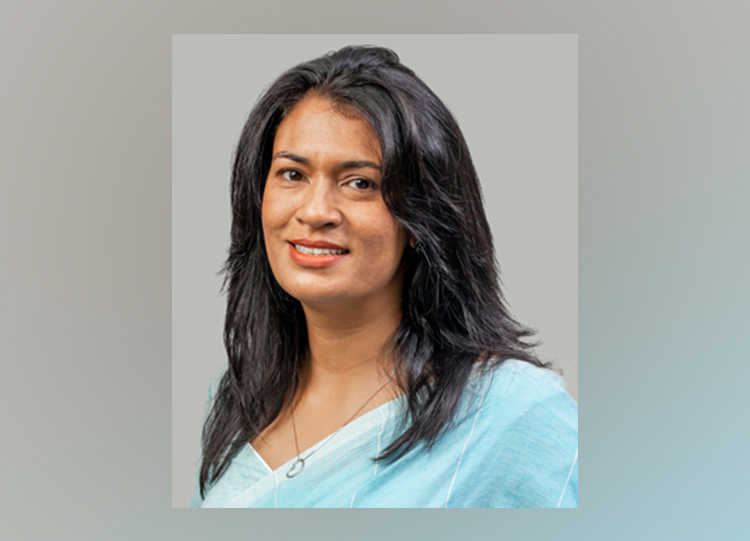
Aaranya Rajasingam
The event marked the culmination of a comprehensive countrywide effort under the project ‘Advancing DEI in Small and Medium Enterprises’, led by the Chamber and supported by GIZ Sri Lanka. Over the past year, the project hosted policy discussions and capacity-building workshops across all nine provinces, engaging stakeholders from government, private enterprise, civil society and local development agencies.
“These workshops aimed to explore current DEI practises, identify implementation challenges and assess the key steps needed for future progress, Balendra noted. “DEI is not just a buzzword. It is the backbone of strong, adaptive organisations. Businesses that invest in inclusion are stronger, more resilient and better positioned to compete globally.”
He reaffirmed the Chamber’s commitment to continuing engagement, advocacy and training to embed DEI practices deeply across Sri Lankan enterprises, large and small.
The event also featured a powerful address by Aaranya Rajasingam, Programme Component Manager for Economic Inclusion, SCOPE Programme, GIZ Sri Lanka.
“Tonight is a celebration of businesses who are not only transforming the way they work, but the communities they serve, she said. “At SCOPE, we try to take a holistic approach to promoting business impacts for social cohesion and peace.”
She noted that the DEI initiative was anchored in serious ground-level engagement. Through mapping and research efforts led by advisors like William Baxter and supported by local leaders such as Hasaki Diasing and Solomon Fernando, the programme created spaces for honest, reflective discussions on how DEI is understood — and misunderstood — in diverse regional business contexts.
“Do people in the regional sectors understand what DEI is, the same way the national businesses understand it? What is the difference, and what is our difference? she asked. “This is really important in understanding how national level policies must connect with local communities.”
Rajasingam also praised the efforts of frontline public institutions — including the National Enterprise Development Authority, Small Enterprise Development Division, Divisional Secretariats and local chambers — for laying the groundwork for DEI integration at grassroots levels.
“But inclusive growth cannot be the burden of public institutions alone, she asserted. “The private sector must now help us go beyond using DEI as a compliance requirement or a CSR activity. It must become a way of shaping identities, building trust and anchoring stability in a country still healing from divisions.”
In a clear call to action, she stressed that “the most resilient businesses are those embedded in resilient communities.”
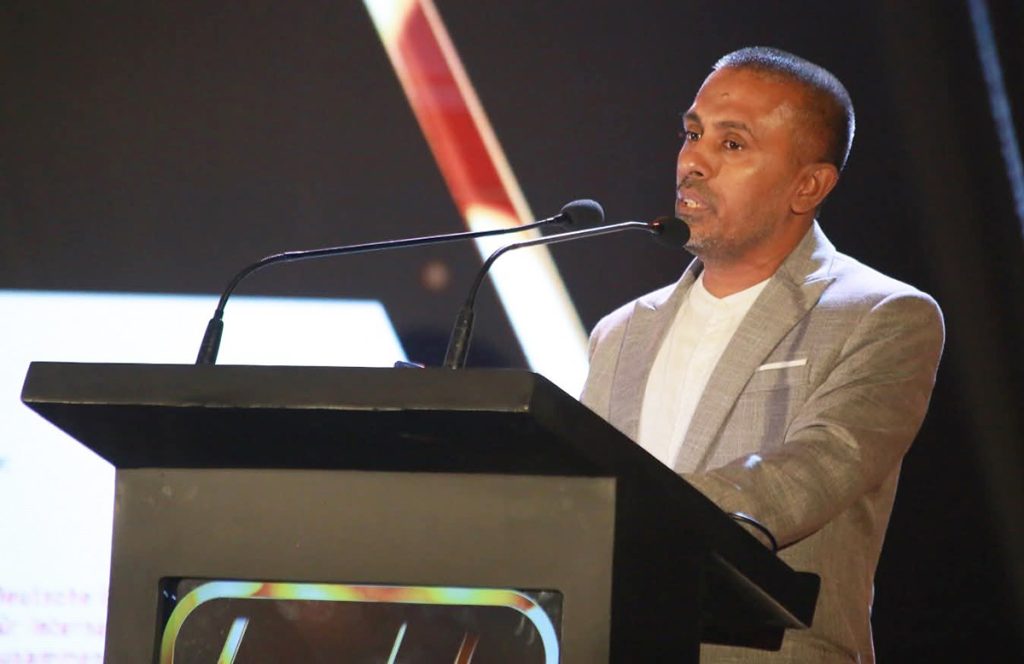
Muneer Mulaffer
The evening also saw a strong endorsement from the government side, with Deputy Minister of National Integration Muneer Mulaffer delivering a brief but powerful message on the state’s role in promoting cohesion.
“Injustices in society must be wiped out. Coexistence should be paramount for a progressive country. A responsible government must work towards fulfilling the aspirations of the people, he said.
By Ifham Nizam

Business
Successful completion of consent solicitation, exchange and tender offer related to SriLankan Airlines’ bond restructuring

SriLankan Airlines Limited (the “Company”) and the Government of Sri Lanka (the “Government”) announce the expiration of the Consent Solicitation, Exchange and Tender Offer related to the Company’s U.S.$175,000,000 Guaranteed Bonds due June 2024, guaranteed by the Government (the “Existing Bonds”).
On 20 February 2026, the Company launched an official invitation to holders of the Existing Bonds to tender and exchange their holdings for cash and the U.S.$-denominated 4.00% amortizing PDI bonds due 2028 issued by the Government (the “New Republic Bonds”), pursuant to the agreement in principle reached on 20 November 2025 with the members of the Ad Hoc Group of Bondholders – together holding approximately 55% of the aggregate outstanding amount of the Existing Bonds.
Following the expiration of the offer period, the Company and the Government are delighted to report a very high level of participation of over 99% of the total outstanding amount of the Existing Bonds. Bondholders representing more than 97% of the outstanding amount voted in favour, resulting in all Existing Bonds being tendered and exchanged on the settlement date.
Mr. Sarath Ganegoda, the Company’s Chairman, reacted to the results stating: “We are sincerely appreciative of the bondholders’ strong participation. The overall transaction results in a 16% haircut on the outstanding claim, and its successful completion marks a significant step forward that allows us to focus on the future of the Company with renewed optimism. As the flag carrier of our island nation, this important progress toward financial recovery will further strengthen our ability to support Sri Lanka’s economic prosperity.”
Dr. Harshana Suriyapperuma, Secretary to the Treasury at the Ministry of Finance, issued the following statement: “The successful completion of this transaction paves the way for the full normalization of our relations with our external partners. Having now successfully concluded restructuring agreements covering 99% of our public external debt, we extend our sincere appreciation to all stakeholders who supported Sri Lanka throughout this process. This achievement strengthens our position as we pursue our efforts to improve our credit rating.”
The settlement of the exchange and tender offer is intended to take place on 20 March 2026, subject to the relevant settlement conditions being satisfied.
Any questions related to this transaction can be directed to the Information, Tender, Tabulation and Exchange Agent for this transaction, Sodali & Co Limited
Email: srilankanairlines@investor.sodali.com
Transaction Website: https://projects.sodali.com/srilankanairlines
With over 18% already aged 60 and above—and one in four projected to be 60 or older by 2041—the Sri Lankan population is rapidly ageing. IF harnessed effectively, the elderly population and the related Silver Economy have great potential to contribute to Sri Lanka’s economy. This blog analysis shows the challenges and the possibilities for Sri Lanka to reap demographic dividends by unlocking the potential of the ageing population and the related Silver Economy.
Demographic Dividend and Silver Economy
Although population ageing poses challenges such as slower growth and increased fiscal pressures, healthier ageing trends offer a silver lining by boosting labour force participation, extending working lives, and enhancing productivity. Population ageing becomes a demographic dividend when the older population is considered an economic asset, rather than a social burden, and the potential of the change in the age structure is harnessed to accelerate economic growth. This involves creating employment and other economic opportunities, products, and services required by the elderly.
The Silver Economy refers to the economic opportunities associated with the growing public and consumer expenditure related to population ageing and the specific needs of the 50+ population. It is the system of production, distribution, and consumption of goods and services, targeting older adults, who are recognised as active economic agents with spending power, life experience, and growing demographic significance.
Changing Population Dynamics
To trigger a demographic dividend, this older population requires accumulated savings and investments to finance consumption during their retirement. However, the status quo of the elderly in Sri Lanka is mostly gloomy. In recent years, 49% of 55-64 year old cohorts were economically inactive, while the labour force participation rate for males and females were 36% and 11%, respectively. This suggests limited interest, capacity, and/or employment options. For instance, the retirement age of 60 years restricts formal employment opportunities for the elderly. Hence, a majority of older workers are employed in the informal sector, which underutilises their skills and underemploys them. Similarly, the elderly have limited options for part-time and flexible work, and are dissatisfied with participating in work. With the current average life expectancy of 75.5 years, they face about 15 years of post-retirement life with limited income and employment opportunities.
Additionally, only 31% of those above retirement age received a pension in recent years. Over three-quarters of retired persons were net dependants, and 91.7% did not receive any income from savings. Among those with savings such as the Employees’ Provident Fund (EPF), most spent their EPF without saving or investing for later life. Estimates suggest that by 2030, the economic old-age dependency ratio in Sri Lanka will reach 29.2%. Moreover, the 65+ years population had the highest multidimensional poverty headcount ratio (17.9%) in 2019. The age group of 36-64 years, including those who will be 60+ years in 2037, had a multidimensional poverty headcount ratio of 16%. With the worsening of overall poverty in the post-crisis setting, Sri Lanka’s older population is likely to be more vulnerable now.
Looming Care Crisis
Moreover, there is a growing care deficit – a gap in demand and availability of caregivers, for the ageing population. Around 76% of 65+ years population live with children, which is projected to decline over time with the emerging cultural and social shift from home-based care towards institutional care. Three-generation households are projected to decline from 19% in 2012 to 5% by 2060. The decreased availability of family care due to smaller family sizes and growing female employment will increase demand for commercial care. Yet, as discussed, most elderly people will not have the financial capacity to seek commercial care. At the same time, the elder care sector in Sri Lanka is polarised. On the one hand, there is an excess demand for the limited number of state-run elder care institutions—often of relatively low quality, while fee-based facilities remain unaffordable for the average elderly. Hence, the less-affluent middle-class elderly have virtually no options for institutional care. On the other hand, formal and professional home-based care is costly, while lower-cost options are informal and ad hoc. Moreover, free adult day care centres are limited and often target low-income elders, with almost no paid day-care options for other income groups. Across all care options, there is an acute deficit in both formal and informal care workers. Projections indicate a 149,076 deficit of long-term care workers by 2037.
Silver Economic Strategic Plan
Therefore, without timely strategic action, the ageing population would become a burden to the Sri Lankan society and increase government expenditure on health and other care, pensions, and social protection. The potential demographic dividend would instead become a drag on the economy.
The global approach to reap a demographic dividend includes policies supporting healthy ageing, increasing labour force participation among older individuals, and closing gender gaps in the workforce, to boost growth and rebuild fiscal buffers amid demographic headwinds. In the case of Sri Lanka, targeted strategies are needed urgently to facilitate the elderly to accumulate savings and investments to finance their post-retirement consumption. Similarly, it is important that Sri Lanka creates an ecosystem of affordable products and services for healthy, productive, and dignified lives for this demographic group.
To achieve this, Sri Lanka should focus on two strategic areas:
Prioritise the extension of economic opportunities into later life. This includes employment opportunities, such as phased retirement, flexible working arrangements, part-time work, and work-from-home arrangements targeted at older workers, to engage them in productive economic activities for a longer period. Such activities include adopting an age-friendly certification for businesses and employers to ensure businesses are welcoming, accessible, and responsive to older workers and clients. Another is to increase the minimum retirement age in the formal sector beyond 60 years of age. Moreover, increasing awareness on saving and investing for retirement and expanding related options—such as scaling up coverage of private life insurance and state-led contributory pension schemes—are essential.
Expand care options to not only protect the elderly but also create economic opportunities. This includes scaling up both free and fee-based elder care facilities to cater to all income types across both living-in and day-care options. Another is providing incentives, such as tax breaks or land, for the private sector to invest in care facilities and tie these to subsidised services for low-income elders. Additionally, existing infrastructure and systems, such as Development Officers at the Divisional Secretariats and local government community centres, could be harnessed to provide community-based care. Similarly, establishing and protecting the rights of elder care workers, providing formal Recognition of Prior Learning and certifying their skills would help attract and retain care workers.
By Dr Bilesha Weeraratne,
Research Fellow and Head of Migration and Urbanisation Policy Research at the Institute of Policy Studies of Sri Lanka
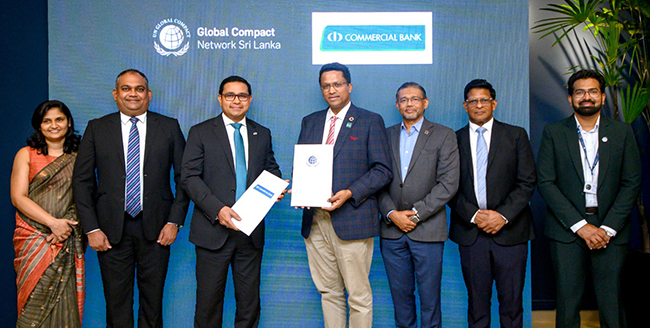
The Commercial Bank of Ceylon has taken a leadership role in advancing key sustainability priorities of the United Nations Global Compact Network Sri Lanka by becoming a Patron of Network Sri Lanka’s ‘Diversity & Inclusion’ and ‘Water & Ocean Stewardship’ Working Groups.
The Bank formalised this landmark commitment through the signing of a two-year Memorandum of Understanding (MoU) between Commercial Bank and UN Global Compact Network Sri Lanka, establishing the Bank’s patronage of the two Working Groups and its role in guiding initiatives that promote sustainable water management and inclusive business practices.
Commercial Bank will provide leadership and advocacy to advance the objectives of the Diversity & Inclusion and Water & Ocean Stewardship Working Groups. The Bank will collaborate with the Network to organise events, facilitate dialogue and partnerships, and encourage greater participation by companies seeking to strengthen their environmental, social and governance (ESG) practices. The engagement will also focus on initiatives that accelerate progress towards the Ten Principles of the UN Global Compact and the UN Sustainable Development Goals (SDGs), particularly in the areas of sustainable water management, ocean stewardship, gender equality and inclusive economic participation.

Sri Lanka says it denied US request to land two aircraft at Mattala airport

Eid celebrations dimmed by war and displacement across Middle East

Showers may occur at several places in the Western, Sabaragamuwa, Northwestern and Uva provinces and in Galle, Matara, Kandy and Nuwara-Eliya districts after 1.00 pm.

Iranian strikes on bases used by US caused $800m in damage, new analysis shows

President maintains Lanka has been even-handed in dealing with Iran and US

Heat Index likely to increase up to ‘Caution level’ at some places in the Western, Sabaragamuwa, North-central, Southern and North-western provinces and in Monaragala, Mannar, Vavuniya and Mullaitivu districts

‘Dates have the highest sugar content to fight Coronavirus’

Sunday Island 27 December – Headlines

#SundayIsland 17th December – Headlines

Sunday Island – 28th March

Sunday Island Headlines – 21 March

Sunday Island – 21st February – Headlines
-

 Business5 days ago
Browns EV launches fast-charging BAW E7 Pro at Rs. 5.8 million
-

 Life style6 days ago
From culture to empowerment: Indonesia’s vision for Sri Lanka
-

 News3 days ago
CIABOC questions Ex-President GR on house for CJ’s maid
-

 Life style6 days ago
Ranjith Fernando celebrates cricketing journey with Hob Nails to Spikes
-

 News4 days ago
Sri Lankan marine scientist Asha de Vos honoured at UNGA opening
-

 Features5 days ago
Achievements of the Hunduwa!
-
 Latest News6 days ago
QR code system will be implemented for fuel with effect from 06.00 a.m. today (15th)
-

 News4 days ago
Australian HC debunks misleading travel risk claims for Sri Lanka