
News
Prez insists on IMF approved new tax regime, warns of dire consequences unless fully implemented

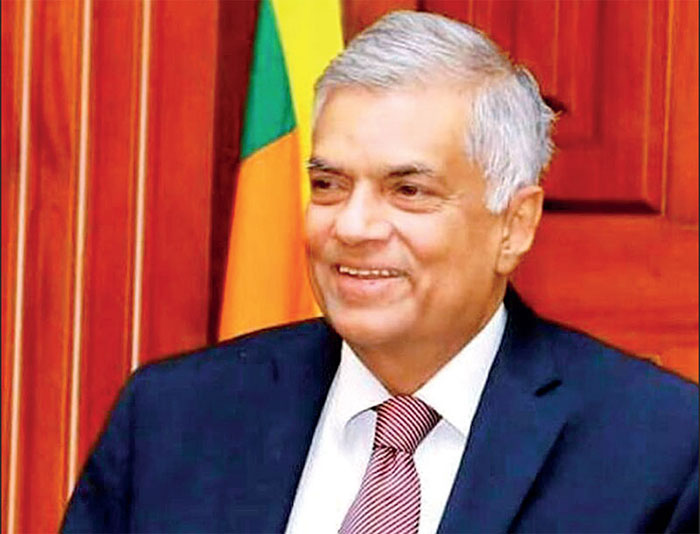
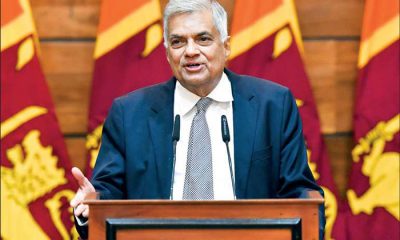
President Ranil Wickremesinghe, in a televised statement yesterday (18), warned that Sri Lanka wouldn’t be able to obtain assistance of the IMF, or any other lending agencies, or countries, if tough new tax regime was not implemented.
The President said: “If we withdraw from this programme, we will not receive assistance from the IMF. If we don’t get the IMF certification, we will not get the support of those international institutions, such as the World Bank, and Asian Development Bank, and the countries that provide support. If that happens, we will have to go back to the era of queues.
“We may have to face even tougher times ahead. We have to obtain these loans and go for the debt-restructuring programme. We are not doing these wilfully. We have to take certain decisions, even reluctantly.
“However, we will reconsider these decisions periodically.”
The following is the full text of the President’s statement: “An important step in Sri Lanka’s debt restructuring program took place last week. A team under our Minister of State for Finance participated in the annual (October 07) meeting of the International Monetary Fund. Accordingly, a meeting was held under the leadership of the International Monetary Fund, with the countries that had given loans to Sri Lanka and some private institutions that had also given loans.
Over 75 persons participated directly or through zoom technology. The primary purpose of this was to come to a common platform with the 03 main countries that have granted loans to Sri Lanka, namely Japan, China and India, and discuss the next steps to be taken to provide these concessions.
During this meeting, the International Monetary Fund and Sri Lanka pointed out the need for a common platform. India and China have informed us that they will investigate further and provide answers. These two countries have also informed us that bilateral discussions may be required.
Many other countries also participated in this meeting. It is notable that, an Assistant Secretary of the United States Treasury came here. All this was possible because we are implementing the decisions taken in consultation with the International Monetary Fund.
There is one thing about the income of the Government of Sri Lanka. In 2015, when the representatives of the International Monetary Fund came to Sri Lanka, we were told of the need for a surplus in the primary budget. Therefore, we provided that surplus in 2017-2018. But it was reduced as a result of the 2019 Easter Sunday bombings. However, there were no serious issues. They were optimistic that we would be able to increase our revenue, to have a surplus in the primary budget.
At the time, our income was between 14.5% and 15% of the Gross Domestic Product (GDP). However, we agreed that we can gradually increase this to 17%-18%.
However, in November 2019, the country’s taxes were drastically reduced. Then the government revenue decreased to 8.5%. There, the International Monetary Fund declared that it is unable to provide aid because of these agreements.
That year we lost around Rs. 600-700 billion. Simultaneously, we had to face the Covid pandemic. These issues are the main factors that led to the collapse of Sri Lanka’s economy.
The International Monetary Fund notified us that we need to show a surplus in our primary budget. We agreed to it because we needed their support.
The other factor is that it was decided to increase the country’s income from 8.5% to 14.5% of the GDP. It’s impossible to do it all at once. We have planned to increase the country’s income to 14.5% of the GDP by 2026.
Initially, we had to think about how we were going to increase our income. We have printed money because our income decreased. During the past two years, Rs. 2300 billion has been printed. As a result, inflation has risen to 70% – 75%. Food inflation has increased even more.
These need to be controlled, but we also need to secure our income. Therefore, a new tax system was proposed during these discussions. The International Monetary Fund had notified that even the export industries are required to pay taxes.
It was indicated especially in countries with an export economy, taxes are being paid. The IMF also pointed out that our primary export economy was the plantation industry. During British rule, taxes were charged from every plantation sector, including tea, coconut and rubber. Therefore, we decided that if we are to move towards that goal, we will have to pay taxes. The export sector has now questioned this move and if these facts are to be submitted to the International Monetary Fund, we have discussed carrying out an analysis.
The second matter is individual taxes. We have obtained the majority of taxes through indirect taxing. Even the majority of the country’s people below the poverty line had no choice but to pay taxes indirectly. Our direct tax revenue is 20%. 80% which was derived from indirect taxes. The International Monetary Fund had specific questions about it and they were of the view that the amount of tax obtained from direct taxes should exceed 20%. Otherwise, they noted that this would not be successful, as ordinary citizens would be forced to pay taxes.
Therefore, according to this mechanism, and to achieve the goals of 2026, the treasury and the International Monetary Fund discussed the possibility of limiting the taxation from those who have an income of 02 lakhs, but that was not possible. Eventually, income tax was levied on people earning over 100,000. Today, this has become a huge problem in the country.
I would like to point out that based on this backdrop, we may not be able to achieve the desired goals without this tax system. The desired goal is to achieve 14.5% – 15% gross domestic product (GDP) revenue by 2026.
If we withdraw from this program, we will not receive assistance from the IMF. If we don’t get the IMF certification, we will not get the support of those international institutions such as the World Bank, and Asian Development Bank, and the countries that provide support. If that happens, we will have to go back to the era of queues.
We may have to face even tougher times ahead. We have to obtain these loans and go for the debt-restructuring program. We are not doing these wilfully. We have to take certain decisions even reluctantly. However, we will reconsider these decisions periodically.
While successfully conducting our debt restructuring program, we expect to move forward through the economic success achieved through a bountiful Maha season. This will help reduce our economic pressure. We have also discussed measures to increase our foreign reserves. Once we have implemented these measures, we can move forward.
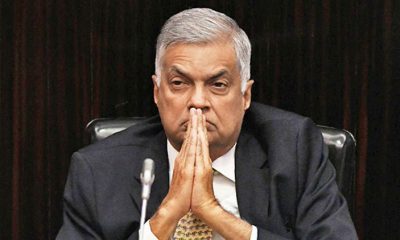
We are in a difficult period. We will have to make tough decisions during these difficult times. I took on this difficult task when no one else was willing to come forward. Hence, I feel I must enlighten everyone regarding this background. The government is ready to discuss this further.







Latest News
Financial contribution from Gift Sri Lanka Foundation and the Georgia Buddhist Vihara, USA, for disaster relief


In support of relief efforts for communities affected by the Ditwah cyclone, Gift Sri Lanka Foundation and the Georgia Buddhist Vihara (GBV), USA, have made a financial contribution of USD 16,000 to the Government’s ‘Rebuilding Sri Lanka’ Fund.
The relevant cheque was formally handed over on Thursday (18) afternoon at the Presidential Secretariat by the Chief Incumbent of the Georgia Buddhist Vihara, Most Venerable Panamwela Vajirabuddha Nayaka Thero, to the Secretary to the President, Dr. Nandika Sanath Kumanayake.

The European Union has allocated a total of Euro 2.35 million of financial assistance to Sri Lanka. This includes Euro 500,000 through IFRC and Euro 1.85 million through DG-European Civil Protection and Humanitarian Aid Operations (ECHO) partners, WFP and UNICEF as humanitarian assistance to Sri Lanka, in response to the impact of Tropical Cyclone Ditwah,
In addition to the above allocation, the Union Civil Protection Mechanism (UCPM), which brings together 37 participating States, all 27 EU member States, as well as Albania, Bosnia and Herzegovina, Iceland, Moldova, Montenegro, North Macedonia, Norway, Serbia, Türkiye and Ukraine, is providing in-kind assistance to Sri Lanka.
As a part of the UCPM in kind assistance being provided, on Wednesday, 17th December, Sri Lanka received an aid shipment, with two air cargo flights arriving in Colombo from Germany, France and Luxembourg. This aid shipment included 83 tonnes of relief items such as family tents, mattresses, hygiene and kitchen kits, beds and water filters. The supplies are intended for distribution among communities most affected by the cyclone.
The arrival of the assistance was welcomed by the EU Ambassador to Sri Lanka, Carmen Moreno, French Ambassador, Rémi Lambert, and the Deputy Head of Mission at the German Embassy, Sarah Hasselbarth. On behalf of the Government of Sri Lanka, the donations were received by Sugeeshwara Gunaratna, Director General / Europe & North America, Ministry of Foreign Affairs, Foreign Employment & Tourism and Chathura Liyanarachchi, Director, Disaster Management Center (DMC).
Italy has also provided a team of structural engineers to support Sri Lanka’s disaster assessment and recovery process.
Furthermore, the EU has activated its Copernicus Emergency Management Service (EMS) in rapid mapping mode, with around 30 maps produced so far.
The European Union has committed continued cooperation and support to Sri Lanka’s disaster recovery and rebuilding process, reaffirming the enduring friendship and strong partnership between Sri Lanka and the European Union.

… hands over proposal asking for PSC probe into govt.’s lapses
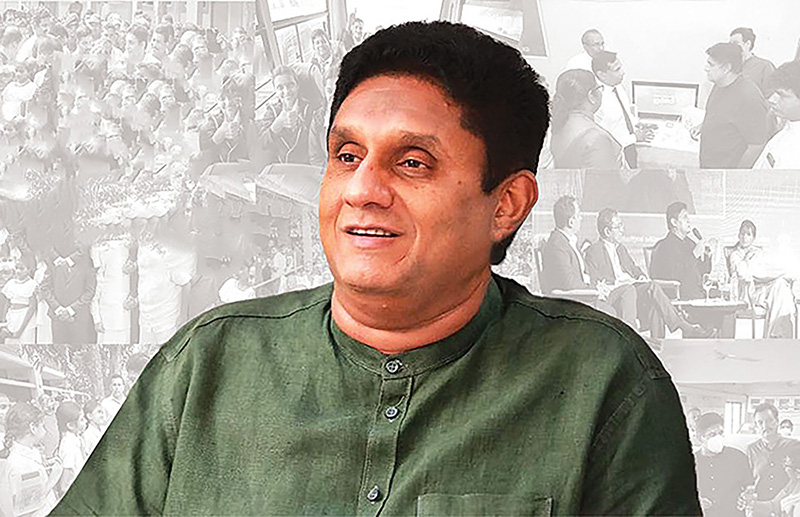
Opposition and SJB leader Sajith Premadasa yesterday accused the government of having gagged the Meteorology Department officials, who, he said, had been placed under virtual house arrest. He claimed that they had been barred from speaking to the media.
Speaking in Parliament, Premadasa said withholding information from the public was unacceptable. He insisted that the Meteorology Department and international agencies had repeatedly issued warnings about extreme weather events between November 11 and 26. He demanded to know why Sri Lanka’s disaster management mechanism had not been activated in a timely manner.
“The key issue is why the country’s disaster management system failed to respond when the risks were clearly identified,” he told the House, describing the lapse as a serious failure of governance.
Condemning attempts to silence officials, Premadasa said acknowledging mistakes was the only way forward. “If we are wrong, we should admit it. If we are right, we should say so. Silencing professionals will help solve problems.
The Opposition Leader also called for a National Disaster Response Force and amendments to the Disaster Management Act to strengthen preparedness and response mechanisms.
Premadasa and several other Opposition MPs have submitted a formal proposal to the Speaker seeking the appointment of a Parliamentary Select Committee to investigate the government’s failure to mitigate the impact of Cyclone Ditwah.
The Opposition has demanded a 30-member select committee tasked with producing a comprehensive report on the institutional and administrative failures during the disaster.
Describing the government’s lack of preparedness as deeply regrettable, the MPs have said that timely action would have helped save many lives and reduced the scale of destruction caused by the cyclone.
By Saman Indrajith ✍️

Ex-Nascar driver and his family among seven killed in US plane crash

TikTok owner signs agreements to avoid US ban

Violence breaks out in Bangladesh after death of youth protest leader

Financial contribution from Gift Sri Lanka Foundation and the Georgia Buddhist Vihara, USA, for disaster relief

European Union provides over Euro 2.35 million Humanitarian Assistance to Sri Lanka

Tannane goal from own half sets Morocco on way to FIFA Arab Cup 2025 title

‘Dates have the highest sugar content to fight Coronavirus’

Sunday Island 27 December – Headlines

#SundayIsland 17th December – Headlines

Sunday Island – 28th March

Sunday Island Headlines – 21 March

Sunday Island – 21st February – Headlines
-

 Features5 days ago
Why Sri Lanka Still Has No Doppler Radar – and Who Should Be Held Accountable
-

 News1 day ago
Pakistan hands over 200 tonnes of humanitarian aid to Lanka
-

 Midweek Review2 days ago
How massive Akuregoda defence complex was built with proceeds from sale of Galle Face land to Shangri-La
-
 News1 day ago
Pope fires broadside: ‘The Holy See won’t be a silent bystander to the grave disparities, injustices, and fundamental human rights violations’
-

 Latest News5 days ago
Landslide early warnings in force in the Districts of Badulla, Kandy, Kegalle, Kurunegala, Matale, Nuwara Eliya and Ratnapura
-
 News6 days ago
Govt. okays postgraduate medical training for Maldivian medical officers and dental surgeons
-
 Features5 days ago
Srima Dissanayake runs for president and I get sidelined in the UNP
-

 Editorial5 days ago
Disaster relief and shocking allegations