
News
Prez insists on IMF approved new tax regime, warns of dire consequences unless fully implemented

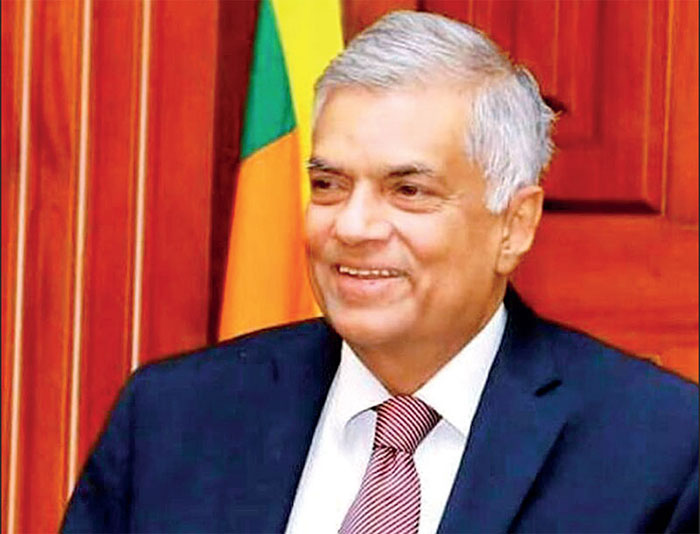
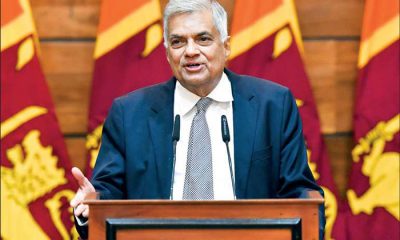
President Ranil Wickremesinghe, in a televised statement yesterday (18), warned that Sri Lanka wouldn’t be able to obtain assistance of the IMF, or any other lending agencies, or countries, if tough new tax regime was not implemented.
The President said: “If we withdraw from this programme, we will not receive assistance from the IMF. If we don’t get the IMF certification, we will not get the support of those international institutions, such as the World Bank, and Asian Development Bank, and the countries that provide support. If that happens, we will have to go back to the era of queues.
“We may have to face even tougher times ahead. We have to obtain these loans and go for the debt-restructuring programme. We are not doing these wilfully. We have to take certain decisions, even reluctantly.
“However, we will reconsider these decisions periodically.”
The following is the full text of the President’s statement: “An important step in Sri Lanka’s debt restructuring program took place last week. A team under our Minister of State for Finance participated in the annual (October 07) meeting of the International Monetary Fund. Accordingly, a meeting was held under the leadership of the International Monetary Fund, with the countries that had given loans to Sri Lanka and some private institutions that had also given loans.
Over 75 persons participated directly or through zoom technology. The primary purpose of this was to come to a common platform with the 03 main countries that have granted loans to Sri Lanka, namely Japan, China and India, and discuss the next steps to be taken to provide these concessions.
During this meeting, the International Monetary Fund and Sri Lanka pointed out the need for a common platform. India and China have informed us that they will investigate further and provide answers. These two countries have also informed us that bilateral discussions may be required.
Many other countries also participated in this meeting. It is notable that, an Assistant Secretary of the United States Treasury came here. All this was possible because we are implementing the decisions taken in consultation with the International Monetary Fund.
There is one thing about the income of the Government of Sri Lanka. In 2015, when the representatives of the International Monetary Fund came to Sri Lanka, we were told of the need for a surplus in the primary budget. Therefore, we provided that surplus in 2017-2018. But it was reduced as a result of the 2019 Easter Sunday bombings. However, there were no serious issues. They were optimistic that we would be able to increase our revenue, to have a surplus in the primary budget.
At the time, our income was between 14.5% and 15% of the Gross Domestic Product (GDP). However, we agreed that we can gradually increase this to 17%-18%.
However, in November 2019, the country’s taxes were drastically reduced. Then the government revenue decreased to 8.5%. There, the International Monetary Fund declared that it is unable to provide aid because of these agreements.
That year we lost around Rs. 600-700 billion. Simultaneously, we had to face the Covid pandemic. These issues are the main factors that led to the collapse of Sri Lanka’s economy.
The International Monetary Fund notified us that we need to show a surplus in our primary budget. We agreed to it because we needed their support.
The other factor is that it was decided to increase the country’s income from 8.5% to 14.5% of the GDP. It’s impossible to do it all at once. We have planned to increase the country’s income to 14.5% of the GDP by 2026.
Initially, we had to think about how we were going to increase our income. We have printed money because our income decreased. During the past two years, Rs. 2300 billion has been printed. As a result, inflation has risen to 70% – 75%. Food inflation has increased even more.
These need to be controlled, but we also need to secure our income. Therefore, a new tax system was proposed during these discussions. The International Monetary Fund had notified that even the export industries are required to pay taxes.
It was indicated especially in countries with an export economy, taxes are being paid. The IMF also pointed out that our primary export economy was the plantation industry. During British rule, taxes were charged from every plantation sector, including tea, coconut and rubber. Therefore, we decided that if we are to move towards that goal, we will have to pay taxes. The export sector has now questioned this move and if these facts are to be submitted to the International Monetary Fund, we have discussed carrying out an analysis.
The second matter is individual taxes. We have obtained the majority of taxes through indirect taxing. Even the majority of the country’s people below the poverty line had no choice but to pay taxes indirectly. Our direct tax revenue is 20%. 80% which was derived from indirect taxes. The International Monetary Fund had specific questions about it and they were of the view that the amount of tax obtained from direct taxes should exceed 20%. Otherwise, they noted that this would not be successful, as ordinary citizens would be forced to pay taxes.
Therefore, according to this mechanism, and to achieve the goals of 2026, the treasury and the International Monetary Fund discussed the possibility of limiting the taxation from those who have an income of 02 lakhs, but that was not possible. Eventually, income tax was levied on people earning over 100,000. Today, this has become a huge problem in the country.
I would like to point out that based on this backdrop, we may not be able to achieve the desired goals without this tax system. The desired goal is to achieve 14.5% – 15% gross domestic product (GDP) revenue by 2026.
If we withdraw from this program, we will not receive assistance from the IMF. If we don’t get the IMF certification, we will not get the support of those international institutions such as the World Bank, and Asian Development Bank, and the countries that provide support. If that happens, we will have to go back to the era of queues.
We may have to face even tougher times ahead. We have to obtain these loans and go for the debt-restructuring program. We are not doing these wilfully. We have to take certain decisions even reluctantly. However, we will reconsider these decisions periodically.
While successfully conducting our debt restructuring program, we expect to move forward through the economic success achieved through a bountiful Maha season. This will help reduce our economic pressure. We have also discussed measures to increase our foreign reserves. Once we have implemented these measures, we can move forward.
We are in a difficult period. We will have to make tough decisions during these difficult times. I took on this difficult task when no one else was willing to come forward. Hence, I feel I must enlighten everyone regarding this background. The government is ready to discuss this further.







Latest News
Landslide Early Warnings issued to the districts of Kalutara, Kandy, Nuwara Eliya and Ratnapura


The National Building Research Organisation [NBRO] has issued landslide early warnings to the districts of Kalutara, Kandy, Nuwara Eliya and Ratnapura effective from 0400hrs on 12th June 2026 to 0400hrs on 13th June 2026
Accordingly,
LEVEL I [YELLOW] landslide early warnings have been issued to the Divisional Secretaries Divisions and surrounding areas of Palindanuwara in the Kalutara district, Doluwa in the Kandy district, Ambagamuwa in the Nuwara Eliya district and Pelmadulla, Ayagama, Ratnapura, Godakawela, Kalawana and Nivitigala in the Ratnapura district
News
Wife, counsel seek regular access to ex-Spy Chief Sallay held under President’s detention order

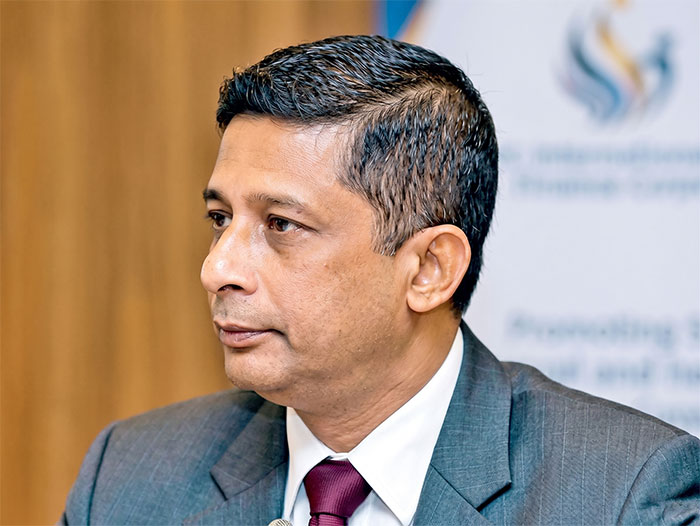
Wife of former State Intelligence Chief Maj. Gen. (Retd.) Suresh Sallay has asked CID Director retired SSP Shani Abeysekera to allow her, her family members and lawyers to visit her husband in the National Hospital, Colombo. Sallay’s counsel has also written to Abeysekera, asking for permission to visit the former spy held on a detention order signed by President Anura Kumara Dissanayake.
The text of Manori’s letter: “I respectfully request your assistance in granting me, and my daughter or alternatively my son, permission to visit my husband, Rtd. Major General Suresh Sallay, who is currently at the National Hospital, Colombo.
“As you are aware, my husband is presently engaged in a fast-unto-death campaign. His physical condition and emotional well-being are of deep concern to our family. During this difficult period, the presence and support of his immediate family are extremely important to him.
“I firmly believe that regular visits from me with our daughter or our son would help uplift his spirits, provide him with much-needed emotional strength, and may encourage him to reconsider continuing this course of action. Family support can play a vital role in preserving his mental and emotional health while he remains hospitalised.
“In view of these exceptional circumstances, I kindly request that permission be granted for either me and my daughter or my son to visit him daily during the period of his hospitalisation.
“I would be most grateful for your compassionate consideration of this request.”
“The text of the counsel’s letter: “I write in my capacity as Counsel for Rtd. Major General Suresh Sallay, who is presently under detention and admitted to the National Hospital, Colombo.
As you are aware, Major General Sallay has embarked on a fast-unto-death campaign, giving rise to serious concerns regarding his physical and mental well-being. In these circumstances, it is imperative that I be granted reasonable and regular access to my client during his hospitalisation.
As his legal representative, I have a professional obligation to monitor his condition and obtain instructions from him so that I may accurately apprise the relevant courts of his health status and any developments affecting his rights and welfare. Effective legal representation requires continuous communication with my client, particularly in light of the grave circumstances presently confronting him.
I also wish to respectfully highlight that Major General Sallay has placed explicit trust and confidence in me as his counsel. Indeed, I was the first person he contacted following his arrest.
Given the trust he reposes in me, I believe I am uniquely positioned to engage with him constructively and persuade him to discontinue this campaign and instead place his confidence in the legal remedies and judicial processes available to him.
For these reasons, I respectfully request that I be granted permission to visit my client on a daily basis during the period of his hospitalization.
Such access would not only facilitate the discharge of my professional responsibilities but may also contribute meaningfully towards safeguarding his health and encouraging a resolution through lawful and institutional means.
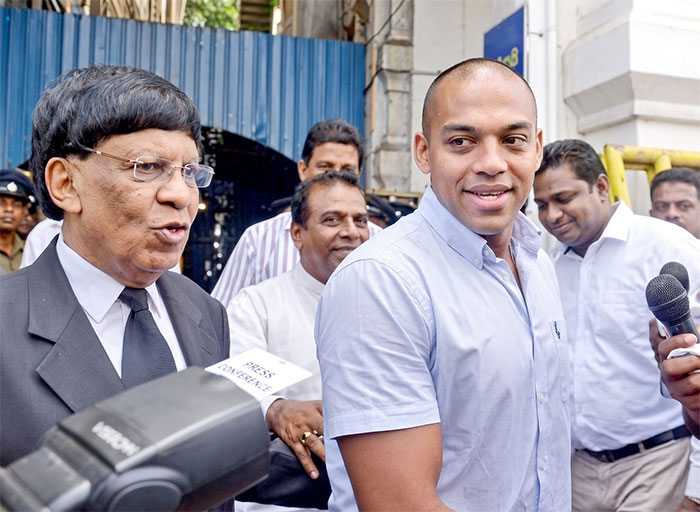
Yoshitha Rajapaksa, who served as a Lieutenant in the Sri Lanka Navy, has now been summoned to the Commission to Investigate Allegations of Bribery or Corruption next Tuesday (16) for questioning over his participation in a Royal Navy training programme in the United Kingdom outside established procedures.
The Commission is expected to record statements in relation to several complaints received regarding his recruitment and subsequent service in the Navy after he enlisted on December 14, 2006.
According to sources, the investigation focuses on allegations concerning the educational qualifications considered at the time of his enlistment, as well as foreign training opportunities he is said to have received while in service, which are suspected to have been granted in violation of due process.
The Bribery Commission has launched the inquiry under the provisions of the Anti-Corruption Act, officials said.

Jailed South Korea ex-president gets 30 more years for sending drones into North

Holder, Joseph set up victory as West Indies go 1-0 up against Sri Lanka

El Niño under way and threatens weather extremes, scientists say

South Korea beat Czech Republic 2-1 in World Cup opener

Police investigate ‘8647’ written in grass on US national mall

Thai Princess Bajrakitiyabha dies after more than three years in coma

‘Dates have the highest sugar content to fight Coronavirus’

Sunday Island 27 December – Headlines

#SundayIsland 17th December – Headlines

Sunday Island – 28th March

Sunday Island Headlines – 21 March

Sunday Island – 21st February – Headlines
-
 News5 days ago
Women’s T20 World Cup 2026 warm-up: Chamari Athapaththu’s 94 helps Sri Lanka beat Pakistan
-

 News6 days ago
Asst. Manager, security officer arrested over Rs 30 mn snatch at Horana PB branch
-

 Editorial4 days ago
Probe Sallay’s complaint
-
 News5 days ago
Lankan-Canadian inducted to Toronto Sports Hall of Fame
-
 News2 days ago
Local firms move millions of dollars overseas for phantom imports: Govt.
-

 Editorial5 days ago
Prez in the dock
-

 Features5 days ago
Entering MIT for my Ph.D program, coping with harsh Boston winter and breasting the tape
-
 News6 days ago
No blanket ban on musical performances; only those promoting LTTE