
Latest News
President Wickremesinghe warns of climate crisis and unveils ambitious plans

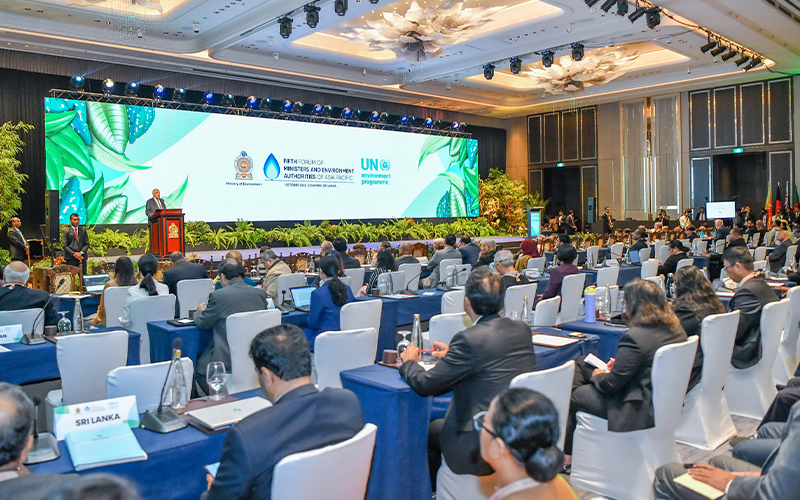
President Ranil Wickremesinghe addressed the 5th Forum of Ministers & Environment Authorities of the Asia Pacific at the Shangri La Hotel in Colombo today (05), delivering a passionate speech that emphasized three crucial points: the urgency of the climate crisis, Sri Lanka’s ambitious climate plans and the dire state of global biodiversity.
President Wickremesinghe opened his speech by drawing attention to the pressing climate concerns facing the world today. He cited the alarming estimate from the Intergovernmental Panel on Climate Change (IPCC), stating that global warming is projected to reach a dangerous 1.5 degrees Celsius between 2030 and 2052. “Humanity is facing an existential threat,” he declared. He highlighted the interlinked crises of climate change, biodiversity loss and pollution, emphasizing the devastating impact on individuals and communities worldwide.
The President then turned to Sri Lanka’s commitment to addressing these challenges. He pledged to accelerate nature-based solutions, including renewable energy, through Sri Lanka’s Climate Prosperity Plan, which was launched at COP 27. “Sri Lanka is in the process of renewing the National Biodiversity Strategic Action Plan 2016 to 2022 to achieve the objectives of the Kunming-Montreal Global Diversity Framework,” he announced. Additionally, he unveiled an ambitious Net Zero 2050 roadmap for Sri Lanka, set to be launched at COP 28.
President Wickremesinghe stressed that despite Sri Lanka’s minor global emissions contribution (0.03%), the country is dedicated to significant reductions. Sri Lanka aims to achieve a 14.5% reduction in greenhouse gas emissions by 2030, generate 70% of its electricity from renewable sources, attain a 32% forest cover, phase out coal power by 2042, and reach net-zero emissions by 2050.
The President also expressed deep concern over the state of global biodiversity. He lamented that the world has already lost 8% of known animal species, with 22% at risk of extinction due to habitat destruction and invasive species. “We are now losing biodiversity up to 10,000 times faster than it was disappearing 100 years ago,” he warned.
In conclusion, President Wickremesinghe’s speech outlined the urgent need for climate action, Sri Lanka’s commitment to sustainability and the critical biodiversity challenges the world faces. The President’s call for collective action and his unveiling of ambitious climate plans underscored the gravity of the global situation.“Countries unwilling to do their part to stop the climate crisis are guilty of committing genocide,” he concluded.
Following is the full speech delivered by President Ranil Wickremesinghe at the 5th Forum of Ministers & Environment Authorities of the Asia Pacific;
“I join our Minister of Environment in welcoming you to Sri Lanka. Humanity is facing an existential threat. The interlinked and cascading effects of climate change, biodiversity loss, and pollution—the triple planetary crisis—are demanding a heavy toll on individuals, communities and threatening life on our planet. We are putting extreme pressure on the planet. The triple planetary crisis is already exceeding the planetary boundaries. The world has already lost 8% of known animal species and 22% are at risk of extinction due to the destruction of their natural habitats and the introduction of invasive species. We are now losing biodiversity up to 10,000 times faster than it was disappearing 100 years ago. Declines in nature and biodiversity at the current trajectory will undermine the progress towards 35 out of 44 targets of the SDGs related to poverty, hunger, health, weather, cities, climates, oceans and land. In terms of change, the Intergovernmental Panel on Climate Change estimates that global warming is likely to reach 1.5 degrees Celsius between 2030 and 2052.
The other day, I read a blog by a young scientist, a member of the Union of Concerned Scientists. Her name is Sanjali De Silva. This is what she said: “People of Sri Lanka feel the impact of climate change every day. Those effects are overwhelmingly caused by the self-serving command and irresponsible action of the fossil fuel industry and the nations unwilling to do their part to stop the climate paradigm. My people of Sri Lanka and my family deserve better.” I agree wholeheartedly with her. Sri Lanka, her country and mine, has constantly been placed among the top risk of extreme weather events by the Climate Risk Index annually released by German Watch. Although Sri Lanka’s emissions are globally negligible, amounting to merely 0.03%, we, in our ambitious NDCs, have set targets for 2030 to achieve a 14.5% reduction of GHG emissions, a 70% electricity generation through renewable sources, 32% forest cover, weaning off coal power by 2042 and reaching net zero by 2050.
The Climate Prosperity Plan of Sri Lanka, launched at COP 27, aims at rapid augmentation of nature-based solutions, including renewable energy. The Net Zero 2050 roadmap for Sri Lanka will be launched at COP 28. Sri Lanka is in the process of renewing the National Biodiversity Strategic Action Plan 2016 to 2022 to achieve the objectives of the Kunming-Montreal Global Diversity Framework. Since Sri Lanka is one of the 36 global biodiversity hotspots, I have instructed the Ministry of Environment to formulate a national policy on living entities to conserve pristine ecosystems. Sri Lanka has formulated the national policy on waste management, covering nine categories of general and hazardous waste. The national policy on chemical management was formulated to streamline chemical management in the country. Sri Lanka formulated the national policy on sustainable consumption and production in 2019. The Green Procurement Policy and the Green Labelling Framework will come into effect this year. My government will enact a new Climate Change Act and a National Environment Act to address the triple planetary crisis in the context of new knowledge and practices. We are starting our transition to a green economy. But there is a cost. The Climate Prosperity Plan, which spans from 2023 to 2042, will require 26.5 billion U.S. dollars. The implementation of the Net Zero 2050 roadmap will require over 100 billion U.S. dollars. The list is not over. Where are we going to source these resources from? We cannot source all this money from within our country. The problem is not confined to Sri Lanka.
Developing countries require financing up to 5.9 trillion U.S. dollars to fulfill their NDCs up to 2030. A further 4 trillion U.S. dollars is required per annum for clean energy technology to achieve net zero emissions by 2050. At COP 27, there was an agreement to provide the lost and damaged funding for vulnerable countries hit by climate disaster. The Sharm El Sheikh Implementation Plan, a transitional committee was established. The meetings of the committee and the discussions at the recent sessions of the UN during the UN General Assembly have not resolved key questions.
a. Who will contribute? Is it the developed nations? EU, UK, Norway, among others, say all countries are liable to pay.
b. The question of criteria. Who will receive the funds?
c. Where to house the fund? At the World Bank or UNFCC?
d. Where do you find the money for the fund? Is it re-channelling existing funds or new additional funds? Delegates, these discussions are getting nowhere and it’s unlikely that these issues will be resolved by the time of COP 28.
The ability of global leaders to cooperate and provide a coordinated response to existential challenges such as climate change is missing in a scenario dominated by great power rivalries, geopolitical interests and in many cases domestic policy. For instance, it is not feasible to expect robust leadership of the United States in the global fight against climate change next year. The US will be caught up in an acrimonious election year and must first overcome domestic debates between climate deniers and those who are serious about addressing the issue. The Ukraine war will tie down Europe. The Indo-Pacific will witness further escalation of tension. Numerous global fora have attempted to address the issue of climate change. The Bridgetown Initiative, Paris Pact for People and Planet, and numerous initiatives by the UN Secretary-General. The issues and potential solutions have been well articulated at these events. What is missing is the money on the table, leadership and action.
Therefore, we in Asia-Pacific and others in the global south will need to galvanize an alternative leadership mechanism. What is crucial is that geopolitics and great power rivalries take a second place when it comes to addressing climate issues such as climate change and global environmental degradation. We need a climate justice forum to ensure that the countries least responsible for climate change do not bear a disproportionate share of the loss. We need to raise our collective voice and say, let’s get done with this. While the debate on the loss and damage fund continues, we should insist on the following: The money on the table is negligible, but let’s at least start with the 100 billion SDI initiatives available to the IMF and convert that into actions and positive outcomes. The developed economies should be held accountable for meeting their net zero targets at least by 2040. If they fail to stay in line with these targets, such countries should be required to compensate the rest of the world. These funds can help with the financing requirements for climate mitigation, adaptation and climate prosperity of developing nations. The global ambitions regarding finance of combating climate change have so far been woefully inadequate. It is also not just public funds that can resolve the magnitude of the issue at hand.
The Bridgetown initiative has clearly articulated the need for using the balance sheets of the NDBs to provide guarantees and leverage private funds to be channelled towards addressing climate change issues in developing nations. Additional volumes of concessionary financing at scale through the NDB are also a crucial requirement. Climate-related investments provide long-term returns, which cannot be financed by fragmented short-term high-cost private financing. The prevailing situation where global monetary tightening is pushing up market-linked lending rates of NDBs and the IMF is also an opportune moment to consider options of capping such rates or other means to avoid further fiscal burdens on borrowing nations. All three initiatives above would have been on the agenda in a serious manner long time ago had there been a greater voice of developing nations and the global south in the decision-making authorities of these global financial institutions. We must also press ahead with Kenya’s call for debt relief for low-income countries.
Parallel to these settings, we must finalize the loss and damage funds. In my view, all developed countries must contribute to the fund. We must also call for voluntary contributions by the developing countries, especially those exceeding the 2050 target. The Vanuatu Resolution has taken the issue of climate change before the International Court of Justice. This is the start of a process of recognizing climate justice as a human right. It is the core of the right to life. All other rights flow from the right to life. Countries unwilling to do their part to stop the climate crisis are guilty of committing genocide.”


Spain snuffed out France’s dream of a third World Cup triumph, taming their galaxy of forwards to win 2-0 and progress to a final against England or Argentina.
Didier Deschamps’ men were hot favourites for the trophy after a string of breathtaking displays in the United States but they met their match against the slick European champions at the semifinal stage on Tuesday.
Mikel Oyarzabal opened the scoring for the 2010 winners with an emphatic penalty in the first half in Arlington, Texas, and Pedro Porro doubled their lead in the second half.
Shell-shocked France could not find a way back into the match despite their wealth of attacking riches.
The game at the Dallas Stadium caught fire midway through the first half when Salvadoran referee Ivan Barton pointed to the penalty spot after a reckless challenge by France left-back Lucas Digne on Spain winger Lamine Yamal.
Oyarzabal hammered the ball past France goalkeeper Mike Maignan for his fifth goal of the World Cup to leave France trailing for the first time in the tournament.

Minutes later they suffered another blow when centre-back William Saliba had to leave the pitch after a recurrence of his lower back injury, replaced by Crystal Palace defender Maxence Lacroix.
Spain went agonisingly close to extending their lead after some dazzling one-touch football but Dayot Upamecano’s challenge denied Fabian Ruiz.
France finished the half without a single shot on target, and just two attempts overall.
Deschamps threw on Desire Doue for Bradley Barcola in the 57th minute in a bid to supercharge his attack but a minute later they were 2-0 down after a stunning team goal for Luis de la Fuente’s men.
Defender Porro delivered a sharp pass to the feet of Dani Olmo on the edge of the box and collected the return ball before coolly slotting past Maignan.
(Aljazeera)
Latest News
S. N. B. M. Patdmasiri appointed Director General of the Department of Government Factories

The Cabinet of Ministers approved the resolution furnished by the Minister of Housing, Construction and Water Supply to
appoint S. N. B. M. Patdmasiri who is a Special Grade officer in Sri Lanka Engineering Service and currently serving at the Department as the Additional Director General to the post of Director General of the Department of Government Factories with immediate effect.
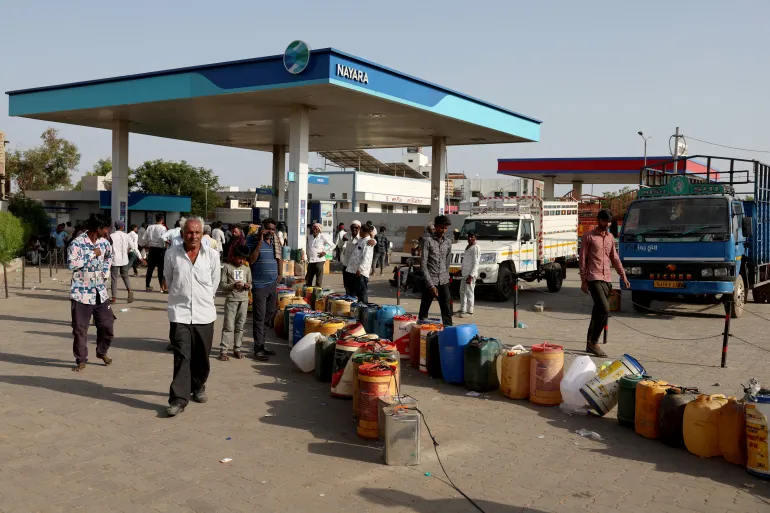
Oil prices have surged to their highest level in a month as renewed hostilities between the United States and Iran continued for a third consecutive day, dampening hopes for a return to normality in the Strait of Hormuz.
Brent crude, the primary international benchmark, rose 2.8 percent on Tuesday, extending a 9.6 percent gain from the previous day.
Brent futures for September delivery stood at $85.67 a barrel as of 07:00 GMT, the highest since June 15.
After easing to pre-conflict levels following Washington and Tehran’s signing of a memorandum of understanding (MoU) for peace last month, Brent has risen 18 percent from its price before the start of the US-Israel war on Iran in late February.
The US Central Command on Monday announced strikes on Iran for a third day, saying its forces targeted Tehran’s ability to attack “innocent civilians and commercial shipping” in the Strait of Hormuz.
Iran’s Islamic Revolutionary Guard Corps said it hit two oil supertankers in the strait and launched missile and drone strikes against US military assets in Kuwait and Bahrain in retaliation for the attacks.
Adding to the market volatility, President Donald Trump said on Monday the US would reimpose its blockade of Iranian ports and begin charging vessels transit fees as the “guardian” of the critical waterway.
“Crude oil is fast losing its strategic petroleum reserve buffer, and a violent repricing up cannot be discounted until the market sees toned-down rhetoric from both parties,” June Goh, a senior oil market analyst at Sparta Commodities in Singapore, told Al Jazeera, referring to the US government’s emergency oil stockpile, which the Trump administration has drawn on to mitigate supply constraints.
After ticking up in recent weeks amid hopes for a permanent peace deal between Washington and Tehran, traffic in the Strait of Hormuz has plummeted amid the renewed threat of violence against commercial shipping.
A total of 57 transits were recorded from Friday through Sunday, a more than 50 percent drop compared with the previous week, according to ship-tracking platform MarineTraffic.
Roughly 130 vessels transited the strait daily before the US and Israel launched their initial strikes on Iran in late February.
“Traffic through Hormuz is grinding to a halt, back to – or even below – our immediate pre-MoU pace,” Rory Johnston, founder of oil market research firm Commodity Context, told Al Jazeera.
“The oil market has proven extremely patient through this crisis, in large part thanks to an ample stock cushion upon which we were able to draw to blunt the sharpness of the supply shock,” Johnston said.
“Unfortunately, much of that cushion has now been depleted, leaving us much more vulnerable to a rerun of March and April.”
[Aljazeera]

Spain deliver masterclass to beat France 2-0 and reach World Cup final

Cabinet approves award of BIA expansion contract to M/s Maga Engineering (Pvt.) Ltd
Centralized Zero Waste Biomass Cinnamon Processing Centre to be established at the Mapalana Agri Faculty of the University of Ruhuna
S. N. B. M. Patdmasiri appointed Director General of the Department of Government Factories
Cabinet approval to hold the 4th BIMSTEC Agriculture Ministers’ Meeting and Senior Officials’ Meeting in Sri Lanka on 17 and 18 March 2027
Cabinet approval to implement the National Livestock Policy

‘Dates have the highest sugar content to fight Coronavirus’

Sunday Island 27 December – Headlines

#SundayIsland 17th December – Headlines

Sunday Island – 28th March

Sunday Island Headlines – 21 March

Sunday Island – 21st February – Headlines
-
 News5 days ago
Herath warns prospective migrant workers not to get fleeced by racketeers
-

 Midweek Review7 days ago
Unexpected focus on ‘pieces of tin’ worn by military men
-
 Features3 days ago
Prison riots and politics: NPP’s biggest challenge and Sri Lanka’s biggest opportunity
-

 Editorial4 days ago
What’s the world coming to?
-
 Foreign News5 days ago
Tensions erupt in Indian state after 11-year-old raped and murdered
-

 Features5 days ago
Devanesan Annan – in Memoriam
-

 News6 days ago
Negombo Prison riot: Ensuring protection of prisoners fundamental responsibility of the state – UN
-

 Editorial7 days ago
Prison riots and political battles