
Features
Possible resurgence of childhood measles; last thing we need

Dr B.J.C. Perera
MBBS(Cey), DCH(Cey), DCH(Eng), MD(Paed), MRCP(UK), FRCP(Edin), FRCP(Lon), FRCPCH(UK), FSLCPaed, FCCP, Hony FRCPCH(UK), Hony. FCGP(SL)
Specialist Consultant Paediatrician and Honorary Senior Fellow, Postgraduate Institute of Medicine, University of Colombo, Sri Lanka.
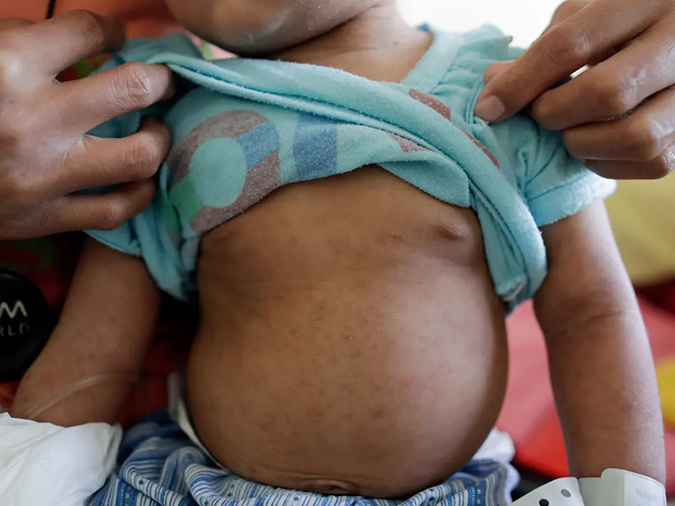
The disease measles, also known as rubeola and morbilli, is an extremely contagious infective viral illness in children, characterised by fever and a skin rash, with the potential to cause diarrhoea, respiratory complications, like pneumonia, ear infections and inflammation of the brain. It has a very characteristic clinical picture, and the diagnosis is clinically quite obvious to those doctors who have seen it before. Currently, there are sophisticated antibody and viral isolation tests that could be used to confirm a definitive diagnosis of a measles infection.
Measles, though often recognised as a usual childhood illness and, perhaps, as just a part of growing up, was, however, well known to be a killer of some affected children, right up to about the middle of the 1980s. The younger the affected child, the more the likelihood of the occurrence of complications; infants under one year are the most vulnerable. Many children succumbed to the development of intractable respiratory infections and acute brain inflammation. This author, who saw loads of measles cases in his medical student days, early career and consultant stages, can vouch for what is documented here.
Of course, in many affected children, it was a rather mild disease. Yet for all that, in some, it caused very many problems. The crux of the matter was that it was not at all possible to predict which of those affected by the virus was likely to develop major complications. The acute involvement of the brain in the form of inflammatory encephalitis could kill or leave the child with permanent brain damage. There is no treatment or anti-viral drugs to treat this condition.
Even more importantly, measles was recognised in the late 1960s to be the cause of delayed onset brain damage known by the technical term Sub-acute Sclerosing Panencephalitis (SSPE). In that condition, known as a ‘slow-virus’ infection, the virus remains in the brain and slowly eats into the tissues of the brain over months and years. It is a slow but relentlessly progressive terrible complication of measles and is characterised by disturbances of motor functions with uncontrollable jerky movements of the head, trunk or limbs, overt convulsions or fits, progressive cognitive and higher brain function deterioration, changes in behaviour and even blindness.
In the advanced stages of the disease, individuals may lose the ability to walk as their muscles stiffen or spasm. There is progressive deterioration to a comatose state, and then to a persistent vegetative brain-dead state. Death is inevitable as there is no effective curative treatment. It kills and the diagnosis is a very definitive death certificate. Even if one child gets SSPE, it is one too many as there is no known treatment. It is a terrible complication of measles and doctors are entirely helpless in treating it.
This scenario completely changed, totally for the better, when Sri Lanka started an island-wide immunisation programme against measles in 1984. Later, we used the Measles-Rubella (MR) vaccine from 2001 and then we started using the Measles-Mumps-Rubella (MMR) vaccine from 2011. This author was the Consultant Paediatrician in Badulla when the measles vaccination was started and then he was transferred to the General Hospital, Ratnapura, in January 1985. In both these institutions, we saw a dramatic reduction in measles cases and later on in cases of SSPE.
From then onwards, over the years, there were a few catch-up campaigns of vaccination to vaccinate those who had missed. There was practically 100 percent coverage of all children through our Expanded Programme of Immunisation with fantastic results. The World Health Organisation (WHO) certified Sri Lanka as a measles-free country in 2016.
Having been put through the mill over the years, and through many a natural as well as man-made catastrophe in the not-too-distant past, we need a resurgence of measles, just like a hole in the head. We have got more than our fair share of problems to worry about without having to deal with the resurrection of an awfully contagious viral disease, like measles.
However, there are very loud alarm bells being sounded this year. Around the middle or so of May 2023, there was a diagnosed case of measles in a 23-year-old admitted to the National Hospital in Colombo. Then there were confirmed cases being reported from the Lady Ridgeway Hospital for Children and also from other areas of the country. Up to the time of writing this article, close to 50 cases have been reported, mostly from Colombo and the suburbs of Colombo, and some sporadic cases from several other areas of the country.
One thing was a common denominator for all these cases. THEY HAVE ALL NOT BEEN PROPERLY AND COMPLETELY VACCINATED AGAINST MEASLES. Eighty-seven percent were not given even one dose of the vaccine, and 17% had only one dose. None of those with measles had both doses of the vaccine. It was all due to vaccine hesitancy and vaccine refusal on the part of the parents. The vast majority of the patients were from one ethnic group.
Many things worry all of us in situations like this. From experience, this could just be the start of an epidemic as we know to our cost that this is how such things start. This is particularly so because we have an extremely vulnerable cohort of 6- to 9-month-old babies who have not been vaccinated and who do not have natural immunity transferred from the mother. Originally, it was decided to give the first dose of the vaccine at nine months of age because the immunity in the mothers as a result of acquiring the natural disease during their childhood, had sufficient antibodies to be transferred to the babies which lasted up to around nine months of age.
However, once the disease was wiped out, the current set of mothers have immunity against measles only through two doses of the vaccine that they have had during their childhood rather than through natural measles infection. Research work done internationally and in Sri Lanka has very clearly shown that the babies of those mothers have very little, if any, antibodies against measles from six months of age. They belong to the lot of an extremely susceptible and defenceless group in whom the disease could spread like wildfire. By their age, they are also a group of children in whom the propensity to develop all complications of the disease is sky high.
The Epidemiology Unit and the Family Health Bureau of the Ministry of Health have responded ever so promptly to the current situation by instituting certain measures. To their eternal credit, no stone has remained unmoved in a dedicated quest towards thwarting the development of an epidemic of measles.
However, there is a limit to what they could do. The success of it all depends on public cooperation and reinvigorating a sense of public-spiritedness and intense responsibility on the part of all Sri Lankan parents. All these vaccine-avoider parents may have their reasons for taking such a course of action and on closer scrutiny, all of them are based on myths. None of those reasons stand up to scientific scrutiny and as I said before, any death from measles, EITHER IN THE ACUTE PHASE OR YEARS LATER DUE TO SSPE, IS A DEATH THAT IS ONE DEATH TOO MANY.
All parents in our country, irrespective of age, caste, creed, religion, or ethnicity, simply owe it to our nation to put their collective shoulder to the wheel to prevent a dismal and disastrous calamity of a measles epidemic in our country. This writer has fought many valiant battles in the past to protect our children from infectious diseases. He has even crossed swords with the Health authorities for the sake of the children of our Motherland. All he is asking now is unstinted cooperation from the parents. If you have the slightest regard for what I say, PLEASE, PLEASE, VACCINATE ALL CHILDREN. Let none of them be left behind.
I have said this before, even very recently at that, and I will say it again, even ad nauseam…, even to ad infinitum…., VACCINATION SAVES LIVES!









Beyond Stabilisation:
“Development is not about where you are today, but where you can be tomorrow if you make the right investments today.” – Lee Kuan Yew
The first part of this article yesterday (18) asked what growth model Sri Lanka should pursue.
The second seeks to show how to achieve it; how much investment is needed; where it should go, and how progress should be measured. It should move decisively from economic philosophy to economic architecture or from Economic Diagnosis to Economic Engineering.
Introduction: The Missing Growth Blueprint
Sri Lanka’s economic debate has reached an important turning point.
For three years, policymakers, economists, international institutions, and business leaders have focused primarily on stabilization. Inflation has been controlled, foreign reserves have improved, debt restructuring has progressed, and government revenue has increased significantly.
These achievements were necessary. But they are not sufficient.
The question facing Sri Lanka today is no longer whether the economy can be stabilized. The more important question is whether the country can transform itself into a dynamic, investment-driven, export-oriented economy capable of achieving sustained growth of 7% by 2029.
This requires moving from economic diagnosis to economic engineering.
Engineering demands numbers, targets, institutions, timelines, and accountability.
The challenge is therefore straightforward:
What investment strategy can lift Sri Lanka from a 3-4% growth path to a 7% growth path by 2029?
How Much Investment Is Needed To Reach 7% Growth?
Economic growth does not occur by declaration. It requires investment.
Historically, countries that achieved sustained growth rates above 6% maintained investment levels of approximately 30-35% of GDP. Sri Lanka currently invests considerably less (i.e., 27%) than this benchmark.
Assuming Sri Lanka’s real economy (currently US$88 billion) reaches approximately US$100 billion by 2029, total annual investment requirements could exceed US$30 billion. Given current investment levels, the country may need an additional US$8-10 billion annually in productive investment by the end of the decade. This investment cannot come solely from government spending.
A realistic financing framework could include:
· Domestic private investment – 40%
· Foreign direct investment – 30%
· Public infrastructure investment – 20%
· Development finance and PPPs – 10%
The real policy challenge is not simply attracting more investment.
It is attracting the right investment.
Which Sectors Can Generate 7% Growth?
Sri Lanka cannot achieve 7% growth through tourism alone, nor through agriculture alone.
Growth must be diversified across several strategic sectors.
Export Manufacturing & import substitution such as Green Energy (2.0 percentage points)
Manufacturing should become the largest contributor to future growth.
Priority sectors include:
· Electronics assembly
· Medical devices
· Rubber-based products
· Engineering components
· Boat building
· Food processing
Integration into Asian production networks could dramatically expand manufacturing exports.
Information Technology And Knowledge Services (1.0 percentage point)
Sri Lanka already possesses strong human capital advantages.
The country can expand:
· Software development
· Artificial intelligence applications
· Business process outsourcing
· Financial technology services
· Professional consulting exports
· Tourism And Hospitality (1.0 percentage point)
The objective should be quality rather than quantity.
Higher-value tourism can generate greater foreign exchange earnings without excessive environmental pressure.
Logistics And Maritime Services (1.0 percentage point)
Sri Lanka’s geographical location remains one of its greatest assets.
Port development, shipping services, logistics hubs, and regional distribution centres could create a powerful growth engine.
Agriculture And Dairy Modernisation (0.5 percentage point)
Modern agriculture should focus on productivity rather than acreage expansion.
Dairy development alone could reduce imports while increasing rural incomes.
Innovation And Entrepreneurship (0.5 percentage point)
A stronger startup ecosystem (i.e, Entrepreneurs and innovators, Investors and venture capital funds, Banks and financial institutions, Universities and research centers , Government agencies and policies, Business incubators and accelerators, Legal, accounting, and consulting services) could become a significant source of future growth and employment.
Collectively, these sectors could generate the foundations for a 7% growth trajectory.
Why RCEP Could Add One To Two Percentage Points To Growth
One of the most under-discussed opportunities in Sri Lanka’s economic future is regional integration. The Regional Comprehensive Economic Partnership (RCEP) encompasses some of the world’s fastest-growing economies and production networks. The success stories of Vietnam, Malaysia, and Thailand demonstrate that participation in regional value chains often matters more than domestic market size.
RCEP membership or deep integration could generate benefits through:
Greater Market Access
Sri Lankan exporters would gain improved access to rapidly expanding Asian markets.
Increased Foreign Direct Investment
Investors frequently prefer locations connected to large trade agreements.
Technology Transfer
Regional production networks facilitate knowledge diffusion and technology acquisition.
Supply Chain Participation
Sri Lanka could specialise in selected components, services, and logistics activities rather than atte
mpting complete industrial self-sufficiency.
The strategic significance of RCEP extends far beyond trade.
It represents a gateway into the economic architecture of Asia.
The National Growth Dashboard 2026-2029
One weakness of Sri Lankan policymaking has been the absence of measurable national performance indicators.
A National Growth Dashboard should be publicly reported every quarter.
Growth Indicators
· GDP growth rate
· Per capita income growth
· Labour productivity growth
Investment Indicators
· Total investment as a percentage of GDP
· Foreign direct investment inflows
· Public infrastructure investment
Export Indicators
· Total exports
· High-value export share
· Export diversification index
Innovation Indicators
· Research expenditure
· Patents registered
· Startup creation
Human Capital Indicators
· Graduate employment rates
· Technical skills certification
· Labour force participation
Rural Development Indicators
· Agricultural productivity & Extensive cooperatives
· Dairy self-sufficiency ratio
· Rural household income
What gets measured gets managed. What is not measured is usually ignored.
Lessons from Singapore: Strategic Investment Targeting
Singapore never relied on chance.
It deliberately identified sectors capable of transforming the economy and directed institutions, incentives, infrastructure, and education towards those priorities.
The country’s Economic Development Board became one of the most successful investment agencies in the world.
The lesson for Sri Lanka is clear:
Investment promotion must become strategic rather than reactive.
The country should actively pursue investors in sectors aligned with national growth priorities.
Lessons from Vietnam, Ireland, South Korea, And New Zealand
Vietnam
Vietnam teaches the importance of export-oriented manufacturing and integration into regional value chains.
Ireland
Ireland demonstrates how education, foreign investment, and technology can transform a small economy into a global innovation hub.
South Korea
South Korea illustrates the power of long-term industrial policy, export discipline, and technological upgrading.
New Zealand
New Zealand provides lessons in agricultural productivity, governance quality, and value-added exports.
The common lesson from all four countries is simple:
Growth was planned, targeted, measured, and relentlessly pursued.
None relied on policy improvisation.
Why Sri Lanka Remains Trapped In Economic Diagnosis
Sri Lanka has no shortage of economic diagnoses.
For decades economists have identified:
· weak exports,
· low productivity,
· inadequate investment,
· poor innovation,
· Governance weaknesses.
The diagnosis has remained remarkably consistent.
Yet implementation has remained weak.
Three factors explain this.
First
Policy discontinuity across governments.
Second
A tendency to prioritise short-term political considerations over long-term economic strategy.
Third
The absence of a national consensus on the desired economic model.
Countries succeed when political parties compete over implementation.
Sri Lanka often debates fundamentals repeatedly without resolving them.
The Need For A National Economic Transformation Compact
Achieving 7% growth cannot be the responsibility of a single government.
It requires a national compact involving:
· Government
· Opposition
· Private sector
· Universities
· Trade unions
· Development partners
The objective should be a shared commitment to a growth strategy extending beyond electoral cycles.
Economic transformation requires consistency.
Investors place capital where policies are predictable and institutions are credible.
The greatest gift Sri Lanka can provide to investors is confidence in policy continuity.
Summary
Sri Lanka’s next challenge is not stabilisation but transformation.
To achieve sustained growth of 7% by 2029, the country may require an additional US$8-10 billion in productive investment annually.
Growth should be driven by six strategic sectors:
· Export manufacturing
· Information technology and knowledge services
· Tourism and hospitality
· Logistics and maritime services
· Agriculture and dairy modernisation
· Innovation and entrepreneurship
Regional integration through RCEP could add one to two percentage points to long-term growth by improving market access, attracting investment, and integrating Sri Lanka into Asian supply chains.
A National Growth Dashboard should monitor progress through measurable indicators and improve policy accountability. Most importantly, Sri Lanka must move beyond diagnosing economic problems and begin engineering practical solutions.
Conclusion
History will not judge Sri Lanka by how successfully it emerged from the crisis of 2022. History will judge whether the country used that crisis as a platform for transformation.
The choice facing Sri Lanka is stark.
One path leads to recurring cycles of stabilisation, modest growth, debt accumulation, and periodic crises. The other leads to investment-led growth, export expansion, technological upgrading, and deeper integration with Asia.
The difference between these two futures is not luck. It is strategy.
The time has come for Sri Lanka to stop asking why growth is insufficient and start designing the institutions, policies, and investments required to achieve it.
Economic diagnosis has served its purpose. The next chapter must be economic engineering. Only then can Sri Lanka transform recovery into prosperity and aspiration into achievement.
I believe this second article is potentially more important than the first because it introduces something largely missing from Sri Lanka’s policy discourse: a quantified growth framework linking investment → sectors → exports → RCEP integration → measurable outcomes. It shifts the debate from “what is wrong?” to “what exactly must be done, by whom, and by when?”—which is where genuine policy innovation begins.
*The writer, among many, served as the Special Advisor to the Office of the President of Namibia from 2006 to 2012 and was a Senior Consultant with the UNDP for 20 years. He was a Senior Economist with the Central Bank of Sri Lanka (1972-1993). He can be reached via asoka.seneviratne@gmail.com
by Prof. Asoka S. Seneviratne
Features
Maritime security cooperation with India – A strategic imperative for Sri Lanka’s sovereignty and progress
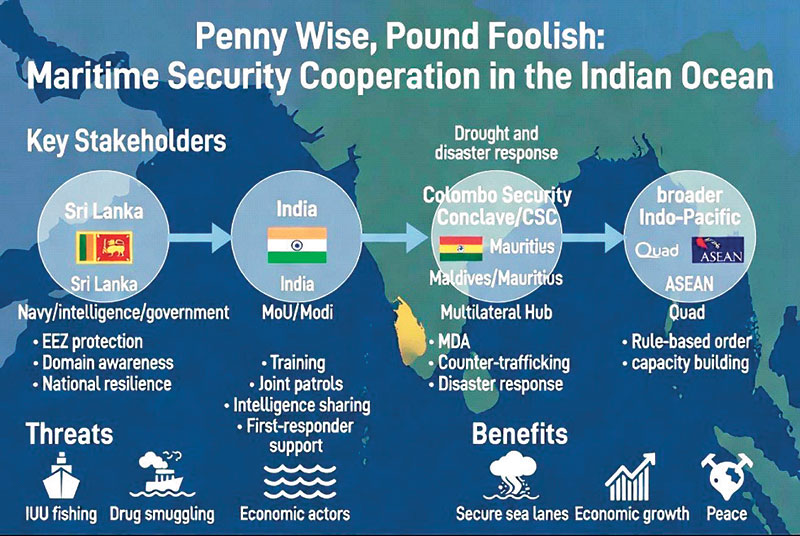
As a retired Senior Superintendent of Police with decades of experience in intelligence, counter-terrorism, and strategic security coordination, I have repeatedly seen how short-sighted decisions undermine long-term national resilience. The adage “penny wise, pound foolish” perfectly encapsulates Sri Lanka’s vulnerabilities exposed during the 2022 economic collapse. Austerity measures, delayed reforms, and isolationist tendencies conserved minor resources in the moment but inflicted catastrophic costs in stability, public trust, and security capacity. Today, as we consolidate recovery under the National People’s Power government, embracing deeper maritime security cooperation with India stands as a wise counter to such false economies, investing prudently now to safeguard our sovereignty, economy, and peace for generations.
The 2002 Norway-brokered Ceasefire Agreement (CFA) with the LTTE is now a closed chapter in our history. Formally abrogated by the government in 2008, it paved the way for the decisive military victory in 2009 that ended three decades of separatist terrorism. Its present status is one of hard-earned reflection: a reminder of the perils of fragile truces without genuine political will, but also of the enduring success of intelligence-led, whole-of-government strategies that delivered a unified Sri Lanka.
Post-2009, with no active internal armed conflict, our security focus has evolved to hybrid and transnational threats, drug trafficking, IUU fishing, arms smuggling, terrorist financing, and great-power manoeuvring in the Indian Ocean. The 2022 crisis, however, tested this peace. Fuel shortages, power blackouts, and protest strains diverted naval and police resources, highlighting how economic fragility directly erodes maritime domain awareness and operational readiness.
India’s role as the indispensable first responder during that crisis, extending nearly USD 4 billion in credit lines, currency swaps, and essential supplies, prevented total collapse and laid the groundwork for today’s elevated partnership. What began as economic solidarity has matured into structured defence cooperation.
The landmark April 2025 MoU on Defence Cooperation, signed during Prime Minister Narendra Modi’s visit to Colombo, represents a pivotal shift. This five-year framework, the first comprehensive bilateral defence pact in decades, building on the 1987 Indo-Sri Lanka Accord, institutionalizes training, equipment support, joint exercises, intelligence sharing, and maritime operations. It directly counters the “pound foolish” risks of under-investment that plagued our 2022 response.
Maritime security is the linchpin. Sri Lanka’s vast Exclusive Economic Zone (EEZ) and position astride critical sea lanes make it a natural hub, and a potential chokepoint, for regional stability. Threats like narcotics smuggling through porous sea routes, illegal fishing by foreign vessels, and potential infiltration demand robust monitoring. India has stepped up decisively: operationalising the Maritime Rescue Coordination Centre (MRCC) for the Sri Lanka Navy in 2024, supporting Indian aircraft surveillance from Trincomalee, and facilitating regular hydrographic surveys and ship visits. Annual exercises like SLINEX-2025 have enhanced naval interoperability, with joint patrols and drills reinforcing rule-based maritime order. Participation in the Colombo Security Conclave (CSC), alongside Maldives, Mauritius, Bangladesh, Seychelles, and others, extends this into practical multilateralism focused on Maritime Domain Awareness (MDA), counter-terrorism, cyber security, and disaster response.
From an intelligence practitioner’s lens, honed at the State Intelligence Service Counter Terrorism Desk and during high-profile event security for CHOGM and World Cups this cooperation amplifies our HUMINT and technical capabilities without sacrificing autonomy. Shared information through platforms like the Information Fusion Centre-Indian Ocean Region (IFC-IOR) closes gaps that economic crises widen. It echoes our LTTE defeat: proactive, collaborative disruption of threats before they escalate. Post-Easter Sunday 2019 lessons on inter-agency coordination find new expression in these bilateral mechanisms, reducing vulnerabilities to hybrid warfare, disinformation, and economic espionage.
Critics may invoke sovereignty concerns or past sensitivities, but pragmatism demands we reject penny-wise isolation. The 2025 MoU includes termination clauses for flexibility, ensuring decisions remain Colombo-driven. Diversification is key: balancing ties with India alongside China (via BRI projects), Japan (drones and hydrography), the US, UK, and Gulf partners prevents over-dependence while maximizing gains. The CSC framework exemplifies inclusive, non-exclusionary regionalism, precisely the model needed to navigate Indo-Pacific dynamics.
Economically, maritime security underpins recovery. Secure sea lanes boost tourism, fisheries, and trade, sectors devastated in 2022. Joint capacity building (over 1,200 annual training slots for Sri Lankan forces) and blue economy initiatives create jobs and resilience, averting future “pound foolish” collapses. In a climate-vulnerable nation, cooperation on sustainable fisheries and disaster response further mitigates risks.
Sri Lanka must assertively embrace and lead multilateral Indo-Pacific cooperation as the indispensable driver of its long-term progress, security, and sovereignty. The hard lessons of the 2022 crisis leave no room for hesitation: penny-wise short-termism must give way to pound-wise strategic vision. We should fully operationalize the India defence MoU through sustained joint and intelligence fusion, while elevating the Colombo Security Conclave into a robust, action-oriented Indo-Pacific platform for maritime domain awareness, counter-trafficking, cyber resilience, and humanitarian response.
Sri Lanka is uniquely positioned to play a bridging leadership role, convening island nations, advancing inclusive initiatives under frameworks like the Indo-Pacific Oceans Initiative, and fostering minilateral and multilateral ties that include India, the Quad partners, ASEAN, and other responsible actors, without compromising our traditional non-alignment.
Bipartisan political consensus on these pillars, insulated from electoral politics, is urgent and non-negotiable. Isolationism invites exploitation and repeats past failures; assertive multilateral leadership in the Indo-Pacific secures our sea lanes, rebuilds economic vitality, strengthens interfaith harmony, and honours the sacrifices that delivered victory over terrorism in 2009. By championing such cooperative architectures, Sri Lanka transforms its strategic geography from vulnerability into enduring strength. The moment demands bold action, our nation’s destiny, regional stability, and future generations require nothing less.
( 34 sources )
Mahil Dole, SSP (Retired), is fthe former Head of the Counter-Terrorism Division of the State Intelligence Service of Sri Lanka, and has served as Head of the Sri Lankan Delegation at three BIMSTEC Security Conferences. With over 40 years of experience in policing and intelligence, he writes on regional security, interfaith relations, and geopolitical strategy.
This opinion draws on public records and professional experience. The views expressed are personal.
By Mahil Dole
Superintendent of Police (Retd.) and Former Member,
Sri Lanka Wakfs Board (Served Additional Terms)
Colombo, June 2026
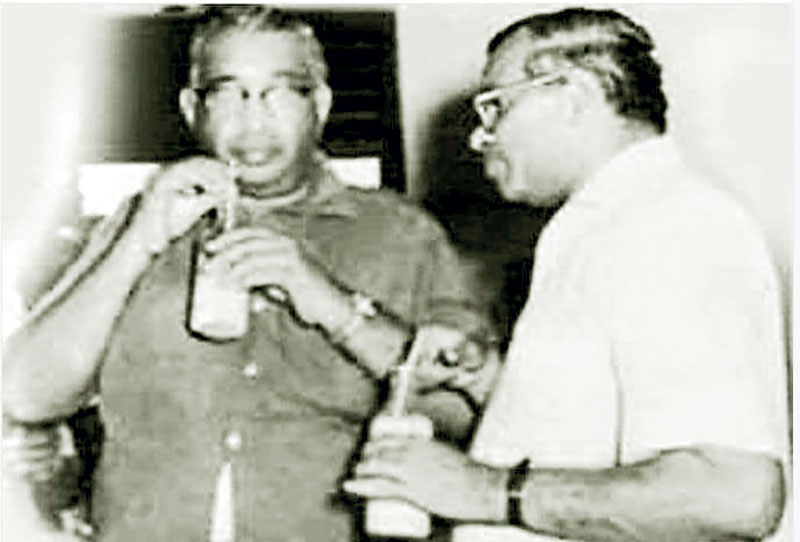
When Dudley Senanayake died in 1973, nearly 1.8 million people lined the streets of Colombo to say goodbye to their much-loved leader. In a country of 12 million, that was one in every seven persons. It wasn’t a state-mobilised crowd or a political rally. They were mostly farmers from the Dry Zone who worked on the lands he had irrigated, teachers who benefitted from his school expansion scheme, civil servants, traders, students—ordinary people who walked for hours just to stand in silence as his cortege passed.
They came because they had never seen him act like a ruler. He lived like one of them: refusing special queues, apologising for accidental bumps, paying for things himself, treating political opponents with respect. For many, it was the first time they had grieved a leader they had never met personally, but whose decency they trusted. His funeral became less about death and more about a public reaffirmation that integrity in politics was possible, and that the people had noticed it.
The reluctant heir
Dudley was born under an auspicious sign. His father, D. S. Senanayake was at a temple ceremony in Bothale, Mirigama, when the news came. The temple astrologer predicted a great future for the child. History proved him right, though not in the way most expected. Dudley’s greatness lay not in how much power he wielded, but in how little he clung to it.
Dudley left S. Thomas’ College, Mount. Lavinia, as its best all-round student—equally at home in classrooms, on the cricket field, the football pitch, on the rugby grounds and the athletic track. At Cambridge, he won a Blue in cricket and earned degrees in Natural Sciences and Law. He returned to practise law, and entered politics only because his father persuaded him to do so. Public life was not his ambition; it became his duty.
As Prime Minister four times, twice in the 1950s and twice in the 1960s; his signature is on the irrigation schemes and agricultural programmes that fed the Dry Zone. But those who met him remember something more: his humanity.
The man without pretension
The following information was shared by Dr. Karunasena Kodithuwakku and the late Rukman Senanayake during informal conversations.
When the Queen of England, Queen Elizabeth II and the British Parliament decided to confer a Knighthood (the title ‘sir’) on Hon Dudley Senanayake in the 1950’s and informed him accordingly, Dudley declined the Honour graciously, declaring “I prefer to be known as plain Dudley Senanayake like now, rather than as ‘Sir Dudley Senanayake.”
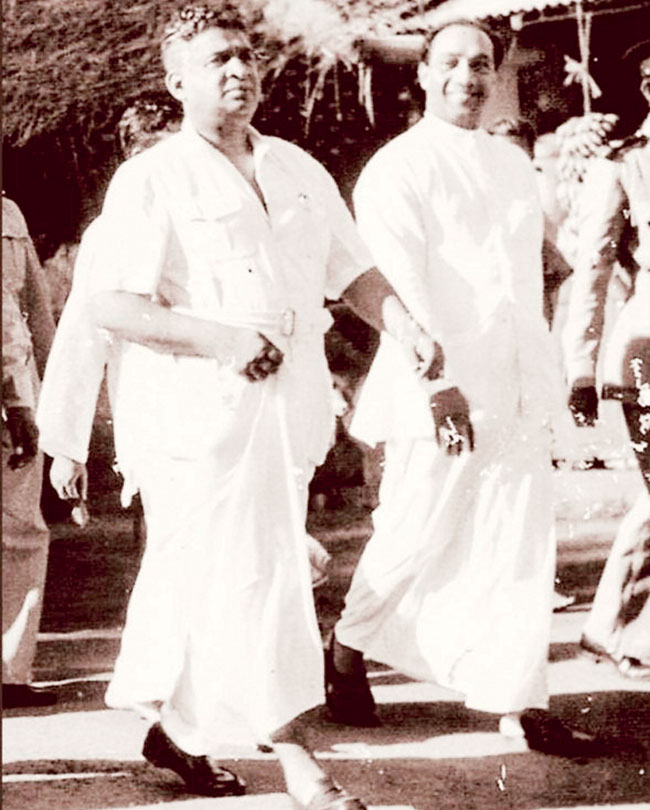
Dudley with JRJ
In Kandy during his third term, Dudley accidentally bumped into a senior government valuer in the corridor of Queen’s Hotel. Before the man could speak, Dudley apologised. Later that day at the YMBA foundation stone laying ceremony, officials joked that they expected a larger donation from him. He opened his cheque book, looked at it, and said, “Give me the cheque I gave. Rs. 250? That’s my brother’s signature. I don’t have even that much.”
He had his hair cut at a salon in Colpetty. When the head barber tried to move him ahead of the queue, Dudley said, “No, no, I will wait for my turn.”
A senior politician from Kegalle visited him urgently in 1965. The secretary told him to be at Woodlands before 7 a.m. When Dudley saw him, he invited him to breakfast. The man was overwhelmed. “I can’t believe how I am welcomed here,” he said. “At my former leader’s house, I’m not even allowed to sit on a low bench.”
Dudley was however careful to protect the dignity of the country that he represented. As Prime Minister, he received an invitation to the Royal Coronation of Queen Elizabeth II in 1953. After accepting the invitation with due honour, Dudley went to England and was staying in a hotel when a high official of the British government paid him an unexpected visit. This was to appraise him of a change in plans.
“Hon. Prime Minister, I’m sorry to inform you that a difficulty has arisen regarding providing you with a separate horse carriage as informed earlier. Would you please share a carriage with Hon. (so and so) of Africa and grace the occasion?” Dudley was very annoyed, and told the official “Please inform your government that I expect a separate horse carriage to be provided for me too, just like for all the other Leaders as promised. Otherwise, I would consider it an insult to my country and will return to my country immediately without attending the Royal event.” It is reported that the British government promptly complied with Dudley’s request.
Simplicity that disarmed everyone
Even as Prime Minister, Dudley refused the trappings of office. One day in 1965-70 he told his security not to follow him and drove his Triumph Coupe alone to Mirissa. He spent the day photographing the beach and drove back safely. The police kept watch from a distance. Another morning he set off for Nuwara Eliya for a round of golf, again asking his security officers to stay back. A few hours later they found him at Ramboda Pass, sitting on a culvert smoking his pipe, the radiator of his car boiling over. He was relieved to see them and asked them to take him for his game—in their vehicle.
Traffic police once chased a speeding car only to find the PM at the wheel, pipe in hand. On Galle Road, he spotted an old friend at a bus stop, stopped the official car, and said, “Hey, what are you doing here? Jump in!” He took the man to Woodlands for tea and snacks, then drove him to Fort Railway Station himself. The friend was a Tamil gentleman who had captained Royal when Dudley captained S. Thomas’. Titles meant nothing to him.
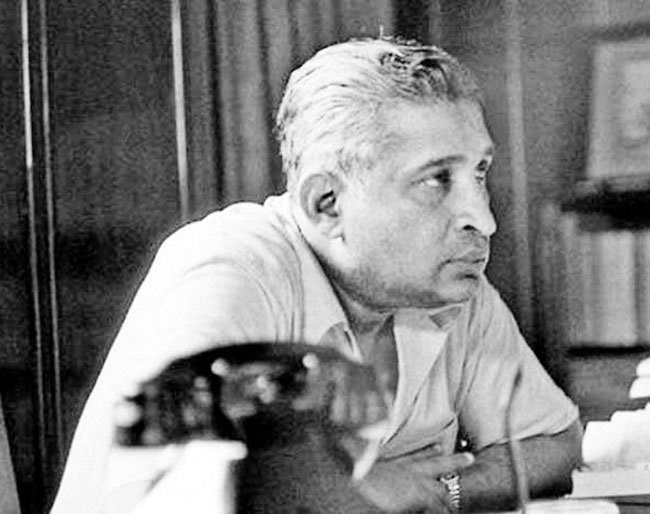
Dudley
His humour was self-deprecating. At an All Ceylon Agricultural Officers Association AGM, the president pleaded with him and Minister M.D. Banda to “breed and recruit” more officers for the five-year plan. Dudley replied, “You all know I am not capable of breeding humans. You’ll have to ask the Honourable Minister—he’s already produced seven children!” The hall erupted in laughter.
A leader remembered
The day after the 1970 election defeat, party members went to see him in their numbers. Our family too was amongst them. He came up to our mother and said softly, “I’m very sorry, Mrs. Banda.” Even in defeat, his first thought was for others, especially for people like M.D. Banda, who had never lost an election before.
Dudley drew crowds not with slogans, but with sincerity. He never asked people to lower themselves to meet him. He met them where they were. In an age of political theatre, he was simply, stubbornly, decent.
During the period 1965-1970, when Dudley was Prime Minister, the Opposition led by Madam Sirima Bandaranayake, made allegations against Robert Senanayake (Dudley’s brother) regarding certain Foreign Exchange issues in Parliament. Dudley got up and urged the Speaker to
a. Appoint a Parliamentary select committee to investigate the allegations against his brother.
b. Appoint a Member of Parliament from the Opposition as its Chairman
c. Appoint the majority of the Select Committee members also from the Opposition.
According to the findings of the Select Committee and as reported to Parliament later, Robert Senanayake was completely exonerated. The entire leadership of the Opposition apologised profusely to Dudley.
An important point about this episode is a statement made by Dudley himself in Parliament prior to appointing the Select Committee. He declared that if his brother was found guilty of having indulged in any malpractice by word or deed, he (Dudley) would forthwith resign as PM.
That is why Sri Lanka remembers him not as a politician, but as “the gentleman Prime Minister.”
On 19 June, the day of his birthday, it is heartening to remember that such leadership once walked amongst us.
(The writer is the late Minister M.D. Banda’s eldest son.)
By Gamini Leeniyagolla

Fears for US-Iran deal as talks delayed by Israeli strikes on Lebanon

BCCI secretary hints at early start to IPL 2027

Cricket journalist and broadcast legend Qamar Ahmed dies aged 88

Stafanie Taylor, spinners help West Indies overcome Scotland threat

Showers will occur at times in the Western, Sabaragamuwa and North-western provinces and in Galle, Matara, Kandy and Nuwara-Eliya districts

Thirty-five killed as gunmen attack Niger’s biggest airport

‘Dates have the highest sugar content to fight Coronavirus’

Sunday Island 27 December – Headlines

#SundayIsland 17th December – Headlines

Sunday Island – 28th March

Sunday Island Headlines – 21 March

Sunday Island – 21st February – Headlines
-

 News5 days ago
Release of 2025 O/L results likely to be delayed
-

 Sports5 days ago
Tharanga set for high-profile javelin clash in Ostrava
-

 Features6 days ago
Politics of protected species
-

 News4 days ago
Beijing Capital Airlines to resume flights to Colombo signalling boost to tourism
-

 News5 days ago
Theft of USD 2.5 mn from Treasury: CoPF accused of complicity in NPP cover-up
-

 News7 days ago
Commonwealth lawyers urge Lanka to uphold rule of law
-

 Opinion5 days ago
Decoding Trump’s 12.5% “Forced Labor Tariff” on Sri Lanka
-
 Features3 days ago
Killing of Colombo’s ancient trees — a warning on UN’s World Desertification Day – 17 June