
Sports
Cricket journalist and broadcast legend Qamar Ahmed dies aged 88

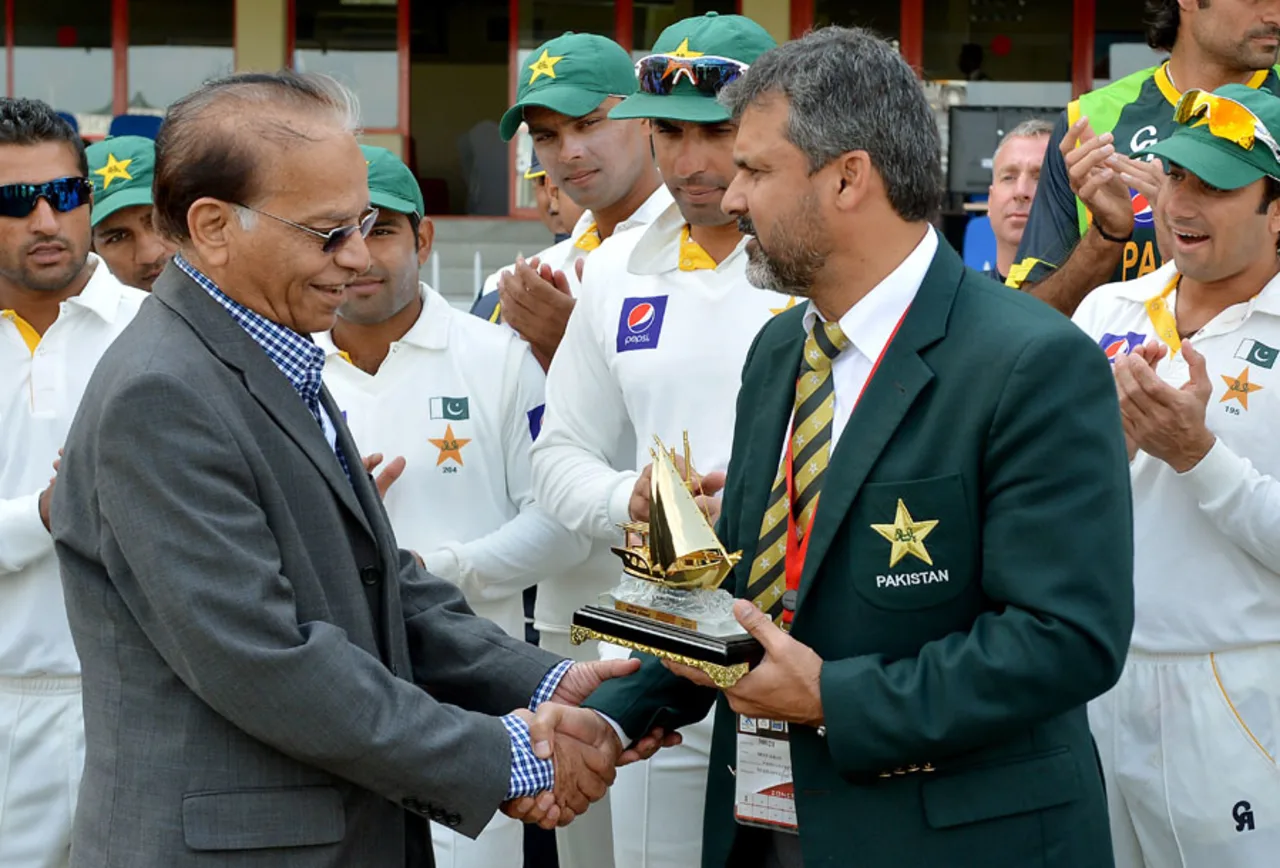
Qamar Ahmed, the cricket journalist and broadcaster, as well as a former first-class cricketer, has passed away in Karachi, Pakistan. He was 88 years old.
Ahmed – or ‘Q’ as he was fondly and widely known to his fellow journalists – was for a long time, arguably Pakistan’s most accomplished and best-known cricket journalist and broadcaster, a career he embarked upon in London after leaving behind a fledgling first-class career in Pakistan in the 1950s. Eventually he would travel the world covering international cricket for a number of newspapers and magazines, and news agencies such as Reuters and AFP. He also worked for the BBC.
Additionally, he also did broadcast work for various TV channels and radio stations, including for TVNZ during the 1992 World Cup in Australia and New Zealand – which Pakistan won. He covered every single World Cup until the 2007 one in the Caribbean. By then he had stopped covering ODIs – “pyjama cricket,” as he called it – and focused purely on Tests. The third Test between Pakistan and Sri Lanka in Sharjah in January 2014, marked his 400th Test as a journalist – only a handful have covered more.
His long and well-travelled career meant he was an eyewitness to many of Pakistan cricket’s most seminal moments, including that 1992 World Cup triumph. He was in the hotel rooms of players when the famous pay dispute of 1976-77 happened, paving the way for the professionalisation of Pakistan’s cricketers. He was also present on Pakistan’s tour of the West Indies in 1992-93, when four players – Wasim Akram, Waqar Younis, Mushtaq Ahmed and Aaqib Javed – were briefly detained for marijuana possession, chronicling it in his book ‘Testing Times’. He was also present during the terror attacks on the Sri Lanka cricket team in Lahore in March 2009. Not just Pakistan’s moments either: Q was witness to Sunil Gavaskar’s 10,000th run, Richard Hadlee’s 400th wicket, Anil Kumble’s 10-for, cricket’s 1000th Test and its 2000th in 2011.
He was also the writer of the autobiographies of Hanif Mohammad and Waqar Hasan. His last book, ‘Far More than A Game’ came out in 2020 and was a memoir of his life in the game. It was a rich life, and it meant he was a lively raconteur around press boxes and cricket circles. The most popular of his stories invariably revolved around some of Pakistan’s biggest stars in the 1970s and 80s, such as Imran Khan and Javed Miandad, both of whom were regular guests at his London home. Many of them are too salacious to publish here but are well-known to journalists who had spent time with Q. Indeed, a visit to Q’s London home was a fixture for touring cricketers (and journalists) of the time, an opportunity to enjoy not only his generous hospitality and company but also – and this was not to be missed – his culinary skills.
These relations were reflective of a different era for the sport and journalism, when there was less distance between journalists and their subjects. Q could count for instance, Mushtaq Mohammad, one of Pakistan’s most influential captains and allrounders, and Zaheer Abbas, one of their greatest batters, among his closest friends. But in truth, there are few cricketers from that time who would not have come across or engaged with Q. Another of his closest friends was the late actor Mohammad Ali, one of the great superstars of the Pakistan film industry . He was also the subject of some of Q’s funniest stories and proof of a rich life outside the game.
Even though he had stopped covering cricket regularly over the last few years, he remained a fixture in cricket circles. Last October, he attended the UK’s Cricket Media Club lunch (of which he was a member) and was the recipient of a generous and cheery birthday toast. He seemed, as ever, in good health, the result of a disciplined lifestyle and, no doubt, an athletic early career.
Indeed, it was as a left-arm spinner in Pakistan’s fledgling domestic circuit that he first rose to prominence in the mid-1950s. He did well enough across 17 first-class matches to push for a Pakistan spot, most notably for the 1957-58 tour to the Caribbean. Living in Hyderabad, however, meant he was outside the radar of selectors who, in those days, focused on the urban centres of Lahore and Karachi. Still, he does hold the rare distinction of having dismissed all the Mohammad brothers, including Hanif, Sadiq and Mushtaq on their debuts; his friendship with Mushtaq began, no doubt, when they made their first-class debuts in the same game.
One of his favourite stories was that he dismissed Hanif in the game before Hanif made his world record 499. The punchline was that Hanif had made 129 by the time Q got him, and that he holed out to long-on. He was still turning that left arm over in media games until the mid-2000s, and standing as umpire after he stopped playing, his love for the game undimmed until the very end.
[Cricinfo]


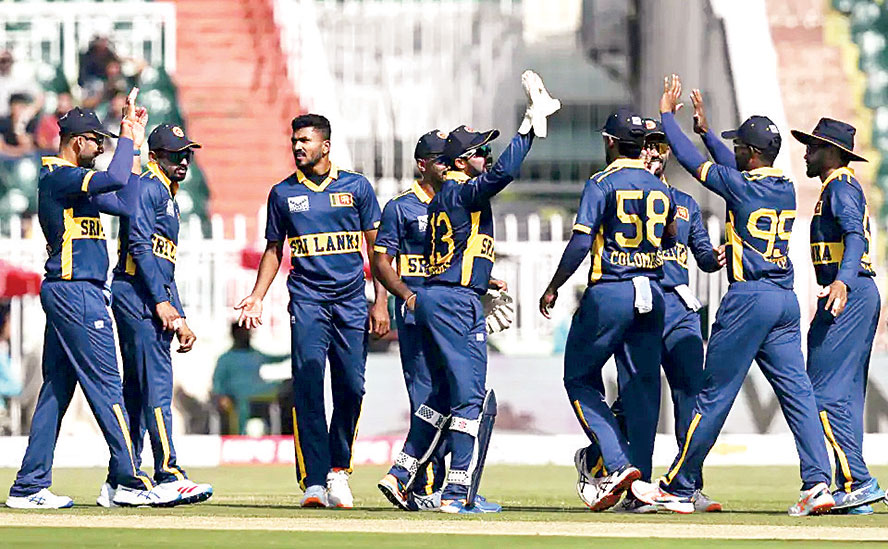
Eshan Malinga returned career best figures of four for 46, but his impressive spell could not prevent Pakistan from breaching the 300 run mark in the curtain-raiser of the ODI tri-nation series in Rawalpindi on Sunday.
Pakistan were bowled out for 305, with former captain Salman Ali Agha leading the charge with his fourth ODI hundred.
Agha struck a fluent 107 off 90 deliveries, peppering the boundary with ten fours and a six before falling to Asitha Fernando. The Sri Lankan seamer was equally impressive, returning tidy figures of three for 39.
Agha featured in a 97 run partnership with Hasan Nawaz and at 215 for four with 13 overs remaining, Pakistan appeared poised for a formidable total. However, Sri Lanka’s bowlers clawed their way back into the contest, applying the brakes just when the hosts threatened to run away with the game.
On a surface tailor made for batting, Sri Lanka’s late fightback could prove crucial, with the visitors fancying their chances of chasing down the target.
Left-arm seamer Dilshan Madushanka finished with two for 67, although his figures flattered him somewhat. He was guilty of straying onto the pads far too often, offering the Pakistan batters several scoring opportunities.
Sri Lanka went into the contest with just four specialist bowlers, leaving the part timers to shoulder a fair share of the workload. To their credit, the makeshift attack rose to the occasion, sharing ten overs between three bowlers without allowing Pakistan to completely dictate terms.
Dasun Shanaka did the lion’s share of the work, sending down seven overs, while Sahan Arachchige and Kamindu Mendis chipped in with the remaining three.
Sri Lanka also welcomed back top order batter Avishka Fernando, who returned to the ODI fold after spending several years on the sidelines.
England are the third team in the tri-nation competition, which serves as valuable preparation for next year’s World Cup.
The opening three matches will be played in Rawalpindi before the tournament shifts to Lahore for the remaining fixtures, including the final.
Sri Lanka are in the midst of a marathon 50 day tour of Pakistan. Having already completed a three-match T20I series, they will turn their attention to the tri-nation tournament before playing a First Class warm-up fixture followed by two Tests.
19 Division I – Tier ‘A’ Cricket
by Reemus Fernando
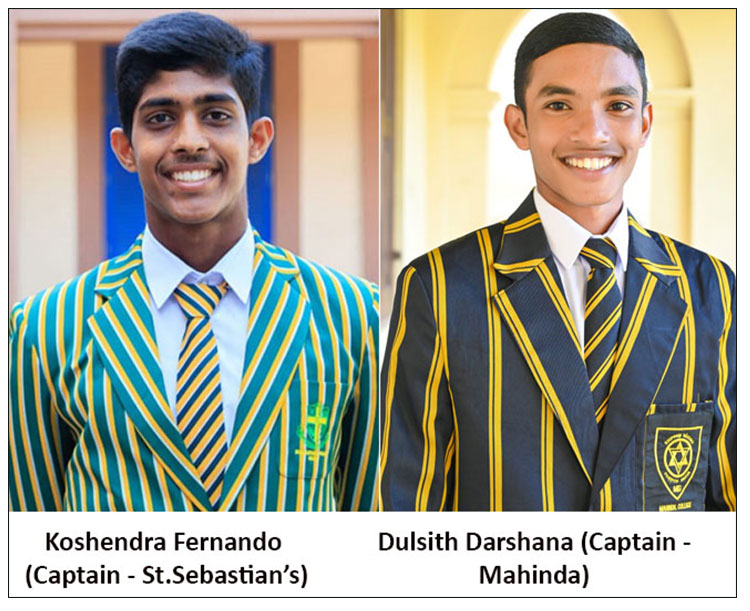
The top eight teams begin their battle for the Under 19 Division I Tier ‘A’ limited-overs title today, when Mahinda College, Galle, take on St. Sebastian’s College, Moratuwa, in the first quarter-final at Dombagoda.
Led by Dulsith Dharshana, Mahinda qualified for the knockout stage with wins over St. Anthony’s College, Katugastota (by five wickets), Royal College, Colombo (by six wickets) and Lumbini (by ten wickets). Their only defeat came against St. Peter’s College, Bambalapitiya, the only side to top 200 against them. In their other matches, Mahinda’s bowlers kept opponents to low totals.
That bowling unit, spearheaded by left-arm paceman Sadew Nethmina, appears to have peaked ahead of the crucial clash. They bundled Lumbini out for 40 in their last match, with Nethmina and Vishmitha Sathsara sharing nine wickets between them.
St. Sebastian’s reached the knockout stage on the back of wins over Maris Stella College, Negombo, and D. S. Senanayake College, Colombo. Their match against Sri Sumangala College, Panadura, ended without a result because of rain, while they lost by two wickets to Richmond, the eventual group champions.
St. Sebastian’s boast a strong batting line-up, with Hirusha Perera, Navinu Fernando, Lashen Fernando, Thivanka Fernando and Meshone Ferdinando all making notable contributions in the group stage. Skipper Koshendra Fernando is expected to lead the bowling attack with his spin, supported by Adeesha Lakshan, Lashen Fernando and Risinu Prabesh.
Teams
Mahinda (from):
Dulsith Darshana (Captain), Sadew Nethmina (Vice Captain), Randula Mabarana, Manitha Rajapaksha, Sehas Ashinsa, Kaveesha Githmal, Thiyon Helika, Kavindu Nimsata, Gesandu Bisas, Vishmitha Sathsara, Buddhima Tharupathi, Naviru Nishitha, Nihindu Sesitha, Anuga Palliyaguru, Senuja Vehan, Kevin Geemitha, Bakshara Jayarathne.
Officials: Denuwan Rajakaruna (Head Coach), Sandaru Nethmina (Asst. Coach), Y. Nishantha Kumara (Master in Charge)
St. Sebastian’s (from): Koshendra Fernando (Captain), Meshone Ferdinando, Nisila Dimath, Navinu Fernando, Hirusha Lochana, Lashen Fernando, Thejan Bandara, Chamath Wellalage, Risinu Prabesh, Sanoj Perera, Deneth Keshara, Adeesha Lakshan, Dilena Fernando, Thiwanka Fernando, Shenas Hashein, Pathiv Vehan, Dineepa Wickramsooriya.
Officials:
Lahiru Kanishka (Head coach), Nishantha Fernando (Asst. Coach), Sandaru Tharusha Perera (Master in Charge)
The other three quarter finals will be played on Tuesday as per the below schedule.
Mahanama Colombo V St. Joseph’s Darley Road at Mattegoda
Nalanda Colombo V St. Anthony’s Katugastota at Campbell Place
Richmond Galle V Wesley Colombo at Weeraketiya
Several big names fell at the first hurdle, including last year’s finalists Royal College, Colombo, as well as S. Thomas’ College, Mount Lavinia, Trinity College, Kandy, and St. Peter’s College, Bambalapitiya. Royal and St. Peter’s were in the same group and finished behind Mahinda and St. Anthony’s. S. Thomas’ were in Group ‘A’, where Mahanama and Wesley edged out the rest to book their places.
by Reemus Fernando
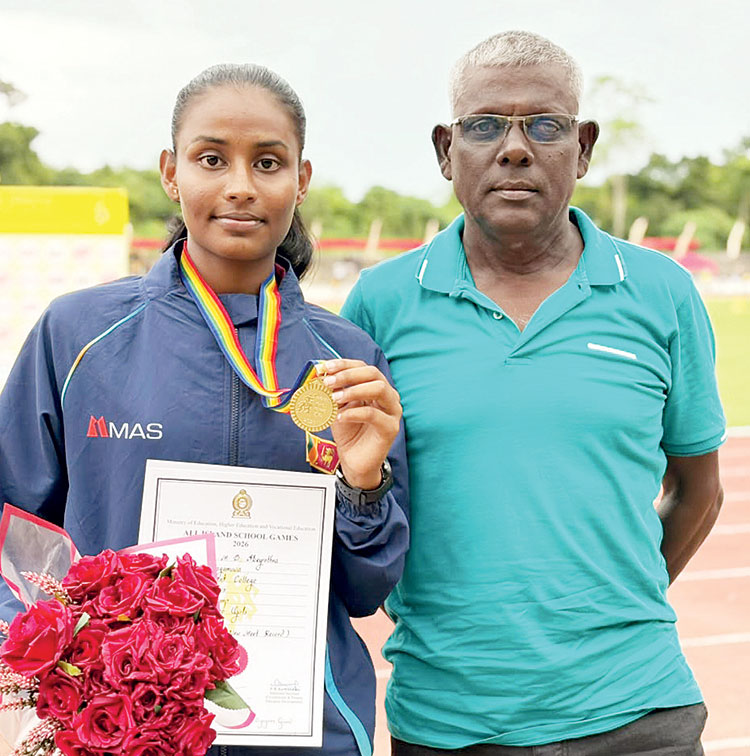
Asian Junior Championship medallist Mihinsa Dewmini Abeyratne broke a ten-year-old meet record to win the Under 20 high jump at the All Island Schools Games Athletics Championship at Diyagama on Sunday.
The President’s College, Embilipitiya, athlete cleared 1.75 metres, equalling her personal best, to erase the record of Poornima Gunarathne of Leeds International, Panadura. Gunarathne’s mark of 1.74 metres had stood since 2016.
Trained by retired sports officer Gamini Dias, Mihinsa was expected to achieve something special this season after setting a personal best of 1.75 metres at the same venue earlier this year. She followed that with a bronze medal at the Asian Junior Championship in Hong Kong.
Hers was one of six meet records to fall by the time this report was filed on day three of the meet.
In the girls’ category, Lyceum International School, Wattala, and Ave Maria Convent, Negombo, set new marks in relay events. In a closely contested Under 14 4×100 metres final, Lyceum clocked 51.35 seconds to erase Musaeus College’s 2019 record. Ladies’ College, who finished second in 51.52, also bettered the previous mark.
Ave Maria Convent edged Nimala Maria Balika in another tight finish to win the Under 16 girls’ 4×100 metres in a new meet record of 49.49 seconds. Nimala Maria Balika also bettered the old record.
In the boys’ category, Sadeesh Denuwan of Halmillaketiya MV stole the limelight with a new meet record of 11.22 seconds in the Under 14 80 metres hurdles. Maneesha Samarasinghe of Lyceum International, Wattala, set a new record of 13.09 seconds in the Under 16 100 metres hurdles.
Lyceum International, Wattala, also set a new meet record of 3:13.76 in the Under 20 4×400 metres relay.

Showers or thundershowers will occur in most parts of the island after 1.00 p.m

CTU: Teacher shortage casts doubt on govt.’s education reforms

Norochcholai to remain offline for several days after blackout

President links businessman held with arms to politicians

CID probe sought into tusker’s death amid fears of elephant-killing syndicate

Bill to allow remote witness testimony in courts

‘Dates have the highest sugar content to fight Coronavirus’

Sunday Island 27 December – Headlines

#SundayIsland 17th December – Headlines

Sunday Island – 28th March

Sunday Island Headlines – 21 March

Sunday Island – 21st February – Headlines
-
 Latest News6 days ago
Nissanka’s return headlines Sri Lanka’s Test squad against Pakistan
-

 News6 days ago
Sri Lanka, India caught in US-Iran ship crisis
-
 Latest News6 days ago
Imran Khan’s PTI braces to fight federal takeover of Khyber Pakhtunkhwa
-

 Latest News6 days ago
Missiles intercepted near Riyadh after Saudi coalition hits Yemen fuel depot
-
 News3 days ago
Asgiri Mahanayake calls for immediate release of Gnanasara Thera
-

 Features2 days ago
Kotahena:A Small Enclave, An Extraordinary Legacy
-
 Latest News6 days ago
Kusal Mendis’ unbeaten 87 hands Sri Lanka consolation win
-

 News7 days ago
Mahinda and Shiranthi hospitalised