
Features
Past, present and future

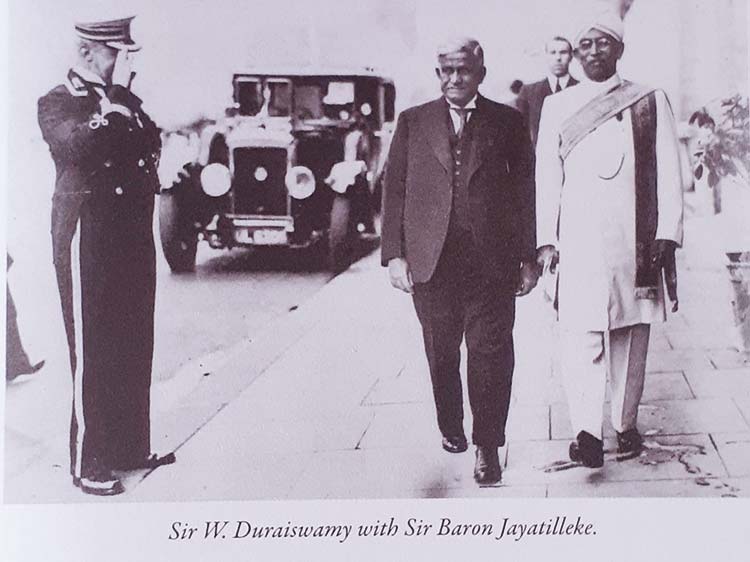
Addresss on the twin launch of books on father and son
by Prof. Savitri Goonesekere
The first edition of the book “My Diplomat,”authored by Ms Sivanandini Duraiswamy, as a biography of her late husband Yogendra Duraiswamy was published in 2000.This was at the beginning of new Millennium, a year after his passing in 1999. I thank Ms Duraisawmy and her son Naresha for inviting me to speak to you this evening, at the launch of the second edition of this book. The family and I have had some connections.
When Mr Duraiswamy’s father and Dr Naresha’s grandfather Sir Waitialingam Duraiswamy was a distinguished Speaker of the State Council, my maternal grandfather was a member of the Board of Ministers, as Minister of Health. Both became “Knights” of some obscure colonial “Order”, an honour conferred by Queen Victoria, British Empress of our island, then Ceylon.
Sir Waitialingam wore his traditional dress, as did my grandfather. Sir Waitialingam acquired the name of Porter from his colonial sponsor. My grandfather kept the first generation Kandyan name of Tikiri Banda, and named his son the third generation TB, Theodore Braybrooke ! So we have had colonial connections that we have happily shed in succeeding generations. as the publications launched this evening, clearly demonstrates for the Duraiswamys.
I had mixed feelings when I read this book. It was inspiring to read a testimony to a life well lived, with equanimity, integrity and courage in difficult times in our country. Mr. Yogendra Duraiswamy lived in the best of times at the dawn of independence, and the worst of times, of armed conflict. Mr. Duraiswamy, like those of his generation was a son of independent Sri Lanka at the dawn of freedom from centuries of colonial rule. There were anticipations and promises of a clear path to national progress and development.
Yet when Mr Duraiswamy passed away just at the end of that century, he had lived through a fratricidal and violent armed conflict, that impacted especially the North and East of the country, with which he had a deep sense of roots both in his personal and professional life. We meet this evening 25 years after Mr.Duraiswamy’s passing, 15 years after the end of the armed conflict in the North and East. We concluded an armed conflict of 30 years. Is not peace and development after conflict, still an unfulfilled dream?
Readers of this book will I think find that its record of past times, experiences and events, will provide some relevant insights and wisdom. The book comes as an expanded second edition, with documents that provide an opportunity for thought and reflection in Election Year 2024 for resolution to our National Question of power sharing. The book also provides insights on the leadership needed for accountable governance and public administration, based on a social contract that is not misunderstood by the rulers and their officials.
I hope the Book will receive the publicity that it deserves, and will be read by concerned citizens, despite the current focus on google searches WhatsApp messages and the internet, as a mode of communicating thoughts and ideas. The book comes in two parts. The first focuses on memories and events linked to Mr. Duraiswamy’s personal and professional life. This is usual in biographies.
I would like to share some thoughts on the first part which, is closely linked to the second part, that deals with substantive issues of public concern. This part also includes what I would describe as archival material of value. I would like to describe the former as the “He and Me” chapters of Ms. Duraiswamy’s book,”My Diplomat”. Crafted with an easy style and clarity, by someone who has received a national award for creative writing, this really is what is often described now as a “good read”.
Feminists tend to dismiss what is sometimes called “pativatha”or adulation of a husband. I think readers will appreciate a human story that speaks to a close relationship of love, and companionship, after a traditional arranged marriage, that was abundantly fulfilling and enriching for both partners. Indeed the idea of recording Mr Duraiswamy’s experiences in his “Jaffna Story” in a book, was a common project that interested both, and encouraged a shared approach to carrying this forward.
That relationship also extended to a strong bond of love and affection with their son Naresha. On one occasion when he actually sets their apartment on fire by lighting a match left by a careless maid, he is showered with affection. Modern mothers now understand that connectivity to the unborn in pregnancy is vital. Mrs Duraiswamy not only had stimulating conversations with her beloved spouse and companion. She began her conversation with her son before he was born and forged a bond that has helped her cope with the desolation of grief and loss and come through.
They have been fortunate to experience what is referred to as “the matchless blessing of a happy home and family”. These personal reflections to me are important, capturing a world of bonding and close familial relationships enriched by traditions of human communication and connectivity that seem to be disappearing in a brave new world of Internet connectivity. I recall Nelson Mandela once saying that all his core values were formed with his connectivity to his elders in the Transkei region of South Africa. Intergenerational connectivity is celebrated in this book.
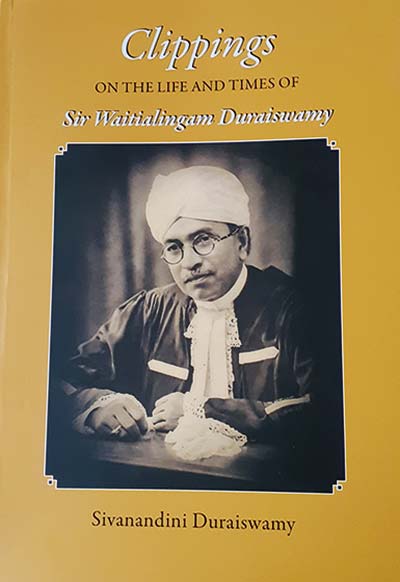
Mrs. Duraiswamy’s introduction to life in Jaffna in colonial times also makes interesting reading, capturing as it does the impact of the American missionaries on education in the colonial period. The connection to conversion to Christianity in some ways contrasts with the British missionaries in other parts of the country, where secular school Principals in mission schools focused on giving a secular education to both Christians and Non Christians in an ethos of Christian values.
The impact of the religious revival linked to nationalism is reflected in the establishment of Hindu Secondary schools in Jaffna, rather like the establishment of schools like Visakha in Colombo and Mahamaya Girls School in Kandy. This trend was to have significant impact on educational policy in later years. Mrs Duraiswamys writing on their diplomatic postings also captures times past, in countries of the Middle East like Iraq Iran and Palestine – trapped today in violence generated by power politics.
Experiences in the “Forbidden City” of the times, Beijing, speak to the austerity and rigidity of an environment that has changed dramatically.
The second part of the book , beginning with the Chapter “Return to Jaffna”, has I think archival value in two important areas of continuing concern for our country. These chapters record various facets of Mr. Yogenndra Duraiswamy’s life, his experience of public office and governance, and what we would call today “civil society activism”. We now live in a country that has seen the collapse of public institutions, and adversarial or confrontational politics that has prevented us from winning the peace after 30 years of armed conflict.
Mr Duraiswamys experiences and his writings are carefully documented, with a sense of history, rather than personal emotions and bias, that can surface in writing on the national question or governance. Mr Duraiswamy articulated his vision of solutions to the National Question in terms of maximum devolution of power to the Tamil regions, and maximum and shared resource allocation for economic growth and development. He saw this as a necessary and possible path to peaceful coexistence of the majority and minority communities in our country. He was articulate in his rejection of separatism.
He celebrated his identity as a member of the Tamil community in his life and work but respected the diversity of Peoples and the shared religious and cultural connectivity of the Sinhala and Tamil communities. These ideas are reflected in his contribution in public life, and the speeches and writings published in this book. Articulating this position required courage at a time when a completely different and dominant political discourse prevailed in his community. Criticism and his rejection when he tried to enter active politics did not change his views in this regard. He was a role model of integrity and personal commitment to ideas and values he believed in.
Compare this with today’s politicians in public life. and public office. Mr Duraiswamy was a person who Tagore describes as “men and women whom the lust for office cannot buy.” Mr Duraiswamy perhaps like many others of his generation was active in Civil Society after retirement. A central area of his engagement was working towards peaceful coexistence in a plural society through interfaith religious and cultural connectivity.
He gave leadership in the Hindu Council and facilitated expression of a collective opinion on issues of public concern, not just for that community, but for Sri Lankans. The attack on the Temple of the Tooth was condemned by the Council in a public statement (p193). He helped to establish the Bauddha Hindu Maha Sabha in 1990, that brought both communities together to explore areas in which they could communicate and create awareness of common concerns.
He also connected with the Muslim community through a close personal friendship with a Minster at that time late Mr MHM Ashraff, the leader of the Muslim Congress. Mr Duraiswamy’s Civil Society activism also extended to the Education sector. Today with the controversies on IMF support in our economic crisis, there is a discourse that refers to an “entitlement culture”, where the public expect hand outs from government on health and education.
Mr Duraiswamy can be described perhaps correctly as “a famous son of a famous father”, born to wealth and privilege. But imbued with an ideal of service and social responsibility embedded in his religious beliefs as a Hindu, he could respond to economic deprivation and disadvantage. He helped grass roots organizations he worked with, to access international funding. He worked with the Alumni Association of my University of Colombo, to enable low income students from the outstations to access hostel facilities.
He understood the Kannagara vision that equal access to the public good of education was the right of all students and the State had a duty to provide that without ethnic or class discrimination. His writing on education policy critiquing affirmative action that benefited rural students in the Sinhala areas was because he believed passionately in the idea of equal access to education without discrimination.
He pointed to the disastrous impact of these policies in denying Tamil students equal access. That contribution expresses an interesting point of view . It is very relevant today where affirmative action or positive discrimination to address historical discrimination is being questioned, including in a controversial recent decision of the US Supreme Court.
It is important to make some remarks on Mr Duraiswamy’s contribution to public administration, as recorded in this book. The manner in which he held public office after retirement as a very senior official and, in our Foreign Service, demonstrates commitments that seem almost unreal today. The capacity of public servants to resist political pressures while holding public office was central to Mr Duraiswamy’s concept of fulfilling the public trust.
He himself had experienced disappointments because of politicised decision making while he served in the Foreign Ministry. But without bitterness and rancour he was committed to policy changes that would ensure non discrimination and appointments on merit, by the establishment of an independent Police Commission, Public Service Commission and Elections Commission.
The importance of that vision is seen today as we witness destructive politicization that has led to inertia in the prosecutors office. Loss of public confidence in the administration of justice, and law enforcement agencies has become a matter of concern when the Police Commission fails to take disciplinary action against officers who contravene the law. Assuming public office again by taking a controversial appointment as District Secretary and Government Agent Jaffna, Mr Duraswamy was witness to the political interference and violence associated with the District Development Council Election of 1981.
He had the satisfaction of using his office to engage in development work and programmes in the region, in the tradition of an early cadre of government officials who saw their mandate as public service for the benefit of the People in the region. Following a past tradition in public service, he preserved documents and papers in all his official work whether in the foreign office or in public administration and his personal life. This is remarkable in a country that is now familiar with a practice of destruction of records.
He received accolades for his development work. But the chapters in this book on this period in his life are testimony to the pressures he had to experience from many quarters. The situation culminated in violence by a police force seeking reprisals for police killings by militants, and the burning of the treasure that was the Jaffna Public Library. This was in a sense a portent of things to come in the appalling and tragic violence loss of lives and property of the Tamil community on 1983.
Yet Mr Duraswamy guided by the power of his spiritual beliefs seems to have coped with all this with equanimity. Despite criticism and pressure he made his decisions firmly and quietly and then resigned from the posts he held. How many public servants holding high posts can say that they have held office in this manner? How many would have witnessed the destruction of a much loved family home, in the armed conflict, and continued to live by his ideal of public service, contributing to public life and civil society in those traumatic years of armed conflict.
A few years before his passing Mr Duraiswamy had the satisfaction of serving on a Committee established by President Chanadrika Kumaranatunga and late Minister Mangala Samaraweera to reconstruct and resource the destroyed Jaffna Public Library. I interacted with him briefly when this initiative was in its final stages with leadership from late Minister Lakshman Kadirgamar.
Mr. Duraiswamy was able to witness in his lifetime a shift in national policy that led to the recognition of Sinhala and Tamil as “national languages” in public administration, administration of justice and education, through Constitutional Reforms of the 13th and 16th amendments. The failure to proactively implement the changes is documented in published research. However those changes have not been eliminated by the power politics that has impacted Constitutional Reform.
His vision of maximum devolution and power sharing remains embedded in controversy, with no efforts to implement the promise of the 13th Amendment. This book reveals that at the time of his passing Mr Duraswamy had great hopes of peaceful conflict resolution and Constitutional Reform, led by a Chandrika Bandaranaike government. He believed that these reforms would help realize his own passionate vision of a united country that gave sense of national identity and belonging, to all its diverse people.
When Constitutional Reform was proposed in 1989 as a way forward for resolving the armed conflict and the national question, Mr Duraiswamy stated publicly that there was collective responsibility in “acts of omission and commission by society in general and governments in particular.” (p228). He recommended an All Party National Government, as a preparatory step to a general election and a mandate of the People for Constitutional Reform including the continuation of the Executive presidency. These are ideas that seem pertinent to current discussions on Constitutional changes as the country moves into 2024.
In Mr Duraiswamy’s submissions on the draft Constitutional Reforms in 1996, as part of the Hindu National Council, he commended President Kumaranatunga’s leadership in agreeing to proposals on power sharing, and a political settlement on devolution of power on “specified subjects”.in a new Constitution (p322). Yet, one year after his passing the Constitution of 2000 with significant provisions on devolution and power sharing in important areas, and many other extremely important and relevant changes including the abolition of the Executive Presidency and return to a Parliamentary system of governance, was torn to shreds physically by the current President Ranil Wickremesinghe and his MPs.
This irresponsible and destructive behaviour was motivated by a petty concern in regard to who should succeed as Prime Minister in a government formed according to the new Constitution. We have witnessed over the years a lack of consistency in those who assume public office. Those who abuse power, transform into human rights experts and activists. Liberals tend to become autocrats in the seats of power, especially when they don the mantle of the Executive Presidency.
In our Dissolution of Parliament case 2018 our Supreme Court reminded that “Since 1972 (when we became a Republic) this country has known no monarch, and the President has not inherited that mantle”. A body of jurisprudence including the recent judgments on national bankruptcy and torture by the Police including the Acting IGP, focus on the doctrine of official duties and powers exercised for the well-being of the public, and held in “public trust”.This concept is considered embedded in democratic governance and the Rule of Law.
Yet the incorporation of a kingship concept into a powerful Executive Presidency, has permeated legislative and executive institutions and eroded any perception that public office is held in public trust. The Executive Presidency which Mr.Duraiswarny critiqued in his responses to Constitutional reform in 1998 remains the dominant institution in governance, in all its toxic manifestations. He recognized the dangers of concentrating executive power in one individual. He wanted it modified to incorporate checks and balances essential to prevent abuse of power and facilitate good governance.
The destructive impact of this model of governance on the national life of our country, would have amazed Mr. Yogendra Duraiswamy, as it has citizens who have lived with that experience. 2024, is a critical year for making important decisions on the progress and development of a country that we all love. The launch of the second edition of the book has given us an opportunity to recall Mr Duraiswamys vision, documented by Mrs Sivanandini and Dr Naresha Duraiswamy through the book “My Diplomat “.
At the inaugural meeting of the Jaffna Library Committee by President Chndarika Kumaranatunga Mr. Yogendra Duraiswamy said that “this was surely the forerunner of many efforts at nation building. The day has dawned when we as sons and daughters of Mother Lanka should work unitedly to create a new nation where peace equality freedom and justice shall prevail, and where every citizen shall live with honour and self respect, free from fear or want”.
Let us hope that we as citizens do not repeat our past follies, as rulers and citizens at Election time in 2024. I hope that we can collectively. recognize the relevance and importance of a new commitment to give life and meaning to that vision of peace and harmony, and accountable governance to the People of Sri Lanka.

Features
Independence of the judiciary, democratic governance, and dismantling of the executive presidency:

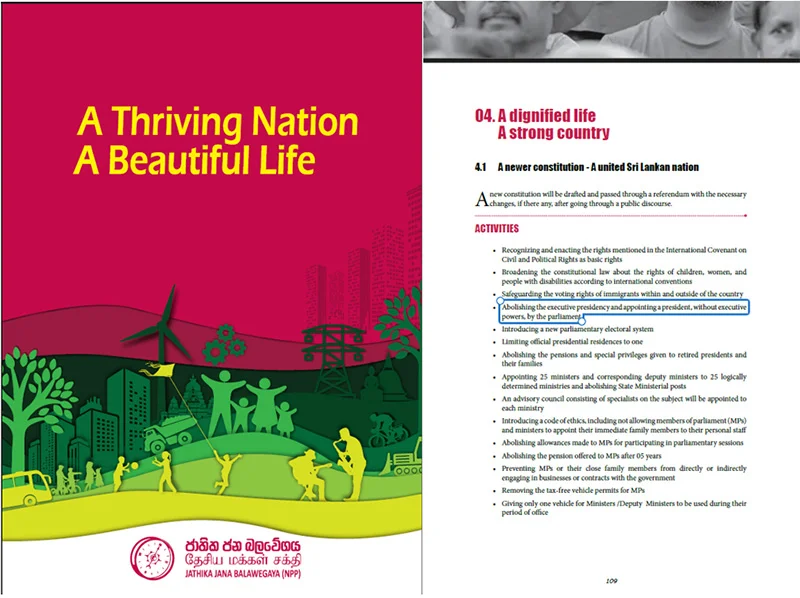
the basis for drafting a new constitution
By Savitri Goonesekere
( This is an edited version of the transcript of a talk given at a public seminar titled ‘Why should we rally for a new people’s constitution?’, held at the National Library Auditorium on 11 September 2026 and organised by the Young Lawyers’ Association. )
Today there is so much confusion: what is Constitutionalism? What is a Constitution? Why do we need a Constitution? We must recognise that, it has been civil society, including professionals in this country, who have always articulated a voice on issues of public concern. If you remember the time of COVID, we had the medical professionals articulating a voice because this was a matter of public concern. So, the Bar Association, too, has expressed views on public concerns. We have with us this evening, President’s Counsel Mr. M. A. Sumanthiran, and Mr. Geoffrey Alagaratnam, and we will have President’s Counsel Mr. Saliya Pieris, who will join us later.
They and many other leading lawyers have always led from the front. And in that regard, in the case of the legal profession, inevitably there are areas of public concern that necessarily mean that they have to call the government to account. When that happens, the Bar Association is required to question government’s action or inaction including their policies
Now, in the past, I don’t think it was as bad as today, because today we have such adversarial, confrontational politics that if by any chance—and an unlucky chance—the Opposition’s stand on a matter happens to coincide with that of professionals, then there’s a delegitimisation of the professionals. That is wrong because professionals must have the courage to speak for their profession, even when they question the government. Constitutionalism and Constitution-making, to be functional, must have bipartisan consensus. When that is not there, even professionals who articulate a voice are seen as either anti-government, against government, or worse, lackeys of the government.
I think citizens should be aware of these realities, and therefore reflect on what it means to have a Constitution. What is a Constitution? A Constitution is, after all, the basic law of a country which will regulate the governance system. And to regulate a governance system, you have to have a framework for governance. The framework for governance also then will have to have institutions of governance. That would be what you call the system of governance. Now, those institutions of governance also have to be embedded and linked with some values, and a values framework.
In the 20th and 21st centuries, we have basically two forms or frameworks of governance. One is Democracy. The other is what we call centralised power with perhaps a single leader. That kind of governance does not focus in the way that Democracy does on the Sovereignty of the people, the rights and liberties of citizens of the country. Therefore, we need to understand in Constitution-making where we stand. Is it going to be for Democracy or is it going to be for another form of government? And I say this because today we’re constantly talking of the Democratic deficit, the failures of Democracy. Contrasted with that are countries which have strong leadership, single leadership, supposed to propel our counties into economic growth and a wonderful future.
In that context, therefore, we need to ask ourselves: what is the value in Democracy? Now Democracy, we must understand, was born of an evolutionary framework developed from a time when there was single leadership by a king, a monarch. Democracy didn’t come overnight. It had to dismantle monarchy and single leadership, and that’s what it did. Historically we know that basic ideas on Democracy as a form of governance can be traced to the Greek civilisation and time of what we call the Western Enlightenment. It was the Western Enlightenment that brought together these ideas of the Sovereignty of the People, a social contract between government and the People who are governed, and the central importance of the People of a country. That is Democracy. That did not come overnight. It took centuries. It took ideologies. It took thought. It required struggle born also of blood and tears.
Today we dismiss Democracy and this history and say, “Oh, it is elitist liberalism.” But we must not forget that Democracy was born as an evolution from monarchy and single leadership, replacing this with the concept of government that respected the rights of the Sovereign people. The central importance of the Sovereign Peoples rights to be protected from abuse of state power is the foundation of democracy as a form of governance. The European countries and the UK engaged with that system of governance.
By 1948, when the UN Charter and the International instruments were drafted, there were two different approaches to governance. One was the Western tradition born of their experience evolving from monarchy to People’s rights and People’s sovereignty that focused on civil liberties: freedom from torture, freedom of speech, freedom of expression, freedom to protest—those are civil liberties. But the weakness was that there was no recognition of social and economic rights as the rights of the people: that was absent in that tradition.
On the other hand, there were member states from the Communist countries, which had the centralized, authoritarian system of governance. They did not recognise civil liberties, but focused on meeting all their people’s social and economic needs as rights: health, education, shelter.
In 1948, we must remember that there were therefore two major international treaties or covenants: one, a Covenant on Civil and Political rights, and another one on Economic and Social rights. That was the Cold War period. But then subsequently through the years, there were changes. In the 1990s, there was the flowering of the human rights tradition. Member states of the UN came together at the Vienna World Conference in 1993, which then recognized that ALL these rights should be human rights of peoples across the globe
So, the Western liberal civil liberties tradition, linked with that of the countries of the Global South like Malaysia, China, and Russia—which recognized and gave importance to social and economic rights. And then a consensus developed that ALL these rights are important; they are “indivisible.” We witnessed this in the 1990s, and the early years of this millennium in the development of many international Conventions which declared human rights on the basis of both civil liberties and social and economic rights.
One would have thought that we would achieve a global consensus on the broadening of the meaning of democracy and a movement away from this concept of strong leadership without civil liberties. But we have not had that. In place of that, we have had a decline in multilateralism in the UN system, giving way to bilateralism, once again back to this focus on two systems: Democracy or strong single leadership.
In this global context, let us compare the situation in countries like ours, which experienced decolonization: countries which knew the impact of colonialism. What happened in those countries? These civil liberties, the legacy of the colonial powers, were used in freedom struggles. They were used to dismantle colonialism. That is why the idea that this liberal tradition of civil rights is a colonial white man’s sudda-law should be challenged. Because this is not so. These countries of South Asia and Africa internalised the values of Democracy, the systems of governance known as Democracy, and built for their nations Constitutions which recognized the importance of civil liberties and control of state power And you see this in India, you see this in Nepal, you see this in Sri Lanka: we had the same concepts of the importance of civil liberties in Constitutionalism. But we focussed on civil liberties. Social and economic rights in the Vienna Convention were considered only as social policies, following the Western tradition on people’s rights.
And what is the meaning of Constitutionalism? The Sovereign people have given their consent to the rulers to rule subject to protection of THEIR rights. And that means that Constitutionalism must prevent the abuse of State and Government power. . Today sometimes we talk of authoritarian Constitutionalism, we talk of abusive Constitutionalism. That’s a contradiction. If Constitutionalism is to prevent abuse of state, government power, you can’t have authoritarian constitutionalism or abusive constitutionalism. What you can say is you can abuse of constitution making process to embed an authoritarian system of governance.
So, we must now, therefore, recognise that even today, if we say there’s a Democratic deficit, this system of governance has been used in our countries to give a better quality of life to our people. There have been failures; there are dysfunctional areas, but that does not mean you have to reject something which has been a powerful force for recognising the importance of the citizens of a country.
I think today when we are challenged with all this talk on the deficit of democracy, the importance of single leadership and authoritarian governance to deliver development, we must stay the course and say: “No, for Sri Lanka, from 1948 we have had Democratic governance.” Governments have not delivered in many areas—true—so the challenge is to focus on Constitutionalism in a new Constitution. Priority must be given to help the government to deliver on the gaps that we have, and ensure the well-being of our people. Constitutionalism must be the basis for drafting a new constitution.
I think we have to also challenge this often-repeated statement that we have a “78-year curse” in governance. We have had deficiencies, but we have had Democratic governance. Central to that has been regular elections and the resilience of the People. Also, the contribution of the courts of this country, the lawyers of this country in ensuring that there has been some accountability in governance.
Some of you may not remember, but I have lived through dark times. I have witnessed the horror of the murder of a dear student, a politician whose head was cut off by the JVP—the Deshapremi at that time—and stuck on his gate. He had young children. I have gone with my husband in dark curfew streets to help clear a body for burial, where the first person who opened the poll, a relative, was killed at the General Election the JVP prohibited.
So, we in this country have lived through dark times. But we also have moved from that dark past to a point where those involved in an armed struggle the JVP entered into the democratic political process. They did so in 1994. Having come into that political process, the Democratic process, it is a commitment made to the people. We must hold this government with its JVP partner to deliver on Democracy, and not any other system of governance.
Let us look at our history of Constitutionalism and Constitution making. What is our history? 1948: we had the parliamentary system. We had, particularly in relation to the minorities, decisions of the appeal courts which have been criticised, which did not take into account minority rights. So, there were deficiencies. But we had a written constitution, we had courts, we had public administration and law enforcement systems that functioned. That was the dividend of post-independence freedom and political autonomy in Sri Lanka.
Then in 1972: with a massive mandate, we had a government which again brought in the 1972 “autochthonous” or home grown constitution. But what did it do? In fact, it interpreted the Sovereignty of the People as the Sovereignty of Parliament and parliamentarians. And that made Democracy dysfunctional. There is a recorded history of the abuse of power that took place at the time, including the conflict with the courts.
Now change was promised in 1978 Constitution. The people gave a massive mandate for a Dharmishta anduwa. And then what happened ? Again, we put in place all the democratic institutions as we know them, the system of democracy familiar in the liberal tradition. But a huge gap was the aggrandizement of power in the strong Executive Presidency, which has led to decades of problems in the governance of this country.
The Executive Presidency of 1978 has destabilised what were good public institutions. It has contributed to an ethos where, in institutions, the person who is considered the boss is supposed to lead, and everybody else does not question him/her. That happens in the public sector today in many institutions, and I’m told (and it looks like it does) that sometimes this also happens in the private sector. So, we have developed what you call a boss-man culture which seeps down to society, not just public institutions and governance. The Executive Presidency, therefore, has contributed to the weakening of many public institutions and also, to a large extent, a culture of corruption, and abuse of power.
This decline has been understood, and because it has been understood, since the year 2000 we have been asking for a new Constitution that will eliminate the Executive Presidency. Successive political leaders including the current President and their political parties have pledged in election manifestos to do this. At least the Chandrika Bandaranaike government fulfilled that promise and brought such a constitution in 2000 to abolish the Executive Presidency and strengthen the democratic institutions to achieve accountable governance to the People. Unfortunately, a subsequent and recent executive President and his party tore that Constitution to shreds in Parliament. That was 2000.
(To be continued)
by Jehan Perera
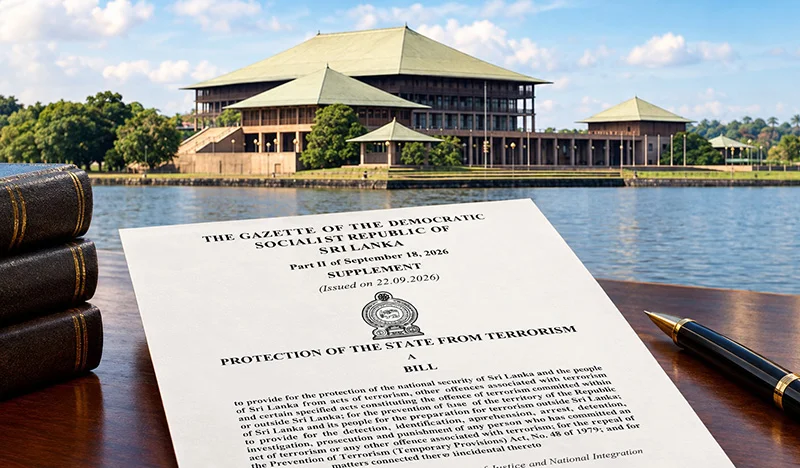
The NPP government is going after powerful figures from the past and present who have engaged in corruption, fraud and criminal activity in a way that no previous government in Sri Lanka has done. Former ministers, politicians and senior state officials are among those facing investigations and legal proceedings. The government has placed before Parliament a document listing 50 cases involving corruption, fraud and other crimes. These include not only financial offences but also cases relating to the Easter Sunday attacks, the killings of Lasantha Wickrematunge and Wasim Thajudeen, the disappearance of Prageeth Ekneligoda and attacks on journalists Keith Noyahr and Upali Tennakoon.
The significance of this effort is that it can demonstrate that nobody is above the law, regardless of political connections or social standing, which will help restore public confidence in institutions that have long been distrusted. It could also recover public resources, improve the investment climate and strengthen the foundations for a more prosperous and just Sri Lanka. When criticised for focusing on the past and not the present, the government position is that these investigations were initiated under earlier governments, particularly between 2015 and 2019, and that it is now allowing investigators to proceed to deal with the backlog without political interference.
But there is an aspect of the government’s approach that is less justifiable. While pursuing past wrongdoing by powerful individuals, it is also advancing a triumvirate of draft laws that could give the state sweeping powers over citizens, organisations and dissent in the present and future. The draft Prevention of Terrorism legislation, the Prevention of Organised Crimes Bill and the NGO Registration and Supervision Bill raise serious questions about the over-centralisation of power. Each of these laws strengthens the powers of the state while weakening the rights and safeguards that protect people from their misuse and thus questions the basic rights of people in democracy where ‘the power of the people is vested in the government’. This is a recipe for future misrule rather than the rule of law. As the well-known saying goes, power corrupts and absolute power corrupts absolutely.
Proposed Laws
The real test of system change, for which the government obtained an overwhelming mandate, requires not only a government willing to hold others accountable, but one prepared to subject itself to the same principles of legality, transparency and restraint. The three proposed laws that are particularly important in this regard are the Protection of the State from Terrorism Bill, the Prevention of Organised Crimes Bill and the NGO Registration and Supervision Bill. Each of these draft laws has been presented as serving a legitimate purpose. Preventing terrorism, combating organised crime and ensuring that NGOs do not facilitate money laundering or terrorist financing are proper responsibilities of the state. Sri Lanka has international obligations in these areas, and no responsible government can disregard them. However, the existence of a legitimate objective does not justify every means adopted to achieve it.
The proposed Protection of the State from Terrorism Bill illustrates the problem. Although its definition of terrorism draws on a model developed by a former United Nations Special Rapporteur, the Human Rights Commission of Sri Lanka has warned that the definition of terrorism extends beyond the model and could bring legitimate political protest, trade union action and civil disobedience within the scope of counter-terrorism legislation. Its concerns also include prolonged detention, inadequate judicial oversight and restrictions on access to legal counsel. These are objections that go to the heart of the relationship between the citizen and the state. The government cannot credibly promise to protect democratic freedoms while creating powers that could be used to restrict them. It is necessary for the government to reassess the draft through transparent consultation and revise provisions that could criminalise legitimate dissent.
The Prevention of Organised Crimes Bill raises similar concerns. It is presented as giving effect to the United Nations Convention against Transnational Organised Crime, which Sri Lanka ratified in 2006. The Centre for Policy Alternatives (CPA) has argued that the convention does not require many of the bill’s provisions. The proposed law extends to a broad range of offences, permits detention orders lasting up to a year, makes confessions to police admissible for purposes of legal evidence, and introduces extensive surveillance powers. A law intended to dismantle criminal networks should not create a parallel system of exceptional powers that could be applied far beyond organised crime. Nor should safeguards developed through years of experience with abuses under the Prevention of Terrorism Act be weakened through legislation bearing a different name. The government should review whether or not existing laws could be used effectively to control these crimes or whether each exceptional power is necessary.
Civil Society
The proposed NGO Registration and Supervision Bill presents another test of the government’s intentions. The government may reasonably seek transparency in the finances of organisations receiving public or foreign funds, including measures to prevent money laundering and terrorist financing. It seeks to justify its overreach on the grounds of meeting the internationally mandated requirements of the Financial Action Task Force (FATF) for the Asia-Pacific region. But these objectives do not justify placing civil society and NGOs under excessive administrative control when even the FATF ranks them as low to medium risks. The draft bill would require registration and renewal, impose extensive obligations on organisations and empower authorities to suspend or deregister them on broadly framed grounds. It is important to redraft provisions that confer excessive discretion over registration, renewal, suspension and deregistration of NGOs.
Among the concerns raised by United Nations human rights special rapporteurs with regard to the draft NGO law are provisions requiring organisations to align with government policies and restrictions that could affect advocacy, dissent and freedom of association. The implications extend well beyond organisations that engage directly with the government. Community groups, human rights organisations, independent researchers and organisations working on reconciliation or accountability could find their activities constrained by uncertainty over how these provisions might be interpreted. Organisations that criticise government policies are not thereby working against the country. Their freedom to do so is part of what distinguishes a democracy from a system in which the government determines which opinions and activities are acceptable.
The government has generated considerable public goodwill through its pursuit of corruption and criminality. It should not assume that this goodwill gives it an unlimited mandate to strengthen the coercive powers of the state. The NPP knows from its own history that governments can treat dissent as a threat and use the machinery of the state against their opponents. There is still time to correct the drafts through transparent public consultation, narrow definitions of offences, meaningful judicial control over detention and surveillance, and effective remedies against arbitrary decisions. A government that pursues corruption while weakening safeguards against state abuse risks undermining its own achievements. Besides bringing to light the abuse of power by previous governments, the NPP government needs to build a system in which no future government can abuse power in the belief they can get away with it.

 By Ramya Kumar
According to the Quality Assurance Council (QAC) of the University Grants Commission (UGC), quality assurance (QA) refers to “the means (i.e. the policies, attitudes, actions, procedures, etc.), by which an institution can guarantee with confidence and certainty, that the standards and quality of its educational provision are being maintained and enhanced”.
An expansive structure has been in place since 2005 to govern and implement QA processes within the state university system. The QAC is the focal point at the UGC that implements external reviews of state universities and institutes. Each university has its own Centre for Quality Assurance (CQA) tasked with performing QA in line with QAC directives. Faculties, in turn, have Internal Quality Assurance Cells (IQAC) performing their own QA; they are answerable to the CQA.
The big question is whether this all-encompassing top-down QA system, that in many ways undermines the internal dynamics of university governance, actually supports universities to enhance the quality of education. This article highlights some concerns.
Top-down check-box activities
The QAC conducts external reviews of universities and degree programmes. A review team appointed by the UGC (who may or may not have experience in the institution/programme in question) examines the self-evaluation report submitted by the said institution/programme. The team then conducts a site visit to verify the claims made in the university’s self-evaluation report, clarify issues identified during the desk review, and examine how QA procedures operate in practice. The team holds meetings with the university administration, members of the Council and Senate, Deans, Heads of Departments, academic and non-academic staff, students, and others. Following the visit, a draft report is submitted to the relevant institution/programme for comment before final publication. The reviewed institution/programme then prepares and publishes an action plan addressing the recommendations, with subsequent monitoring of progress.
There are some worthy QA initiatives under implementation, such as improving facilities for students with disabilities and strengthening mechanisms to address sexual- and gender-based violence. However, for the most part, QA activities have little to do with improving the quality of education. They are mostly preoccupied with monitoring faculty and department websites, digital transformation, student feedback, subject evaluation, course evaluation, peer evaluation, and, more recently, staff appraisal. These activities, which consume an inordinate amount of time—so precious at understaffed universities—have become check-box activities completed to generate evidence for the next review. Below is an excerpt of a conversation between two academics (1 and 2) that conveys how QA plays out at universities (reproduced with permission).
1: … .it’s like social media you know, like posting things on Facebook or twitter or Instagram. When people do a lot of social media, everything they do, they do thinking, “okay I’m going to post it in this way… this I have to put on my Instagram.” QA is a little like that… everything is considered in light of, “ah we can use this for the review, as evidence… for example very recently we were encouraged to have all the things that we do in our department in the faculty newsletter so then they can put in the review. Every little thing has to be noted down….
2: And with pictures and all…
1: At the very least it has to be written so that you have written evidence .. you can’t be doing something for the sake of doing something or because it is good for the department … and sometimes people tell me “oh yea that’s a good idea we can fit that under this x, y section of the review..”
2: Yea, and nobody really thinks about the actual outcome… whether it’s actually helping anyone..
1: I also find that a lot of the words that we used in different ways have now been co-opted to the QA discourse ..including quality.. I can’t actually say what I want as an “outcome”, for example, that the outcome of this workshop is that my students “think about” … then I am told “ah but no that’s not one of the Bloom’s taxonomy words, “think about”.…
2: And the worst part is these medical and agriculture people, these types of people go around spreading it like some kind of gospel!
1: Yea, this cookie cutter way of doing things, they think is the height of innovativeness or creativity, when actually it is so mundane … for me the most awful thing about it is like some fungus of mundanity has taken over through QA reviews.
2: yea, when you say QA, my mind closes off immediately and I stop listening…
Auditing everything but power
QA leaves out crucial aspects of university governance. For instance, there is no review or assessment of the “quality” of university administrations under Criterion 1 or the integrity of procedures governing the promotion of academic staff under Criterion 6 of the institutional reviews.
The majority in the Council—the university’s executive and governing body, which is responsible for selecting the Vice-Chancellor (VC)—are appointed in ad hoc fashion. Apart from the Ex-Officio members in the Council (VC, Deans, etc.), and the two members elected by the Senate, the remainder are appointed by the UGC with no formal consultation or vetting procedure. The VC appointment process described in UGC Circular No. 03/2023 exemplifies how an ostensibly technical process can become entangled in political sycophancy. The Registrar invites applications for the position of VC through advertisement. Applicants must submit a curriculum vitae, a statement of vision for the university and supporting documents. The University Council appoints a three-member Search Committee of senior academics to encourage “eminent persons” to apply, while the UGC appoints a former VC from another university to “observe” the selection process.
A Special Meeting of the University Council is convened. Candidates are interviewed and must make a presentation to the Council Members, followed by questions. Each Council member “gives marks” for seven prescribed criteria: strategic focus (20%), effective leadership (20%), holistic thinking/conceptual skills (10%), academic and research excellence (15%), personal integrity (10%), professional communication (10%) and managerial competence (15%). Marks are averaged, and the Council recommends three candidates to the UGC in rank order. The UGC-appointed observer separately submits a confidential report on the selection process.
This procedure is expected to guarantee quality, but does it? Applications are submitted to the Council Members, who have been appointed on questionable bases, and who are expected to review the applications and give scores, based on objective assessments. But, in reality, most Council Members are manipulated by VC candidates, who often have personal ties with them. The UGC-appointed observer usually has no genuine interest in the outcome. And there is no way for anyone to actually question the Council’s decision once it is made. Although the highest-ranked candidate may ultimately be appointed, the selection remains a political decision made by the President, who retains the discretion to appoint any one of the three.
External reviews also do not look into the promotions of academic staff, except to scrutinise whether there are policies and procedures in place to govern promotion. Academic staff may apply for promotion to Professor once they satisfy the prescribed eligibility requirements, which typically include the period of service, academic qualifications, research and publication achievements, teaching experience, and contributions to the university and wider community. Applications are evaluated against specified criteria, with research output and academic contributions assessed through documentary evidence and expert evaluation. Under the UGC’s scheme for Professors, two experts from outside the applicant’s institution assess specified aspects of research and knowledge dissemination. Again, beneath this technical process, which is externally evaluated, lies a problematic points-based scheme that can be manipulated and abused with impunity.
Rethinking university QA
Like the VC election process and the schemes of promotion for academic staff, QA reviews are open to manipulation. Before a review, there is a chaotic rush to complete evidence gathering and reporting. Academics leave all other work aside, including at times their teaching, to focus on completing documentation and preparing reports. The standardised criteria in the review manuals and scoring sheets often do not reflect differences in disciplines and institutional contexts. But this does not really matter because any serious problems experienced by institutions or programmes are hastily brushed under the carpet to conceal any evidence that could taint the review. The goal is to obtain an A or at least a B grade at whatever cost.
QA may result in positive change if it moves beyond top-down check-box activities towards internally designed and owned processes encompassing all aspects of university governance, led by departments and faculties, and supported by adequate resources. The current QA system needs to be dismantled and replaced by procedures that are accountable, not to the UGC, but to our students and the communities we serve.
(Ramya Kumar is attached to the Department of Community and Family Medicine, Faculty of Medicine, University of Jaffna)
. Kuppi is a politics and pedagogy happening on the margins of the lecture hall that parodies, subverts, and simultaneously reaffirms social hierarchies.

Heavy showers above 100 mm are likely at some places in the Western, Sabaragamuwa, Southern, Central, and North-western provinces and in Anuradhapura district.

Sri Lanka, India caught in US-Iran ship crisis

Namal further remanded

IMF projects Lankan economic growth to moderate amidst mounting global uncertainties

Major Gen Pushpakumara assumes command of 56 Infantry Division

Dickwella axed, Bandara earns maiden Test call up

‘Dates have the highest sugar content to fight Coronavirus’

Sunday Island 27 December – Headlines

#SundayIsland 17th December – Headlines

Sunday Island – 28th March

Sunday Island Headlines – 21 March

Sunday Island – 21st February – Headlines
-

 Features6 days ago
The Sri Lankan who made Scottish history
-

 Sports6 days ago
Nissanka absence opens door for Sri Lanka’s young guns
-

 News5 days ago
NDB fraud Rs 60mn more than reported
-

 News5 days ago
Removing monk’s robes matter for Sangha to decide: Mahanayake Theras
-
 News6 days ago
Shiranthi R remanded until 13 Oct.
-

 Features6 days ago
Future of Sri Lanka’s state university system: Should it be shut down and reopened?
-

 News3 days ago
Sri Lanka escalates anti-graft drive with Shiranthi’s jailing
-
 Latest News4 days ago
Farhan, Sadaqat help Pakistan ace 183 chase to go 1-0 up