
Business
Overcoming Obstacles: The economic case for a Sri Lanka-Thailand FTA


By Asanka Wijesinghe and Nilupulee Rathnayake
In 2019, only 6 % of tea imported by Thailand was from Sri Lanka. This low percentage can be attributed to the difference in preferences and Thailand’s high tariffs of 90 % on imported tea, which act as barriers to Sri Lanka’s tea exports. Additionally, Thailand imposes up to 30 % tariffs on nearly 120 product lines of wearing apparel.
These high tariffs for products with a comparative advantage are not exclusive to Sri Lanka. Thailand also faces higher tariffs for vehicles, rubber, and light-electronics exports which Thailand exports competitively. This tariff structure hampers the bilateral trade of products with a higher comparative advantage for both countries.
Despite these challenges, Sri Lanka and Thailand have expedited the process of signing a free trade agreement (FTA) to boost bilateral trade by threefold to USD 1.5 billion. This article discusses the trade effect of an FTA and a way forward to maximise the gains from an FTA.
Existing Trade is Skewed
towards Thailand
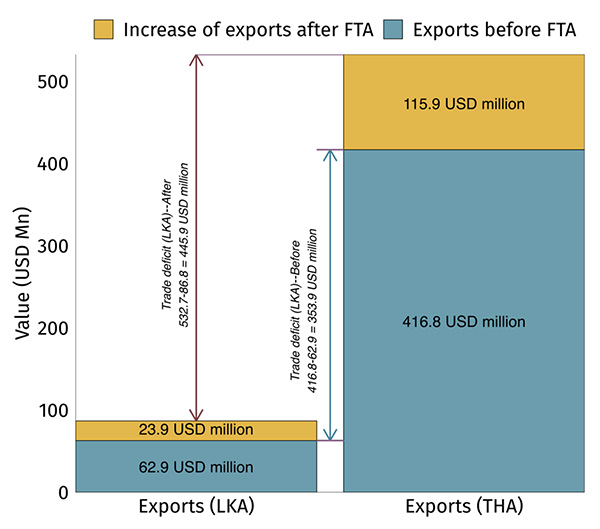
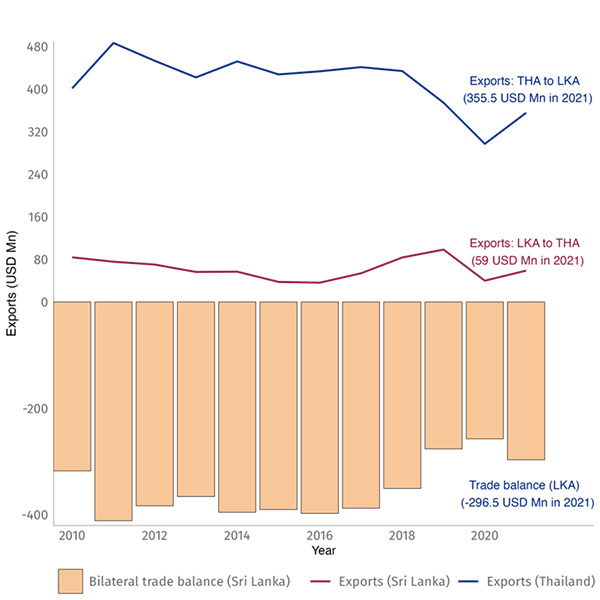 In the pre-pandemic period, Sri Lanka-Thailand bilateral trade was nearly USD 500 million. The three-year-2017, 2018 and 2019- average exports from Sri Lanka to Thailand were USD 62.9 million, while the exports from Thailand to Sri Lanka were USD 416.8 million. In 2019, Thailand was the 9th largest import source for Sri Lanka, but Sri Lanka is only the 73rd largest import source for Thailand. The mismatch resulted in a bilateral trade deficit of USD 353.9 million.
The existing exports from Sri Lanka to Thailand do not represent Sri Lanka’s typical export basket. The contribution of traditional exports like ready-made garments, tea, rubber, and coconuts is relatively low, and gems, electrical equipment, wheat flour, and activated carbon contribute to a greater extent. Technically specified natural rubber and latex are the top exports from Thailand which are essential raw materials in the value-added rubber industry of Sri Lanka.
Effect of Lowering Tariffs on Bilateral Trade to Zero
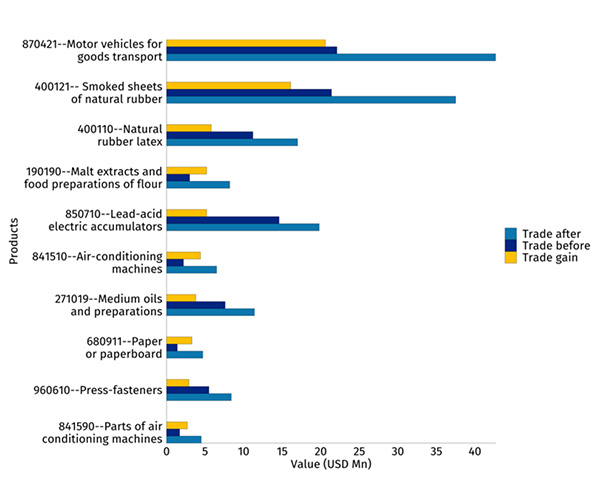
 As estimated from partial equilibrium analysis, Sri Lanka will realise a 38 % increase in exports to Thailand if tariffs are reduced to zero (Figure 2). The wearing apparel sector would be the biggest beneficiary, with exports projected to increase by 251 % from USD 6.4 million to USD 22.5 million. Figure 3A provides the top ten exports by Sri Lanka benefitting from a tariff removal by Thailand. The export effect for Thailand will be 27.8 % and Thailand’s rubber and plastic products will be increased by 71.9 % or USD 35.4 million. Products such as smoked sheets of rubber and natural latexwould benefit the most from tariff elimination, as shown in Figure 3B.
Assuming an immediate phasing-out of the existing tariffs, an FTA would increase bilateral trade to USD 619.6 million by 29.1 %. This increase falls short of the ambitious goal of a threefold increase in bilateral trade, at least in the short run.
However, partial equilibrium analysis does not estimate the trade gains from new product innovations due to FDI movements. The estimates also do not account for trade effects through input-output linkages and magnification of tariff effects along the value chains. However, tariff phasing out takes time, and FTA coverages are less than 100 %.
Notes: Simulations were done for Global Trade Analysis Project (GTAP) 47-sectors using sector-specific Armington Elasticities. The base years were 2021, and 2017 for Thailand and Sri Lanka, respectively.
Maximising Trade Gains
through Offensive Lists
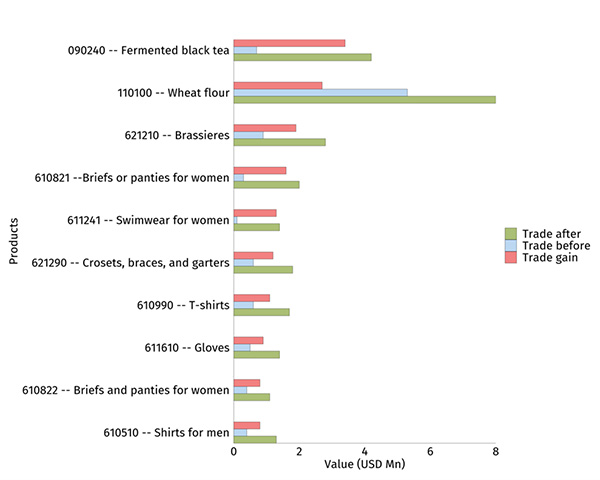 An offensive list contains products for which a country has a comparative advantage, capacity for expansion, and a favourable tariff from the importing country. There are 154 such products for Sri Lanka. Notably, 81 % of the USD 27.6 million export gain from an FTA comes from these 154 product lines. Similarly, 69 % of Thailand’s export gains to Sri Lanka in an FTA comes from 147 products identified for the offensive list.
Once ordered by the estimated export gains, nine out of the top ten products of Sri Lanka’s offensive list are from the wearing apparel sector. For Thailand, vital offensive products are rubber, electric equipment like air-conditioners and refrigerators, and motor vehicles for goods transportation.
Challenges and the Way Forward:
 Applying tariff cuts for all the products in the offensive lists is a challenge. Thailand’s high tariffs for tea and ready-made exports indicate its protectionist intent. Likewise, Sri Lanka might prefer to keep tariffs on rubber products. Significant political manoeuvring and delicate negotiations will be required to bring the coverage of the FTA to a satisfactory level. Secondly, an FTA will widen Sri Lanka’s trade deficit with Thailand by 26 % (Figure 4). Although a trade deficit is not necessarily detrimental, it does present a short-term challenge due to increased dollar outflow.
A possible solution is tariff elimination for the products in bilateral value chains. Sri Lanka uses Thailand’s rubber and textile products to produce finished goods. If Thailand removes tariffs for these finished products, increased exports will demand more raw materials. Sri Lanka can reciprocate by eliminating tariffs on raw materials. Phasing-in of the FTA, accounting for required adjustments, will also increase the political feasibility.
Strengthening bilateral trade ties with Thailand offers additional benefits to Sri Lanka. An FTA provides an opportunity to join electric equipment manufacturing value chains and a gateway to ASEAN economies. Thus, Sri Lanka should negotiate a comprehensive trade agreement with investment promotion, trade facilitation, and competition laws. Thailand can leverage Sri Lanka’s position as a distributional hub for regional exports.
Link to Talking Economics blog: https://www.ips.lk/talkingeconomics/2023/05/11/overcoming-obstacles-the-economic-case-for-a-sri-lanka-thailand-fta/
Asanka Wijesinghe is a Research Fellow at IPS with research interests in macroeconomic policy, international trade, labour and health economics. He holds a BSc in Agricultural Technology and Management from the University of Peradeniya, an MS in Agribusiness and Applied Economics from North Dakota State University, and an MS and PhD in Agricultural, Environmental and Development Economics from The Ohio State University. (Talk with Asanka – asanka@ips.lk)
Nilupulee Rathnayake is a Research Assistant working on Macro, Trade and Competitiveness research at IPS. She holds an MSc in Development Economics from the University of Nottingham, United Kingdom, and a BA in Economics from the University of Colombo, Sri Lanka. (Talk with Nilupulee – nilupulee@ips.lk)



The Ceylon Chamber of Women Entrepreneurs (CCWE) officially announced the CCWE Fashion Week & International Summit 2026 at a press conference held in Colombo, unveiling a historic national initiative that will mark the first-ever fashion week in Sri Lanka and the South Asian region dedicated exclusively to women entrepreneurs.
Held under the theme “Threads of Inclusion Woven from Every Walk of Life,” the event is scheduled to take place from 16th to 20th July 2026 at Cinnamon Life, Colombo, positioning Sri Lanka at the forefront of inclusive and sustainable fashion while creating a powerful platform for economic and social transformation.
This landmark initiative goes beyond fashion to deliver meaningful value to society by empowering women entrepreneurs across diverse communities, industries, and regions. By bringing together designers, artisans, SMEs, policymakers, investors, and international stakeholders, the event aims to create new market opportunities, strengthen financial inclusion, and promote sustainable livelihoods. It will serve as a catalyst for economic growth by supporting women-led businesses, enhancing export potential, encouraging youth participation in creative industries, and fostering regional collaboration across South Asia.
Supported by a strong network of corporate partners, the initiative is led by HNB as the Title Sponsor, reflecting a collective commitment to empowering women economically and driving more inclusive national progress.
Speaking at the press conference, Dr. Ayanthi Gurusinghe, President of CCWE and Chairman of the Fashion Week, stated, “Today we are announcing more than an event—we are introducing a national movement that will transform the way we view women entrepreneurs in Sri Lanka. This platform is designed to open doors for women from every walk of life, enabling them to convert talent into enterprise, gain access to markets, and contribute meaningfully to the economy. Through this initiative, Sri Lanka has the opportunity to lead the region in building a future where inclusion meets opportunity and equality.”
HNB, MD/ CEO, Damith Pallewatte, added, “For over 135 years, HNB has stood as a partner in progress to all Sri Lankans, and supporting women entrepreneurs is central to how we continue that legacy. This initiative creates a platform where women can access markets, build sustainable businesses, and contribute meaningfully to national economic development.
When women are empowered with the right access and support, the impact extends to families, communities, and the broader economy. Our decision to serve as Title Sponsor is driven by our commitment to enabling that access and supporting pathways for long-term growth through financial inclusion and enterprise development.”
Extending regional support, Mrs. Premila Acharya, President of the South Asian Women Development Forum (SAWDF), shared her support online, “The CCWE Fashion Week & International Summit 2026 is a landmark initiative that reflects the strength and potential of women entrepreneurs across our region. It is inspiring to see Sri Lanka take the lead in creating a platform where inclusion, opportunity, and equality come together. SAWDF is proud to stand in partnership with CCWE in empowering women through collaboration and shared progress.”
Highlighting achievements The United Nations Economic and Social Commission for Asia and the Pacific Subregional Office for South and South-West (ESCAP-SSWA) as Knowledge Partner Ms. Mikiko Tanaka, Head and Director noted “ESCAP is pleased to serve as a knowledge partner for the CCWE Fashion Week & International Summit 2026. This initiative reflects our shared commitment to enhance women entrepreneurs’ access to markets, finance and digital networks. Connecting women-led businesses to regional networks can further unlock opportunities outside Sri Lanka. We commend CCWE’s leadership in creating an enabling environment for women from diverse backgrounds to innovate, participate and contribute to inclusive and sustainable economic development.”

The Colombo Stock Exchange (CSE) announces that Sri Lanka’s capital market has received international recognition for the quality and innovation of its Green, Social, Sustainability and Sustainability-Linked (GSS+) bond issuances at the 2026 Sustainable Debt Awards hosted by Environmental Finance. This milestone reflects the continued strengthening of Sri Lanka’s sustainable finance landscape and its growing alignment with international capital markets.
This achievement builds on a sustained collaboration with the EU-funded Green Recovery Facility, implemented by Expertise France, which has supported the development and international positioning of Sri Lanka’s GSS+ bond market. Advisory and coordination support has been provided in close collaboration with the CSE, alongside technical inputs from the contracted consultancy team Baastel led by Jason Taylor.
Since supporting the operationalisation of Sri Lanka’s Green Bond Framework in 2023, this engagement has evolved into a broader effort to develop the country’s GSS+ bond market. Through strengthened policy alignment, market development, and stakeholder engagement, this partnership has contributed to corporate GSS+ bond issuances aligned with international standards.
Collectively, recent GSS+ bond issuances in Sri Lanka have mobilised approximately LKR 82 billion (around EUR 216 million) across green, blue, social, sustainability, and sustainability-linked instruments, financing priority sectors such as renewable energy, energy efficiency, water and coastal resilience, and inclusive social infrastructure. These issuances have been oversubscribed, reflecting growing investor confidence in Sri Lanka’s sustainable finance framework.
This progress has been supported by the introduction of Sri Lanka’s GSS+ Bonds Regulatory Framework in 2025, aligned with international principles, further strengthening market credibility and investor confidence.
The awards recognise the following Sri Lankan institutions:
DFCC Bank – Award for Innovation: Use of Proceeds (Green Bond, APAC)
Bank of Ceylon – Award for Innovation: Sustainability Bond Structure (APAC)
Commercial Bank of Ceylon – Green Bond of the Year (Financial Institution, APAC)
Thimal Perera, Director/Chief Executive Officer, DFCC Bank PLC said, “This recognition reflects the progress Sri Lanka’s capital markets are making in aligning with international sustainable finance standards and strengthening credibility with global investors. We are honoured to receive recognition in the area of innovation in use of proceeds, which highlights the growing ability of Sri Lankan institutions to structure financing solutions with transparency, measurable impact, and long-term relevance. We remain grateful to the regulators, market participants, technical partners, and investors whose continued support is helping advance Sri Lanka’s sustainable finance ecosystem.”
“We are honoured to receive the Environmental Finance’s Sustainable Debt Award for Innovation – Sustainability Bond Structure (APAC) for the Bank of Ceylon’s inaugural LKR 20 billion Basel III compliant Tier 2 Sustainability Bond – the largest sustainability bond issuance in Sri Lanka and the first of its kind. This alignment addressed both BOC’s capital adequacy requirements and commitment to aligning sustainable finance with national development priorities while advancing resilient and inclusive economic growth in Sri Lanka. As the first Sri Lankan bank to secure this prestigious global award, we wish to thank the Colombo Stock Exchange for their proactive coordination and encouragement. We also extend our sincere appreciation to all stakeholders who partnered with us in this trailblazing endeavor.” said Mr. G. A. Jayashantha, Acting Senior Deputy General Manager/ Head of Global Markets, Bank of Ceylon.
Remarking upon the award Sanath Manatunge, Managing Director / Chief Executive Officer of Commercial Bank of Ceylon said “Winning the ‘Green Bond of the Year’ award is a significant milestone for Commercial Bank and a strong endorsement of our commitment to sustainable finance and responsible banking. As the largest private bank in Sri Lanka, we recognise our responsibility to support investments that drive long-term environmental and economic resilience, particularly in the renewable energy sector. This recognition reflects the Bank’s strategic focus on advancing sustainable financing solutions that contribute meaningfully to the country’s climate goals and broader sustainable development agenda.”
These recognitions are particularly significant in the context of Sri Lanka’s ongoing economic recovery and debt restructuring process. As the country works to restore macroeconomic stability and rebuild investor confidence, the ability of Sri Lankan financial institutions to successfully issue GSS+ bonds aligned with rigorous international standards sends a strong signal to global capital markets.
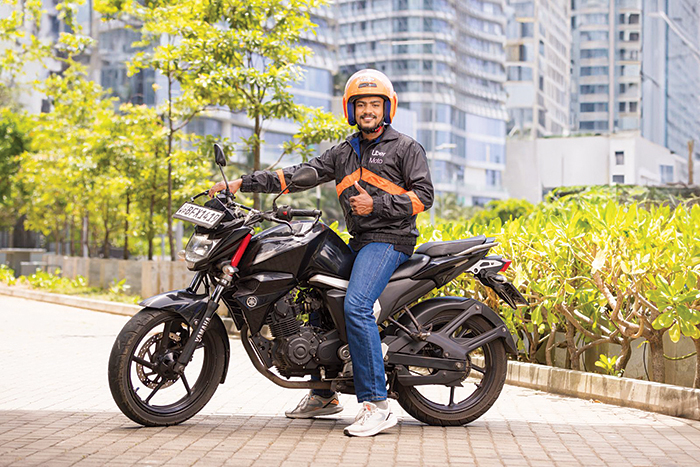
Uber, Sri Lanka’s most loved ridesharing platform, today announced the launch of Hybrid Subscriptions for Moto and Tuk drivers in the country. This includes a new ‘earn first, pay later’ model that gives drivers greater flexibility by allowing them to start earning on the platform without upfront payments. Drivers will continue to benefit from 0% commission on trips, allowing them to keep all of their earnings while paying a subscription fee separately.
With hybrid subscriptions, drivers can choose a model that works best for their driving patterns, making it easier for both full-time and part-time drivers to access trips and earn on Uber. The launch is aimed at improving the overall experience for drivers while continuing to offer reliable mobility for riders.
Flexibility and earning potential remain key priorities for drivers across Sri Lanka’s two- and three-wheeler ecosystem. The new model addresses this by giving drivers more control over how they engage with the platform and how they structure their earnings. By offering both time-based and earning-based subscription options, Uber provides drivers greater flexibility. While time-based subscriptions are ideal for full-time drivers, earning-based subscriptions work well for part-time drivers.
Commenting on the launch, Kaushalya Gunaratne, Country Manager – Mobility, Uber Sri Lanka, said, “”Drivers are at the heart of everything we do. We were among the first to introduce subscription models for Moto and Tuk drivers in Sri Lanka, and with hybrid subscriptions, we’re taking it further – giving drivers the benefits of zero commissions and the flexibility to choose what works best for them.”

Catholic Council reconvenes after nine years

ICC to widen Women’s Emerging Nations Trophy

Italian Navy’s ITS GIOVANNI DELLE BANDE NERE departs following replenishment visit

PM meets Secretary-General of the Commonwealth of Nations

Tennessee execution called off after failed lethal injection

Landslide early warnings issued to the Districts of Colombo, Gampaha, Kalutara, Kegalle, Nuwara Eliya and Ratnapura

‘Dates have the highest sugar content to fight Coronavirus’

Sunday Island 27 December – Headlines

#SundayIsland 17th December – Headlines

Sunday Island – 28th March

Sunday Island Headlines – 21 March

Sunday Island – 21st February – Headlines
-
 Features6 days ago
Sri Lankan Airlines Airbus Scandal and the Death of Kapila Chandrasena and my Brother Rajeewa
-
 News7 days ago
Lanka’s eligibility to draw next IMF tranche of USD 700 mn hinges on ‘restoration of cost-recovery pricing for electricity and fuel’
-

 News6 days ago
Kapila Chandrasena case: GN phone records under court scrutiny
-

 News6 days ago
Rupee slide rekindles 2022 crisis fears as inflation risks mount
-
 Features3 days ago
Octopus, Leech, and Snake: How Sri Lanka’s banks feast while the nation starves
-
 Business6 days ago
Expansion of PayPal services in Sri Lanka officially announced
-
 News2 days ago
Steps underway to safeguard Sri Lanka’s maritime heritage
-

 News6 days ago
Court orders further arrests in alleged USD 42 Mn NDB fraud case