
Editorial
No quick fix


That there is no quick fix to the globally raging Covid-19 pandemic is now all too clear. Countries worldwide seek to protect their populations as best as they could by inoculating them with vaccines hurriedly developed in some of the best scientific laboratories in the world. Billions of dollars have been poured into this research effort, thankfully marked by some significant successes, and the vaccination process is ongoing in most parts of the world including this small backwater called Sri Lanka. But the global supply of vaccine falls far short of demand and how this gap is to be bridged is a yet unanswered question.
However, it is very well known that untapped manufacturing capacity is available in many parts of the world. How such capacity can be harnessed to meet the crying need of humanity is not rocket science. The heart of the problem lies in the reluctance, nay unwillingness, of the world of commerce to share the research gains already made in an equitable manner and relax patents to enable maximum utilization of available manufacturing capacity, particularly in the Indian subcontinent, to break the back of if not significantly dent this problem that continues to confront mankind.
The global pharmaceutical industry, throughout its long history, has poured vast funds and resources, both material and human, to develop wide ranges of medicines to treat and protect living beings – human and animal – from the many illnesses that have always been a part of life. Many notable successes, ranging from penicillin to the various drugs and medicines that have defeated numerous scourges that have confronted humanity over the course of history, have marked this effort. It is well known that when new drugs are developed, their manufacturers recover the huge investments made in the research and development efforts to achieve the various outcomes, in pricing the various products they market. These are patent protected and such patents, most often ironclad, are zealously protected.
Unarguably, industry must be permitted to recover investments made in developing products and processes benefiting humanity. But this can, and often does, lead to profiteering and unjustifiable ripoffs of consumers. However that be, the immediate problem confronting the whole world is to find ways and means of relaxing the various patents and devices in force to maximize the production and availability of supplies of vaccines to fight the pandemic. It has been reported that the new head of the World Trade Organization has joined calls for pharmaceutical companies to share their coronavirus vaccine know-how and technology more broadly in the developing world. Whether this will happen or not, and the profit motive will remain the overriding consideration as has always happened in the past, remains to be seen.
The Associated. Press (AP), one of the world’s biggest news agencies, a non-profit organization owned by newspapers and broadcasters in the U.S., recently reported its findings in three continents that established pharmaceutical manufacturers could start producing hundreds of millions of doses of COVID-19 vaccines at short notice if they only had the necessary blueprints and know-how to get started. But that knowledge belongs to the large pharmaceutical companies that have produced the first three vaccines authorized in many countries both in the developed and developing world including Sri Lanka. These vaccines now in use in countries that include Britain, the European Union, and the U.S. are products of Pfizer, Moderna and AstraZeneca. Responses from the patent holders to requests to enable more broad based manufacture, are awaited.
The WHO which is supplying countries in need, including our own, with free vaccine to inoculate a proportion of their population, has called on manufacturers to share their know-bow to “dramatically increase global supply” to stop the virus before it mutates into deadlier forms. This issue must be obviously looked at from a non-commercial perspective. The vaccine was not developed utilizing only private resources. Billions of dollars of taxpayer funds, largely from the U.S. and European countries, were injected into the R&D efforts of pharmaceutical manufacturers to develop now patented vaccines. Such money came out of the pockets of ordinary people in some of the world’s richer countries. There is no debate that the benefits of such efforts must also be shared with people in poorer countries.
These vaccines were developed at unprecedented speed after the disease, first seen in China and thereafter in many parts of the globe, spread like wildfire worldwide. However, sharing the knowledge discovered has unfortunately not happened as speedily. Although contracts and licensing deals are being negotiated with producers on individual case-by-case basis on the logic that the intellectual property of the vaccine developers must be protected, manufacturing capacity worldwide is not being boosted at the needed pace. All over the world, the supply of coranavirus vaccines is falling short of demand. Much of the limited supplies that are available are going to rich countries. The AP report said that nearly 80 percent of the vaccine thus far administered had been used in just 10 countries. WHO is on record saying that more than 210 countries and territories with 2.5 billion people have not received a single shot by the end of last month.
The shortcomings in getting the urgently needed results of boosting the supply and distribution of the vaccine to parts of the world most in need have been highlighted ad infinitum. Winnie Byanyima, Executive Director of UNAIDS recently said that “what we are seeing today is a stampede, a survival of the fittest approach, where those with the deepest pockets, with the sharpest elbows, grabbing what is there and leaving others to die.” The AP report said that governments and health experts have offered two potential solutions to the vaccine shortage. One, supported by WHO is a ‘patent pool’ modeled on a platform set up to fight HIV, tuberculosis and hepatitis. The other is is to suspend intellectual property rights during the pandemic. But no progress in either direction is visible.



Saturday 6th December, 2025
The NPP government’s Budget 2026 was passed yesterday with a 157-vote majority. Its passage was a foregone conclusion, given the NPP’s supermajority in Parliament, but whether it can be implemented as previously planned is in doubt.
When Budget 2026 was presented on 07 November, it outlined revenue plans and expenditure allocations for 2026, based on the situation prevalent at the time, but Cyclone Ditwah has upended revenue and expenditure projections to the extent of making one doubt the viability of the budget. The Opposition called for Budget 2026 withdrawal and the presentation of a fresh one with the post-disaster economic realities factored in.
Commissioner General of Essential Services Prabath Chandrakeerthi has gone on record as saying the economic cost of the recent disasters could amount to about 6-7 billion US dollars or 3-5% of GDP. Thus, the workability of the budget hinges on the government’s ability to raise this huge amount of funds for reconstruction.
Restoring critical infrastructure is a prerequisite for maintaining economic growth momentum. The government is said to have curtailed capital expenditure to keep state expenditure low, but it will now have to change its strategy, and spend more on infrastructure. This is likely to shift the budget’s centre of gravity, so to speak.
Nothing is said to be more certain than the unexpected. The government was on cloud nine about a fortnight ago, boasting that the state coffers were overflowing under its watch. What it left unsaid was that taxes on vehicle imports had boosted state revenue exponentially. There was a sharp increase in vehicle imports, which had been suspended for several years in view of the country’s foreign currency woes; the current revenue bubble may burst when vehicle imports drop. When the government made the above-mentioned boastful claims, it may not have thought it would have to seek disaster assistance two weeks later. The uphill task the NPP has to accomplish is making its budget work vis-à-vis the post-disaster challenges.
The Opposition is right in having urged the government to take cognisance of the plight of disaster victims and make sufficient budgetary allocations for relief. However, one should not lose sight of the broader context. Disaster relief and reconstruction are essential, but the focus of a national budget has to be on growth. A contraction of the economy will adversely impact the disaster victims more than others. Hence the need for the Opposition to assess the current situation realistically and act rationally, taking the economic reality into account, without playing politics with the economy.
True, the government should have heeded the Opposition’s concerns about the post-disaster situation. However, Budget 2026 is now a fait accompli, and the task before Parliament is to make it work and find ways and means of raising funds for reconstruction and resettlement while maintaining growth momentum and enabling the state to resume debt repayment, according to schedule.
The Opposition has reportedly offered to support the government’s post-disaster expenditure plan. While this is a positive development, the sustainability of any expenditure plan depends on revenue generation, the be-all and end-all of a budget. Hence the need for cooperation among all parties to strengthen the economy and make it resilient to absorb shocks.
Friday 5th December, 2025
The JVP-led NPP government has laid bare its Jekyll-and-Hyde nature by deciding to use Emergency regulations to suppress the media. President Anura Kumara Dissanayake, in his address to the nation on 30 November, stressed that the state of Emergency, declared in view of recent weather disasters, would not be misused for undemocratic purposes, but on 02 December Deputy Minister of Public Security Sunil Watagala directed the police to use the draconian Emergency regulations against social media. Watagala told the police top brass, at a meeting in Malabe, that they must invoke Emergency regulations to deal with the social media activists who were carrying out personal attacks on President Dissanayake and ministers. He warned the media that all those arrested under Emergency regulations would be treated as offenders and not as suspects. So much for the new political culture the JVP/NPP promised!
The police, who are accused of acting as the JVP’s Gestapo, are likely to follow the government’s order at issue to the letter and go all out to suppress the media critical of the JVP/NPP bigwigs. Now that the JVP’s legal advisor and Central Committee member Watagala has defied an assurance given by President Dissanayake and directed the police to use Emergency regulations against the media, one wonders whether there is an alternative centre of power within the NPP government.
There is no gainsaying that nobody must be allowed to abuse media freedom to vilify anyone or disseminate lies. Social media has become a metaphor for smear campaigns. The self-styled social media influencers who resort to hate/rage baiting are driven by five motives, namely attention and engagement, polarisation, influencing public opinion, political or ideological leverage and, in most cases, monetary gain from viral outrage that drives advertising revenue and subscriptions. Many of them are in the pay of political parties and politicians and do not scruple to do dirty propaganda work. Whatever the motives, defamatory social media posts are a scourge that must be eradicated in the name of civility. However, there are ways and means of dealing with the culprits under ordinary laws, and using Emergency regulations for that purpose cannot be countenanced on any grounds.
The JVP or a government led by it has no moral right to use Emergency regulations against the media or any other institution or individuals; it opposed Emergency vehemently during previous governments. The JVP leaders themselves became victims of Emergency regulations during their so-called revolutionary days and therefore know what it is like to be arrested and detained indefinitely on trumped-up charges.
The JVP/NPP and its propaganda hitmen have been doing exactly what the current government is going to have some social media activists arrested for—launching smear campaigns. They opened a new low in Sri Lanka’s social media culture, demonising rival political leaders during previous governments and propagating diabolical lies to turn public opinion against their political opponents. They succeeded in their endeavour and formed a government. Now, the boot is on the other foot. They are still carrying out savage propaganda onslaughts on their opponents if their defamatory attacks on a young female speaker who attracted a great deal of media attention at the SLPP’s recent rally at Nugegoda are any indication. Shouldn’t the JVP/NPP and its propagandists do unto others as they would have others do unto them?
The JVP has a history of stifling dissent; old habits are said to die hard. In the past, it relied on mindless violence for this purpose, but it now appears to be attempting to use of Emergency regulations to achieve the same end under the pretext of controlling errant social media activists. This makes it all the more necessary to call a halt to the NPP government’s plan to misuse Emergency regulations for a witch-hunt against the media.

Thursday 4th December, 2025
Cyclone Ditwah has dissipated, but the trail of destruction it left remains. More than 475 people have already been confirmed dead. Many have gone missing, and the death toll continues to rise. It may not be possible to trace most landslide victims who were buried alive. It is too early to assess the economic cost of the recent weather disasters. Commissioner General of Essential Services Prabath Chandrakeerthi has given a ballpark figure—USD 6 -7 billion or about 3 – 5 percent of GDP. This is a staggering amount. The economic crisis is far from over. The government has its work cut out to allocate funds for rebuilding programmes and is therefore seeking assistance from other nations. Thankfully, disaster aid is pouring in, but whether it will be sufficient for the post-disaster reconstruction projects in all 25 districts, affected by Ditwah, remains to be seen.
Many organisations, public and private, and individuals have been donating relief supplies. All disaster victims, especially the displaced, will have to be supported for several weeks, if not for months, continuously. It is heartening that there has been a tremendous response to calls for disaster assistance, and the relief material collection centres are overflowing. The challenge is to streamline relief distribution programmes.
Some private companies and individuals collect relief materials and distribute them in a haphazard manner. Their intention is laudable and deserves appreciation, but whether their efforts will serve the intended purpose is in doubt, for they lack expertise and logistical facilities to distribute relief efficiently. There have been instances where large amounts of cooked meals had to be discarded due to delays in distribution during previous disasters.
What characterises social welfare and disaster relief programmes in Sri Lanka is poor targeting. Whenever a disaster occurs, various organisations come forward to collect relief items, and whether all the goods so collected reach disaster victims is anyone’s guess. Going by oft-heard laments from many victims of Ditwah that they have not received any food or drinking water for days, there is a need to streamline the ongoing relief distribution programmes. Not all disaster victims can be identified easily. There’s the rub. Some fraudsters visit disaster-stricken areas and collect food and dry rations, posing as victims.
The process of providing relief often involves multiple intermediaries, and this could lead to inefficiency, delays, misallocation, and even diversion, as we have seen on previous occasions. People are donating relief items generously amidst crippling economic hardships, and therefore the government is duty bound to ensure that these goods reach the intended beneficiaries. Relief distribution operations should be monitored closely to prevent waste and malpractices. This points to the need for a more vigorous state intervention. However, there have been complaints against some state officials involved in relief distribution. A group of flood victims, in a suburb of Colombo, interviewed by a television channel, accused a Grama Niladhari of siphoning off disaster relief. The shameless characters thriving at the expense of disaster victims during national calamities must be brought to justice.
Complaints abound that some politicians abuse disaster relief programmes to gain political mileage by using various associations affiliated to their parties to distribute the goods collected from the generous public. All such complaints must be probed expeditiously and action taken against the culprits. Politicians also engage in what can be described as calamity clout chasing in disaster-stricken areas, as evident from the sheer number of videos they have posted on social media. There have been instances where irate disaster victims set upon some of them. It behoves the self-righteous politicians to put an end to the disaster selfie culture and knuckle down to relief work.

Wolvaardt 115*, all-round Luus set up South Africa’s thumping win over Ireland

Deadly border fighting breaks out between Pakistan and Afghanistan

Advisory for severe lightning for the Western and Sabaragamuwa provinces and Galle and Matara districts

Government briefs Diplomatic Community on recovery progress

All parties have agreed to recruit Development Officers into the teaching service through a competitive examination – PM

“Our people have shown extraordinary resilience.” – PM

‘Dates have the highest sugar content to fight Coronavirus’

Sunday Island 27 December – Headlines

#SundayIsland 17th December – Headlines

Sunday Island – 28th March

Sunday Island Headlines – 21 March

Sunday Island – 21st February – Headlines
-
 News7 days ago
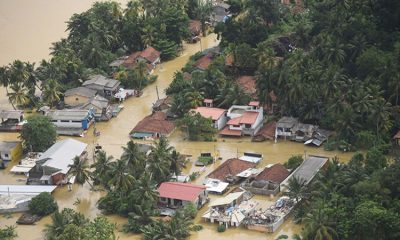
Weather disasters: Sri Lanka flooded by policy blunders, weak enforcement and environmental crime – Climate Expert
-
News4 days ago
Lunuwila tragedy not caused by those videoing Bell 212: SLAF
-
 News3 days ago
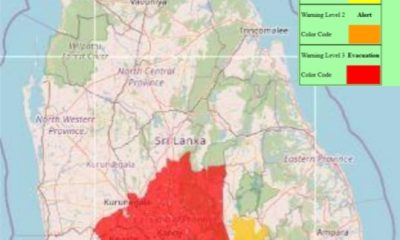
Level III landslide early warning continue to be in force in the districts of Kandy, Kegalle, Kurunegala and Matale
-
 Latest News5 days ago
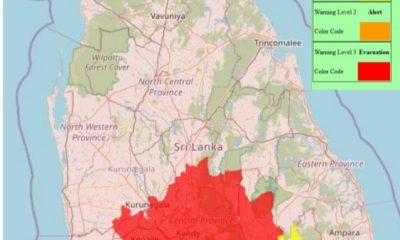
Level III landslide early warnings issued to the districts of Badulla, Kandy, Kegalle, Kurunegala, Matale and Nuwara-Eliya
-
 Features5 days ago
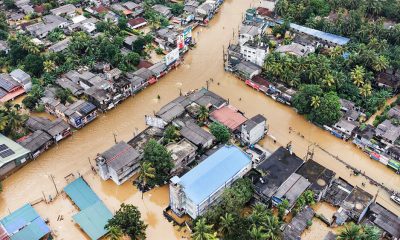
Ditwah: An unusual cyclone
-

 Latest News6 days ago
Updated Payment Instructions for Disaster Relief Contributions
-

 Latest News6 days ago
Landslide Early Warnings issued to the Districts of Badulla, Colombo, Gampaha, Kalutara, Kandy, Kegalle, Kurunegala, Matale, Moneragala, Nuwara Eliya and Ratnapura
-

 News17 hours ago
A 6th Year Accolade: The Eternal Opulence of My Fair Lady