
Foreign News
Nepal to scrap ‘failed’ Mount Everest waste deposit scheme


A scheme to encourage climbers to bring their waste down from Mount Everest is being scrapped – with Nepalese authorities telling the BBC it has been a failure.
Climbers had been required to pay a deposit of $4,000 (£2964), which they would only get back if they brought at least 8kg (18lbs) of waste back down with them.
It was hoped it would begin to tackle the rubbish problem on the world’s highest peak, which is estimated to be covered in some 50 tonnes of waste.
But after 11 years – and with the rubbish still piling up – the scheme is being shelved because it “failed to show a tangible result”
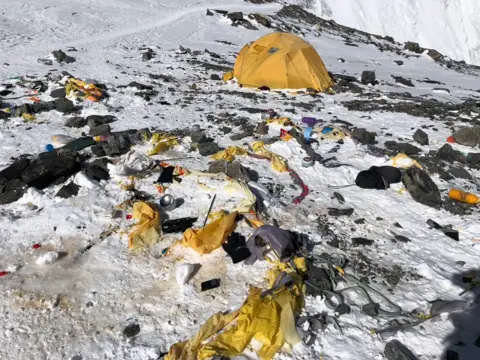
Himal Gautam, director at the tourism department, told the BBC that not only had the garbage issue “not gone away”, but the deposit scheme itself had “become an administrative burden”.
Tourism ministry and mountaineering department officials told the BBC most of the deposit money had been refunded over the years – which should mean most climbers brought back their trash.
But the scheme is said to have failed because the rubbish climbers have brought back is usually from lower camps – not the higher camps where the garbage problem is worst.
“From higher camps, people tend to bring back oxygen bottles only,” said Tshering Sherpa, chief executive officer of the Sagarmatha Pollution Control Committee, which runs an Everest checkpoint.
“Other things like tents and cans and boxes of packed foods and drinks are mostly left behind there, that is why we can see so much of waste piling up.”
Mr Sherpa said on average a climber produces up to 12kg (26lbs) of waste on the mountain where they spend up to six weeks for acclimatisation and climbing.
Apart from the “flawed rule” that required climbers to bring back less trash than they produce, authorities in the Everest region said lack of monitoring has been the main challenge.
“Apart from the check point above the Khumbu Icefall, there is no monitoring of what climbers are doing,” said Mr Sherpa.
Nepalese authorities are hoping a new scheme will be more effective.

Under the changed rule, officials said, a non-refundable clean-up fee from climbers will be used to set up a checkpoint at Camp Two and also deploy mountain rangers who will keep going to the higher parts of the mountain to make sure climbers bring down their trash.
Tourism ministry officials said it will most probably be $4,000 per climber – the same amount as deposit money – and will come into effect once passed by the parliament.
Mingma Sherpa, chairperson of the Pasang Lhamu rural municipality, said the change was something the Sherpa community had lobbied for for many years now.
“We had been questioning the effectiveness of the deposit scheme all this time because we are not aware of anyone who was penalised for not bringing their trash down.
“And there was no designated fund but now this non-refundable fee will lead to creation of a fund that can enable us to do all these clean-up and monitoring works.”

The non-refundable fee will form part of a recently introduced five-year mountain clean-up action plan, with Jaynarayan Acarya, spokesperson at the ministry of tourism, saying it was designed “to immediately address the pressing problem of waste on our mountains”.
Although there has been no study quantifying the waste on Everest, it is estimated there are tons of it including human excrement which does not decay on the higher part of the mountain because of freezing temperature.
And the growing number of climbers each year, averaging around 400 with many more supporting staff, has been a growing concern for mountaineering sustainability.
[BBC]


President Donald Trump cancelled a planned trip by US officials to Pakistan for talks on the Iran war on Saturday, shortly after Tehran’s delegation had left Islamabad.
The US president said special envoy Steve Witkoff and son-in-law Jared Kushner would be wasting “too much time”, adding that if Iran wanted to talk “all they have to do is call”.
Earlier, Iranian Foreign Minister Abbas Aragchi held talks with mediator Pakistan, saying afterwards he had shared Iran’s position on ending the war but was yet to see whether the US was “truly serious about diplomacy”.
Diplomatic efforts have stalled despite Trump’s extension of a ceasefire that had been due to expire on 22 April to allow talks to continue.
Both sides have been locked in a standoff over the Strait of Hormuz, with Iran restricting passage through the key shipping route in the wake of the US and Israel commencing strikes in February, as well as over Tehran’s nuclear ambitions.
The US has since increased its naval presence in the strait – through which roughly a fifth of the world’s oil supply passes – to block Iranian oil exports.
The White House had said the Iranians “want to talk” when the trip was announced on Friday, but Iran said there were no plans for a direct meeting.
Trump said the ceasefire would hold on Saturday despite hopes of another round of face-to-face talks fading.
[BBC]
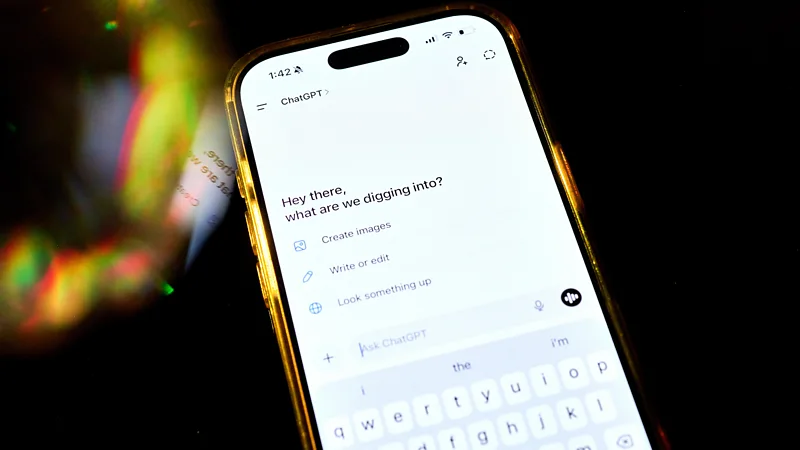
As large language models take over more and more cognitive tasks, researchers are warning this mental outsourcing comes with a cost.
When research scientist Nataliya Kosmyna was looking for interns, she noticed that cover letters she received were suspiciously similar. They were long, polished and after introductions would often jump to an abstract and arbitrary connection to her work.
It was obvious to her that applicants were using large language models (LLMs) – a form of artificial intelligence that powers chatbots such as ChatGPT, Google Gemini and Claude – to write the letters.
At the same time, during lessons on campus at Massachusetts Institute of Technology (MIT), Kosmyna, who studies the interaction between humans and computers, noticed that numerous students were forgetting content more easily compared to a few years ago.
With the increasing reliance on LLMs, she had a hunch that this could be affecting her students’ cognition and sought to understand more.
The concern that researchers like Kosmyna have is that if we become too reliant on AI, it could affect the language we use and even our ability to do basic cognitive tasks. There is now a growing body of research suggesting that this “cognitive offloading” to AI can have a corrosive effect on our mental abilities. The consequences could be alarming and may even contribute to cognitive decline.
“The ChatGPT group showed notably less brain activity – it was reduced by up to 55%”
It’s well known that the tools we use can change how we think. With the advent of the internet for instance, tasks that once required deep research could be found by plugging a simple query into a search box. As the use of search engines increased, research found we became less likely to remember details, something dubbed “the Google effect”. (Some argue, however, the internet also serves as an external memory system that frees up our brain to do other tasks)
But there is now growing alarm that as we offload even more of our thinking to LLMs and other forms of AI, the effects on our memories and ability to solve problems could get worse. Artificial intelligence tools can write convincing poetry, give financial advice and provide companionship. Students are increasingly outsourcing their own work to AI tools as well.
Studies have already shown that young people might be particularly vulnerable to the negative effects that using AI can have on key cognitive skills like critical thinking. Kosmyna, however, wanted to dig deeper into the potential effects.
Reduced mental effort
She and her colleagues at MIT Media Lab recruited 54 students to write short essays and split them into three groups. One was instructed to use ChatGPT. A second could use Google search, with AI-generated summaries turned off. The third didn’t use technology. Each student’s brainwaves were measured while they worked.
The essay topics were deliberately open-ended, meaning little research was needed for the task, with prompts including questions around loyalty, happiness or our daily life choices.
The results haven’t been published in a scientific journal yet, but they were none-the-less eye-opening, according to Kosmyna. Those who used their own minds had a brain that was “on fire”, showing widespread activity across many parts of the brain, she says. The search engine-only group still showed strong activity in the visual parts of the brain, but the ChatGPT group showed notably less brain activity – it was reduced by up to 55%.
“The brain didn’t fall asleep, but there was much less activation in the areas corresponding to creativity and to processing information,” says Kosmyna.
ChatGPT also affected people’s memories. After submitting their essays, people in the AI group were unable to quote from their essays, and several felt they had no ownership over the work. Other studies have also shown that people become less able to retain and recall information when they use AI tools such as ChatGPT.
While the findings are still undergoing peer review, they echo those from other studies. One study by researchers at the University of Pennsylvania suggests that some people undergo something they term “cognitive surrender” when using generative AI chatbots. This means they tend to accept what the AI tells them with minimal scrutiny and even allow it to override their own intuition.
Similar effects can be found outside the world of AI chatbots too – even in life-or-death situations. A recent multinational study team found that medical professionals who used an AI tool to screen for colon cancer for three months were subsequently worse at spotting the tumours without it.
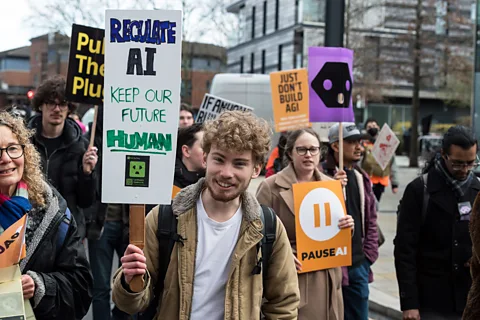
Outsourcing work to AI also risks losing much of the creativity that produces original work, warns Kosmyna. The essays that students in her study wrote with ChatGPT looked very similar and were described by the teachers marking them as “soulless”, lacking originality and depth, Kosmyna says. “One of the teachers asked if students were sitting next to each other because the essays were so similar.”
While studies such as these illustrate the short-term effects LLMs can have on the brain, the long-term impacts are far less clear. The study by Kosmyna and her colleagues provides a glimpse. Four months after the initial study they asked the students to write another essay, but this time those who had used ChatGPT were told to work without LLM support. The neural connectivity in their brains was lower than those who switched the opposite way, perhaps indicating that they had not engaged with the topics properly in the first place.
Cognitive decline
Yet, LLMs can be a positive tool to aid thinking, but only if we don’t rely on them by outsourcing our mental tasks in the process, says computational neuroscientist Vivienne Ming, author of Robot Proof. She’s concerned though that this is not how most people interact with this technology.
Her reasoning comes from research she conducted for her book, during which Ming asked a group of students at the University of Berkeley to predict real-world outcomes, such as the price of oil. She found that the majority of participants simply asked AI and copied the answer.
She measured their brains’ gamma wave activity – a marker of cognitive effort – finding it showed very little activation. Again her research is yet to published, but Ming worries that if her findings are borne out in further studies it could have long-term implications. Other research, for example, has linked weak gamma wave activity to cognitive decline later in life.
“That’s really worrying,” Ming says. “If that is a natural mode for people to interact with these systems – and these are smart kids – that’s bad.” Deep thinking, she says, is our superpower. “If we don’t use it, the long-term implications for cognitive health are pretty strong.”
That’s because when we rely on LLMs it requires very little cognitive effort, Ming adds, which is exactly what’s needed for a healthy brain.
A small subset of participants though – less than 10% – worked differently and used AI as a tool to gather data that they then analysed themselves. These individuals made more accurate predictions than others participants and showed stronger brain activation too.
For long-term brain health we need to continue to challenge ourselves
Almost two decades ago, Ming predicted that within 20 to 30 years we would see a statistically meaningful rise in dementia rates directly related to our overreliance on Google Maps. “I meant it to be provocative,” Ming says. “If you don’t have to think about navigating then there’ll be some detectable effect.”
While we don’t have data on this exact prediction, the increased use of GPS has been linked to worse spatial memory over time, according to one study of 13 people conducted over three years. And poor spatial navigation may be a potential predictor of Alzheimer’s Disease, according to another study.
It’s clear that the more active our brain is, the more protected it is from cognitive decline. LLMs then, Ming says, could not only reduce creativity but could harm cognition and potentially increase the risk of dementia.
As AI tool use increases, we need to work with it in a way that benefits us rather than harms us. Ming suggests that ultimately, the goal could be a form of “hybrid intelligence” where humans and machines “do the hard stuff” together. By this she means we need to think first and use tools to challenge us later, rather than simply letting them answer questions for us. Kosmyna agrees and suggests learning subjects without AI tools first to build a foundation and then think about using LLMs.
Ming recommends using what she calls the “nemesis prompt” to challenge your own thinking. It works by prompting an AI to act as a “lifelong enemy” or nemesis, then ask it to explain in detail why your ideas are wrong and how you can fix them, forcing you to defend and refine your arguments rather than simply accepting the answers it provides.
Another technique she suggest is prioritising “productive friction” and asking the AI to only provide context and ask you questions, rather than supplying answers. When she tested this by fine-tuning an AI bot not to give answers, she found that more individuals were more engaged.
Ultimately, we should all be wary of cognitive shortcuts, which is something “our brains love”, Kosmyna says. Clearly, for long-term brain health we need to continue to challenge ourselves. Our minds, creativity and cognitive health will benefit in the process.
[BBC]
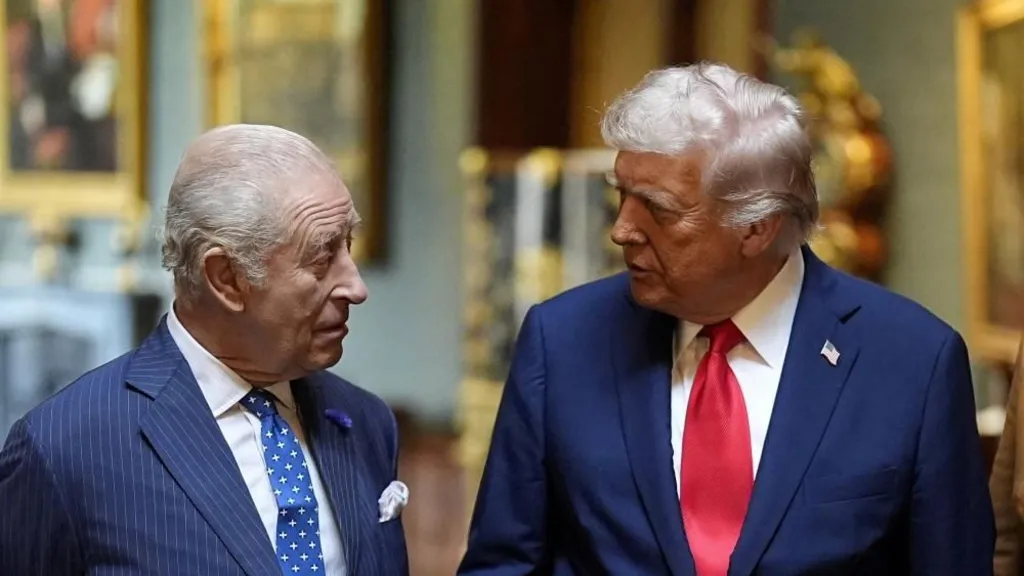
US President Donald Trump has said next week’s state visit from King Charles and Queen Camilla could help repair relations with the UK.
When asked in a phone interview with the BBC whether the visit could help repair the relationship, Trump said: “Absolutely. He’s fantastic. He’s a fantastic man. Absolutely the answer is yes.”
“I know him well, I’ve known him for years,” he said. “He’s a brave man, and he’s a great man. They would absolutely be a positive.”
The president also spoke about his relationship with UK Prime Minister Sir Keir Starmer, who he said could only “recover” if he changed course on immigration.
The King and Queen will travel to the US for a four-day visit beginning on Monday, and will meet with Trump at the White House.
The King will have a private meeting with the president and also deliver an address to Congress.
After two days in Washington DC, they will travel to New York, Virginia and Bermuda before returning to the UK.
The Foreign Office said the trip would mark the 250th anniversary of US independence, and would celebrate a partnership of “shared prosperity, security and history”.
In the five-minute interview on Thursday, Trump was also asked about his relationship with Sir Keir.
The two leaders have appeared at odds over the war in Iran, and the prime minister has faced mounting pressure over his decision to appoint Lord Mandelson as UK ambassador to the US.
In a post on Truth Social on Monday, Trump said Lord Mandelson was “a really bad pick” but the prime minister had “plenty of time to recover”.
When asked what he meant by that post, Trump said: “If he opened the North Sea and if his immigration policies became strong, which right now they’re not, he can recover, but if he doesn’t, I don’t think he has a chance.
Trump has repeatedly called on the UK to increase oil and gas extraction in the North Sea.
“I make my decisions based on what’s in the British national interest and not what other people say or do,” Sir Keir said while talking to broadcasters about the president’s comments on Thursday.
“That is why I took the decision that we would not be dragged into the war in Iran,” he said. “I’m not going to be diverted or deflected from that by what anybody else says.”
(BBC)

Russian circumnavigation team arrive in Sri Lanka

Trump unhurt after shots fired at White House correspondents’ dinner

Sooryavanshi ton in vain as Sunrisers Hyderabad raze a 229 chase

Prabhsimran, Shreyas upstage Rahul’s 152* to mow down record T20 chase

Showers expected in the Western, Sabaragamuwa and North-western provinces and in Galle, Matara, Kandy and Nuwara-Eliya districts after 2.00 pm.

Heat Index at Caution Level in the Northern, North-central, North-western, Western, Sabaragamuwa, Southern, and Eastern provinces and in Monaragala district during the day time

‘Dates have the highest sugar content to fight Coronavirus’

Sunday Island 27 December – Headlines

#SundayIsland 17th December – Headlines

Sunday Island – 28th March

Sunday Island Headlines – 21 March

Sunday Island – 21st February – Headlines
-

 News5 days ago
Rs 13 bn NDB fraud: Int’l forensic audit ordered
-

 Opinion6 days ago
Shutting roof top solar panels – a crime
-

 News3 days ago
Lanka faces crisis of conscience over fate of animals: Call for compassion, law reform, and ethical responsibility
-

 News2 days ago
No cyber hack: Fintech expert exposes shocking legacy flaws that led to $2.5 million theft
-
 News2 days ago
Whistleblowers ask Treasury Chief to resign over theft of USD 2.5 mn
-

 News6 days ago
Church calls for Deputy Defence Minister’s removal, establishment of Independent Prosecutor’s Office
-

 News3 days ago
USD 2 mn bribe: CID ordered to arrest Shasheendra R, warrant issued against ex-SriLankan CEO’s wife
-

 Features6 days ago
The Digital Pulse: How AI is redefining health care in Sri Lanka?