
Sports
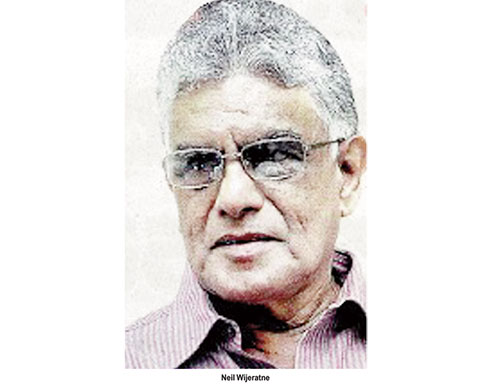
Neil’s books on rugby bring back nostalgic memories

By A Special Sports Correspondent
These are days where sportsmen and women can review their lives and careers. Some would say it’s a must do during these times where there are travel restrictions. We all experience such a period some time during our lives when we are made inactive. From a rugby perspective there is so much literature to read up. Innovative people can do a documentary on rugby or short film clip and post on social media and youtube. This writer remembers the two books penned on rugby by one time recorder of Sri Lanka Rugby Neil Wijeratne.
These are great days to read his two books ‘Rugby Across the Straits’ and our very own ‘Sevens Saga’-which caps the rugby sevens history of the island.
Wijeratne is still the person to go to when a writer wants information for a sports article. He is a serious historian and takes great pain in collecting his facts and figures for his compilations. He has been generous in parting with whatever statistics he has when budding writers and journalists tap him as a source.
 He was pushed to keeping sports records on pen and paper because destiny didn’t afford him the opportunity to be a sportsman. Many feel that sport was richly rewarded because this brought the writer out in Wijeratne.
Wijeratne showed his prowess in writing as a schoolboy and penned his first novel ‘Mihiduma Atharin’ in 1968. That pen kept flowing and he produced many gems in writing; his compilations coming out in English and Sinhala languages.
He is one person who saw rugby’s changing face from being an amateur sport to its professional status. Those who speak with him will vouch that his cherished memories were when players played for the love of the game and remained as amateurs.
His writings highlight those achievements by ‘amateur’ rugby players. He mentions of players like Apisai Nagata, Sari de Sylva, Nalin de Silva, Didacus de Almeida, Michael Jayasekare and Nalaka Weerakkody in a note of acknowledgement in his book Sevens Saga. He leaves out two great names that of Hisham Abdeen and Priyantha Ekanayake in that list. But who are we scribes to challenge his thoughts as a writer? May be a writer like Wijeratne sees subtle intriguing qualities and more interesting traits in these players he has mentioned because that total package makes their presence on the field so much interesting.
Wijeratne picked up those bits of information which the spectator might have missed out on and brings them out in his writings. He also never forgot about to write on lesser known sports personalities and people who contributed to sport from behind the scenes.
We Sri Lankans have often caught the attention of overseas crowds when contesting international sevens tournaments. This could be one reason why he dedicated effort and time to pen the early history of the island’s sevens rugby.
According to him it had all happened in 1931 on a February 1st in Ratnapura when the Police team took on a planters combined outfit that marked the first rugby sevens game in Sri Lanka. The writer in his book goes on to find out the exact population in Ratnapura (8497) which adds flavour to the article and brings back nostalgic memories of the past. According to Wijeratne the person credited for introducing rugby sevens to this nation is Welshman K.F Jenkins who was stationed here as a probationary Assistant Superintendent of Police.
 As rugby progressed and more clubs came into being Wijeratne simply expanded his horizons. From rugby sevens tournaments in Colombo’s Longden Place and Race Course he has captured the action in tournaments like Sabaragamuwa Sevens, Kurunegala Sevens, Ruhunu Sevens, Uva Sevens, Dimbula Sevens travelling the length and breadth of Sri Lanka. He also writes about Sri Lanka hosting its first international rugby tournament -the Cargills International Sevens-which was won by Fiji Islanders’. The team comprised all Fijian players, who played domestic rugby here, except for Chandrishan Perera, who was probably included here to keep the interest of the local crowd in the tournament till the end. The old style of playing rugby is captured by Wijeratne in his punchy style of writing English. In the article titled ‘Some days are diamond days’ dedicated to Sri Lanka’s Bowl Championship win at the 1994 Fiji Sevens he writes ‘Sri Lanka was very much famous in Fiji not because of any rugby prowess of theirs, but as a country where the Fijians are looking ahead to make lucrative playing careers. Wijeratne brings out the best of Sri Lanka rugby when the islanders are on top and dazzling and still can keep the reader glued to the page with his descriptive writing when the ‘Tuskers’ are struggling with defeat staring in the face.
Still for Wijeratne, he can’t help but find space for two legends like Abdeen and Priyantha Ekanayake in the book ‘Sevens Saga’. He writes extensively on Sri Lanka’s 1984 Bowl Championship win where Abdeen led from the front as skipper. The author underscores the leadership skills and rise to fame of Ekanayake in selected sections of the book. When one begins to think that the book is not complete without the mention of two rugby stalwarts who gave so much opportunities for rugby players one finds the names of Kishin Butani and Malik Samarawickreme and some of their contributions to sevens rugby.
During these lockdown days where rugby activity is absent Wijeratne’s books are ideal to do more than pass the time; they are educative as well.
In his characteristic way of saying it Wijeratne’s rugby books ‘offer a nostalgic pilgrimage to recapture everlasting moments in rugby seen in this island’.



[Cricbuzz]
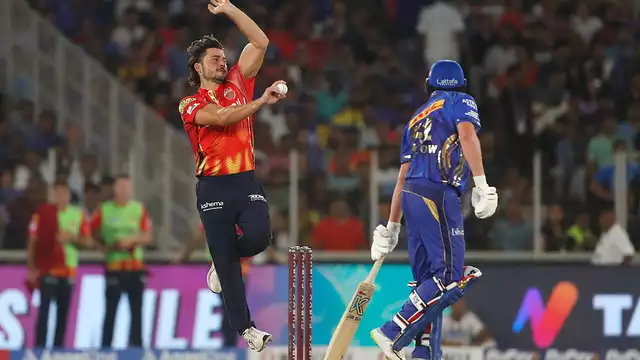

Why did David Miller refuse a single off the penultimate delivery with Delhi Capitals needing 2 off 2? It’ll be spoken of for a while, but not inside the Gujarat Titans change room. Because Prasidh Krishna bowled a nerveless slower bouncer off the final delivery that Miller missed, and Jos Buttler then nailed a direct hit with an underarm throw from behind the stumps to run out Kuldeep Yadav, clinching a dramatic first win for GT in IPL 2026.
Despite being adjudged run out on the field, Miller wasn’t in the mood to concede defeat, and reviewed the final ball for a possible wide. But when replays confirmed what he had perhaps known, he was crestfallen. Equally distraught in the dugout was K L Rahul, whose 52-ball 92 set the game up for DC but for one run.
It was GT’s first win of the tournament and the first loss for DC after starting the campaign with two wins in a row.
Thirty-six needed off 12. A bruised finger that didn’t make it easy for him to grip the bat had forced Miller to retire hurt with DC needing 81 off 42. But when Tristan Stubbs was run-out in the 17th over, Miller returned hoping to play second fiddle to Rahul. Instead, he was now expected to deliver a box-office hit with Rahul nicking behind off a full Mohammed Siraj delivery two balls later.
Miller nearly delivered what was expected, as he went 6, 4, 6 off Siraj, repeatedly peppering the short leg-side boundary. At the other end, Vipraj Nigam also ramped four off a short delivery to bring the equation down to a manageable 13 off the final over.
Prasidh was tasked to bowl the final over. His three overs prior to that had been walloped for 41; Rahul, his state mate, had climbed into him earlier in the night. But all that would’ve been forgiven if Prasidh delivered a gun final over. That GT could only have four fielders out due to a slow over rate added to his challenge. And he nearly succumbed.
Nigam made room and swung cleanly to hit the first ball to the long-off fence, but a rush of blood had him swipe the second delivery to Shubman Gill at mid-off. With DC now needing nine off four, Kuldeep gently deflected his first ball to deep third to leave the chase in Miller’s hands.
With the equation down to 8 off 3, Prasidh bowled a slot-ball that Miller walloped over long-off. But with two needed, Miller inexplicably refused a single to take it all upon himself to finish the deal. He couldn’t connect on the final ball, and Prasidh belted a roar. GT had pulled one from under DC’s rug in dramatic circumstances.
After scores of 1 and 0 in his first two games, Rahul announced himself with a 29-ball half-century that was as pleasing as they come for large parts. It was also one that didn’t have the baggage of him playing run-accumulator, like he has tended to in the past while opening the batting. This Rahul was fun, free and fearless and he helped DC overcome a few roadblocks along the way, like when they lost two wickets in two deliveries to Rashid Khan at the halfway mark.
Rahul was particularly menacing against the fast bowlers, and it began with a wristy flick that he sent way back over deep square off Kagiso Rabada. The early jitters out of the way – if he even had some inkling of them – he batted like a man possessed, fearlessly climbing into length balls from Prasidh over cover, and slapping disdainfully over point.
He is good, but where is the Rashid of old, they asked. Turns out he hadn’t gone anywhere. After he conceded just nine in his first two with DC rampant, he returned to dismiss Nitish Rana in his dramatic third over, the 10th of the innings. Having been given out lbw earlier, only for Rana to overturn the decision through DRS, he was out a few balls later when he miscued a googly to Sai Sudharsan at long-off. This was Rana’s third sub-20 score of the season.
This brought the in-form Sameer Rizvi to the middle, and he lasted all of one delivery as Rashid snuck through his inside-edge with a ripping googly to briefly elicit jitters in the DC camp. This is when Miller entered, before briefly exiting with seven overs left. But in the same over, when Rashid had Axar Patel slice one to Glenn Phillips running back from cover, GT started to have an opening.
On any other night, Rashid’s spell would have cracked open the game. The fact that DC were still in it despite these wickets was down to Rahul. It needed the skilful Siraj to dismiss him with DC needing 45 off three overs. By then, the pressure was telling.
That GT were eventually able to get over the line was down to their run cushion, made possible thanks to half-centuries from Jos Buttler, Gill and Washington Sundar. Buttler looked unshackled, hitting four sixes off his first 15 deliveries en route a bruising half-century, while Gill played himself in and then allayed fears of neck spasms during his takedown of Kuldeep with the slog sweep. Then Washington, promoted to No. 4, struck his maiden IPL fifty to shore up the innings.
Even so, GT managed just 49 off the last five. On another day, this may have proved to be costly. It didn’t on Wednesday, and for that, they have Rashid to thank.
Brief scores:
Gujarat Titans 210 for 4 in 20 overs (Sai Sudarshan 12, Shubman Gill 70, Jos Buttler 52, Washington Sundar 55, Glenn Phillips 14*; Mukesh Kumar 2-55, Lungi Ngidi 1-24, Kuldeep Yadav 1-42 ) beat Delhi Capitals 209 for 8 in 20 overs (Pathum Nissanka 41, KL Rahul 92, David Miller 41*, Vipraj Nigam 12; Mohammed Siraj 1-42, Rashid Khan 3-17, Prasidh Krishna 2-52) by one run
[Cricinfo]

PSL 2026: Iftikhar’s all-round show seals last-ball win for Zalmi

BCCI curbs movement of benched IPL players in latest rules

Prasidh trumps Miller in last-ball finish as Gujarat Titans clinch thriller

Greece to ban social media for under-15s from next year

Showers will occur at a few places in the Western, Sabaragamuwa and North-western provinces and in Galle, Matara, Kandy, Nuwara-Eliya and Mannar districts after 2.00 p.m.

Sun directly overhead Chilaw, Bingiriya, Halmillawewa, Panduwasnuwara, Gokarella, Kawudupelella, Koppaveli and Kirankulam about 12:12 noon. today (09)

‘Dates have the highest sugar content to fight Coronavirus’

Sunday Island 27 December – Headlines

#SundayIsland 17th December – Headlines

Sunday Island – 28th March

Sunday Island Headlines – 21 March

Sunday Island – 21st February – Headlines
-

 Features5 days ago
Ranjith Siyambalapitiya turns custodian of a rare living collection
-

 News5 days ago
Global ‘Walk for Peace’ to be held in Lanka
-

 News3 days ago
Lankan-origin actress Subashini found dead in India
-

 Features5 days ago
Beyond the Blue Skies: A Tribute to Captain Elmo Jayawardena
-
 Opinion7 days ago
Hidden truth of Sri Lanka’s debt story: The untold narrative behind the report
-

 Features5 days ago
Aspects of Ceylon/Sri Lanka Foreign Relations – 1948 to 1976
-

 Features7 days ago
The Ramadan War
-

 Editorial6 days ago
Brouhaha over a book